The Write Space Podcast - Navigating Boundaries & Self Care
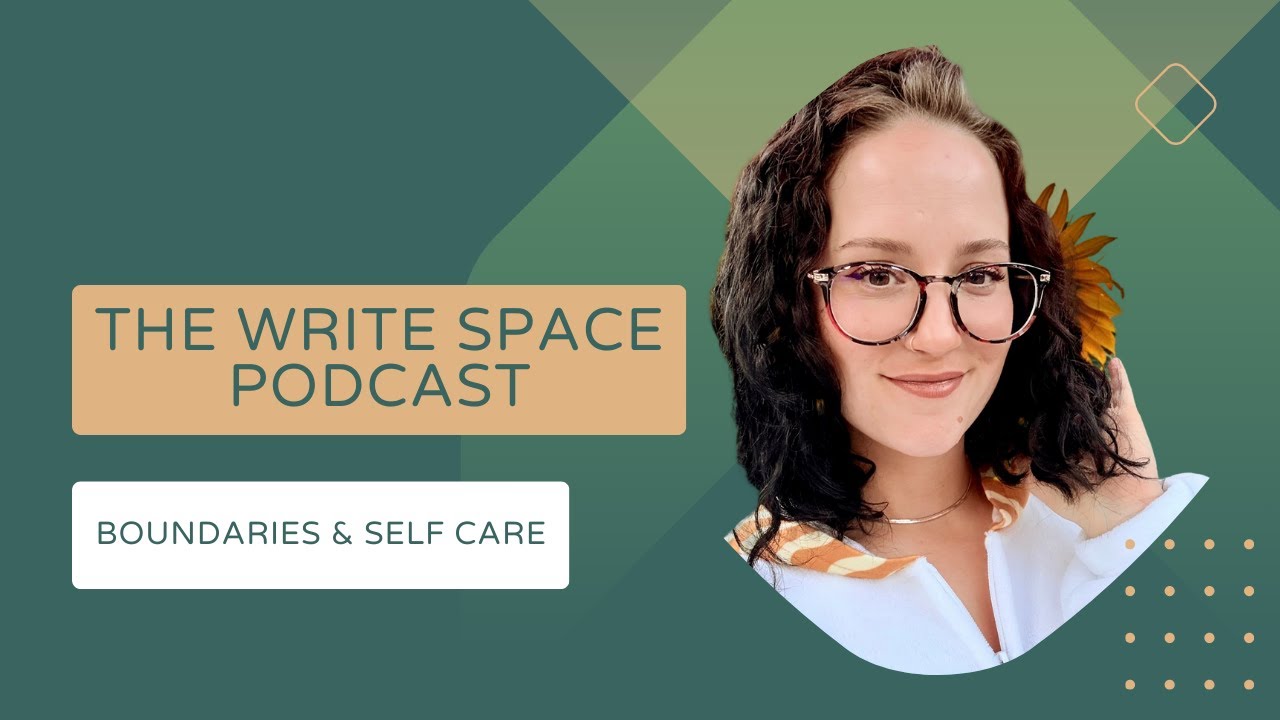
Robyn Lee talks with Hannah Rose, a licensed therapist and Survivor Season 45 contestant, about boundaries, self-care, shame, and running a group practice. They discuss pricing without imposter syndrome, abundance mindset, and staying authentic online.
Chapters
Hello everyone and welcome back to The Write Space podcast where we help you breathe, dream, create, and be inspired. I'm Robyn Lee, your host, and with me is a very special guest, one who is near and dear to my heart. I first came across her at a horrible time in my life while she was going through a horrible time in her life on my TV. And this bubbly person on this yellow tribe on Survivor Season 45, uh, was really just going through it. And I remember her talking to herself, reminding herself that this is temporary. This is— she's done hard things and she can do hard things. Um, and somehow watching this lady just have the worst time of her life gave me comfort and hope and kind of the strength to go through and to continue on, um, at a time when I was like at my bottom. So Brightspacelessness, help me welcome Hannah Rose!
So kind! I was just not expecting any of this or that. I don't think I realized that you were a Survivor fan I think you, I don't know, I don't know what I thought, but, you know, I have gotten messages and been able to connect with people who had had similar sentiments, which is so surprising. Not that people were going through hard times, but that seeing someone struggle on live TV or national TV and then make a decision that was very unpopular, but at the end of the day, there was no question about it. It helped them realize like, things are temporary. And also I can set boundaries and step away from things that don't serve me if that's possible. And to me, especially as a therapist, I'm like, that's so healthy and empowering. And so to hear that from you, I mean, it just, it makes me like, when I think of Survivor, I think of, you know, it's forever going to be a funny story. It's a great icebreaker. You know, I just moved and I'm like, Have you ever seen Survivor? Because I was on it. It's like a great way to just— it's just a funny story. But to make it more meaningful and deeper than that and know that it could have had a positive effect on people and you is really, it's really humbling. So thank you.
You're welcome. And I think like you're saying now, like you were a therapist in this space. And I remember like after that episode telling my brother and He was like, wait, no, the therapist? Anyway, anyone who doesn't know what happened, you can Google Hannah Rose survivor and you'll find the whole story.
I will say you will find snippets of the story and the headlines on Google say survivor therapist quits because of nicotine. That's not true. It was like a funny comment I made and then that got taken out of context. Yeah, I quit Survivor, and people don't typically quit Survivor, and that's the whole story.
Yeah, that's the whole story. And there was something in it though, like, just, I'm actually happy that they gave the story time because there were these moments when you were talking yourself through it and through, like, the tears and the fact that it sucked. And your shoes are wet and all of that. And there was one thing in particular that I remember you saying that like in your normal life you wouldn't put yourself through this and you would like be okay with like, like you were talking about like how in your day-to-day life back off of reality TV, um, you have boundaries, you are okay saying no to things, um, you don't necessarily— it was this whole thing was like why am I not doing that now? I can do that now. I can, like, I'm not gonna be— I'm still the same person, whatever. Um, and that just, like, the, the, the— it was just something about the way that you said it and the way that you were, like, like, kind of being a therapist to yourself in the moment. Um, it really spoke to me because, like, I'm a business owner, a small business owner, a solopreneur person, and I think a lot of entrepreneurs and founders at any scale of the game, they go through that thing where it's like, but I have like 50,000 employees, or like, what happens? I quit my job to start this thing. Like, you know, what does it say about me if I fail? And kind of that moment, it's something that I'll like carry with me forever, which is why this is like so special. But it's that, like, if I go back to the corporate world, it doesn't mean that, like, I failed or whatever. It's a decision that I've made, and I can be okay with it. And the millions of people, or, you know, like, podcasters, they're like, you should put your voice out there. I'm one of the people who says you should put your voice out there because people can learn from your story. And actually, if you decide 5 years down the road that you don't want to do podcasting anymore, or you don't want to be like a content creator anymore, that's okay too, because those people, they can find inspiration everywhere else. They can, you know, they were fine before you, they'll be fine after you. Like, just taking that time to be a bit selfish, not necessarily in a bad way. I think being selfish has gotten a bad rep, and it is bad in some ways, but like in this case, just like thinking about yourself, and putting your needs first, putting like your mask on first is like so powerful. And I think that I think business owners kind of need to, especially like in the early years, need to kind of be okay with and own a bit more. Absolutely.
Absolutely. Also, while I talk, I'm going to move to another location in my home because like I said, we were recently in a hurricane and no one has Wi-Fi and we're using like a temporary Wi-Fi and it's really bad. So I'm just going to be here. Hey, I'm here now. That's okay. Okay. Yeah, I hope the quality is not too horrible, but yeah, I mean, I agree with everything that you said. So I also am a business owner and have had a lot of different identity shifts and realizing that what I do is not who I am. It's a branch of who I am and how I am. And you know, getting trained as a therapist and leaving my job in treatment centers, working with addiction to be in private practice, that was a massive shift. And I really kind of struggled with, but these people need help, but I need to take care of me. You know, I'm burning out. And if my cup isn't filling, I have nothing to pour from. And so that was the first shift. And then a couple of years later, deciding to transition to a group practice and start hiring therapists, and it just kept growing and growing. And I realized I couldn't keep seeing as many clients as I was seeing. And then when I got cast on Survivor, which was very accidental and not a life dream and not something I thought and planned out, I just submitted an application kind of as a joke 'cause I was bored during COVID and realizing like, yeah, you know what? I'm just gonna keep saying yes. I'm just gonna keep, you know, like what an experience. Didn't think that through. And I eventually made the decision to transition out the rest of my clients because I did not feel comfortable competing on a competition reality show, half naked on an island, and then having clients. It's just a weird— that's just a weird boundary for sure. And so that was also a huge shift. Like, is this selfish? You know, I left the country for a month and now the practice has continued to grow and I just run that practice. And I think— and I don't see clients, but I am a therapist. And so there's a lot of, I think, shame narratives that come into making decisions that benefit you. You know, I have so much more energy. I have so much more of a capacity to be present for the therapist and to provide supervision. And, you know, I'm happier and I'm not burnt out. And similarly, you know, when I was on Survivor, I think, you know, my— the only thing that would have kept me in the game was I don't want fans who I don't know to be angry. And I will get so much backlash on the internet, which I did. And And I just had this moment at tribal council when it started drizzling. And I just thought, so I'm going to sacrifice my authenticity and what I know to be true for me because I want to make a bunch of strangers like me? That is not what I stand for. And so I knew that it would make people upset. And a lot of the feedback I got was, it was selfish, it was selfish. You took someone's spot. You know, and former survivor players like Tyson have said to me, you didn't take anyone's spot. You earned that spot, someone would have been voted off and you figured out it wasn't for you pretty quickly and made a decision to leave. And I'm like, yeah, I have zero regrets. So I think, you know, the word selfish, I wouldn't call it selfish. I'd call it self-care. I think they're so different. And for me, self-care is everything because I cannot pour from an empty cup. And I think like you were talking about, is this a failure, et cetera? Shame really comes into play. And shame is essentially taking guilt, like, oh, I feel badly about this, and swallowing it whole and internalizing it and saying, this is who I am. And so being a quitter, quote unquote, to me is not a shame-based narrative. Do I walk away from things that are super unhealthy for me? Yes, I do. I find a lot of pride in that. And so identifying where we hold shame and being able to process and walk through that, I think, is paramount as business owners, as humans. I, I just think it's huge in our journey.
Um, yeah, I, I like, like, like what you mentioned there about like shame being this thing that you feel guilty about, and then you kind of, instead of like dealing with it, like you take it and you put it on yourself. You kind of wear it, um, instead of just experiencing it and like letting it go. Um, you are a business owner. Tell us a bit about your business.
Yeah, so yeah, it's a group private practice. We offer virtual counseling. This is something that happened, you know, in the wake of COVID and I just saw that there was such a need. I was a therapist in network with most major insurances here in America. Managed care is huge, and insurance company. People are always saying, I can't find a therapist who takes my insurance. And so— that's my husband. And so I— we'll move this way— was doing that. And I just kind of had a random thought one day of maybe I'll hire someone because I'm always full, always on a waitlist. And if I am able to give other therapists the space to provide this service and be in network with insurance, that will help more people. And a lot of therapists don't want to go into private practice because they have been told and tell themselves, I'm not a good business person. I don't know the business stuff. And it's like these false narratives of imposter syndrome, you know, like, who am I to run a business? Which I still feel like that sometimes. And so I started hiring people and like I said, it just continued to grow. And so now we have, I think, 25 or 24 therapists who are networked with insurance, provide counseling across a wide array of specialties. And it's like, wow, there was a need and we're filling it. And there's still such a, like, more of a need, but it feels really awesome. But I wouldn't, I don't identify as like, oh, I own a business. Because to me, it just feels, it's almost like I've been conditioned through school to, I mean, I've been told therapists don't make good business owners because they're too empathetic, because they're too generous. And I'm like, let's operate from from a position of abundance rather than scarcity. There are enough clients to go around. And I think one of the reasons Rose Wellness has done so well is like I tell people upon interviewing them and hiring them, "Hey, when you want to start your own practice, go ahead. There's no non-compete contracts. There's no— I'm not going to give you this learned helplessness where you're stuck here. Let this be a stepping stone to continue your journey in whatever way works for you." So of course we have great retention because it's a psychologically safe work environment. The feedback I get from the therapist often is that this is an incredibly healing space from their own work and supervisor traumas. And I'm like, cool. So like, if we can help the people working for us, that's going to help them help others. And like, I don't know, I just, again, that abundance mindset is everything. That's very Brené Brown and her teachings and writings have changed my life in so many ways. You know, being authentic and vulnerable and walking through fear and all of that stuff is just like integral to my, my, my life.
So how would you like teach an abundance mindset? Um, let's say you have, yeah, let's start there. So how does one like cultivate, I suppose, an abundance mindset?
Ooh, I've never been asked that question, but I do do a lot of private practice consulting where I help therapists start their own practices. Or if they work for me, I help them start their own practice once they're ready. Which, I mean, I've been given legal counsel that's like, you shouldn't do that because you'll lose money. And it's like, I think for me, let's see, the first step in that process would be identifying where we feel scarcity. You know, I am not blank enough, which is also a shame. You know, financial scarcity, thinking that there's only a finite amount of customers or clients in whatever field, right? Like when I need to, get all of them and then keep all of them. I think anytime we're trying to latch and hold onto something that we're afraid of losing, a lot of scarcity there. And so for me, and it depends on the field, right? But at least in mental health, there is never a shortage of people who need, would benefit from, or are looking for some kind of treatment. And so I just realized that in a very competitive space, like counseling. I don't, yeah, I think identifying where there's scarcity, acknowledging that it's all fear-based, and then trying to poke holes in those narratives. Like, okay, so what if all of the therapists leave right now to start private practice and that's it? Okay, if that's a fear, what would I do? Oh, well, you know, I'm qualified to see my own clients. I could just do that. What if I lost my license in some way? You know, what if survivor ruined my career? I could work in restaurants. Like, okay, I could make it work. And rebuild. And I think playing the tape through on what those fears are is really helpful because I can't see a scenario where I would be— and this is privilege too— is like, I know that I'm employable. I know that I could work whatever jobs, right? Even if it's not what I'm doing now. And that really alleviates some of the fear that leads us to operate out of scarcity and clinging. I gotta cling to this. I gotta make sure they don't leave. I'm gonna make them sign all these contracts so that they're stuck here. And that just creates an environment of fear and scarcity. And then we're perpetuating the problem. And so succinctly, I would say identify where there are scarcity mindsets in your life. Start to play the tape through, poke holes in them, and also think about what would you like? Like, if you were working at someone else's business, what kind of environment would you benefit from? And then recreate that. You know, like, I try to operate as a supervisor that I would have wanted during those years of training, during those early employment years. And so whether or not I'm overpaying people, it's like, maybe I'm just like, maybe it's okay that I'm not profiting as much as I could if I was really screwing them over. Right? Like that's not, that's not authentic to me. That's not in my values. I think doing values exercises is also super important to figure You know, what's meaningful to you? And then can you like manifest that?
I hear you. So just to sum that up again, like firstly, when you're in a space of scarcity, cultivating an abundance mindset would be firstly looking at where you feel scared and acknowledging that it is a fear-based scarcity. And then playing the tape through. And something that Christo, who runs a company called The Future, something he likes to say is if you're gonna play the tape through on the negative extreme, play it like, play the A side and the B side. So if you're playing it through and not just what if this happens, but like, I like what you, the examples that you gave where you were looking like, okay, what if everyone leaves and what if everything falls, and then it's like, okay, what are you going to do in that, given who you are? And yeah, the package that you are, what are you going to do about that? And that on both sides. What if it goes amazing and you become a billionaire or gazillionaire? Like, what are you going to do about it then? And that's an exercise that he likes to play with, that he likes to do with like his, his people. And that he teaches his audience to do because he finds that people a lot of times, they, they forget that it could go— if you're, you're making this up, you're guessing, you're imagining, and if we're going to be making stuff up and imagining, you might as well imagine things on both sides because chances are you feel like things going well, it's probably unlikely. And I don't know, The other side might also be as equally unlikely, who knows? But that was really good. Thank you.
Yeah, of course. I love that. I love playing the tape through on both sides because it's like, what if it fails? But what if it doesn't? You know, I'm in a 12-step recovery program and I have been for a little over 13 years. And so a lot of my process is like, okay, I can identify these things I want to change, but also what are the things I'm grateful for? What are the things I'm you're proud of. Like a lot of this is integrated in 12-step work. And, you know, for one of the steps, I had to make a list of fears. And this is when I was 20 years old. And a lot of the fears were, you know, of course it's like failure, abandonment, being alone forever. But on the flip side, it was like success. Like, what if it works? What if this works? And I think a lot of the anxious attachment we bring into relationships is what if it fails? And we don't realize that we can also be harboring fear of what if it works? Who, you know, like we can be so afraid of health if it's foreign to us and wellness that will inadvertently sabotage ourselves to stay emotionally sick. And so I just love all of that kind of work. And there's, I mean, talk about abundance. Like there's always more room for growth. And that doesn't mean that we are unwell or broken. It just means we are human beings having this experience where there's really no ceiling. We can keep expanding, whether it's physically and physical health or emotionally or spiritually. And it's like, to me, that's super exciting. I'm very much like, if you're familiar with Enneagrams, I am a classic enthusiast. I'm just so enthusiastic about most things because how cool that we get to do this. That's how I feel. Like I get to do this as opposed to I have to do this. Oh no. How's my internet? I'm gonna, let's try to move.
Yeah, it's okay. I couldn't hear you for a second there.
Okay. I'm moving to a new location to see if that helps.
That's better. It should be cool. So you were saying you're an Enneagram enthusiast?
Yes. And so I'm not like an Enneagram girly per se, but I have friends that are, and they're like, oh, you're a 7. And I guess there are tests you can take online to figure out. It's kind of like personality type. And the enthusiast is exactly what it sounds like, just super enthusiastic about a whole range of things. And for me, I think clearing away anything that blocks me from my own light or enthusiasm is, is so important. It's like my favorite quote by Rumi is, "Your task is not to seek for love, but merely to seek and find all the barriers within yourself that you have built against it." And it's like, you can substitute the word love with anything. Your task is not to seek emotional health or a relationship that you like and want to be a part of. It's like, what barriers have been built in me or have I built against this? And then it's super empowering because I am the only one that can start to break down those barriers. And so, yeah, it's cool. It's like there's just always more work to do, but in a fun way.
Yeah, it is. That's super cool. And you're always discovering something new about yourself and being able to— I had a conversation with my mom the other day about something, and she was like, is it because you got depressed and anxious again? And so she's talking about the spiral thing I usually go through. And I'm like, actually, this time, no, that was not the reason. It was something else. And I'm like, see, there's growth here, there's progress here. It doesn't feel like there's progress, but there is. I find joy in those little things of being able to— even if someone tells me like something's going to be the most horrible thing ever, I'm like, next time this happens, it's not going to be like that. It's going to be different. We're going to deal with this differently. And I, like, other people might find it exhausting, but to me, it's like, like you said, it's this challenge of like, not a challenge, but maybe I see it as a challenge, but it's like this thing where there's this constant space for growth. And it's like a thing you can do with yourself where you have some form of forward momentum in life, even if it is just within yourself and within how you handle things that are thrown at you throughout, like your environment and things like that, which is cool. Something I do want to go back to is like earlier you mentioned that people were always saying that therapists don't make good business owners and like, you know, all the therapy stuff but you don't know the business stuff. How did you go about learning the business of wellness?
Yeah, not gracefully at all, which is like my thing, right? As you can see on Survivor Season 45, Episode 1, not gracefully, but I did it. And, you know, we live in an age where literally all information that we are looking for is on the internet. And so I get it's like the biggest thing that blocks people from taking these steps is not that they don't know, because it's really easy to Google How do I do this? It's imposter syndrome. It's internal fear. You know, it's a lot of our own self-imposed barriers. And so luckily I've done a lot of work in therapy and the 12 steps to get rid of some of— so now it's like I almost have this sometimes potentially delusional, like I can do it attitude. For example, watching Survivor during COVID and saying, I can do that. I have that outlook with most things. It's like, well, why not? Worst case scenario, I fail and then I get back up. You know, if you stop fearing falling down, you do so much more. And so like with Survivor, like worst possible case scenario, I have a meltdown day one and then quit and then the internet hates me. Okay. And then what? Right? Like, and then what? I'm fine. Like my, my ego strength is strong enough now where that's not going to totally ruin my life. So, so for me it was like, yeah, why, why couldn't I do that? And so I spent a lot of time on the internet and there's so many resources and I'm sure there are in a lot of fields of like how to do this. I mean, now if you Google something, AI pulls together like a checklist and it's just like, oh, I think you should do this. And I found out that it's actually not difficult at all. It was just unknown. And I definitely made mistakes. You know, about a year in, I finally like hired a business lawyer and found out all the things that I like was not doing that I should be doing. Same thing with an accountant. Like eventually, as I was able to, I also brought on resources to help. You know, once the practice was big enough, I hired a biller to do all of the insurance claims. But before that, I was doing it myself because I taught myself how. And instead of clinging to this idea that I'm not businessy, like I'm not administrative, I don't know how to do that. It's like, well, I can learn. I don't think I have an I can't attitude with anything except math. And that's totally self-imposed. Like, I'm sure if I took math courses now, I could maybe get better at it, but I have no desire to. So I'm just like, oh, math? No. But like, that's not hindering my life in any way that I know of. At this point in time. So I'm fine with it, but yeah, I just Googled it. It's like, how'd you start your own practice? I Googled it. And so I do think people often think about like the logistical and practical steps of like how to do this, how to get from A to B. But in my mind, it's so much more about the internal, emotional, and mental process of what hurdles do you have to get through, which is a very typical therapist mindset, but It's also true. Like, the story that we tell ourselves about ourselves and the world becomes our reality. So if I tell myself I can't do this, I'm not going to be able to do it. If I tell myself I'm bad at commitment, I will continue to believe it to be true and sabotage relationships or attract people who are not good long-term partners, right? Like, we have— this is like a literal thing that we do is that whatever our core beliefs are, we subconsciously create scenarios to validate those core beliefs. So that process looks like, okay, well, I need to figure out what my core beliefs are. What actions am I taking to validate these core beliefs? Where can I dispute those narratives and poke holes and make changes? It's like, there's never any end for growth. And so business-wise, can you get a mentor? Can you reach out to someone to help? Can you just Google it and try to get as much info as possible, but really, can you walk through the fear of the unknown, the fear of failure, and know that you will still be standing at the end of it, even if it's public humiliation and disgrace? Like, it's not that deep.
Yeah, that's really beautiful. And if someone had to— because one of the, like, there are two things that people in in my community or in my audience that typically comes up, and it's imposter syndrome or fear related to like pricing and specifically like saying their prices to a client or a customer. And yeah, and the other one would be like around their— okay, let's do the pricing one first. So let's say you have someone who's supposed to do this, they have to do this anyway. And are there any exercises or things that they can practice while they're still like struggling through it and they have to still do these calls that you can— yeah, are there any exercises that they can try to maybe get rid of that, not get rid of it, but to start facing the fear? And growing, because I think it is a big thing that sets people back, and not like valuing themselves properly and not like charging what they— not even like what they're worth, but charging what's fair. Because like your worth isn't tied to someone pays you, like that's just the price they pay. Um, so what's some exercises that they can do to like, yeah, just get over that?
Such a good, such a good topic. Um, and not one I think about that often unless I'm working with new therapists who are like, oh, my fee will be $50. And I'm like, what? Like, what? Like, what do you mean? I think first and foremost is gauging the field, right? Like whatever field you're in, looking at similar companies, looking at similar practices, whatever it may be, and just getting an average of like, this tends to be the average of what people are charging for this service. Because then you're taking emotion out of it for a minute and just saying, okay, so like, yeah, if I charged $1,000 for a counseling session because I think my worth is gold, like that's just delusional because no one is charging $1,000. Like that's just absurd. Now I think most of us would not err on that. End of the spectrum, we would be like, well, who am I? Who is little old me to be, you know, like, if I'm not perfect and my life isn't wonderful in every single way, who am I to be offering this service? And it's like, that comes up a lot for therapists is like, if I'm not living my best, healthiest life, am I— should I be providing this service? And it's like, yes. Like, do you think you've ever been treated by a doctor who has their own health issues and like, doesn't practice like the best nutrition, exercise, sleep? Like regimen, I'm sure, but they're still providing it. And we almost give doctors, in America at least, this like, oh, of course they're really expensive. Of course they show up late. Of course they're on a waitlist. Oh, I missed a session, I know I'm gonna have to pay. Or I missed an appointment, I know I'm gonna have to pay 'cause that's just the policy. And yet in counseling, it's like, well, I don't wanna charge them a no-show fee because I feel bad. Or, oh, they're switching to self-pay, I feel like I should give a reduced amount. And so one thing that helps me is, What would a doctor's office do? Because again, it just takes the emotion out of it. Like a doctor's office is just as much as a like legitimate practice as a counseling practice. And yet maybe because we didn't go to medical school, I don't know. I, we tend to be much more like, well, I feel badly about this. And so getting an average of like, what's the norm? And then again, what are my barriers to charging that average? Well, when I started private practice consulting, I thought, well, I can't— consulting is expensive. I do charge less, but I also love doing it. So it's more like a hobby. But if that was my primary mode of income, it's like, okay, well, what's blocking me from charging the average rate for a consulting fee? It's typically, I don't think I'm worth that. I don't know if I have enough to offer. I feel like an imposter. And so once again, our task is to look at the barriers, identify what they are, and see if we can work work through them. And that first means getting honest with ourselves about those narratives and about those barriers. And the other thing is acting as if, which is like, I'm just gonna act as if I am a professional who is totally comfortable charging this, even though internally I'm not. The client doesn't need to know that I'm not comfortable with that. You know, I'm just gonna act as if I am. And a lot of times, We take specific action and it's like our brain and our heart follows. If I act like I am a person with self-esteem and I do esteemable things, I'm going to start liking myself more than if I act like a piece of trash who is causing harm left and right. Like I have to first change my actions. Now that's not always the case because a lot of things can block us from doing that. But I do think those are some tools is again, identify the barriers, look at what the normal average is for the same service and start acting as if, and just try it out. You can always reduce your prices, but just try it out. And I think most of us would be pleasantly surprised that people say, oh yeah, of course, that totally makes sense, I will pay you this. Like when I first started doing consulting and I'm like, this is my fee. And I literally would say in the email like, but I'm happy to offer a reduced rate for any reason, and they'd be like, no, that's fine, like how do I pay you? And I would be like, whoa, they're giving me money for this? But like, of course they are. I'm offering a service that is benefiting them and they are willing to invest in it. So yeah, those are my, those are my tips.
Great ones. Like, so take the emotion out of it by looking at the average that's out there, um, and then looking into like what are your own barriers, um, and getting honest with yourself, and then finally acting as if you're already whatever your imaginary version of made it is. So those are— thank you for sharing that. There's one final question I wanted to ask you. You mentioned earlier something about like empathy, and I had another conversation, another episode where we spoke about empathy and specifically showing up and creating safe spaces for people online. And since you're here, I thought I would ask you for your take on that. How do you think people can, one, lead with empathy in their business, and then secondly, lead with empathy online as they are marketing their businesses and maybe through content creation or through networking or what? They're doing to market their business. How can we show up with more empathy, um, in just in these online spaces and creating safe spaces for the people that we need to have?
Great question. So I'll start with the online. I think for me, as someone who is not on social media anymore, um, and I have spent a lot of time on social media My qualms is that a lot of times it's a highlight reel and it's inauthentic, right? And it doesn't mean you should trauma dump on all of your followers, but I just feel this disconnect between, you know, I would work with a client who would say, you know, I'm feeling really insecure and I hate my body. And then they would go and tell me about how they'd post pictures of them in a bathing suit to get more likes, right? It's like this, this cognitive dissonance. And so as businesses, Knowing that most people have an eye for inauthenticity. I think the adage, real recognizes real, is really important. And so like for us, like as a therapy practice, I think I first started by being like, finding a therapist is like, I would, I would write in posts and stuff like finding a therapist is hard and terrifying. The first session is going to be like, awkward, right? And I would say it in session too, like, it doesn't get worse than this moment with all the anticipatory anxiety. So let's just like, let's acknowledge that. And they'd be like, okay, yeah, I feel really weird. I'm like, yeah, because it's weird, right? And like normalize it. And so in posts and stuff, can you find ways to be real? You know, like I noticed that in counseling, most of us here use a website called Psychology Today to find therapists and like, I have looked for therapists on there and I've emailed like 5 to 10 therapists and heard back from no one. And it's really common. And so like on our website, it says, tired of not hearing from therapists that you reach out to online? We guarantee we will respond the same day. It's like, and I put that on our Psychology Today profiles as well, like frustrated with trying to find a therapist? We're going to respond the same day. And I feel like that's just such a nice, easy way to bring attention to something I know a lot of people are experiencing and setting us apart from the rest. Right. And it's like, that wasn't some like marketing strategy. I was just like, damn, I'm really frustrated with this. Oh, I can tell people that I'm frustrated and that we do things differently here and here's why. And so, you know, the nuances of different fields and organizations, like, can you sprinkle a little vulnerability in there? Again, there's a big difference between dumping and selective vulnerability, you know, like, hey, we get it. Like, we are also human. We understand this is a competitive space. And so that, that's what I would say about bringing empathy and really just connection and authenticity to the online world is like, can you broach things that most people aren't broaching? Can you just bring attention to the things that we know we're all thinking and doing? It's like comedians often go to just telling stories about things that we all experience and never talk about. Like, that's why it's so effective. It's like, oh, you know how when you're driving and you do that? It's like, because we get it. And so I think really, I don't want to say like, like cashing in on the human experience, but like making yourselves more real and human. It does create, oh, I'm drawn to that. I'm drawn to that abundance, that authenticity. So online space there, empathy in life or empathy in business, et cetera, all the same thing. Best thing I ever learned in grad school was what makes a good therapist, and I think this is true of like what makes a human that you want to be around, is not the letters after their name, the amount of school they have, the degrees, the accolades, the superlatives. It's empathy, authenticity, and unconditional positive regard. Meaning, and this is, that's more for therapy. If you were to tell me something like a big dark secret, I wouldn't be like, what? Oh my God. Right? Like imagine if a therapist reacted that way. But I think It's so important. What I get from that is it's who the person is, not how they present themselves, not, you know, like the stoic professional sterile environment that we all try to create. Like, can we just be real? And there's something so attractive and magnetic about that. And so once again, the key is what are my barriers to authenticity and empathy? Do I practice empathy towards myself? Brené Brown has a phenomenal 3-minute animated video called Empathy vs. Sympathy, and I suggest that every human on the planet watches it. And you know, like an empathetic statement will never start with "at least." So if you're like, "Hey, I'm going through this really hard time." Oh no. Is it back now? Is my internet back?
It's back. Oi.
Okay. So if you told me you were going through a really hard time, an empathetic statement would not be, well, at least you have a job. That's minimizing. That's gratitude shaming. Oh, you should be grateful. Right? Empathy is, God, that sounds really hard. And there is never a response that can make something better. What makes something better is connection. That's from the Brené Brown video. And, um, What usually blocks us from empathy and genuine connection is barriers to vulnerability. And so it's like, what is, what work do I need to do on myself to self-actualize, to be myself, to be comfortable with myself, to have empathy towards myself? Like all, like our relationship with self is the starting point of literally everything else. And a lot of times this is a Tiknat Han quote. He says something along the lines of, "We try to facilitate change by watering the leaves and not watering the roots." So, like, if I change all these things outside of myself, if I change all these circumstances, and it's like, "Bro, you have to water the roots." Because if I'm growing and healing and changing, my whole reaction to life changes. And it's such a cliché, but it's so true. But it's not about how things are and what's happening to me. It's about how I'm showing up and responding to my life. Like, two people can experience the exact same thing externally and have a totally different experience. What's blocking me from changing how I respond and react to life? And really cultivating and healing our relationship with ourselves is what allows us to show up more empathetically towards others. You know, the less I judge myself, the less I'm judging others. The less I gossip about other people, the less I'm going to live in fear that they're gossiping about me. Like, it's so simple and yet takes a lot of work.
Thank you so much, Hannah, for making the time to speak to me. This was really like one of the best days of my life ever. I'm so happy that we got to talk like about businessy stuff and things that we're both passionate about. Yeah, it was such a pleasure having you here. Where can people find you? Where can they show support towards the work that you do?
Yeah, I'm like catch me nowhere because I am not accessible to the public, but I do have a YouTube channel because I love if you can't tell, just like talking about things. And I used to do a lot more like public speaking. And when COVID happened, I was like, well, I'll just talk into the camera and upload it to the internet. So I do have a YouTube channel. What is my YouTube channel? Actually, it is— yeah, it's Rose Wellness. It's youtube.com/HannahRoseLCPC, but it's on our website, which is rosewellnesscounseling.com. We only provide clinical services to residents of Maryland, United States, because that's how licensing laws are here. And besides that, you won't see me anywhere else on the internet because I loathe social media, but I understand it can be useful for business, but just not for me.
Yeah, on LinkedIn, when, when you're a therapist, you usually post something.
I always forget that to me it doesn't count as social media because it's too boring to endlessly scroll through, you know what I mean? Like, I don't count LinkedIn. I'm like, I'm not gonna sit here for hours on LinkedIn.
You're in the wrong spaces on LinkedIn.
Oh, my LinkedIn is dull. It's like, "Congratulate so-and-so for starting a new position," and I'm like, "Yeah, that's cool, but like, I'm not gonna scroll forever unless there's like some drama on a post," and then I'll like read it all, you know, that's fun.
Okay. Uh, well, she is on LinkedIn. Um, most of my audience is on LinkedIn. Um, and yeah, so you can, I'll drop all the links in the description or the show notes depending on where you're listening. And yeah, thank you so much, Hannah. Once again, it is just such a pleasure to have you here and I hope that we'll be able to talk again sometime.
Yeah, I would love to. This was amazing. Robin Lee, your energy and passion for this is like contagious and also again, just so kind and humbling and healing that my experience had an impact on you. I was not expecting that, so thank you for, for sharing.
Thank you so much. Enjoy the rest of your day, and hopefully the hurricane season will pass with no big things happening. Thank you.








