What Blocks Us from Healthy Relationships?
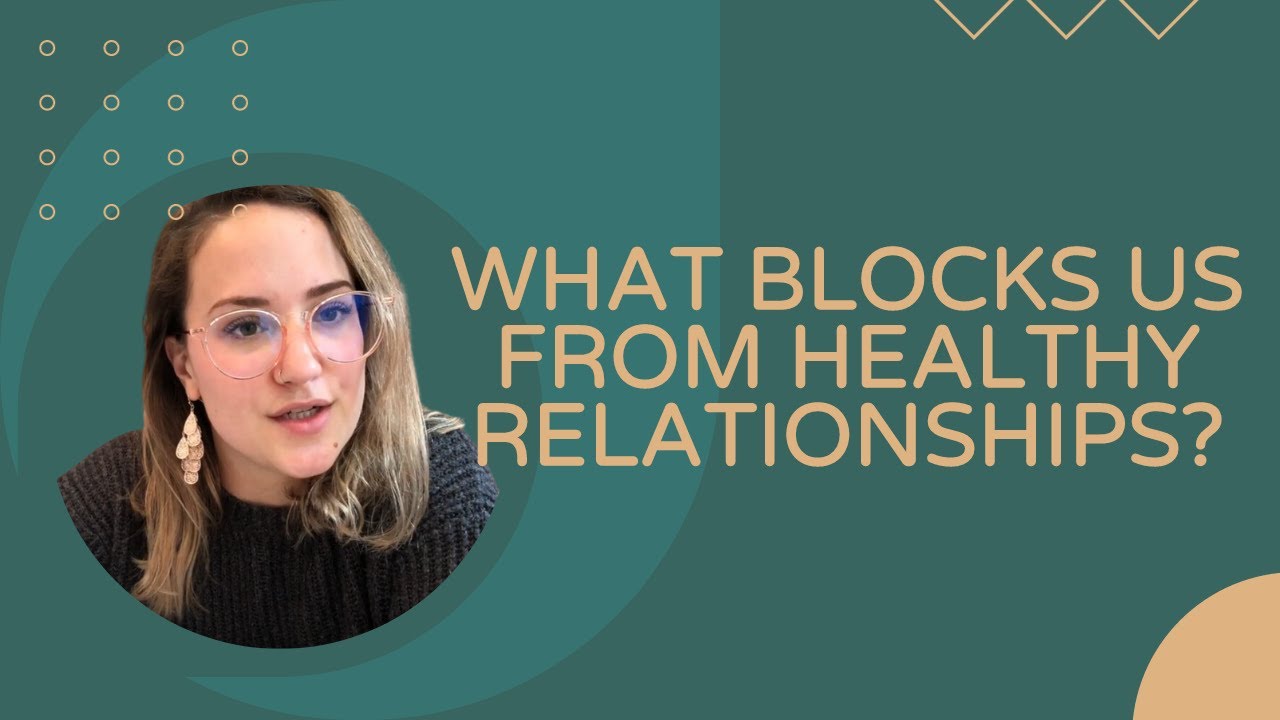
Hannah Rose uses a sun-and-umbrella visual to map what blocks healthy relationships: fear, control, unresolved trauma, core beliefs of unworthiness, attachment styles, and difficulty with boundaries. She recommends writing down your obstacles and working through them deliberately, often with a therapist or trusted person, rather than blaming external circumstances.
Chapters
Hi everyone, and welcome to another episode of Hannah Talks About Things. So today I wanted to give you a short visual aid to help you figure out what it is that's blocking you from getting what it is you want. Now, this is less about external things like a better job, car, money, girlfriend, etc. Although those can all be internal as well. You know what, actually it may have to do with that, but I'm gonna put the focus more internally and emotionally. What is something that you struggle with? Do you struggle with self-esteem? Do you struggle with healthy relationships? Do you struggle with body image, right? Looking at yourself in the mirror and embracing all that you are and saying, I am enough. This is fine. Um, do you struggle with feeling inadequate? Do you struggle with setting boundaries? Right? And for this to work, it would be much more helpful if you have a piece of paper, even the Notes app on your phone. And I'm gonna show you a visual that has really helped me. Um, it's not an original creation of mine by any means, and I don't know exactly where I found it, but it stems from the belief that everything that we're looking for is available to us. Already. And I believe that everything we're looking for is inside of us already. What that means is that just like the Persian poet Rumi says, our task is not to seek for love, but merely to seek and find all the barriers within ourselves that we have built against it. So for this topic, we're going to talk about what is blocking you. Now here you'll see there's this blank sun. I think I'm going to stand up because— oh, this is, this is awkward. I'm going to sit just over here. So we have this sun, right? And on this sun, I'm I'm going to have you fill in what is something that you want, right? And here's me not looking too happy over there holding this giant umbrella. So for the purpose of this, we're going to talk today about what is blocking us from healthy connection. Okay, most people that I talk to and work with really struggle with healthy connection, and what I mean is a strong connection with themselves and with the people in their lives. Often we jump to that place of wanting to fix the relationships in our lives without looking at what is our relationship with ourselves. So on the sun, I'm going to write healthy connection. And if you do actually have a piece of paper or you're using your notes app on your phone, or you're just doing this mental exercise while you watch me talk at you, uh, on this glorious YouTube channel, then I want you to take a second and just think about what is it that you want? What is something about yourself that you want to change or something in your life that you want? I'll give you a second to think about that. So if you've identified identified something that you want, awesome. I encourage you to write it down. What I'm doing right now is I wrote healthy connection in the center of the sun, and now I'm writing things on the rays that can stem from that. So one of them is communication, right? Do I know how to communicate effectively? And with that comes vulnerability, which I'll probably write. Trust. Do I trust other people? Do I trust myself? Do I have self-love, right? Do I love who I am to the core? It doesn't mean do I love every single thing that I do all of the time, But as a whole, do I believe that I'm worthy of love and belonging because I know that I love myself? Do I believe that I belong to myself? Right? What about consistency? Consistent— well, I don't have room for that, but consistency in my relationships. Am I myself across the board? Am I a different person at work than I am at school? I'm not in school, but whatever. Am I a different person with my friends than I am with my family? Do I wear different masks? Right? Do I put on this mask on social media and then rip it off when I'm home alone and I'm looking in the mirror full of self-loathing, right? Am I promoting this image of myself to the world that is not consistent with who I am? Things to think about. So you can write whatever you want. Um, so healthy connection, right? Consistency in my relationships, I think is really huge. And along those lines, authenticity. Am I authentic? Do I know who my authentic self is if I have an identity that's not contingent on outside things, right? What else can I think of with healthy connection? I don't know. So you can write whatever you want on here, but essentially this visual is to show you everything you're looking for is here already, but here you are standing in the shade, not getting these rays of the sun. And so our next task is to write on the umbrella, what are some things that block me from this? So healthy connection. In my experience, there have been numerous things that block me from healthy connection. Especially healthy connection with myself. So I'm going to take a different pen, a different color, and I'm going to write down some of the things that have blocked me from genuinely connecting with myself. One is a general, just like unwillingness to look at the things that cause me pain, right? So I'm just going to put unwillingness, um, not wanting to deal with things, right? Unresolved core issues, grief, trauma, emotional pain. If I'm unwilling to deal with that stuff, that's going to be a major block that blocks me from what it is I want. Another thing that can block me from healthy connection is a core belief that I am undeserving and unworthy, right? I do another whole video on core issues and core beliefs, and it's really important to figure out what are your I am shame narratives, if you have any. I am not enough. I am a failure. I am unworthy. I am fill in the blank, right? I'm a failure. I think I said that already. Uh, imposter syndrome, that can be a really big one. If they really knew me, they would leave. So this fear, this insecurity, this anxious ambivalent attachment style that leads us to want to bring people close to us and then push them away, right? Our attachment styles can absolutely affect all of our relationships. And those attachment styles are created in us when we are kids. And it doesn't mean that we can't unlearn them, but a lot of our habits are formed automatically over time. And to unlearn those habits, it has to be a deliberate process. Deliberate, conscientious. It's a tough word, et cetera. So what blocks me from communicating effectively? I'm gonna put fear in really big letters, right? Fear. And underneath that, fear of what? Fear of losing people, right? Fear of upsetting people. Fear of others' reactions, right? For me, healthy connection, I'm adding this to a Ray of Sun. Healthy connection needs to include boundaries. Can I set boundaries with the people in my life, friends, family, whoever? Am I comfortable setting boundaries? If your answer is no, well, what blocks you from setting boundaries? Fear, right? That people pleasing. Okay, well, what stops you? Fear of what? You know, play that tape through. Often we are— seldom rather, we don't deconstruct our fears. So what would happen if you set a boundary? They would react badly. Okay, then what? Then what? This sounds really kind of cliché and corny, but I'm a firm believer that you can't say the wrong thing to the right person. Of course you can cause pain and hurt someone, but if I'm speaking my truth, whatever that may be, and someone doesn't want to be my friend or be with me, you know, romantically as a result of me speaking my truth, maybe that relationship is not organic, right? I want to be able to take that mask off and to be me truly. And if that's too much or not enough for someone, Maybe the problem isn't me, right? Maybe the problem is that we don't really mesh well and we're trying to force something to work. So what can block us from healthy connection is also fear of being alone, right? Settling for whatever is there. Familiarity. Sometimes it's really scary to look at our existing friendships and relationships and even dynamics with family because I don't want to rock the boat, right? I don't want to change the status quo. This is just how it is. But is your quality of life suffering as a result of your current relationships? And how can you find the line between setting boundaries and detaching while also being present in someone else's life if that's what you choose to do? There's no finite answer for any of these things, but the reality is if we sit back and blame everyone and everything for our quality of life and our state of mind, we're never gonna grow. We're never gonna get anywhere. The reality is that everything we're looking for is inside of us already, but it's our job to identify what's blocking us so we can de— deconstruct those things. So fear is a really, really big one. Also control. Most human beings seek to control, and you may be like, "No, I'm not controlling. I'm more passive." But if you're passive and don't set boundaries, that's typically a result of wanting to control an outcome, right? If I allow you to walk all over me, underneath my passivity is the desire for you to like me and not get mad at me, which means I'm trying to control how you feel about me by being passive. So control can manifest in a lot of different ways. So if you can see, I dropped a marker. So far, this is what I have, right? And so these are some things that can block me from healthy connection. And so this is the first part of like a how-to process. If you want healthy connection, first identify what it is that's blocking you from it. Another really common one is our past experiences in relationships, right? And so we hear people talk about this a lot. Is that we bring our baggage from past relationships into our current relationships. These chairs are really becoming problematic for me. And what that means is that we can inadvertently project our past experiences onto our current ones. So if you were in a relationship where you were shamed for being vulnerable, or you finally said, okay, I'm just gonna be myself and let you in, and that person left or cheated on you, right? Those past experiences can absolutely provide this internal muscle memory of fear. And unlearning that and kind of retraining the muscles and just the pathways in the brain to not have that fight, flight, or freeze reaction needs to be deliberate. And it's freaking hard. And this stuff is supposed to be hard. If you struggle with self-esteem, it's not an overnight process. Right? Maybe one of the things that blocks you from self-esteem is that you're not acting like you have it. Another cliché, but if I want to have self-esteem, I need to start by doing esteemable things. So if I want to feel good about myself, but I'm cheating on my partner and having an emotional affair or physical affair, you know, if I am continuing to settle for a job where I'm treated like absolute garbage and I tell myself, well, I have to be here. Do you though? Is another path going to be more difficult and potentially inconvenient? Maybe it's going to deviate from the path that you had in your mind. Sure. But we teach people how to treat us. And if I'm continuously signing up for a job where I'm being essentially emotionally abused in some capacity, capacities. Like, at a certain point, I don't get to get mad at the people that treat me like garbage if I keep going back. And that goes for relationships, family, I mean everything, right? I have more autonomy than I was taught. We're almost taught that this is what you do and you don't deviate from these paths. And fear of deviating from a path, the fear of upsetting someone, etc., is so ingrained into us like muscle memory. So it's worth looking at what are your past experiences, um, you know, do you struggle with truly trusting another person based on something that someone else did? Or do you struggle with trusting the person right in front of you because they've already broken your trust? That's something to also look at. And not rehashing the past over and over and throwing it in someone's face, but have you and this person really worked through the breaking of trust that happened? You know, asking yourself these questions are super important. So wanting to control, dealing with our past experiences, unresolved trauma and grief— like that whole video on core issues— we need look at what we're not dealing with. If I struggle with being authentic, what's blocking me from being authentic? Like, really play that tape through. And as a result of doing this work, we get to, rather than seek outside of ourselves to find these things, look internally and say, okay, so these are some of my core issues. Now what am I going to do with this? And ideally, you can work with another human being in some capacity, whether it's a therapist, a sponsor, a close friend, a mentor, because we can't think our way out of a thinking problem. Um, even if you are a therapist, by the way, that doesn't mean that you can think your way out of this stuff. We need to still remain teachable and accept help from others. And so now that hopefully you have a list of things that are blocking you, your next step is to look at how to start to deconstruct these things. And again, you cannot do this in a vacuum, and you're not going to change a relationship, uh, pattern by continuously getting in relationships. I was once told that until I stop the behavior, like dating, seeking attention and validation, etc., if I I do that, if I don't stop for a period of time and essentially go through that withdrawal and sit with myself and deal with that stuff, then I'm going to continue to cultivate the same exact patterns in all of my relationships. And age does not equal wisdom always. It can, but sometimes it doesn't. To me, what really can bring about wisdom is, have you done any of this stuff? Like, have you worked on this? Life experiences are fine, but do you learn from them and then change as a result? And so this is an eraser, and I'm now going to erase all of those things that block me from healthy connection, and I'm going to turn that frown upside down. And the thing is, is it's not a one-time process. Sometimes these things can crop up again, but as a result, I'm going to let go of holding the umbrella. I get to look at the benefits of healthy connection. I get to stand in the sunlight essentially and say, okay, and I get to feel super empowered that I dealt with this stuff instead of expecting other people to change and meet me at the level of my needs. What's blocking me? And so, you know, I covered kind of a lot of things in one. But I'm gonna call it a day for now. I'm getting really, really hot. And if you have any questions, feel free to message me or send me an email. Please subscribe to my YouTube channel, and if you don't, that's okay too. It's just there's some perks that come with more subscribers, like, uh, I don't really know what. I don't know. You don't have to subscribe. But in any case, you can subscribe if you want to. You can visit my blog on psychologytoday.com or on psychtimes.com, and I hope you all have a wonderful day. Happy Tuesday! Bye!








