EP 2 Jaden Bales // Wyoming Breakdown
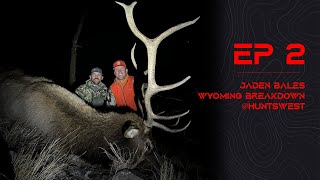
Jaden Bales runs Hunt West, a consulting business that helps DIY hunters navigate Wyoming's draw system and plan long-term application strategies. He breaks down tag types, regional differences, season timing, and recent drought impacts on mule deer and pronghorn, plus the mechanics of preference points and nonresident access rules.
Questions this video answers
January 31st
May 31st
Approximately 84% to residents and 16% to nonresidents
Of the nonresident portion, about 60% are allocated to the regular-price draw and 40% to the special-price draw
About 75% are allocated to the highest preference-point holders and 25% are allocated randomly (when at least four tags are available in that division)
Chapters
Okay, there he is. Send it. Yeah, baby. Keep down.
Anyway, we're back in action, man. And of course, right before we hop on, I and look in the kitchen, and there's a pool of water that's just like. I was like, oh, no, that's not good. Sure enough, like, one of the PVC pipes just, like, came unattached under my sink. And I was like, ah, sweet. So I get a get after that, after this. I've got towels soaking up water now it's just one thing after another.
See, that would be my. That would be my sign to leave Wyoming. It's too cold. It's telling you to get the freak out.
It is awfully. Yeah, it gets awfully cold. But I sure like it, especially as a resident, man. I have all these points in different states, and I always make a point to get out of state for one hunt a year, if not two. But it's really hard because, like, we just have good opportunity kind of all over the place. So, like, I've got these whitetail buck tags last two years in a row that I have never actually hunted because it's on the other side of the state. Just didn't make time to do it.
So if you always grew up in Wyoming, have you born and raised there or what?
No, I grew up in northeast Oregon. For folks who, like, apply in Oregon, they would know it as, like, the Mount Emily unit outside of the grand is where I grew up on a family farm and ranch there. Yeah. And then I ended up in Wyoming after college and took a job here, and it kind of sank its teeth into me. It's. You know, being in Wyoming is pretty dang awesome, especially compared to the, like, hunting opportunities and stuff where I grew up. They were pretty good. They've. They've changed drastically since I left. But this is definitely the place of opportunity as a resident. Oh, yeah.
I mean, is there what, like, is most estate kind of open for deer steel, or is it, like a draw or how's. How's Wyoming for residents look?
Yeah, Wyoming has over the counter deer and elk tags for residents. Those are the region tags that people apply for for both deer and elk. There's a bunch more regions for deer than there are for elk. There's only the three for elk, but yeah, anywhere that there's a general tag in the regulations is where I can kind of go over the counter and run around. There's definitely, you know, a lot of rumblings of trying to change, especially the deer situation for residents. But until that happens, I'm Hunting on a general tag over the counter.
Those are the good old days for us and Utah stuff.
It's.
You can still do it, but it's not. Not near the opportunity you guys have.
Yeah, it's really good. And you know, one of the things that so like especially in western Wyoming where the winter kill was really bad, you know, I think that there's a lot of concern over making sure that deer herd comes back and those kinds of things. But it's like when you go to a limited quota system, you force people to go hunting in that area and in these other general areas in the state, like there's a lot of residents and non residents that are overlooking good opportunities elsewhere. I think it's the same for elk, honestly. But yeah, you'll find a lot of the not talked about zones are like, no one's out there. And it's pretty fun, especially if you're just like, you know, like I. I like to try new places and go to new areas every year, if not a couple new areas every year. And that makes it really fun. It's like a new adventure testing out different parts of the state that you don't normally have a reason to go to.
Yeah, I mean you guys have. It's. It's such a huge state with so much opportunity. Man. Before we get into the. The Wyoming hu stuff to kind of tell us about. Well, I met you through trying to find a lane for capture for Maven and then find out that you have a consulting business for Wyoming. And so just give a brief rundown on that and then we'll kind of jump into what Wyoming has to offer for non resin.
Yeah. So about 2020, 2021, I was noticing there was kind of a gap in the way that consulting services operate currently. There's like quite a bit of do it yourself information. Like you can filter on go hunt and find hunts. And then there's the other side of the equation where there's a lot of folks that can help you find an outfitter. But for the DIY person, there wasn't a lot of help to just get them going in the unit and help understand what parts of the unit they should be looking at to go hunt. So I started messing around in like 2020 with helping friends plan hunts. That went pretty well. And then in 21 I started doing it for random people. And. And so since then I've. It was a side hustle. And then last August I finally was like, well, I'm busy enough. I want to do this full time. So I Quit my nine to fiver and I guided, I've got, I've been guiding the last two falls but I guided a lot this last fall and then basically just made Hunt west my consulting project, my consulting business as my full time gig this year. So yeah, basically folks will pay me to do a session with them on Zoom and break down a unit or talk about tag application strategies for a multi year time horizon. And yeah, it's been really good. People like that kind of in between because they still. There's a lot of folks who want to get out there and do it themselves but don't really know where to start. So that's where I come in.
So is this a full a la carte or is it just a consultant? They still apply or do you apply for them or anything like that?
No, I'm not applying for folks. I'll go through their apps with them like what they should be applying for. But there's a lot of people out there already doing that thing and I didn't, there's a whole administrative aspect of that that I didn't necessarily want to take on. So yeah, like services like Rolling Bones Outfitters or Huntful or Epic Outdoors, those are still the ones. Like a lot of people who work with me have subscriptions to those services and have them do their application. So yeah, I was trying not to duplicate work that other people are doing.
So. Wyoming's apps are open right now for non residents.
For.
Is it just for deer Nelk. What is it? I can't remember.
Deer, elk, sheep, moose and goat are all open. Bison opens later but. And then they have rolling application deadlines. So like the non resident ELK applications due January 31st, deer and pronghorn aren't due until May 31st and then the, the moose, sheep, go, bison is due in between then. So it's kind of frustrating if you're someone who's putting in in January and you don't get your draw results until late May. But yeah, that's, that's kind of how they've set it up. And, and it's, it's like I said, it's kind of frustrating, especially when you're applying in other states because you'll put your application in for Wyoming now, but you'll hear about New Mexico, Colorado, probably even Utah before, in Nevada, before the Wyoming draw comes out. Even though it's the first one you submit.
Why do they separate the animal to draw deadlines for them? Is there logical reason?
Not necessarily. There's, you know, like my speculation was I think early on, the guides and outfitters really like having their clients book with them and put money down on their tag so they get fewer people backing out when they draw other tags. I think that that's a big part of it. And the Game and Fish Agency does make a little bit of money on the, on the applications, just like the insurance or the interest that comes in from those applications. But it was, that wasn't. I don't think that was the primary driver of that choice. And honestly, gaming fish, it's like a small enough amount that they would move it. I think if there was a lot of interest in moving it from the residents. That's where you get into that. Like, there's so many complicated issues going on right now that that one is pretty low on the priority list for most people. So it hasn't been addressed.
Yeah, it's just interesting that the elk are due like at the end of January and the rest you have a couple of months.
Yeah. And they set seasons and tags like after the applications are due, which creates some interesting things. You can modify or withdraw your application based on what they change when they set seasons in April, but it makes it so. Yeah, you don't actually know the tag numbers when you do apply. And sometimes they change on folks or they add new hunts and if you're not paying attention, it can really catch people off guard.
Now that's where service. I can see why yours would be beneficial, especially where you can have some, some local knowledge. I mean, you get a, a severe winter where they have to start limiting numbers and they're not going to give those numbers till after you apply it. Definitely it's going to change the game for your odds.
Yeah, exactly. And the other thing is also the case where they'll add a hunt someplace and if it's a new hunt, like they've done this every year for the last at least three years. They've added some new bull hunts in different places. And if you don't have some on the ground knowledge of like what the elk will be doing in that new hunt, then it would be really hard to want to take a leap on a new hunt. You know, like they added a couple late season hunts a few years ago, two, three years ago, and gosh, they like went for almost no points because no one really knew about them. And I was like. And last year they added up new hunt too. And I was able to put one of my clients in for it because he had like their perfect scenario and he snagged it for like nothing. And I'm like, well that's going to be a 8, 9, 10 point tag this year now that people know about it. So yeah, I mean for someone like me who's paying attention like for my job, it creates some opportunity, but it also is a little frustrating if you're someone who doesn't have the time or ability to like pay attention that closely.
Let's dive into the elk non resident. What, what are some kind of your overview opportunities? How. Because they have a special draw and a regular draw. So kind of go through those for the listeners to understand what they're applying for in Wyoming. And general too is another, another mix in there.
Yeah. So the basic breakdown of Wyoming tags is this. Oh shoot, now I'm gonna say it backwards because one, New Mexico and Wyoming are flip flopped, but it's like 86%. Nope, nope, nope. It's 84% of the elk tags in Wyoming go to residents and 16% go to non residents. Of those 16, it's broken up 60, 40 into the regular and the special price draw. 60% go regular price and then 40% go special price. There's no difference on the hunt like that you draw, but there's a difference in the price. And they're basically just trying to use basic economics to have a high priced option that weeds people out and allows them to draw more frequently. It was kind of the, it was kind of the compromise that they came up with for a guide draw basically because usually the guided clients are willing to pay more money for the tags and they'll have better drawing odds to go more frequently. And, and then the regular price draw is kind of for everybody else. But a lot of non resident DIY people can apply it in the special two, but that's just kind of the way that they use like the free market system to try to separate those out and within that. So you've already talked about 16% of the tags. You divided those up 60, 40. And then underneath that, 75% of each of the blocks of tags goes towards the highest preference point holder and 25% go random. So as long as there's at least four tags given out for that division of tags that you're looking at, you've got a random chance of picking up a license in Wyoming. So there's always that and that helps a lot. Especially when you're looking at the general tag. There's limited quota tags which are the ones that are limited for residents and non residents. And then there's the general opportunity and they set tag numbers for the General opportunities every year and people get a all throw in for that. That's pretty much the one that people have looked at the most as like an opportunity to go more frequently. And last year they implemented the new region system for it. So you ended up with an east region which is mostly private land. You got a south region which is kind of a lot of public land, a lot of elk, but not necessarily any backcountry. Then you've got the whole west, which is really just the whole western half of the state. And that's known for kind of big bulls, big backcountry, gnarly terrain, grizzly bears. Like it's like the classic kind of side of Wyoming. And within that you ended up with a bunch of tag preference point breakouts that were slightly different. I think they'll start separating a little bit more in the coming years. But basically they all took five points to draw them in the regular draw. And then they took varying levels in the special. For instance, to guarantee the tag in the west region last year took five points in the regular and it took five points in the special. Different, there's like a sub preference point level if you're in a party and if you're in a party less than five points in Wyoming you were probably able to get it in the special. But that's kind of getting into the weeds. The moral of the story being sometimes the special price is either the same or just slightly better drawing odds than the regular price. Even though it's a two thousand dollar tag versus a seven hundred tag.
And that's the whole point of the special is just to, you know, people that are serious to give them a better opportunity. So that's interesting.
The unit I drew last year was a type 9 archery tag. So there was no rifle season attached to it. And I was looking at the drawing odds for that recently and like in the regular price draw it took 10 points to guarantee it. And in the special price it took three points to guarantee it. And I'm like, if you ask most people if they'd pay $1300 to have seven years of their life back, like I think they probably would, you know, like, so that one, it worked, right? That one definitely gave a good benefit to the special price people. But depends on the unit. And that's kind of the tough part of playing that game is it's not always that big of a discrepancy.
You mentioned the types, which is, is it type one that if you draw a rifle you can, you go. Can go hunt archery too?
Depends on the type one, because Wyoming basically has like a ground up management strategy. Each region and each even like district within a region chooses the season dates. So like in the Bighorns, where I had my type 9 tag, you cannot hunt the archery season with a type 1. But if you get a type 1 in other parts of the state, central part of the state, by Casper, Laramie, whatever, you can hunt the archery season with those. So it just depends. Now when you have a general tag in your pocket, doesn't matter what region. Those almost exclusively have both archery and rifle opportunity. So you get both seasons with most.
Of the general tags in the archery season. Is it a rut hunter? When does the season dates fall for archery?
The majority of the time it's September 1 to 30, and if it's not September 1 to 30, it's because a rifle season starts in September at some point. So like some of them west region units, the archery season will start September 1st and end on the 25th because the rifle season picks up on the 26th.
Is the how's the archery route hunt? Is it pretty active on a lot of the units with archery, or is it kind of like here? It's kind of. It's just changed. It's not as consistent as it used to be.
I think it just depends on where you're at. Like, I've had better rut activity in a general hunt in September than I did in my draw hunt last year. But maybe it was a weird year, I don't know. So it just depends on where you're at. I like the idea in Wyoming that you can find places that are spot and stockable too. So whether you're in the alpine or in some burns or whatever the case is, you can try to play that game as well. But yeah, for the most part it can be really good. The biggest piece is though, like, and people forget this when they get a tag for five points, but it's an over the counter tag for residents. And so there's quite a bit of activity. There's quite a bit of few folks out there, so you still have to work to get away from them and get into elk that aren't being buggered with. And even then, you know, you can get it away from elk and that that are bugling a lot at night and then they shut up in the middle of the day and you kind of have to make a game plan around that. I've actually just basically made game plans from here on out for elk to be quiet. And when they're not then I'm pumped, you know, like 99 of the time. They're not. They're not ripping like you see on Primos. And even in that limited quota unit I had last year where there was only 100 archery tag holders, I was out there for 14 days or 13 days, and we only had two days of really good bugle activity, but we were prepared for the that. And we're doing a lot of spot and stock in some burn country and some. Some kind of parky stuff. So, yeah, Wyoming is one of those places where I think you might expect a different experience because of the points you put in. But it's still hard hunt on this big country.
Wyoming, it's deceivingly big country. Do you want to get into any specific units, or is that something you just want to have people direct when they talk to you, then you'll get that information out Like, I don't want to.
No, you're fine. I don't mind. I think. I think one of the important things that people get into a pickle with is like, for instance, they would draw the east region because they see that the east region, and we can maybe talk specifically the generals. But the east region is built basically for good numbers of elk harvest. And so you've got some September rifle seasons, October 1st rifle seasons, and they run like through the end of October for any bull. And what you'd see, you'd look at that and be like, oh, dude, we're going to find some running bulls. We're going to get out there and get after it. And unfortunately, it being predominantly private land, pretty much all of the bulls that you're hunting on, on any of the public chunks out there are coming and going often, and they're like, not like, consistently in a place where you can actually kill them. So that's like a big piece of the east region. That's kind of tough. The other side of that equation is like, the east region, there's, like, not much water and there's not much shade. So once you do get something killed, there's a logistical challenge of making sure you get it out without. Without losing any meat, you know, especially because most of these public land places, you're weaving your way around private and public for a couple miles to get back into where the elk are. So that's a big piece of that equation. As people look at the better drawing odds over there, you kind of have to know where some elk are that you want to chase. Otherwise you could spend a lot of time driving around the prairie and not see any elk.
How was the Wyoming private work for that eastern side? Is it. Is it. Do they have a program for. For hunters to. To gain access or is it kind of a knock on the door hope you can get on a ranch or how does that work for that private?
You could probably knock on some doors but for the most part a lot of that's leased up and the. I would say you, you'd be remiss if you didn't acknowledge like part of the region reason why they went to the regions is so that those outfitters in the east side could get more folks drawn earlier and increase the licenses out there because there just wasn't know when people are drawn a statewide tag as a non resident. A lot of that east region wasn't getting hunted and people weren't really looking at it because there's all this stuff this, all this public land in the south and west. So I think you'll find like the vast majority of the public land or private land in the east is leased up and you have to manage that. But you could still find some old timey ranchers or whatever. Especially in areas where elk are not can. Like if they're. If they've moved in there in the last 10, 15 years then you're going to find some opportunity to get on to elk. But if they've been there like there's some stuff up by Gillette where elk hunting has been pretty good for 20, 25, 30 years.
Those are probably least up does because does Wyoming have. Do they issue landowner tags that the outfitters have access to outside the pool or.
No, the landowner tag system is only for owners of the land and that's actually something that's kind of under contention and is going to be looked at this year in 2025 is how that those get given up because some corporations own land and can give them to their shareholders basically those tags. But if you're not a shareholder then you don't. You can't get one of those. But most of the time it's basically like you. Each landowner gets two tags if they have enough property in the, in the unit and they can only be used within the family. That's the, that's the vast majority of the landowner tags.
Cool man. Anything in on elk that people should know about before we jump on to me lease?
I think the number one thing is. Yeah, just setting your expectations right. I write quite a bit for Eastmans and I did this elk expectations article a couple months ago now and it was basically like Whatever you think your effort level is going to need to be to get that critter that you're looking for, like, up it by one. So if you're a cow elk hunter and you want to kill one from the road up that by one, you're gonna have to, like, work to find some elk away from a road system and, like, where they're not getting buggered the majority of the time. If you're just wanting any bull, again, take that and like, add one. And if you want, you know, a big bull, boy, you should expect to spend a lot of time and. And have a lot of resources, you know, either horseback or, you know, hiring a guide, an outfitter, or paying for a trespass fee, something like that, to get into that next level that you're looking for. So that's kind of my cautionary tale. I think everyone comes out with one expectation or their expectation one level lower than their effort.
Yeah, especially the people in the Midwest that don't understand the western hunting. That's where I think that they. There's their biggest downfalls. They're not prepared mentally and physically and stuff. So because it's. It's not just driving down to the farm and going in the tree stand, man, it's some serious. So you mentioned winter kill off. Did that affect elk or is it just on the mule deer side or what?
I don't think. Yeah, I don't think we really saw it make any sort of impact on hunting for elk. Now. We probably lost some elk to winterkill, like, duh. I think that that's. It would be hard to say that you didn't win that hard. 22, 23 winter. But it was not really in a noticeable fashion in any way. You know, it was kind of one of those things where, like, oh, nope, they still seem to do pretty good. The where you saw the winter kill show up in particular was on the mule deer and on the pronghorn. And related to pronghorn. Just the side note, like, Wyoming had a pretty hard winter and lost a lot of pronghorn. Especially the winter coupled with the two years of drought prior to that was pretty hard on them. And they cut tags drastically, but they cut tags from like a thousand in a unit to 550 in a unit. There's still a ton of pronghorn out there. So Wyoming really is like. And I would say the same for deer. When the deer hunting is really good, it's really good. And now when it's, you know, curbed a little bit, they are really Pretty conservative and how many bucks that they keep on the landscape. And it can still be pretty dang good, especially when you're comparing to other states where they manage a little bit for lower, lower buck numbers.
How's the quality been kept up in Wyoming? Because here in Utah it's just gone. It's gone kind of down a lot, man. Quality's down. How is it in Wyoming?
You know, I think especially the ripple effects from that winter were pretty rough. I get the great fortune of guiding for extreme outfitters and they do. We've done some commissioners tags and governor's tags, deer hunters. So we get the opportunity to look over a whole bunch, a bunch of deer. And I think you notice like right after the winter everything is pretty shrunk up. Like a 170 buck was more like a 150s type buck. This last year I think we brought that back up another 10 inches. So like we're not back to where we were before the winter, but we're getting, we're getting on the right track. I think the nice thing is, is, you know, outside of those kind of premier areas that people always look, you know, the deer didn't really get hammered like maybe the headlines had suggested, right where I, I hunt a lot. I scout. I scouted 37 days last year because I'm kind of looking for a unicorn and I didn't find a unicorn, but I saw a lot of really good like three and four year old deer and some good four points up and coming. So I don't necessarily think, you know, 25 is going to be a horrible year for deer hunting now that we've had a couple years of coming back from that winter. Especially when you think about like what's. What does a winter take out? Winter takes out the oldest and the youngest and then like the, the mid age stuff usually stays and can survive that winter. So the deer that were 2, 3 and 4 years old from that 22, 23 winter are going to be 5 and 6 or 4, 5, 6 now. And so we're going to have some bucks that are, that are getting some pretty decent antlers, especially if we can get the right moisture. Last year we had a hard, hard time and you saw it mostly especially in elk. We had, it's like the weather shut off in June, so we didn't hardly have any good growth in, in July and August. And gosh, like in particular you saw it in. The bulls were breaking main beams, they were breaking the back ends, they were breaking all sorts of stuff. I think that was probably more due to the nutrition than anything. So outside of the big mountain units, that plays a big difference. And it's a lot more like a desert type hunt. When you're looking outside of the mountains of like how much the rain and precipitation in the spring, summer like has an impact on, on antler growth.
You don't think of it as Wyoming as a, as a, you know, a drought, a unit that or a state that could have any drought issues, but it for sure affects them.
Yeah, man. And we went. It's kind of a bummer. We went straight from that hard, hard winter. Obviously you don't have a drought after a hard winter like that where you have big snowpack. And then it was like in all of 23, we had a decent amount of rain and then it shut off and we had a really dry winter last year and it just bled right into this whole last 20, 24. And we're all, all but back in a drought as far as that's concerned. You know, on the maps here, Wyoming is 92% in drought right now. So it's. It hopefully the snowpack, we get good snowpack and it just isn't on the valley floor. Right now we're looking pretty good. But as long as it stays like it's been, it'll be a good combination of water in the mountains and not too much on the, on the valley floor. We'll just have to see how she plays out.
So where do you recommend guys put in for muleys?
The number one question I have of folks who put in for mule deer is like what kind of physical shape are they in and what kind of time can they dedicate? Because the, the season structure in Wyoming is different kind of all over the state. That's very rare that you get any November deer hunting. So basically you can think of like, if you can scout in the summer, I would be looking at a lot of the stuff that has a October 1st or September 15th type opener. Make a trip in the summer, find out where some bucks are at and then if you don't have that opportunity, then look at the late season stuff. The, the end of October especially where you get some better weather and deer get on their feet and start cruising around a little bit more. Because I think that makes a bigger difference as to whether they find the mature bucks that are out there more so than necessarily the type of unit that they're in. You'll notice like the Wyoming range, the hoback, the stuff up by Jackson and Pinedale that is really famed is doing a Lot better in the north end than it is in the South. So like those region H guys are doing pretty good still. Friends of mine that live in Jackson and Pinedale still found absolute slammers while scouting last year. So it takes more effort to scout than it did three years ago, four years ago and find that next level buck. But they're still up there and it's, it's due. I think you've got good deer numbers even when things are down. And you couple that with just like a really, really good habitat, you get bucks that are throwing some big antlers at 4 and 5 years old compared to like the drier parts of the state. You'll kill bucks that like I've got 143 inch 3x4 buck that I killed outside of Lander and I was like, man, I hope he's three. You know, like, I was like, this is a pretty small. And I had him tooth age and he was six and I was like awesome. Like, I'm glad we killed a good older buck. But just goes to show, when it's dry, their antlers really don't reflect their age all the time.
Oh for sure. Especially hard winters is hard for good growth. They're run down and stuff. One thing to mention, in Wyoming, if it's Will, there's no wilderness in that the region G and H is there? Because if you're a non resident, you have to hire a guide. Correct?
There's some wilderness in H for sure, and it's some good. Some of the good buck country is in wilderness areas in H. But there's a lot of stuff that's outside of it too. The way that works is for folks who don't know and it's big capital W wilderness. So it's federally designated wilderness that you have to either have a guide like underneath an outfitter to go into or you have to have a resident guide. And that can just be a friend who's gone to the game and fish office, got your license number and they give you a little slip that says, yeah, you can go into the wilderness with this person. So that's how you can manage that. Wilderness study areas are exempt, actually. So if you see a wilderness study area, usually on BLM land, you can actually go into there without a guide of any kind as a non resident just because they're not federally designated. So that's an important kind of loophole for guys who want to get away from roads and get away from pressure but don't have a guide to go with.
Is there a Better opportunity. Think in the wilderness or is it, is there less people? Is it more, more game? Like as a non resident. And you sit and think, well man, if there's, if it's wilderness, then maybe there's going to be less people and if I'm willing to work, there's going to be more opportunities. That kind of the case or.
No, I've never killed an animal in the wilderness in Wyoming. So I, it's one of those things where I think it's a grass is greener type situation for guys. Now I've, I have done wilderness hunts where my like friends and buddies or whatever have, or clients have killed in the wilderness. Right. Like there's good hunting there for sure. But I don't look at the map and go, we gotta go to the wilderness because there's no non residents there. Goes back to that thing of like, the tag allocation is, is heavily weighted towards our residents. So residents don't think about it and they're just going to kind of go where they want to go. The only time I've seen anybody, any non residents pushing that is like we were half mile inside a wilderness area and there were some resident non residents that were parked on the boundary hunting deer. And I was like, I mean that's fine. But that was the one time that I was like, oh, this really benefits me because they couldn't, you know, we were back in there and they couldn't go in there. So. And we killed a buck right underneath them. So it was pretty fun. But that's like the only scenario. I mean it's, it's. I, if I was a non resident in the majority of the state, I wouldn't worry about whether or not you had wilderness access. Um, that gets more critical, especially up around Cody. There's some closer wilderness that's closer to roads around that, that Cody country. And in particular for deer and elk. I think you might consider that before.
You apply there because it is for non residents. Even me in Utah and having a history of hunting is still like, man, I want, if I want to go on an adventure and get away from people's at wilderness, but I don't want to go up. There's no opportunity. That's just. You're just wasting time. So that's good to know.
No, it is. And it's. There's some definite big backcountry areas that aren't in capital W wilderness that people can find too. So it's kind of funny though, if you just get creative like that. I think you'll find ways to get away from resident pressure and not be in the center of the wilderness. Because a lot of times especially I'm talking like the Cody and Dubois and Jackson areas, the main trail systems go straight to the big wilderness and you'll find the only the residents that have horses, they're there, you know, so it is kind of a highlighter for those kinds of guys. And that's where, you know, if there's the better trail systems are kept up is in the wilderness. So I would definitely be considering that.
If you're looking cool, man, let's. Well, actually, before we jump to pronghorn, when's the, the deadline for non residents to apply for mule deer in Wyoming?
That's May 31st and it's actually the same deadline as, as pronghorn. And the cool thing is we kind of touched on this with deer or with elk. But the deer application and pronghorn applications are due after the season settings. So you can keep an eye on. You'll get the latest regulations when those apps are due. Yeah.
So do you do much with pronghorn?
I always have a pronghorn tag in my pocket. Now as a resident, I'm really lucky and it's a completely random draw. So we put, I always put a hard to draw tag down first for pronghorn and then an easy to draw tag for second choice for the majority of my non resident friends. Those second choice tags for me take two or three points to draw. So it's been kind of fun. I've been. I've never gone to the same pronghorn unit twice and I always, I always make a trip and get my pronghorn for the year. A lot of those hunts, especially the easy to draw hunts, man, they are kind of all over the board based on the kind of access you'll find or the kind of pronghorn numbers you'll find. I did this backpack trip for a pronghorn in 2022 just to say I did it and there was not many goats in that unit. And I was like, oh man. Like this was. And I shot a small one, man, way back in there. And I was like, holy cow. I wouldn't probably recommend that one for non resident at low points. And then the year following in 23, I shot my best pronghorn. I've had some good tags, but I shot my best pronghorn on a second choice unit in eastern Wyoming. So you get like.
More from Jaden


Bulls, Bears And Bows With Jaden Bales | Eastmans' Life of A Bowhunter Podcast #30