Episode 240 - The progression of a hunter
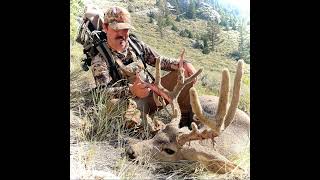
A recorded YouTube episode (Episode 240) featuring Jaden Bales in conversation with a host about hunting practices, gear, and experience. The discussion moves through weather and snow impacts on deer/elk movement, practical gear care (waterproofing boots), layering strategies for different hunting styles, tactical choices (when to move, call, glass, or sit), the role of time-in-field vs. podcast/reading for learning, and advice on creating and pitching hunting content. The episode includes sponsor ad reads (PenFed, Mint Mobile) and ends with promotion for Wyoming Wildlife Federation fundraising shirts and the Muley Monday podcast subscription.
Questions this video answers
$5 per month
Friday, October 15th
Open your account with just $25
$15 a month
End of October
Chapters
It's time to get your checking account to Xero. With free checking from PenFed. That's zero ATM fees, zero balance requirements and zero time spent waiting for your paycheck to direct deposit because you can receive it up to two days early. Open your account with just $25 and see how big zero can be. Apply online today at penfed.org freechecking early direct deposit eligibility may vary between pay periods and timing of payer's funding. To receive any advertised product, you must become a member of PenFed insured by NCUA.
4 inches of snow is like new for this time of year, right? Don't you get some early storms?
Oh yeah, we. We've gotten some spitting of snow last couple weeks. This is the first like real snow which for deer and elk hunters, especially deer hunters, this snow is just money.
Yeah. I remember when I was on that mule deer hunt last year. Everything was hot and then as soon as it snowed, things got moving. I was amazing. How many mule deer came from so many different areas. Like they just came from anywhere. I don't know where they came from but all of a sudden they were just everywhere. Nothing huge, but it was just, it was crazy.
They're just hide and go seek champions and people don't give them the credit.
Yeah, they don't want to be found.
They don't get found.
Not to be confused with Sasquatch who is the current record holder. But yeah, they're pretty good.
That's. That's true. They're on. On four legs. They're probably in top night category.
So I'll just do. I have always have to press record. So I just recorded that. That's gonna be the longest intro or the longest pre intro. Got Jaden Bales back again. Always great to have you on man. Thanks for being on here. Yeah, I just had.
Thanks for having me on, man. I like catching up.
Chad Riker on yesterday. I recorded one with him and I think whenever I talked to you two guys I have like one question or one thing that I want to make sure that I hit. But other than that I'm just like, no, this is going to be. There's no need to have a whole bunch of questions because it's, it's. It's on.
Yeah, well that. And that's what I think I've said before is like as your Wyoming correspondent, I feel like we've got enough team chemistry here to, to just kind of COVID some topics that I think, you know, might be valuable for other people and also catch up so that's the fun part, right?
Yeah, for sure. So when you, when you are talking about your snow, do you have like that. Is it the thin, wispy stuff and.
Then.
Later on does it get a little, little more wet or is it just kind of that thin, wispy stuff at all the time?
So right now it's coming down and it was 28 degrees. So today and it's supposed to warm up to the low 30s. It's gonna be pretty wet. It's gonna be kind of, kind of coastal style wet snow. But when you go up high, I mean, it's going to be. It's going to be dry and fluffy and powdery. So this is the kind of stuff right now, like anytime you get into that 30 something degree weather where it's snowy and rainy, that is just like a. The boot testers dream. Because I swear that every any day you're walking around in this stuff, you find a leak in your boot somehow.
Yeah, that was kind of where I was going with it because you and I have talked about coming up here and every time that I'm. You were talking about your boots like in the muskegs and how they work. And every time I'm walking on a muskeg, I'm like, dude, you got to go rubber boots. You just have to go rubber boots. And then when I was down there a couple weeks ago, walking around and there was a little bit of sleet, little bit of rain, and then walking through the grass, you eventually just. It just water works its way in and then your feet are just wet for days and days and like mine were and just did. Did not get it. Smelled terrible. Absolutely smelled terrible. By the third day of having wet shoes then or soaked shoes. And I don't know if it's soaked wet shoes. A little less wet shoes than damp shoes. Every day for, for three days. It just, it made my. My feet smell terrible. Horrible.
Oh yeah, it's terrible. And if you don't have a way, like if you're camping, you don't have like a stove or something to dry them out at night in the wall tent, like it's dang hard to get to ever get back to neutral. You're always fighting, coming back from. From your cold feet. So that's good. That can get really gnarly on your feet too. Like it can really tear you up.
Oh yeah. Yeah. Even with even wearing rubber boots up here, the. Either the Grundin's or the extra toughs you walk around for a couple days in that and your feet don't really get dry. They kind of get shriveled up and it's not, it's not exactly trench foot, but it's not exactly good.
Yeah, for sure.
What do you use for like a cover or a coating or something to protect the leather or to keep things waterproof? That's the, that's the longest way that I have ever gotten to such a simple question.
Dude. Nik Wax, their Nick wax has a leather and suede kind of like wash on waterproofing. There's also just a bunch of different types of waterproofing stuff that Nik Wax runs. Um, and this actually came from, came from kind of back in the ski shop day as we would. I worked at a ski shop in Eugene, Oregon, which is, you know, dang, dang wet and everything. And you're trying to keep waterproof all the time. And the Nik Wax, I think was kind of the best all around stuff, like the best, most reliable. I think that you could also oil your boots, you know, with. I know Kennetrek, for example, sells their own oil compound that you rub into your boots. I think it works fine, but I do think that the synthetics probably last longer and do a better job. So unfortunately, like, it would be nice if like all of the good, the good oils, like were the best sell the market, but I don't think they are, personally.
Yeah, I went with. I go snow seal and it. Okay, it, it works. Works pretty well as well as certain things can. It just seems like, yeah, it's still gonna happen. It's like, yeah, that's good.
That's good stuff too though.
Yeah. So what is, how does your, your gear change and how often are you out camping away from like a vehicle? When I was down there with Abby, every day that we camped, it was next to the car and we just made long treks during the day and we came back. There was one day that we had a fire in a ring at one of the fire camps. So it wasn't, you know, illegal or anything like that. It was the day that she shot a grouse. And so we picked up the grouse, which is pretty nice. But what are you, what are you taking back in there for those days where it's super cold in the morning and then it's kind of not really hot during the day, but certainly nice and kind of warm as long as you're out of the wind. Like, do you take a whole bunch of different stuff or is it just like, you know you're going to be cold and you're just gearing for when it's going to warm up, dude.
I like to think of it like from the style of hunting that I do, first and foremost, right, because if you're out there chasing elk and you're running ridges all day long, you're going to have a different, you're going to have a different layering system than if you're going to go up to a glassing knob and sit there all day. So for me I very much so. It's, it's a lot like the similar kit that I've always ran all, all fall. But basically I just add an insulating layer. So let's just say for craps and giggles, like if you're running a synthetic like thin layer as you're kind of a puffy in early September then into October, I swapped that out for like a down, like a lightweight down jacket. You know, like the Brooks down from First Light and like the Grumman down from Stone Glacier are like the two that kind of fit that, that mold. And then I always throw in like I look at the weather, always look at the weather. I'm a weather fanatic. I don't know about you, man, but you, you probably, you probably just plan for shit weather every day.
Yeah, it's not even, I don't even know why I look at it. It's going to be rainy and windy.
So I always like to like see if it's going to be. If it looks like, oh, clearly a storm system's coming through, then I'll throw in my rain jacket to put over the top of that. Like it's like a Gore Tex 1 1/2 layer jacket from outdoor research. But then if I, if it's not raining then I always just have a soft shell to put over the top. Something like a windbreaker that might keep off a little bit of like, of a surprise rain or something. It also just keeps that down, keeps that down from getting ripped to crap when you're trying to change glasses, spots or something. But anyway, yeah, I basically just go from a little bit like more synthetic, like thinner mid layer to a full on down puffy plus an outer layer. Yeah, I don't do anything with my pants, do you?
I actually didn't bring a rain pants down there, which is stupid. Well actually it's, it's actually I tore up my rain pants to the point where I couldn't use them anymore and so I was either going to bring down my rubber bibs that I use for the rut up here that's It's. It's a thinner rubber, but it is definitely a rubber. And it's great because you don't have to worry about when you're sliding down part of the mountain or you're, you know, going through all the brush like you're not going to tear it up. It's. It's so nice. But not having rain pants was. Was tough down there because when it started raining, then I got these pants at the De Havilland Stone Glacier, so that it's not waterproof at all. But, you know, it doesn't exactly soak in real well. So I was not as prepared on that one. But the thing that was kind of. I brought my puffy pants. I never put them on. I had the puffy jacket, and a couple mornings it was really stinking cold. And you get out of the tent and it's really cold. So I had the puffy jacket on and. And I hiked in that. And I'm always paranoid about that sweat layer because up here, once you get sweat and you get wet, like, you start to, you know, you're on the hypothermia clock. But down there, I found that it's so dry, if you unzip and kind of vent it out, like, it's like the moisture gets sucked out, too. So it's just kind of a different program that I'm not really used to. And I don't get to use the puffy a whole lot up here because it is so wet. And so if that thing gets wet, it's not. I have a Sitka one, which is nice. I bought it on sale. It came from somewhere. I don't know if it's like, I checked the logo. You know, you can. When you go down south, you can go to these areas that they sell Oakleys that are actually, like, oaky. Like, it smell. It's, it's. It's a knockoff brand. I was like, is this really a knockoff brand? Because this is a pretty good deal on this. On the Sitka jacket, it's like, is it really a teaser, like Scylla? What is this? It seems awesome, but I don't get to wear it a whole lot because it is usually so wet whenever it's cold.
So.
Yeah, it's. It's just different because there's so many things I thought I wanted to have because it was cold. And then, man, if we shoot an elk, I got not a bag full, but a couple extra pounds to have in my bag. And then we're packing this elk out, which never happened, but just an interesting being in such a cold but dry climate versus up here where it's a lot more damp and then figuring all that stuff out.
Yeah, totally, man. And the other thing of it is, is like I, I don't think folks give themselves enough credit for how much body heat they put out when they hike. You know, like, man, I, I have such a hard time putting anything on more than just like a base layer and maybe a soft shell outer or something like that when I start hiking in the morning down to 30 degrees or 20 something degrees. Like, I also, you know, if, if it's chilly and I always say, like, be bold, start cold. Because by the time you're 100 yards up the road, you're going to be like. Or up the trail you're gonna be like, ah, dang it, I gotta shed layers now. Right? So that's the one thing that like, I, I think that layer management is the hardest thing to dial in. And oftentimes the best solution is to be comfortable at the start or to be uncomfortable. Yeah, at the start.
I like quarter zip, fleece, things like that. It's so nice to be able to have that down. So as you are like hiking, you're getting that cold air in and so like your chest can almost feel cold, but the rest of you is warm. And certainly you're back with no circulation because you have to pack on. That's going to be sweating. But it's nice to be able to have, have that. But just. Yeah, it's going to be levels of hopefully just discomfort rather than full on misery as you're doing that stuff. But.
Yeah, for sure.
Styles or something that Abby and I were talking a lot about hunting styles and we, we were thinking about, you know, when we were.
Oh, not related to gear.
I got no style.
Okay, well, we were already talking about. And then you and I were talking the other day, like I shot an antelope in my blue jeans the other day and that was, man, that was a throwback. That was great. But that's what I thought. I was like, styles. I was like, yeah, you've got the blue jean guys, you got the sick guys.
That was, that was pretty funny. But I was thinking back to the. What I made a comment about if you were. It was if it was a 1980 brand of Levi's. Like that was back in that sturdy denim. You know, I shoot, I don't even know if I could wear some of those old jeans anymore because now there's so much of that Synthetic. And the spandex and stuff in those jeans, they're a lot more comfortable than they used to be. I can't imagine the chafing and I can't imagine the just discomfort that would come with wearing the old true denim jeans. And they look at those old timers who were riding horses with those things because you kind of had to. Right. You had to have a sturdy denim.
Like. Yeah.
Skin to just be like, like bottom of foot type skin in certain areas. And it's oof. That's not me.
After years of fine print contracts and getting ripped off by big wireless providers, if we've learned anything, it's that there's always a catch. So when I first heard that Mint Mobile offers premium wireless Starting at just 15 bucks a month, I thought, what's the catch? But after talking to them and using their service, it all made sense. There isn't one. Mint Mobile's secret sauce is that they're the first company to sell wireless service online only they cut out the cost of retail stores and pass those sweet savings directly to you. For anyone who hates their phone bill, Mint Mobile offers premium wireless for just 15 bucks a month. I was hesitant about having to get a new phone and a new phone number, but. But with Mint, you can use your own phone with any Mint Mobile plan and keep your same phone and your same phone number along with all of your existing contacts. Mint Mobile gives you the best rate whether you're buying for one or for a family. And at Mint, families start at two lines. All plans come with unlimited talk and text, plus high speed data delivered on the nation's largest 5G network. Switch to Mint Mobile and get premium wireless service starting at just 15 bucks a month. To get your new wireless plan for just 15 bucks a month and to get the plan shipped to your door for free, go to mintmobile.com waypoint that is mintmobile.com waypoint Cut your wireless bill to 15 bucks a month at mintmobile.com.
Waypoint no, no, it's definitely not it. And I actually dealt with this question when I was on the search and rescue team in Laramie when I was living down there, because these old guys, like, we had a horse team that was part of sa and the old guys running the horses were like, well, I can't wear synthetics if I'm gonna ride a horse because you just get the crap beat out of your legs. And I was like, wow, that's a really excellent point. I got, I got nothing for you. Like, they just have to, they just have to, you know, if you're working on those kinds of constraints, you just have to manage your moisture better and understand when you're about to. When you're in danger zone. Right. When you've gotten wet and you need to, like, really be cognizant of what your temperatures are.
Yeah. I'm teaching Into Thin Air with my Adventure lit class, and I love that book. Looking at the difference in technology, even from 1996 to now, things have changed so much. If you look at the gear, it's that old, huge, puffy North Face type technology. And things have improved so much from there. But if you look at the first people who are going up Mount Everest, or at least trying it, the weight of it, or, you know, reading Endurance, the Shackleton adventure down there in Antarctica, when they just had this, they were always wet, but it was just that wool that was able to still stay dry. But I can't even imagine the weight of that. And, yeah, totally. Gear, it's. It's changed so much in order to.
Do the same things that we do today. I mean, I think the moral of the story is, like, people were just way tougher.
Yeah.
And. And didn't have the time constraints. You know, like, if they had to go warm up and they had to build a fire or like, I'm thinking about hunting in particular, and they had to go dry out their stuff over a fire at camp instead of hunting that day or whatever the case was. Like, that's just. They took the extra time.
Yeah.
We don't take the extra time. I don't think.
Yeah. I. In the back of my head, I. I'm dreading. And it happens all the time, but I'm just dreading the moment where water finds its way in and my socks are wet, and I'm thinking, gosh, I'm so soft. I'm so soft. Oh, are your feet gonna get wet or you're gonna have wet socks? Poor guy. You know, just. Come on, man. Stop being so soft.
That's exactly right. Yep. Yep. And. And I will say, though, like, if you have the option to not do, like to take care of yourself, you should. If you have the option to be comfortable, you should be comfortable. But being uncomfortable shouldn't ruin your entire hunt.
Yeah. There's. There's no reason to invite unnecessary discomfort just so you can tell other people. That's just stupid. But, yeah. So different style here. Style of hunts. When Abby and I were down there, she had read a lot of stuff about elk hunting, and we'd both talk to you, and you were giving us tips, and I'd. I'd taken the. The Cory Jacobson course and read all that good content and then listen to a whole bunch of different podcasts and stuff. And people say so many different things, and you have to figure out what tactic to use at what point. You know, you have. They can't tell you exactly what to do every time. There's no one secret recipe. It's the same thing with blacktail hunting up here. You don't know what you're gonna have to use. And so you kind of have everything in the brain and you try to utilize something. But when you're not hearing stuff, do you just keep moving or. We weren't hearing any bugles, but we knew that there was some elk around. So, like, do you go somewhere else to try to find something that's bugling? And that was kind of the Corey Jacobson tactic is he just keeps moving until he finds a bull that's bugling. And so that's the one he's most likely going to be able to make a move on, rather than the quiet ones and trying to sneak up on something that you think might be there. And is that a waste of your time versus going high versus low versus. Yeah.
What.
How do you. It's impossible to really tell, but do you just kind of go with the gut? You're out there elk hunting and you're thinking, you know what, this is the time to glass and, nope, I'm gonna go over there. I'm gonna go over there.
I think the biggest. The biggest thing. And I actually was just talking to Jess a lot about this because there's undoubtedly a lot of styles that work. Like, there's no way that you can say this is the only thing that you can do to kill an elk as our example. Right. Like, you know, I think it. You have to play into. You have to play all of the factors into the game. So if it's the early part of September, you don't know where any elk are at yet, and you haven't scouted, like, let's say, like Abby did. Right. It's probably worth it to be on your feet, move in and call in and trying to get something worked up and covering miles. Right towards the end of the year, you know, we were. Me and some buddies were hunting in an area where we saw elk. We knew the elk were there, they were bugling, and, you know, we were basically, like, taking a slower approach, and we're like, okay, we're going to wait for the wind to get right, and then we're going to drip, like, drift in there and just try to sneak into those. Those elk. Because when we're calling at that later half of the year, it wasn't working as well. So it was a lot more like sitting, waiting for the wind and then moving slowly into their. Into their bedding zone. And it worked to get us really dang close. So, you know, I think that you kind of have to take into seasonality and then also your personal strengths, like, if you've eaten too many cheetos all year and are having a hard time hammering the mountains, like, that's okay to change your game plan and sit a wallow or. Or try to, you know, slow play a calling sequence or something like that. The other thing is that, like, if you're in a highly pressured area, kind of like Abby zone, and you know where those deer are, you just have such good knowledge of place that you can, like, figure out where I said deer, just like. And you know where those elk move through. I've got deer on the brain right now. Then change your tactic and go sit on that meadow where, you know that they roll through every evening. Right. Like. Like, I think a lot of people get romantic about how they want to have it done Instead of looking at the kind of practicality of how you would successfully fill the freezer.
Yeah, that was the thing. Day one, we were at the spot where she'd put up the game cameras, and she'd had that experience. She'd heard bugling elk. And then she had called, and she actually got her kindle out and was reading previously. And then as she was moving, that's when that six point was on its way over to her. But it hadn't made any noise except for raking a little bit. And so she was kind of caught as she was moving a little bit. And so I'm thinking we're just gonna have experiences here. But we went in and we did some soft cow calls, and it's bugling, you know, Tried everything, but just didn't get any responses. And so then we're like, well, they're probably quiet now, so let's. Let's play the. They're here, but they're gonna come in quietly. And we sat, and it was just crazy. Nothing was happening for those first two days. And then we were like, all right, let's get out of here. Let's go put on some miles. And then we tried that tactic where just, like, miles. Miles and glassing got. And it seemed like we Employed three or four different things. And at some point it was. It wasn't really frustrating. It was just, this is kind of what you have to do. You got it. You got to figure some things out. And the worst thing we can do right now is panic or have that regret of. Man, I should have come down 10 days earlier. Or Abby should have just kept hunting by herself because she was having these great experiences and she should have just filled the tag and so we could have. I know they camped in glass for mule deer or something like that, but it can be kind of a. I guess it would have been different if I had the tag. If I would have paid a thousand dollars for this tag. And this is all turning out a little bit differently. It would have been a little bit more stressful. But I think, like, keeping that calm was good because then when the season ended, it was kind of disappointing. I would have loved to call in an elk for Abby. And we had a couple close encounters, but it just didn't really work out so hard with the bow. But then opening day, mule deer shoot an awesome one with. With the rifle. So, yeah, that was just kind of. Just kind of recapping. And it is so similar. You know, I've. I'm always curious about universal hunting tactics. And it's. It's very similar to. To black tail. There's times where you just, you know, like, you know, I'm not. I'm not feeling this, or the wind is different or something's happening, or I'm going to an area where people are calling a lot, and they've been calling for the last month and a half. So are. Does going to be call shy now? Are, you know, all the stupid bucks or the curious bucks going to get or the early rutting bucks, are they going to get taken out of the equation in early October before the rut is really on? They're just kind of curious and just kind of have some confidence, make a decision and live with it. Because you can't do two things at once.
That's exactly right. And I think. I think you hit the nail on the head. It's like having some confidence in the game plan you're running. The other day we were, you know, we were helping a friend try to shoot her first elk. She had a cow tag and, and. And we had glassed up some elk and knew the meadow they were using. And so like, we just went down there and sat at the edge of the meadow and some of the other parties like, or some of the other people in our Party were just losing their mind. They just wanted to be walking the whole time. They just wanted to keep walking. And I think that if you take the. If you're, like, looking at a situation, you're like, wow, I think, you know, I'm confident this process will work. Then just run that process over and over and over again, you know, like, stick with it until something changes. And then, like the other day, Jess and I were out hunting elk, and they're not bugling up here anymore. It's middle October, and they're still kind of in there. I'm sure you could find a bugle if you tried real hard, but they're not going to call in or anything. And it's rifle season, so we're sitting up here glassing. We glass these out. That herd of elk that we had kind of expected to come out a thousand yards below us was more like 2,000 yards away with about 30 minutes of daylight left. So we're like, probably not going to get on them tonight. You'd literally have to sprint. You'd have to usain bolt your way over there and then try to get a shot before dark. So let's just still hunt. Um, so we took, you know, the opportunity to kind of move slowly through some parks in the timber. And I love that tactic is actually what my dad likes to do, and I didn't. I hated it as a kid. I just absolutely hated it. But we knew that there had been elk in this area, and we were, like, pretty confident, you know, we're like, all right, let's just move slow. And we're talking, you know, cover a few steps, look glass. And then cover a few steps, look glass. We didn't see any elk, but sure enough, we got to 80 yards on embedded mule deer buck that just spotted, you know, and that's how you like when you're doing something like that. You find a critter, like, sitting there, and you're able to sneak up on it without them knowing you're there. It's just like, wow, that actually was. That was going to work. You know, the elk didn't get here. But if you did that same tactic over and over again, that same style of hunting over and over again, you. You. You'd run into one and you get a. You'd get your critter down.
Yeah. I was wondering a lot about luck, too. When we were over, we went across this little, like, valley to this other ridge, and we were looking down the ridge and had a. Made a couple calls down in there, and then we just kind of sat, took a nap, and then we're working our way down to the bottom of it. Then we're going to go, like, head into the wind and work the edge of it. And it looked like an awesome spot, but it looked like a spot where maybe they had been at one point, and that was kind of the case. But we were walking past this bush, and then all of a sudden, a grouse just flushes, just takes off. And we're like, man, that thing. It ruined it for his buddies. Because once that took off, Abby ended up shooting one of its friends. And so I wonder if, like, in the bush, it was like, dude, just be cool, be cool. Hey, don't do anything stupid. Be cool, be cool. And then it takes off, and then he gets his friend shot. And I like, we were so close to being past them. All they had to do is just be quiet. And Abby gets this grouse. Not because it was, like, expertly hunted. It was because, you know, Steve took off and alerted us to the present. So I just wonder the amount of times that we are successful, and it gives us confidence, but we may or may not have done the right thing. We were just lucky to some degree, but happened to be in the right spot to put ourselves in a position to be lucky. You watched Ted Lasso.
I know.
It's a great show. The harder you work, the luckier you get. And so because we were willing to do this and we were walking, we're putting the miles in. You know, at some point, you're going to have those encounters, and it's. And you do enough glassing, you kind of get. You can develop a feel. And I felt that a couple times when on that mule deer day, we're glass in one area. And I don't know why I was just like, I just don't. I don't feel it. And so we kind of went a little bit. We. We went a little westish. And then I just didn't feel it. I don't know why. There's a lot of stuff to look at, and I just didn't feel it. And then as we're going to the next spot is when we see a couple elk and then we see the mule deer. And I was. How do I. How have I developed mule deer instinct? Was I just absolutely, totally lucky? Because Abby wasn't really feeling where I was saying that we should go, you know, and it's just weird to develop those things, but you get that confidence that might not have happened correctly the next time. Like, you're just lucky enough you get these feelings and is it skill developing? Is it luck? Does it matter?
Dude, I think, like, obviously there's a level of skill or intuition that you build over time, but at the end of the day, like, the only, like the, the defining factor as to like, whether or not you end up with the outcome you're looking for is if you're spending the time out there. Like, when I was a kid, my best friends, grandpa actually was just a elk killing fool with his bow and he sat a tree stand, like, for elk and just would sit on this heavy, heavily traveled corridor. And you know, we kept asking him, like, well, we want to kill an elk like you and yada, yada. And the only thing he was like, well, why aren't you sitting in the tree stand with me? Because that's the only way that you can, you know, you can talk about tactics and you can talk about, you can talk about different ways to do it, but really, like, the only thing that's gonna get you the outcome you're looking for is if you're in the woods and you're in the mountains and in the right place at the right time. So, yeah, I think people, we put a lot of weight and look, this is coming from a guy who does a mule deer podcast every other week about the tactics of hunting mule deer. I think that the time of field is what, like, makes a difference, like at the end of the day.
Yeah. It's funny too that I wrote that article for Rock Slide and I included two scenarios about black tail deer hunting up here during the rut. And in both scenarios, I ignore one of the lessons that I had just written about. It's kind of knowing which one to employ or which one to focus the most on. Like, is that you need to be still, quiet and patient, but sometimes you got to move. And just knowing which one to employ at a certain time is. It's. So it can be the source of a lot of frustration, but it's also that, that intuition. And like you said, you're just going to kind of get a feel. And sometimes maybe it works out, sometimes maybe it doesn't. But yeah, you just got to get out there.
Yeah, yeah, exactly. And like, I think what you're kind of hitting on is like, once you do spend the time, as you spend the time, then you start picking up the right timing as to which use different ideas, tactics, locations, you know. Yeah.
So as a podcaster, as someone who has ingested hours and hours and hours, days worth, weeks worth of Hours of hunting content. What percentage of your knowledge and intuition has come from that? Are you say, is it like a 90%? Being out there has, has taught me so much. And then 10% has been the online content, podcast stuff like that. Is it a 50? 50? Can you put a percentage on your overall mule, deer, elk knowledge and then attribute it to more actual experience or is it stupid to try to put percentages to those?
Might be tough to put percentages to it because, you know, it's always the cart. It's the cart before the horse. Right. The knowledge is important. Like you got to have an idea of how to get there. But let's. As an example, I started really listening to hunting podcasts in 2015. It wasn't until 2020 that I probably would confidently say that I like started putting things together in any sort of predictable manner. So, you know, I think that that makes the time of field is the defining factor because you can have all the knowledge in the world, but if you don't, if you don't actually do it, like, I don't know that it really matters that awful much. So yeah, I think it's probably on the front end. Let's just say getting started, right? Like you've never been hunting before or you don't know what you're doing at all. You need the knowledge. You need like 80% of the knowledge, right? Like is gonna, is what's going to make the difference from this, from the get go. Right. You can't just go out there with no idea what you're doing. But then as things change and as you develop as a hunter, let's say you start looking for bigger critters or whatever the case might be, your goals are going to change. Then that's, I think, where the time of field starts taking over so that you could kind of hone in on what you're really trying to achieve.
Yeah, I like that.
Hope that makes sense.
Yeah, I don't know if I'm. There's so many good metaphors that could, could work with that. It's kind of like the training wheels and at some point you got to be able to ride the bike yourself. And so, you know, courses, podcasts, things like that, then it becomes like an enjoyment. You can just listen to podcasts, listen to people talk about stuff that they did, and it's, it's a lot of fun.
But yeah, well, it's one of those things where like, you know, I've had friends and, and significant others be like, why are you listening to this podcast like, you've heard them talk about this stuff a gazillion times over. Like, this is the same thing that you hear over and over and over again. I'm like, yeah, but one, it's enjoyable, like you're talking about. And two, maybe you do pick up some sort of like, tip, or you rehear something that you hadn't thought of for a while and then you implement that that weekend. You know, I think that's more valuable than anything is just like the reminders or like, like keeping your brain fresh, thinking about all the different scenarios and all the different situations you can put yourself in.
Yeah. If you don't know tip B, then you can't understand the nuance of tip B, part one. That doesn't make any sense. Like, I gotta go numbers tip number two, then you're not going to understand tip number 2.1. So after listening that more and more and more, you understand more stuff. Then when you hear this person talk, it's like, oh, there was a little nugget right there that I would have totally not even got because I didn't even. I wasn't even looking at the same book earlier on when I didn't know anything. But that stuff's good.
Totally.
And there's a lot of times when people don't really know what exactly to communicate as far as what the tips are. And there's also a difference between what you think you do and what you really do. I've noticed that a couple times when I'm trying to tell Abby something like, you know, with. When she was learning how to fly fish or something like that. Oh, you do this? And I was, wait a second. Like, I think I do that. Do I actually do that? And I was like, no, I actually don't do that at all. I think I do that. It's like a fundamental that I think I do, but I actually do something else. And that happens, you know, like even coaching basketball, you know, like certain things, like you have to have your feet square looking at the hoop. But actually a lot of really good shooters have their feet tilted a little bit off to the side. But yeah, it's. I don't know, I was. I was getting off top.
That's one of my. It's one of my favorite parts about being a new, new person into a new student in a game, you know, like, you're talking about basketball. I'm actually. I don't think I've fully committed, but I've got a trad bow now.
Oh, boy.
At the house, right? And so one of the things I'm really excited to do is just go, like, let's start from scratch. Right. And relearn and relearn and relearn. And it's the same thing when it comes to hunting different things. That's one of the things I think you do well as a podcaster. And then I try to do is just like, I try to start with a bank blank slate every conversation. Because you're not going to learn if you think that you're tilted, if you're like, I shoot square to the hoop every time. And then someone points out something new fundamental to you, you know, and you don't think that you can improve upon.
Your current stance or you realize what you're doing was totally different than what you said.
Yeah, exactly.
I don't know.
I like it.
Yeah, that's. It is. It is fun to be like that sponge. And there's so much out there. And it makes me just think back to the old days when you only had, like, you know, Field and Stream would come out with an article, or Outdoor Life would come out with an article, and then you would hope it would be relevant to your region and, you know, you could learn the tips or whatever from this story and that was. Or reading books, you know, you don't. There's so much content now. There's so much available right now. It's a lot of it is super good, super relevant. Some of it's hogwash, but I don't know, like, it's ultimately just pointed. The fact that, like you said earlier, you just have to get out there and you got to do it yourself.
Yeah.
When you are making content, because you have, you know, like you said, you do the Muley Monday podcast for Cody Rich, and then you've written some freelance articles. How do you approach presenting that content? Like, do you. Do you look at a specific audience? Because anytime you're writing journalistically, you have to have an audience and a purpose. Like, who am I writing to and what am I trying to say? Do you tend to pick out like, okay, this is Jeff Lund. I'm running for Jeff, who doesn't know much at all about elk hunting or mule deer hunting. Are you like, okay, Jeff, this is what you need to know? Or, how do you choose your audience and purpose for these articles you write?
Man, I will say I, because of the way that I approach writing is like, it's kind of something I do for fun. I write basically for an audience that looks like me usually, and for people with kind of like, close to my background. And like I said, I do it that way because it's most fun. So some articles that I have in the queue for this winter, I haven't started these yet, but, like, one of them is, should you hunt in shorts? And I hunted in shorts, back and pants, back and forth for, like, the first 15 days of archery season or something. And so, like, it was just something I was curious about. And so I tried to answer the question. I think those kinds of things where you're trying to answer a question or try to try to provide a solution to a query is fun because it gives you a direction to go right from the get. And then it also is ultimately kind of helpful. I'm not a great story writer, and, you know, Jess actually told me I need to do more story writing because it's something I haven't tapped in too much. But that's partially, like, why I write the way I write is because I have fun with it. And I feel like, you know, if I have this question, maybe somebody else will too, and then we can answer it together.
Is that a thing, hunting in shorts?
Oh, yeah, yeah, yeah. I have some buddies back in Oregon, or I would say, like, acquaintances of mine back in Oregon who do it. But then in New Zealand, in Australia, it's, like, pervasive across the country. So my buddy Hayden went to New Zealand for a year. He was kind of stuck there during coronavirus. And so he started hunting in shorts. And I was like, God dang it, I want to see if I can do that. So, yeah, here we are.
See, I would think I would like, like a very light pant because then you're. You're not quite as exposed. Yeah. You know, it's gonna brush, things like that. And up here, the mosquitoes, like, there's no way you want as much coverage as possible. That's interesting.
So I will say they're quieter.
Oh, yeah. I bet if you are going to pitch something like that, it's super unique. So if that was your first idea for the first article you ever wanted to get published, would that be. Would you recommend that to someone else who wants to write and hasn't been published to pitch a story like that because you want to stand out, but something like that, it's like, yeah, this might be a little bit too. Too specific or not really. Would that be your first important.
I think it's important to understand, like, the publication too. Right. Like, as an example, that is a great article for Rock Slide because there's a lot of stuff like how to's and like specifically about gear. And like, it fits that audience and it fits that like, communication style of Rockslide really well. Right. But that probably is not a good one to pitch to the Juno Empire. Right?
Yeah.
So I think it depends on, like, I almost would work and this is what I did personally was I worked backwards and I found like some places where I was like, man, it'd be great to contribute there. And I did a project that I thought was neat, which was my. I called it my 201 rifle build. And then I was like, I wonder like I did the thing already. And I was like, I wonder if I. If I wrote about it, if they'd be interested in it. And so you kind of have to test. I tested the waters with the publication first. Like specific publication, specific style. So I think that's. I don't, I don't know what your experience has been, but that seemed to be how I could get my foot in the door best. You know, if someone is more like Gray's Sporting Journal, who has in my estimation, and I'm not an avid reader of Gray's, but in my estimation, Gray seems to be a lot more storytelling and maybe a little bit more ethereal, like, and you like to write that way or you want to write that way, then maybe you find out their style and pitch them something that would, would go well in their publication.
Yeah, there are two things that in there that I definitely incorporate into mine. One is like having a background knowledge of the publication, just trying to send stuff out to like googling outdoor magazines and then sending a query that's just not, it's not very effective. So like knowing and understanding styles, what they're looking for, what they've had, what they don't have, and then also working like in advance, like Rock Slide, you can get published quicker, whereas a lot of these magazines are out. I sent an article to Alaska Magazine that's going to be published in this coming March and they accepted it in the previous February. So you're like, you know, they're over a year out planning things to put in the publications for sure, that is a long way out. But a lot of times, if it's mule deer season now, like you're looking to submit something for mule deer season next year or like right now is this. It's almost too late to be submitting spring things. So writing stuff that's going to be relevant, not only the content and the style, but also timing is important. And I've, I've. I almost Never send queries. I like have the thing written that way they know exactly what it is and then if they want the whole thing, that can send that. But that's so important to match and it's just going to up your odds because it's difficult to get published. So yeah, just anything you can do to increase your odds and show that you're a good writer, you thought it out and this absolutely works with that publication. Being knowledgeable about that stuff is so important going forward.
Dude, I'm curious how much you think that the personal relationships with these people is important because, I mean, it's something that I know has been crucial for me getting published in some things. Just being able to put a face to the name has been able to like fast track. It definitely feels like it fast tracks my foot in the door in some places.
I think it definitely helps if you're kind of, if you're known out there as a content maker, you're not some random person. But I think the problem that a lot of people run into is the fact that they don't have a connection. And that was, it was just kind of white noise. I submitted a couple articles to Meat Eater and they said, they said no. And I was like, what the heck, man? Like, I, I am in Alaska writing about Alaska stuff. Like, why would you not? But I don't the amount of submissions that they got. And I was like, I, I can't be submitting stuff to Meat Eater. Like it's just white noise. Like they, there's no connection there. So that was, I don't think it was a waste of my time, but it's like, yeah, you know, that probably wasn't, wasn't the way to go at that point. They were, weren't as focused as Alaska stuff. It was a lot of news for more, the down south type stuff and wide audience stuff. So it's difficult if your name isn't in there. So like anything that you can do to kind of get that first thing published and then deal with editors and talk with editors and be confident with that. So I think, you know, a big magazine for your first one would be a really tough way to go at this point. So finding something smaller, even if it is just like a, a guest column or something like that for, for the local paper, you know, it's published that way. When you have your little bio in there, you could say that you've, you've been published and then you know, you can kind of build that way. But you know, that's the reason why? You know, you look at at like the average listens of podcasts. What is it, like a hundred downloads per episode within the 90 days? Like, that's not a lot. Isn't that the average?
And it's something low like that. And it's one of the reasons why, like, I really am happy to be working with Cody on his podcast because I know it'd be so damn hard. And I kudos to you for building this podcast because it's so damn hard these days to get something like that started off on your own, man. The other thing I would just comment on is the fact that, like, a lot like you're saying getting published in a local paper is really good. And maybe this is a pro tips maybe folks can look into. But a lot of companies actually are hoping for more content for their website. So, like, Argali is one of the first places I technically, like, got published on besides the websites I was running. And just because they're looking for really quality articles to share with their customers. Right. And they're probably not going to pay for it, but they will definitely, like, help take some of that information and can give you a platform to get started with anyway.
Yeah, that's definitely huge. And there's like, Brad is so purposeful in everything that he does, which is an awesome business model. You know, you don't get the impression that he's trying to overextend or just grow, grow, grow, grow, grow, which is. Which is good. And so it's not like an expensive. He's not exploiting anybody that wants to contribute and be published. It's just like, I'm not at the place right now where I can pay for it. And so if you want to be paid, then I'm not going to be able to take it. But there are some people who are looking for just how can I get as much free content as possible. And at some point, as a writer or content maker, you have to figure out you're putting time, effort into this thing. You should be compensated some way that doesn't. I mean, it's not like a bratty, entitled sort of thing. And maybe in order to get published, right off the bat, you kind of. All right, I'm not really good yet. And so let's get just a couple things out there and I'll do a couple things for free. And then now, all right, I'm at the point now where my words are worth 25 bucks, 100 bucks, 200 bucks, 500 bucks, whatever it is. So you kind of have to go through that. But at the same time, at some point, you gotta. You gotta kinda stand up for yourself. The amount of free marketing that so many people get because of, you know, tagging people whatnot. And Sitka's Diverge series is brilliant because they get so much free, beautiful photos to be able to share, you know, because everyone wants to win that contest. And you're getting so much advertising for Sitka, so many beautiful images. It's brilliant. But, you know, for so many of those people, they're so excited because Sitka shared their photo. They got so much more out of it than you did. Like, you get that. You get the proud. Like, it's good to feel proud, good to feel happy. But at the same time, like, man, if you're that good of a photographer, you know, you and an idea like concept, like, you can put those things together, then you should probably get paid at some point.
Yeah. Yeah, for sure. Yeah. It's a tough balance to. To do for sure. Anyway, do you have a difficult time.
Asking, like, did you ever have to ask, like, hey, I'm expecting to get paid for this one?
For, like, I'm in the middle of a handful of those right now, like, three. So I think that it's important. And let me just also preface by saying, like, all three of these publications, I knew I was going to get paid, so it's good to have that conversation beforehand. But still I'm like, all right, guys, like, this was published in July digitally, and here we are in October. Right. Like, all right. Like, it's been a little bit, but so I think that there is an element of, like, you have to stand up for yourself after the fact as well. And I'm bad about it, man. I am as bad as anyone. I'm like, it'll be fine. Like, especially because I don't do it for my day job. Right.
Yeah.
So I don't know, what do you. Do you have any good tips for making sure that that's taken care of?
That's so frustrating. I had one point where I'd written a bunch of articles and I was owed for, I think eight or nine articles. And it was almost a year later and I stopped writing for them. I was like, I'm not going to keep adding to this balance sheet until you pay me, because this is getting. This is getting a little weird, right? This needs to. I feel like I'm being exploited. I appreciate the opportunity. I love the opportunity. I love. I mean, the layout looks great. I'm so happy that you're Using my maggot, my. My articles in your magazine. But come on now, what's the deal here? There was one that I sent in an article, and sometimes it can take between, you know, four to six months for them to even get back to you to say that they're going to use it or not. And so I, about five months afterwards, I said, hey, you know, did you get out abusing this thing? And they're like, oh, yeah, we. We put it in our reader submitted articles back in like June or something. So I'm like, wait, so you used it without asking or like without telling me, and then you put it in the reader's thing so that you wouldn't have to pay? I was like, that's. That's pretty jacked up, you know, so that sort of stuff happens and I don't really know if there is much of a tip. You don't want to be a jerk about it. You want to give people the benefit of the doubt. Things get busy. They're running a, running a business. They're trying to get stuff, you know, figured out for the next issue and whatnot. But it can kind of. It can be difficult to be put in that situation where you're not like, you did the work, like, you got it turned in. It was good, it was published. They benefited. So, you know, but you want to sell, where's my money? You know, like a. I don't know.
It's weird. Yeah. You don't want to sound ungrateful for the opportunity, but at the same time. Wait a minute.
Yeah.
Yeah, that's good.
So what's next on the list there? I know Abby's kind of. She's not sad. She's. She's moving up here. But she only went one out of six on her tags.
When is she moving?
Now? She's coming up here on. She'll be up here next Monday.
When's she moving up there?
Monday.
No kidding?
Yeah.
Oh, so she. So she's gonna miss her rifle oak season?
Yeah, she's gonna miss. Well, we have a totally free full freezer at this point. Between the caribou from leftover caribou from the spring, the fish, mule deer. We got some elk, so two black tails. Like, we're pretty good and you know, we're pretty good on. On meat. But yeah, she wants to. To get up here and enjoy the, the duck season, things like that, and then hunt the rut up here. So.
Yeah. So did you. One thing I was actually curious about was did that buck end up being A chronic wasting disease. Positive buck.
No, it was negative.
Negative.
Yeah.
So I sent my. Another really good friend of mine from Laramie into that same spot after the fact, and she shot a buck out of that. I assume it's the same herd of deer, so. And she shot a buck that was younger than yours or than. Than your wife's that was positive.
Really?
Yeah. So that's something. That's something that's kind of like, got me. I'm. I'm really a major proponent of getting stuff tested just because even if you eat it still, like, I think it's a great idea to provide the data to the game of fish. And then another buddy of mine, he shot a buck and was the lucky. He got the lucky first chronic wasting disease, positive deer in one of these units in Wyoming. I was like, oh, man. Like, what is your. What are the chances? Right? So that's something I've been watching. And Jess and I are going to go hunt hard for mule deer Starting on Friday, October 15th is the opener around here. And we're just stoked. We have, we've got a handful of deer spotted that are really nice. And we're going to also help her friend, who is 17, get a deer, hopefully her first mule deer. And she can, because she's a youth, she can shoot any deer. So that should be super fun. You know, like, having that kind of first, first deer experience will be a good. It'll be a good learning lesson and maybe we could touch base after this whole deer season and talk a little bit more about mentoring and stuff, because it's something that I am just firing on all cylinders about. It's so fun. But then after that, I got a Nevada deer hunt, and then I've got an Oregon elk hunt kind of back to back. So I'm really excited for those. Those are, those are my two trips this year. I haven't, I haven't taken any big chunks of time to go hunting yet this fall. So that's what's coming up for me.
Yeah. Speaking of mentoring, sometimes, like, I will reverse mentor, I'll be asking my students who know a lot more than me, like, hey, man, when do you start calling? Like, are you. Do you wait until, you know, November 1st you call a bit before? Yeah, I had a conversation with my students earlier this week about that, and we just kind of chat a little bit before the bell rang about. Yeah, it just seems like certain areas, people are already calling, you know, or going, you know, grunt or rattling, but not, you know, rattle with four keys. Rather than three points, stuff like that. It's kind of funny to be in a spot where you can kind of share tips with, with the students who, they're the hard. They are out there and they're doing the thing and they're trying to figure stuff out and it's, it's pretty cool to learn from them. And I think a mentor has to be open to new things too. Otherwise it's just I know everything. And I will grace you with my, my presence and I will bestow my knowledge upon you because I am the ultimate hunter. Like, that's kind of, that's no good.
But. Yeah, yeah, no kidding. Anytime that's like maybe a good final parting thought is anytime you can learn from someone. Don't, don't miss the opportunity. Don't squander it.
Yeah, yeah, for sure. All right, so give me, give me the last little, little pitch where people could find you, listen to your show, read your articles and then. How did that Wyoming Wildlife foundation thing go? Is that still on?
Okay, it is still ongoing. And if someone wants a spoon and crock pot wants to join the spoon and crock pot club, you can go get a T shirt from us. Still. I'm not wearing my today. I wore it yesterday. But those things, the T shirts turned out sweet and they're like limited run. We're only doing this run for the Wyoming Wildlife Federation and it supports all of our boots on the ground work. So that ends like the end of the month, end of October. So just check that out.
That would go to the website and get that or you can go on the Instagram and do a swipe up thing or whatever.
We don't have, we don't have enough people for swipe up. But wyoming wildlife.org and it's on it's front center homepage and you can go that way or you can go to our Instagram or Facebook and the links are pretty easy to find there. But yeah, I appreciate you bringing that up because that is really important and it's, it's this, this whole time of year like is where we get to have a lot of fun. And the rest of the year we would get to work on making sure that we can have this fun, you know, as far as Wyoming Wildlife Federation is concerned. So. And then yeah, we, we've talked about the rich outdoors Mealy Monday podcast a lot. It's five bucks a month to get Mealy Mondays and Wapki Wednesdays and ad free listening for the rest of the podcast that Cody does. I think It's a really good podcast feed. So if you want to give us basically the price of a beer a month, that's a good way to go. Do it. And then you can find me kind of at Jaden Bales on Instagram and anywhere else. There's the social medias. So thanks, Joe. Or thanks, Jeff. I appreciate it.
Yeah, no problem. All right. Call that good. Until next time, man. Take care.
Oh, it won't be long, I'm sure.
No, thanks, buddy.
Yeah. Talk to you later.
More from Jaden
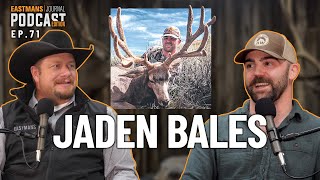


Bulls, Bears And Bows With Jaden Bales | Eastmans' Life of A Bowhunter Podcast #30