Episode 156 - Early Season Recap
A conversational podcast episode (Episode 156 - Early Season Recap) hosted by Jaden Bales with a Wyoming correspondent. The speakers trade hunting stories and early-season mistakes: mis-reading maps and contour lines that turned a short hike into a brutal 200–800 ft extra elevation gain, rifle icing in sub-zero conditions, phone distractions causing missed stalks, and practical survival tips (keep moving, downstream-navigation, starting fires). Personal anecdotes include a mountain hunt where Jaden shot a deer and proposed with a ring from his kill kit. The conversation also touches on gear logistics (boat + bike access, backcountry food boxes), weather impacts, and upcoming hunts.
Questions this video answers
March 3, 2024
Camp at ~1500 ft; final ridge climbed reached about 3000 ft (he shot the buck at ≈3000 ft).
He expected ~1950→1850 ft dip, but encountered ~2000 ft→almost 1800 ft then up to 2300 ft (roughly 200 ft drop and 300 yd distance).
Chapters
Gaydon Bales, welcome to the podcast again. The Wyoming correspondent. Before we pressed record, we were talking about technology and how 10, 15 years ago we didn't need a lot of the stuff that we have now. Do you think that we can survive without it or do you think that technology has become such a part of our everyday life and work experience that we can only go part of our day without it?
Man, I was, you know, I know a lot of old time, you guys and gals, you know, still don't run smartphones or whatever. So I would say we can still do it without it. You know, we'd have to make some sort of adjustments, but for the most part, dude, we put so much value on it and I don't think it's really needed one of those things. Like when you're like getting ready to go, you know, I'm sure you feel this way too. When you're getting ready to go for like a big fishing or hunting trip, you're like, oh my God, everyone is going to want to talk to me while I'm gone. I'm going to miss all this stuff. And you come back after like five days and nothing has changed. You're like, oh, okay, exactly.
You think?
I don't think it's as important.
I've only a couple times I've come back from hunts and I've had like 47 text messages. That's just because someone in one of the group chats goes off on a rant and then everybody responds to the threat. It was like all 47 within like a 3 minute time period. Other than that, it's crickets.
Exactly, man. And most of us, you know, maybe I'm lucky and I haven't had major family emergencies happen yet, but barring a major family emergency, I don't see why, you know, you're gonna come back in something you know isn't gonna be okay when you get back to service, you know. Yeah.
So speaking of technology, this, but I.
Was gonna say, I say this, but I'm going to the mountains this weekend and I get perfect bars on top of the mountain. So I'm like last on one of my scout trips, man, I was freaking on Instagram, screwing around, looking stuff up on Amazon or whatever. So, you know, I see it. But I'm one of the worst offenders as far as using, you know, Internet and technology when I don't necessarily need to be.
So yeah, I think it's an excuse, a positive excuse. It's the right thing to say. So you kind of have to check yourself. But you are in your position for the Wyoming Wildlife foundation or Federation and then also with, with Cody Rich, like you are in industry to a degree. So you have to have some sort of online presence because it's marketing and you're marketing yourself and your products involved with. So that's the right thing. And as a writer, freelance writer, having some sort of online presence is important to me. But that's, that's the right excuse or that's the right thing to say, the right justification. But you know, it could just be that I'm addicted. That's the real reason.
Oh, totally is, man. Well, and I've oftentimes thought like, you know, as a retirement move, it'd be sweet to own like a small archery shop or, or like a little woodworking store in a small town, someplace that just serves local stuff. But you know, I still don't know. You're put your handicapping yourself if you don't use all these other Internet tools, you know. And I try to think of like a business model where you don't need it and it's really not, it's really hard to make it not to make it not an option, you know.
Yeah, yeah. To not have an online presence if you're a business or a entrepreneur. It's. It's doesn't make any sense.
Yeah.
Well, I was, I was going to change subjects to move on unless you had a closer for that portion.
No, man, go ahead.
So there's use of technology and there's improper use of technology and there's this third category that we'll start off with is it's not improper use of it, but it's misreading or you have all these things at your fingertips and you read it wrong. So I'm gonna recap my latest hunt here and I'll tell you the goof made and I know that you made a goof too, so we can talk about our early season mistakes. So.
My group is actually related to a little bit of technology too. So this actually is all tying in.
Yeah, just bring it all, bring it all together. So I have a new boat. It's new to me at least. And so I'm looking at extending the range. And so I scouted a spot in the mountains that can work for an over the counter residential mountain goat hunt. So I was really excited about that. And I looked at the maps, I looked at on X, I looked at Google Earth and so I'm plotting my way to get from sea level to this mountain that has reportedly had goats and looks so goaty. I thought it was on. So take my boat down there. About a six mile bike ride on an old logging road, and then there's a hike. Then there are these two little mounds. And that was gonna be somewhat of a complication, but it didn't look too bad. When I was looking at the contour lines. I was using the hybrid map and then just the topographical map. And it goes to. It goes from. We made camp at 1500ft. The first knob topped out at a little more than 1900, but it wasn't far enough. There's 100 foot lines. Between the lines, it didn't quite get to 2000ft. So it was somewhere above 1900. And then to get to the next hump, it didn't go all the way down to 1800, it just went to 1900. So it was somewhere above 1900. Then on the way to the other nub, it was somewhere below 1900. So when we got on that thing, it ended up being darn near 2000ft. Dropped down to almost 1800ft and then back up to 2300ft. So what I thought was gonna be like a little dip. You get up to like 1950 or so, and then you go down to 1850. Ended up being more like 200ft and about 300 yards. And it was. There was no trail, it was brushy, it was awful. So by the time we got to the second nub, down the second nub, and then finally working our way up, up the ridge, like we were hours in it. We were moving at like a mile, mile and a half per hour. It was that awful and that just gross. So I thought I had this all scouted out, but man, in actuality, it's so different. But you know, you've hunted Oregon, you're from Oregon, you know that you can't get a good view of some of these satellite images. It's just too thick.
That's exactly what happened to me in my very first backpack hunt. It we like the. There was this giant fire that kind of shut down the area that we had scattered out all summer. And so my buddy and I were like, okay, we'll just go bump over a few ridges. And this area in central Oregon, like it had this giant fire come through at 2003. And all that's replaced it is this manzanita brush. It's like, you know, chest above, you know, six feet tall, probably. So four to six feet tall. And it was just nasty. Kind of like willows, you know, like just Hard to get through. And so from the sky, it looked like it was fine, but we had that same issue. And whenever it does that, like, if it was slow and you knew it was going to be slow, that's one thing. But when you have, like, a set time span of which you expect to get somewhere, dude, that's demoralizing. I think that's the hardest part.
Yeah, well, that was. When I looked at it, it looked about three miles. And that's not bad, man. You can. You can book on three miles in the last probably mile and a half or so of it was. It was broken in that pre alpine. You can just kind of work your way through. Then it was alpine. So, like that point you're hunting, so you feel fine. You can go some steep stuff, no problem, because you're hunting. But being still in the woods, man, it was demoralizing. And then knowing that we're gonna have to go all the way back through that stuff, oh, man, it was terrible.
So how'd that go, coming back through? Abby was with you, right?
Yeah. And actually, the plan was to get the goat and then propose. So.
Okay.
By the time we got. We got. We got there a little bit late because we didn't want to leave town until she got her COVID test back. Because, you know, then they're calling you sign this sheet of paper that said you're going to be quarantining at this location until you get your results back. Because they were testing everybody that was coming in to Ketchikan. It was a test, which is pretty sweet. So they were testing everybody that was coming into Ketchikan, and she signed the paper that said she'd be quarantining at my house until. So we waited for that call. So it put us a little behind schedule. So we didn't get up the mountain quite as much as I would like to. By the time we boated down to the spot and then mountain biked up and then hiked. So when we left in the. In that morning, it was rainy. We couldn't see anything, and we couldn't even see up the mountain to the ridge to kind of see, you know, where we're at, how close we are, what the mountain looks like. We couldn't do any glassing or anything. So that was even more, you know, kind of discombobulating because you can't see anything.
But.
So we get up there, and I'm seeing deer. We didn't see any goats. It finally clears. It's beautiful. Don't see any Goats. And I know that this is just a very small weather window. So if we go up there and we try to get a goat.
You.
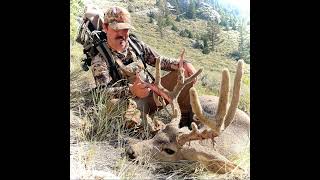
Know, we might find one, might not. The next day, definitely not gonna be good enough weather for it. So I just, I shot a deer. Really nice. Two by three thick.
Yeah.
And then as, as we were cutting up the deer and putting it in the packs, I was like, alright, at some point, when am I gonna do this? Okay, it's, it's when we're all done. All right, we got this. Cause I had the ring in my kill kit and so I was careful, I was careful to hand her a knife out of it without showing what was in the kill kit. And so then we're done, we're cleaning up. We have everything in the game bags and then strapped to the, to our packs. I'm like, okay, here we go. She happened to pick up her binos and was glassing across this lake for goats. I was like, oh, right now? So I got out the ring and gone on one knee and proposed. So it was good. And she said yes, which would been, which is good. It would have been awkward if she would have said, yeah, let me think about it.
Then I would have been like, can.
You still hold down this half a deer? Because, you know, but I need your help.
Well, congratulations, man. I mean, I'm sure on behalf of everybody listening too, like, that's super big. And I saw the photos and that's just such a classy way to go. And the other thing is the fact that she was glassing is like, prior to you, like, proposing. I think that, like, is a prerequisite to the one for a hunter. That's good work, man. Awesome, awesome job. And congratulations.
Thank you, thank you. I wanted something that was, that was special and unique to us, you know, sometimes, like, that was something that I wanted, but, you know, it something that she liked too. You know, she's about you. You've met her, you've, you know, she's been hunting. She likes to hunt, she likes to hike, she likes to camp, she likes to do all that sort of stuff. So it wasn't just something that, you know, was something that I wanted. It was something that we both enjoyed. We both have the memories. Even though I bet she's going to remember how miserable the hike was more than the proposal. But, you know, at least it's a, least it's a good story, I guess.
Oh yeah, man. Yeah, that's going to be one of the best parts is like this dude, he drugged Me up to this place and it was horrible. We were going less than a mile an hour and it was thick and nasty. And I was like, what is he getting me into? Is he taking me here to kill me? And then you propose. You know, that's gonna be the story. Oh, that's awesome.
Yeah. So we hiked out, got down back to camp, picked up camp and then rode our bikes down. So we got back down to the boat at like 7, 7:30, I think, and then crushed a bag of Cheetos, which was kind of weird. You know you get weird cravings, but man, we just. The whole bag, the whole bag of Cheetos.
Like a big bag or like an individual size bag?
It was the regular bag. It wasn't like the elementary kid lunch bag, but it wasn't the family sized disgusting bag. It was like the normal, what used to be normal until they had a whole bunch of different bags. So. But we had our back door or our backcountry fuel box before and after and during. So I won't leave that out. There was a pretty good box this last month.
Oh yeah, man. Wait, was that the August one? No, no, that was July. Yeah, July was a good box.
Yeah. Because I'm, I'm behind. I think I get my box today or tomorrow. It takes a little bit to get up here. No, you guys ship on the 25th, right?
Yeah. Well, Cody shipped on the 20th most of the time, 20th or 21st and folks get them by the 23rd, 24th. Usually I'm on like his, I'm on his like spare list now because I don't do anything directly with the box now. I just kind of post for the Rich outdoors podcast, so. So I'm like the, I'm the leftovers. I get the floppy seconds with the box now, but it's still sort one of my favorite things to get every month though. Especially like now I'm headed into this bigger like backpack trip and I'm like, ah, load it up for good.
That was the nice thing. That was one of the selling points. It wasn't just to have it during the season. It was to accumulate a bunch of stuff. And that's been nice because Abby and I have been tearing through it since she's been up here since August 7th and we've gone on a couple of hunts, We've been trolling for fish. So just having those snacks there, it's been pretty nice.
Yeah.
After years of fine print contracts and getting ripped off by big wireless providers, if we've learned anything, it's that there's always a catch. So when I first heard that Mint Mobile offers premium wireless Starting at just 15 bucks a month, I thought, what's the catch? But after talking to them and using their service, it all made sense. There isn't one. Mint Mobile secret sauce is that they're the first company to sell wireless service online only. They cut out the cost of retail stores and pass those sweet savings directly to you. For anyone who hates their phone bill, Mint Mobile offers premium wireless for just 15 bucks a month. I was hesitant about having to get a new phone and a new phone number. But with Mint, you can use your own phone with any Mint Mobile plan and keep your same phone and your same phone number along with all of your existing contacts. Mint Mobile gives you the best rate whether you're buying for one or for a family. And at Mint, families start at two lines. All plans come with unlimited talk and text plus high speed data delivered on the nation's largest 5G network. Switch to Mint Mobile and get premium wireless service starting at just 15 bucks a month. To get your new wireless plan for just 15 bucks a month and to get the plans shipped to your door for free, go to mintmobile.com waypoint that is mintmobile.com waypoint cut your wireless bill to 15 bucks a month at mint.
Mobile.Com waypoint you guys have been slaying the fish. I've seen posts from both of you. Got landed some hog.
Yeah, it's nice. It's been pretty slow, you know, and I hate. You sound really spoiled when you're. When you're in Alaska and you're catching halibut and you're catching salmon, but comparatively, man, it's been, it's been kind of a rough year so far. But you know, like in the eyes.
But good for deer, right?
Yeah, good for deer. Got the proposal. Deer was my second deer. So that was nice. So I had a good start on that and I'd like to go back to that spot and I think now that I've seen it and now that I've really scrutinized a couple different maps, I think there's a way that maybe I can get around those two knobs and get. Hike up a different spot and maybe meet back up with the ridge and then take that up. So we'll see how that works. So what about you?
I am obviously. Well, I was just gonna say before, before I move on from the sick of deer. I'm obviously no sick of the expert. Never hunted sick deer in my life. But Just by how hard it sounds to get to this area, man, it seems like there should be some big like older age class. Like I think like you said that two by three is a big. It's a good, good buck. I wouldn't. I wonder if there's like an old troll that's hanging out up on top of that mountain that no one has seen for years. You know, just like a stud.
I saw that deer about 15 minutes before I shot that fork or that two by three.
Oh really? Okay, so he's there. You gonna go get them?
They were starting to pop out. Yeah. Because it was the. The weather was, was changing. Had gone from that morning drain. Drizzly fog, gross. It was opening up. It was getting a little sunny. So the deer were popping. There's a lot of texture as you were going up there. And we're just below 3,000ft and man, there are definitely some nice deer. There's a really nice thick forky and then two by three and there was one that just appeared over this little wrinkle and texture as we were making our way up to a different one that was super nice. But by the time I chambered, he was gone. So I'd like to get back up there. I was, I was in goat mode, you know, mountain goat. Mountain goat. Then it was. I was able to look at some of those deer and think, no, I'm looking for a mountain goat. And then the transition started happening. I'm like, I don't want to go back empty handed. This hike sucked. If we don't find any goats. Goats. And the weather closes in, I can't go back empty handed. So the one I ended up shooting was, was nice. It was bedded down and man had some great meat.
Wait, so this was all in one opening day? Like one day?
Yeah, we went out there Friday. We left at left the dock like 3:30. It was about an hour and 45 minute run in the boat. About two hour bike ride, half hour hike to camp. And then the next morning we went from camp at 1500ft, shot the buck at about 2 in the afternoon at just about 3000ft and then went all the way back down to the boat that night.
That's crazy.
Yeah.
That's cool though. And that's pretty close though, all things considered. You spent a lot of like slow human powered travel there. That, that's pretty close to your place to have that kind of experience. That's awesome.
Yeah.
Yeah. The boats is the game changer because not having a road to these place and you Know, people, even though it's hardcore, you're Alaska people, people want the easiest route possible a lot of the times. And so you have the local hunts, the local roads that you can drive. There's people everywhere. The little muskegs right off the roads, you can see tons of people. The most accessible mountains that have trails on them. You know, people are going to take the trail up to the top and then, you know, try to go down the ridge. They're looking for the easiest bucks possible. You're looking for that bargain buck. So taking the boat really separates you from some people taking the boat and then taking. A lot of people use four wheelers. But, you know, taking the bike and then being willing to hike and then getting to the spot, that's. That's pretty tough. You know, you remove yourself from a lot of that traffic and then unlike down south, you don't have someone in coming from the other side. Just go back in and that's. You're in good shape there. So when you and Jess come up, we'll maybe that will be a little bit more of a trail hack down, but there's certainly not many.
Oh, that's awesome. I would love. I would love to do something like that, man. And it's just like, weird. We were talking about it too. Like, it's. It's a great time to be out and up there because it's like a month before these archery deer seasons open up in the lower 48. So I am all about it. That sounds like a great trip. Yeah.
Yeah, it's sweet. So the big problem right now is I got two tags left and that's not a problem. But I go back to that place, but the weather's been terrible. We got 24 inches of rain in July.
Wow. We just. I'm looking across now in our. The driveway is first time that the driveway has been actually saturated with water since mid July.
Yeah, it's been. It's been a rough. I would love to go back up there and go after that big guy, but there's no guarantee of any sort of window. It seems like anytime they say it's going to be just. Just cloudy, it's like 25 to 40% worse. So they say that it's going to be 50% clouds and then it's going to rain, but just showers. It ends up being rainy the whole day. So it's. Finding another window to get back up there might be difficult because it is. It's in a place where it just gets socked in and the clouds Will stay. And then they're just sitting there the whole time, so who knows if I'll have a chance? But I'd like to. And I'd like to take that third tag and get one there. But that only leaves me one tag left until the end of November. That's pretty fun. A good time last year.
There you go. Well, I guess you could always just go try to get that mountain goat, huh?
Yeah, I still got that tag, so. You know, I sound like just a spoiled. Oh, the fishing's not that good this year, and, oh, what am I gonna do about my tags? I sound real tone deaf right now.
That's okay. You, me are in the same boat, man. I've got these Wyoming tags burning a hole in my pocket, so I understand the struggle. It's. It's like, I don't really want to go chase that antelope anymore. I just want to shoot a deer. But, you know, I do have an antelope doe and two antelope doe tags and an antelope buck tag that open concurrently. So it's been all hectic trying to get something killed.
So, yeah, tell me about. You and I were texting about a mistake that. That you made. What was. What was that about?
So I don't know if this is the exact mistake that we were texting about, because I made a lot of them. So the last time that I had a. An antelope tag for myself, it took me 24 stalks to get my. My antelope. And on top of that, I used a decoy. So, you know, it was kind of one things where the first time I did it, I found out that stocking elope was really hard. And then now, this time around, I'm very much so, like, just kind of expect to fail a lot. So I'm not discouraged based on what's happened so far, but it's definitely, you know, not been that great. So that first morning, man, I was out there, and I found a whole bunch of does. And the first thing I did was, like, I tried to sneak around these antelope does, like, 300 yards away in the wide open. And with antelopes that you cannot do that. They, like, run off. You know, they have such good vision that that's just not an option. So then I remembered that, like, okay, you have to, like, tuck behind a feature of some kind. You can't let them see you at all. So I went to the next spot and immediately found this, like, really nice buck with another smaller buck. And I'm going To be honest, because this turns to a rifle tag, I'm being pretty picky, you know, about the goats I put stocks on. My standards are a little bit lower because I have an archery or I'm using archery equipment. But, you know, I am not taking every single stock. You know, I'm trying to get a mature goat. So I see this go, and I get out of the truck, I park around behind the hill, get out and kind of like follow this goat. I'm belly crawling up to the first hill, he feeds out of sight, and then I sprint up to the next hill, take off my shoes, and I stalk around the first hill where I think he should be feeding right on the other side. Just as I peek around the side of the hill, he walks up and over the next hill in front of me. So I'm like, ah. I go put my shoes back on, and then I like, run up to the next hill. Same dang thing. So there's another one. He's just cresting, you know, 150, 200 yards in front of me. He's cresting the next ridge over, and I'm like, oh, my gosh, this is never gonna happen. So I put my. I get my backpack and I run up the next one, and I'm legitimately, like in, like, track mode here. Like, like just trying to, like, I don't know if anyone's done any long distance running. You just kind of like get into this mode where you just have your steady strides, you know, and you're not trying to sprint necessarily, but you're just trying to keep good pace. And I'm running up to this next hill, and I, you know, get to the top, start sneaking. And I look down in the valley below me, you know, like 6, 700 yards, and there's these two antelope bucks standing there. And I'm like, they just took off. That must be them. You know, I'm just too slow. And so I kind of discouraged. I'm sitting there on my knees and I pull out my phone. Here's where the technology screws me. I pull out my phone and I. My grandpa text me. He's like, hey, you in the mountains today? And grandpa's one of my best friends. So I was just like, no, not in the mountains. Chasing speed goats. And then I put my phone away and I look up and there's an antelope 40 yards away from me. And I'm like, oh, no. So, you know, you tuck deck down, and I get my arrow knocked and my earring Triander out. And that buck is just looking at me and his head's right next to a sagebrush over the rise. And I know the gigs up, but, you know, I'm ranging him, he's 40 yards. And I kind of try to draw back and eat bus, you know, it's just not. Not the right situation. But little did I know. So that was like 9:00am Maybe 9:30 on opening day. That was the best buck I've seen thus far. And I've hunted like four more days, so turned out to be a really good, good antelope. But anyway, that's actually the second time I've looked down at my phone and looked up to see a decori that I was chasing standing there in front of me. So I needed to put that dang thing away, like, not touch it.
Yeah, I got a. The little indicator that said that my usage was down like 55% or something like that. I'm like, well, yeah, because I. I was out of range and so I didn't. I didn't use it at all. Sometimes I just look down. I don't. I don't look at the map, but I just. I just look at my. I'll change the color on the morning's route or I'll add something here. You know, all the little features like, dude, what are you doing, man? Look up.
Yeah, yeah, that's exactly right. And it's so funny because, you know, I. You look at it while you're walking along, just trying to be like, you know, where am I headed? What's coming up at. What's the terrain like ahead of me? If you didn't have that thing, it wouldn't change necessarily, like, the actions that I take either. I'm probably sure you're the same way. You're like, oh, cool. There's like, you know, some rocky bands that we have to work our way up.
Yeah.
That didn't change the fact that I'm have to crawl up anyway. You know, like, it's just. It's an addiction. And it's unfortunate because the first thing it cost me was a white, a blacktail buck in the rut when I was in western Oregon. And that one was a bummer because I hadn't seen a single buck up until that point. So, you know, fooled me once, shame on you. Fool me twice, shame on me. At this point, huh?
Yeah. Yeah. There are a couple times going through that fog that I wanted to make sure that we stayed right on the right line. Because if you're thick in the woods and you go the trail that's easiest or you get on a game trail or something, it could take you off the mountain. You got to go back up. So.
Yeah, yeah.
Sometimes it's kind of what we talked about getting that sometimes it's okay. But you got to know when to just keep your head up.
Yeah, I will say like. So when I was archery elk hunting last year, I had this spot, it was like three miles in. So I started hiking. So my method is, if you can't tell, I kind of jog around a lot. Just like, I don't. I should probably give myself just more time, you know, wake up 30 minutes earlier and not run places. But I do it anyway. So I had three miles to go and I had an hour to get there. So I was like, okay, gotta keep a three mile an hour pace. So that's kind of like for most folks who haven't paced themselves. Like that's your head is down and you're trying to keep your legs moving pretty quick. Like it's not a jog, but you're just trying to go. And pretty soon I look up, have my track on my onyx, and about 30 minutes into it, I look up and I had walked, you know, a mile in and then had totally j hooked around and walked a half mile back towards the truck, just in this trucking mode. And you know, I had my headlamp on because that's in the dark when I'm trying to get in there. And I was like, no, I should have looked at my onyx. You know, that set me back. So in that case, yeah, I should have been looking at it and making sure I wasn't going the wrong direction. But geez, I mean, that's like the one case, you know, when you're in the dark and stuff and you really disoriented and thick timber. Yeah, it's probably helpful.
Growing up in southeast Alaska, I'm used to being pretty good in the woods. You just kind of get used to markers and you kind of get used to basic sense of direction.
Yeah.
But a couple years ago I was fishing with a couple buddies and we found this really nice spot on a river that you. It's just. You couldn't tell by looking at it, but it's, it's fairly shallow and even. But then there are these little like undulations and the fish just stack up. The Dolly Varden and the rainbows just stack up in there. And so we were trout fishing and you go in on this kind of oldish trail Then you hike way down river. And so we figured, hey, if we just go in right here from the road, we just go straight. We're gonna hit the dolly hole right there. And so we did that. The three of us. We just walked. All you got to do is go straight, go straight, go straight, go straight, go straight. So we saw a clearing. Like, oh, great, Perfect. There it is. And we had gone in a U, and we'd gone all the way back to the road. And I thought, oh, my gosh, how does that happen? You just think, oh, good, just go straight. But then you have to go around this snag and then around this. And then the easiest way to get between these trees is. Is to go a little right. And so you just go a little right, little right, little right, little right, until you gone a horseshoe. It's unreal. And you just feel so. And it's. It's almost. It's almost scary. You think, man, that was. I grew up here. I shouldn't be doing this sort of stuff. But, you know, that was before on X. But, man, that was. That was weird feeling.
It is a weird feeling. But, you know, one of the things also is, like, important I think, is, you know, whether your phone dies or you don't have a GPS on you or whatever, like, is to make sure that you feel comfortable getting yourself out of those situations, you know, Like, I spent a little bit of time training with search and rescue when I was living in Laramie, which is Albany County. And, you know, one of the things they keep talking about is, like, if you do get lost, like, right now, people are really trained to try to go uphill, and when they go uphill, they're trying to get cell phone service. Right. Because you're just like, obviously, I need to get a call out or something. Back in the day, you know, like, free cell phone. Clearly, like, the idea used to be when you got lost, you go downstream, you find. You find a creek, and then you follow that creek down. Because every creek drainage leads to a river, leads to a settlement, you know, leads to people.
Yeah.
And so they. They actually said, like, as far as search and rescue is concerned, like, they've had to start looking for people near the tops of mountains more than near the bottom nowadays. So. But that is something good to remember if you do get lost. Like, man, just remember, you know, especially if you're on a freaking island, you're gonna hit the ocean at some point, you know, if you parked your boat on the. On the shoreline, you know.
Yeah, the basic.
That Might be helpful.
Are really important. And up here you can get hypothermia during the summer. I got hypothermia. I was starting to get hypothermia last August because it was just rainy and it was cold and I wasn't moving because we were just waiting out some fog. And I lost feeling in my feet. Like, okay, this is the time where you start to do some. Got to do some squats, something to get the. No, it's not a huge deal. Just one of those things you just get used to. Okay. I need to recognize the fact that I can my feet. I need to get the blood. Blood going a little bit. Or like two of my fingers got totally numb. Like why am I to my fingers numb. Okay. I gotta get the blood flowing for where you're in a basin and you know that. Okay. The basin. I don't know where I'm at. I have no idea where I'm at. But this little bit of a river leads to a bigger river. And I know that that meets up with the Harris river which goes under the highway. So it's gonna suck. But this is the way to go out and get. And get found and intersect with the road.
But yeah. Do you guys. Can you start fires up there? Very well.
If you have accelerants. There are little tricks and little things to do. Side of spruce trees, it's really pitchy. And so that stuff's pretty flammable. So if you have matches, waterproof matches, you have a lighter or something like that starting your base with some of that really sappy bark. There's some other spots where you can get some of. You're more likely to find some more flammable or some drier grass and things like that. So you know, if you have something to cut those things and put it together and you know you can slowly build a fire. But at some point, you know you're going to need some bigger wood. And so that can be a real issue. But having a knife and cutting the shavings to help add to it. So we had a fire on the beach last weekend when we were boat camping. We set some crab pots and then went to the beach and cooked up some food and had a little. It was raining all day, but we got a little fire going. So that was kind of fun.
Oh, that's cool, man.
All.
And you mentioned earlier, but like, I don't think people oftentimes go back to this notion of like doing air squats or push ups or whatever like to keep themselves warm. Like you have this full capability of like keeping yourself warm as long as you just keep moving. You know, it's like, it's definitely something I don't think our brains automatically go to. We automatically go to a fire. But in order to build a fire, especially like in a place where you're at or this, you know, if you're in a frigid, cold Wyoming day or whatever, like you have to have some dexterity and you have to have some patience to even get the fire going in most cases. So you gotta, you gotta be, have some blood flow and stuff to keep that going. Yeah, for sure.
Yeah. It's part of the, called the car part of the culture and also the curriculum growing up. Here you have sixth grade survival trip and then the eighth grade survival trip over here in Ketchikan was actually, I think it was the Atlantic online or magazine 8th grade trip. And it's, they learn the survival. But you know, all the kids up here have used hatchets, have chopped some wood, have built fires. You go outside, that's just how you play or at least used to before, you know, video games. Anything else made something else entertaining. But you had to be so self sufficient so you'd go outside and you do all this sort of stuff. So you, you are probably more likely in those situations to think, okay, I need to move to circulate the blood to. Rather than just add more clothing. Because once you run out of clothing, you're still cold. Oh my gosh, what do I do now? So getting that and then also being prepared, like what type of clothing are you taking out there? You're not in cotton, you're not in jeans because you know, cotton kills. You need something that's, that's going to be insulating. Even if you're wearing wool, wool can still be warm when wet. So those sort of things are, you know, you don't consciously necessarily think about it, but you just gather these sort of skills and stories and things. And so it really doesn't make you immune to disaster at all. But it might help if something does happen and it goes from an inconvenience or doesn't go from an inconvenience to something worse. It's just like, okay, that kind of sucked. I was cold, I got warm rather than, you know, gets worse and then worse and then worse and then all of a sudden it's now it's over.
Have I ever told you about the story about my buddy's rifle icing up when we were elk hunting?
Icing up? No.
No. Okay. So here in 2018, I moved to Wyoming in July, so I didn't have any. Actually had that non resident antelope tag in 2018 as I was living here. And then I did some elk hunting with my buddy who was school down here. And I said, if. Actually, I think he's coming with me on my deer hunt this weekend. But anyway, I was like, Hayden, if you. This is why he owes me. If you. If I find you an elk, will you skip your classes on the opening day of rifle elk season? And he's like, yeah, sure, whatever. My opening or my. My classes for opening day season. If you find an elk. So I went out scouting that weekend, and on Sunday night, I found a whole herd elk, you know, multiple bulls and a bunch of cows in this herd. Elk. I was like, all right, and you're coming with me. God dang it. I was hoping you wouldn't find any. So he skips his. He skips like. Like a midterm or something. It was actually quite important. We were talking about this the other. He was like, okay, fine, we'll find these out, because I sent him pictures. So we get up there and that night it had snowed and then gotten really cold and clear. It was negative 5 degrees as we left the truck. And everything was like the moon out and shining, and all of the light was reflecting off this new six to eight inches of snow. It was gorgeous. We're hiking up to this glass and spot where I'd seen elk from. We get up there and we realize, shit, we're like 30 minutes too early, which is what you would rather be. But when it's negative 5 degrees outside and you're supposed to sit there for 30 minutes for light, you know, shooting light to happen, that's cold. So we're sitting there, we're doing just exactly what we were talking about. I'm doing push ups and he's doing squats and vice versa, and we're seeing how many we can do in a row. Just try to stay warm. And then right at first light, man, those elk showed up right at the edge of this meadow, right where I'd seen him the night before. And so he gets. He sets his rifle up, he's getting ready to make a shot, and I'm looking at my watch. We've got like three minutes until shooting light. You know, this is opening day. There's people in the woods, there's wardens in the woods. There's no, we're not. We're playing by the rules, right? And I'm waiting. And you know, we're waiting. It's getting down the last couple seconds. And he's like, dude, I'm on that elk. You just tell me when to shoot. And I'm like, dude, you can't. You still got a couple more minutes. And. And those elk, they round them, the big bull rounds his cows up and takes them off into the timber right before shooting light. You know, we're just like, oh, no way. So we're like, well, there's fresh snow on the ground. We can chase these elk down. And you know, him and I are both fairly good physical condition. Him and I worked out together at that point at the gym and then knew we could keep. So we kind of get on these elk tracks, we start following these tracks, and sure enough, you know, two ridge lines over, we finally catch up with these elk and they're uphill in front of us. So they're 180, 200 yards, depending on what else you look at. And so I get down one knee. He's down on one knee getting ready for a shot. And I'm looking through my binos and I'm like, okay, Hayden, I'm ready. And he goes, okay, I'm gonna shoot this next six point. That walks out. The six point walks out and I'm looking through my binos and I'm like, okay, Hayden, I'm ready. He's like, dude, I'm trying. What? I'm trying. And so this point like walks away and then he's like, next, another shell in. And I'm like, is there anything I can do? He's like, no, no, no. I was like, okay, there's another, there's another six point. And this one was like, he was goofy. He had like, he was really big on side and he had some other crazy stuff going on the other. And he was just a cool looking bull. I'm sitting there waiting for him. All right, you can shoot anytime now, man. And he's like, dude, my gun's not going off. I was like, no. So I walk over there, I had this little Nalgene pouch on hip or my Nalgene pocket was on his hip pouch. And I just, I don't know what to do other than like, hope the water is warm enough. And as soon as I poured that water on his gun, it just froze as like a sheet of ice, you know, I mean, at that point it's probably, you know, zero or a couple degrees above zero. So it was pretty cold outside.
Wow.
We made a fire right there in this, you Know, we, like, dug deep underneath these bushes and. And got a fire going, and it roasted his rifle over this fire like a shish kebab. And eventually we actually, that whole action, you know, warmed up, and everything was working just fine. So then we're like, okay, we already lost these and found them once. Let's do it again. And so we cut those tracks and we follow those tracks again. And we're in the deep, dark timber at this point because we'd kind of been working. We were in the foothills at the beginning, and we just keep working deeper up into the hills. And Hayden's like, oh, there they are. These oak are running through this timber, and, man, they're probably 75, 80 yards away. They're not that far. And Hayden pulls up his shoots and nailed the tree. Get away. So his rifle worked. He missed that last shot. But, oh, my gosh, the third time wasn't quite the charm. But that was one of the most insane mornings of Outcome, I think I've ever. I don't think you can really beat it. We got on those three different times one morning. But I went out that next night. We got back to the house, and I purchased a solo hunter rifle cover so that I didn't get snow and ice to my rifle.
Yeah, that's probably a good plan. Yeah. Crazy.
So that's something to think about when you're. When you're down here on your mule deer hunt, I guess. Keep that rifle ready. Snow and ice, man.
Yeah, Shoot. Just another thing to worry about. Of all the other things I got, I got to worry about that now, too. But it's good to. To have that in the brain at some point, so you kind of know, so you're not that panicked what's going on. It could be this is the problem. I can fix it.
And it's one of those, too. Like some folks after the fact and they said, you know, really well, oil that can help it from freezing as well as keeping it covered up, you know, keeping your truck in. If they're keeping your rifle in the, like outdoors overnight, you know, keeping it in your truck or in the bed of your truck if you've got a canopy, that kind of thing, like, sit from freezing up because it will get cold without being stuff to freeze.
Yeah. So, yeah, that important up here, too, because it's so humid, so even if it's not super rainy, you think you kind of dry it off, but there could be a little bit of moisture still left over. And so you're can rust or, you know, it can break down. And so the oil thing is really.
Important up here too. Oh, yeah, I didn't about that, man. At this point, we trade humidity for the season. Yeah, we. We've been crawling around in the cactus quite a bit after antelope and Jess and I both have it and holy cow. It's just like. I'm super excited this weekend. I was looking and it said snow showers down to 10,600ft. And my, my camp this weekend is supposed to be at 10,800ft. And that'll be quite the change from this 95 degree weather that we're experiencing right now.
Yeah, for sure. Yeah. We might get up to 62 this weekend. So that's cool.
Up to. Is that your normal daily high or is it a little hotter?
August is usually the best month. August is usually fairly dry, sunny, warm. But man, I think we've had like four days above 70 this year.
Dang. Yeah. And usually this seems so chilly.
Yeah, we usually have like four or five days in August alone. Like, you know, you get some really nice weather and then you have some days in the 60s, but you know, we usually hit 80 once per summer. But man, this year has just been wet and cold.
We've got fires propping up not too bad in Wyoming, but, you know, kind of all the stakes around Wyoming and I think we could use a little bit more of this rain.
Yeah, for sure. Well, what else you got? It's been about an hour. So you got some closing thoughts or what's. What's going on for the next hunt?
So this weekend on Friday. Well, I guess on Saturday I am going to head into the Wyoming backcountry for. I have eight days. Nine days. I have nine days blocked off on calendar Saturday through the following Monday, which is Labor Day to be archery, mule deer hunting. And I'm super excited for it. I've done a bunch of scouting and stuff, so. Which I know you, you've kind of paid attention to and it's kind of cool when you comment on it and stuff. I, I sent you a picture from my last trip, which was abysmal because besides the fact that I stumbled into a really nice buck, it was so smoky I couldn't see anything. So I'm really excited to go. Give this a shot though. I haven't, I haven't actually backpacked in by myself for more than, you know, a weekend before. And so this is going to be a fun trip, man.
Nice. Outstanding.
Yeah. How about you? What do you have coming up?
Depending on weather, I'D like to go back to that spot and I think I want to try this new route around those humps. Take Abby back up there and see if we can look for a goat. If not, then shoot a nice buck, see if we can find that old guy. But if that doesn't look like it's going to work out, if we're not going to get any sort of break in the alpine weather wise, then might take the boat out with another buddy. His wife, they just bought a brand new boat and so we, we did boat camping last weekend. So we just go out to. To a inlet or bay and anchor, set some crab pots, anchor up, go eat on the shore, then camp on the boats. And so we might do that again, try to get some halibut, some salmon. So either option is good. Just hoping open for some good weather.
Oh, man, I will absolutely trade you mule deer, me for halibut, salmon, any of them.
Yeah, yeah, yeah. We'll see if I can get into some good stuff. Maybe when I get, when I get down there, we can, we can swap something out. That's a pretty long drive, so I don't know. You know, we'll see.
Dude, I would record.
Yeah.
All right.
We haven't committed your life.
I'd be happy to. Plus I have a whitetail tag out not too far from here, next to the woods, so. Yeah, yeah, I can make it a big old loop and, and it would be fun, so. Plus you need. I. You know, it's never bad to have another set of eyes on the mountain and I'd be happy. Not at all.
Not at all. That'd be nice. We've talked a lot of hunting. We've never hunted together, so. But be nice.
We fished together and that worked out pretty good. So I think, you know, we broke the ice. We can go hunting now.
That's true. All right, man. Well, thanks again for taking some time out of your day and we'll be in touch, I'm sure.
Oh, yeah, sounds good. Jeff, thanks for having me on as your Wyoming correspondent again. I really, really appreciate it and this is fun.
Awesome. Take care, man.
Yeah, you.
More from Jaden


Bulls, Bears And Bows With Jaden Bales | Eastmans' Life of A Bowhunter Podcast #30