Day 15: Design Thinking—Wired Like Your Nervous System!
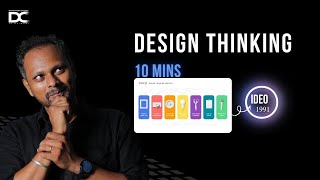
Jagadeesh P explains design thinking through the lens of your nervous system: empathy, define, ideate, prototype, test. The process mirrors how neural pathways form through feedback loops. He covers the history from Stanford and IDEO, common designer mistakes, and tools like Figma and Miro.
Questions this video answers
Empathy; Define; Ideate; Prototype; Test.
Stanford (D School) and IDEO; named people: David Kelley, Tom Kelley, Tim Brown.
1960.
"Testing raises your success rate by up to 42%"; "design thinking cuts the rework by up to 50%."
Change by Design (Tim Brown); Creative Confidence (Tom Kelley); The Design of Everyday Things (Don Norman).
Congratulations for all of you to be staying connected with me. In this last two weeks for our skeletal and muscular system, we've been learning design in a very, very different context. You know what? This week I have something very special. Even more than that which is called nervous system of our body. We all talk, we all react, we all respond, we all think because of the system what is being there inside our brain which is all connected to the actions. This is because of the nervous system, what we have in our body. So what exactly I can able to tell you with respect to the concept of nervous system, Cognition, psychology, behavior, mental models of the user, experience loops, decision path, feedback loops and habit triggers. This is what is a topic which we are going to discuss today. More importantly, I wanted to tell you in this day 15, something very special is going to unfold for you. You know, I'm going to be telling you something called design thinking. Many people might have listened to this topic for designers already. Design thinking. Tell me something else and people who are listening to this design thinking for the first time. Let me tell you for all the people, this is going to be a very interesting thing for you. You know what? Design thinking is equal to the human centered process mindset. You need to understand that human centric process is exactly the design thinking. It focus on understanding, ideating towards a problem and then creating a solution and testing out in a very simple nutshell. But it also bridges the creative part of the problem solving as well as a logical reasoning and analysis towards the requirement of the product. So this is a good bridge what a design thinking does. Sometimes you know what, design thinking process can go very iterative. It is not a perfect process. See, there is a hard brain connection for the design process. When your heart is thinking like let's say a very, very abstract answer, a very creative answer, then your logical brain will also think about whether it is possible or not. There is always a constant fight which happens between the body and the mind. Same like that in design, functionality, aesthetics, both are completely, completely contradictory. Many times when you make a functional design, aesthetically it will not be good. Many times when you make a aesthetic design, functionality will not be good. How do you balance it out? How do you also understand the needs of the user? This is why human centric process is very important. And this is the ultimate nervous system of our body. I want to tell why it is very, very vital. See, this makes the design coming into a visual part into a strategic thinking or the ulta way strategic part into a visual design process. This is the center of all the needs of the users are. This is not based on assumption. This is exactly why experimentation is not allowed here. And more importantly, it is moving towards a factual way. Maybe you could have started this project with assumptions or hypothesis or maybe some kind of unrealistic data, but when you move towards it, you get to the problem very, very close to the user without any kind of a fear. Why? Because you're all testing out and then you're going very close to the factual part. So failure is a part of process, iteration is a part of process. But design thinking ultimately works. It helps you solve very unambiguous problems, real world problems, and build a critical thinking pattern. I'll give you a little history of it. 1960, Stanford & Ideo pioneered this method. David Kelly and Tom Kelly and Tim Brown was one of the big big people who are promoting this. And more importantly they have moved from engineering into UX education. More importantly, they have formed this innovative framework that this entire world is using. I would highly recommend you to go to the IDEO.org and IDEO Toolkit to find out the materials which these people have invented. This is world class. You know what? These people have created a design system and a framework where all the industries like Apple, Google, Airbnb, IBM and systems are using. This is a historical thing which you need to understand when you're learning a design thinking process. So what are the five methods? Very simple. You need to first understand your user, you need to define what are the problems. You need to go and ideate the method, you need to create a prototype for it, you need to test it out. Very simple. There are no big complication in it. But the reality is how well you mix and match in order to solve this problem. How well you create an understanding. Sometimes your problem statement starts exactly in the reverse way. You test it out with the user data, you get the problem and then you go and solve the problem. And then you again test it out to put it into a real world point, real world solution. So design thinking phase, I'm telling you. Empathy, define ideate. Prototype testing doesn't mean that it has to be like that. It's completely non linear way. Your nervous system can also work in a non linear way, right? Sometimes if somebody hits you, you may trigger. Sometimes when you think that somebody is going to hit you, then the reverse trigger happens. Same like that. Your process also can work in a reverse way when you solve a problem based on the context. I'll tell you the common mistakes, what designers do. Too much fast jumping into solution. No process at all. Skipping completely research. You only do it in a linear way. Memorizing the process. Hey Jagdish, I paid 70,000 for course. They said that you need to do empathy, idea testing, prototype and make a portfolio in behance and apply for the job. Stop that. You need to be really, really ignoring that kind of a monotonous process. Okay. And more importantly, many of the designers ignore this feedback cycles. They don't understand the user's feedback and put it into a proper document so that you don't miss that many, many designers make this big problem. And more importantly, you need to be also flexible and creative towards the openness of a design thinking methodology. In fact, it was adopted by Stanford D School as an education curriculum. So please understand this has been a global method which has been followed. And I'll also tell you what happens. Our brain synapses and the idea connections happens when you do a process properly as a designer, this video is mainly for you. As a designer, your brain will work in a way and connect all the ideas. When you go through a proper process and when you ideate more and iterate, it strengthens your neural pathways. Hey, I've already explored this methods it not working. Let me try this way. Third, it also empathizes and activates your mirror neurons. Hey, if you're empathizing with that same user, hey, this guy is also having the same problem. When I was also doing the payment, I was also having the same thing, right? So there is a good amount of mirror neurons which will happen when you empathize this process and reflects a long term learning process for your design thinking methodology. You're not just solving a problem to close the deadline on this Monday when your boss asks. No, you're having that reflection towards long term product design thinking. This is what is going to build your design career in a whole new different way. Curiosity is a big dopamine for all the designers. So your brain synopsis is equal to connecting ideas. Your iteration strengthens your neural pathways. Your empathy activates your mirror neurons. Reflection creates long term thinking. And Curiosity is a dopamine for all the designers. You need to understand this method. I want to tell you if you're not understanding the concepts in a neurological way, you won't be able to understand anything. Can I tell you one simple example? Why don't you download an application called Practo and see how it can be improved on the onboarding process which we saw in the last two weeks. Second, use empathy to also understand how the patients can be treated in a different way using the same practo app or you can take any one app I told you a very common prominent app, right? Third, try to do a prototyped voice based instructions and see whether it can be done in a very different alternative way. Not just text, not just screens. Can you do it in some other non linear design process to think about something solution out of the mobile app or web app and test it out with the user? Can I tell you one thing? Testing raises your success rate by up to 42 percentage design thinking cuts the rework by up to 50% each. Any designers don't understand this, that is why they get into a bigger problem. I would recommend you to use this tool called Miro figjam for empathy maps. I would also recommend you to use ChatGPT and whenever you're using ChatGPT use this prompt called how might we this will help you a lot to understand to get a better output out of the LLM models. Use Notion and Google LM and Ulearn to document all of your learnings while you're doing the research and design thinking. This is like a digital brain and use figjam to also create low fidelity wireframes and get it into figma to make it into a proper medium validity wireframes as well. Putting your thought process into sketches into some kind of a wireframes and use typeforms to collect a lot of survey from the users Google form Typeform survey monkey. All these things can be used to do the design thinking in a more effective way. I'd highly recommend you to read this book called Change by Design. It was written by Tim Brown. I'd highly recommend you to read this book called Creative Confidence by Tom Kelly. Recommend you to read this book called Design of Everyday Things by Non Norman. Go through this articles of Nielsen Norman Group for Design Thinking guide. Use this Ideal Design Kit online and more importantly use the Stanford D School Bootcamp bootleg. It will be really really helpful for you. More importantly type out design thinking in this chat box. Type out brain in this chat box like a neural way we would be able to send you the Design Thinking worksheet which I have been giving for our students whenever they're doing a field research when they follow a design thinking methodology which might be very helpful for you and also please click the Sunday Workshop link below to join in our upcoming workshop to also put all of these learnings into a 6 step job approach process to get a 3x salary in just 90 days. Click the link below. I'll see you inside to teach you this process to put your learnings into a money making monetizable skill. Thank you so much guys for attending this day 15 for design thinking. Tomorrow we'll see the day 16 which is how might we do a problem framing method. Take care. All the best. Bye bye.
More from Jagadeesh




Comment “ME” if you want to join the next upcoming hackathon — we’ll send you the registration link.



Comment “ME” if you want to join the next upcoming hackathon — we’ll send you the registration link.



