Day 23 - Behavioral Nudges in Design
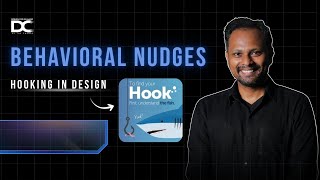
Jagadeesh P explains nudges as gentle pushes that shape choices without forcing them, from decoy pricing to urinal flies. Ethical nudges differ from dark patterns, and work through dopamine and social proof. Tools like Pendo and Mixpanel help designers implement them in products.
Chapters
Your design are always making the people persuade. The question is, does it do it in an ethical or a manipulative way? Because each and every pixels or the buttons, it's going to push the behavior of the people, whether you really mean it intentionally or not. The point here is many people don't know how to use this behavioral nudges in a very, very careful way. In UX design, particularly with respect to marketing, with respect to landing pages, campaigns, advertisement, people have to really understand before designing this. In this video I'm going to be telling you about the behavioral and the nudges, what a UX designer can able to create for the product and how we can able to hook the customer in a more ethical way. And what exactly is the concept behind it and what are the mistakes around it. Let's see it in the full detail. Okay, so what does mean by behavioral nudge? Nudge is equal to a gentle push towards making a better decision. Have you ever bought a popcorn which is in the medium size or a large size or a small size? Can you look at the pricing? The pricing will be like the bigger popcorn will be a little bit smaller. The prices will be little difference between the mid and the bigger one. So what happens is naturally our mind tend to see, hey, if I'm able to afford a mid sized popcorn for $2 or maybe like let's say 100 rupees, the big size popcorn itself is 110 rupees. If I afford 10 rupees extra, I can able to buy a bigger popcorn. Naturally our mind thinks that way. That is like little bit nudging the user to go and do it. So it's all based on the choice hierarchy theory. There is something called a decoy effect. When you have a third product in between the second, when you have a third product and when you put the second product in between, this becomes a push on the nudge for the people to buy the third. And this is like exactly called the decoy effect. This shapes the behavioral ethically, not manipulatively and works through the cognitive bias. And it is very subtle over the path, not in a forceful way. So the background behind this is nudge theory was actually designed first invented by Richard Thaler and Cass Sunstein in 2008 and it was adopted by many, many government policies and technology and tech companies. Even if you go to any kind of airport, like let's say not in India, in abroad countries, I've observed this experimental what they did, I'm not sure about which airport it is. It is heathrow or some other airport where the urinary leaks was very, very high in the toilet of the mail in that facade. Okay, so what happened is people tend to put some kind of a stickers of the bees or maybe stickers of the ant or something stickers. So what happened is when people are shooting that urine on that, on that basin, so people get a point, people get a target, people get exactly the way in which they have to shoot it. Now the leakages have come really, really down. The cleaning and maintenance cost have really come down. It's just a small behavioral nudge, but that pushed the people. So everywhere people are using it. In fact, this is called the core behavioral idea. Behavioral economics. It's called as a b. Many people don't know this topic in design. This is called behavioral economics and now used in UX for decision simplicity and commonly used in fintech edutech healthcare applications. So this is a quite small background of it. And of course you must have understood the importance of it. This helps the user makes the informed decision, build the trust through the overall process and not like a command and it increases the conversions without manipulation. This creates the inclusive and mindful experiences. And this is one of the great way to ethically differentiate your product, right or not. This is very important. Many people don't get that. Okay, Jagdish, what are the types of nudges? It's very, very super, guys. Nudges are very, very important topic and it's very interesting. There is something called default nudge. Like let's say whether you select or not. People have already given the call to action to delete the button. Like let's say when you delete an app, where is the default option going? Delete. Or maybe in the other side. Like let's say when you use Mac OS or when you use every other iOS applications, you will find that the default option comes in never. Not okay. Why? Because intentionally also sometimes people process the option of delete. So the interface is making you nudge that. Hey, do you really want to delete this? The default option lies in not. If you consciously decide to delete it, it will go sometimes even by clicking the blue button, people delete the option, right? So that is why Apple has invented that. Apple has understood this error which users can make and then they have created that. This is called default nudge. Second is called reminder nudge. Periodically how the users can able to switch off. Like let's say there is an option called screen time. Let's say even if I'm able to open this there is a screen time available. So this particular option helps our users to understand where exactly the screen time can be reduced. Can all of you see this? Where exactly the screen time can be reduced. See the reminders keep popping out. So this is one of the way. Third Gold nudge. Like let's say when you have a milestone, when you reach this 5000 points automatically this level will unlock. This game will open up, the new module will open up. So you have a goal and you nudge the user. Next is called social nudge where others also choose this. Like let's say the point is if you are all using this particular feature, then others will also be able to see this when you post it in a social. Others will also be able to donate for this social cost. So you nudge the society using this behavior. And next is called emotional nudge. It's very subtle, but it will create a more emotional background for the product or the the choice what you're making. Okay, like let's say this is mostly used as a motivation. Like let's say hey, you are now getting into a very high pace of your game and intensity. Now you have to gear up and you have to put in your full heart and soul to play this game. See now the emotion is built. You nudge the people through that. So the first is default nudge, reminder nudge, gold nudge, social nudge and emotional nudge. These are all the way in which you can able to do. There are many common mistakes. Also designers do sometimes they overuse this FOMO which creates actually insecurity and scarcity for the people. And sometimes guilty driven microcopy damages authenticity. If you too much write the email copy or marketing campaign. In that way it creates a mistrust. Sometimes it misaligns the tone with the brand value. And the product value has been completely perceived wrongly. People think it's just a marketing push, right? Not an ethical marketing way. Nudges used without feedback testing. Sometimes it is really really bad. Dark pattern disguises the user nudges. I already told that in the yesterday video as well. So we need to get the background of it. Nudges activate the dopamine and creates the oxytocin circuit inside your brain. It reassures the brand and builds a trust using that hormone. Yes, this is very, very important. You feel very happy motivated Oxytocin produces and then you build naturally touched for the product. Urgency triggers adrenaline and anxiety. Balances messaging calms cortisol. So balanced messaging calms the cortisol level. Like let's Say when you have a nudge in a more balanced way, you tend to balance the people emotion and it calms the cortisol levels as well, right? Cortisol is one thing which is which has been measured during our stress states. Like let's say this has been used in medical fields. When you have the person like let's say if you have to really ask him hey are you really frustrated or not? How will you go and ask him? He is sleeping in the bed. You need a measurement, right? People has this measurement called cortisol and then they measure this thing and you can also use it for UX and emotionally aligned design creates retention for the user to come back again and again again to your product. Now let us understand the example. Like let's say banking application user users avoid saving feature. Like let's say banking application with the users avoided saving feature. Like let's say when you are having this option towards no option of savings, what happens? You are now making the user 90 percentage reach to your goal or 80 percentage reach to your goal or 30 percentage reach to your goal. So the user will have completely the like let's say a target towards hey I'm very close to my goal now he's been nudged towards that. And more importantly when you gamify this with an encouragement like let's say points or rewards or cash back, you also make the user release the oxytocin and savings participation increases in the 27% in the last four weeks. So this makes the user also increase their saving potential. Have you seen application with respect to like let's say I will use. I will open this application called Razorbay. Okay, have you seen this Razorpay application? So this will create something like this. Can all of you see here? Yeah, current balance today settlement and something like it will also show you compared to the last week the payment has been come down it is like 33% it has come down. 21% it has come down. Can all of you see the graph? This will nudge the user to also take a decision better. Can all of you see for refund is there this much payment has been success and it has come down compared to the last week. So you will also come to know that the trend is really really getting reduced and we have to increase our payments more. See this is a way to also positively put. Can all of you see here? This is also a positive way to nudge your user to take a decision better to earn more or maybe to get their money rotation more for a business owner. So user reported emotional connection to your progress. So this is exactly what is the case study and there are many tools to also measure this. ChatGPT is of course a great tool to also ethical nudge copy. When you are having a product you copy paste it into ChatGPT and ask to create a copy around it. Many people don't know how to create a microcopy. This is where exactly you can use use this tools called ChatGPT and you can use this tool called Pendo and Mixpanel to have a behavior analytics. And also you can feed it back to chat GPT feedback to chatGPT and also start writing microcopy of it. You can use this thing called brace nudge delivery orchestration. You can use notion AI to find out the user journey nudge mapping. You can also use this tool called uxpressia to visualize the behavior flow. And also you can use this Google sentimental analysis to find out what exactly is your user going through. So utilize these tools. It will be really helpful for you to learn and nudge your user. Of course you can read this book called Nudge by Taylor and Sustain. You can read this book called Hooked by Nir Ariel. You can use lot of case studies from Nielsen Norman Group for Behavioral UX research. You can also read this BJ Fox tiny habit framework. You can read this thing called Ideo Behavioral change Playbook. It is easily downloadable and it's free of cost in the audience. You can also read this book called Habits by Carl Duhigg. You can also find that. Let's say a lot of. You can also find a lot of nudges and behavior change historical happened. This is going to be a real advantage for someone who wants to know the complete science and biology and the background behind it. Superb. Now what I want to tell you is please DM me with nudge in the chat box. Wherever you are watching this in the YouTube or podcast or Spotify you have been in the Instagram, please type nudge. I will be able to send you a nudge design matrix how you can check whether your product has been enough cleared with the nudge. Probably. Okay. And more importantly tomorrow we are going to see microcopy and emotional influence off of it. Okay? Because influence built with empathy, not with a proper manipulation, not with the improper unethical manipulation. Okay, let's wait for that content. And more importantly I wanted to take your game into next level by inviting you to my four hours designers workshop where the link is available. You can able to just pay 99 rupees to come into the workshop where I will be also teaching you all this concept, but I'll be teaching you how you can use this in your portfolio to start pitching for the design organizations where you can get 3x salary and growth towards it. Some of our students have applied this methodology to get 15 LPA, 20 LPA, 30 LPA. Some of them are even going to reach 1 CRS salary. So attend this workshop to know the magic behind it and take it to the next level. See you again in the day. 24 I want to get you more topic with respect to the human body system. Just to reiterate, we've been splitting our human body into multiple systems and this week four we are splitting this body into endocrine. In this endocrine we saw just a nudge and behavior. Tomorrow we'll see another topic. Bye bye. Thank you.
More from Jagadeesh




Comment “ME” if you want to join the next upcoming hackathon — we’ll send you the registration link.



Comment “ME” if you want to join the next upcoming hackathon — we’ll send you the registration link.



