Ep 248| 7 Step Roadmap to Your First Design Job
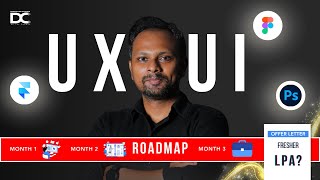
A roadmap for landing your first design job. Build a resume that works, create a portfolio that shows your process, network with people already in the field, and keep learning as the industry changes.
It becomes a nightmare for people to get their first design job. It takes even months, weeks, years. And they lost interest and they go back to their old field. Not thinking clearly that design is not for them, thinking that nobody is having vacancy, thinking that fresher like me is not having any kind of a hole, any kind of a requirement in this particular design field. And you know what, let me tell you, people who are experienced, they have not come out from the sun or moon directly. They have also been as a fresher like you, right? So there is a way, there is a process, there is a method to do it. In this podcast I'm going to tell you how as a fresher you can able to create your roadmap for your first job. Okay, let's listen to this podcast. Resumes are actually a quantifiable results of your portfolio. Quantifiable results of your candidature in a job interview. Guys, okay, you know What? It increases your 40 percentage likelihood of getting noticed. According to a study by Ladders, recruiters spend average of 7.4 seconds on reviewing your resume. If you are a designer, if you wanted to become a fresher in design or an internship in design, or you want to start your career, the very first thing which you have to come into your mind is resume. Okay, I told you the important information about it. The second comes portfolio. Study by Career Foundry shows that portfolio are most crucial for your job application process. 71% of the employees consider them as essential. Let me tell you the third thing is technical interviews. A survey by Glass Doors found that average interview process for a design role lasts for about 23.7 days. So that much of time a company wants to understand your fit, your technical skills and then your suitability for the role. 76% of the hiring managers believe that right fit depends on significantity of the candidates problem solving ability and their behavior and attitude. So what you think is very different, what the market wants, what the HR wants is very different. Guys, okay, I told you. 76% of the people think about your problem solving abilities and your cultural fit. You don't have to have a superb portfolio in first place that shows that you need to show problem solving ability in any means. You can even show it in a small paper how you can able to solve some complex problems. You can show your attitude in behavior and goal and aspiration. People will understand how you will be able to fit here. That's it. You don't have to break your head much. And the next thing which you have to put in your head is networking it can lead to job opportunities. And 85% of the jobs are filled through networking guys. It's survey by LinkedIn 76. 70% of the job are not advertised properly or publicly. Highlighting the importance of connection. So this is the important point guys. Lot of jobs are away from your eyesight. A lot of jobs are away from your job description which you find in Naukri, LinkedIn, Monsters, Glass, Dose, Internshala, everything, right? So and the last important thing is you need to have a continuous learning process. According to LinkedIn 2023, a workplace learning report, 57% of the employees are likely to engage in continuous learning when they feel encouraged by their employers. Okay, so it is very important to learn. And also people expect that skill of you. If you are having that attitude and behavior of learning and improving, then they will hire you. A study by Domination University showed that writing down goals are having the likelihood of achieving them by 42 percentage. So I just told you seven important things guys. The first important thing is goal. The second important thing is continuous learning attitude. The third important thing is networking and building connections. The fourth important thing is technical round and clarification and clearing the interviews. The fifth important thing is having a strong portfolio. The sixth important thing is having a resume. And the last but the least important thing is understand what is the current requirement of the market and how are you fitting there. This is the most most important thing I just told you. Upside down. Exactly. Think the other way around. They think only portfolio is important. There are hundreds of things which you needed before a portfolio which I just told you. Resume, cultural fit, behavior, networking, connections. And you need to have a very good resume. Everything needs to be there in order. And also you your fit towards the current need of the market should be there. The demand for design role is very huge, guys. U.S. bureau of Labor Statistics shows that designers are more needed than 2021 than 2015 and in the 20202030 it's going to be very very high. Every year it's growing, including the graphic design role, product design role, UI UX design role. So importance of UI UX design in various industries is now growing. You know what? LinkedIn 2024 jobs shows that there is a huge rise of reports available for the UI UX job in the 2024 market now. And it's a very very critical skill and sometimes it is even second or third highly most paid job in the country. So you need to understand everybody starts as a fresher and these are all the things we need to understand. First, once you are able to Understand this clearly, then automatically you can able to create a value proposition with your recruiters once. If you're doing this, then there is nothing to stop you guys. People will come and hire you because you have exactly what they want and you show exactly what they exactly want and you will find a place to work there. It doesn't matter whether you're starting up with a 10,000 job or 25,000 job or 50,000 job. But all it matters is you need to start with an industry to gain experience. Okay, so have this mindset whenever you're going for your first job. Don't have lot of confusions. People have lot of, lot of, lot of questions in their mind. Just should I focus on portfolio? Should I focus on resume? Should I focus on improving my communication? Should I focus on what you call building a website? Can I have a behance profile? Can I have this profile? That profile? All it matters is having this clarity what has been discussed in this podcast. Guys, if you understand this clearly, let me tell you a lot of your questions inside your mind will come down because a lot of people face a problem. They work here and there. One day they'll work on technical interview, another day they'll work on resume, another day they'll work on something else portfolio. Another day they don't know exactly the roadmap how they can attack this job industry. And this podcast is exactly giving you clarity. Okay, you can even listen to many of my other podcasts which have recorded around interview, job search and portfolio and networking and LinkedIn strategies so that you can able to maximize your job search process in a faster way if you're a fresher or even an experienced person. Okay, I hope this podcast would have given you value. See you in another episode. If you find this useful, give me a best start rating in Spotify and Apple and make sure you write a comment about it. Because it's not only one way communication which I am talking. It's like I also wanted to have a feedback from you. What are you really thinking about this podcast? And list your pain point as well. I'll be more than happy to address it. Okay, take care. All the best. Bye bye.
More from Jagadeesh




Comment “ME” if you want to join the next upcoming hackathon — we’ll send you the registration link.



Comment “ME” if you want to join the next upcoming hackathon — we’ll send you the registration link.



