Short Form Content is KILLING Your Business (and you)
Jacob Morgan says short-form social media damages your attention span and raises your dopamine baseline, leaving an emotional hangover. He proposes a 30-day reset: create instead of consume, write 30 minutes daily, read a physical book, and exercise to rebuild focus.
Chapters
Is short form content slowly killing you? I believe the answer is absolutely yes. And in this video I'm going to explain exactly why. And by the end of it, you'll want to delete Instagram and TikTok from your phone. We need to have a difficult conversation, a conversation about the invisible force that is silently stealing or all of your remaining potential. It's not the economy, it's not your boss, it's not the lack of opportunity. It's that 10 second loop. You're endlessly trapped in the doom scroll. And I'm not just here to give you a metaphorical kick up the ass that lasts about two days before you fall back into old patterns. This is about a fundamental shift in how you potentially operate. Because you can have all the information in the world, all the answers, all the strategies, but if your mind is not fit for the task and work, working at its potential, all of that information becomes absolutely worthless. So let's talk about the unnecessary consumption of short form content. And by the way, I'm someone that has at least my company has made millions of pounds off short form content. So I'm definitely not biased here. And I need you to understand this isn't a moral failing on your part. It's just we're in a system that's designed to absolutely break you. But you can get out of it. Just think about the last time you had a doom scrolling session when you just picked up your phone for a minute and it quickly turned into 30. Now just try and remember. Five, three, maybe one of the videos you saw. You can't. It was very unlikely that you can. And it's a total blur, the flurry of disconnected images and sounds. That's because content consumed for 10 seconds or less never actually has long enough to imprint in your brain and become processed. You, your brain isn't actually working, it's just kind of reacting. What is working is your emotional center, your nervous system. For a piece of content to go viral, and your feed is nothing but an endless stream of viral content, it must elicit a strong emotion. Anger, sadness, elation, jealousy, motivation. So as you scroll, you're not actually thinking, but you are performing emotional acrobatics. You see a dog in a shelter and then political outrage and someone with no arms doing something incredible. Then a child surviving cancer, then someone falling off a bike in the span of just a few minutes. You're essentially experiencing a lifetime worth of emotional volatility. And we didn't evolve for this. And then we wonder why we feel anxious or depressed. Or just off. Your brain is disengaged, but your emotions are very much on a roller coaster and it's a recipe for mental breakdown. That's why after you've had a scrolling session, sometimes you can feel a bit deflated, sometimes even hungover. You know, if you poisoned your body with alcohol, for example, your body often lets you know that it's being poisoned, and then your body's doing the same thing. With short form content, you feel a little bit dull. So basically an emotional hangover. They call it brain rot, and that's a literal description. You are training your brain to stop thinking and only to feel. You're outsourcing your critical thought to an algorithm that is designed by what can only be alien level sophistication. When it comes to creating this algorithm and getting you hooked on these platforms, these companies have the best behavioral scientists in the world and their entire job is to figure out how to get you and keep you addicted. It's not a conspiracy, it's a genuine business model. They keep you scrolling so they can serve you more ads. You are the product and the cost is your focus, your potential, and ultimately your life. And this creates a state of being that you might refer to as mental obesity. If you ate nothing but sweets and chocolate every single day, you would become physically obese. And you'd see it, you'd feel it, and eventually you would be forced to do something about it. But with information, with content, the obesity that compounds over time is invisible. We are being gluttonous with our consumption. And just like with food, your baseline shifts. You need something sweeter, something more intense, something more fatty to feel the taste at all when you're used to eating so much crap. I actually remember a time where I did like a no carb diet and I cut out all bread and sugars and shit like that. And I exclusively ate meat and vegetables. And when I finally broke that cycle, a simple sandwich, the bread of a sandwich, it tasted like sweet cake. It was like one of the sweetest things I ever tasted at the time. Now, with my current poor eating habits, bread tastes like essentially cement. And we can do that with our brain. That's what's happening to your brain. The constant high intensity stimulation from short form content is raising your dopamine baseline to a level that everyday life can no longer compete with. A walk with your dog, a conversation with a friend, the satisfaction of completing a difficult task and work. It feels like cement is boring, it's lifeless. And so when you're faced with something that is High effort and low dopamine. Like writing an email, planning a project, scripting a video. Your brain, which has been conditioned to seek the path of least resistance, will rebel against you. It will scream for the easy hit, instead, the scroll. And you'll find your hand reaching out for your phone without even consciously deciding to do it. And it becomes a genuine compulsion, an addiction. And over time, it will ruin you. But there is a way out. And it starts with embracing the one thing these platforms have trained you to fear. Boredom. Boredom is the gateway to novelty. And it's the breeding ground for creativity, for motivation, for action. When you deprive yourself of boredom, you deprive yourself of the opportunity to have your own thoughts. So here's a challenge. A 30 day revolution against the algorithm. A period of intentional deprivation to reset your brain. First you're going to be a creator, not a consumer. When you're on these platforms, it's for a purpose, to post your content, to engage with your audience, and then you get out of there to not get high on your own supply. The most successful people I know in business, they don't scroll. In fact, they don't even have these applications on their phone at all. And sometimes they have a burner phone, um, where they'll have their social media on one and then their work on the other and then they'll put the burner phone away so they're not tempted to touch it, pick it up and start a doom scrolling session. They are hyper conscious of where they invest their attention. The second thing you're going to do is you're going to write for 30 minutes every single day. Not necessarily for work, not really to be more efficient, just to write maybe your thoughts, maybe your feelings, a story, maybe an email, maybe a piece of content that you're going to post. It doesn't really matter. This is a mental resistan distance training. You are rebuilding the neural pathways that have atrophied by consuming too much short form content. And I need to be very clear about why this matters now more than ever. Because there's a dangerous combination emerging. Short form content tells you what to feel. And now AI tools like Chat GBT are doing your thinking for you. And so you've got one thing hijacking your emotions and then another thing, outsourcing your cognition and you're being attacked from both sides. And your brain eventually is going to become redundant. And if you don't actively fight against that, if you don't force yourself to sit down and generate your own thoughts on a page, you will lose the ability to do it. I'm actually a big advocate for using AI in business. I'm not going to change that. But I also need to be conscious not to neglect my brain and turn into a fucking moron. My brain has served me well so far, so I feel like I've got a duty of care to protect it. Thirdly, you're going to read for 30 minutes every single day a physical book. Fiction, nonfiction, it doesn't really matter. Something that requires sustained focus, something that doesn't have a comment section, essentially. And finally, you're going to move your body, you're going to walk, maybe even lift something heavy. There's a direct correlation between your physical strength and your mental resilience and actually how long you live, in case you didn't know. And when it comes to weight training and when you regularly overcome the acute pressure of lifting something heavy, the chronic pressures of life become way more easy to deal with. Now, this will be uncomfortable to a point. You will feel a physiological response to the boredom. Your skin might actually tingle. And you will feel a genuine craving. You must identify that discomfort as the right thing, as a sign that you are healing. And you have to embrace it. You have to work through it. This isn't about becoming a social recluse. It's just about taking back control. And it's about ordering your consciousness in a world that profits from your disconnect. It's about choosing the difficult path, the meaningful path, over easy distraction. So the question is not whether short form content is killing you. That is definitely the case. The question is whether or not you're going to let it.
More from Jacob
I Had 100K Followers And No Money. Here’s What Fixed My Dog Training Business
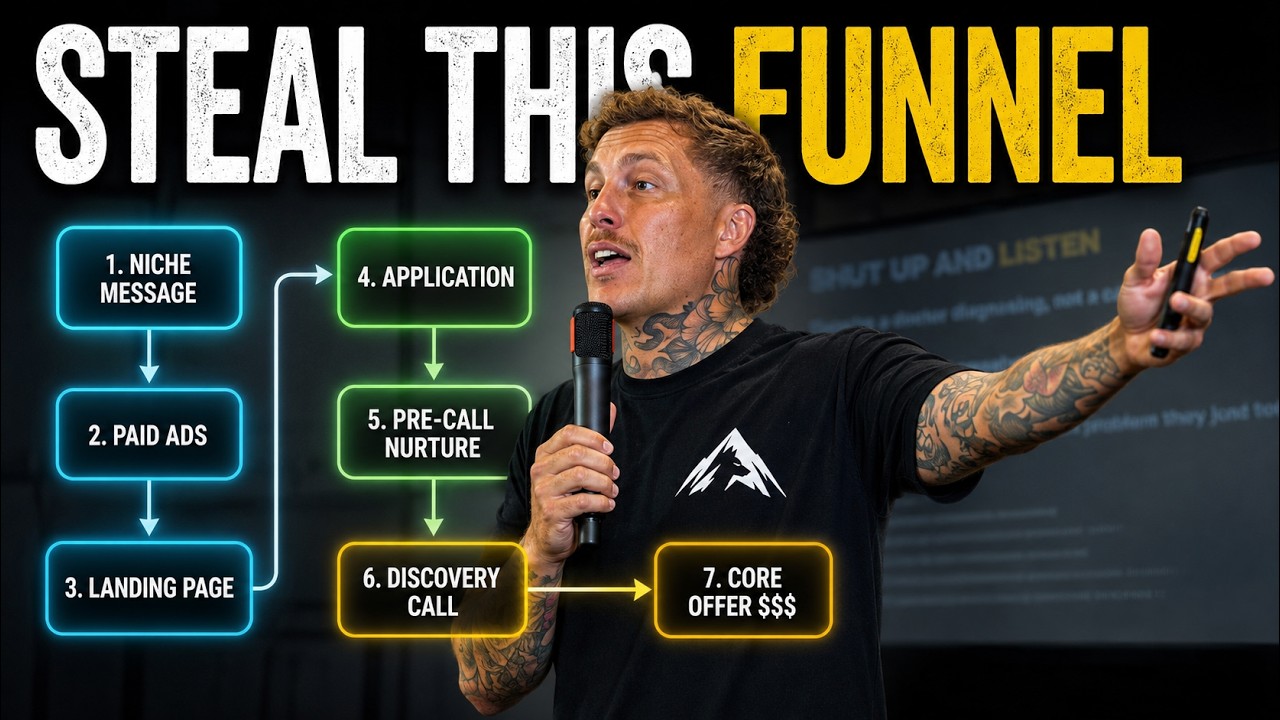
Stop Relying On Organic Marketing, Build THIS Funnel Instead (For Dog Trainers)
He Was Charging Too Little. I Fixed His Dog Training Business In One Session.