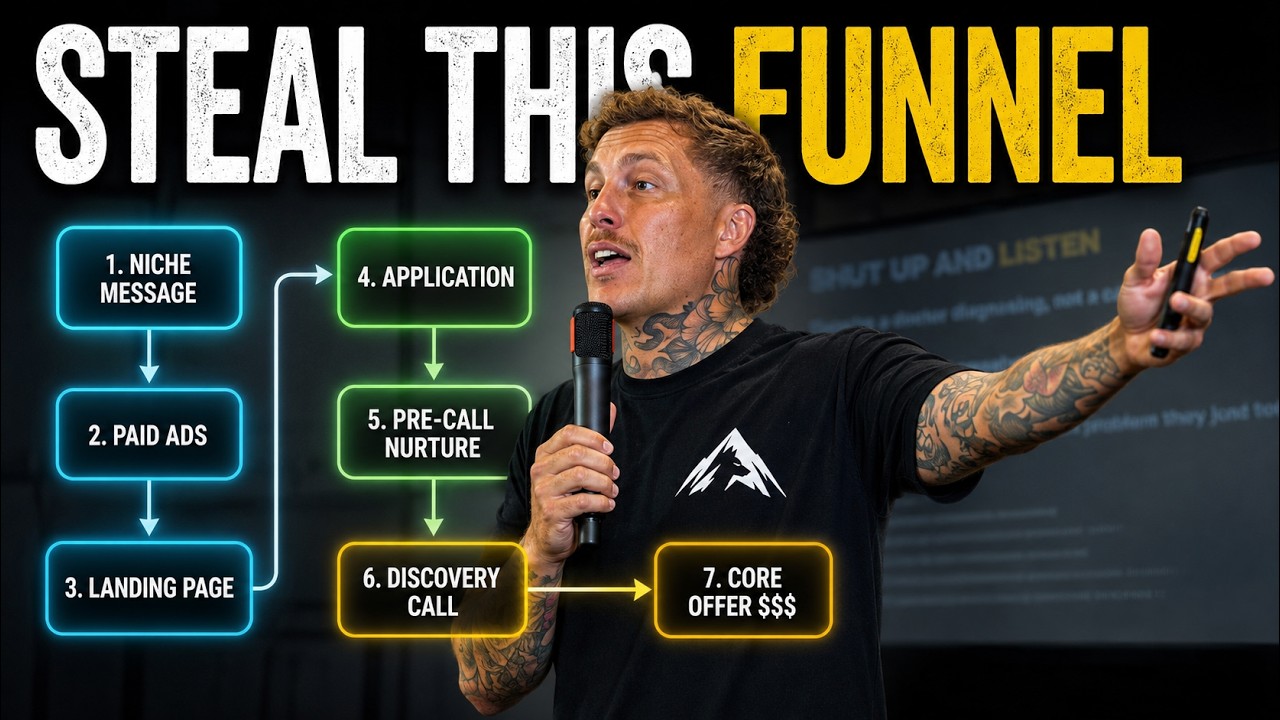
In this video, Jacob Morgan warns dog trainers that constantly repeating the same advice in one‑on‑one sessions leads to burnout and wasted intellectual property. He introduces the "three‑time rule": whenever a trainer finds themselves explaining the same concept three times, they must immediately create a permanent, scalable asset (e.g., a short video, PDF, or audio). This transforms repetitive teaching into a reusable product, freeing one‑to‑one time for refinement and high‑level strategy. Morgan illustrates the rule by describing how he built his Momentum Part 2 curriculum from the six most common mentorship topics, and he urges trainers to capture recurring questions (like marker words or hand‑feeding) in assets. By converting knowledge into assets, trainers stop being the bottleneck, reclaim hundreds of hours, and avoid burnout. The video concludes with a brief promotion of his mentorship and dog‑trainer development programs.
Chapters
This video is going to save you from burning out. As a dog trainer, you're not just losing energy, you are actively setting fire to your business. You are actively setting fire to your most valuable resource, your intellectual property. Every repeated explanation, every reoccurring piece of advice is a symptom of a broken system. So just stay with me here. It is a sign that you're operating as a manual laborer in a knowledge economy. Your expertise is an asset, but most of you are treating it like a disposable commodity. You give it away piece by piece, in one off conversations, in the DMs, in client sessions, especially with no system for capturing its value. You're essentially a leaky faucet of knowledge or a tap here in the uk and you're wondering why your reservoir is empty. We need to install a new operating system in your business. A system that turns your repetitive labor into a compounding asset. And it starts with a very simple rule. A rule that is so powerful, it will change the entire structure of how you work. I call it the three time rule. So the rule is this. If you find yourself saying, writing or explaining the same thing three times, you must immediately create a permanent scalable asset for it. It, with no exceptions, no delays. The third time you repeat yourself is not a coincidence, it's a data point. It is the market is telling you this is a reoccurring problem. This is a common question. This is a valuable piece of information and if you fail to listen to that data, you are choosing to remain inefficient. Essentially, this is going to save you from repeating the same lessons and concepts over and over again to each and every client. Because I, I guarantee by the time you get to the fourth, fifth, maybe sixth time, you find yourself repeating the same thing that day. It gets tedious fast. And for me that is why most dog trainers start burning out. Because they find themselves repeating the same thing over and over again to their clients. And again you follow the three question rule and that's going to stop you from having to repeat yourself. Your one to one sessions should be made for refinement, not education. We never actually teach anyone. We build an asset to teach someone the concept and then we use the one to one time we have with that client in order to tinker and refine the application of that concept. And that is what saves you from burnout. Because if every session is then different, instead of you repeating the same thing over and over again. This rule is the foundation of building a scalable business. And it is the mechanism by which you transform your personal one to one expertise into a one to many system. And it's how you stop being the bottleneck in your own system and perhaps most importantly, stop yourself from burning out. So let's look how this applies in practice. I just finished building the curriculum for my new program. It's called Momentum Part 2. So why did I build it? Because I found myself on my one to one calls with my mentorship clients repeating the same advice over and over again. The first time it's a conversation, the second time it's a pattern. The third time it needs to become a system. It's feedback that my curriculum, my teaching, has a gap and it's a signal that I need to then create an asset. So I took the six most common topics from those calls and I built them into a new course. And we do the same thing with our dog training services. So if the same questions regarding hand feeding or play or how to teach your dog place keep coming up over and over again, or you get the same problems or people are getting stuck at the same point, you need to create an asset to pre tackle those problems and pre tackle those questions so you don't burn out repeating yourself a thousand times. Now in my example, instead of me repeating the advice I'm giving out to my mentorship clients dozens of times in individual calls, my clients can then learn it from a single perfectly crafted asset where I nail it first time, every time. And our one to one time can be reserved for more like high level strategy and tinkering and problem solving, not just repetitive teaching. I've essentially captured my knowledge and then turned it into a scalable product. And this applies to your client delivery too. You're a dog trainer. How many times have you experienced client asking what a marker word is? A hundred? A thousand? The third time you explained it, you should have created an asset. A simple five minute video, a PDF, maybe even like an audio recording. From that point on, no client should ever hear you explain that concept live again. Because if they should, get the asset beforehand. And once you do that enough times, you can literally buy back hundreds of hours of your life. Now listen, this YouTube channel. I give about 1% of the information I have available because I don't want to disrespect my paying clients, eg, my mentorship students. So there's a couple of things you can do from here. You can either enjoy the rest of the channel or you can head down to the description, apply for my mentorship program, or if you're a dog trainer that has not yet learned how to solve people's problems. We have a dog trainer development program. That program might be more suitable for you. Anyway, I'll see you in the next one.