Biggest mistakes first time fund managers make with Gaurav Jain of Afore Capital | 1947 VC
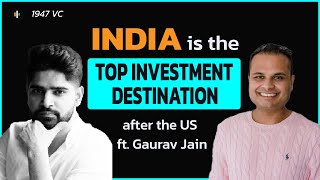
Gaurav Jain, co-founder of Afore Capital, shares what first-time fund managers get wrong: insufficient differentiation, underestimating the long-term commitment, and weak LP relationships. He built Afore by concentrating ownership, reserving capital for downturns, and running rapid experiments like founder-in-residence programs.
Chapters
The number one probably is just not having a high enough bar on differentiation, not having a high enough bar on whether the best founders, they'll see the best companies, or what the best founders will pick them, where the differentiation still feels incremental and not disruptive. And I think that's where some of those founders just have a harder time fundraising, right? Because if you see from an LP's perspective, they're just getting inundated with LP pitches. And I think pitches have to stand out for them to be able to underwrite that because they know only then will the founders, you know, pick them unless you obviously have a celebrity status or something that's different. But I think for the rest of us, right, that are doing good work and trying to build a franchise over the long run, I do think that bar has to be pretty high because it's gotten to be a pretty competitive space. Incremental thing is just having a harder and harder time getting funding.
Another day, another amazing guest on the pod. Today we had Gaurav Jain. Gaurav is the co-founder founder of A4 Capital. A4 Capital is one of the largest venture funds, $300 million in AUM, dedicated to super early-stage investments. Before founding A4 Capital, Gaurav Jain was an investor at a VC fund called Founders Collective, and before that, he was one of the first product managers for Android. In this conversation, we covered various topics starting from the founding story of A4 Capital, the importance of portfolio construction, and how one should should think about modeling their fund, how to fundraise, building relationship with LPs is a long-term game, the hardest part of the journey is getting to the first close, how to stay relevant by reinventing yourself, his take on the Indian tech ecosystem, who is he outside of work, and much more. Now I bring you Gaurav Jain.
Gaurav, I'm excited to have you on the pod.
I am excited to be here.
Thank you for having me.
How's the kids?
Kids? Now I got two under two, which is, you know, I don't think you have kids, so you don't know what I'm talking about, but it's a lot of fun, but a lot of work.
We'll dive right into it. How did you first get into angel investing and what was the founding story of Afor?
Yeah, I look, it's a bit of a meandering path and I'll take a slightly longer version of this. I grew up grew up in India, studied, the path was software engineering, IIT, hopefully I get in and sort of get a job at Microsoft in America. That was kind of like all I could see growing up in the '90s in Dehradun, which at the time was arguably a tier 3 city. I mean, now I think it's become tier 2, it's now a capital of a new state, but at the time it was a small city.
The family then moved to Canada actually when I was in high school.
So I was 15 when the family moved to Toronto, finished high school there, went to Waterloo to study software engineering like a good Indian kid, you know, did a bunch of different co-op terms or internships, worked at Amazon and Morgan Stanley, worked in Singapore, worked in London, worked in different places. And I think coming closer to graduation came to the realization that even though I entered Waterloo thinking I was going to become a software engineer, I think realized kind of halfway through that I was a good but not a great software engineer. A lot of my classmates were far smarter than I was, and I wanted to start something. I wanted to build a company. I didn't want a job per se. So a couple of buddies of mine from software engineering class, we started a company that eventually became venture-backed. So that was my first exposure to venture actually as a founder myself. Frankly, until we were told by somebody that we should go raise venture funding, I'd never heard of VCs, angels, you know, any of that stuff. I didn't really know this concept existed. And actually, I'll share a quick anecdote. It's a bit of a tangent, but when I was graduating from business school, my uncle who lives in India came to visit, and I explained to him what I do in venture, and, you know, we give million-dollar checks and blah, blah, blah, so company, you know, startup founders can build their companies.
And he like paused and looked at me and said, "Hold on a second.
So what collateral do you get for this money?" And I was like, No, actually, we don't get no collateral.
No, I don't have their house on mortgage or their car. We just write these million-dollar checks and kind of hope for the best.
So this idea of venture was actually quite non-obvious to me, especially growing up in India where, you know, at the time there wasn't much of a venture capital community.
But anyway, so that was my first exposure as a founder.
We raised multiple rounds of funding. That brought me to the Android team in the early days as a product manager with the mandate to help grow market share for the platform. At the time when Google found itself competing with Apple and iPhone.
You know, it was a fun journey.
I was there as we went from less than a million total users to about a million new users a day by the time I left. So it was a fun ride.
Went to business school and then I kind of flipped over to venture, right?
As in business school, it was like, what do I want to do next? Do I want to go back and start a company? Do I want to become a product manager somewhere else? Or, you know, this venture thing was always in the back of my mind as something I was intrigued by having been a founder. So started working an internship at this fund called Founder Collective. I really liked the team there because there was two of them who started the fund. They're still investing out of Fund 1, but they were both founders and operators first. So I really connected with them at that level, and they brought me on as the first investor to the team outside of the two of them. I joined them full-time when I graduated from, from HBS, which is where I went to business school. Was there for about 4 and a half years total. You know, I was lucky to invest in some really great companies. and then that became the genesis for us to start A4, because I wanted to invest even earlier than what I was doing at Founder Collective. So with A4 now, we're investing in literally founders, idea stage, inception stage, looking for their first kind of $1 to $3 million. We can lead that round and get them into business and get them to, you know, early sense of product-market fit.
Got it. And thereafter, how did you meet, you know, your partner at A4, and what was the founding story?
Yeah, so my partner, Anamitra Banerjee, also from India, she grew up in Calcutta.
You know, he's got a similar story. He came to the US for business school, and he was the first product manager at Twitter. So he was one of the first 25 employees there. And we met because he had left Twitter to become an EIR at Foundation Capital because he was thinking of starting a company. And I was a scout for Foundation Capital for Harvard and MIT when I was at Business School at Harvard. Um, and we met at a dinner hosted by one of the GPs at Foundation. You know, they wanted the scouts to meet, you know, the, the EIRs. And we hit it off and, uh, and really got along, maybe partially because we both were first-generation immigrants, we're both product managers, both software engineers, and both were not in venture, right, when everybody else was kind of already, uh, already very much in venture. Uh, so we stayed in touch and actually just did deals together didn't really formally start working together until 4 years after we initially met, which is when we started the fund. I moved back to San Francisco and then we raised Fund 1 in 2016. The rest is history, as they say.
Got it. So today you are managing over $300 million. So let's start with the first fund. How is the process like? Meaning, you know, you got the deck, Now you have a portfolio construction in place. Now, next step is to raise capital. What was the process like? Was it easy for you to raise capital? If not, how was the journey like?
Yeah, it was not easy at all. And it never is for most people, right? And because ultimately, look, for Fund 1, you're trying to sell yourself, right?
Is really the product. I mean, raising money for a company, which I've done before, is hard. But this in some ways is harder because like you're selling, you know, yourself as a story.
It's like, give me money to invest, give me money in a blind pool. I'll invest in companies that I can't tell you which ones they are, what they're going to do, who the founders will be.
But trust me, they're going to be good companies.
I mean, that's a, it's a pretty big leap of faith if you really think about it, right?
And especially the first time fund with like no track record for, for the fund. I mean, we had a track record from our previous firms, but nothing with Afor specifically.
It was not easy.
I'd say like, uh, the biggest thing where we spent a lot of time was around our story and differentiation, right? Like, why does a fund need to exist in a world where there's so many funds already, right?
And there is no dearth of capital, at least again in the US.
Like, I think of my context, right? Mostly focused in the US, mostly software, you know, early stage.
There are a lot of good options for founders.
Like, why should a fund really exist, right?
Who are the Founders that we're going to be able to source and convince to take our money. Why will they take our money?
And like, you know, what is our thesis? The way we see the world, is that different or is it the same as everybody else?
So we spent a lot of time thinking about that.
And because we wanted to convince to ourselves too that we should go do this for the next foreseeable future, decade, two decades, three decades, God knows how long, right? Like this was all we could see in front of us because Starting a fund is a very, very big commitment, right? And we can talk about, you know, why that is, but it's a massive commitment.
So we wanted to convince ourselves.
We spent a lot of time, months, kind of thinking through the strategy, iterating on the narrative, the pitch, the deck.
And then we started to talk to a few LPs.
Both of us obviously had gotten to know LPs through our previous firms, right? So that helped. That was sort of our first port of call, you know, with the blessing of the partners that we worked with.
And we shared the story, we shared our track record.
That was the other thing that was important to LPs to see is, hey, what investments have you made? Sure, it was part of another firm, but at least let me understand, like, what have you gotten involved with? Let me— and the other really, really big bucket is reference calls, right? Reference calls with your former GPs that you work with, reference calls with founders that you've invested in, like really just trying to understand the person, which makes sense in retrospect, again, because they're investing in us as people, that is really ultimately the product. They want to just triangulate or understand who this person is that I'm potentially going to back. I'd say the hardest part of the journey is getting to the first close because LPs, rightfully so, they're inundated with a lot of fund pitches, new Fund 1 pitches.
So they're trying to figure out, should I spend time even diligencing this or not? 'Cause a lot of funds never get to first close.
A lot of funds kind of start off with like, here's a strategy and we wanna start a fund, but they realize it's gonna be actually really hard to fundraise, not getting any traction, and they kind of move on, right? So LPs don't wanna really invest time until they kind of know this is for real.
Once you get to first close and you start to make some investments, there's still some room left in the fund, that's when a lot of LPs go like, oh, well, interesting. Like, this is gonna happen, let me dedicate some resources on this. So getting to first close, finding your first few believers is the hardest. And it's also hard because, Again, if you think from an LP perspective, right, there's actually not a lot of FOMO, right? Because they know first-time fund probably won't be oversubscribed. So whether I move fast now or wait a little bit doesn't really matter. The deal terms are the same, right?
Whether I'm the first dollar in or the last dollar in, kind of get the same deal.
Um, and you know, there's no like, oh, I have to fight for a board seat or a lead slot. Like, you know how like we have FOMO as, as GPs because I'm like, well, if I don't move fast Maybe I won't get allocation to this round because there's a limited amount of allocation. Or if I don't, you know, move fast, I mean, we're ownership sensitive. I need to get my ownership.
So if they commit to a whole bunch of investors and even there's allocation left, it might not be enough, right?
So there's a whole bunch of reasons why you live with FOMO as GPs.
LPs don't really have that, especially for first-time fund managers.
So convincing somebody when there is like no real strong incentive to be the first ones to commit for them to commit, That's definitely hard, right? But we were very lucky.
We got a few investors to commit that got us to a first close, which was just over half the fund.
And then, well, then you were in business, you know.
Then you started making investments because you closed some— close the fund, you've got some capital, and you can keep fundraising in parallel. And it took us a few more months after that to kind of finish it, for finish the entirety of the fund. And we were lucky, we were about 15% oversubscribed for Fund 1, and we've been similarly oversubscribed for Fund 2 and 3. So we've been lucky with the fundraise, but then I'd say for every yes, there was like 10 nos, right? And I think at some point you become immune to hearing nos.
And the other thing I would also point out is that there were LPs who passed on Fund 1, which ended up investing in Fund 2. And there are LPs who passed on Fund 1 and 2 and ended up investing in Fund 3.
So, you know, when they say like, look to build rock-solid relationships, there's a lot of merit to that because we've been beneficiaries of folks that, you know, initially passed that I was like, ah, you know, I said I really wasted my time to build these relationships. Turns out it was not, right? And I think a lot of these folks, you know, sometimes say like, okay, I'm not really quite there for Fund 1, let me see how this goes, and then maybe I can commit for Fund 2. So look to build long-term relationships with LPs because, you know, this is very much a long-term game.
Got it. So, uh, two parts to this question. One, uh, was there a process that you followed to keep the LPs engaged, the ones that had passed in Fund 1 or Fund 2 and they ended up investing. Secondly, if, you know, you said your Fund 1, 2, and 3, they were oversubscribed. If you were to pick one thing that has worked best for you, and the byproduct of it is that the funds have been oversubscribed.
Yeah, I think there's one thing, it'd be communication and transparency and sort of being very open with existing and new LPs on what's working, what's not working.
Uh, in fact, we do a quarterly call in addition to annual LP meetings. So most managers will just do an annual LP meeting, right, where they'll get the LPs in together and like, you know, talk through the, what, the fund performance and strategy. We actually do that but also do a quarterly call on top of that, right, because we believe once a year is just not enough cadence to really keep everybody abreast. Um, and there we go, you know, deep on like, here's what's working, not working in the last quarter, some new investments we made companies that may be coming up for air for next round in the next quarter.
So like that level of transparency LPs really like, because I think a lot of funds are black box, right?
It's that you, you make a commitment and you, you barely ever hear back from, from the GPs. Um, I think that is, is, is a feedback we get from LPs quite a bit. And again, being transparent about highlights, lowlights, what's working, mistakes we've made, what we've learned, things we could have done better.
I think LPs kind of like that iteration.
Because then, because look, LPs are looking to make a commitment for the long run, right? They don't want to invest in just one fund, they want to invest in multiple funds.
And hopefully, you know, this becomes the next big fund, next, you know, successful fund.
And they could say, hey, I was an early LP and like my, my slot is guaranteed because I was an early LP, and like so on and so forth.
Like, that is an LP success metric, right?
It's like they pick the next— whatever, pick your favorite fund very early on. Like, that in the LP land, in addition to performance, is like obviously what stands out. So I think I think giving them that comfort that you're thinking in that direction, you're executing to that plan, you're really self-aware, I think really helps LPs.
And, you know, a lot of times we invite prospective LPs to some of these quarterly calls and our annual LP meeting, right? Even though they're not LPs in the fund, we're like, look, we're open kimono, right? You should know not just like the sales pitch, right?
But also the board meeting essentially, right?
Like if you think of us as investors, like, you know, when you hear a pitch, when you see a pitch deck, that's like very salesy, right? When you go to the board meeting, that's when you get the good, bad, and ugly of the company, right? So it's like, can we give that level of transparency to LPs?
Because we feel, you know, very comfortable in our skin and we feel comfortable with, you know, being transparent.
I think that's one thing that's really stood out for LPs.
You know, I think building those relationships, keep, you know, not being transactional.
right?
As I mentioned, like the LPs who passed on one and two and then came in on the third.
Sometimes you have to like, you know, swallow your ego because you're like, if I hear no the third time, that's a lot. But, you know, look, you still, you have to be at some level, you know, a little bit divorced from the fact that this is, you know, this is ultimately business.
And just because they said no, again, it's not a judgment on us. Maybe it wasn't a fit for their strategy and so on and so forth.
We say no a lot, right?
But for every 100 companies we look at, I think we invest in 0.3 of them.
So like I say no way, way more than I say yes.
And so I think you kind of, you know, it's always hard to be on the other side, but I think it sort of helps that, you know, we get to also practice investing to be able to, you know, when we're on the other side as fundraising, as fundraising GPs.
I'd say those are probably a few things that stick out.
Got it. And so it's communication and you being empathetic at the same time. You understand, you know, no now doesn't mean that it would be the same, you know, answer later on if you keep showing the work, the progress, the traction, same as, you know, as you're tracking companies. And Gaurav, we talked about, you know, the importance of entry price. Why don't we talk about the importance of portfolio construction and how should one model a fund? Let's say I'm an emerging fund manager and I'm all in and I want to do a fund. How should I think about modeling my fund?
Yeah, look, I think portfolio construction is something that's fluid, right?
In the sense that as your fund size changes, as you're in, you know, fund 1, 2, 3, 4, or 15, like that can somewhat evolve over time.
But I will say this, I think it's steady state.
If you think from a first principles perspective, you know, LPs pay us and invest in our funds to produce outsized returns. And what I mean by that is, you know, research has shown that AngelList, which is arguably an index of early-stage tech venture, is actually a top-quartile fund. I.e., if you invested in every company, you know, on AngelList, you'd be a top-quartile, you know, you'd have top-quartile performance, which, by the way, means a few things.
One, three-fourths of managers are getting paid to underperform the index, which is, which is, you know, not, not great. Um, And by the way, it's actually not too dissimilar to what we see in the public markets, right?
And the public markets, passive index funds actually outperform vast majority of active managers and mutual funds, which is why I think mutual fund industry has been under pressure.
Um, so that you see a similar dynamic in the private markets. Um, so, so LPs should only invest in you as a manager over many vintages if they believe that you can outperform the index, right? And then, so not—
that doesn't mean top quartile, that actually means like top decile, or ideally top 5% or top 1%, right, of venture managers for that, for that vintage.
Well, how do you get there, right? I think there's two things you have to do to get there.
One is, of course, you've got to be in the, in the great companies, right? It is a power law business, i.e., a few companies, you know, generate majority of the returns and You know, for curious folks, you can read more about power law, you know, separately, but it very much does exhibit power law dynamics.
So you have to be in some of those outliers, right?
Otherwise, the venture model does not work, number one.
Number two, I do think ownership matters a lot.
So not only do you have to be in those companies, but you have to own a significant portion of those companies relative to your fund size. Obviously, smaller the fund, the smaller the ownership can work.
But I do think you have to, you know, have concentrated portfolio, which means relatively high ownership for your fund size, and get into those best companies, because only then can you truly outperform an index, right?
Otherwise, it's really, really hard to be able to beat the index, i.e., AngelList, and certainly, you know, um, you know, uh, be, be be worthy of LP commitments over and over again.
So, so first principles, outliers, right? Really believe in power law, and then like optimize for high ownership.
I think, I think those two things matter.
That being said, um, you know, building a fund is like building a business over time, right?
The product that what may look like on day one may be very different than what it looks like a year out, 5 years out, 10 years out.
The go-to-market strategy could be different, the customer could evolve. Pricing and really so many things involved in companies. Similarly, I think funds can evolve too, right? And I think initially in the first few vintages, you have to demonstrate that you deserve to exist, right?
That you—
that the world wants and needs your fund and you as a manager. How do you demonstrate that?
You demonstrate that by access.
Are the best founders, you know, willing to take your capital, even if it's like small allocation, but they're willing to take your capital? And you have to demonstrate that you know, out of the two variables that I talked about, at least one of them, which is I can, I can get into the power law companies, right, the outliers.
And then over time, as you, as you demonstrate success and you scale the fund size and so on and so forth, then you start to optimize for ownership as well, right?
And that's when I think you can truly have the ingredients of what it takes to be top 10% fund, top 5% fund. Um, so anyway, that's sort of first principles thinking of portfolio construction.
And then you can kind of work backwards on how to like actually construct the fund based on your fund size.
You know, the other thing I'd say is like reserves are also important, right?
Because in your best companies, you want to be able to defend your ownership, right? So you need to be able to reserve the funds for that. And then the second thing I'd say is, as evident from the last couple of years, the world doesn't just go up and to the right, can also go down, you know, and then can stay down for a while before it goes back again, up again. And you want to be able to defend ownership in your best companies when the chips are down, right? And there are already happening recaps, you know, pay-to-plays, so on and so forth. You got to reserve some capital where in your best positions in those times you can still be able to defend your ownership. So I think you have to be thoughtful about that as well because Again, your, your, your job is not just to deploy capital, but also like, you know, protect the LP's interest, protect your positions, and not just buy but also sell, right? And sell at the right price at the right time and the right kind of ownership.
So I think, I think, you know, best managers exhibit that level of thoughtfulness and LPs, LPs look for that. But again, if the first few vintages you haven't, you're still iterating, I think that's okay.
But there should be a path to get there.
Got it. And Gaurav Jain, you know, whether it's sports, politics, business, or anything, one has to reinvent to stay relevant. How do you at A4 think about reinventing to stay relevant? Not just stay relevant, also, you know, striving ahead.
Yeah, you know, we take a lot of inspiration from our portfolio founders, to be honest. You know, the one thing I've learned, I've been doing this for 11 and a half years, early stage venture, um, is that when I draw kind of lines of common patterns across the best portfolio companies I've invested in, or the ones that haven't done so well, there is no pattern I can find in terms of like where they went to school, or like if there was like an IQ test, how high their IQ was, or, um, you know, even who they raise from or how they, how much money they raise.
Like there's some correlation, but it's like fairly weak.
I'd say the one common pattern that I have found is just how willing they are to like iterate and, and like be really self-critical and really like lean on the customer on like, does the customer really care about my product or not?
Are they willing to pay for my product? Are they willing to use my product? If not, why not? Let's keep iterating. Let's go back to the drawing board.
Let's like, you know, just like that cycle has to be as short as possible.
So you just get a lot of shots on goal and then eventually you kind of figured it out, right? So like sometimes some of our portfolio companies started off in a market that we were like not so jazzed about, right? But they quickly realized that that was actually not a good market and then eventually pivoted into something, a really good market, right? So like that's why I can't even say like the common pattern is like market size, 'cause like the best founders figured out the market. Pretty quickly is not a good one, and, and they find something that's, that's much, much more exciting. So we, we take a similar kind of approach with the 4. It's like, look, we started off with a hypothesis around—
it was pre-seed for us, right? This idea that there's a gap in the market where there were very few funds willing to write meaningful check, you know, upwards of $1 million, pre-traction, pre-product, pre-revenue, right? There are a few options, mostly like, you know, accelerators like YC, you know, who have you know, the terms are pretty, uh, pretty aggressive for like, you know, um, you know, angels and stuff, but not many, not many other, other options, right?
Um, so, um, so we said there's a gap in the market.
That's the hypothesis we started off with.
Um, but, uh, but we've evolved over, over time, right?
In terms of our, our, our one example is, you know, we actually started off with a portfolio construction where we were gonna write small checks across many companies cuz we're like, wow, we're doing pre-seeds, must be really high risk. And like, hence we should kind of diversify our risk. Then quickly we realized that like our best companies go from pre-seed to Series A, so like it's hard to increase ownership at that price. So like we should, if we have conviction, we do the work, we believe in these founders, believe in these companies, we should just like really go all in and write a much bigger check and build a more concentrated portfolio.
But that was like done mid-flight, right?
And we were comfortable with changing the model, changing the portfolio construction, went back to LPs and said, this is what we're going to do. Moving forward.
Um, and there's examples like that across the board.
I mean, if you look at the number of initiatives we launched over the last few years, it's, it's for people in the venture industries a little overwhelming, right? Because like most GPs, it's like they do the same old thing every day, you know, look at their inbox, what deals came through, do some diligence, invest it on boards, blah blah blah. But we've like, we, we run the Pre-Seed Summit, which is like the industry meeting kind of event for, for, uh, founders at this stage. We've had founders of Doordash and PayPal and Stitch Fix and, you know, all these companies coming to speak. We just launched a Founder in Residence program where we're going like negative 1 to 0, right? So like we're helping founders build conviction in their ideas. We ran a program called Angel to Fund Manager where we're helping angel investors raise their first-time funds.
We ran a program called Zero to One.
We were helping founders kind of get their company off the ground. And there's probably another dozen different initiatives we've run over the last few years.
Some we ran as a hypothesis, realized didn't work, we canned it, we moved on. Some have worked really well and we've stuck to it and we've expanded them. So there were constantly this experimentation mode. And internally, the marching orders for the team are, if you have a good idea, pass it by the team.
Unless it's like a crazy stupid idea, we'll probably gonna greenlight it. And then you run with it, you own it, take it, you know, run it all the way and then share kind of the learnings with the team. And if you want to, if it makes sense, let's go expand it, put more resources. If not, then we move on. And the team has an incredible amount of latitude to experiment, try different things, and, you know, there's gonna be no judgment if things don't work. So I think if we create that kind of culture of experimentation, which again, we're just walking the talk, 'cause we're learning from our best founders who also have that similar kind of experimentation, you know, mentality.
So it's not about 10,000 hours, it's about 10,000 iterations.
Yeah, totally, right?
But I think the question is like, how much can you achieve in 10,000 hours, right? If you, if you are working linearly, you have a certain level of like learnings. And if you are just constantly iterating, again, with very short, you know, cycle times, you're just going to make so much more progress given the same amount of time, right?
So you have to put in the hours.
I think there's no two ways about it because again, 9 women cannot produce a baby in a month, right? So like, we cannot accelerate how many experiments we can run or how fast we can run. There's only— there's only— it takes a certain amount of time to put these things up, get them out there, you know, run them, get feedback, and then learn from it. So, you know, we do our best to move fast, but, but it's only that much we can do. But I, I do think having that mentality just changes the output at the end of the 10,000 hours. Yeah.
Uh, and Gaurav, you know, you've been a, uh, first-time fund manager at some point. You also run a program where you help you know, first-time fund managers raise capital or even do a fund the right way. What do you think are the top mistakes that first-time fund manager makes?
I'd say the number one probably is just not having a high enough bar on differentiation. Right. Not having a high enough bar on whether the best founders, they'll see the best companies, or what the best founders will pick them, right? Where the differentiation still feels incremental and not, you know, disruptive. And I think that's where some of those founders just have a harder time fundraising, right? Because if you see from an LP's perspective, they're just getting inundated. Way the LP pitches. And I think pitches have to stand out for them to be able to underwrite that, because they know only then will the founders, you know, pick them. Unless you obviously have a celebrity status or something, that's different. But I think for the rest of us, right, that are doing good work and trying to build a franchise over the long run, I do think the bar has to be pretty high because it's gotten to be a pretty competitive space, right? And the incremental thing is just having a harder and harder time getting funded. I'd say the second thing is probably not internalizing how long of a big of a commitment this is, right? I love being a founder of a fund now and building that franchise, but I don't know if there's like a binary answer of like, that is the only way most folks should go. There's also like, if you can join a great platform where you don't have to worry about fundraising and all the other overhead of building a firm, maybe that is the right answer for a lot of folks, right? Because they're really good at investing and they don't want to deal with all the overhead that comes with building a firm. I spend, unfortunately, a disproportionate amount of time on like fundraising, LP management, you know, just like firm operation stuff and building the team, mentoring the team. There's a lot of stuff, right, that takes away from the investing part of the, the job. And I think you have to be truthful to yourself, right? And what, what do you really want to do? Do you want to just be an investor? And I say just, it's not easy to be a great investor, but like, is that what's where your passion is?
Or do you want to build a firm around that, which will take away some time, right?
Maybe a lot of time initially from being an investor. And, and like, just internalizing that trade-off is important.
And at A4, Gaurav Jain, uh, you invest, uh, globally What's, you know, what's your take on the Indian tech ecosystem? And I'm from India, I'm a founder, I want to raise capital. If I were to raise capital from A4, from Gaurav Jain, here are a few things that I can keep in mind. What would those be?
Yeah, you know, while we're based in San Francisco and very much focused on North America. We do invest internationally. In fact, I've made 2 investments so far in India.
You know, I would love to invest in way more companies in that.
It's obviously an exciting market for so many reasons. And obviously folks in India know, so I don't need to preach to the choir, why it's such a special market, especially, you know, ex-US is probably the most exciting market to be investing in as an early-stage VC.
So, and for us, you know, it all comes from the same bucket, right?
We don't have a separate international fund. We're not going to write, you know, small call options. So when we invest in India, it's coming from the core portfolio. It's a core investment. We're writing a check of the same size as we would for an SF-based company. I think for us, obviously the question, you know, the bar will be higher in some ways for a founder based in India because we're always asking the question, why am I so lucky to see this deal when there's other great investors in India. So, you know, we look for more of a network-based introduction where, you know, I could say, oh, here's a— for example, I invested in a company out of India where I got the introduction through a founder who I invested in who's based in the US. But he went to IIT with the founder of this company based out of India that I invested in. And it was like, look, he's a buddy of mine back from IIT, and I really like him. He's not really raising yet, but he's thinking of starting his company. You're one of the first ones to see the deal, right? So there I can kind of answer the question of why am I so lucky to see it. But a lot of other times, obviously, you know, a bit more, a bit more skeptical, you know. I think it's the same kind of questions we ask, you know, our other investments we make, right? Is this the right team? Do they have that level of authenticity in terms of the use case, right? Where they were doing something else, stumbled upon this opportunity or this problem to solve, and then now they want to go off and solve it.
Or they did—
they read something in TechCrunch this morning and said, oh, you know, this sounds like a big market, let me go start that It can work sometimes, much harder.
We feel like we look for more, you know, that authentic trajectory.
You know, ideally one of the founders is technical, so, you know, they, they can build a product and get that up and running, you know, within the founding team itself. Um, you know, an interesting insight, a non-obvious insight on the market, you know, what a lot of people call earned secret, right? What do they know about the market and the use case that it's not obvious to, to a lot of other folks, sometimes even inside the, inside the space.
So again, you look for some of those things.
Obviously, trend lines matter. So there's obviously amazing, incredible trend lines in India across so many things. So, you know, there's tons and tons of opportunity. But I'd say the best way to get in front of us, obviously, is to get an introduction. We're fairly accessible. Lots of friends in the local VC ecosystem. Obviously, now we've got a portfolio in India, and there are probably many other ways to get to us. You know, there's also an alpha program that we run. So, you know, you can just go on our website and also apply for funding because You know, one thing we realized was that, you know, while we have a great network for inbound, you know, we want to make it easier for folks that are not directly connected to us to get in front of us. You know, we get hundreds of applications through that. So obviously it's a little bit— we go through every single one of them. It's a little bit harder for us to obviously, you know, sometimes pinpoint exactly where there's gold. But, you know, we go through every single application and we've made investments out of that program as well. So, you know, feel free to apply there as well.
But, you know, otherwise we're very much open to business to India.
I think there'll be some great companies built there.
Got it, love it. Looking forward to seeing you doing more deals in India in the future. And Gaurav, with this, we'll switch gears. My co-pilot in the back, his name is Alfonso, and he wants to get in. He got some, you know, questions for you. He's asking, he never asked directly, he'll just ask me to ask the guests.
Love it.
It's a generative AI copilot, right?
Yeah, I'm not sure if he's too happy with generative AI. He's like, I just want to be just authentic.
I can tell from his face he's not very happy right now.
Yeah.
So Gaurav Jain is asking, what are you most obsessed about outside of work these days?
Yeah, I think this might be an unsatisfying answer, but like, there's only two things I'm really obsessed about right now. One is building Afor, and like, that occupies so much of my brain. I think you only realize when you're a founder, it's like, you know, you're only—
you may be putting 10, 12 hours in front of the computer or in meetings, but like, man, whether you're sleeping or working out or whatever, the brain's constantly just thinking about work.
right?
So that's a huge obsession, and partially because we feel like for us as a 4, we've ourselves gone from pre-seed to Series A, like we found product-market fit, but there's so much more we have to do to become a real firm that matters.
So that is something obviously I'm very obsessed about. And then family, right? I've got 2 young kids, and you know, they're growing up in a very interesting time, right?
I mean, I see some of this generative AI stuff, and it's it's going to have a meaningful impact on just exactly how the world evolves and society pans out and what the jobs are going to be in the future and good and bad, you know, impact, by the way, right, on society and like sort of how I can influence some of that, the work I do with the investments I make. And of course, just spending time with them and getting joy and meaning in that moment.
I said those are two really big things.
I am, And those are probably the two big buckets.
But I think that'll, you know, evolve over time.
Hopefully I'll have more time to spend on other things.
But right now it's the brain only functions in two modes.
And Gaurav, what's your relationship with health?
Could be, you know, physical, mental, nutritional.
You know, growing up, given the generation I'm from, there was definitely a lot more awareness on physical health.
Cardiovascular, especially is like somebody from Southeast Asia. So, I've tried to maintain a fairly decent routine. I've got a Peloton at home. That's frankly as much as I get because given the schedule, it's hard to like, unlike you, I don't get a time to play tennis or any of that stuff. It's very much like, can I get a workout in through my Peloton?
That part, but that part I've known for a long time, right?
Is physical health is important. I've invested in that. But over the last, I'd say, 10, 15 years, especially since I became a venture-backed founder, you know, 15-odd years ago, I've really come to appreciate the mental health part of my life as well.
And I've realized just how important mental health is and how relative to how important it is, how little focus it gets.
And I think part of that is also growing up in India. I think mental health is stigmatized still. It's changing thankfully now, but it's always been stigmatized and it's always sort of like shoved under the rug, right? And I think I was a product of that.
But the thing is I've realized it's a real thing.
I'm actually invested in companies that support that. So I was a first lead investor in a company called Modern Health, for example, which is sold through employers as a benefit for mental health. Because I've come to realize that mental health for our generation will be what physical health was for the previous generation where you know, for my parents early on, like cardiovascular awareness and physical health awareness wasn't quite there. And then kind of it became, became to be the case. I think we're going to go through a similar, or we are going through a similar journey with mental health, right? Where my early years there wasn't as much awareness, but that's going to hopefully change over the next few decades. There's going to be as much focus put on mental health as there was on, there has been on physical health.
So I've tried to, through my investments, really make an impact, right?
I've invested in a company recently that's helping with mental health for adolescents, right? Sort of like, think of like, you know, youth, you know, sub kind of 25-year-old, 25 or sometimes sub-18-year-old, especially with serious mental health issues, which is becoming worse, unfortunately, because of social media and so on and so forth.
So I've made investments in that space. I try to invest myself in terms of meditation once a day.
I am guilty of not always maintaining that practice, but I try to like, you know, invest in that because I get, I've realized it's so important, especially, you know, with our just constantly, you know, on kind of, you know, brains. We're always like thinking about deals, thinking about fundraising, whatever else is going on. I think it's really important to invest in the mental health part of it. And then now, you know, all these sensors and stuff are coming, which are giving us more insights into, you know, into what's happening in our bodies, again, both mentally and physically. So that's—
I'm very data-driven.
So I think that data really helps me make decisions. For example, I've, you know, I never used to drink much, but like, you know, socially one drink or whatever a week or something, but even cut that out because I noticed my recovery scores just plummet the day I have a glass of wine or the night that I have a glass of wine the next day. So yeah, I think some of that data would be obvious to you unless it was for something like a Whoop, for example.
And I'm sure we're starting to hopefully see some data similarly for mental health.
I still think we have so, so much lack of data on what's happening in our brains and our mental health. Hopefully that comes to the surface over the next decade or two. That's going to change our behavior. And I want to be at the forefront of that.
Very interesting. You know, mental health to our generation is what physical health was to our parents' generation. And very interesting point you picked up, Gaurav, that we don't have any way to get data around mental health or what's going on in our minds. And I'm excited for that. If something, a technological thing comes around that. Love it, uh, Gaurav Jain. I had a lot of fun chatting with you, and thanks a lot for doing it. Really appreciate it.
Oh, thanks for having me. I hope it was, uh, it was helpful. Uh, thanks again for, for, for, for, you know, really taking the time. And as I said, I'd love to invest in more India-based companies, or global companies for that matter. So if you're an early-stage founder, please, uh, pretty easy to find, just first name and or on Twitter or LinkedIn or, you know, all kinds of socials. So thanks, Shiva, for having me, and good luck with your phone.
More from Gaurav
How Soon Will AI Power A Billion Dollar Company Run by One Person? W/ Henry Shi & Guarav Jain | Ep11
Episode 28: Catch the attention of investors with non-obvious insights | Gaurav Jain
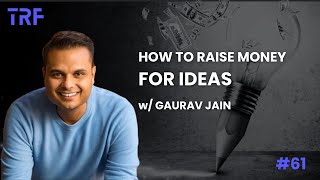
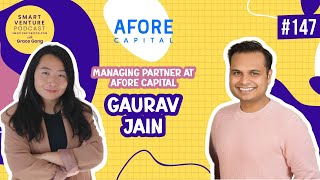
Early-stage Success: Insights From Afore Capital's Gaurav Jain on Investing in Pre-seed Companies
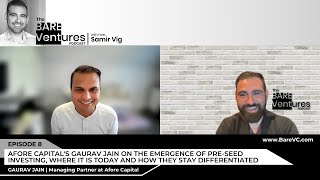
Afore Capital's Gaurav Jain on the Emergence of Pre-Seed Investing and How They Stay Differentiated