Early-stage Success: Insights From Afore Capital's Gaurav Jain on Investing in Pre-seed Companies
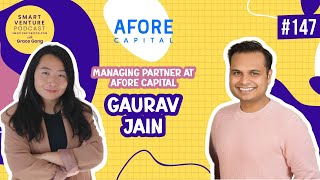
In this Smart Venture Podcast episode, Afore Capital partner Gaurav Jain discusses his personal background, investment philosophy, and operational approach to pre‑seed investing. He explains how his early career in finance and consulting shaped his analytical mindset, and how Afore’s F4 fund focuses on founder‑first, execution‑driven companies. Jain details the deal‑sourcing pipeline, due‑diligence criteria, and the importance of founder authenticity and product‑market fit, citing portfolio successes like Cruise and Airtable. He describes Afore’s founder‑in‑residence/incubation program, post‑investment support, and the dynamics of fundraising and limited‑partner relationships. Jain also shares personal insights: balancing family, work, and sports interests; his “unfair advantage” of being supportive yet demanding to build trust with founders; and his content diet, which is heavily weighted toward podcasts consumed at accelerated speed. The conversation concludes with advice for emerging solo general partners, emphasizing relationship building, disciplined focus, and leveraging personal strengths.
Chapters
plastic bag flies across the highway, you and I know it's plastic bag. You drive right through it. Founders in our portfolio. So we try to understand the authenticity of the founders. What is a trajectory that allows them to be the right person to be building this? You know, we do a lot of work on the team, the idea, the market, the timing, and then a lot of work post-investment.
Welcome to the Smart Venture Podcast. We're here to bring you the latest and greatest from Silicon Valley, where unicorns roam and innovation never sleeps. We've got top investors, superstar founders, and well-known tech executives lined up to share their secrets on building and investing in successful companies. Just a quick disclaimer: while we may sound like financial geniuses, but please don't mistake us for your friendly neighborhood financial advisors. So let's get started and dive into the wild world of tech entrepreneurship. Thank you so much for coming on the show today, Grace.
Thanks for having me.
It's a pleasure. So to give the audience a little bit of background, you grew up in India, you moved to Canada when you were in high school, and then later on you studied software engineering in University of Waterloo. And then you realized that you didn't really want any job. You only wanted to be a founder, and then later on you joined Founder Collective and invested in many great companies. Cruise was one of them, the founder was on our show before, and then Airtable was one of them. You invested in a lot of unicorn deals, and then later on you started F4. It's been like over 7 years since starting, and then you guys invested in many amazing companies. So to start off the show, I would love for the audience to learn from you about maybe one lesson that kind of impacted you early on in your career that kind of shape you into who you are today?
Yeah, look, there's been so many lessons along the way that I've picked up. I'd say the one that has always struck me, I think it might be a Steve Jobs saying, and maybe he didn't invent it, maybe he heard it from somebody else, but the idea is that you really connect the dots looking backwards, not forward. You know, I'll give you an example. You know, I grew up in a tier 3 city in India, you know, and India's come a long way over the last few decades, but you know, when I was growing up, there wasn't as much access to opportunity and like exposure. This is kind of the very, very early days of the internet. Like, you know, I was growing up, I was in, I was in like middle school in the '90s, you know, and like late '90s and things like that. And the internet was just sort of starting to come to the fore. So like, you know, the exposure to opportunities, what you can be one day in your career was limited. So growing up, all I could see was like IIT, which is obviously one of the best tech schools in India, and like become a software engineer and like, maybe make my way to the US. Like, that was sort of the, like, North Star. Like, if you— if I could have any dream, like, that was right. My family moved to Toronto, so the aperture expanded a little bit, right? It started to think a little bit bigger. And I went to Waterloo for software engineering, kind of again along that path of becoming a software engineer. And I remember when I started at Waterloo, like, Microsoft— this is like in 2003— Microsoft was like one of the coolest, like, tech companies, right? And one of the best jobs you can have. So like that was the north star. It was like, okay, not just get into the US, but I wanna work at Microsoft. So like that was like the dream. And then, you know, I worked at a bunch of different places including BlackBerry back in the, back in the day when it was still a cool company, worked at Amazon in 2005, worked in Singapore, worked in London, and sort of the thinking evolved to say, okay, you know, maybe, maybe I don't wanna be a software engineer, or maybe my career aspirations a little bit different. And I wanted to be more on the business side and that kind of led me to start a company because I wanted to solve problems and build something. And then, you know, when I started a company, I didn't know what venture capital was, right? I mean, especially growing up in India, like that concept at the time did not really exist. So when I learned about venture initially, it was a little bit crazy. I was like, so somebody will give us $1 million, like, and not take my house or like my car, like, is it a loan? Like, what's the catch? Venture, right? And it's like, you give it a shot, and if it doesn't work, like, no harm, no foul. And it's just a little crazy, but, you know, I learned about venture. We raised venture capital, and that sort of first opened my eyes to, like, venture capital as a job, right? As a business. And I was like, oh, this is kind of interesting. Like, they get to work with lots of different founders, help these businesses grow. Like, sounds a lot of fun. But, you know, I was kind of going, building a company at the time, and that then brought me the Android team and then business school. And it wasn't until business school I started thinking about, okay, like, what do I want to do next? And I was like, venture was something that's really interesting that I kind of heard about a few years ago. Let me see if that's something could be my thing. And I first worked part-time, and then I ended up joining full-time. Anyway, point being, like, if you asked my 15-year-old self or 12-year-old self that, like, you know, I told him, like, this is what I'd be doing 20-odd years, I'd, like, I wouldn't believe you. I'd, like, I don't see how what I want to do today, where I am, how that leads to where I, where I've ended up. And I think you have to be, like, open-minded to that. And I think I've always just focused on, like, the next thing, and then, like, maybe, maybe think a little bit about the thing after, but not too much, honestly. Just like focus and do a really, really good job with your next thing, but constantly be learning and like evolving as a person, as like my aspirations and dreams. And I think looking back when people ask me like, how'd you end up at Venture? Was that like always your plan? I was like, like, no, like I, you know, unlike some VCs here, like my dad was not, not a VC and like I did not grow up in Silicon Valley and I did, no, I did, I had a very different plan in mind and I've ended up somewhere very different. I'm very happy for that. But like, I think you just have to, so But I find that some people are so like programmatic about like, oh, I'm going to do this, this, this, this, and then like 20 years I'll be doing that. I just don't know if life works out that way. I think you just have to focus on the short term, do a really, really phenomenal job with some idea for the long term, but just, you know, give it your 150% and good things will happen.
Yeah, totally. I love what you said about doing things 150% and then see what's going to happen. And I wonder selfishly, I'm going to ask you a question about parenting or just growing up. I have a 4-month-old now and then like I really want to train him to be someone like you. Who is like, you know, self-motivated and all that. I wonder what were things that your parents did differently back in time that helped you to become a motivated person on your own?
Yeah, you know, it's a good question and it's a good question because I also reflect on that a little bit and I've got two young kids and, you know, I try to figure out how to like give them the right values and work ethic. You know, it was a mix of like, I guess, carrot and a stick, if you may. Right. Like sort of, you know, you give the guidance online because I think, you know, I feel like sometimes, especially in America, things go a little bit too extreme where kids have too much agency and too much, like, aperture's too wide on, like, what they want to do and what they want to experiment with. And, like, and I don't know, like, I think at least for me, I was not very mature, right? Like, for the— maybe not even now, but, like, for the longest time, to have some level of guidance where, like, for example, my dad was like, look, I think software may be the future, right? I think, like, and again, growing up in the '90s, like, and especially coming out of the dot-com bust, like, a lot of people were like, ah, software is dead, don't worry about it. Like, like it's crazy to become a software engineer now. And I think he had that fortitude to be like, no, I think like this is, I feel like there's still gonna be a lot of value creation here. You should like do this. And if it wasn't for that, I'm not sure like I would've figured it out. 'Cause you know, when you're a kid, like the shiny object is what you get excited about. Like I remember like my first, my first flight when I was like, I don't know, 6 or 7 years old and went to the cockpit and I was like, oh my God, this is so cool. Like I wanna be a pilot, you know? But like it's just 'cause it was cool, right? Like it wasn't necessarily what I, generally wanted to do or, or was best use of my skills and talent. So I think there was that, but at the same time, giving, like, not being overly, you know, prescriptive about it and, like, letting the kids kind of also discover what they're really good at and, like, what their skill set is. I think it's like a, it's a tough balance to strike, but I do think that's the right balance where you don't want to completely leave them on their own, but you also don't want to be too overly constricted, which I feel like, certainly in India, like, sometimes things can be a little bit too much, like, no, if you're not a doctor, lawyer, like, or an engineer, maybe, you know, it's like, that's it. It's like game over. And I think kids, you know, don't end up realizing their potential, you know, if you are too prescriptive.
Totally. I love that. I feel, you know, giving some guidance but not limiting certain things that they really, really wanted to do is like super important. And like, since you mentioned about your dad mentored you to like go to do software, I wonder who is on your personal board of advisors when it comes to picking a career and then especially in venture, I feel like a mentorship-driven business. Who did you learn from when you were at Founders Collective or, you know, doing things before you started F4?
Yeah, you know, I don't have like a personal board of advisors in a very like formal way. I know some people are like, oh, this is my formal mentor, and that's great for them if that works. I think where I've struggled with that concept is like folks that I would want to mentor me like formally are too busy to like doing their own thing and they're like, I don't know, this commitment of like a certain number of hours. Like, and I've, I've sometimes made that ask and people are just like, look, I'm happy to like spend some time with you, but I don't wanna make any commitments that like I feel guilty if I can't follow through. So yeah, I, I've always struggled with like a formal group like that. And I, so I've, I've felt I've learned a lot with just like osmosis, just being around really, really smart people who are several steps ahead of me and like, and, and just being a lot of times fly on the wall and like just being in around them. I think, I think it's really helped me learn a lot. And I think that's a low kind of friction way for people to help you as well, where they're just kind of going about doing their thing and then you, you kind of wedge yourself in. So for me, when it comes to venture, it was really Founder Collective. And I think, I think venture specifically is very much an apprenticeship business because there's a lot of art to the business and it's not just science. Because, you know, when we're investing at the stage where we do, it's like founders and an idea. It's like, especially first-time founders, it's like, how do you know if this is going to work or not? Is this a big problem to be solved? Could these founders really build a company? Like, a lot of it is like hard to quantify in like an Excel sheet. So I I think you want to be around smart people where you can see sort of how they make decisions, what gets them excited, what doesn't get them excited. And not in a way where they're teaching a class or like sitting down with you one-on-one and like giving you the lesson, but like you're just in board meetings with them, you're just in those diligence meetings with them. And I think I was very lucky. I was at Founder Collective for 4.5 years. I was the first person to join the team full-time, you know, back in the day. And, and I've grown a lot and, and still apply a lot of those learnings that I picked up at Founder Collective.
Totally. I guess like, so what were some lessons that you've learned? So like we could use maybe like some of your like portfolio that I personally very interested about, like, you know, Cruise or like Airtable. Like how do you find these deals? And then like I feel like they must be like super competitive to get in. So I wonder like how did you kind of like position yourself and like your firm to like be able to sneak a check in?
Yeah, yeah, totally. You know, look, it is competitive, but it's not competitive at the same time. Right. It's weird. But what I mean by that is we don't see as much competition in the way one would define competition, which is like zero-sum game, which is like, I really wanted to do this deal and I couldn't do it because I couldn't get allocation. It does happen once in a while, but not very often for a few reasons. One, you know, we're investing very, very early, right? So like these companies have the— usually don't have a product in market, have no revenue and like, you know, no customers and so on and so forth. And most VCs want to invest when there's some traction, like customers I can call, do some diligence on, on the market and so on and so forth. And hence, I'm very happy to have somebody like us do the deals before them, right? And the other investors on the cap table alongside us, the round where we invest, tend to be angel investors, and they're not very sharp, right? They're writing small checks, $25K, $50K, and we can— a lot of times we bring them in, right, to say, hey, I think you could be really helpful, you should come along on the, on the ride with us. So, uh, it's not competitive in that sense a lot. And of course, keep in mind we're at the top of the funnel, right? There's, we look at 6,000 companies a year, for example, we invest in 10. So like, it's like very, very highly selective. I'd say our competition is our deals we never saw, right? And it's essentially like our competition in some ways is ourselves, right? Because there's so many companies getting started and we can only cover so much surface area, right? Given the small team that we have and, you know, you wanna keep the team small so we can move fast. We're nimble. It's not a lot of coordination overhead. And because of that, there are founders who were not able to get in front of at the right time, you know, or for whatever reason they were not on their top 3 list. I think that's the problem we try to solve all the time. And then the other competition we have is when we fail to imagine the future alongside the founders, right? So for example, Carta, which is a company that does historically some capturable software, like the founder Henry, he pitched me, I think like 2 times, maybe more, and I just failed to imagine how big Cardano could be. 'Cause I, I was so stuck on like cap table software. I was like, oh, that sounds like a nice to have, like cap tables. Like how many companies in the world really have like cap tables? It's really startups, you know, like is that really a big company? And like, I just failed to imagine, you know, just how big it could be. And like those are like, looked at Solana when it was getting started and like, you know, we weren't very deep in crypto, so like I, I just couldn't again imagine just how big Solana could be. So I think that's another place where we sometimes struggle, but I feel like we're pretty differentiated is the fact that we go in very early, right? Again, we're going in pre-traction, which most investors don't want to do. We write meaningful checks, right? We're writing, investing $1.5-2 million, which is pretty much the entirety of the capital these founders want to raise. We give them a fair price, a fair valuation for the company. We spend a lot of time helping them get to Series A metrics, get to product market fit. So I feel like given just how unique our product is, you know, losing deals we want to do hasn't been an issue. But, you know, there's obviously other things we're working on.
I wonder, so like, I feel like, let's say Cruise or Airtable, if they pitch me, I would have very different mental— I would be in a very different mental space to think about each company, right? Like Cruise is self-driving car, that's emerging tech. It's like, happens, it can be like a really big thing. And then if it doesn't happen, it's like my money is gone. So it's a really risky bet. Airtable is kind of like a better Excel sheet. Vibe thing, it's a lot safer when you look at it. Like, since you have worked on both deals, either source or led the due diligence, I wonder when you encounter deals like this, you encounter these two kind of deals, what's your thinking process like? And then as you mentioned, you look at 6,000 deals a year and then you invest in 10 of them. What are things that you would— besides like the earned insight, Morden House, like about like these other companies, like besides the earned insights, I feel like each founder, when they pitch you, they must have something to talk about. But like besides that, how do you kind of like do due diligence to kind kind of like pushing the deal forward.
Yeah. And I think let's just take Cruise and Airtable as two examples. And in some ways they are a little bit of an exception because they're more binary bets than I think a lot of companies are. Right. To your point, Cruise, you know, trying to go after a very big vision. If it works, it's massive. High chance it doesn't work. Airtable, the same thing. Most companies tend to be a little bit less binary than that, though venture capital largely is a binary business where a few companies end up accounting for most of your return, and the vast majority of them, you know, lose capital or barely move the dial for the fund. So it's true, but what we try to do is like break down that journey of like zero to like, let's say, like really, really big business IPO, big M&A, whatever it is, intermediate steps, right? And I think this is where you see certain founders stand out more than others, right? Because see, it's one thing to like talk about a big vision, you know, I want to change the world, I want a big driverless car, I want to kill Excel, you know, I want to kill whatever, Oracle, Salesforce, like, yeah, sure, we can do that as a vision. But very few founders are able to like sort of show you like step by step how they're gonna get there. And Ashish, you're able to talk both at a very high level in a very compelling way, but also the details, right? On exactly how they go step by step. I remember when, you know, Kyle Voight, who's the founder of Cruise, he drove me down on the 101 with like the very like pre-alpha version of Cruise. Like all it did was like it barely kept the car in between the two lanes on a highway. So it was like a very, very rudimentary product. But I asked him, so like, you're trying to build driverless cars. Like, that's a very, very long journey. Tesla's trying to do this. Google's doing it. Like, how are you going to be able to like win and compete in this, this highly, what will be a highly competitive world and a very capital-intensive world. And you know, Kyle at the time could articulate to you to say, yep, I totally agree. Building a driverless car is very hard. You know, for example, if a plastic bag flies across the highway, you and I know it's a plastic bag. We drive right through it. For a human, for, for a human, it's easy. For a computer, it gets confused, right? It's like, oh, Should I slam the brakes? Should I keep growing, keep going? And then there's like millions of these edge cases, right? And he is like, look, the way I'm gonna solve for that is I'm going to build essentially a better cruise control, right? Mm-hmm. Uh, which is like keep the car on the highway, on between the two lanes, maintain distance. So like a few features I'm going to retrofit in that in, in cars that don't have those features. And it'll be an aftermarket product. I'll get 50 customers. I'll put a gigantic hard drive in the trunk. I'll give you free car wash and you come in every week. For the car wash and I'm gonna like download all this data so I can like get the data and learn really fast because what I don't want to do is I have like hundreds and thousands of cars on the road that we're paying for, but instead I'm gonna like have a lot of my customers help me generate data. I'm gonna get the data, I'm gonna code those use cases and I'm gonna keep going from there. And again, you can sort of see how you— but he had thought about a lot of the detail as well and not just the hype, right? Yeah. Start to go like, okay, this is how this company will get de-risked over time, right? Same thing with Airtable, right? It was like, okay, we're gonna go after this customer base first. We are going to be the better CRM for them. And then once we do that, we're gonna go after this customer base. And that's how you sort of see, okay, it'd be great if this company gets to the ultimate vision, but even if they build something along the way, this could actually be a really good business, right? And I think sort of that, that is what you're looking for in the best founders who can really execute on a day-to-day basis, on a quarter-to-quarter basis, make progress, de-risk the business, and keep funding the company from milestone to milestone.
I have a full-on question on that. So like, I feel like I hear so many founders like answer the question perfectly, but like when it comes to execution, people are like switching like ideas week to week. So I wonder like, how do you quickly do due diligence on the execution part besides like briefly look at what they— what did they do in the past? And also like in terms of, you know, backing multiple deals like this, I wonder like number one is like, how do you encounter this deal in very early stage? There's a lot of deals that just like hunt you down, like, you know, we're building, you know, like AI for this or that, like, and then when it comes to later stage, maybe the, the VC will chase the founder. But like in early stage, like you mentioned, like, you know, a lot of the founders probably just look for you guys. But like when you get so many people reaching out to you from like everywhere, how do you quickly filter out, you know, 99% of the deals to get to a Caruso or Airtable?
Yeah, for sure. I mean, we take a lot of first meetings, right? Those meetings tend to be relatively short, 20 to 30 minutes. And in those 20 to 30 minutes, you're trying to figure out, you know, triangulate a bunch of different things, right? You know, are these founders, builders, product-oriented? Do, can they ship? Or are they more like kind of pie-in-the-sky thinking, maybe really good at sales but not so good in like the actual day-to-day building? You try to understand just how in-depth they can, they've thought about the idea. You really ask a lot of follow-up, follow-up, follow-up questions and see like where they go like, actually, I don't know the answer to that, you know? But let me see, you wanna see like how, how much depth, cuz you know, there's some founders are like, oh wow, I saw McKinsey report on AI. That seems like that's gonna be big. Let's go build AI. And it's like, that's not a good enough insight. But there are founders like Allison at Modern Health, for example, who spent a bunch of time at Collective Health, you know, thought about this idea, saw the idea firsthand where customers were asking her for this product, did a bunch of work before she decided to leave and, and start Modern Health. So, and you see this across so many other founders in our portfolio. So you try to understand the authenticity of the founders. What is that trajectory that allows them to be the right person to be building this? Yeah, we try to validate the idea within our network. Usually a lot of the founders we can backchannel pretty quickly, right? So you're trying to figure out, is this the founder that's more of a corporate ladder climber and is going to become a VP and CXO one day, or is this, is this a founder type? And a lot of times those founder types end up like not becoming great employees because they're a little bit rebellious. They're a little bit hacker types. They don't, they don't like rules too much. They don't fit the mold of a company sometimes very well. So yeah, you try to like triangulate across a bunch of different signals to say, okay, is this, could this be gold or am I looking at brass or bronze, you know, and I think the more The moment we feel like this may be gold, that's when we drop everything else. The entire team kind of coalesces around doing diligence of this one deal. And within a couple of weeks, we have a pretty good sense of whether we want to do this or not, right? And of course, look, we're taking on a lot of risk, which means we don't always get it right. But we also then spend a lot of time with the founders post-investment, right? And sometimes the ideas pivot, they certainly evolve and morph a lot post our investment. And like, to us, that's a feature, not a bug, right? We want that to happen. I think if the founders are too prescriptive and like stuck on like, no, this is the idea, the customer and I'm just going to like push it through. Sometimes it can work. Most times it doesn't. I think most times you kind of want to let the customers lead the dance and like sort of get feedback from the customer and then keep iterating to navigate to the right kind of hook that works, that customers are willing to pay for, and then you kind of build from there. So, you know, we do a lot of work on the team, the idea, the market, the timing, and then a lot of work post-investment.
Totally. So speaking of doing a lot of work post-investment, let's talk about like, you know, raising a fund. So like in 2022, Afora raised like $150 million fund. And then 85% of them were from existing LPs. Can you talk about your fundraising journey as an investor? And then, like, you know, when you started at Four, like, what does a first fund look like in terms of fundraising? Where do you raise from? Like, oh, your best friends? Or like, what did you shoot for? Like institutional investor right away? Like, how do you go about it?
You know, I've now raised money as a founder of a company and also as a founder of a fund.
And your venture capital startup is working.
And like, there are, there are some similarities, but a lot of differences. You know, one of the big differences when you're raising money for a company, right, you know exactly who to pitch, right? Because VCs shout from rooftops, right? Come talk to me, I'm a pre-seed investor, you know, I'm on podcasts, like email me, come to my events. It's like fairly easy to get in front of VCs, obviously not easy to convert, but easy to get in front of You know, when you're raising money for a fund, it's an easy cohort.
I'm just kidding.
Yeah, easier, I'd say, in some ways. Really? You know, I'll tell you why. But like, first of all, it's really hard to figure out like who to pitch and like who to get in front of because like these LPs, family offices, and now they're not shouting from rooftops saying like, come talk to me, email me, I want to hear your pitches. A lot of times the richest families, like especially family offices, they're very discreet. They're very under the radar. They don't have a website. They don't have like a mailbox, right? So lead prospecting and lead qualification is actually really hard. But once you qualify the lead, the nice thing is that some institutions obviously have a strategy and a budget and stuff, but a lot of other LPs are saying, hey, look, this is a good idea, good team. Like I can make money here. Maybe we beat the stock market. I'll invest. So in some ways the conversion can be easier once you found the right lead, but finding the right lead is the hardest part. But I'd say that, you know, we've been lucky that, you know, 90% plus of our funds have been institutional in nature. So that means like, you know, a mix of pension plans, endowments, sovereign wealth funds, fund of funds, so on and so forth. It's been— you identified more or less the same LPs across 3 funds. And part of the reason is because we invest very early, right? We're investing at, as I said, the idea stage. So I think for you to feel comfortable with that level of risk, We should be a small part of your portfolio, right? Even though I, you know, we think there is, we think that in a diversified portfolio it's, it's okay, but you know, it is early, right? So if you're a small part of our portfolio, but we still look for meaningful checks, right? Given the fund size, you just do the math and you just have to have a significant enough AUM before this makes sense. So, so we don't have a lot of like high net worth individuals as LPs. We have some, right? Of course, just, you know, really close friends of the fund. Or very notable founders who we wanted to be involved with the fund. But that, that was a very small part of the capital base. Most of the capital base, as I said, from institutional capital because, you know, for them it's like we were diversified portfolio and where Afor really fits in is this like very high alpha strategy that, you know, is somewhat risky. But, you know, if it works, it can really move the dial for our AUM. But look, it takes time, right? It took us, you know, it took us quite a few months to get the Fund 1 fundraise done. You know, you've got to kiss a lot of frogs. For you to find your prince, if you may. And, and you just have to be in it with, uh, patience. And look, we also had LPs who passed on Fund 1 and came in Fund 2. We had LPs who passed on 1 and 2 and then eventually came in 3. So like, I think it's a long-term business. You have to be in it for the long run and build relationships and, and be okay with a lot of rejections, you know, with, for every 1 yes in Fund 1, we probably had 10 nos. I don't know, 5, 10 nos, like a lot, right? And that's okay. You know, it's a first-time fund, LPs, you know, it's also a crazy product, frankly, to be selling to LPs because you're asking somebody to give you capital when you can't tell them what you're going to invest in, you know, what these companies will be building, what these— who these founders will be. Like, none of that is known at the time. You just have to believe my ability to find these founders, to pick the right ones, to like then help them build something massive. Like, that's a lot of unknown. So I get why investing as an LP in first-time funds is very hard and you want to see some meat on the bone before you, you part with your capital for sure.
So I think you, you guys have ride a really big wave. You know, I think the pre-seed market become like very popular these days. So you guys started at a very good time and they're like, that's like a really big wave beyond your good track record, right? Like, so if I look at the logo, I'm already pretty impressed. And like after that there's like a big wave that's going like, you know, basically going on your— basically playing in your favor. So I wonder what does that mean for like if some younger, like emerging solo GPs like raising for today, like what is a big wave that people could ride on?
Yeah, look, there's, there's so many different directions that I think you can take this. It's a little bit like starting a company, right? There are certainly some macro, you know, tailwinds, but I think you have to find your own niche and I think you have to be authentic, frankly, to who you are, right? I feel like venture is, you know, personal business in some ways. Like it's so much about judgment and taste and your network because 10 VCs may look at the same company and 5 may think it's like the worst idea ever. And the other 5 may think this is the next big thing. Like, and, and, and that's fine. Like that is, that is a good thing because that means like more companies get funded and like the more diverse ideas, diverse talent gets backed. And I think that's, that's awesome. So it's hard to like, pick one thing to be like, this is what everybody should be doing. I think people should lean on their strengths and figure out what their, what their special sauce is, what their superpower is. I think what Anamitra and I, my co-founder and I realized was like, for us, if we had one superpower, it was helping companies get off the ground and get to product market fit. Like that is what we love doing. That is what we thought we were good at. That is something we had done in the past and that's what we wanted to do. So I think that for us was very authentic. You know, obviously you have to do a little bit of marketing and we ran with that. Which at the time people like poo-pooed it and people are like, ah, pre-seed, that sounds like, you know, adverse selection, worst part of seed. And funnily enough, a lot of those fund of funds now have like a pre-seed strategy, right? And like a lot of those people have funds. So like, it's funny how the world comes around, but that's okay, you know? But I think like that's what we believed in and we ran with it. I think, you know, these days there's a lot of different directions. I mean, I think if you're more sector focused, obviously AI is huge, right? I think you could probably pick a few swim lanes within AI that you think could be big. And you go find the best founders that are working on that, or you incubate ideas that could work. I think helping founders, you know, earlier and earlier could be also interesting. I mean, we're doing a bunch of that. We launched a program called Founder in Residence where we help founders build conviction on their idea, right? So even before they're ready to raise, there's usually like this idea maze that founders go through before, you know, they start off with 10 ideas and they have 5 and they have 3, then they finally have one and they have like 3 people they're thinking of starting the company with and they finally pick one co-founder. So, you know, How can we help in that journey, I think, is, is also really powerful. So that's, that's one direction we're running in. So I know there's a lot of different things you could be doing to support founders. Ultimately, I think what doesn't change is like we have to be in service of founders, right? Where we exist to, to help founders realize their dreams, realize their vision, build their companies, right? We're very much in a support role and there's many different ways to support them, right? And we picked one which was we wanted to invest when everybody else was telling them they were too early, right? And the fund was telling them I like your background, I like your idea, but you're too early. Go raise money from somebody else, angels, friends and family, and then call me. And we were like, hold on a second, that sounds like a disservice to founders. Why don't we do this service to founders? We will give them the money they need and the help they need to get to product-market fit. There's lots of other ways you can help founders. And I think you have to really be first principles driven in this business and do the right thing. And I think, you know, opportunities are plenty.
Do you think the best founders are like the best tactical talent. I'm very thankful to be a part of your happy hour last time, and I met some really wonderful founders. One of the founders was from, like, I believe NVIDIA or OpenAI. And then, like, I wonder, like, so to incubate these talents, so let's say they have really great career track record, work at the, you know, OpenAIs of the world, and then, like, coming into A4 as a founder resident, assuming you're leveraging that time to also get familiar with the founders, de-risk yourself a little bit by spending some time with them and then helping them figure stuff about. I wonder, do you feel the highly talented person will become a highly talented founder? Let's say if I went through the Founder Resident and then you guys found out like, okay, this person is very smart and then it's a perfect first engineer for X company instead of being a founder themselves. I wonder how do you deal with that situation? And from a portfolio construction perspective, how much of your time are spending on incubating things in-house versus finding some people outside?
Yeah, look, building a company is very hard and it's a long journey and I think you have to almost be irrational to want to do it, right? I think I haven't seen this interview yet, but the founder of NVIDIA, I think, did an interview recently, Jensen, where somebody asked him like, would you do it again? And he was like, no way. Like it was so painful to build NVIDIA, right? And I think that's like super true, right? Because building these companies is a painful journey and risk adjusted, actually a very bad way to make money, right? You're much better off keeping a job to make money than starting a company. So, and we don't take that lightly. And our job is to, with the Founder Residence program, help the founder figure out if they want to start this company and is this the idea they want to pursue for the next decade or two? And like, do they really want to do this? And we do it by helping them get in front of customers and do customer validation and like see if there's like any kind of market pull for what they're working on. Because look, if the customers don't care about your product, it's a very, very hard journey and not fun, right? So I think we help them figure that out. And look, it happens where after our 10-week program, these amazing talented people realize that maybe I don't wanna start a company yet, or maybe it's not this idea, maybe I gotta keep working on a different idea or keep looking for the idea. And that's part of the plan, right? We like, not everybody is gonna start a company coming outta the program or raise lots of capital. That's okay. We, we very much are, have like built a product around that. And, and, and it's just like in Silicon Valley, frankly, the startup ecosystem thrives because failure is not like looked down upon. People don't judge you for that. In fact, in some ways, like once you have one or two failed startups, you become even more attractive to VCs because you're like, ah, you did all the learning and now you're gonna go for it, right? And that's fine. Like that, so we very much support that. And of course, the folks that find and validate their idea and they want to go build it, we'll support them as well and we'll help them get to the next stage. So And I think that's why you have to be not overly prescriptive about like, no, like this is the idea or we got to give you money upfront or, or whatever. And I think if you wait too long for the idea to be baked, you know, you feel like you missed an opportunity to really service the founders.
For sure. And in terms of building a great fund, since you're the managing partner of your fund, I wonder how much time do you spend on fundraising? Because for VCs, like people always say founders are always fundraising, but VCs are technically always fundraising as well. How much time do you spend on either fundraising or sourcing the deal or doing due diligence of deal and then promoting yourself. There's so much stuff going on. I wonder how do you structure your day? And then let's say 3 core jobs. What do you think VC's 3 core jobs are?
Yeah, look, 70% plus of our time is spent in the search of the next investment we want to make. So we are hyper, hyper focused on sourcing, diligence, moving really fast. I mean, like, you Sourcing 6,000 opportunities a year across the team, that's not easy. That takes a lot of time, right? And then trying to then narrow that down to 10 you wanna invest in, that also takes a lot of time, right? We're saying no a lot. And a lot of times we run a sprint, do a lot of diligence over 2 weeks and then, and then say no, right? So like that takes up a lot of time and like vast, vast majority of our time is spent there. I'd say another 20% is spent on supporting portfolio companies, right? Especially in the 0 to 1 phase. We don't support companies like for the, life of the company. We don't serve on boards forever. We think again, our superpower is a zero-to-one phase. So like, how can we help you get to Series A? How do we help you get to product-market fit? So I spend a significant amount of time doing that. And, but that's only like, you know, probably 5, 7 companies at a time that I'm supporting. And then my co-founder probably has a similar number. So it's not a lot of companies, but we spend a good amount of time doing that. And then the remaining 10% tends to be around fundraising. And even fundraising, I'd say is a lot of like existing LP management, right? Customer service, if you may, like, like, you know, our annual LP meeting, which we have next week, and like preparing for that. Or we do quarterly calls with our LPs when they're in town, like, you know, hosting them, giving them updates on the fund. And of course, a few new relationships we build, um, on and off. And then like mentoring our team and helping support build our team, a little bit of branding activities, like a whole bunch of other stuff, back office stuff, admin, you know. Like, we're a small team, and, you know, we want to stay small because we think that's the right kind kind of, you know, fund strategy and fund size. But like what that means is like I and my co-founder end up having to do, you know, a bit more of the non-investing stuff than frankly we would like. But that's the sort of the split of the role.
I know that you guys have the best younger people at your firm as well, beyond like the good funding partners. Shout out to Jack. I know that like the younger people can give you a lot of deal flow as they're always on the ground, like meeting 400 people a day or something. I was a younger associate myself at one point. Every day I'm like encountering a ton of deals and I'm sending to So I wonder, how do you train your team to develop a good filter? Since I feel like if I'm bringing another $6,000 deal to you, that will be a disservice because you only have limited amount of time. I wonder, how do you make the deal better quality?
Yeah, it takes time, right? Number one, it takes time to build judgment, to build that taste, and to also understand like what's an affordee, right? And like, as I said, everybody, every fund has got their own different view of the world and so do we. The way I try to inculcate and build that DNA, that taste, is I ask our team like, look, across all the companies you met this week, what's your number one favorite, right? If there was one company you want me to meet as a second follow-up call, which one is that? And what that forces people to do is to sort of calibrate across them. Because look, the reality is like we're only gonna make a very few few number of investments. So like, what I don't want to hear is like, I met 20 companies last week and here are the 10 that are interesting. It's just like the odds of us investing in all 10 is very low. So what I want to hear is like the, what's your absolute favorite and why? Or maybe give me 2, but that's it, right? And like that then makes them think and like compare deals to each other. And obviously it allows me to only meet the stuff that people are really excited about, but I think more importantly it helps them build their versus, you know, outsourcing judgment to me, right? What's not great is like, hey, I met 20 companies. Okay, 10 were obviously bad, but like these 10, you tell me what's interesting. And it's like, I could, but like that's not helping you develop, right? Because what I want to eventually get to a place is where you're just sponsoring the stuff that you're excited about. And of course we're going to debate the stuff that they made as a team, but I want to get you to a place where you can be a check writer and you can be investing yourself. And I think if you're just outsourcing judgment to me, you're not gonna get there. And I think, uh, and look, I had that luxury at Founder Collective, and I give a lot of credit to the team there. They allowed— they gave me that agency to really do that work myself and build that independent thought and then come to the team having done a lot of that work to make that case. And then we would kind of debate it as a team, and then some stuff got done, some stuff didn't. But I think that's a good way to sort of, you know, be productive with my time but also help them, help them develop.
When it comes to building a really good fund, like, do you see yourself as like going after the A-Z of the world, or do you feel like you wanted to build like a really small practice, but only like, you know, a few investors, but they're all like killers? And then do you feel like your associate will one day become a partner here, or do you feel like, you know, some funds are never— like the associates are never going to be promoted because like they just don't have that system. They just have like, you know, two partners making all the decisions. All the time. So I wonder, like, in terms of building a fund, like, what do you envision are things that you want to do for your fund?
Yeah, look, I think we certainly don't have any aspirations to build like an asset gathering platform fund. I think there's definitely a place in the world for funds like that, especially for really large LPs that are looking for exposure to venture. You know, I think you need to have a large fund to do so. And a lot of those funds can then have multiple strategies and products and invest in this sector, that sector, this geography. That's great. That's a certain strategy and it works really well for them. It's not really authentic to our DNA. I think what we, what we love doing is like spending time with the founder when they're just getting started and like just focus on that zero to one stage. So I think that's what we wanna build. We like having a small nimble team. We like having everybody be autonomous to some extent and like being each person. Person being like an, an equal contributor to the team versus having this massive army and hierarchy is just again, not like, you know, aligned with the kind of personality that we have and what we enjoy doing. So, you know, look, exactly what that product looks like and how it evolves over time, it's really hard to tell, right? Just like I talked about connecting the dots, looking backwards. But I, I, I think what we wanna keep doing is continue to like hone in our craft of like helping companies get to product market fit, getting companies off the ground, And look, if we can develop that and do that, you know, repeatedly, that's really, really valuable, right? Because the world has tons of problems to be solved. We need lots of companies to go solve them. And if we can just increase the odds of these companies becoming successful businesses one day, that's huge. But I think we'll do it in a focused strategy. We'll do it as a probably a small team, but, you know, certainly have aspirations that the right people in the team can grow and scale over time. Time, that'd be huge because there's definitely a lot more work to be done that the two of us, you know, can't do. I don't think it's a 20-person partnership, you know, 20 investors, but it's certainly more than two. And I think we're just looking for kind of the right people to step up.
When it comes to— you mentioned like, you know, you guys are helping founders to get to product-market fit. Since the time that you guys have built product, that was a long time ago since you guys are professional VC for a 7-year-old fund, right? So I wonder, how do you stay up to date in terms of the concept of helping the founder in the operational side? How do you scale that process, right? Since you're not going to only invest in one company, it's like kind of an outside advisor coming in. How do you scale your specialties among all your portfolio companies?
Yeah, if your question is around like domain expertise, you know, we tend to be generalist investors and almost think of ourselves like pre-thematic investors. A lot of investors are thematic, right? It's like, I want to invest in in martech or defense tech, and that's great for us. We're very founder-driven and we're investing so early that frankly it's not even clear exactly what the market will be. And like, you know, like if you had invested in Uber back in the day, like the on-demand economy wasn't a term, gig economy wasn't a thing, transportation wasn't like an interesting sector. So I think you have to be very open-minded on that and just back the best founders building something interesting. And then you kind of like, you know, you help it go from zero where we tend to be more helpful is sort of the cross-functional kind of how do you build a team, how do you fundraise, how do you get your first few customers, how do you think of pricing, how do you think about de-risking the business? That's where we tend to be helpful versus like, I know exactly what, you know, marketers are looking to buy or like how, you know, scientists think. Like that's not, that's not our bread and butter. And we spend a lot of time with founders, right? So like the founders tell us, right, what problems they need solved and like we reacting to that and iterating and building products like Founder Residence Program is a reaction to that, right? Where we heard from founders over and over again, like, look, help me even before I am ready for a 4. And like, sort of, we thought we heard that enough. We said, okay, let's build a product to support that. So again, we're, we're trying to embody what we tell founders to do, right? As they build their company, we're trying to build our own business the same way.
Totally. When you are thinking about like building a great firm and then like, you know, investing in the best deals. Like you mentioned about like, you know, founder— these like founder residency program. And then, uh, before— I don't know if it's still around— but like US had like a 4Alpha. Like, you know, in terms of like thinking about the best practices, like on building some programs to help founders succeed, like what are your thoughts on that? Like how does that going in the, in the future? Like where do you see kind of like a Fort doing it? In the next 5 years?
I mean, it's so hard to, hard to predict that because again, we're gonna keep running experiments. We've run so many experiments in the last 7 years. Uh, peak pandemic, we had this, this program called Zero to One where it was kind of like a very, very rudimentary version of FIR. It was virtual, obviously peak pandemic. And we had like founders of Airtable and Segment and, you know, all these interesting companies come and talk about their journey of building their companies. So we did that, but we realized that class size was too large. There was 120 companies that went that program and we think it's just really hard to support companies at a very like granular level at that scale. So we, their FIR program tends to be much smaller in size, closer to like 10 companies versus 120. You know, we've run, we've run go-to-market school in the past to help founders figure out how to get their business off the ground. We've got all kinds of things and now we're experimenting with this. So I don't know, we'll keep running experiments. It's really hard to tell exactly what that looks like. 5 years is a long time. But I think again, what it's going to be all about is like, how do we help founders, you know, get their business off the ground and get to product-market fit? It's somewhere along that journey that we can help you in some way or form.
After building your own company, this was like back in time. So after you built your own company, why did you build another company? Why do you feel like venture was the thing that you wanted to build upon?
It's very personal, very much a personal decision, right? I think it's— there's no right or wrong answer. You know, LeBron James would probably make for a pretty poor coach, right? Because like, he's an athlete. And he probably wants to run his own plays and like maybe he'll be a great coach, but probably not. And there's certain people that are like really good at being coaches and like maybe refined athletes, maybe not the best and like, and they're okay with that, but their temperament is just more oriented around building other people and like helping them in that way. Thinking more strategically, thinking a little bit like zoom out, right? So you're thinking about all the plays on the, on the, on the court as opposed to like just my play. So I just felt personally for me it was a much better fit. There is no like right or wrong answer to these things. But I felt, and again, it was an experiment initially. I didn't know if that was the right thing for me. So I just kind of worked part-time at Founder Collective while I was in business school and I enjoyed it, right? And I was like, I think this feels like the right fit for what I want to do, what I enjoy getting up in the morning doing. So, and that's been that.
Kind of like what does your co-founder bring to the table when it comes to founding a fund together? Beyond the good track record or like all the awesome experience at like Malaysia Capital and stuff like that.
Yeah, I mean, in some ways it's like us being co-pilots, right? It's like there's a lot going on and like we divide and conquer a lot of stuff. We are a sounding board for each other, a counterweight. A lot of times I'll get excited about a company and then he'll like sort of, you know, help me rationalize it and bring me back to earth. And I've thankfully not made many of the bad investments that I would've made if it wasn't for him. You know, we have different strengths and weaknesses, so, you know, we support each other in that sense. And it's also like really lonely sometimes to be like running this business and like, you know, funds tend to be small teams. So it's like, it's nice to have somebody there on the journey who really cares as much as you do and has the right incentives. And has a different perspective on things. And, you know, I think it's sort of 1 1 3. Totally.
We'll go for the women in fire round. So number 1 is like, what's your favorite book?
I mean, I have so many favorite books, but I thought Thinking in Bets was an interesting one. I think it really sort of made me think a little bit differently on how I think about venture capital, sort of in a more properly adjusted business. Yeah, look, I'd say probably if I do like zoom out, ever. Clay Christensen's stuff has been the most kind of, you know, consequential for me. I was very lucky to have him as a professor when I was in business school as well. But, you know, his books around Innovator's Dilemma and Innovator's Solution and sort of thinking about disruption and thinking about bringing new technologies to market is probably the one that has had the most impact for me.
I can't believe you actually took his classes, but that's really cool. Who would you invite to your dinner party?
Well, my wife, but I'm lucky to have dinner with her quite often. So is it, is it like I get to invite one person or It's your party, so. Oh, look, and I can have lots of people. Yeah, I'm a huge fan of Naval. You know, he's, I think, one of the smartest people in venture. So I definitely would want to have him. I used to spend time with him before, but now he's got a lot going on in his life, so I don't get as much face time. But I think he's still— his writings and his work is incredible. I think Barack Obama is really interesting. I certainly would love to have him. I think he's one of the most charismatic people and smart people. He's obviously had a lot of impact. Impact over, over time. You know, some of the freedom fighters for India back, back in the day— we're getting philosophical now, but like, I benefited a lot from that, having grown up in a free India versus one that would have been, uh, you know, under British rule. And I'd love to just thank them from the bottom of my heart for the sacrifices they made to, you know, free India and allowing it to be where it is today. Obviously my parents, family— there's a lot of people, but I, I like small parties, so I'll probably keep it fairly Amazing.
Who made the biggest impact in your career?
There's a lot of people that have played a role, small and large. Obviously, like I mentioned, my dad was pretty impactful and sort of just being a guiding light. But there's also a lot of other folks along the way, you know, that my team at Founder Collective that gave me a chance to enter venture capital and then helped me fundraise for Afor as well. People that helped me get internships when I was back in, back in Waterloo, helped fundraise for our company. And there's a lot of folks that that have indirectly, indirectly been very helpful.
Where can we find you outside of work?
A lot of time with the family, as much as I can. I got two young kids, so it's a fun age they're in right now. So I spend a lot of time with them. Date nights with wife. That tends to be honestly the majority of it. I, you know, and some trips, but that tends to be mostly with the family as well.
Family.
Hawaii and things like that. But honestly, between work and family, it's just there's not a lot of room for better or for worse for a third thing. And I watch a bunch of sports too. So that may be the other thing in front of my TV, watching either Brock Purdy with the Niners or Steph Curry with Warriors or the Indian cricket team right now playing in the World Cup.
What do you identify as your unfair advantage?
Again, probably better question to ask people around me, but I think it's a healthy mix of being supportive slash like friendly. You know, I think I come across as like a friendly person to folks, yet being demanding, yet being like, I think I can be tough when I need to be. And I think that combo allows me to build a relationship with founders where, you know, you should check with them, but they listen to me and they hopefully respect me, but I think they don't, they don't hate me. I think that's important to mention.
Totally. Um, last, last question. What's your content diet look like?
What do I I consume for content.
Yeah.
Honestly, these days I'm just on podcasts like nonstop. Like when I'm in the car, when I have any downtime, I find that podcasts are such a special opportunity because it's like having coffee with somebody without having to have coffee with them. And I usually listen to them on 1.8x. Uh, so I get through a lot of content pretty quickly. And honestly, I don't even get a chance to read that many books these days. I do read a little bit, but not a lot. I don't really watch much TV or that stuff is literally podcasts when I can. I try avoiding the news when I can, a little bit of Twitter, but honestly, podcasts is probably where my 80% of content consumption comes from.
Amazing. Thank you so much. I really appreciate this.
Thank you very much for having me.
Thanks for tuning into Smart Venture Podcast. If you learned something from the episode or even just mildly tolerated me, please subscribe and leave a 5-star rating. I promise I will keep bringing you more successful and insightful interviews and insider tips about startups. Remember, sharing is caring, so tell your friends to listen too, or enemies, I won't judge. Until next time, keep venturing smartly.
More from Gaurav
How Soon Will AI Power A Billion Dollar Company Run by One Person? W/ Henry Shi & Guarav Jain | Ep11
Episode 28: Catch the attention of investors with non-obvious insights | Gaurav Jain
Biggest mistakes first time fund managers make with Gaurav Jain of Afore Capital | 1947 VC
Afore Capital's Gaurav Jain on the Emergence of Pre-Seed Investing and How They Stay Differentiated