The Power of Pre-Seed: Why Momentum Is the Only Moat with Gaurav Jain
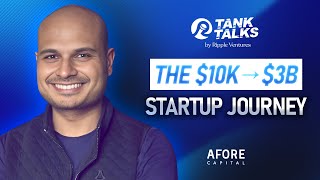
Gaurav Jain, co-founder of Afore Capital, manages over $500 million in pre-seed funding. He argues momentum is the only moat for early startups and looks for founders with growth mindset, speed, and grit. Afore runs programs like Founder-in-Residence and university internships to source talent, and Jain has backed companies like Gamma that are AI-native from the start.
Chapters
The blessing is, of course, the Canadian founders get to come to the Bay Area and build amazing companies like Cloudflare. The curse is like they're not doing it in Canada. And part of the reason it's tempting for a Canadian founder to move here is because the ecosystem is here, not just capital, but also talent, right? I think there is a lot of value in being around other founders who are maybe just a click or two clicks ahead of you who you can learn from versus just reading it on the internet. So I think we're going to continue to have, frankly, Canadian founders who choose to build their companies in the US. And I'm not sure if we should stop that. I think we should frankly embrace that. Welcome back to Tank Talks.
I'm your host, Matt Cohen. Founder and managing partner of Ripple Ventures, and we've got another awesome episode today with Gaurav Jain, co-founder of Afore Capital, one of the most recognized pre-seed venture funds out there. On this episode, you'll hear how Gaurav became a pioneer in pre-seed investing and his journey as an engineer and product manager, where he was part of the early Android team at Google, helping them scale from under a million users to over billions. He even earned the Google Founders Award, which, let's be honest, isn't exactly something you pick up every day. But Gaurav Jain's journey didn't start there. After building Polar Mobile as a student at the University of Waterloo, he went on to Harvard Business School. He joined Founder Collective and eventually co-founded Afor, a firm that now manages over $500 million in assets and is laser-focused on backing first-time founders even before they have traction or sometimes even an idea. Today, we dive deep into why he bets on the pre-traction stage, even when most LPs told him it was too early, the lessons he's learned from scaling Afor into one of the most respected early-stage venture funds in the ecosystem, and what founders need to know about raising a pre-seed in today's markets, especially with AI reshaping the game. Now let's jump into the tank for this week's episode with Gaurav Jain from Afore Capital. Thanks for jumping in the tank today, Gaurav.
I'm ready. Let's do it. You know what?
We've been chatting for a while. You're in the tank here. But before we get started, you know, it'd be great if you could share a bit about your personal background, you know, where you grew up, what your childhood was like, and maybe a bit about your early professional journey.
I grew up in a tier 3 city in India, which at the time was only a few hundred thousand people in the continent of, you know, it's a country of a billion people, is tiny. Not so much in North America. Grew up in a small town in India, you know, a big focus on education, as you can imagine, coming from the Indian subcontinent. Thankfully, I was decent in school and in STEM specifically, so that allowed me to then go into engineering. So my family moved to Canada, to Toronto, I was in high school, went to University of Waterloo for software engineering. As you know, it's an incredible co-op program more than anything else where you work 4 months and you study 4 months. My first internship back when I was still a teenager, I was still 19, was to work at Research in Motion, now called BlackBerry. Of course, at the time the company was doing far better than it is today. 20-odd years ago, at the time, it was probably one of the hottest tech companies. You know, we were selling more BlackBerrys every quarter than we had sold in the history of the company, to give you a sense of the growth. I remember my first day, they were Here's a laptop. We don't have a desk for you. We don't have a cubicle, but we need code. So start shipping code, which as a 19-year-old man, it was like a dream come true. Anyway, did that, did a stint at Amazon in Seattle, one of my internships for Waterloo, worked at Morgan Stanley in London. I optimized for travel, as you can sort of see the pattern. And then I did an internship in Singapore in the mobile space and kind of the story came full circle, having started at BlackBerry in the smartphone space, worked in Singapore and the mobile startups, and man, mobile is clearly the future. So, but I wanted to start something as opposed to, you know, joining one of the companies where I'd interned. So with a couple of buddies from software engineering, we decided to start a company which became Polar Mobile, building smartphone applications for media companies. Our first two customers were Canadian Business and Maclean's magazine. They remember they wrote us a check for $10,000 each for those apps, and that got us into business, raised multiple rounds of funding. That was my first exposure to venture capital as a founder myself. It's an interesting time that the business was doing well. This is 2008, 2009 timeframe, but the world was kind of melting on the other side. Sort of that dichotomy of trying to keep the company alive through all of that was interesting, to say the least. That then brought part of the Android team. In the early days, you know, Google was facing an existential threat from iPhone, and it was pretty clear that increasingly consumers will access the web through their phones as opposed to their computers. And if all of us use iPhones, that's kind of a problem for if you're Google, because, you know, Apple gets to decide what the default search engine may be. So I was part of that team who was given a blank check to basically say we need to have a horse in the race. It was a fun time. We went from less than a million total users on Android to about a million new users a day. By the time I left. So kind of scale you only see a few places. Of course today it's the most popular piece of software on the planet. You know, it's like 3 billion people use it every day, which is kind of cool to see. You know, 15-odd years later, I pivoted. I initially went to business school as part of that and wanted to run a bunch of experiments to see what I would really want to do in my life. And I ended up meeting a couple of folks that were running a fund called Founder Collective. You know, it was a $50 million fund one kind of emerging manager, you know, idea of sort of seed-only funds or stage-focused funds. Joined the team as the first person after the two, two founders, and then was there for 4.5 years. Had an incredible run, learned the business of venture firsthand from who I think are some of the best, if not the best in the business, and then spun out to start A4R about 9 years ago.
Oh, what a journey. I, I can't believe you were at the epicenter of two iconic mobile companies, you know, both Android and Research In Motion, BlackBerry. I gotta go back a bit though. You know, you said you were obviously pretty good at school. Being good at school is one thing. Being able to incorporate yourself into the real world and being able to adapt to some fast-moving companies, to say the least. That must have been a big adjustment for you. How did you find yourself when you were put into this hot seat at, you know, at RIM being tasked with doing work, but also kind of learning what business was all about? 'Cause let's face it, that's the best part about co-op is like not actually doing the hard skills, it's the soft skills.
Yeah. You know, you bring up a really interesting point and honestly that has been a transition and I feel like it's a transition I'm still making because, you know, when you go to school, the good news is like it's very clear what you need to do to like write. It's like, Here's the marking scheme, here's how we're gonna judge you, here's, you know, you gotta get points out of 100, more the better. The rules are kind of very deterministic, if you may. And then you go into the real world, the business world, and it's very stochastic, right? It's like unclear exactly what it'll take to be successful. There's some, you know, parameters, but it's largely open-ended. And I think that was definitely a transition. I remember my first, when we were applying for our first internships, this is back at Waterloo when they didn't have a software for applications, you literally had to physically take resumes and put them in these bins. And the bins had like the name of the employer. It was a very, you know, very visceral kind of experience, as you can imagine. Only happened for that first semester. Then they finally got JobMine, which is a software that powers the co-op system. Anyway, for the first one, I remember, you know, Microsoft was like the job at the time. This is like, we're talking 2004, that you could get. And I remember like everybody told me, don't even bother applying for Microsoft. They never hire first-year interns. But you know, you like still want to use that one bullet as like that, you know.
You only have so many physical copies of the resume to put in the box, right? They limit you to 3.
Exactly. Totally. But you still used one from Microsoft and you put that in there and you say a little, you know, prayer. Point being like, that's where I started at Waterloo. And by the time I finished at Waterloo, like Microsoft wasn't the company to be at, right? Frankly, even RIM was like past its prime. Fast forward to today, like Microsoft's again, like kind of the company to be at. I think that the learning from that was the real world is not only kind of stochastic as well as deterministic, but like moves very rapidly. You know, the rules keep changing and you're only as good in the venture world as your last investment, in the product world as your last product launch, and you cannot rest on your laurels. You know, I think the mistake when I've reflected a lot on like what BlackBerry could have done differently, I think in some ways they became a victim of their own success. I remember, you know, 2009, 2010, 2011, going to RIM's offices and talking about, you know, Android or talking about iPhone, and they were just like, I don't know what you're talking about. Like RIM is totally like beloved device that is so the future, at least for the enterprise, maybe not consumer, we don't I don't really care about consumer. I think what was happening was if you walked around Waterloo for the longest time, people were still carrying BlackBerrys and people still loved the product. But if you came to Silicon Valley, the world had started to move on. And I think you've gotta keep iterating, you gotta keep executing. And frankly, that pace of innovation has only accelerated with AI. We're seeing disruption happen faster and faster. And you know, in some ways I've realized momentum is the only moat, right? It's how fast you can move and how fast you can improve yourself, your product. Like that is the only sustainable defensibility you have, which I think is very, very different, by the way, from like the academic world.
That's incredibly true. And I'm glad you mentioned like the PTSD you have from seeing how slow, you know, RIM was in terms of adopting and then the opposite side of how fast Android moved. But it was because they were also fearful, right, of their own demise before they even got started. But let's go into some of your kind of early impacts. You said you started your first company, Polar Mobile, at the University of Waterloo. You raised pre-seed and then went on to raise some more, got caught up obviously in the global financial crisis. But how did that shape your views on being like a first-time founder and, and developing almost like founder empathy towards other founders?
Look, man, we made every mistake under the sun, right, that you make as a first-time founder. But I think there were two different aspects to it. One is the first-time founder mistakes you make, but also I think at the time the Canadian ecosystem was nowhere as developed as it is today. And part of it is obviously the ecosystem has come a long way in the 15-odd years, but also there's just so much access to information now thanks to podcasts like yours or blogs and so on and so forth that like, even if you're starting a company in Waterloo or Toronto, you're not at the same level playing field as San Francisco, but you're like, definitely the delta is not as massive. But at the time there just wasn't that many resources. So like the people we would kind of, you know, learn from were folks that had made money in like lumber or mining and, you know, and, but that's, those are Canadian industries, right? That those are the rich people. So like those are angel, exactly. Those are angel investors that we had that would invest in our company. For them it was like actually diversification. It's like, look, I made my money you know, all this and like, no tech, like let's, you know, Waterloo kids, you know, let's give them some money. And obviously with money comes advice and we were like, okay. And like so much of the business was oriented around sales. It was oriented around like an exit, you know, like things that are like at some level, yes, it's true. But like what I've come to learn is like, man, in software, like it's gotta be product-led, you know, like your product has to really speak for itself, has to stand on its own two feet and yeah, sales and everything else and fundraising and exits will happen, but the product has to have a penetrating insight. It's gotta be a 10xer. It's got— it cannot be a nice to have. Like all of those things I've really come to appreciate now in the context of like venture-backed software companies, which is a very different beast than every other type of business, right? Because if you think about it, yes, like the companies you and I are investing in are companies, sure, just like a restaurant is, just like a lumber business is, just like a real— but these are like extremely unique beasts, right? And they should never be compared to like traditional business, at least in the early days. Maybe at some point, yes, sure, when they're public or close to, but like in the early days, you cannot take what works in one world and apply to the other.
I mean, human beings are just programmed for pattern matching and pattern recognition, and there's no way to pattern match like a real estate portfolio versus like a VC portfolio. And also, yeah, setting something up for an exit is great, but we are betting on people and problems and solutions, not spreadsheets and not obviously financial records in terms of how their performance is doing in the first few years. And that's just a different mind shift. And the timing doesn't align with what traditional investments typically have in terms of their IRR return profile and things like that. So I totally agree with you. But in terms of sort of your early days of like, you did HBS, then you joined Founder Collective, an incredible early-stage fund making 26 seed investments, including Airtable and Cruise before you left to co-found Afor at the age of 30. You know, thinking back to your first day in VC, you know, what would you tell your younger self now that you learned after being in it for so much longer that you kind of wish you were able to learn the first day you jumped into Founder Collective?
The Malcolm Gladwell rule of like 10,000 hours, right?
I say the same thing, 10,000 coffees.
It very much applies to venture, especially early-stage venture, like the stuff that you and I do, which is like investing kind of idea, very early traction. And it's because so much of it is like judgment. It's like, you know, I'm assuming I'm not a batsman and like a batter or whatever in baseball, but like probably what it feels like when your pitches are coming at you. I mean, I grew up playing cricket. It's exactly that, right? The pitch comes really fast and you've gotta figure out which ones to like let go, which ones to go for. And it's like a split-second decision. Sometimes it feels like that in venture. And frankly, it just takes time to calibrate to like, I remember playing cricket. When you go out to the pitch, pitches, you just like, you feel like fish out of water. The ball's moving, all this funny stuff. But once you've been at the crease for long enough, the small cricket ball starts to look like a soccer ball. Your eye is so like well set that you're able to follow the ball so much better. Probably very similar to baseball. And I think that's sort of what's happened to me now. I've been doing venture for 13-odd I probably looked at like thousands and thousands of pitch decks because look, honestly, man, the first year I would look at a pitch deck and I would make a few mistakes. One, I would start to imagine if I was a founder, how I would run this company, right? So very much optimizing for the idea, right? More than the team, right? Not realizing, look, the team is what matters more than the idea because you're backing the team to then go after the idea versus backing the idea and then you gotta find some team to kind of, you know, orchestrate it. That was one mistake. I think second is just like when you haven't seen too many ideas, you're not able to like calibrate and compare them to each other. Venture business is about less is more. We as a fund at A4, if you look at 6,000 companies a year, as a team we invest in like 10 to 15, maybe 20 companies, right? It's not to say like the ones we pass on are all garbage. It's not the case at all. It's a gradation, right? We try to pick the top 15, 20, 'cause there's only that many companies we can support. But there's probably 100 that we come close to that we're like, ah, would love to help, but just not gonna get there. By the way, we make mistakes all the time. I think when my early days of venture, you start to sort of think like, okay, this could work, so like let's chase it. It's like, no, No, no, no, this could work is not good enough. It's like, is this the one, you know, that you're gonna go all in for? And I think that is a switch I've had to make over time is that the biggest constraint in this business is time actually, not capital, right? You can always find more capital if you have access to good opportunities, but finding the time to find those opportunities, to diligence them, to support them, that's the biggest constraint. No matter how hard I work, I still have 24 hours in a day. That's my biggest problem. And hence you have to be uber selective. And I think that just took some time.
That's amazing. I mean, it's the same thing we say to our team as well. We see 10,000 companies, but we don't call them companies. They're just people, right? They're people before there's even companies. And that's the people we track, just like you. But what I tell our team when they're getting started, I don't actually want to hear if you think this is a good investment opportunity or a bad investment opportunity for the first year of working here because you have not seen enough to know where this thing is gonna end up. All you need to do is say yes to every single company you can see and hear them pitch and listen to the founders. And then the team will end up getting together and see whether or not this makes sense as a viable idea or the person is the right person to take it to the next level. And the other thing we say is the company idea you start with is most likely almost guaranteed not to be the company idea you finish with after the journey's done. So don't really listen to the idea as it's pitched today, but listen to the person. You know, you described meeting your partner Anamitra in 2012 as a key moment that obviously led to Afor. And you know, you guys highlighted this gap around first-time founders being overlooked without any traction. First off, how did the two of you meet and how did you guys come to this mutual understanding about the big gap in the pre-seed market before product founders were even being built in terms of companies?
Yeah, you know, my story, and probably it's true for a lot of people, is like luck, right? It's serendipity. You can't plan everything. The way we met, I was a scout for Foundation Capital when I was at Harvard. Now partner Anamitra, he was the first product manager at Twitter. So he was there as they scaled Twitter. He was hired by the founders. And then when he left Twitter, he was thinking of becoming a founder. So he joined Foundation Capital as an EIR. and there was a GP at Foundation that was hosting a dinner for all the scouts from different schools. He had, they had brought us together and then they invited the Foundation team, including the EIRs, and we randomly ran into each other, hit it off and said, wow, we've both been product managers and we're both not in venture but are interested in venture. Like, let's stay in touch. And then he subsequently ended up becoming an investing partner at Foundation Capital and I ended up joining Founder Collective. We started doing some deals together and got to know each other really well, and that kind of led us to spin out. But, you know, could I have predicted that, you know, random, you know, dinner would lead— it would be so consequential to my life? No, it's impossible. And I think you have to just put yourself out there and, you know, 9 out of 10 times nothing comes out of these things, but once in a while it ends up being consequential. You know, we had a shared passion for backing founders really, really early. We saw increasingly that seed managers, and frankly, I was at a seed fund, so admittedly I was part of the problem, but would tell founders like, you're too early. Early for us, right? Go launch the product, get some traction, and then we can do a seed round. And the founders would often turn around and be like, so let me get this right. So I need money to get traction, but I need traction to get the money. Like, how do I solve this cash 22? At the point of venture capital was to break that cash 22. And all I could say was touche. And like, I don't know, check AngelList. And when that happened enough number of times, we kind of looked at each other, said, holy shit, like maybe this is what we gotta be doing. Maybe we gotta be investing at a stage earlier than seed. When companies don't have any traction, they haven't launched a product, maybe it's just an idea stage and nobody else wants to do it, that's great, we'll run with it. Didn't know what to call it. Pre-seed was this like fringe term that was being thrown around. Frankly, pre-seed at the time was a negative term. It was reserved for founders that couldn't raise a seed and hence would—
It was like a bridge.
Exactly right. And we say, you know what, eff it, we're gonna like start a pre-seed exclusive firm. We're only gonna do pre-seed and we're gonna raise the largest firm focused on pre-seed to make a point. The bar was pretty low on the size 'cause nobody wanted to do pre-seed at the time. So, you know, $40 million was like gonna be, if we could raise that, would be the largest firm focused on pre-seed. We were very lucky, we ended up raising $47. You know, we've been hyper-focused on that strategy for the last kind of 9 years. If anything, we've gone even earlier. Now we have a program called Founder Residence where we have founders come in and work out of our offices that don't have an idea yet or still iterating through ideas and still like very raw. Maybe the team is not fully formed yet. FIRU, which is U stands for university, where we literally have college students now. Our pitch to them is you could do an internship at a startup to know what it's like to work at a startup. We'll just fund you and go start your own company for the summer. You know, and if you go back to school, that's okay. We hope that you'll drop out because the company is doing well, but we want to go in earlier, support these folks. Because to your point, it's all about the talent. The ideas, that's dime a dozen. Some of our best companies have had like half a dozen pivots. We're in the business of finding the most impressive and high potential talent that is going to be a founder, hopefully it's their next company, but it's a company after that, that's fine. We've got that patience. We wanna be partners with the, with the best talent in the world.
Yeah. And we'll get into a bunch of those opportunities that you guys have created inside the Afor family. But let's go back to that word you said, too early is something you often heard when you were in the seed market. You know, seed rounds were ballooning, things were getting a little bit more frothier, and there was this too early mentality from the, obviously seed investors telling the founders that, but I can only imagine the early days in raising that first fund, you probably had many LPs that were also saying it was too early. They were saying that pre-seed was too early for them. You know, how did you convince your LPs and partners to even think about betting on pre-seed? Obviously you were the founders, so they bet on you, I'm sure. But how did that kind of transition happen? How did you get them to believe in the model?
Doing something contrarian in the venture world is really hard, and I realize why. It's because when you go pitch something contrarian to an LP, the first thing they do due diligence, diligence is call their existing managers, right? And so we would go pitch an LP and we'd be like, hey, there's this opportunity on pre-seed, blah, blah, blah, here's the data. They'd be like, oh, it's interesting. Okay, let me call my seed manager, see what they say. Pick up the phone, call the seed manager. Seed manager's like, pre-seed, that's a fad, that's gonna go away. What is that? That's the deals we, we're not interested in. Like, those are bad deals.
They're good enough. They would be seed.
Exactly. Like, why would you ever fund a fund to just, you know, invest in the bad stuff? It was really hard, to be honest, right? And I think the top-down diligence would never get you to invest in a fund like ours or believe in pre-seed as a category. But I think when you do bottom-up diligence, what that means is when you talk to founders, right, to say, hey, like, these four guys are talking about pre-seed, they're saying that you've got to pitch for seed, and seed manager said no, and you were forced to be creative and find capital. Is that true? Is that really happening? And like, if there was a pre-seed fund, would you have funded it? The LPs that did second level of diligence, which by the way, there are only few that are willing to do that level of work, but the ones that did that level of work said, ah, you You know what, it's not in the data yet because there aren't enough pre-seed funds. There's not enough like pre-seed demand.
We don't have angel investors.
Exactly, right? But like we are seeing there's something happening here 'cause we've done the raw diligence. We went to the source, right? Not to the intermediary of that data. So look, man, it was hard, but you know what's ironic now 9 years later is some of the fund of funds that passed on us because they did not believe in pre-seed as a category, not us necessarily, but pre-seed, they're like, we just don't think this will be a category. Now have a pre-seed strategy and have like pre-seed funds, which is like, it's just incredible to see. Obviously, you know, it's both a blessing and a curse for somebody like us. The blessing is like the category's become a thing. The curse is now there's a lot more competition. And of course these funds are funding other pre-seed funds, which is all net great. As long as the category wins, the founders get served well, we're happy. But look, man, we had to do a lot of work in the early days. We sat down with Crunchbase, PitchBook, everybody to say, hey, look, you gotta break out pre-seed as a distinctly separate round from seed because right now You bundle everything into seed. So like the data, of course, like just doesn't support pre-seed 'cause it makes it sound like not many founders raise pre-seed or these successful companies that are like really successful now, it seems like they never raised a pre-seed even though like, I don't know, let's say Airbnb, you know, raised a few hundred thousand dollars before they raised a big round. Like that is pre-seed, whether you call it exactly that or not. And like a whole bunch of other companies. So as we worked with them to break out the data, that's when things started to become more obvious that it is a different stage altogether. Just like seed and Series A is a different stage. And then what that led to is the founders started to clue in because then the founders would be like, oh, okay, I should call this round pre-seed, not seed. I should go talk to pre-seed firms. They'll be more amenable to my stage and pitch. And that starts to become a self-fulfilling prophecy because this business runs on founders, right? That is the oxygen that runs the venture business. Once the founders bought in, game over.
I mean, Gaurav Jain, I owe you a thank you. You did the hard work. You did the heavy lifting for guys like me. But I will say it's so interesting to hear you say you had to go through in terms of the education part, you know, the collecting of the data. You know, we don't announce a lot of our fundraising rounds at the pre-seed because a lot of these companies are still in stealth. So we don't wanna have this kind of eye on them too early when they haven't even launched the product. They're still with design partners, as you know well. Lack of data was a problem for you to overcome. The knowledge gap on what this clearly meant, and also the founders as well, was something you had to make them aware of as well for this reason to even exist. But you know what we've also been hearing is that fund of funds are now realizing that the 30% reserves they had for their seed or Series A managers that they were gonna use for the direct follow-ons, they can't even deploy that capital into growth equity investments 'cause there's so much competition. Or those seed managers don't have, you know, the same pro rata major investor rights. And they are saying they wished they would've taken that 30% and put it all into pre-seed so that they would've had more ownership ownership in the breakouts to have a better chance of getting direct access to those companies. And that's sort of changing the model. But look, it's worked for you obviously quite well. You've got now $500 million of assets under management, including your recent fund 4 raise, I believe $185 million across all these market shifts. And you've had some pretty strong breakout names that obviously, you know, we know well in Canada, like Neo Financial, the old Skip the Dishes founders that you re-backed. They've raised Series D, BenchSci, Modern Health, High you know, you've seen a lot of these companies over 9 years go from pre-seed to, you know, pre-IPO, call it. What have you seen the biggest shift though, as dedicated pre-seed players like you are now, you know, more abundant in the ecosystem and how this plays out across the founders and companies' journeys over a much longer period of time?
Yeah. Yeah. I think some things have changed, some things have not changed, right? So what's changed is obviously there's more players in the ecosystem funding at pre-seed, which obviously leads to more competition, but I'd say net what hasn't changes, the opportunity is still very much there. There's many, many founders who are looking for pre-seed, and arguably the number of companies getting started has only increased. And we're seeing with this, with AI, I think that number is going to skyrocket because the barriers to entry go lower. There's just so much opportunity to create value. And frankly, what we're seeing is folks that might have been founding engineers in the past are now choosing to be founders. So I'd say the opportunity has kind of grown for all of us. While there's more competition, frankly, we like competition. It keeps us honest and keeps us on our toes. And we keep iterating, just like going back to my— where we started, you know, you've got to keep executing. You're only as good as your last great investment you did. It just helps us keep on our toes. Like, we feel very excited about the prospect of pre-seed. In fact, even more now than ever. You know, there's a term that's been thrown around, seedstrapping, right? This idea that companies raise a little bit of capital to run a bunch of experiments. Because see, what happens at pre-seed is like, you need some money to be able to quit your job and support yourself, or, you know, drop out of school, whatever it is. You need to maybe hire a couple people to be able to like build the first version of the product, maybe a little bit of money to run some go-to-market experiments. And that is, let's say, anywhere from $1 to $2 million. You still need that capital. But then once it starts to work, the beauty in these AI companies is that they scale very rapidly and they're very efficient as they scale. In fact, we did this analysis across our 200 companies, some obviously AI native and some not. What we found was that our AI native portfolio gets to a million in revenue twice as fast and by burning one-fifth of the capital. Than our pre-AI companies. So we think there may be sort of increasingly this sort of this chasm, if you may, in terms of venture where you need some capital to get started and then you can delay when you raise, you know, your growth capital, which maybe historically might have been a Series A in 12 months or 18 months. We feel excited about the prospects and, you know, we only see kind of more companies getting started, which is exciting.
Gaurav Jain, please don't tell more people about this inside scoop that we both have about this, you know, seedstrapping. It's just too good to be true. I mean, we have the exact same anecdotal data as well. We have companies that are crossing $1 million in ARR faster with only raising $1 million initial capital. It is the most unbelievable time that we are seeing to be early-stage pre-seed investors like yourselves. And when I hear your name is in the mix on a deal, I want to work harder too. I think competition is great and we've obviously co-invested together and work well together and that's what this ecosystem needs. But listen, this is an industry of missed deals and missed opportunities, but also fast-moving market shifts. How are you guys developing this instinct to know when to basically pursue a pre-seed opportunity as the market is shifting rapidly? Next AI wrapper, next model comes out. And how are you trying to layer that in with the founder-in-residence program with even pre-idea founders? Do you want people to be a pre-idea founder when they think they're a pre-seed founder? Or do you think people who wanna be pre-seed founders on an idea are ready to go and you wanna let them free? Like, how do you try to kind of collect them into the right moment in time for them to make the call?
Yeah, you know, as you and I were talking about this stage of investing, and frankly, the fact that we're now going earlier, It's all about investing in people, right? And what we're really trying to underwrite is a person more than the idea. So we try to quickly triangulate, you know, the team and the person we're talking to, right? And I'd say things that I look for, to me, number 1 is growth mindset. Is this team able to iterate? Number 2 is pace, right? Is this team going to iterate quickly? And number 3 is grit, right? Is this team gonna walk through walls? The number 1 and 2 are easier due diligence, frankly, than number 3, especially given that, you know, we don't get, we don't have the luxury of getting to know the teams over weeks or months. We have to sometimes make decisions quite quickly, but I think you can get a pretty good sense. Does this team have the ingredients of what it takes to find the right idea and then build a company around it, at least get it to like a certain, you know, first base, let's call it. And then from there, obviously the team will then have to kind of reinvent themselves and to go from strength to strength. And some of that is just hard to know a priori. You know, when I've looked at the founders that I've invested in that have been very successful, you know, you look back 10 years later, you're like, wow, like this, you are not the person I You know, you have grown and evolved so much in wonderful ways that frankly, the way you now talk and pitch and whatever, if you had done that back in the day, I would've gone all in, right? I would've put way more money, but like you were not as confident, not as bold. I think you're almost like betting on some of that personal growth, but I think you can figure out at least like, hey, is this team gonna, you know, be able to get to that first base? And for companies that are a little bit farther along in the sense that they have an idea that they've done some customer development, then we can underwrite the idea as well, or at least a general zip code to be able to say there is some market potential. Pull in the short term, right? Because what we have found is if there is market pull in an idea and the team has those 3 ingredients that I talked about, they can usually make something of it, right? And of course, like how big it can be is still a question mark, but at least they'll get to like something meaningful. Once they don't have that market pull or just for whatever reason, or just not able to move fast, they don't even get to first base. And those are diligence failures on our part, you know, that we should avoid as much as we can. But being able to predict which ones are going to be the billion-dollar businesses at the stage we invest in, we think it's still pretty hard. Yeah, it's pretty much impossible.
For sure. But you know, the opportunities for founders these days has never been more abundant for pre-seed programs, founder-in-residence programs, obviously Y Combinator. How do you guys think about the value-add approach and why founders should choose to work with Afor either at the FIR program, at the pre-seed program, or any other options versus, you know, what some founders are saying, you know, get the $500K from, choose your accelerator incubator program, studio program, whatever What is the A4 model that makes sense for most founders?
You know, some of that stems from like my experience as a founder, ex-first-time founder. I think there's building a company, like not to dissimilar to other stuff in life, there's a lot of art, there's a lot of science, right? And I think there's a lot of things that you can learn from other people's experiences and other people's perspective, especially with something like building a company. There's so many subjective calls you have to make. There's no black and white, like a deterministic marking scheme, like on what customers are looking for, you know? And that's where we can be really helpful or any other investor, frankly. And our differentiation is as follows. Number one, we build a concentrated portfolio. So we're not trying to spray and pray and invest in hundreds or thousands of companies because we believe with a concentrated portfolio, we can actually roll up our sleeves and be helpful to you, understand your nuances, your context, and be there for you when you need us, right? So it's concentration. I think second is like stage focus, right? So we only invest at this stage. A lot of, frankly, players at this stage are multi-stage funds that are writing small checks to buy a call option. Option, right, to track the company. We think that's not great for a founder because as a founder, you're not writing a call option. It's not like you have a job in the day and you're doing this on the side, right, to see if it goes anywhere. So why should you partner with somebody who's basically investing to see if it kind of, you know, goes anywhere? For us, you know, this is all we do, right? So the first check we write, it better work, right? It's not a call option for the second check. We pay what we think are fair terms, right, for that stage. I think a lot of times with these accelerators you refer to, like the price you're coming in at, the best founders we find are subsidizing the ones that are maybe not as strong or don't have as strong of a network or connections or resume or whatever the case might be. And we're able to do bespoke deals, right? Figure out what makes the best sense for you as a founder, for the stage you're at, the market you're at, and so on and so forth. So I think the combination of the above makes us, we think, a really good fit for a certain kind of founder. Again, they usually tend to be earlier in their career. So these are not second, third time successful founders, right? Even like the founders of SkipTheDishes, for example, they were kind enough to let me invest in NIO, but like it wouldn't be at the same price or the same stage where I invested in Skip because they had made the money themselves, they could fund their business, and they knew a lot more. So, you know, those tend to be like non-core almost investments for us, right, where we still have the relationships, we'll back the founders. But our core strategy is to back the founders of Skip the first time around, right, and then help them build that business. So we find like for that kind of ICP, there's still, you know, we've kind of carved out our niche. There's still competition for sure, but there's frankly plenty more companies for us be looking at that we're not able to get to fast enough that we miss, and then so much about like losing deals to competitors.
Yeah, it's so interesting to hear you say that the great founders who go to like a YC are subsidizing the other maybe lower level founders because they all take the same structured deal. And people don't talk about that often enough. It's like this 200 company batch or however many it is per batch. You're right, there's like the top 10% and then there's the bottom 90% and everybody talks about the 10%, but everyone has the same deal. So what you're saying is having a bespoke offering, a non-prestructured offering is what founders want and makes sense for what they believe their worth is and what you believe you can bring to the table as well as a fund. That makes a lot of sense. So thanks for sharing that.
Yeah. I mean, I mean, bespoke only works if you do it at a small scale, right? Right. You cannot do bespoke at scale. No, that's not possible.
You can't do 1,000 companies bespoke. It's impossible.
Exactly. So I think you have to pick a lane, right? Different folks have picked a different lane. For us, the lane we've picked is just, it's okay to be concentrated. It's okay to be I mean, we take on more risk obviously by being concentrated, right? But we think that's the right thing for the founders.
How many portfolio companies do you guys have now, would you say?
So we are now investing out of Fund 4. Each fund ends up having about 35 to 40-odd companies. So we're probably at somewhere around 150 or so across the 3 funds. We're in the middle of Fund 4, you know, fairly concentrated. And then we take 3 years to invest in a fund. So in any given year, we're investing in 10 to 15 companies as a team, right? I've got a team of 7 investors now. The base has gone up a little bit 'cause now we have 7 investors, but it's still a fairly concentrated portfolio. Each one of us is only doing a handful of investments a year.
Okay, so let's go back in time. What would you have done differently to better prepare for scaling to Fund 4 and maximizing your impact on the ecosystem? Now know what you know.
Yeah, I think the one thing we probably should have done differently is brought on more investing talent a little bit earlier in the life of the fund. And look, some of that's like hard to know at the counterfactual, but I think we were trying to balance building the core kind of foundation of Afor, the culture, the ethos, like what do we stand for? And then balancing that with like bringing other people to the team. The moment you expand, especially the investing team, like the dynamics change and there's more, like you slow down 'cause more people now need to be brought on up to speed on investments you're looking at. But I think we maybe took a year or two longer than we should have. It's just, there's so many companies to meet at the top of the funnel and some of that is like, it's impossible to know without meeting the founder, right? It's impossible to know from a deck, you know, which ones are interesting, which ones are not. So I just think more people people, you know, that are afford-trained meeting founders is better for us. I think that's probably one piece that we feel could have done differently. I mean, there's a whole lot of obviously anti-portfolio companies. I think, you know, we added the concept of non-core a little bit too late. Frankly, we were too dogmatic with Fund 1. Part of it is, you know, we sold this thesis around pre-seed, right? Just so you talked about an LP. So we were super like, if it's not pre-seed, if then we're out. So to give you an example, the founders of Ramp, right? And they're LPs and are one of the first investors in our fund. And the reason they're LPs in our fund is because my co-founder, Anamitra, he was on the board of their previous company called Paribus that was acquired by Capital One. It was like a smallish outcome, wasn't huge, but you know, we knew them really well because he was literally on the board of their previous company. They, when they found out we're starting a fourth, they became LPs pretty quickly and then they were pitching us right when they were getting started. But I think the first round itself was at like 25 posts or something. It was like something high, but it was pre-seed, right? Pre-traction, pre-revenue, all that kind of stuff was pre-seed. But the price was like, if we do this deal, our LPs are going to be like, wait, hold on, are you doing seed investing now? Like, I thought you told us pre-seed. So we're like, Eric and Karim, we like you, man, but like, this is off spec for us, so thanks but no thanks. Probably a several hundred million dollar mistake at this point. So like, you know, stuff like that we've screwed up on, you know, where we were just too dogmatic. And I think part of the maybe course correction is like NIO is a good example where, you know, that wasn't a pre-seed in terms of the price that you paid initially, even though again, the stage of pre-seed. But we said like, these are founders I have incredible respect for, they're going to build an amazing business, we've got to be a part of it. And obviously we found ways to help them. There's tweaks we made to the strategy as we've kind of, you know, learned ourselves from mistakes we made.
Thank you for sharing that. It makes me feel a lot better about my first pass on Drata when they first got started and I had a revenue threshold of something basically when I had our second fund, we promised our LPs we would not invest in pre-revenue companies during the beginning of COVID and they came obviously with a very pre-revenue product or idea almost, and we had to pass on the very first call. So that was a tough one as well. So I'm glad we both have that to share in common with our stories. But you know what, it's interesting to hear you say about the expansion of the investment team? Because right now we're seeing more and more, you know, solo GPs getting started and getting funded and spinouts. So how do you think about that in terms of like what you've learned in terms of like, there's too much to cover, we need to cover 10,000 companies a year, we should add more investment talent, which you have by fund 4, but you've got solo GPs now which are raising pretty large first-time funds and they're also basically staying as an individual investor?
Yeah, like I think the nice thing about venture business is there's no one right way to do the business, right? And part of it is founders have unique preferences and needs and desires, and they find kind of the investor that works best for them. You know, the biggest constraint I've learned in this business is our time, right? It is a services business, right? In a services business, you know, time is what you're selling ultimately, and almost money is like just a vessel, right? Really give them your time in one way or the other. The solo GP strategy strategy works for certain founders for whom maybe they don't care to work as closely with their investors, or, or maybe they're repeat founders, or for whatever reason, they don't find as much value from the support that the fund can provide. Versus I think the strategy we've taken is like, look, there are ways we can be helpful to the founders, and now we've got a, a 7-person investment team. So it's not just about like covering more ground, but also we can help you by having a larger network, right? When it comes to follow-on hiring people, you know, all kinds of things. Like in just in the last 2 months, 12 companies in our portfolio have raised $200 million in follow-on, and vast majority of that is just introductions we made, right? And by the way, there were many other introductions we made that led to a term sheet that obviously like the founder didn't end up taking. So like it's probably much more capital there that we brought onto our portfolio because of the network we've built, because of the team size, right? And the presence that we have and the fact that people recognize our brand. And our portfolio on aggregate, I think has raised about $3 billion or so after us. 62% has been introductions we made, right? So again, we can be very consequential to the business because of the impact we can have, which is driven by, somewhat driven by the size that we have. The follow-on investors now recognize our brand, right? Because when they say, oh, it's an A4 company, it doesn't mean they'll invest, but at least they'll take it seriously. That of course comes from like having more foot, more size. So look, it's pros and cons. I'm not going to say there's one right or wrong. I think we feel like for our ICP, this works well, but at the same time, we've also chosen not to be a 500-person shop like an reasons, right? We don't have a massive operating arm because we explored that and we realized at this stage it's really hard to just parachute in GTM support because it should be founder-led sales, not like sales driven by your investor. And even recruiting to some extent is like hard to do because you should do a network-based hiring because you should bring on your friends as the first few engineers. So anyway, there's certain decisions we made to keep the size, we still think, on a relatively small size, but not too small.
Gotcha. Yeah, no, I appreciate the transparency there. It makes sense. Different shapes and different sizes in this entire industry. You know, want to just get your thoughts thoughts on the Canadian ecosystem. Obviously you started here in Waterloo, a lot of Canadian investments. We have produced amazing tech talent like yourself, you know, but we still are struggling to build that kind of globally VC-recognized brand in Canada at the earliest stages. You know, what do you think needs to change to get more people like you— obviously we're trying to emulate what you've done here in Toronto and Vancouver— to unlock more opportunities for founders to have optionality? Or do you think Canada punches above its weight in innovation and there's enough early-stage capital out there that we don't really need to have its own Canadian dedicated pre-seed fund?
Yeah, look, I think we could definitely do better in Canada, uh, but I'm not sure how much better, and let me unpack that. So I think we could do better in the sense that there's incredible tech talent coming out of places like Waterloo, U of T, and, and a few other schools in Canada. So if you believe in kind of what I believe, which is the talent is sort of the nucleus of this whole ecosystem, I think Canada has that. And we've done incredibly well in both investing not just in Canadian companies, but frankly Canadian founders. Moving to the US and then building incredible companies. And there'd be many companies even outside our portfolio. I think the founder of Slack, for example, and others that are Canadian, you know, or Cloudflare and so on and so forth, right? So, but I think we could do better in the sense that the talent is already in Canada. How can we keep them there? And some of that is like risk capital, the right kind of mentorship right at that early stages of figuring out how do you run these experiments, you know, build a team and so on and so forth. But the reason I say is like there's only so much that can be done is I think part of the challenge for Canada is the US is right next door, right? And it's relatively easy, the, you know, the current administration is maybe trying to make it a little bit harder, but it is relatively easy to come here and build a company, right? And I think that's a blessing and a curse, right? Because the blessing is of course the Canadian founders get to come to the Bay Area and build amazing companies like Cloudflare. The curse is like they're not doing it in Canada. And part of the reason it's tempting for a Canadian founder to move here is because the ecosystem is here, not just capital, but also talent, right? I think there is a lot of value in being around other founders who are maybe just a or 2 clicks ahead of you who you can learn from versus just reading it on the internet. So I think we're going to continue to have, frankly, Canadian founders who choose to build their companies in the US, and I'm not sure if we should stop that. I think we should frankly embrace that because a lot of times those folks then go and build their engineering, you know, teams in Canada, right? And now, especially given Shopify and other stuff, there's lots of engineering talent, and hopefully some of those people will then choose to stay in the country as opposed to moving out here once they're done their stint. So I think in general, that's good for the ecosystem, but look, having more risk capital that's seen it before, that's stage-focused, I think that'll be good because a lot of people also want to stay back, right? They don't want to necessarily move to the US for a whole host of reasons. So is that market underserved? Absolutely.
Yeah. I know, I appreciate the transparency. I think we have the same thing in our portfolio. We have the R&D engineering product teams being headquartered in Canada and the go-to-market sales ops teams being based in the Bay Area or in New York or somewhere else. And it totally works. I think it's a great thing for both of us to have that kind of overlap between the two markets.
Markets.
You know, obviously Afor emphasizes on giving founders, you know, a safe space to iterate, you know, even pre-idea founders. How are you thinking about backing founders now in this AI revolution we're seeing and how fast things are changing? Are you seeing companies pivot even faster during these like 8-week, uh, bootcamp programs that you're offering in the FIR program?
Yeah, totally. I mean, we've seen the pace of pivots skyrocket in this AI world.
What's the wildest pivot you've seen? We've had one go from like database optimization to like 24/7 healthcare services?
It's wild in the sense that like we have a company started off in speech therapy software, now doing like customer success softwares and all kinds of flavors. But, and I think the reason for that is a few things. One, I think the average age of the founder, at least the one we're seeing, is getting younger and younger, right? Part of it is because the folks that go into college are AI native. They grew up with LLMs, they're very comfortable. A lot of the research is being done in college campuses. So like a lot of folks are dropping out or spinning out of school and starting companies. As the average age goes down, what that means is that these folks have less and less domain expertise, right? Historically, like when we started Afor, the prototype of a founder would be like 2 to 3 years at a company, pick Uber, right? And it's like, hey, look, I saw something at Uber. It doesn't fit the roadmap of the mothership. I want to go spin out and do something, right? I mean, this is how Apoorva, talking about Canadians, right? Started Instacart, was at Amazon, saw the opportunity, started Instacart. Or how, you know, Anne Silverman, who was at Google, started Pinterest. That was sort of the typical kind of sequence. But now, as the founders are 18, 20, 22, like, they haven't had that same level of experience. So they're coming in with like very open-minded on where the opportunities might be, and they're just like trial by fire, right? They're trying a bunch of different things and see what sticks. So I think that's one reason for it. The second is like, at the surface level, it might seem like there's opportunities everywhere, but I think once you start to like actually go down those options, you realize for whatever reason it may not be one. So like you start with a certain hypothesis, you think it makes sense, and then you quickly have to pivot because it's just the world is moving so fast. You know, I will get on a call with a founder and they'll be like, oh, did you see this like new Gemini 4.0? Do it like that. And I'm like, I feel bad cuz I feel like I should be on the top of things. I'm like, no, like when was it launched? And I'm thinking he's gonna say like last month and you're so out of it. He's like, oh, 2 hours ago, dropped on Twitter. And I'm like, dude, like I don't know, Zim's been taking meetings the last 2 hours, you know? Like how do I know what Gemini launched? He's like, anyway, so like every day there's like a new launch, right? And like one-upping each other. So the space is moving fast, you know, opportunities everywhere, but like not obvious where they are. So I think for a whole host of reasons, we're just seeing a lot of pivots, which I think is great, frankly. We embrace that. We kind of joke that we offer pivot as a service almost, right? Because we're like, look, come here. And unlike a multi-stage fund that wants to sit on your board and like help you scale, we're going to help you pivot if that's what it comes down to. And like keep trying new ideas. And like, if we don't think it's a bug, we think it's a feature, right? The fact that you're pivoting. Means like you're self-aware, you're like iterating and you're going like, that was a good idea, but maybe not a great idea. That was a local maxima and I gotta go find global maxima. So anyway, we think it's a good thing.
My favorite thing is when a founder comes back after a couple months and tells us they're pivoting, especially at like the pre-idea stage. I love it.
Totally.
And I'm, I say, good for you. I hope the bloodshed wasn't too bad for you. And like, let's get back to work and find something else more exciting. So that's awesome.
100%.
You know, I could talk to you forever, Gaurav Jain, but I gotta ask you, what inspires you the most outside of work? You know, like health, wellbeing, something else more important that's personal personal to you?
Honestly, man, it's my wife who is a far more impressive, hardworking, and ambitious than I am. She runs her own business. She runs an interior design studio. The amount of passion she has for what she does, it's like I go back and I'm like, man, you gotta be more passionate and work harder. The dedication, you know, she's like one of those perfect founders you wanna invest in. Just like obsessed about like the mission and like what she's trying to build. And I learned a lot, frankly, just founder in the house. It's like a bit of a petri dish on like, you know, what it's like to live with a founder. Not because sometimes it can become very academic as an investor. On like, I was the founder, you know, 15 years ago. And like, yeah, I've worked with, talked to founders all day, but I'm not like living with them. And I think being in close quarters is pretty—
That's awesome. Thanks for sharing that. I'm sure you guys have some great pillow talk. Before we wrap things up, we always ask our guests for their fast favorites. So first off, your favorite podcast.
Yours.
Get outta here. Next.
Honestly, I don't know if I have one favorite. I listen to Harry Stabbings. I listen to Bloomberg.
I listen to like Matt Levine or something else.
There's two anchors. I forget the name. Okay. I do listen to Matt Levine, but I listen to him in the morning when I work out at 7:00 AM on his show on TV. But I have a bunch of favorites and they kind of like cycle through. Great.
Next is your What's your favorite newsletter or blog?
I've been following Alex Conrad, you know, who left Forbes to start his new thing.
Yeah.
So I've been enjoying that.
He's up there.
He's starting something new.
The underdog now.
I love it. Exactly. I love, I love supporting underdogs.
Nice. Next is your favorite tech gadget?
It's gotta be my Eight Sleep, man. Speaking of my wife, it's kept our marriage healthy.
I have the same thing, but my wife thought it was too hard of a mattress to sleep on. So we had to put a thin cover on top of it and now it dampens the coldness of it. So I'm cranked up to like, I'm like cranked up to minus 10.
That's so funny. Cause I sleep in minus 3 and she sleeps at crossed 3 because like exactly before that we would like we would go crazy but now you know we're happy.
That's great. Next is your favorite new trend.
I just seed strap it.
Too early to tell if that's good in the future but what's your craziest seed strapping you have seen in your portfolio?
Well we have a company called Gamma which is kind of building an AI-native PowerPoint. They've raised a little bit more than seed but they have way more than what they've ever raised in the life of the company in the bank today. So negative cash burn in the history of the business. They are well north of $50 million ARR now, cash flow positive. Wow.
Over how Years.
They started pre-Gen AI. They started in 2020 or so, or 2021. So it's been like 3 or 4 years.
So 3-year overnight success. I love that.
Yeah. But majority of the revenue's come in the last couple years and they're in hypergrowth mode. They've gone from 28 to now 35 people. But, uh, it's still, anyway, it's, it's still tiny. Uh, and it's just an incredible—
and you own more of the company, I'm sure, because of that. So that's awesome. Okay. Next is your favorite book.
I have many, but I'd say if I had to pick one, the one I always go back to is Innovators Deliver.
Still relevant today.
Like Chris has said, and maybe part of it is it was my first business books that like just changed my fundamental way of thinking about business, but obviously the, the lessons are still very true. And I was very lucky to have him as a professor at business school.
Was it weird to hear Satya say he'd, or not Satya, Sundar say he'd never read it, Google, but he knew about it? Yeah, I think it was, uh, David Friedberg interviewed him on the All In interview and he's like, oh, like you've obviously read The Innovator. He's like, no, I haven't read it actually, but I heard of it. He's like, you are the innovator right now.
Yeah, exactly. He's like, you better read it tonight, man.
It was crazy. Uh, last but not least is your favorite Life lesson?
It has so many, but I'd say the one that comes to mind is that you connect the dots looking backwards. When I was young and, you know, in college and stuff, I was so caught up on like trying to predict the future and exactly what that path will look like. And I think I've realized you just gotta like take the next best step and maybe you can think 2 steps ahead, but it's hard to think 10 steps ahead and you just gotta embrace as, you know, life unfolds.
Fantastic. Well, thanks for jumping in the tank today with Gaurav Jain from Four Ventures.
Gaurav Jain.
More from Gaurav
How Soon Will AI Power A Billion Dollar Company Run by One Person? W/ Henry Shi & Guarav Jain | Ep11
Episode 28: Catch the attention of investors with non-obvious insights | Gaurav Jain
Early-stage Success: Insights From Afore Capital's Gaurav Jain on Investing in Pre-seed Companies
Biggest mistakes first time fund managers make with Gaurav Jain of Afore Capital | 1947 VC
Afore Capital's Gaurav Jain on the Emergence of Pre-Seed Investing and How They Stay Differentiated