Top 5 "Gold Mine" SMMA Niches of 2025
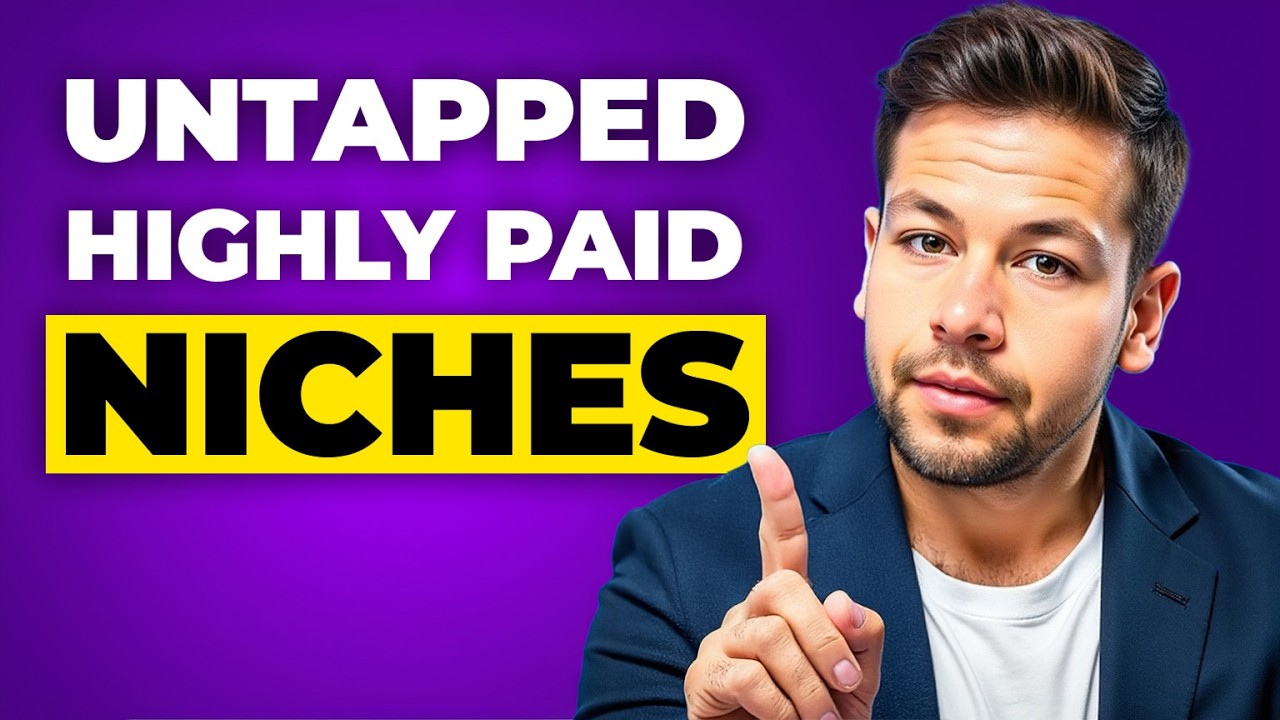
In this solo presentation Jake Setterlun explains why narrowing your agency’s focus to a specific niche is essential for SMMA success. He outlines how a clear niche improves client outcome targeting, product iteration, sales positioning, perceived value, and pricing. He then provides a framework for selecting a niche based on personal experience, service‑demand dynamics, competition level, and market size, warning against overly broad categories and sub‑niches that are too small. Setterlun lists three industries to avoid for lead‑generation‑focused agencies (e‑commerce, solar, restaurants) and then reveals his five “gold‑mine” untapped niches for 2025: insurance agents, mortgage brokers, home‑services businesses (especially emerging sub‑segments like pest control or home automation), gyms/fitness centers, and online weight‑loss programs that leverage prescription‑based treatments. Throughout he stresses using tools like ChatGPT to validate demand and outlines practical steps for moving from niche selection to offer creation and client fulfillment.
Chapters
Today I'm gonna be giving you my 5 untapped goldmine niches of 2025. But before we get into those, I wanna break down why niching down is important and what niches you should absolutely avoid. Niching down is going to help you do 2 things. First off, it's gonna help you identify what specific desired outcomes your clients and your target market currently have, and then how you can actually market your product to those individuals based off of those desired outcomes. So I'll give you an example. When we were in the real estate industry, the desired outcome of a real estate agent is qualified appointments, but really going further down, they want to sell houses and they wanna make more money and they wanna talk to qualified individuals. So for us, we were able to position our product and our service which was qualified appointments as the solution to their desired outcome. So if you have a niche and you actually have something that is identified that you know that, okay, like this is the type of industry that I work with, you're able to then reverse engineer to help market your product better to those specific individuals. The other thing that having a niche and why a niche is so important just in general in business. It also is going to help you improve your product and get customer feedback very quickly. So I'll give you an example. If you would just work with any type of business and you have a specific product or service that you're offering them, you're getting on meetings and you're pitching them. If you talk to a golf course owner and then a real estate agent, an insurance broker, and then a restaurant owner, Every single one of those specific customers is going to have a different reaction to your product. So if you're going to them and you're hearing, oh, the golf course owner saying it's too expensive, the real estate agent is saying, oh, this isn't like super unique, I'm already doing this, the insurance agent is saying something along the lines of, you know, oh, this is really good, and you're getting good feedback from them, but then the restaurant owner is saying something completely different, you're getting all of these different points of view and these different inputs. You don't know what to change in terms of your product if you're just bringing this to market because you're hearing something completely different from everybody and you're really not gonna know exactly what to do. And you might have one prospect that's saying, oh, it's too expensive, and then you lower the price and you just screw yourself over out of, you know, potential profits because just because it's that one industry's, you know, objection or that's what they're saying about your product. Somebody else might not be saying that. So really at the end of the day, if you're not niched down and you're just pitching them your product in general, you're just gonna hear all of this crazy feedback that really doesn't apply to your ideal client. The other reason why niching down is so important is during the sales process. I talk a lot about this. You wanna position yourself as the expert during the sales process. And part of that is when you're showing somebody what you're gonna be doing for them, again, whether it's a service, marketing, a that product or service is going to sell 10 times better when you're showing them specific examples of their industry or of it applying to them and their industry versus just having this general application to any type of business or any type of customer. So I'll give you an example. Again, with real estate, we were selling Facebook ads to real estate agents. And if I got on there and I just showed them some generic ads, Maybe one was for a golf course, one was for an insurance agent, one of them was for a real estate agent, but I showed them all these different ads. They don't care about all that other stuff. They only care about what applies to them, which is the real estate ads. But when I get on a call and I'm niched down and I'm like, I, I do X, Y, and Z for real estate agents, and I come to the presentation with a whole built-out presentation with every little thing that that we do applying specifically to that industry. So, you know, again, as an example, if I get on a call with a real estate agent to sell them on our services and I show them, this is how we target buyers, this is how we target sellers, and going down the line, this is, these are our example ads that we run for buyers, these are our example ads that we run for sellers. And I show them how everything that we do is tailored to their specific industry in that we're positioning ourselves as real estate marketing experts, as you know, for this example, they're going to be more attracted to buy from us than somebody else that just is, you know, in general marketing. Because at the end of the day, somebody is going to want what they're buying to work for them. And when you're able to show them exactly that we specialize in this industry and that we specifically know exactly what to do for your specific situation and how to get you results, they're going to be more likely to buy from you than anybody else. Because at the end of the day, when somebody is buying from somebody, It's, there's a little bit of inherent risk and it is a little bit of an, it is a little bit of a gamble. So they're gonna have more trust in you. And at the end of the day, you're gonna be more likely to win their business because you're niched down. You're positioning yourself as that expert and you're showing them exactly what they're gonna get. Again, it's gonna build trust and they're gonna be more likely to actually buy from you. Another reason why it's so important to niche down is actually going to be perceived value as well. So going off of, you know, being able to actually show them the results that you're gonna get, it also helps you get a higher price point for your specific services. So again, we'll use advertising as an example. If I just go out there and I search for companies that do Facebook ads, as an example, online, I could probably find people for as low as $100 a month to do my Facebook ads. Like literally you know, as cheap as possible because, you know, as a generalist, when you're just competing with absolutely everybody, it's kind of a race to the bottom of who can charge the least to win over just, you know, those people's business in general. But when you're an expert in a specific niche, again, you're branding yourself as we are the expert X, Y, and Z. We know exactly how to get this type of individual results with whatever it might be. Again, with our product, with our service, you're able to command a higher price point because you are this perceived expert versus just, you know, a generalist that knows how to do, you know, something specific. And when somebody's in that buying pocket, we talk about that a lot, which basically means the buying pocket basically is when somebody is ready to buy, they have the pain, they feel it. It's definitely top of mind for them. And they're literally searching for a solution to their specific problem. Problem. Again, you know, they have this, you know, desired outcome, they have a current pain, and they're looking for a solution. When that pain is strong enough, they're gonna want to go to a guaranteed, you know, fix to their specific problem. And a lot of times when they see your marketing, even though you might be a little bit more expensive, again, making more money per customer and commanding a higher price, they're gonna go to you because again, you're positioned as that authority, you're positioned as that expert, and you have a higher likelihood of actually getting them the results that they need. So when somebody's in that buying pocket, they're more likely to spend more money with somebody that's an expert than just trying to risk it with just a basic individual that might be a generalist. They might do Facebook ads, but they might not be an expert in real estate because if I'm in that buying pocket, I have a pain that is top of mind that I need a solution and I need a fix to fast. And the best bet is going to an expert that is skilled in exactly the issue that I'm currently having than just going to a generalist that I don't really have that much trust and faith in to actually fix the current problem that I'm having. So overall, you know, why is a niche important? It just makes everything easier. It makes your marketing better. It allows you to get cheaper leads because you're able to call out a specific market. You're instilling more trust during the sales process. Your presentation is better. Everything is just better. Your numbers are going to look better across the board. And at the end of the day too, you're going to be able to deliver a better product for your customers because if you get really good at Facebook ads for real estate agents, you're actually going to be able to help them. But If you're bringing on a real estate client and then a golf course and then an insurance agent, and you might not have the most experience in, you know, one or two of those niches, you're really doing that customer a disservice because there's gonna be unique things inside of each of those industries that you might not know about. And again, when you're honed down and you had just have a process, again, you're gonna get your clients better results, and then it's also gonna be easier on your backend. At the end of the day, everything just becomes easier when you're niched down and you have a specific niche that you are working with. So let's talk a little bit about what niche is actually right for me. Jake, you told me exactly why I need to be niched down. Let's talk about good niches, bad niches, what niches you should absolutely do and what you shouldn't do. So I think the first thing, so I will say the first Identifier of what niche you should or shouldn't do is going to come down to your personal experience and your work experience, really just, you know, whatever you might have a passion for. So I'll give you an example. When I first started in marketing, I had a lot of experience in the golf industry. I was a longtime golfer. I'd been golfing for almost 16 years at that point. I started when I was 3. I got into business when I was 19. So I had a lot of a lot of experience in the golf industry. I knew it. I knew golf, which is the deliverable of these courses. And then I also worked at multiple different golf courses when I was in high school. So for me, it was just like, yeah, I know the golf industry. I know about the product. I can speak their lingo, which again is a big part of actually getting into and learning a niche. So for me, it was just like, yeah, this makes sense. And When, and so when we actually started, you know, getting into marketing and doing and taking on clients in the golf industry, it was just super easy for us because we knew how to speak to their ideal customer. We knew what motivated them. We knew that we needed to run deals and discounts because they weren't motivated by just general ads. We knew that it's more financially motivated to get a customer to come to a golf course than it really is anything else. So that was something that, you know, I had a passion for golf and I took that and I was like, we're gonna go in the golf industry. Now that didn't last long because there are some inherent issues inside of the golf industry that I did find out. And we absolutely could have stuck there and had success, but I did end up partnering with another individual. He had a lot of experience in real estate and we ended up growing and scaling in that vertical. But again, I will say we would not have had the success we had in the real estate industry without my partner's experience in real estate. He was a real estate agent before, you know, we worked together. He actually worked at a real estate management company. He managed over a billion in real estate assets. So for him, he just knew the industry like the back of his hand, and we could also leverage his experience in the real estate industry to help us sell. Again, we were able to position his story and say, hey, you know, when my partner got started, he tried and he tried to learn marketing. He ended up actually, you know, developing a marketing system for himself. You know, he ended up learning these skills and then was able to take that to his business, scale it, and now we're offering it to other people. And, you know, we were able to spin his experience in real estate as a way for us to build our business, our marketing company, because of that experience that he had. So that number one is going to be the biggest determining factor of what, you know, niche I should or shouldn't do. It's going to be again your experience, because when you're getting into business, you want to be an expert. You don't want to be a generalist. And if you're able to leverage your experience that you have to help sell more individuals, that is going to help you win a lot faster. It's also gonna help you obviously put together your website lingo. It's gonna help you connect better with your ideal clients. Everything is just going to get easier. So what do I do if I don't have a specific, you know, industry that I'm just drawn towards, a specific interest to an industry? And that's when you really get into looking at, well, okay, you don't have this specific industry or niche that you're drawn towards. What are you good at? What are your skills? What, what service are you gonna be offering? What product are you gonna be offering? So that's what we need to look at next. And that's really gonna dictate, you know, what industry you might get into and what industry you might not get into. So I definitely recommend using, if you're in this position, definitely recommend using ChatGPT to actually kind of look at, you know, hey, I am an expert in SEO. I'm an expert in website design. I'm an expert in, chargeback mitigation, whatever it might be, whatever your specific skill is, Facebook ads, Google ads, have a chat with ChatGPT and specifically ask it, you know, these are my skills. What's a good niche for me to get into with a lot of demand for my specific service but might not have the most competition for me? And I'll tell you why that's important here in a second. So when you're getting into a specific industry with a specific service, there's really 2 outcomes. You could have a lot of competition, which means there's a lot of different people offering your specific services. The pro of that is, you know, hey, there's a lot of demand for your specific services, but there's also going to be a lot of competition and you're going to have to fight through that. You're going to have to have a purple ocean offer and really stand out in your specific industry. Now, on the other hand is you might have a niche that there's not a lot of people offering SEO or websites or whatever service or product you might offer. But then kind of on the negative side of that specific industry, you know, that you might be getting into where there's not a lot of competition for you on the surface level, you probably, you know, unfortunately you're not gonna have a lot of demand for your specific services. That's exactly what happened with us, you know, in real estate and then in golf courses. In real estate, there's so much competition. Everybody does marketing for real estate agents. So for us, you know, again, we really had to spin the story of the owner. We had to come up with a unique way to show off our product for us to be able to stand out. But one thing that was always super easy for us was there was always a lot of demand. We were always able to set appointments. We were always able to generate leads because there was just so much demand, because there was just so much demand for marketing for real estate agents. They all wanted to close more deals. Now talking about golf courses for a second, you know, we didn't have a lot of competition. There were probably 3 to 4 companies that we like had as legitimate competition doing advertising and marketing for golf courses. On the downside of that, you know, there was not a lot of demand. And I think that really spoke to, you know, why we didn't have a lot of competition was when there's not a lot of demand for a specific product or service, people aren't going to be drawn towards that industry because it's, it's kind of hard to sell those individuals. There was a lot of actual education, and that was something that we had to do a lot during the sales process, was not only sell them our marketing, you know, services or our marketing plan, but we had to educate them why it was actually important to do advertising, to do marketing, to run these different deals, to remarket to their current list. We had to educate them why it was so important. So So with real estate agents though, we did not have to educate them at all. So that's really going to be your determining factor based off of what's a good niche or what's a bad niche for me. It's really going to come down to what service you're specifically offering. Now, if I had a payment processor for golf courses, well, every golf course needs a payment processor. There's definitely some competition out there. If I can bring a better market If I can bring a better product to market, absolutely valid, absolutely something you can grow and scale. If you don't have a specific industry that you're just drawn towards, that's going to be the next layer of how you actually pick an industry that may or may not be good. So now the third option is you don't have a specific industry that you're drawn towards. You just want to make money and you don't have a product or you don't have a service that you're offering. You're just like at square one. And that is definitely going to be a very interesting position to be in. You're going to want to identify not only a niche, but then also a product to serve that niche. So if I was in that specific situation, what I would look at is what niches are just absolutely the top of the top, have the most people. Those are usually going to have the most competition. And then what are niches that are very, very small and that most likely won't have the most competition. So let's break down some of these. I'll give you some examples. So at the top of the food chain, top of the, top of the pyramid, whatever you want to call it, you have real estate. Real estate is going to be one of your biggest niches in general, uh, employs the most people, uh, in terms of B2B industries for marketing, you know, using that as an example. Real estate is just top of your food chain. Outside of real estate, when you start getting down the ladder a little bit, next is going to be home services. Now what's super interesting about home services is that yes, home services is a pretty big, you know, niche in general. But what I could do is I can niche down within that specific industry. And you could actually do the same thing in real estate. Real estate's a broad term, right? Real estate agents, you have real estate investors, you have mortgage brokers, But if I wanted to niche down a little bit, I could maybe go after mortgage brokers. Not gonna have as much specific competition, but I'm still gonna have a big enough audience. Again, inside real estate, you could go after real estate investors. Again, you're definitely gonna have competition. Don't be afraid of competition, but it's not just gonna be all of these individuals and you're just playing in all these fields. So same thing with home services. If I was like, we do marketing for home services, a lot of competition, absolutely a lot of competition. But if I niche down just a hair and I say, hey, you know, we do marketing for roofing companies. Well, obviously again, there's competition in every niche. Don't be scared of competition. I'm going to kind of hone into a specific market. There's still a viable amount of people, but again, I'm limiting my competition and also helping myself stand out by niching down into one of those specific industries instead of just going after the whole industry in general. So again, some other examples that are absolutely valid: med spas, gyms, chiropractors, insurance agents. So outside of real estate and home services, you really get into health and wellness and then some financial services as well. But inside of each one of those categories, You just have different specific niches that are gonna be viable for you to pick. So if you look at something, you know, like financial services, you might wanna look at financial advisors or insurance agents as a specific niche for you. Again, inside of health and wellness, you have med spas, you have gyms, you have chiropractors, you have, you have massage, you have fitness studios, you have all of these different industries. So, At the top of the food chain, you have just an overarching category, and that is never going to be ideal for you in terms of what niches to not do. It's going to be just absolutely these overarching, you know, themes. Same thing with the hospitality niche. That's such a large niche. Inside of that, again, you have entertainment, you have restaurants. You're going to want to layer it down. So you have all of these overarching themes, and then below that is where your gold is. That's gonna be your ideal niches. So again, I listed out a lot. I'll list out a few. These are all gonna be absolutely valid, but you have chiropractors, real estate agents, gyms, mortgage brokers, you have real estate investors, you have financial advisors, you could do CPAs. All of these one-off specific job titles, specific industries, specific specific businesses are going to absolutely be ideal. Again, contractors, roofers, cleaning services— these one-specific business niches are going to be where the gold is. Now, if we hone in a little bit underneath that, that is when you start to have some issues. So again, going too broad and taking those just— we'll call those overarching niches— those are always going to give you trouble because you're just taking all of those little niches underneath, and you just now have all of the competition of all of those combined. And then on the bottom of that pyramid, you have sub-niches. To give you an example, in real estate, you have luxury real estate agents, or another example would be relocation real estate agents. These are these super, super, super sub-niches of just overarching normal niches that you're currently playing with. Again, inside of insurance, you might look at only P&C insurance agents and, you know, just these little super defined niches inside of those golden niches that I talked about. And the issue that you're gonna have with those sub-niches is number one, you just don't have a lot of people to play with. It's definitely something to consider once you really, really, really know what you're doing. But number two is going to come down to Again, you knowing what you do, because these sub-niches are just so small, they're very, very, very tight-knit communities. And if you screw up something with a client, your name's gonna spread like wildfire and people are gonna know that you aren't good at what you specifically do. It doesn't really give you a lot of opportunity and a lot of customers to work with, and it's gonna be really hard for you to actually book appointments on a super realistic and viable basis. To have 1 or 2 salespeople inside of your company if you're that niched down and you're just super, super, super sub-niched down. It's going to be very hard to actually get people on the phone to sell your services. So again, the magic happens in between where you have these overarching industries, you take it one step down, you have these niches, that's where the gold is. And then you really want to stay out of that sub-niche category because unfortunately you're just not going to have a lot of customers to play with. And when you have a smaller customer size, again, you know, if you, you burn a customer, you screw up, you don't do a good job to start, which is absolutely going to happen with any type of product or service that you have, you know, you just getting started, you are going to screw up. Again, I'm not saying that you don't refund the customer. I'm not saying you don't make it right. But even if you don't get results, somebody might say something to one of their colleagues like, yeah, we tried them. It didn't work out too well. And, you know, now when you go to approach them, your name's in their head. It's just going to be that much harder. So really try to identify a niche. I like to look for at least nationwide, just speaking the US, I like to look at at least 30,000 ideal prospects on a minimum basis. And then, you know, going up to anywhere to 500,000 to 1 million, it's really just going to depend on how big that specific niche is inside of your specific country. And that is also something to think about too, is if you have a little bit smaller of a niche, let's just say you're at 25,000, it's chiropractors, you can absolutely prospect worldwide. Obviously just make sure you're talking to your specific language, but it definitely is viable too that don't be afraid to pick a smaller niche if you see that there is opportunity inside inside of there because you can expand out worldwide. So before we get into my 2025 list of untapped niches, I will give you a handful of niches that I personally, as of 2025, again, this might change down the road, but these are my list of niches that I personally would stay away from and that we in our marketing agencies actually do stay away from currently. And I will say warning with this list, these are all for marketing services. If you offer a different service to these specific individuals, absolutely might be a different story. But for marketing and for advertising, we stay away from these specific niches. So number 1 is going to be any type of e-commerce. So e-commerce is absolutely a niche that if you're good at ads and you're good at marketing, you could absolutely get into. You can make a lot of money in e-commerce. Ecommerce. But for us being a lead generation focused company, our skillset is running ads, booking appointments, and getting those appointments to show up for our customers. And everything in ecommerce is the exact opposite of that. You're running ads to get direct purchases, and it's just something that we don't do. So if you're looking at having any type of marketing service, unless you're really, really, really good, I would probably stay away from ecommerce to start. It's, it's absolutely a valid industry. You can make a lot of money, but that's something that is really going to be a play after you have a very, very good and defined skill set in whatever you specifically offer. So e-commerce is definitely number 1. Number 2 for us is going to be solar. So that might sound, you know, a little shocking to some of you guys, but the thing with solar is that there are a lot of very, very, very good marketers inside of the solar industry, and they're all on a pay-per-performance model, which means they come in, they bring on a client, they start running ads, and then they're getting paid off of the commission of that specific solar company. And again, you know, it's one of those things very similar to e-commerce. If you're getting into that specific industry, you need to be very good at what you do, and you need to be willing to not make money up front and only get paid on the deal. And there's just going to be individuals that you're going to be competing with. Again, talking about marketing, talking about advertising, if you're in some type of industry or if you have some other type of service, absolutely might be valid. But for advertising and what we teach, that is absolutely going to be one of the industries to stay out of because it's not only that you have competition, it's that your competition is so developed and it's at such a point that it's going to be very hard for you to come in and actually compete with those individuals, especially when they're going out there and saying, hey, you know, start working with us. You don't have to pay us till you close. Like you, that's going to be very, that's going to be something that is going to be very, very hard to compete with. And then the last niche that I will give you that we personally stay out of. Now, again, this absolutely could be something that you potentially get into if you have the skill set and if you have the want to actually, you know, really kind of test it out. But that's going to be the restaurant industry. There's going to be 2 big things for the restaurant industry. Number one, they just don't have the biggest budgets. And unfortunately, with how we charge, you do need a little bit of money to actually market your specific business. And the other thing with restaurants that, you know, we're not really able to book them calls. It's all just traditional marketing. And in traditional marketing, it can be very hard to actually track an ROI because it's not like you can actually specifically track, you know, we had— we, we brought in 100 customers or something like that, and, you know, the profit margin's this. And it's just very hard to track ROI, and they already don't have a lot of money. So that is going to be obviously number one why I would stay away from restaurants. But then number 2 with restaurants is, again, like I mentioned, they can have very, very small profit margins. And even if you convince them to spend $1,000 a month with you or $3,000 over a 90-day period with you, they're still going to have to run ads. And you're most likely going to be using some kind of deal to get people in the door. So not only are they paying you, not only do they have to pay ad spend, but now they have to deal discount their services just to get people in the door, it's really going to be a net negative for them. So again, it's just one of those industries we absolutely stay away from. But those are my 3 industries that I would really, really stay away from. But if you're kind of in that position where it's like, I don't know what to look at, really have a chat with ChatGPT, look at some ideal industries, and just start looking at, you know, okay, you know, what do I want to do? What do I want sell. And then ask ChatGPT what industries or what niches actually value and have a desired outcome of the specific service that I offer. Again, for me, if we're doing advertising, I would ask ChatGPT what industries work off of booked appointments and, you know, buy marketing with the outcome of wanting more booked appointments or something like that. And then I would, you know, take that list and then hone it down and You know, look at the pros and cons of each industry. Have ChatGPT say, you know, what, what are the— list out the pros and cons of working in that specific industry. Again, you might want to pick a bigger industry because you want to have a bigger business, lots of salespeople, or you might want to pick a smaller industry in a smaller niche because you don't want to have as many people. You might want to have 1 or 2 salespeople, charge a little bit more money, and it's just how you want to run your business. So at the end of the day, Those are all going to be factors that play a part in how to actually niche down, how to identify a niche. But I definitely would recommend staying away from those 3 niches that I didn't mention. So let's talk about my untapped niches of 2025, and I'll give you 5 different niches that I really think are the most untapped niches just in general. So number one is actually going to be the insurance industry. So it's specifically an industry that we are in. So I, you know, I might be giving myself a little bit of competition by telling you this, but it is an industry that is like real estate 4 years ago. And what I mean by that is they work off of leads, they work off of appointments. They know that they need to be paying somebody to generate leads, but they're not so advanced like how real estate is. Where real estate, it was, it was leads and then it was appointments, and then now it's qualified booked appointments. Now it's commission splits. Like the deliverable has gotten so advanced that again, it can be a little bit hard to tap into. But with insurance, it's really at this beginning stage where they're just starting to get leads and appointments that they're not so far down the rabbit hole. The deliverable isn't so advanced. It's really become a good industry where There's not a lot of competition. There's people still selling lead lists, and we're able to come in, present our marketing system, present our product, and really stand out from our specific competition. My second recommended untapped niche for 2025, and I mentioned it a little bit inside of this video, but that's actually mortgage brokers. So if you look at real estate and the real estate industry in general, you have the front end of real estate transactions, which is real estate agents that are either, you know, helping people buy or helping people sell. But you also have the back end, which is your loans, which 99.9% of people are doing, which are taking out a loan to buy real estate. And you have mortgage brokers, which make a very, very, very similar commission to real estate agents off of every single home purchase. But there's also something called refinances, which is what individuals do when interest rates, you know, either drop, come up, they might need to take money and take the equity out of their house that they currently live in because they want the cash to do whatever with. There's a lot of different things that you can do with loans inside of the real estate industry. And with real estate, yes, has the market slowed down? Is there less people buying? Is there less people selling? Are interest rates at a weird, you know, current situation where they were up, now they're dropping a little bit? Absolutely. There's always activity for mortgage brokers specifically because there's a few different products that they have. You could just do a normal USDA loan. That's just your typical, you know, buying loan where somebody's putting 20% down. There's a VA loan where you're putting 0% down. There's a bunch of different first-time homebuyer programs. There's gonna be different refinancing options. There's also gonna be a lot of different loan options for real estate investors, which is kind of a piece of that whole real estate pie that gets overlooked. But mortgage brokers have so many different products, whereas real estate agents, it's 2 products. You're either buying, you're either selling. Mortgage, there's a lot of different products that they offer. There's a lot of different loans that they offer. There's actually a lot of different ways you can help mortgage brokers advertise and get clients outside of just you know, Facebook ads or Google ads or something like that. You could help them build a referral network on LinkedIn. You can help them organically prospect. There's just a lot of different ways that you can actually help mortgage brokers show the world that they have all these different products and services. So mortgage brokers is definitely one of those industries that I, I personally think is an untapped niche for 2025, just because if you look outside of the deliverable of Facebook ads, and you look outside of just buying and selling real estate, there's a lot of different options and there's a lot of different other cool ways that you can actually help them generate business. So that is my number 2, mortgage brokers. Number 3 is going to be home services. So this is an industry that, you know, obviously I mentioned you need to niche down, level down, you know, outside of just home services, but I'm using that category Just in general, because I personally think as of 2025, and we've seen it in some of our businesses that we actually go after some of these industries, it's become, and I think it always is, it's become and it always is going to be a valid industry. People are always gonna have homes. They're always gonna need people to put on a new roof. They're always gonna have plumbing issues. They're always gonna have HVAC issues. They're always gonna need people to clean their homes. There's all of these needs that homeowners just inherently are always going to have that are always going to be issues. So on the backside of that, that means that home service businesses are always going to be a super valid niche that you can get into. Now, I will say where you can make a lot of money in the home services industry is looking at those specific companies that are a little bit more unique inside of that umbrella. So again, roofing, electric, HVAC, you're gonna have a lot of competition. But what I'm really talking about when I say home services is pest control, is home automation, which is putting, you know, these smart devices in homes, making them connect, that, you know, you can charge like $10,000 for. And it's something that as these industries and technologies develop, it's something that you can capitalize on and make a lot of money by offering your services and working with those home service type businesses that are new and up and coming. Again, you know, before I mentioned solar is, you know, really a bad niche and I would absolutely stay away from it. But 5 years ago, 10 years ago, when solar was just, you know, kind of on the forefront, a lot of marketers and a lot of people that worked with solar companies made a lot of money because it was this new thing thing that people wanted. So inside of home services, again, look for the smaller untapped niches inside of that category to partner with, and you can absolutely make a lot of money and stand out. Number 4 on my list, and this is something that I feel like a lot of people actually get scared away from because of Alex Hormozi, but that's working with gyms. When you see somebody that, you know, you look up to in business and you see that, oh, they, they do X, Y, and Z, and they have such a big business, and like, oh, I'm gonna be competing with this individual. I think sometimes that can scare individuals away from actually getting into specific industries. But from— for me personally, what I've seen, because Alex Hormozi is, you know, in Gym Launch, obviously he owned, uh, because he's gotten so big, people are getting scared that there's not a lot of marketers picking that niche because they're like, oh, I got to compete with Gym Launch. But then it's also an industry that is just absolutely constantly growing. You know, GymTok, you know, all these fitness brands, fitness influencers, fitness in general is always going to be an industry that is just consistently growing year after year after year. People are getting in shape, people are being healthier. And obviously that goes along with gym memberships, people joining gyms. And you know, with Alex Hormozi and Gym Launch mixed with just the industry always growing, personally, I think it's an untapped niche that you should get into in 2025, especially if you even have a remote interest in that specific industry. I'm not saying that it's gonna be easy. I'm absolutely not saying that, but it's absolutely an industry that if you break in and you bring something unique to that specific industry, to gyms, whatever it might be, It's absolutely an industry that you can have a lot of success in. Then going off of fitness and just, you know, the health and wellness space in general, my 5th recommendation for untapped niches is actually going to be online weight loss programs. Now, so I'll break this down a little bit for you. So obviously you have Ozempic, you have, you know, Mounjaro, you have all of these different prescription medications that are helping people lose weight. Whether you're for these prescriptions, whether you're against them, at the end of the day, people are still buying them because they're being labeled as these miracle drugs that just help people lose weight. And because the industry, because it's getting a lot of press, I mean, my parents know about it now and my parents are untapped from social media. When you have just the general public starting to know brand names, it identifies that that industry is not only growing, but it's substantially growing and becoming a staple in specific industries. And that is exactly what is happening with the online weight loss industry. And what's super interesting with that is they work off of booked appointments. You have to have consultations, you have to obviously get a prescription for these specific medications. And again, you know, when people are actually signing up for medications, they also wanna actually have, you know, some kind of consultation with a doctor. And I know a lot of these different programs actually tag on some kind of weight loss program or management or coaching and whatever it might be. And that alone is going to be an in for you to start working with these types of companies and getting them more booked appointments and just more customers through the door. And on the back end, because there's a lot of news press on these specific specific drugs and on these different prescriptions, it's gonna be super easy for you to actually get these companies results because most of them, again, most people don't know how to do marketing. Most people don't know how to do ads. And when you can come in and there's already a lot of consumer knowledge about these drugs, all you have to do is put an ad in front of them. They're clicking, they're booking these consultations. Again, it's super easy for you to get these companies results. That's why these online weight loss companies are at my number 5 for untapped niches of 2025. So now you know my 5 untapped niches for 2025, but if you want a full breakdown of how you actually start putting together an offer, how you streamline your fulfillment, bring people on board, and actually retain your clients, click the video on screen and watch that video.