EP #25 - From C-Suite to the Stickers (w/ Michael Barlow - Test & Tagger)
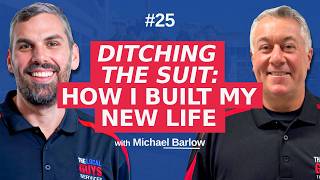
Michael Barlow left corporate real-estate management to run Test & Tag for The Local Guys. He gets quotes done in 30 seconds to 2 hours, knocks on doors with his branded ute, and warns new franchisees against depending too heavily on one big client.
Chapters
Michael, thanks so much for joining us today.
It's a pleasure. Thanks for inviting me along.
No worries. So you're obviously part of our Test and Tag division. You've been a franchise partner now for 9 months, I think.
Yeah, that's about right. Yep.
Yep. Yep. So did you mind maybe kicking off by sort of telling us your story and what you've done before joining The Local Guys and how you came about joining us?
Yeah, absolutely. So I guess the Immediately before joining The Local Guys, I was in corporate real estate, predominantly in the facilities management side of that, but a little bit of asset management and leasing and that sort of stuff thrown in as well. I'd been doing that in various roles for probably the better part of 20, 25 years and worked my way through that sort of corporate structure. Turned up in relatively senior roles, I guess, which was, which was nice. But it did also bring an awful lot of travel and I guess it was a relatively high pressure role, particularly at certain times. But you were constantly switched on. So it was a pretty intense sort of role. And prior to that, I spent a little bit of time in government, again in property down here in Canberra. And initially kicked off actually as a motor vehicle mechanic. So I've had a few different starts across life, but most of it's caught real estate.
So a few different seasons of life there. Now for those people that don't know, because I think people hear the words facility management and they don't really understand what it entails. And I think that probably leads us on to, you know, why you made the decision to do what you do. Do you want to maybe give people who don't quite understand what facility managers do a little bit of an understanding of that?
Yeah, absolutely. It's a good point. To be honest, I think some people in the industry don't have a perfectly clear definition. So it's quite reasonable that others don't, but I guess the link for me, there's a lot of facilities maintenance that goes on. So if you think about a large commercial building or industrial or things like banks and just office environments, we'd be organizing things from cleaning to, funnily enough, test and tag, HVAC services or air conditioning services, pretty much anything that makes the building tick. We were covering on behalf, I was mainly on the tenant side, but we also do it for landlords as well, or did it for landlords.
Right. Okay. That's interesting. So, but then I guess that, that brings us, how long were you in the facility management side of things?
On and off, Jarrad, probably for that entire 20-odd years.
Really?
Specific roles took me in slightly different directions, but there was always a link back to facilities management in one way or another.
And how much of that was, because obviously being in Canberra, it's a big presence of government. How much did you get? Were you involved in the government side much or was it more private?
Predominantly government for probably the first, I'll say 15 years of that. They were mainly Canberra-focused clients, whether or not the properties were in Canberra was another question, but definitely the clients were Canberra-based. And I did about 3 or 4 years inside government as well myself. I was the director of property at Department of Employment and Workplace Relations many moons ago.
Yep.
So yeah, and then in the more recent past, it's been like financial institutions, large industrials off the back of kicking off, I guess, a different sort of line of business for a global company.
Okay. Because I think it's a really interesting, I mean, I was having a look at your scorecard before jumping on to the call and we can go through elements of that later on, but you've obviously got quite an impressive scorecard. I think particularly for the 9 months that you've been with the business now and I think that part of that, or correct me if I'm wrong, but I think maybe part of that had to do a little bit with your history in that facility management thing. I guess before we kind of get to that, is that where you saw, is that, how did you come from doing facility management to look to get into test and tag? Did you see the opportunities on the other side of it being the client in facility management and thought, wow, this could be something where I could be on the other side of it? Is it, how did, how did those two link?
Yeah, there's probably two aspects to that. So, um, in 2024, I took a redundancy from a large global organization and it was a bit left of center when that happened. I ended up taking a bit of time off to, to be honest, I was actually going to get back into the corporate real estate sort of field and then I sort of paused a little bit and thought there could be some opportunity here to actually run my own race and do something that I've got more control over. Getting a redundancy sort of left of center made me think, that's not something I want to sort of head back into. So then I turned my mind, I guess, to where I thought the opportunities were. And it struck me that back in 2004, I wrote a policy for a government department for test and tag when things first kicked off for them, or when they first turned their mind to test and tag back then. And I jumped on your briefing sessions that you hold. I think they're every 6 weeks or 2 months or whatever else.
Yeah.
Yeah, the webinar. To sort of find out some more information. And I guess I liked the the approach that was taken, the structure, I guess, of the business. But also, you know, it was relatively obvious to me that having worked in FM for so long and with maintenance companies is the link, I guess, to the likes of electricians, which I have been very fortunate with so far in this franchise. But even the client side, as you just touched on, I know through being a client and then also servicing those clients before, some of the struggles they've got with procurement. How you've got to sort of present your case to them for a change, if they're going to come across to you. And I guess how you retain those clients sort of year in, year out.
Yeah. Because I know, you know, back when I used to do the discovery calls for, with new franchise partners and stuff like that, I'd quite often get someone on the other side of the fence that sort of says, I saw the size of, you know, I was working for a business or whatever. And I saw the bill that we received for Test and Tag and saw the, saw the guy coming out and it didn't seem like he was working that hard and saw the bill when I thought, oh, that's, that's an opportunity. So that's why I sort of linked the two. In regards to particularly facility managements, which are typically bigger buildings or, you know, bigger properties. I thought that, you know, that might have been part of the process that has sort of led you to this. You obviously test, you've had test and tag on your radar for quite a while then. If you've wrote those policies for Oneness, you know, a lot of people don't even know what test and tag is. For yourself, it's obviously been a peripheral one, that side of things. Was there anything else about, I guess, test and tag specifically that ticked the boxes for you to go, this, this looks like it could be the next thing?
I guess it aligns with Test and Take, but certainly the opportunity to run my own business in a smaller business environment was very attractive. And the things I guess that come off that, maybe we'll touch on them later, but you know, flexibility around your own time and creating your own sort of path and direction for the business. If you want it to grow, then you put in the effort to make it grow. If you want it to sit at the size where you can handle it yourself, then go ahead and do that and you can sort of organize yourself around what you want it to be.
Yeah. Yeah. Yeah. And I mean, look, that's, that's what's kept me in the industry. I think it's 13 years now. It's, it's, it's exactly that. I think the thing of it being preventative maintenance rather than breakdown maintenance, you know, it's not like something's broken down at 3 AM and, you know, you've got to get out of bed and go out there and fix it or whatever. It's preventative. We know that it needs to be done in this month, just come out and get it done. We tick the box and, you know, from a work-life balance perspective, it gives you a little bit more flexibility and freedom. I don't know if you've discovered that.
It certainly does. And I think the other part of that, and I think I've heard you talk about this as well, I've certainly experienced it, the clients are a lot calmer. They don't have water pouring out of a wall that's not supposed to be. It's something that has to happen in January and here you are to do it and it's going to take a day or two days or whatever it is. There's really, there's no panic around it, which is great.
Yeah, no, absolutely. I mean, that's one, one thing I definitely miss from having those, you know, I mean, you haven't done the full 12 months yet, but you'll notice that as your business grows and you start doing those repeats year after year, is you've, a lot of these people that are working in these businesses might be in there for a decade plus, and you've gone out there every year for 10 years, and you really do build a relationship with these people. And, you know, they see you as an extension of businesses and a part of their team and making sure that compliance is there. So I used to love that. It would give me variety. I'm in a different worksite all the time and all the rest of it. One thing I do want to touch on though, because I think it's a unique opportunity with your background and your experience, and you've obviously brought the results already only in 9 months. I was, I want to get into that local area marketing side of things. Because again, you are very unique with your background and I feel like you've probably leveraged off of your 20 years in the facility management side of things to be able to kind of go after some of those clients. Do you maybe lay that out for anyone that's looking to start their business? Because in my eyes, it's just as difficult to win the local fish and chip shop as it is to win a larger site. And sometimes quite often it's easier to win the larger site. But I think people, especially when it's the brand new and they're starting a business for the first time. They go, oh, I can't, I'm not skilled enough to be able to go after that or go after that yet. I'll just go after the little fish. But what they realize is it's just as hard. So do you mind talking on that a little bit?
Yeah. And I completely agree with everything you just said. And I guess my experience has been that. So when I first kicked off, I think it was the 6th of May or something like that from memory, literally drove to the local area shopping center, a little sort of neighborhood center, grabbed a coffee and you know, knocked on every door in that particular area, which was probably 30 or so that morning. And I was actually just about to move on and I noticed there was a childcare center around the corner and went and bumped into the director out the front. She was putting a sign in and she said, actually, yeah, we need it done. So day one.
Can I pause you quickly there? What did you, what was the exact word you said? Because some people who struggle with, you know, that, you know, you're a friendly guy and all the rest of it, confident guy, but how did you approach that? What was the things, the icebreaker? What did you say to actually do that? Do you remember?
Yeah, if I remember correctly, I started with a comment about the weather. It's quite a warm day for us down there as you do in Canberra. Um, a bit of a chat. Um, I think she actually asked me what I was out sort of doing. I mean, I was dressed like this anyway.
Yeah.
And I said, look, I'm actually, um, just looking to see if there's anyone in this area that's needing testing and tagging in the next few months. So I've got some opportunities to sort of come along and do the work. And she actually said, we're due right now. The last guy hasn't called. So when can you do it? Right. I could just call him in 5 minutes.
Yeah. Beauty, we're on here.
So, so that was that kind of experience. But then, I mean, that's relative, relatively difficult way, I guess, of getting things, literally knocking on doors and that sort of stuff. Yeah, I definitely tried the phone calls as well with, with mixed success. I wouldn't say no success because I've still got some contacts there I follow up. But the best I've had has definitely been my previous network and in particular electricians that I've worked with, not necessarily deeply, but had a good relationship with over a number of years on a personal level, to be honest, as much as a business level. And they frankly, they get better value out of not doing testing and tagging with their staff. So it, it. Genuinely is a win-win situation. So one in particular had a fairly decent size contract with a health organization. So there was monthly, first 5 months I was there, not every day, but I was there every month for sure. And it probably filled up on average, say 3 days of every week. So that, that was fantastic.
That's great.
Yeah. And then I've got a couple as well through real estate, more sort of more residential real estate where I've been before, they're a bit more of a tenuous link to the network, but it came through from that way as well as referrals from that referral. So that's been—
so real estate agencies?
Yep.
Yep. So, okay. Yep. So you've got an agent or whoever. So this is rental properties or is—
no, they're, they're actual agencies. So, um, they're not huge jobs. They tend to be, say, 100 items or thereabouts, depending on the size of the agency. But, um, In terms of the effort to get them one—
Commercial though, right?
These were both actually. So there's been residential and commercial.
Yeah, sure. Yep. Wonderful. Wonderful. So, so what I'm hearing you say, and this is one of the things that we, we train with our new franchise partners when we're going through training, it's finding those, those other experts in the industry. So like-minded industries, and we talk about electricians for Test and Tag division. Every division's got different ones. You've got the real estate agents there as well, which hits all of our divisions actually. And the reason why I like those so much and what you've obviously found is they've constantly got work coming up. So it's not like I just find one client, I service them once a year or whatever the number of frequency is, and then that's it. It's much better to try and get in with one sparky than it is to get in with one client, obviously, because that one sparky could be 3 days worth of work a week. He doesn't want to, or she doesn't want to do the work. So quite often they're too busy wanting to focus on solar or focus on, you know, being an electrician. And they say, I didn't go to, you know, do a trade for 4 years to want to go and put stickers on things. So we'll happily do it for them. That's not a problem. No, no worries whatsoever. But I was the exact same as you. I think I had 3 or 4 electricians that would be constantly giving me work, which was, which was fantastic. And it's a win for them. They don't have to deal with it. They can palm it off to us. A couple of them, sometimes I had like a kickback to them where I'd give them a percentage. A couple of them said, don't worry about it. You just take it. We're super busy. We'll just take it off of my hands. So I think that that's, that's really good. Now you had those relationships previously, but that's not to say that you can't form those, like if you were to recreate the whole success of your business again, I'm assuming that would probably, and you didn't have any contacts previously, that's probably going to be one of the first things you do. Is that right?
Yeah, I think it's a good point, Jarrad Goulding. I think if you haven't been in the industry, it probably sounds a bit too good to be true that someone that's got the ability to do it themselves decides not to, but they hand it to you. Well, it's more than hand it to you, but you know, it's probably one that people dismiss a little bit too quickly. I think there's tremendous value in it and I genuinely think there's a win-win-win there. So they, they win, as you say, maybe they get a, a little markup on it or something like that. That's still competitive. Yeah. I think the client wins as well because, you know, we're doing this day in, day out. It's what we do. And I'm sure the rest of the guys are the same. I try and add a little bit of value around commentary of what I've found, things outside of test and tag, particularly with the FM background. I'll, I'll point out, you know, observations for them to sort of think about. And it's a, not to take away from the electricians, but it's a different focus. And I, I guess I a higher level of service on some things they may not look at while they're there as a sparky.
So are you talking about adding value to the client and to the job? So is that offering extra services or things like that? The reason why I bring it up is because your average transaction value is 3 times our average for our division. You know, typically we sit around $555 as an ATV. I think you're sitting at around $1,600. Which is way higher than I was. I think I used to sit around $888 when I was, I would like to say on the tools, but I got told once by Sparky, I'm not on the tools, I'm on the stickers. So when I was back on the stickers, that was mine. And I had a few bigger ones as well. So is that part of it? Is it continually trying to add value to all of those clients that you've been able to increase it by so much?
It's probably got a little bit to do with it. I'll be like perfectly honest, I think I got a little bit lucky with the size of the jobs that I was able to get working with this electrician, which, um, I say lucky, but I mean, do a good job, you get invited back.
So you create your own luck.
Yeah, exactly.
Exactly.
So some of the, the early ones were decent-sized jobs and, and also just noticing that this other building over here needs to be done next month. So it starts talking about that and looking at it as a program rather than a one-off transaction.
Yeah. Yeah, absolutely. Okay, cool. Yeah, well, that's great. I mean, that's a really, I think, strong way to do that. Has there been any other sort of ways besides, I guess, the Sparky side of things that really stands out as far as local area marketing and growing those businesses, that your business in that first 12 months?
More recently, Jarrad Goulding, do I do this deliberately? I probably didn't, but I bought a, my work ute is a BYD Shark. I'm not sure if you're familiar with them, but they're an enormous Chinese thing that kind of stands out, or used to at least stand out from the crowd. You add all of our stickers and I put a canopy on and that sort of thing. It really is a billboard on wheels. Yeah. So every possible opportunity I'm driving around the local area and, you know, parking it in the shopping centers and those sorts of things. It's front of mind at the moment because just probably in the last month, I've had 3 different people say they'd seen the ute, you know, and just noticed it, I guess, and our numbers on it and all of that sort of thing. So I think that's, again, one that probably gets dismissed a little bit, but I do think it's probably hard to measure, but I think it does bring in our clients.
Definitely. And I know we've got a franchise partner here in South Australia who every single year puts it in the Christmas show. He's on the back with, you know, a Santa outfit on. He's throwing out lollies to all the toys and lollies to all the kids, et cetera. And he's in it. Every single year. And it's that consistency that's there. I think that's probably one of the biggest mistakes I see from new franchise partners is they think, oh, I just need to go out and market to someone once. And if they, you know, I've sent them through a quote once or give them a flyer once, it didn't turn into a sale, that's the end of it. And really, I think they say it's like 7 touchpoints, 6 or 7 touchpoints before someone goes into a buying state. So it's constantly just seeing the vehicle getting around, getting vehicle getting around. And before you know it, you become that trusted person in that space and you are truly the local guy of that area and the trusted, the trusted person to use.
Yeah, I have also used, you know, our pamphlets and with my business card on it and so on, but it, and I'm not saying it doesn't work. I haven't, I haven't picked up one yet where someone said that's where it's come from. But interestingly enough, I've used the pamphlet and then soon after also knocked on the physically knocked on the door and spoken with someone and there's been no acknowledgement of the pamphlet being there. You know, to your point about 7 touchpoints, I could probably go back next week and they won't remember me knocking on their door either. So, but, um, it is worth continuing, continuing that touchpoint. Yeah.
How does your quote process work? So you get a lead from the support center, do you, or, or from, from your own local area marketing, do you have a process in place of of how that works in regards to how quickly you touch base with them, how, you know, how quickly you're following up? Is there a strict process on that or are you still establishing that?
No, it's been pretty standard about my only limitation is if I'm in a basement or somewhere and don't have coverage. So, you know, the slower ones are because I haven't had coverage, but generally what I try and do is grab my laptop. The phone's good, but you know, I've got our system on that, but I do prefer to have the laptop there to take notes. I'll get it fired up and immediately call them. So there's been some cases where they go, what? I only just hit send on that and you call. So if they don't answer actually, and this is my process, if they don't answer, I immediately do email them as well, just to make sure that there is something to show that I've touched base with them quickly. But it's, it could be anywhere from 30 seconds to, I'd be surprised if I've missed the 2 hours ever. I'd say most are definitely within half an hour.
Yep. And then what about follow-up?
Yeah, so follow-up, just at our last quarterly review, actually, there's a couple that I haven't followed up as closely as I should have, which did stick out. But generally I do follow them up. I wouldn't say the volume's been high enough that I'm drawing too many conclusions from that other than I know that I should, um, and yeah, and it will. So, um, I haven't been diarizing those to date, but I will put them in the diary when that conversation's over, I guess. I know there needs to be a follow-up.
Yep. Yeah. And I think that's like, I talk about a lot about the system. It's about the process rather than the event. And I think that if you can build out that process or that system, um, and then the events will take care of themselves, you know, ultimately you can't decide for that, that potential customer of whether they're going to buy or whether they're not going to buy. It could be a varying degree of factors of whether it happens or it doesn't happen. But at least if you know, I've got a dialed-in process and I've tested it and this seems to be a model for success, I just need to touchpoint enough people and the numbers should eventually just work themselves out and work from that side of things. What about technically? We've spoken a little bit about local area marketing and building on new clients and all the rest of it. How have you gone on a technical side of things? Like what's been some of the most surprising things about the actual work?
Probably just how dangerous some things are that aren't being picked up by the occupants of the space. Like it actually genuinely has surprised me how many wires hanging out of plug ends, literally hanging out that are still plugged into the wall.
That's, yeah. It's very crazy, isn't it? Yeah. Yeah. Common sense isn't that common.
Yeah, that and things like RCDs not having been tested for, I did one the other day actually that was, would have been 4 years out of date in a center that has the general, you know, public in there and kids and all that sort of stuff. So probably the amount of that, I guess, is probably what's been surprising.
Yeah, I think people get so busy focusing on the, I've got to run my business and and this person's sick and that machine's broken down and this is happening. And what tends to happen is the maintenance and the safety side of it just goes, yep, yep, yep, we know it's important, but it's not on fire yet. And we're dealing with all of these things that are on fire. So we deal with this, we deal with this. And I've, you know, I remember I used to work, you know, you'd have nursing homes that we'd work with and stuff like that. And they'd have a bunch of maintenance guys and go, well, let's just save some money and get our maintenance guys to do all the test and tag. We'll just get them licensed. And all the rest of it. And they ran that for like a year or two, and then they realized that none of it's getting done because none of it's on fire. And they were dealing with all of the things that were on fire. And then they end up going, you know what, we're not doing it. We're not doing it effectively. We're going to have an incident and then it's going to fall, then it will be an emergency and it will be on fire. So then they've outsourced it back to us and stuff like that. So yeah, I think that it's, it's really interesting, I guess, on, on that side of things that, um, how many businesses there are out there that actually just, it falls by the wayside.
Yeah, and I've heard a few times that, I guess along those lines as well, Jarrad Goulding, people will call up and say, oh, we're, we're out of date and we've got an audit coming up in a month, so it needs to be done now. It's like, okay, so we're only doing this because of the audit. Yeah.
Very reactive.
Yeah, yeah, exactly. But, um, that's probably the, the, the main point, I guess. And, and yeah, probably those places that actually have never been done, um, that you sort of get along to.
Yeah. And I guess that's the, the beauty of our process is it's set and forget for the businesses. Like you then become from the safety officer or the electrical safety officer in some ways, because that once they get your services, then that's it. Now they're your client for the next 10, 20 years, and you will notify them when their tags are due. This area of the business might be on one frequency, this part of the business might be another frequency. The fire stuff needs this and the electrical side of things needs this, and you can manage all of that for them, and you just need give them a call and say, hey, I'm going to be out on Tuesday next week. So it allows them to focus back on, again, their core business. And you're the expert and you're managing 100+ clients of doing that for them. So it makes sense. Yeah. And then from your side on that, it's repeatable, scalable income because you can be reliant that we've gotten this person almost into a subscription model. It's not a subscription model. Obviously, we don't normally make our clients clients sign up for a year or two years or further. But generally that's what tends to happen is that they'll just continue the service on. So, you know, looking at your revenue here, you've had some really big months and it's looking really strong as far as you're projected for what you've already earned and then plus what's projected. But what I like about that even more so than that is that you can pretty much guarantee that a lot of that work, if not all of that work, will then carry through to next year. Plus any new stuff that you add to it. And that's how I built my business, you know, was exactly in that way. We had a retention rate of at least 90%. And I know for the way that you run your business and that you're going to be right on par with that, probably beat me in that regard. So, so yeah, that would be, I mean, we haven't got to that point yet. That would be the only thing that I would, that's jumping off the page when I'm looking at your scorecard now is the potential threat. And it's knowing how you run your business. It's not, It's not a, it's making sure that you've got your repeats set up in our system and make sure that obviously when you're calling those clients up as well, it is not, hey, we did your test and tag once. Would you like to get that done again? It's, hey, it's Michael. I look after the test and tag for you guys. It's that time of year again. What day can I come out next week? Yeah.
And Jarrad Goulding, that's probably been the one risk that's popped out of me with starting in a very busy way. Is the amount of local area marketing that you can fit into your day when you're executing at the same time. So it's interesting you just raised it then. It's been that little alarm bell sort of sitting at the back of my head. It's great to be doing the work and getting the revenue and all that sort of stuff, but you know, you're not building all of the foundations you want to at the start.
Yeah. And wise of you to notice that because it's what's called a high quality problem, obviously. You first start the business, you've got heaps of time, but limited resources coming in. Then the resources part starts to expand out massively, but the time to grow the business drops down, obviously. Now that's all well and good as long as it continues on that trajectory, which from your standpoint looks like it's pretty good. You don't have all your eggs in one basket. I remember we had a franchise partner that had one massive client, like massive, massive. And then any of the leads or any of the smaller stuff, they were kind of neglecting. And it was a big alarm bells to me because the problem is if they lost that client, which they ultimately did lose that client, then they went from hero to zero in one day basically. And you know, that was north, I think it was north of $160,000 of one client, which is amazing, but not amazing the day where, you know, I think they, they said that we're going with someone else or they got taken over by someone and, and they had their own guy already. So you just want to be building up those moats around your business, I guess, and making sure that Although things are great and again, high quality problems, but now it's about building out a moat and making sure that we're scaling so that in year 2, 3, 4 and beyond, we've got that strong structure where it's going to take a lot more than one client leaving or a couple of clients leaving or a sparky to leave for the business to head into a negative territory. I know you've got your son working with you now.
Yeah, he has done a little bit. He's a uni student, Liam. So, um, I've had him along for a few.
And how's that been?
It's been good, actually. He's, um, yeah. Uh, it's interesting. Liam's probably not our hands-on, um, child. So it was a good opportunity to get him working with his hands a little bit. And it, he's been great support, to be honest. I mean, um, it is a role where you bring someone along and you actually do get a benefit from it. Um, whether it's recording the data or, you know, there's little bits and pieces they can do all all along the way. What I haven't done yet though, Jarrad, is give him license so he can be doing the testing himself as well.
Yes.
And yeah, he's actually moving out at the end of this week. So moving on campus at the end of this week. So I've gotta find new ways to convince him that he needs to go and get his license.
The leverage is dropping off a little bit there.
Oh, I don't know. I know he's paying the rent at the campus.
So the leverage is alright. Okay. All right. We're good with the leverage side of things. All right. That's good then. And look, that's normally the typical sort of process on that. You know, you get someone to come out, help you out with the reporting. It means that you can get through a lot faster because, you know, you're not having to do one side of the actual job. They can also be talking to the people in the station ahead of you and asking them to shut down their computers and stuff like that. So then you can just power through. And then as you say, the next step to there is is, all right, let's go out and get your license now. And then, you know, maybe I can do the reporting a little bit and get you used to it. And then once that kind of happens, you know what, you do that part of the building, I'll do this part of the building. And then before you know what, you're going, all right, you've got this site and this site today, and I'll go off and do this site and that site. So I think you're doing it in the right order. And yeah, it's a good way to do it. I think if you just try and get someone licensed from day one, they might hate it. You might not work well together. They might not have the same standards as you and all that sort of thing. And also working with family as well. You never know how that side of things is kind of going to go, but I see you smiling as you're talking through it. So it sounds like you're enjoying the process of it.
So yeah, it was, it's been really good actually. When he's come along, it's, it's a good father-son day on top of doing a bit of work and earning a bit of money. Yeah.
Yep. That's great. That's great. What's something important that we haven't talked about yet? Is there anything that, you know, you're hoping that I was going to kind of bring up that I haven't raised yet that you think you could add value on? On something?
I think we've touched on, on a reasonable number of them. I've jotted down a few notes, obviously, but, um, I guess one of the things that jumped out at me and it's probably fairly specific to me or people that have come out of, you know, the corporate environment that gets to a point in corporate where all you seem to be doing is dealing internally. So your customers are internal and you're debating things that arguably don't matter so much and you lose, you lose that client interface. One of the things I've really, or two of the things I've really enjoyed about this is the diversity of clients. So the number of them and their childcare centers, their hospitals, their offices, caravan parks, all that sort of stuff. So the diversity of them and I guess the number of them, and also probably more importantly, having that face-to-face one-on-one contact with them where it gets lost a bit in my old world where the the customer becomes 2, 3, 4 steps away and you're trying to make decisions that really you don't know who the end user is.
Yeah.
Yeah.
That's great. Yeah. No. And that was one of my favorite parts as well as, as you say, caravan parks one day and an office building another day, you might be doing all sorts of different sites. So, you know, it's, it's the end of the year, Christmas time when they give you, you know, a bottle of wine or a carton of beer or whatever. It's really those human connections that you've form that in corporate you're a few steps away from. And it just, sometimes it's just emails back and forth constantly. You don't really get that human, human side of it. So no, I couldn't agree more. All right. I'll finish up. The big part of me doing these podcasts is, and speaking to franchise partners and successful franchise partners is that we're trying to add value to other people that are, success leaves clues and we're really trying to. Leave as much value to someone else who might just be getting started and they've seen someone doing it successfully and trying to work out where's the little nuggets and the little lessons and how do I avoid that little pitfall, et cetera, et cetera. What's some advice that you'd give to, you know, a brand new franchise partner? If someone's starting up this week and they're about to finish up their training with us and they're about to get out there and start going, what's some advice that you would you would pass on to them in regards to doing this whole thing?
Yeah, I think in terms of local area marketing, I've said during this, this interview, I guess there's a few things that didn't necessarily work well for me at this point. Um, and I deliberately say at this point, I think every people should try all of them and see what does work for them. So I wouldn't say I'm the best person on the phone necessarily. It's, it's probably not my strong point. I do enjoy being face to face with people. People, the face-to-face options are probably better for me, for instance, whereas others, maybe they don't enjoy being face-to-face, they prefer emails or phone calls or whatever it might be. And there is a vast list that's provided by yourselves during that training process. I'd say have a crack at all of them and have more than one crack at all of them until you figure out which ones work for you. I think the other part that I've been pretty regimented on is knocking over the admin side of of the work the same day. So you're probably familiar with the sort of caravan groups that we've done recently. They were putting in pretty big days, but every single time I do that, the data piece that night, so it was done. I know from a previous life, if I don't get it done early, it'll mount, mount, mount, mount, mount. So, um, I think, and I think it goes into the business management side as well. You know, if you've got to do your best, then just do your best. Don't put it off, get everything done as it needs to be done, um, rather than falling behind.
Yeah, no, I couldn't agree more. I think it's those strong habits you build into yourself. It'd be easier just to go, I've done a 10-hour day and, you know, I might be away from home because we're doing a big job away from somewhere and all the rest of it. It's easier just to kick back and relax. And I think, uh, just being strong on that housekeeping side of things and just pumping it through, it it's kind of like making your bed in the morning, you know, it's just those 1%ers that actually just keeps your house in order and how you do one thing is generally how you do everything. And then, and the quicker you get their reports through, the quicker you get paid, right? So, um, it helps from a cash flow perspective as well.
Yeah, and probably the other thing I should call out, and I should have done it before now actually, the service center is your friend. They're there to, I mean, they do the obvious things like send referrals leads through all that sort of stuff, which is great. But, um, if you've got a question, bounce it off them. Uh, and if they're trying to get ahold of you, then, you know, make it happen.
Yeah.
And I know I'm not perfect in, in either of those regards, but I do think it's something to, to push for. It is sort of the, for our teams. Um, that's, that's sort of where they fit in.
Yep. Yep. Absolutely. And you gotta, it's just like any partnership. You've got to nurture that partnership. Um, and. Then, you know, yeah, yeah, that's what you do. All right. Well, Michael, thank you so, so much for spending the time with me. I've really enjoyed the process of going through and learning more about the growth of your business over the last 9 months. I'm really excited to see and continue to look at the scorecards and see some amazing results there continue on. I think it's a really big milestone that we're going to have when we hit that 12-month mark and watch those clients continue to tick over and repeat into year 2. And then yeah, continuing to watch the, see the business grow. Before we let you go, what is the goal with the business? Are you, have you got a certain point where you go, it becomes more about work-life balance? Or are you going to say, no, I really want to keep pushing this thing and I've got lofty goals?
It's probably about really pushing this thing to the point where I know I can get the work-life balance right. Year on year. So there is still that element of it's 9 months in, is next year going to be the same? Will it be right to take the Christmas break off? That sort of thing. So I'll keep the foot on the accelerator for now. There is a goal, I guess, around annual revenue, which, which I've got, which hopefully I can get to that. But once it's set up and I feel like it is actually ticking over, then I'll have achieved what I'm after. I'm not looking to grow a team of 3 or 4 people or anything like that. Sure. Probably a bit long in the tooth for that one. So yeah, it's getting it idling over is important for me.
Yep. Well, that's great. I mean, from everything I can see on here, yeah, fantastic scorecard. I think you're, a lot of the hard work's been done already. There's a lot of momentum. I always talk about it. It's like starting a car, you know, when you first start the business, you're in gear number 1 and you've got no momentum and your revs are really high and all the rest of it. You're now, you know, you're up and on the highway when you're in gear 4 and it's a lot easier moving at a lot faster pace with a lot more momentum and the revs get to be a little bit lower. But I agree with you, I think keep your foot on the pedal for another year to 2 years and then realistically momentum just takes over after that and it's, um, you can still be running at 110 kilometers an hour and the revs that you need to put in are a lot, lot lower. So congratulations, mate, and, uh, yeah, it would just keep pumping it.
Sounds like a plan to me.
Thanks, Michael. Thanks for spending the time with me.
Thanks, Joe. See ya.










