Episode #11: Jarrad's Turn In The Hot Seat (with Jarrad Goulding & Shannon Wright)
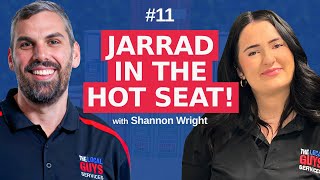
A recorded interview (Episode #11) in which Shannon Wright puts Jarrad Goulding in the ‘hot seat’. Jarrad describes founding The Local Guys (with his wife Stacy), growing it from a small test‑and‑tag startup into an international franchised business (~50 franchise partners across Australia and New Zealand), and expanding into three divisions. He recounts early struggles (first year turnover A$7,000), franchising lessons learned from operating Boost Juice and a restaurant franchise, and key concepts the support centre teaches franchisees (the J‑Curve, habits, marketing, KPIs). He also shares personal details: father of three young children (Bella born two months earlier), lost ~40–45 kg, runs ultras (completed 70 km, planning a 100 km), is a 21 handicap golfer, and describes company values (family, passion, innovation). Future plans mentioned include new websites, an upgraded LMS, new services, and expanded support for divisionals.
Questions this video answers
About 50 franchise partners across Australia and New Zealand.
About A$7,000 (turnover, not profit).
About 11 years since starting the business.
About four and a half years (franchising timeframe referenced).
They donate A$5 to World Vision Australia for every job performed.
Chapters
All right. Welcome, Darren, to your very own podcast.
Oh, thank you so much for having me. It feels weird being on the other side of things. Yeah.
You haven't changed seats though.
No, I've officially worn this one in, so I thought I'd stick to it.
You're in the hot seat today though.
Okay. I feel like it.
I'm not usually on this side of the camera.
Yes, I know.
But end of the year, so we thought we'd turn the spotlight on you for once.
Beautiful.
And talk to you about yourself.
I know. I'm a little bit nervous. Yeah, it's crazy. It's so much easier, you know, being the interviewer than an interviewee. But I'll try my best.
Okay, well, that's good enough, I guess.
Okay, thanks.
As you usually do, you usually open this by asking whoever is in front of you about themselves and what their part of the company is. So why don't you start there?
Yeah, sure, no worries. So my name's Jared Goulding. Myself and my wife started up the local guys. So we currently have just airing on 50 franchise partners throughout Australia and New Zealand. The father of three kids under four years old. So we've got a really busy household at home and obviously, you know, running a international franchise now with three different divisions keeps us really busy at work as well. So very, very busy time of life.
And with your three under three, you've just got a fresh.
We do, yep. Little Bella joined us two months ago on the weekend. So, yeah, plenty of sleepless nights at the moment between the three of them. But no, it's. It's been amazing.
So, yeah, you've got four babies, the three kids and the local guys.
I do, yep. Absolutely.
I won't ask you, I was gonna say, but tell us a bit more about obviously what you do as part of the local guys. Obviously anyone watching this will probably have a little bit of an idea of who you are and what you do. But in a day to day perspective, what is your sort of role here in the support centre?
I have a lot of meetings. Yep, I have a lot of meetings. I work very closely with the. The team at the support center. Center. So I've got two main roles really. My first role is the growth of the franchise. So working with our divisionals and myself and the guys here in the support center and girls at the sports center and growing the actual brand itself. That's one element to what I do. And the other element is the actual franchise partners themselves and ensuring their success and working closely with them in regards to brand standards and ensuring that their businesses are as successful as possible. So they're my two main goals within the business. Yep.
You spend a lot of time obviously with, I think, development of everyone in the company, which is great. So innovation is obviously huge for us, which is, I know, stemmed a lot from your past. Can you talk a little bit about how you even got to test and tagging and the local guys in general and just how the whole story started?
Yep, sure. It's a long story.
We got time.
Yep, sure. So I was working at Telstra and we had the. Just in the call centers within Telstra and we had the test and tag guy that sort of walked through and I thought, what the heck was that? I had no idea. I thought you had to be an electrician to be a test and tagger sort of scratched the surface on that a little bit and realized that you didn't need to be an electrician. So I thought it could be a good opportunity for us. So myself and my wife Stacy, we got into the business and started from very humble beginnings, I think. Yeah, just the first year we turned over $7,000. That wasn't profit, that was turnover, which was really impressive. But we were handwriting tags and just really had no clue what we're doing. You know, to get licensed and test and tag is quite an easy process, but you're far from an expert after that licensing process. So just had to get in and learn. Make a lot of mistakes and sort of have no idea what we're sort of doing. But you learn as time goes on. You learn, you learn, you learn. So, you know, that was 11 years ago now. So obviously the process has changed dramatically. And yeah, that's how we pretty much got started was just not through books, not through anything like that. You know, I left school after year 10. I'm not a book smart person. I don't have an mba. I have business experience through doing over a decade of doing business.
Yeah, I think that's one of the things that we appreciate most about you here in the sports center is you are fully entrenched in every element. So, you know, like if something happened and all of us got sick. Yeah, I think you would be how to do it by yourself. But I'm very glad you don't have to.
Yeah, I'm very glad I don't have to as well. Yeah, I think the business has got to a point now where I think, you know, physically this wouldn't be possible. So. So I'm very glad to have a.
Team around me Outside of work though, you've obviously got a few hobbies that you bring to the office. Sometimes I do. What do you get up to when you're not behind the desk?
Yeah, so I've got a couple of hobbies. I've got two that I'm very passionate about. So I've got golf. So I'm a very average golfer. So I think I'm a 21 handicapper golfer, which anyone knows anything about golf, it's not that crash hot, but I try and I have a great group of guys that I play with, so I do that every week. And yeah, I very much enjoy that. That's my time for me to decompress. We've got a lot happening in the business and a lot happening at home, as we just sort of said. So that's my time to get away and sort of talk nonsense with the other guys out there and just, yeah, get out and stretch my legs for four hours a week. So I. I very much love that and enjoy that. The other thing that I very much enjoy is running. So I've gotten into that over the last few years. So I do everything from sort of 10k runs through to ultra marathons. I've got a 100k run coming up next year. Just completed a 70k run. So I think I normally have about 12 runs booked in or marathons booked in a year. I got the Sydney marathon coming up. Just. Yeah, I've got a bunch coming up. So, yeah, they're probably my two things that keep me. Keep my very active mind calm and settled.
Yeah, you make that sound very easy. But marathons has only been a relatively recent thing for you.
It has, yeah. So last probably year, year and a half is. It's been the whole marathon thing. I lost a bunch of weight, about 40 kilos, 45 kilos. So yeah, no, I found it to be a really good. I don't normally do things in the house. No, no. So that's. Normally my personality type is if I throw myself into something, I tend to throw myself into it, including the kitchen sink. So, yeah, I guess that's kind of been the same sort of thing with running and running stupid distances and stuff like that.
My favorite thing is when you come in on a Monday and you're always like, how's everyone's weekend? And we're all like, yeah, did this, did this. And you're like, yeah, just run 70ks, no worries. We're all like, okay, cool.
Ye.
I just sat on the couch this weekend, but that's fine.
Yeah, yeah, no, it's fun. It's good.
Speaking of your family, though, obviously this is a family business. You do have a fair few of your family members that are involved. Who. Tell me about who you've obviously got around us at the moment.
Yeah. So I've got. It is a family business and we pride ourselves on being a family business. We say that anytime anyone joins the local guys that they're a part of our family. We share everyone's information. And everyone. Everyone's got my contact information. Franchise partners contact me directly all the time. So we pride ourselves on that and we feel like that's one of our big points of difference that we're very proud of. But I do have some of my actual blood family working in the business. So, yeah, obviously Stacy, who's been with me with this since the beginning, but I've got Sean and Renee who run our pest control division, who's also. Sean's been my best friend and cousin growing up. Renee's. His beautiful wife Nathan is just. Come on. Who's. Sean's younger brother has come on as a pest control franchise partner. So, yeah, he's been working for Sean and has now taken over his own franchise, which is really exciting. Yeah. So there's a. There's a bunch of us getting around, which is great. It's good though.
It's fun. When they all come in, we can't get to see all the faces and it was able to see like a golding pop up. We're like, yep, yep.
Yeah.
It's good to have him around.
Yeah.
Before obviously you kind of. We go a bit further back to your history. You obviously started the business and did all of that. But franchising, how did you get started in that element? Because that's obviously very different to starting your own independent business.
Yeah, yeah. So we had the test and tag business going for. For a couple of years and it was, you know, doing good things. It was a great work life balance and stuff like that. So we ended up deciding that we wanted to look into a franchise. So we actually got a Boost Juice and we had an amazing experience with Boost Juice. They were a fantastic franchisor. And we ended up getting a second Boost Juice, which was fantastic and learned a huge amount from. From them in regards to franchising and how good franchises run and all the rest of it, and just had great. I couldn't speak more highly of them. Just a great model, great franchise partners and just a lot of people working hard together to get a great result. We decided that after Having a couple of Juice bars that we thought we'd take the next step and get into a restaurant franchise, we thought that's the next obvious thing. We know retail, we know hospitality. So we just thought, yep, will go for a really big hundred seater restaurant franchise. That one probably wasn't the best experience as far as franchising goes. That particular franchisor didn't have a lot of the same sort of support and set up and a lot of the same foundation as Boost Juice. So we saw probably not the best side of franchising on that regard. So I think that between having Boost Juice where we just thought these guys just know how to run a business so well that we just couldn't sort of see ourselves doing anything like that. But then when we saw the other franchise and they'd grown quite a big franchise and they hadn't run it as effectively as they probably could have, we sort of thought, well, we've got this other thing sitting over here which was the test and tag that we've had for forever. And it was great work, life balance and, and great money and service. That's why we always push service based stuff because, you know, the profit margins are so high and stuff like that, buying's a lot lower. So we thought, well, what we've learned over the franchising experience of these two other franchises, maybe we could look to franchise ourselves. Which at the time just felt like such a crazy thing to do because it's just a, you know, test and tagline. The tools, like I was just, you know, no one's sort of special and I just thought, you know, like, for, for us to try and do something like that, to see madness. But as I throw myself into things crazily, we decided let's, yeah, let's, let's just do it. Anyway. I think Richard Branson said, screw it, let's do it. So I think we just sort of went, screw it, let's do it. And yeah, we threw ourselves into it. And it was sort of the whole thing of how do you eat an elephant one bite at a time? But we just did that one bite at a time. And yeah, that's sort of how I got from there.
I mean, Stacy's obviously a qualified accountant, so you've kind of got a good backing there as well. And then you, as you said on the tools, makes you very technically.
Yeah, I was a bit lucky on that one.
Yeah, I think. But you've also like, as you said, made all the mistakes and stuff like that. So I guess from that Perspective when you're starting and you are kind of throwing everything in. That's daunting to say the least.
Yeah.
Where do you even start?
Yeah, it's a hard one. I mean. Yeah, I mean, back to your point with Stacy, that was. That's super helpful. Only. Only today, before I came in here, we were running through the books and, and stuff like that. And having her ability in. In the books helped significantly in the business. So, you know, we were very lucky to have that scenario. But, yeah, it's a. It's a hard one. Like, I don't really know, probably just. What did I call it? You have an entrepreneurial seizure. And, you know, you look back at it and go, you're crazy. We're probably crazy to have that entrepreneurial seizure. Seizure. And like, it worked out for the best and it was really glad that I did. But, you know, knowing how long and how difficult the road is to go into it, it's just one of those things that you just. You probably don't overthink and you just know, you know, you back yourself. And if you're building something for genuine value for people, and I think that's what it probably starts from is if you're genuinely trying to help people and genuine. Adding value to the market, then you're starting on. We always talk about it firing off of a battleship rather than firing off a kayak. So that's. Yeah, yeah.
And I think like, the genuine care thing is something that you don't see a lot in this market sometimes as well, which I love most about us personally, which is great. But yeah, you've definitely, I think, hit the nail on the head there.
Yeah.
But with like franchising as well, especially like that, obviously you're throwing everything at it. When you're kind of having that conversation at home, it's obviously very hard to be like, okay, I'm just going to get off the tools now and throw myself into it. How long was it between you kind of just going, yep, this is it, to things starting to take off.
Yeah, that's. That's terrifying. And you know, like, I've had those conversations with our divisionals as well, because they very much are in that. Have been in that space. You know, Sean, Renee just gave up a $300,000 a year business to go into the franchising thing full time. That's a scary thing to do. That was scary for us. I still remember Stacy was we were doing the franchising. We had the business going for a number of years. It grow into A successful business. And it was ticking over and it was great. And then I said one day to my only employee, Taylor, we're no longer a test and tag business. We are now a franchising business. That's it. We're a franchising business. But we still had a staff member. We'd hired a staff member to do be our technician who was going out and doing the testing and he was bringing in the vast majority of the income. And then whilst we were trying to grow this franchise and then we were. Stacy was in the middle of giving birth, actually literally in the middle of giving birth, we're in the hospital. I remember it to this day, and we get a text message from. From that staff member saying, hey, I quit and effective immediately, so I'm not gonna give you any. Like, yeah, Yep. So great. Okay, so what do I do? Yeah, what do we do? What do we do? So, you know, owning a business, like there's never. You're never at work, you're never at home, you're always on 24 hours a day. So that was a perfect example of. We were, you know, right in the middle of that and that happened. So that was terrifying. So it forced us to decide, what are we going to do here? Could either try and hire someone again or what we're going to do. So we had a couple of franchise partners at that stage. It was still quite small and we just said, we're going to throw the hat over the fence. Then we were like, well, the hat's over the fence. We're going to make this thing work, otherwise we're stuffed, basically. Yeah. Sink or swim. So that's what we did. And then. And then way we want where we went, so. And then the franchise sort of grew.
From there, doesn't it?
Yeah, it does. It does.
That's exciting. Looking at it now, obviously, as you said, we've got like about 50 of us internationally at this point, which is exciting. It is brought on the first New Zealand franchise partner, which has been a really great experience. A lot of fun.
Yeah, yeah, Dave.
Shout out to Dave. But I guess looking at the business now, obviously we're coming to, you know, about four and a half years. What are your three favorite things about us at the moment?
Three favorite things. I think number one thing is I love seeing the success of our franchise partners. I've seen people come in the door hating their job and just looking for something that's different because what they're doing just isn't getting them anywhere. They've got no work Life balance, they're not making enough income and then seeing those same franchise partners a couple of years on and they've got, you know, really profitable businesses you can see in themselves. They've got, you know, skipping their step. And it's just, you know, you see that consistently and you know that you're, you've, you've had some level of a touch point on that, which, you know, that for me is my favorite thing about what we do is that, you know, you do get to impact people's lives. I mean, we donate $5 from World Vision to World Vision Australia for every job we do. That that means a lot to me. There's, there's lots of elements that we do that I think really exciting. But yeah, there are a couple looking.
Back on it now as well, like having come the last four and a half or now amount of years, is there anything that you'd look back on, like yourself four years ago and tell you, like, is there anything advice you'd give yourself or anything that you'd kind of give yourself a heads up about?
Not really. I don't think so.
Going blind.
Yeah. I think that, I think that you can. Paralysis by analysis. I think you've got to be careful of that. I think that just action is, is a really important thing. So I think that it's never going to be perfect on day one. But what's most important is actually taking that first step.
Yeah.
So I don't think I would really. I think everything's unfolded the way it's meant to unfold. So. Yeah. No, I never sort of look back and wish you'd done this differently, all that differently again. Like, I think if you've built something on, on strong values and on strong foundation, then everything just plays out the way it's meant to play out. Yeah. Good.
No mistakes. Mistakes, I think, help.
Yeah. You've made like a few, as many mistakes as possible. I love mistakes. Mistakes are fantastic. Yeah.
It's always handy when like, you know, we learn from them anyway because I feel like even in my time, like we've made a few mistakes and then you see kind of the projection off the back of that.
Yeah.
And we always end up like with a twice as good solution failing forward. Yeah. Which is nice because we're, you know, thinking on our feet as we're moving through and.
Yeah, yeah. I think that's the, the problem. Like if you're too trigger shy and you don't do anything, I think it's better. What's the analogy? It's Ready, fire, aim.
Yeah.
And I think that that's really important because you're actually doing something and you're moving forward and you can correct as you go. So. Yeah.
And there's a Phil Knight one that we have on the wall as well.
Yep. Yeah. Yeah. What is it? The. The Cowards never started the week died along the way. And that leaves us.
Yes. And that is. Yeah, as you said, on our wall, ready to kind of see it every day.
Yep.
Which is good as well, because when franchise partners come in, they obviously see the sort of stuff that we've got. You and I obviously get to speak to a lot of the new franchise partners that come in.
We do.
Which is very good and very exciting and we really enjoy, I guess, that kind of part because we're getting to speak to people that are making, like a really big decision in their life. Yeah. I think from your perspective, like, what do you think is something that people should probably know before they get into the business or things like that? What's the best advice that you can give someone that's looking at.
Looking at a franchise? Yeah, yeah. I mean, it's all your typical things that people would probably say. I'll see if I can add some good ones in there. So obviously, do your research. Talk to as many franchise partners as possible is a good thing. Think about it not just on the way in, but also on the way out. So, you know, is it easy to exit the franchise if it's not? Not. Why is it not easy to exit the franchise? Like, the franchisor will know whether they've got a successful model or not. And if they make it hard for you to exit, is that a bit of a red flag? Because they know that it's not that great. Don't go for the cheapest one, don't go for the cheapest fees because they won't have the budget to be able to do marketing and things like that. If they're spending money on marketing, it's a good thing because you would rather invest a little bit more into marketing and actually get a return on investment. See that they know their numbers, see that they know the KPIs, and, you know, we talk about all the time of conversion rates and ATV and average transaction value and all those sorts of things. Like, if they're geeking out on that stuff, they probably know their stuff.
Yeah.
If they don't. If they're not. Yeah. Then it's a bit of a concern. Track record's good, obviously, because it gives you a bit of an Indication of where it's kind of going. Yeah, I would say the, the main things, I think just like your gut fuel will probably tell you a lot. It's like looking at a house for the first time. Your gut fuel generally will. If you get that gut feel, then the market will probably get the same gut feel. So when they're trying to take on your services and stuff like that. But yeah, I wouldn't, don't just. This is a long term investment. It's not like buying a commodity where it's like if I buy this can of peas, it's the same as this can of peas. It's just a different packaging. Buying a business or a franchise is not like that at all. The substance in the middle are very different and you only know that once you open up the can and you start eating. So. Yeah, yeah.
I think you often say as well, like you only get out what you put in as well. So I often hear you talking to potential new franchisees every day because you're on the phone speaking to these people that are obviously interested in doing something like this and providing advice and kind of tailoring that advice to them because you get to know their experience speaking to these people. Is there kind of like any, I guess, common qualities or things that you look for in a good franchise partner?
Yep, there is. There's definitely is. I think that if you get someone who wants to reinvent the wheel, I don't know if franchising is suited to you. If you can, if you have someone that has the ability to stand on the shoulders of people before you, I think it's a good thing. I think that if you're someone who is a people person, definitely is a massive thing. If you've got high standards and high work ethic, it is a really strong thing. Yeah, I think, I think that those types of things is someone that will come in and probably someone who's looking at the opportunity is long term minded. If you're someone that just wants to make a million dollars in your first year, you want to go buy snake oil, if you want to genuinely grow something that's, you know, you can sell off as an asset later, you can pass on to your kids, you can do whatever and you're genuinely trying to grow something over the medium to short to long term, then I think that it's a good opportunity for those types of people. If you're just onto this thing and then onto the next thing and you put in five minutes of work and then you put in five minutes of Work over here. And then you just keep jumping from thing to thing. We see those sorts of people and we have to try and bring them. Just get back to the path. Get back to the path. And some people are really good at that. Some people are really bad at that. So, yeah, they're probably some of the things I'd suggest. Yeah.
Beautiful. And I mean, we do have three divisions, so obviously it's kind of finding the right fits for those divisions as well. I know that you often kind of will try and look at a person and their situation and provide them with the best experience in terms of what's going to be the best fit for them.
I talk people out of buying franchises a lot.
And you know that you're hearing it. I do, yeah, I hear it. Which is, I think, an uncommon thing in our market as well. Like a lot of people who come into a franchise and expect that you're going to get on the phone and have this really hard sales pitch, but it's not really the case.
No.
And like, you're very honest with people, which I think a lot of people appreciate.
Yeah.
Which is great. But, yeah. Yeah. I think you're pretty on top of kind of asking the right questions when it comes to people coming into the business. That being said, like, what are the common things that you get asked?
What are some of the common things that I get asked? The first question I get every single time is, how much money am I going to make? Yep. Which I think would be everyone's number one question with every franchise. So I'm sure I'm not unique in that scenario. But that's always everyone's number one question, which, you know, my. My response is normally it's pretty typically the same. We have income guarantees, but. But. But the thing is with business is it's not a job. So, you know, it's a very good question to ask. Obviously, if you're going as a PAYG employee, of course, that's very important question to ask when you're going into a franchise. We give you a platform and we give you a vehicle to. To build wealth. How effective and how much time? So there's time in, but then there's also quality of that time that you put in. So how effective you will be in your time and how much time you put into it will be the deciding factor of how much you'll make. We've had some people come in and just the business goes absolutely bananas. We've had other people that come in with a territory literally right next door to that person, same time in, same leads from us, same quality of leads from us, and they struggle to make it work. Yeah. I mean, we've got a 96% success rate with our franchise partners, but how much money you're going to earn is really going to be determined on you. We give you all the tools, we give you all the training, we give you all the support and all the rest of it, but we can't be in there making you do stuff. So it's just a vehicle for success. How will we drive that vehicle? It's up to you.
I hear you say it a lot as well about, like, working the systems. Like, you come in, you work the systems. We've seen it happen. We've seen it kind of. Yeah. And then the ones that obviously come in. Yeah. And as you say, try to reinvent the wall. I find. Yeah. May not have the success that they want.
Yeah.
In the long term.
Yeah.
But really kind of investing in.
Yeah.
Doing your marketing and doing all of the things that we set out for you, I think is we've built that.
Yeah. And I think there's nothing wrong with people coming in and putting their own. You know, people have great ideas. We have an idea submission, we give out, you know, $25 discount codes for ideas we implement and stuff like that. So there's nothing wrong with ideas when we encourage ideas. I think the thing is, is when you're a brand new person to a brand new industry, I think that if you. It's a good idea to get 12 months up and running with the people that have been doing it for over a decade and then go, right, cool, now I have an understanding of the industry, now I have an understanding of how to be successful. And then, look, I've got this idea and I've got that thing. So I think that definitely it's great to get as much input and we've had some of our best ideas from our franchise partners. But my advice to people would be get your structure in, get some money in the bank, get some things ticking over, don't come up with a whole new pricing structure or a whole new whatever off the whim, because you've been in it such a short period of time. Wait until you've sort of come in, you see the lay of the land, the, the blinkers come off a little bit and you see everything and then you add in your bit, which is normally really good ideas. Then. Yeah.
Speaking of kind of like coming on board and obviously getting your feet wet a little bit as well, just to Throw you on the spot here. Can you speak a bit about. I don't know if we've really talked about this before in podcasts. I just want to make sure that we kind of touch on it is the J Curve, because that's obviously something that you, you will tell a lot of people and you speak a lot about in your trainings and things like that. And can you explain what that is and kind of the process of, of. Yeah, getting into a business?
Yeah, sure. So it's kind of like the way I like to think of it is like a rocket ship getting fired off. They use something like 50% of their fuel getting the first few feet off the ground. So basically what it means is that you're going to use so much of your time, effort and energy in that first little bit. Your motivation will be the highest at the beginning. And that's why we try and implement really strong habits and stuff like that at the beginning as well. Because whatever habits you form from the beginning tend to be the ones that you carry through, positive and negative. So we do a lot of like, we are marketing things, we look at a little cross sell upsell, we look at getting to leads that come through in a really time frame, all that sort of stuff, because we're trying to build those habits in from day one to assist them with the conversion rates and that sort of things. But what will tend to happen is it doesn't matter what venture you go into. It might be learning the guitar, it might be, you know, taking up golf, it might be doing anything is after you get in and you're all excited and all the rest of it and the excitement wears off a little bit, you get a dip and that's part of the J curve that goes down. And then all of a sudden it's, you're going, oh, this is hard. This is, you know, what's going on here? Like my motivation, motivation was carrying me through and now it's like harder it gets this dip. And even we see it like, you know, whether it's like cash flow or just anything like, you know, you've put a spend all this money on this brand new thing and it's just like you've all of this energy and all of this like hard work's going into it and learning all new things and all the rest of it and it's going and then it has this little dip and then what happens is through good procedures and good processes and good habits, it heads off the other way. And we see people on all levels of this, the spectrum of the, of the J Curve. And our goal and our job as a support center is to guide them through that J Curve and to get them to the other side and they end up on this other side and they grow this big, big business and it's really great. And I've got, we've got franchise partners that are all different spots on this J Curve. So, you know, and what our goal is, because down that bottom part there, we call it the Valley of Death and we're trying to stop as many people from being falling off in the Valley of death. So it's like you're learning guitar or whatever. This is getting really hard now. Just quit and just leave it. But if you can persist through and you get through that little bit, then all of a sudden you've built those habits and then you start to get good and then, oh, I can actually play one song and oh, I can actually do this. Oh, I can play a few songs now. Oh, all of a sudden you fall in love with playing guitar and then you've got a lifelong thing and a really successful part of your life. So that's our goal, is to assist our franchise partners through every element of there and that's what we do. And we highlight to that to all of our franchise partners at the beginning of the J Curve so that they're aware of it. We have a video that they watch and everyone goes through and they've all got access to so that they can identify where they are, not panic and, and just get themselves through that bit and then. Yeah, the other side's a really exciting spot.
It is, yeah. And I think we like watching the reactions. That's one of my, again, favorite things is.
Yeah.
Watching them come out that other end.
Yeah.
I can kind of laugh at it.
Yeah.
I always find that when I'm training them as well. And I'm saying like, I like you expect this. It's probably going to happen.
Yep.
And then I usually say like in six months time or however long it is, like, I can't wait to kind of have this discussion with you about how far you've come. Yeah, it's exciting.
But yeah, that's why grits, grits, like such a underestimated thing in people. You know, everyone talks about intelligence and how important intelligence is and stuff like that, but I personally think that grit and determination is. It's far more important for anything. Yeah.
Get knocked down, you get back up again, don't you?
And you just keep going, you keep chipping away day after day. And then all of a sudden, momentum starts to kick in.
Yeah.
And before you. And referrals kick in, and before you know it, like, you know, you're doing these crazy numbers in this business and life's great and, you know, you've got to turn yourself off the leads because you've got too much going on and all this sort of stuff. And, you know, it's a really good place to be. And then you've just got this fantastic asset that you can do whatever you choose to do with. Yeah, yeah.
And we're in a good industry. I think all three of the industries that we're in are very handy in that aspect because it's not like, you know, we're crazy rushing around. Like, a lot of the time, planning it out is beneficial for the guys because they've kind of got a lot of area to move and kind of plan things in place. It's a repeat business. So things just build, which is great for them. And, like, I think that's one of the main reasons why things get so, like, on that projection out of the J curve.
Yeah.
After that first year, it's just hunky dory.
Yeah.
Isn't it?
Yeah. And that's the thing, like. And that's why we recommend a lot of the stuff we recommend in their onboarding and, you know, reaching out to whether it's, you know, real estate agents or whatever. So you've got another referral base over there, and you just. You just. Yes. Parkies or, you know, just whoever. We've got a long, long list of. Of different people that are complementary that work with you, and then all of a sudden it just sort of starts to hook and then. Yeah, it turns into this. This big thing. So that's our job. That's. That's. That's what I take. I know we both take very, very seriously is when they're in that early stage and they don't know what way to go, we give them that guidance and show them what to do. And then. And then.
Yeah, yeah. Watch it happen.
Yeah, watch it happen. Which is great.
Well, we've watched a lot of stories come to life. We've got a lot of people in our business that have got great stories.
Yep.
What's your favorite out of this whole thing, of everything that you've done in the last 11 years, have you got a favorite story of something that's happened?
Yeah, I mean, there's. There's like a bunch of stories. I mean, There's heaps that come to mind bringing on Our first franchise partner was, was a really great moment. Put a lot of faith in me personally, sitting in a little tiny office with one employee and it was about the size of this small area here and had faith in me for some crazy reason, you know, expanding out to two other divisions, which was, which was fantastic. Now being an international franchise was another massive milestone. That was incredible. I think giving back to World Vision winning. We just found out we won two more national awards for business and excellence. So yeah, there's been a lot of like milestones that are sort of pinch me moments and it's, it's happened very, very quickly. We've grown to this really large, beautiful office now with a big team and it's. Yeah, no, like you pinch yourself quite a lot quite often. But I just try and give, do the respect to the, to the business and to the team and to the franchise partners as much as I possibly can. And I think that's what all you can do is. If you put your head on the pillow at the end of the night and know that you've done everything for everyone you possibly can, then I think that, yeah, you're on the right track. Yeah. Yeah.
Well, I've got a couple more personal questions to wrap this up.
Sure.
Business and personal, but very classic me questions.
Yep.
If TLG was a movie character, who would we be?
If it was a movie character, who would it be? That's a really good question. I think it would have to be actually Rocky. Rocky Balboa, because no one expected it. You know what I mean? No one expected. No, he wasn't meant to win. Do you know what I mean? So. But he just outworked everyone. Like that was his thing is he just grinded it out and I think that, you know, it's not difficult what we do, but it's very hard. You know, anyone can, if you, if you want to work 100 hours a week and do it for a very long, long time, like anyone can get the same results but you just got to be willing to out grind everyone else. And I think that that's what Rocky did very, very well. So, yeah, no love to say it's.
So funny, cuz I literally thought the exact same thing. That is weird. But it just, I think, yeah, I think the exact same, to be honest. Grinders, like I said, get back down, get down, get back up again for you as well. Dead or alive, who would you have dinner with? If you could pick three people.
Three people?
Yeah, you've told me this one before as well.
Yeah. So you probably know we talk this often. Often, yeah. Yeah. So Steve Jobs, like. Yeah. Big, big idol of mine, I think. Elon Musk, Same sort of reason I like. I love Richard Branson because he's just crazy and just. Yeah. It's just all in. And we spoke about him just before Fuel Knight, I think would be. Have an incredible story. I've read his book or listened to his audiobook. I just finished it for the third time, actually. So I just love the. The passion is just crazy. Entrepreneurial passion. Yeah.
The grit behind a lot of their businesses, obviously, as well. So.
Yep.
You're on the money there.
Yeah.
If you were on a desert island as well and you could only take three things with you.
Yep.
What would they be? And you can't say, like water or, you know, the normal stuff. Can't pick those.
Life's busy at the moment.
I'd probably take.
Probably take a golf club. Yeah, that's good. I'll take a golf club, a hammock and some music and just chill. Chill. Just take some time out. Yeah. No screaming kids at 3am no crazy business. Yeah, no, I'd take some time out.
You can't turn off, though.
No, I'd struggle. Yeah, yeah, yeah, I would.
You'd last maybe 10 minutes.
Yeah, yeah. Maybe a fishing rod just to keep you going. Yeah.
Describe Des TLG in three words.
Three words. Passion, family. And we push a lot. Yeah, we push. It's gotta be a better word. Innovation, maybe for that one. I think that those three. Yeah, yeah.
So you're about to quote Mean Girls then.
Stacy know that reference? No, Stacey will know that reference. I get hit with those all the time and I just look at it blankly. So I don't know what you're about talking.
Well, I'll make you watch the movie. All right, well, to wrap things kind of up, what. We're coming to the end of the year now. It's. It's in December. What's the plan for next year? What have we got on the agenda?
Yeah, we've got a lot. I've always got a lot on, as you know. Yeah. Yeah. I seem to. I'm very lucky. I've got a team that puts up with a lot of me pushing ideas out constantly. But we've got all new websites coming out. We've got a. We're upgrading our lms, so our learning management system is getting upgraded, which is. We're super excited about. We've got some new services that are coming out, which. Yep. We've got plenty of growth coming in. We've got some new management stuff going on with our divisionals, some. Some high level support for them, which we're really excited about. So. Yeah, no, it's. We're heading in a really good direction. I think that we're gearing up for a big 2024, which is. Which is really exciting. We've got a really strong team here at the support center, which makes my job a lot more enjoyable every day coming in and. No, we've got a great. A great thing going on. So I think that. Yeah, just. Just continuing to run around like idiots with our chooks with our head cut off, but that's just. That's just what we do. Yep, exactly.
Keeps it interesting.
Yeah. Yeah.
Well, that's pretty much all my questions. Thanks for being in the hot seat.
No, thank you. I enjoyed it. That wasn't so scary after all. I appreciate it.
Yeah, well, like, being the interview is hard. I commit now. You've done well.
Yeah, thank you.
Anything else that you want to wrap up and.
No, No, I don't think so. No, just. Yeah, no, I think that's it.
Well, Merry Christmas, you filthy.










