Episode #15: From a Radio DJ To Tasmania’s First Franchise Partner (with Phil Grey)
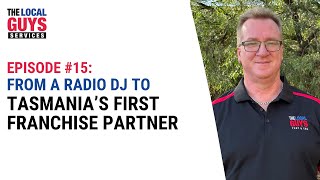
A recorded interview on the Local Guys Business show where host Jarrad Goulding speaks with Phil Grey, Tasmania’s first Local Guys Test & Tag franchise partner. Phil recounts his prior 30-year radio career, how he first encountered test-and-tag work via an electrician client, and why he chose The Local Guys (notably a 12-month income guarantee). The conversation covers hands-on training in Adelaide, the steep but short learning curve for first jobs, regional challenges of operating from Launceston (long drives to Hobart and beyond), local marketing tactics (cold calling, leaflets, sign-written ute), and the business trajectory from a patchy first year to strong repeat bookings in year two. They discuss practical advice for new service-business owners (budgeting, saying “yes” early, building repeat clients), recent revenue gains (months with double/triple prior revenue), and Phil’s near-term goals (regular jobs 4 days/week and possibly hiring).
Chapters
Welcome to the Local Guys Business show.
The show that talks about all things.
Small business for people who would love.
To learn tips to make your business more successful or would like to own their own business one day. Sit down with your host, Jared Gording, strap in and let's get the show started.
Okay, no worries. Well Phil, thanks so much for joining us, mate. I'm glad that we managed to get on. I wanted to take the opportunity today to have a good chat with you and you're obviously joined us from the Test and tag division down in Longston in Tasmania and yeah, just wanted to touch base and talk about your journey with the local guys and your business journey and how things have been tracking in that regards and all the rest.
It.
So did you want to start with maybe just introducing yourself a little bit and then maybe telling us what you were doing previously to joining the Local Guys Test and Tag?
Well, I'm a franchise partner, in fact the only one in Tasmania, so it requires a little bit of driving. Before that though in. I was in radio for about 30 years. Still do a little bit when they, when they need something done on a contract basis. But basically I listen to music all day and played with computers, so.
So you're the guy that's on the, you're the guy that's on the radio talking and all the rest of it and playing songs. Is that, is that, was that your role or you were behind the scenes?
Both, both. I, yeah, I played the music. I in fact programmed the radio station but I did a lot of tech stuff behind the scenes. Installing 5 kilowatt transmitter at one station and a whole studio system and I suppose that's where I first came across Pest and Tag. It was a few years ago when I was at another radio station and there was a client who was an electrician and he mentioned the need for test and tag. So that was the first place, the first time I actually saw it.
Really. So you were thinking what the heck is that?
Yeah, this was over 10 years ago, I suppose.
Yep.
So it was a while ago. Sure, sure.
Very, very similar to my story. I was working in Telstra at the call center and saw the Test and Tag guy walk through and thought what the heck is that? And just found it very fascinating and interesting and same as you, I thought you had to be an electrician to do it, discovered that you didn't and then yeah, rest is history. So. Okay, so. So you had a client that was an electrician and he explained what it was. So how do you get from there to starting your own test and tag business.
Sort of sat on the, in the back of my mind for, for a while and got to the stage where after 30 years thought radio. Even though I love playing music and all of that, I was looking for something different. So I thought maybe it test and tag, that's something a bit different. So I started exploring it then.
What elements of test and tag do you think stood out to you?
Good question. I suppose the first thing was, you know, just testing the equipment to make sure it worked. You know, with it connecting networks, you got, you test it, make sure it works. So I think it was sort of a, an easy jump to, to understand that side of things. Of course, fire extinguishers and everything else was different.
So technically minded sort of person, so similar type fields in being both technical and thought some of their skills would transfer over and things like that.
Yeah, well, a lot of the time I'm dealing with computers and things like that, so it's not really a different kind of environment for me. Yeah, it was an easy jump.
Yep, sure, no worries at all. And so then obviously you went through that due diligence process and how did you know there's a number of test and tag businesses out there? What was the reasoning that you ended up deciding that local guys was the right opportunity for yourself?
I think the one thing that really stood out was I suppose the income guarantee for the first 12 months. That said to me that you really believed in what was, well, the whole process and you really believe that we can do what we need to do. So I think that stood out. I don't think anybody else had that sort of a guarantee.
Sure, sure. Okay, no worries. And then so obviously you've made the decision to sort of come on board, which I remember that training session. I remember us going out to sushi together and you talking about, talking about your daughter and there's a story about your daughter with sushi or something like that. I think you took a photo instead of something that you. When we're. I can't remember. I think you vaguely remember what I'm talking about. But anyway, so obviously came down to Adelaide and, and you did the training with us. How, how was that experience.
Invaluable? Especially the, the, the on the job, you know, being there with you going through it all sort of just cemented what I'd already gone through with the. I did the training online, the license, but the on the job stuff was the best. Getting practical experience in seeing, you know, the theory put it into practice.
Yeah, yeah. There's no, there's no substitution, I think for actually getting out there and throwing in the deep end and going out to real clients and sort of going, oh, okay, the light bulb turns on now and I sort of, I can see it firsthand and I'm physically doing it. You know, even if there is a trainer here, I can kind of physically do it. So how was it then after going through that experience and then going out and performing your first job, was that quite nerve wracking because you've got no bumper bars up then, do you? It's, it's, it's all feel.
Yeah, I, I remember the very first one. It took me a long time. Yeah, I think what would take me now 30 minutes, I think was over an hour. But it was nerve wracking. But at the same time it was, Yeah, it was exhilarating at the same time. You know, this, this is my job. This, this is what I'm doing now. And after it, you go, well, it wasn't that bad.
And I think through, when you get through that first one and you go, okay, cool. Like I know it in theory, but actually doing it for the first time, all right, I think I could do that again. And as you say, then it just becomes that repetition and now you can obviously do it in your sleep and you don't even think about it. You just rock up to and just, yep, this is what I'm here for and blah, blah, blah. But you don't have that muscle, muscle memory built up as of yet. So you know, it can be really daunting in those first few jobs. But yeah, I think that as you say, and I think it's important too for it probably to take too long at the beginning because it means that you're spending the time to getting it right as opposed to, oh, I've just got to jump in, I've got to try and earn as much as I can because per hour I want to earn X amount, blah, blah, blah. And I think that's the wrong attitude. I think that you really want to get in there and go, let's do this properly. Even if it takes me three times as long as it would have last time or generally I, I want to take the time to do it otherwise you start performing bad habits and then you're just relearning bad habits over and over. So yeah, no, I think that that makes a lot of sense. And, and how long do you think it was before you started to see a lot of that speed come in? Oh.
Probably a Couple of months as the number of jobs started building. It was fairly slow to begin with, but yeah, the more I got to do, of course, the better I got at it.
Yeah. And you are obviously in Launceston. It's a, it's a smaller community and Tasmania in itself is, is smaller. I think. Am I off the mark by. I, I think it's. I know Darwin. Is Darwin 200000 or are you Sky's 200, 000 or my miles off the mark as far as population in regards to Tasmania as a whole?
That's a good question. About maybe about 250 000. Yeah, I haven't looked into that.
Yeah. And then obviously long distance is, is significantly smaller than. Again, are you guys after. After Hobart? Yeah, yeah, sure sure. So smaller area. You're not in the heart of Sydney and you're not in the heart of Brisbane or whatever. So I, I know when I had this, this call booked in, I was excited to, to talk to you because when you are regional, use the term air quotes being. I don't want to be insulting to the people of, of Longston, but it is a smaller area compared to say, as I said, Central. Central Sydney. Regional is, is a tougher market. It is and you just don't have as many businesses there and stuff like that. So it takes a lot more leaning into the business and it takes a lot more leaning into the community. How did you find that process originally and trying to grow your business, especially in the first 12 months?
I haven't spoken with anybody to compare, but I think it was possibly harder. As you said, smaller population. But borrowing from the radio days, I tried to say no to any job a couple of times. I've had to force because I've. Yeah, I've had no choice but. But of course that involves a bit of driving.
Yeah, no, absolutely. And that's, that's one thing that I always speak to people who are, who are regional, especially in the test and tag space. Not so much in the pest control cleaning space because we've got that, we've got that residential and commercial clients. But in the test and tag space it is the commercial only. And we can't unfortunately bring any more businesses into an area. We don't have the luxury of doing that. So the only other option to that is to lean into the businesses that are there more and also open up your. Your area of how far you're willing to travel, which I know you've done a great job of. I know we were just talking before we jumped on and you'd been down at Hobart doing a job down there today. And I know that you go down there and you've got some larger clients down there through the government and stuff like that that you travel down there from. So I think that's great. And I think that that tends to be. When you're in that first 12 months and you're growing your business, it can be more of a challenging thing being out in those more regional areas with less population. But one thing that I've been really excited to see through your business is the growth from year one to year two. I think that that's been really exciting. I know. I was just reviewing your scorecard before we jumped on and just looking at the last couple of months and seeing, you know, I think one month was double the revenue and the other one was over triple the revenue. So, you know, getting to some serious numbers, which, which is great because if you're, if you're really looking after your clients and things like that, which I know that you do, then you can almost guarantee like we, we have like around, it's like around 80 to 90% repeat work of our clients that stick with us. So then you can look at, all right, what did I build in year one? And if I'm servicing my clients correctly and I'm providing good value and, you know, they're not waiting for them to chase me up, etcetera, I can almost take to the bank that 90% of them are going to follow me into year two. So then I get them with my new clients. And on top of that base that I built in, in year one and then same thing for year three. How's that felt for yourself? Have you noticed that, have you looked at the numbers over the last few months and noticed that you've seen that big sort of jump up?
Yeah, it's very encouraging. But it's. Well, it's really good to have these new ones come through in the last couple of months and it's really starting to fill out. Whereas let's say last year there'd be a few days, possibly even a week where I haven't had anything booked. And that's where it gets the hardest, is when, when you got nothing booked. But now it's, it's a matter of trying to organize things in a way that's, that makes a little more sense. So if I do go down to Hobart, I can book a whole, a whole lot around there. I could, I've got a friend I can stay with down there. So you know, book, you know, a couple of days and do all of that and then come back up here and. But again, as I said, I try not to say no. And yeah, I'll was down in Hobart this morning to do one job but in 12 months time then I can lump that in with other things while I'm down there and it makes a little more sense.
Yeah, absolutely. And I know I can't remember if it was yourself that spoke to Sophie, who's in Western Australia in regional and I know she's spoken to a couple of. Maybe it wasn't you. I know she spoke to a couple of the other regional kind of guys and she's sort of four hours away from Perth and she's growing a fantastic business on her hands, but she's four hours away, she's like Albany. So. And she just said yes to absolutely everything. It didn't matter if it was a minimum charge, didn't matter whatever it was. And she just said yes to everything. And now she's growing this really big business on her hand because she was just yes, yes, yes to everything. And as, as you said, she will go down there now, but she'll lump together five, six jobs all on the same, same day and it turns it into a significant day. And I think that's a really wise place to be. When you're in your first year of business, you really want to say yes to absolutely everything. When you get to year two, three and onwards, you're in a different mode, you're in a different mode of business. That's generally where we're sort of suggesting to our franchise partners, you know, you might want to be looking at a price increase across the board, maybe increasing things 10, 15% across the board. Let some of your clients drop off, that's okay because you've got majority of your time built out anyway. You might be booked out four days a week or whatever. So if you let 10, 15% drop off and then the rest of the client sort of the price is a bit higher, then you've got a day, a week, a day and a half a week or whatever to fill back up again at that higher rate. But we don't normally suggest that in year one. In year one it's about getting the ball rolling, getting things ticking over, being aggressive and being out there and gazelle intense and growing that business. But it's funny how the gears shift a little bit and I'm sure it sounds like you've noticed that going from year one to year two and I only Had a conversation with one of our other franchise partners that ticked over to year three just the other day, and he goes, wow, it's. It's a big change from year two to year three. You're in a completely different year and you're sitting on the highway in gear five with momentum and wind in your hair. Where in year one, you know, you're. Yeah, you're. You're working and you're saying yes to everything and you're out there pushing with the local area marketing and you're networking and doing that sort of stuff. What sort of local area marketing did you. Did you do, especially in those first 12 months?
A lot of cold calling and drop and dropping off of leaflets. But I found what was most effective was actually the, the ute with, with all the driving. Say, if I was down in Hobart, I would find the next day or two I get a whole lot of inquiries or leads from where I was. So it's, it's interesting. But, yeah, invaluable to have the ute sign written.
Yeah, yeah, absolutely. You know, we've got over 60 now vehicles getting around the place and, you know, people spend a lot of money on advertising and stuff like that, and we have over 60 of them driving around all the cities and all over the country and throughout New Zealand now as well, with the local buzz, branding and it's, it's worth its weight in gold. So.
Yeah, that's great story, actually. Okay.
Okay.
Long after I came over because I, I got my ute in Victoria and I, I had. There was a busy road where I parked a couple of days in a row and a call came through to you guys asking if it had been stolen because it had Victorian plates, not Tasmanian plates.
Yeah, I think we should have said yes. I should have. Maybe we could have tried to get the police station as a client or something like that. And what would you say? What would you say? I know you've got a couple of clients that are in the, in the government space. What would you say some of your favorite clients are that you get to deal with? Or some of the favorite sites you get to go out with? What's the.
I don't know how much I can say.
Okay.
I've never partaken, let's say, but medicinal marijuana place is very interesting.
Oh, okay.
That is the whole time. And a chaperone with you the whole time. Really?
Yeah. That is an interesting one. That is an interesting one. I've had some interesting ones myself. Back in the day. I remember going through. Yeah. Forensics in where they tap phone calls and throughout the federal police and all these different sorts of places that were really high level that you'd never ever get access to. And as you say, walking through a medicinal marijuana business is, is not a place that a normal person would get access to. So yeah, that's, that's fascinating. Okay, so what sort of advice would you give to. I try and add in as much value as we can for someone who's you know, potentially at the stage that's looking at starting their own business or whatever. You've gone through, you know, the most difficult time in any new business which is those first 12 months now that you, you've come through that 12 months and you're on the other side of that and you've got the scales to prove it and you've got some of the momentum to prove it and stuff like that as well. What's some of the advice you'd give to someone who is looking at starting their own service based business and is in those early stages that you wish you knew now and you have the wisdom of that now?
Question. I think for me, I think it was a lot of it was covered because I did have a chat with you well before making a decision. But I suppose making the decision for me was a long time happening. So my personality is. I will cogitate on something for a very long time. But yeah, yeah, Hester you with questions is a good one if you have any. And yeah and look into you know, as much as possible. All the will realize that it will be a hard time the first 12 months. Not sugarcoating anything. It is definitely a hard time financially is a big one. So making sure that you will be able to make it financially while you're going through that period is something I think is very important.
Yeah, absolutely. I think the thing with tested tag is it's interesting because you can get those clients especially with test and tag which you know, you can do, you know say a five thousand dollar week easily. Do you know what I mean? Like but the, the problem with. And you go oh my God, I did so well this week and you know it's almost all profit and, and that's amazing. And now it's repeat clients for next year, rest of it. The funny thing about test and tag is is because it is that business to business only and you know, quite often the little hairdresser might not get it done. So you're looking at medium to larger businesses. You might do that but then you might go the next two weeks with, with nothing or, you know, a couple of very small jobs or whatever. So it's kind of riding that wave. That's, you know, great, fantastic year. But then all of a sudden there's a couple of, you know, I need one of those jobs, like every. Every week would be awesome or every. Every month or whatever. So it's, it's riding that wave. And. But I think the cool thing about it is and, and forgive and let me know if I'm wrong on this. I think by. When you do have those jobs, you see the potential and you go, right, okay, cool. Like, that's awesome. Like, I made a lot of money on the, on that day and a lot of that on money on that week. Now I just need to fill out the rest of my calendar with weeks like that one. And is that, Is that how you were kind of thinking about it at the time or.
Yeah, yeah. It's a real encouragement when you do get those big jobs. You know, even my, my dad would call every now and then. Still does. And how's the business going? Well, you know, he called me in the middle of doing Parliament House and I say, well, this is my third day. Big job, that one. Or how much have you earned so far? Oh, it's about this much. Oh, that's really good. So that encouragement, then you, you can hold on to that for the. Yeah. The next week when you've got two minimum jobs.
Yep, yep. No, absolutely. And. And that's the thing, isn't it? And I think the other important part of that, and this is one of the things I've been harping on, on a lot about throughout our onboarding and our training is, is talking to our new franchise partners about budgeting and about forecasting and things like that. Because all too often, you know, we'll see a new franchise partner that will have a job like that or some sort of, you know, fantastic month or whatever, and then all of a sudden they've gone out and they've brought a $3,000 couch, and then they've gone out and brought a big screen TV and they've gone out and done all of this and it's like, that's great, guys. Like, fantastic. You know that you had that really big month, but you really want to be making sure that you've got some of those retained earnings that are sitting in the business, because not every month is going to be like that, especially in the first year. If we're talking year two, three onwards, it's a different conversation. You know, go get the Big couch, go get this. But realistically, that emergency fund and those retained earnings and working capital within the business is a priority, as you say, when work can be here, a bit there, and then a gap in between time. So, yeah, it's, it's a really important point and I think that that's why I'm excited that we're, we're building that part out with our franchise partners so that they can kind of understand that that's how it is in the beginning. And, and it's not like a night, especially if they've had a 9 to 5 job their whole life, you know, and they haven't had to sort of think about that budgeting because every Friday it's payday and I know whatever I've done for the week, if I've blown it all, all of my problems will be sorted out again on next Friday because I'll get the same thing. And on it goes, on it goes. And business isn't like that. It's very, can be patchy, especially at the beginning days and, and you need to have a system in place to be able to, to build it out for that.
So.
Yeah, no, very, very cool. And so what's the, what's the plan for the next sort of 12 months, mate? What's the goal for the business in and where are you looking to take it? And. Yeah.
Well, I suppose it's still building for me ideally, if I can guarantee at least, still at the moment, at least a job every day or four days a week, that'd be really good. But yeah, if I could fill out four days a week at least and think, you know, pie in the sky type stuff, it'd be good to employ somebody at some point, but we can see how we go. That's. Yeah, there are a few ideas, but whether we get to that or not, I'm not sure.
Yep. Well, I mean, statistically you should. I think I have the luxury. I get to look at top down to a lot of the businesses. So I see the, the trend lines and, and the path that they're heading on. You're with franchise partners, sometimes you're so close to it that you can't see the front forest through the trees and you, because you're in there every single day and you know, punching up the, the clients and all the rest of it, it is hard to see that. But I guess that's the benefit of us being in the, in the support center and just seeing purely the data is you see the trend line that the business is going on and just like, okay, cool, this, this continues into you now in year two and then in year three and all the rest of it. It's like, okay, it just has no choice but not to continue on that line. So that's exactly where you will be heading. And, and we would have seen if you weren't, because clients wouldn't be rebooking back in again. Your repeat clients wouldn't have been going, I quite often have chats with, with newer franchise partners who, you know, we're working with in regards to the customer service and things like that. And they think they're doing fantastically. And it's like, I can tell by the language and what's been taking place. I'm like, you're heading into a problem but you're just not aware of it yet. And you only be aware of it in 12 months time when those clients aren't rebooking in again. And then you'll go, oh my God, I've just burnt 12 months worth of clients because, you know, maybe I haven't been providing them the customer service that needed to or the price point wasn't right or whatever the scenario is. There's a million different things, but we've already seen that with you and that's why we're seeing that compounding revenue and as I said, either double or triple in the last two months of what you're kind of earning. So that proves the point that clients are already rebooking back in again. So you just have to do rinse and repeat. Basically. You just need to make sure that you're contacting your clients from the year before you're rebooking and then rebooking them in again. You're just doing your normal housekeeping that you're doing. And then you've got no choice but the business will, you know, go into that trajectory, which is super exciting. And then it's this, it's a completely different mode you're in, which is, it's a really exciting mode to be. And then you kind of get to make the choice, which is exactly what you were sort of saying, if four days a week is the goal. Because you go, I know I can make enough in four days and then have a day to myself. And then it's that balance between work, life balance and, and revenue. Because sometimes making half a million dollars a year, it's some people's goal, but other people, they're going, well, I don't, I only need to hit, you know, maybe 200 grand a year or 150 grand a year or whatever the number is. And I'm happy, you know, I would rather that extra day off for that. And then as you say, then you can look to, once you're at that point as well, you can kind of go, all right, well, maybe I bring on an offsider to help do the reporting for me. And then, you know, once they've been doing that and they understand where, what the role is in the job and all the rest of it, maybe I'll send them off to get their license and then maybe I'll let them have us go at a site by themselves and I'll go off and do another site and we're getting two sites done at once. And then you can kind of go, all right, well, we've only got three days worth of work this week or four days worth. A week. You do three days and I'll do a day. And, you know, I get to have some that flexibility as well. So that's all the exciting stuff that's. That's coming for you. As I said, you just need to keep on the path and just keep doing that housekeeping every month of, of doing what you're already doing and it's going to head in a really incredible direction. So, no, I couldn't be more proud of you, mate. You're doing very, very well. So, yeah, thanks so much for jumping on with us today. I really appreciate it and I love having that dive back in of how the business is going now and going from there.
Thank you very much.
No worries at all. All right, cheers, mate. Have a good one.










