Episode #4: Phil Manning & Elle Lawrence, Support Centre Staff That Sold A Franchise To Her Partner
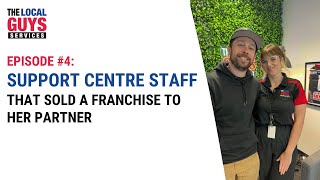
A recorded interview (YouTube Episode #4) with franchise consultant Elle (Shannon) Lawrence and franchise partner Phil Manning. Elle explains her role: initial contact with franchise inquiries, onboarding new franchisees, and ongoing partner support via scorecards that surface CRM metrics (revenue, ATV, conversions). Phil describes his career shift from call-centre and curatorial/gallery roles into franchising after conversations at home, his due diligence (lawyer and accountant review), onboarding and two-week training (office/back-end week + on-the-tools week), early operational challenges (managing tax, marketing, routines), and goals for month 12 focusing on consistency and business foundations. Themes: J-curve of new business, work–life balance, "being your own boss," importance of routines, and peer learning from experienced franchise partners.
Chapters
So why don't you start by maybe introducing yourself first so we know who you are.
Yeah, I'm Phil. I am a franchise partner doing test and tech.
Yep. Beautiful.
I'm Elle. I'm not Elle. I'm really Shannon, but I am Elle for the sake of being here. I'm the franchise consultant here, so I rope in men who often aren't my boyfriend, but sometimes aren't my boyfriend.
Okay. So first of all, people are probably wanting to know why you're Elle and not Shannon. So maybe let's just cover.
Okay. I am technically Shannon, but because there's a very small office, and when we're even in a smaller office, it was even worse. And we already had a Shannon. It didn't work out very quickly, which then moved to my middle name, which I hated being called even more because it reminded me of being a kid getting in trouble and copying, like the whole name when you really did something bad. So then it went to L and I definitely got less mess ups with Shannon. And I say L and people are like. They pause and I'm like, E. L.
L, E. You should do code names for everyone.
All right, so. So where el.
Where are we?
Obviously. And Elle, your. For the business purposes, you're L. At home, you can Shannon, obviously. So. And Elle, your job. Explain what your job role is here. You are our franchise consultant. So you assist people in onboarding who are interested in joining the franchise.
Yeah, I. I kind of. I guess middle you may be first having the interaction. Well, I guess normally actually I have the first interaction with people who reach out to us for the franchising and I'll call them and try and book a Nicole with yourself. And then from there, depending on how things go, you might speak to them a few times. And then once they've kind of committed to wanting to come onto the franchise, I will help them transition into kind of the process that we have for onboarding people into the franchise and getting from not having any maybe business set up to getting them fully set up with a business, which is very fun, satisfying.
Yep, beautiful. You get a lot of people that put a lot of faith into your hands.
It's quite amazing. Yeah, I sometimes I'm like, oh, my God. Yeah, register for workcover. Like, you need to do this. And then I'm going and trying to read and I'm amazed by how much I think over probably in the last like three months, like even yesterday, the conversation about like companies and trusts and partnerships, I'm like, I had no idea. Like, I had absolutely no idea what the difference between a sole trade and a company was. So it is, it's been a learning experience. Like obviously my background wasn't in business. So to be able to pick up as much of it as I have as fast as I have, I'm pretty amazed by, I'm pretty confident what I do now. I think the first few times it was like a lot of questions to you and I'm a lot more confident now of just being like you double check your numbers and you send the invoice when it's due and you read that all the sign, all the dotted lines have been signed. So yeah, it's very good, very satisfying job helping people start business. Yeah.
And that's the thing. Right. And I know that your role carries on through, right through, through from onboarding franchise partners to then obviously getting them trained up and all the rest of it. But then you kind of kick back in again in regards to support for the franchise partners. So do you want to talk a little bit about that and what you do for our current franchise partners and how that sort of works on from a support side of things?
I feel like probably recently with the introduction of the scorecards it's been a lot more like we had like a touch in kind of process for a bit where it was just meant to like call franchise partners and see how they're going. But I felt like compared to actually having like a set out mission when you may be touching base with them, it's not as effective as just being like hi, how are you? And they're like 30 year old dudes. They're like, why are you calling me, asking me how I am? It's the middle of the week. So now the scorecards, like yeah, I offer maybe a little bit of like business support for them. I kind of break down maybe how their business is trending.
Yep. So what sort of metrics do we look at on the scorecard?
Revenue ATV conserves. ATV Average transactional value. Yeah. And I think something I found really interesting was that like they had no idea. Most people I think that I've spoken to so far had no idea that this was already like there for them. Like they already had a lot of this in our CRM.
Yeah.
But to just have it kind of taken and put into a consumable way to be able to have actual conversations and see it in a bigger picture has been I think really helpful for a lot of people. And I've had a lot of positive feedback now from the franchise partners of like how insightful kind of seeing everything as a whole is to them.
Yeah.
Other than just like a number on the screen. Yeah. So that's been, it's been very nice. Kind of some of these people that have been maybe in business for up to three years now and seeing the difference between that and maybe like where Phil is in like the first few months.
Yeah.
And completely different conversations between those kinds of people. So.
And what sort of different. When you say different conversations, what do you, you know, if you've got someone that's three years in, what's the sort of conversations were you having with someone like that to maybe someone like who's Phil, who's new to. To the franchise and new to the guys. What's typically something.
Don't panic.
Yeah. There's a lot less.
Yeah.
That's the thing. I had to be very honest with some of our more experienced franchise partners. I'm like, there's nothing I can tell you. You've got like a quarter of a million dollar business. You've got. You're like pushing the $300,000 or you're pushing to like $200,000 in a business. Like, there's nothing I really need to tell you about how to run this. Like, you've got more experience in this field than I do at this point. Like, there's very small, minor tweaks that we can like make here and there. Yeah.
And what.
Use. I think a lot of the time I feel like that's a big one. But I also, I get that. Like I definitely, after meeting all the franchise partners, like people hate asking for reviews. I think that's like the big thing. But then I've given them the permission to say that. The annoying girl at the office keeps on asking me to ask my customers for reviews. And they have gotten more since saying that. So I feel like they're kind of milking that.
Yeah, yeah.
We just blame everybody.
There's just a lot of clients out there who think that I'm like beating my franchise partners into asking for reviews. Yeah. There's like maybe very small tweaks compared to like maybe conversations with people that are in the first like maybe three to six months of the business where it's like really trying to work out which way you want to steer the ship and making sure that you're like getting that positive reassurement to keep the conversion rate really high and keep the like maybe positive. Like lam kind of efforts going for that time there.
Local area marketing.
Yep. Yeah.
Yeah.
Very different to somebody who's Already been doing it for three years and already had clients three times over. Like, they know that they're going to be with those clients for a very long time and. Yeah.
Yeah.
And it's a huge thing. And Phil, I'm sure you can attest to this coming from, you know, being an employee and having that steady income every week. And then all of a sudden it's changed significantly. The models change significantly. And there is like a lot of it is that emotional support in that beginning stage because you know better than anyone going through the process right now. Ye. We call it the. The J curve that we talk to all of our franchise partners about when you get on the board, which I know you would have been spoken about. And it's the same as when you start any new project and there's this dip at the beginning. And then, you know, our goal is.
You feel so much excitement and energy in the first little bit. You're coming out of training. Everything's very big and new and fresh and wow, I'm doing it. I'm doing it. And then it's like, oh, I'm doing it.
Yeah.
You know, and the reality kicks in.
And it is, you've jumped out the plane.
It's all on you. There is no boss. There is no paycheck at the end of the week. There is, you know, what you have set out to do. Yeah. Is what you're actually doing. And the reality of doing is suddenly like, oh, wow.
Yeah.
And so having people to talk to in our Shannon. Yeah. In the office is super helpful because as she says, she's seen people. Yeah. Or talks to people who go, three years of succeeding in this business.
Yeah.
Hey, here's stories of what they did. Here's the story of where they were freaking out at the two month bar or whatever the case may be, and just gives you that little breadcrumb to keep following down the trail to success with yourself.
It's funny that you talk about jumping out of the plane. I just listened to a podcast just the other day from Toby Pierce, who's a local South Australian, who. Who was one of the founding members behind the app Sweat with Kayla Zenas. And they ended up exiting, I think, for half a billion dollars or whatever. And he was saying being starting a new business is like jumping out of an airplane and coming up with a plan on the way down. And it's kind of true.
Right.
I'm hoping that doing onboarding, I at.
Least check the parachute. Is there actually land or is it water?
Yeah.
So Elle's the one that pushes you out of the plane. She just makes sure.
I feel like a franchise, you at least have somebody checking your parachute before.
You'Re pushing them out.
Maybe going out completely on your own in your own business, it's like, nah, I'm just jumping. I'll strap it on in midair. There's a little bit more maybe help with that than starting it your own. Yeah, I definitely, I just about talking to more experienced franchise partners, I'm like stealing their ideas. I'm like, what works for you?
Yeah, good.
I'm just gonna take this and then talk to newer ones because, yeah, like, I'm not going to tell you anything. So you tell me what you're doing. That works really well.
So once you've hit three years, maybe you're starting to, you know, be a little bit more in the grind or whatever the case may be. And talking about that remembering of when you first started out, you can sharpen your tools again. You can remember why you got into it, all these sorts of things.
Reminiscing on the old days.
Yeah, and the old days created that first bit of energy again, you know?
Yeah, I think as well, like, I know I've heard you on those conversations with those franchise partners that have been around a bit longer and I know sometimes it's talking to them about, okay, do you want, you need to try and carve some more time out of your day? Like, do you do now, now that your book's so full up, is it about maybe lifting up your prices and, you know, letting Potentially the bottom 10% of your customers drop off and that that in turn gives you an extra 10% to fill it up with people at that higher amount. Or is it that, you know, you'. I know you had a conversation just with one of our franchise partners the other day who was very happy with what they were making and they didn't want to make anymore and they were just like, no, I'm good. So I'm happy with the work life balance that I'm sort of making. And maybe it is about now I've got time to drop the kids off at school or whatever. I don't want to fill up anymore. So, yeah, you get your different types. I think you get the ones that want to come in and take over the world. And we've got guys like that and doing very, very well at it. And you've got other people who have gone. I found I've hit that sweet spot.
That work life balance where I feel like a lot of people come in like looking for the work life balance and the money picks up and they're like, oh, money. Like, and everyone loves seeing the money hit the bank account. They get a bit carried away and then maybe they start getting a little bit further into the business. They're like, oh, like, why did I do this in the first place? Like, I wanted to do this so I had more time to myself. Like, I wanted to do this. I could have like a week off in Bali whenever I wanted without having to ask a boss for permission and stuff. So it's interesting seeing kind of the ebbs and flows of business and like, especially from my perspective of seeing it, it's like, like everyone at once. Because I guess the franchise partners don't. I. They talk to each other, like, especially the ones within the state, but they don't maybe see the whole business as the whole thing. So it's a very.
Like, you're fortunate enough to do like.
I get to look over the whole land of the business in a lot of ways, which is very nice.
Yeah.
Very insightful kind of position to be in.
Yep, yep. Absolutely. Absolutely. Okay, cool. No worries. So I think, yeah, no, and I think part of the scorecard part that we sort of. I, I like that we've had many different versions of it and we've gone back and forth many, many times. And yeah, it's been a really important tool that we've built into the business. And I think now the version that we're on is building that out from the grow model in the fact that we're starting with the franchise partners goal in mind first. And I think that that's been a really important element to it in regards to just what we were talking about then it might not necessarily be, hey, you're at X amount. And we want to get it to double that because that might not be the goal for them. So I think it's very much customized, not starting with the goal in mind first, we're flat fee franchise. We're not incentivized in any way for them to be at this reserve or this revenue and this revenue. As long as they're in and they're happy and they're making money, then that then for us, we get incentivized the exact same way. So then we do have the freedom to be able to say, all right, what is the goal? And let's work towards that. And I know that we're starting to document those conversations and then working towards whatever that goal is. So I think that's fantastic. Now what I'd love to know is, obviously at some point you've gone home to your lovely partner. Feel here and you've started at this new workplace and you've obviously told them about what it's like and what the experience is like. And that started to filter through because you're working at the art.
Art gallery.
Art gallery, yeah.
I was doing so very different role. Curatorial assistant at the art gallery, helping put on art shows.
I think your hair was a bit longer back then.
My hair was a bit longer.
That makes sense.
I had a few more bags under the eyes.
Oh, yeah, A few more, yeah.
Yeah. We put on Warhol and Frieda and yeah, it was a heck of an experience working.
Okay.
Yeah.
So tell me about the. The thought pattern of there.
What.
What's happening from your aspect on that feel. You've obviously got Elle, that's out. And she started this new role. How's that started to filter through to you? And I guess how did this seed eventually get planted in your mind to go is this is something that may potentially I could look at doing.
I. I think for me, I. During COVID I decided to go away and study again because I was in the call center game before that I was running teams in call centers and working my way up to being a manager and doing all these sorts of like corporate type things. And when Covid hit, got made redundant. Obviously that's a bit of a period of reflection for all of us during that time. And I was suddenly like, man, I always want to work in libraries. I'm going to go away and do my post grad and become a librarian.
Okay.
Yeah. Yeah. Thought that was the way to do things.
Yep.
Did the degree.
Because you're a writer, right?
I write books.
Yeah.
Studied English.
Yep.
Write books, have played guitar, being a musician, Done pretty much. You name it, I've done it.
Yeah.
And then worked at the Parliament Library for a stint. Stopped doing that because the contract ended. Wanted to finish another book. Saw an opportunity to start working at the art gallery. Thought, why not? Like, the kid in me has always wanted to just go and work in the coolest buildings you can find. So if you walk around a city and see a beautiful old building, I'm like, heck, I want to go and work.
Yeah. Yeah.
You know, so it was like, yeah, let's go from Parliament Library, let's go over to the art gallery. That'll be really fun.
Yeah.
Did you envision it being like a movie where you walk in there?
Yeah.
You pull something more like a book.
More Like a book. Yeah. I was just like, man, it's gonna be like all of these art free freaks and weirdos and I'm gonna get all these cool stories and it's gonna be one.
Yeah, yeah.
It was just like another weird opportunity to grab a hold of and kind of start running with. And the thing with working with libraries is a lot of them are government run. Yeah. And the way, you know, government is going these days, there's no longevity to any sort of work. You don't get given a permanent role. Yeah. You get given short term contracts, casual work, all of these sorts of, of things.
So gone are the days of you think you're working for the government and you've got a job.
You go all the way through to retirement, they give you the gold watch.
And you're out the door.
Give the old cross to the government. No, it's, it's not that anymore. And like recent statistics that have come out show that like, you know, some ridiculous number of government workers are casual babies.
Okay.
And you go in and you knew at it. Just like the new guys coming on here. You're full of energy. You're like, oh, I'm working the audio. This going to be fantastic. And you kind of realize that they're always going to be dangling the contract in front of you. This is not to speak badly of anyone. It's just the nature of the beast. And you're always going to be working for someone and you're always going to be trying to chase down that next contract or that next casual position or whatever. And one night Shannon was talking about how all of these gentlemen at work were making so much money and almost having to turn away work because I.
Wish it was a. It wasn't a good conversation. I was having a right about work. I had had a bad day. I definitely. And I came home, I was having like a full, like, oh my God, I can't believe how hard my life is. Oh my God.
Like they're making money. Handover Fist. They're their own bosses. There's so much work. I'm driving along and I'm thinking to myself of I'm sweating my butt off in a job I don't really like working for all of these crazy people trying to put on art shows. You know, I'm always searching for work, life, balance. I'm an artist, I'm a writer. I'm always searching for that thing that allows me to work at my, you know, avocations as well as my vocation.
Yeah.
And I'm Listening to this, and I'm suddenly, like, it never clicked to me. I never thought about in my title life, you could own your own business. Yeah. You could be your own boss. You could set your hours for work, life balance and have the support of a franchise that's local, where you could actually meet the owner and meet the workers and maybe even date one of the workers and benefit.
And then all of a sudden, I'm thinking, like, you know, they're all taken out as well.
Yeah. Yeah. But it was something twisting around. I just started saying, hey, tell me a little bit more. Tell me a little bit more. What is electrical testing? Yeah. I've never even heard of it.
Yeah.
You work in a billion offices. You see all the little tags, but you never actually think about what it is. Tell me a little bit more. Tell me about the owner. Tell me about what he's been doing. Like, oh, he's had a crazy life as well. Oh, he's done a myriad of things as well. Oh, that's interesting. That sounds like someone I could have a conversation with. You know, it's not a boss, it's support networks so that you're your own boss, so that you can do. Oh, okay, cool. And all of these things started to kind of spiral, and we started talking about it more and more, and in the end, it became almost impossible not to go into it. Yeah. It seemed like crazy not to go and do it because in a weird way, it just ticked all of the boxes of what I've been looking for.
Yeah.
Without even knowing that it existed. Yeah, yeah, yeah. And it was a. It was a random night of bitching about our jobs.
Yeah.
You know where it just sort of started spiraling from there.
I do. I wish it was a. I'm still.
In shock that you were bitching about your job.
I know.
I just can't get it. I can't believe it.
I just. I find it funny that I really have to reiterate, like, I did not try to sell a franchise.
I was very unsettled. It was. It was. There was no sales pitch whatsoever. It was more just discussion.
Part of that was, like, the honesty of it. Like, the frustrations that I had with just being like, oh. And I think maybe you saw that in a way of just being like, she's not trying to freaking sell me anything. In fact, she's trying to dissuade me from it in a lot of ways.
Yeah.
And then. Yeah. It was just kind of like, hold on, what do you mean? I just have to put a Sticker on. What do you mean I get to set my own hours? What do you mean?
What do you mean the work life balance actually exists? That unicorn is actually out there somewhere. Like, you can jump on it. Like, that's bizarre.
I think we've both been through so many jobs where you're like. You almost think that the next job will be the one. Like, the same with the art gallery. Like, the same with me in science. Like, you expect that next job to be the one. And then you're like, oh, no, definitely not. It maybe a year in there, and you're like, I'm ready to.
And I think at a certain point, you try and force it. It's like the library thing as a kid, you start thinking back, what did I want to do as a kid? You know, I wanted to be a librarian. Okay, I'll go and give that a try. Is it realistic? Is it. You know, but it's just, you've got to keep trying and trying, and it's like, yeah, maybe just go for the unknown.
Yeah, okay, cool. So I know El, then you came to me and approached me. We had a chat about it. We obviously made sure that because you weren't in that role, I guess, of doing leads, you're in a completely different role and all the rest of it. So we made sure that was, you know, there was a separation there as well, which I think that in your role, there was more issues with that.
I didn't want to be doing that anymore as well. I didn't want to be, like, even in the idea of kind of interfering with, like, that. I wanted it to be very nice. And even now, I really barely, you know, other than doing your support work, I don't have to deal with you.
Too much, which is good.
It's nice, like, separate from the show, you experience as well. Like, you just want to go home and be like.
We had a similar experience that you and your wife started the business together and set out on that sort of adventure together. And she did certain parts, and you.
Did so exactly right. And we knew. We started to find which seats in the bus was right for each of us. I think we were very lucky. I think a lot of couples that go in together tend to fight for the same seat on the bus, and I think it never works. We were very. We did do that at the very beginning. I remember we were kind of. Of stepping on each other's toes. And then I think, like, just through a couple of, like, frank conversations, like, I'll do this bit. You just Bit. And we eventually just found what. Yeah, some bits I was terrible at and Stace was really good at, and other bits I was really good at and vice versa. So. So we found. Yeah. Which bits?
Computers made me want to jump around and scream.
Yeah. We were doing freak out reporting the other night, and I did. And he was like, if that happened to me, I would have screamed and just walked away from this. You just got to do this. Like, it just takes one moment. It's really easy. And I'm like, okay. I think that's also like the. The upside of finding somebody you really love and having, like, that person who really matches your personality. Like, in the grand scheme of things, not to be too esoteric or like, we really compliment each other with our strengths and weaknesses. So business is just kind of like an asset, I guess, of that in a lot of ways.
Yeah, yeah. No, I totally agree.
And it was great hearing that story.
Story, yeah.
About your journey with it. All right.
Yeah.
You know, they started together and married couple and they've got kids.
They're my favorite calls. When somebody calls me and says, oh, my wife was. My wife and I are a bit interested, like. Yes.
Yeah. You know.
Yeah.
Having that support network is just.
Oh, it's so much.
I can't imagine trying to do this by myself.
Yeah, yeah. And we've got plenty of franchise partners that do do them by themselves, but I think certainly stronger than me. Yeah, yeah. I think certainly when you've got that ying to yang and you can do it together and sort of share the load and all the rest of. Makes a big difference. I know Sean and Renee from our pest control division are very similar. Sean's the same way. Doesn't know how to turn a computer on.
Don't let him fool you. He has a degree in information technology. He's very good at it. He likes to. Weaponized incompetence.
Okay, so now let's go from there. So. All right, so we've had the conversation and we've talked about this and we've gone through and you've mentioned there's a lot of benefits. I want to get to the flip side of that in a minute. I want to hear the negative side of it because I know that there's definitely that side of it. When you give up a lot of the securities.
The sheer terror.
Yeah, yeah, maybe let's talk about that now then.
So you mentioned sheer terror. Can you elaborate? How did that make you feel? How many. Sleepless night. So.
Oh, anyway, let's actually. Let's Go continue on. On the timeline. So we got onboarded. There was. What was the onboarding process like? Tell me. I mean, the warts and all situation of that, the training. How did you find that process?
Well, you guys were in the middle of moving offices.
We were.
Spoke. Yeah, yeah, yeah.
It was like looking at your calendar and knowing you were calling him while you're in the car. And I was just like, oh, God, could this be any worse right now?
So for me, it's been fun because, like, it's been a massive transition for me, but it's been interesting watching you guys kind of transition from a smaller space to a bigger space. Yeah. You know, bring things in house a little bit more. Bring the training in house a little bit more.
Yeah.
You know, so it. It's. Yeah. First phone call. I think you were literally in the middle of moving the offices. I think that's what was going on. But, you know, it was just a good conversation. There was no. How do I say this? There was no businessman trying to sell me something, trying to bring me on, you know, trying to silver tongue me in that way, if that makes any sense. Hey, this is who I am, man, in a van, start a franchise business.
Yeah.
This is what it is.
Yeah. Yeah.
And you're like, okay, cool. That's. That's good.
It either fits your lifestyle.
Yeah. I'm not trying to hunt you down. I'm not trying to sugarcoat it. This is what it is. Okay, great.
Yeah.
You know, and then I was finishing up the contract at the art gallery, and I had a laundry list from a literal L from the office of things. He copped L a few times and get done. But it was actually good because I didn't want to stop and think too much about it.
Yeah.
Actually, take me back a step. It was documents. We got the documents.
I think it was a span of about four weeks.
Yeah. Took them, ran them through with a lawyer. Yep. Which was really, really good.
Yeah.
He was a really, really good franchise lawyer. Went through absolutely every single, single detail of what you guys provide. You know, went above and beyond. For me, really looking into all of that, because as I already said, I had no idea about small business. I had no idea about franchises. You have this kind of preconceived memory of maybe pyramid scheme franchises and stuff, and you have that weird sort of headline.
I think that was very interesting hearing it from somebody.
Fascinating. Because he had been through a few.
For many years, like decades of it.
Precedents that have changed.
Yeah.
On the behalf of franchise partners. Yeah. To give them more protection within the framework of joining a franchise and stuff like that. And I won't go into too much detail. We had some great stories about certain businesses. You know, it's this great old lawyer behind the desk telling me all these things and yeah. To hear him tell all of those what I would call horror stories and then go through your documents and be like, no, this is. I. I move this from here to here. But other than that, this is great.
It was very reassuring. Even being in the business, like having the reassurance as well. Going into that was really necessary. I think we're both.
And certain things you really narrowed in on and. Yep. Yeah, that was a great weight off my mind.
Yeah.
Good.
To remove those pyramids game stories from one vernacular. 1. I thought about franchises.
Yeah.
And then accountants looked over it as well, which I think both of those things are super necessary.
Not unless you're married to an accountant. That's helpful.
That's much more helpful. I'm sorry, I couldn't. Yeah.
Different skill set. But not.
So you did your due diligence is what you're saying.
Not to double check you guys so much as to make things feel more comfortable. My own brain.
Yeah, yeah, totally.
You jumping out of the parachute. Cool.
Yeah.
Where's the parachute? Where's the cord? Where's this? Where's that? I don't know anything about this.
Yeah, yeah.
You know, these are the experts. These are the people that do know stuff about it.
Yeah. You know, and you're handing over a huge amount of trust. You're giving up a job that, you know, you're getting paid X amount on and you've got bills and you've got, you know. Yeah. Commitments and obligations and, you know, you're a dad and all these sorts of things. So, you know, going into all this sort of stuff, you've got all of this stuff to think about in the background. You're going at zero expertise. Yeah. And you've heard stuff secondhand and that's about as much information.
It's that headline mentality and. Yeah. It's just, you know, I had to put my. My faith in a. In an expert.
Yeah.
And I was really, really glad I did that because. Cleared up my own trepidation.
Yeah.
What was the next steps. Did that, did that gave you a.
Very long list of how to start a business. Crash course of starting a business.
One of the best parts was I got to buy a new car. Yeah.
That was.
That was sick. Yeah, that was sick. We're driving on subaru you know, it was a trustworthy shark of a car. But it was on its last legs.
That four wheel drive and sitting above.
Truck and looking down on everyone.
All the cars seem to be angry around us now and I can't work out why. Like I've never been tailgated my little, little Hyundai so much in my life.
Jealous.
Exactly.
So that was, that was actually a cool part of it, like an expensive part.
Getting the sign riding. And I'm like now I cruise around in that. I'm like, why are people staring at me? And I forget there's like local guys on the side of the car as well.
He's got to be careful of road rage in that scenario. That's the hard part.
Motorbike next. So yeah, we'll get the sticking on that anyway. And then yeah, all the license licenses, they're doing the testing tag. Yeah, license and workout and safety. Yeah, that sort of stuff. And crossing T's dotting eyes, making sure that was good to go.
Yeah, they were pushing you over the line, which is what her job is basically. She's a pusher. She pushes everyone.
Encouraging and just being like trying to.
Do that without like somebody there though to actually tell you what you need.
To run a business.
Like the amount of people that must go into business without work cover or without public liability or something.
Just because somebody said public liability today.
And you're like, can I put my bag down here?
And she's like, you can, but if you got public liability. Because if somebody trips over it, I was just like.
Imagine that claim.
We're in the world of everyone's.
Oh man.
Without that really trying to go out there and work out how to do all this stuff with no like me to tell you what you need. I couldn't imagine that you imagine you don't have public liability. Like you're just a small business and you go and crash into somebody and then it's like that's somebody trips up your damn bag. So we were there to stop you from.
She was like, yeah, it should take you about four weeks. I was like, I'm gonna get this done in six days. Like let's just get this done. Yeah, a bit of a mistake. Take some more time with that. But yeah, got it all done. Test and tag license. Like the test and the training on all that was really, really good.
Yep. So that's. So that's one week in the support center either online or, or coming in here.
Oh no, I meant just to get the like licensing actually going into get.
I think you got sick from afterwards.
Somebody was coughing. Post company just seeing it all for the first time was really fun. Y And then we come for the.
The actual.
The fun part.
So. So how's the breakdown? It's two weeks, isn't it?
Yeah.
So one week doing the back. Back the office type stuff. Learning about accounting, bookkeeping, marketing with the.
Mighty Shannon with the mighty chat.
Blessed to do it in person as well.
I think it was the first time you guys did it in person.
Yeah, we used to do it in person, but I think since COVID and all the rest of it and having people having to travel all the time all around Australia and flights getting really expensive, we decided to move that to online. So. So I think we were very lucky in that training group that everyone was actually from South Australia. So we said, well, we might as well have everyone come in.
Oh, it was great. So I felt very, very lucky. You know, not this shadow. Other shadows are gun. And she just knows the ins and outs so well.
So that taught you things like local area marketing and how to drum up business in your area and some of the pitfalls that you can fall into. And gave you a bunch of branding and all that sort of stuff. And everything you need, you needed to kind of get you up and running.
Red Bull marketing.
Red Bull Marketing. Trade secret, that one.
Yeah. I won't say anymore, but I like that one.
Yeah. And so. So we had that in our first week, which is, I think, lays the foundation quite well. You obviously do a full day with myself where we talk about the technical side of it, or if it's one of the other divisions, it's the other divisionals. And then it's a week after that. We're actually out on the tools now. A lot of people say that's where a lot of the light bulb kind of goes off because you can see it firsthand and you can actually get your hands on and actually do it. Is that what you sort of found?
Is that what I found? I'm trying to remember back. Yeah. Because it's been all of six weeks. But I have been busy, which has been good. Yeah. It was one of those things where it was like the first day of school, you show up way too early, you're way too old, overprepared. You. You just kind of like ramped up. And I was working with Liam, who was. Did the training with me as well. He's a legend. And we're kind of both there and gung ho and ready to go. And then the other guys show up and they've been doing it for three.
Years, you know what I mean?
They're old.
Old Gene. They've been to the business.
That's fifth job for the day.
It's like watching you, you know, explain it, how quickly you can do it, you know?
Yeah.
So, yeah, there was that like, like that nerves and that first day school vibes and that. Can we actually do this and are we going to make a mistake and what's going to go wrong?
Yeah.
And the beautiful thing about working with people who have been doing it for so long, have so much experience with it, it just knocks all of that trepidation on the head. Yeah. This is how we show up to the side. This is how we go about it. You know, you set it up in one way for your day, they set it up slightly different. The next person sets up up even more slightly different. And everyone's got their little, hey, I do it. This, this works for me. This is faster for me.
Yeah.
So getting that hands on experience is just invaluable. Trying to go out there and doing it for yourself, first time without that.
Yeah.
I think that that first day jitters would almost ruin the job for you on that first one. I'll be on the phone to you just like, man, did I push the wrong button? Is this tag on the right? You know, my voice breaking is, no, but it was, it was, it was really fun and it was. We got to see so many different types of businesses from, you know, pet homes, like where pets come and stay, to like a bowls club with a great old Irishman, you know, showing us behind the bar and, you know, a nursing home that kind of required covert and flu to get through the door. And it's like all of these little things that I didn't think about old maybe enough. We're just suddenly very apparent.
That's one of the things I miss the most about being on the tools myself. We're on the stickers, as Sparky once told me. Yeah, tools, you're on the stickers, mate. But that's one of the things I, I miss the most, you know, now I'm chained to a desk.
Were you the man with the.
What are you now?
The man with the.
The pest with the desk.
I feel like every time you tell us how much you miss, like being out on the tour with everyone on the sports and it's like, yeah, what are we, like chopped liver? Like, what a scare. You're reminiscing like, oh, it used to be so much better before you.
I gotta Say, like, after going from working in call centers, office environments, doing that sort of stuff. As much as I loved it, I had great experiences. I met great people, had the most fun.
Yeah.
Over the last few months, being on.
The road, doing your own thing, meeting people, seeing different. And you should say those different environments.
Oh, my God, there's so much fun.
Yeah.
So much fun.
Grimy, grimy, grimy.
A lot of places that people aren't meant to go a lot.
And then you go into a nice office with, like, nice clean cabling. It's all beautifully set out.
Yeah.
Easy, man. Go to, like, a workshop and it's just trash. All right, let's go.
Yeah, yeah. No, I know. Like, I've seen, you know, I've been to remote community, aboriginal communities to do it. I've been to where they tap phone calls. I don't know if I should say.
That, but let's redirection, retract that. I've.
I've.
You know, with the Federal Police, I've been to all different types of places, all over. And the diversity. You know, you'll be in a fish and chip shop and then you'll go straight to, you know, somewhere that's.
Yeah, yeah.
It's so diverse. Completely different.
And even in that first week with William Nash and Peter Legends, all who, you know, it was just, we're drunk people doing this. This is this style of thing. This is this type of thing, you know, Magic. Yeah. For someone coming into a business or trying to run their own small business. I think the other thing was hearing the, like, hey, this is what my first year was like. This is what my second year was like.
Yeah.
This is what my third year's been.
Yeah. Yeah.
This is where I was feeling a little bit freaked out. This is what I did, you know, having those yarns with the guys, which are these again.
Yeah. And I think that's the thing. Like I say to a lot of potential franchise candidates, and I know. Said to yourself, this is a great ladder to climb. Like, you've. I think in life it's really important to be climbing the right ladder. And, you know, we all go off and climb this ladder, and then you realize, oh, this ladder's only this big. Well, this ladder's only this big. And it's not any easier.
Like, there's a glass ceiling on the ladder that you couldn't see. That's right. And you. And you hit your head on it and you're like. Like, can I climb around it somehow?
Okay, cool.
And then you spend, like, a year or two years or 10 years trying.
To climb around, and all you get.
Is a headache, and you just keep getting a headache. And then I. I think that this is certainly, like, a very good ladder to climb. I think that it's no easier than anything else in life, and it comes with its own unique challenges and all the rest of it. And, like, you're experiencing that now. You're in. The hardest period it will ever be is right now, which is. You know, you're in that first.
First doing it pretty good. Doing it with sl.
This is the hardest. This is the hardest.
The hardest.
I'll take this. Yeah. Yeah.
I mean, you're lucky. You've got this. You. You live with your coach, basically. So you've got. Any time you have a moment, she can just go, wait.
Just. Just. Just wait. Just wait three years. Trust me.
Just wait three years.
I can't handle it.
The only real moment I've had so far. And we were out walking one night. I was kind of talking it through. The moment that I had was realizing that I am my own boss.
Yeah.
And changing that mentality from, like. And I didn't realize how much of a switch it was going to kind of require in my own head of going, you don't have a manager. You don't have a boss now. You need to turn that switch in your head.
Yeah.
And nobody's gonna come tell you to take.
Yeah. Shannon was saying that too. She's like, it's just, you need to switch over from being.
Being.
Hey, I've got to show up. And I wouldn't say kiss us, but play that game, whatever that game may be.
Yeah.
You have to switch that over.
Yeah.
You are your own boss now. You need your own tenacity.
Yeah.
You need your own discipline within that.
Yeah.
And if you're not showing up and.
Doing it, no one's gonna get done.
No one's gonna kick your ass doing that. Maybe she will a little bit, but.
Yeah.
And that, I think, has been the only real mental.
I think it was hard. Like, you're. You're so determined, and it can be.
Maybe we'll get there. Maybe something will pop up.
It can be for your own detriment. Sometimes I remember after that, it was like, you just worked for, like, multiple. Just hours and hours straight, and you were like, I didn't take a break from. Like, that's stupid. Like, that's real stupid.
You got to learn how to take breaks all the time. Did you ever used to take breaks?
I was pretty bad I used to just pound.
Yeah.
I think that's just like a thing where I was like, nobody's going to come and type you on the shoulders.
Take a break, like.
But it's that accountability in your own head of like, I need to be my own boss. I need to make sure that these things are happening for my own.
Conversely, on that, there is a pure joy in suddenly being able to work as hard as you want. Yeah.
Finishing the job because there is no glass ceiling.
All of a sudden, all of that effort you used to put into your old jobs and your own roles, you work and work and work. There's always a bit more work. There's always something else to do and.
You just have to wait there until 5 o' clock to leave.
Four hours, what you've got completed all your work anyway. Now you get to work as hard as you want and see what that feels like.
Yeah. And get the return for it as well.
Exactly. And it's like, oh, that. That's interesting.
Yeah. Yeah. And that's. That's powerful in itself. And that's like, as El said, I think sometimes you've got to be. Because that is so cool and you're not so not used to that, that lifestyle. It's easy just to go pedal to metal for ages and of course, like, do that.
Yeah. I think it's an addictive thing. I think it's like a male addictive thing. I can just keep on going, then it's gonna be done and I can leave and I can go do something else. I could go make more money.
And it's like, but what happens when.
A job that goes for three days? I think that's for my. Maybe experiencing, like seeing people in the third year and it's like, yeah, take breaks, maybe, like, go and eat some food or drink some water and make sure you're like. Like it is a marathon. Like, it feels like a sprint right now. I'm not even going to talk about running with YouTube. I'm not gonna spiral that conversation. But it is like, it feels like a sprint right now. Because that first few, you, like, puff down, you take your day off and you're like, oh, my God, what am I doing? And then you realize it's a marathon. You've got to be able to 100. If you can't sustain this for a week of acting like this, try three years. Like, you need to have that mentality, I guess, a little bit.
Yeah. This is why we need strong women in our lives or strong men, whatever. You're yeah, yeah, exactly.
Okay, cool. Well, so. All right. So I think that gives us a really good understanding of sort of up until the process. So, I mean, what's the goal from here? What's the. Maybe not financial, but what's. What's the goal for you over the next sort of 12 months of business? Like, maybe it is financial. I don't know. But where you trying to achieve now in your. Your business?
Is it. Yeah, it's a good question.
Yeah.
Yeah.
That's a really good.
Or is it? Right now it's just getting comfortable in the process of everything and just ticking over.
Ah, yeah. I. Financial, absolutely.
Yeah, of course.
Consistency.
Yeah.
I want to be consistent in each aspect of what has been given to me to make me successful.
Yeah.
Do the marketing.
Yeah.
Get out there, put your name and your business out there. Make sure you're doing your tax.
Yeah.
You know what I mean? I've never had to do that. Make sure you.
Just play it over.
Because it's. It's these little things that, you know, I know how to work hard.
Yeah.
Tick.
Yeah.
I know how to show up on time, be a professional.
Okay.
We've got all that in the bag.
What.
What am I not good at yet?
Yeah.
Well, there's certain elements of the actual test and tagging itself, which I'm still getting, of course. All of that sort of stuff.
Yeah.
But then it's all of the stuff that goes with running the business. How do you market yourself? How do you present yourself to your area? How do you get better at, like, closing leads.
Yeah.
You know what I mean? Making sure you're converting all of those. How do I get better at making sure I'm keeping up with what I would consider boring things. Yeah. The tax, the housekeeping. The housekeeping. The stuff that actually makes your business professional.
Yeah.
Rather than constantly chasing your own. But.
Yeah.
Trying to get ahead that little bit.
Yeah.
And I would say that that's the first 12 months for me is trying to get that really consistent things that I'm not good at. Yeah. I know I can work my butt off. The rest of. It's going to take, you know, a little bit of time, but yeah. Doing a routine from now.
Yeah.
Means the 12 months from now I won't even be thinking about it. And then second year, third year, I can start pushing for that.
It's really that foundation to build the house. And if I feel like, especially in that first 12 months, if you f yourself up with that and you don't have those good routines in place, to make sure second and third year are just going to be harder and harder for you to maintain that and catch up on, like, whether it's the housekeeping or whatever you need to do. But if you're not seeing those good routines in that first six months or first year, it's just going to be.
Yeah, I was just about to say the exact same thing. I think itself is setting up those healthy habits or healthy routines. And it's exactly like you're talking about. It's making sure you book it. Rebooking in existing work because you've already paid for that lead, You've already paid for that client. You've already done the hard work of getting them on board. It's so easy to rebook in again. If you're letting that slip down at the back end, you're nuts.
You're screwing yourself over just like repetitively. And it's like always. Like, I think about that sometimes when I'm talking people like, you're gonna pay for this. This time next year. Like, if you're lazy for this month or wherever it is, like, this time next year, you're gonna be like, oh, why did I do that? You're gonna kick yourself them so much.
And same with, like, local area marketing. Like, you know, I always say to everyone that comes on board, you'll never be as motivated or excited as you are in that first, like, period of your business. So if you don't build those habits, then when you've got motivation the highest, you'll never do it in year two or year three or whatever. But if you, if you build that into just what you do, same as like, asking for reviews or whatever. If you just build it into there, yeah, it might feel uncomfortable, comfortable. But you do it a bunch of times and all of a sudden, like, it's just done, like, you know, same with, again, local area marketing, things like that. And then all of a sudden you've just got this, this business that's just organically grown, like, just healthy habits we talk about in the, in the support center here. And it's, it's no more important for our franchise partners. It is for us. And if you set that up, then you're building that strong foundation that you're talking about, and then you've just got this, this great business. Well, I think that's. That's amazing. I think. Thank you so much for, for coming in, guys, and taking the time to meet. As I said, you guys have a unique story and I think it's a really good story. And, like, we're really excited to watch the business continue to grow and. And watch, you know, that repeat clients come in and all that sort of things feel. So I think, yeah, no, great work, mate. Which, just excited to watch the business grow and thrive and. Yeah, wish the best for you.
It's a lot of fun.
Yeah.
Yeah, beautiful.
Okay.










