Episode #5: Meet Our Technician Taking Sydney By Storm (with Noel Ovington)
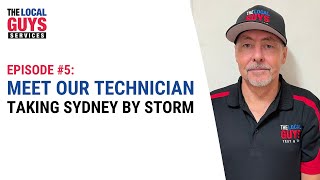
Noel Ovington left 40 years in journalism and media to buy a Local Guys test-and-tag franchise in Penrith. He describes the training, daily routine starting at 6:30am, and why he chose the business for its steady compliance work and chance to build NSW from scratch.
Questions this video answers
Test-and-tag technician; territory: Penrith, New South Wales (Western Sydney)
40 years
About 9 years
Around 6:30–7:00 AM
Usually between 3:00–4:30 PM
Chapters
No worries. Noel, thanks so much for joining us, mate. It's been a pleasure to get you on. So yeah, first of all, welcome.
Thanks Jarrod. Yeah, nice to be on.
Yeah, absolutely. So I just wanted to start off maybe can you tell us who you are and what's your role in the Local Guys?
Okay. My name is Noel Ovington, I'm a test and tag technician. My territory is Penrith in New South Wales, which is out of Western Sydney at the moment. Obviously, till we build up Sydney, I'm traveling probably from the north shore to the eastern suburbs. So I'm traveling around a bit. But getting a lot of good work so it's certainly well worth it.
Yep, cool, cool. Busy man. Busy busy man, which is what we like. So that's great. So what were you doing prior to joining the Local Guys now what was you doing work wise before. Before being a member of the Local Guys?
Well, I'm a journalist by profession. Journalists.
Oh no, actually I remember you telling me that. Yes, absolutely.
Most of my working career and probably about 10 years ago when newspapers were going to the digital age. At the time I was working as the editor of a regional newspaper in Bowral, which is in the Southern Highlands of New South Wales. And newspapers were starting to struggle. Years a few years later there was a lot of people being made redundant as newspapers scaled down to half their size and probably under half their size. And when that happened I thought, you know, it's, it's, it's a younger generation coming through now of university graduates. I come through the system when you start as a copy boy, you run errands and you waited for, to get your big break to, to go out to with someone, one of the senior journalists to do so.
How many years did you say you were in that industry?
I was in. I was a journalist for 40 years.
Wow.
Yeah. Yeah. And then I just went into, in the media roles as in media management, media manager, communications manager for a few different companies. I was actually working for a one of corporate bookmakers in Australia before I joined the Local Guys. I'd been there for about nine years.
Yeah. Okay, so tell me like, I mean, did you see the writing on the wall for the industry? Did you see it sort of year on year you could see where it was kind of going or did it sort of. Yeah. Okay. So it wasn't sort of something that sort of within 12 months it was just things falling over. You could see it slowly year on year it was just that little bit smaller.
That's right. Even when I was editor of the Southern island news at Barrel. We had to really get our online presence there, you know and it's an older like community there. A lot of retirees and that there that still like to physic, have a physical paper to read. But you know, a lot of younger people were moving that area too, so. And we found that, you know, more people were reading our online edition than they were our printed copy.
Yeah, yeah, yeah, absolutely. I'm got a subscription of the Advertiser here in Adelaide and yeah, I haven't read. It's hell actually, occasionally actually enjoy picking up the actual proper physical newspaper and reading rather than be on the iPad and flicking through. But I do have the digital copy which. Yeah, so totally know, know what you mean there. It's, I mean it's quite interesting how industries can kind of come and go like that. I'm an ex Holden's worker so you know, that was for us here in South Australia. At four and a half thousand employees, it was one of the biggest employers in South Australia. And to have, you know, that was the job to have in the northern suburbs of Adelaide, well looked after, great benefits, you know, Christmas show every year and all these big things which was a massive deal and all these things that you got and it was like know a blue chip company working for Holden or GM and you know, when they, when they ended up moving that offshore, it was it really, you know, it makes you think you're in this industry that's supposed to be super secure and safe and all the rest of it and then even the big guys like that or big industries like that can, can move on. So I'm sure there would have been a lot of fear going along in the industry.
Yeah, absolutely. The journalists that have been there most of their lives were, you know, their jobs are under, under threat and that's all they knew. You know, that's, that's the only thing we knew. I mean I, you know, I, I did a bit of work in radio and on screen with sky channel and the Racing channel over the years. But yeah, even that it's, it's, you know, it's now a younger person's career. They bring the young people through, they train them the way they want them to be and, and you know that it's happening. Yeah, across the board.
Yep. Yep. Okay. It reminds me very similar of, I guess when Uber came in and the taxi industry had these guys that have spent fortune on these taxi license plates and all of a sudden they're worth nothing because anyone can get into Uber. Yeah, and yeah, shook up the industry which, yeah, it just makes you realize that I think a lot of people think going into business is a scary thing. And, and sometimes it is, but sometimes just staying in one of the safe industries as well. Safe industries as well, the whole industry can go. So it's, you never, you never know. Okay, so, so what forced the, the exit out of that? Did you see the writing on the wall and decide, okay, I've probably got to move on here or there, some sort of redundancy or how, how did that exit look?
Yeah, no, no, I, I actually left. I, I, I decided that yeah, I wanted a change. So I went and worked for a few companies as a media manager, mostly sporting companies, media and communications manager, which I really enjoyed. But and that's as I said, I ended up at one of the, the corporate bookmakers working, working at North Sydney.
Yep, yep. And why, why didn't you see that one out? Why did you decide that, you know, did you have a scratch that you wanted to itch in regards to business ownership or how did you sort of go through that process to.
Yeah, I, I, I mean I enjoyed the job, but it was a lot of pressure. A lot of it was very high pressure job. And although, I mean I've been in high pressure jobs. Yeah. All my life, it was, I thought it was time to kick back a bit and I thought, well, I, I'm not close to retiring, I don't want to retire. I've got too many, you know, years ahead that, that I want to do something. So I decided that yeah, I'd take the plunge and look at something that I could buy. And I mean the franchise was the, the only, as far as I concerned, that was the only option.
Why is that?
Because of the franchise has proven systems for success. If you follow the systems, work hard, provide good service, then the chances are you're going to be successful. Well, a lot higher chance than, than to go it alone to buy a business.
Yeah, sure, sure. So then obviously you're in the stage of doing your due diligence and looking around at whatever industry and what sounds like you were looking at a franchise, but what got you down to the test and tag industry or the service based industry specifically.
The first thing when I thought about going and buying a business was what happened recently with COVID how, you know, people in the service industry suffered. They, you know, the, the ones that were prepared to diversify and think outside the square did okay, but others that, that just said, you know, we can't do anything you know, they suffered. So I wanted to look at something that, if. If, you know, a recession, if it quietens down, if something like that happened again, what's something that's going to be needed, something that is. You're still going to be able to carry on your business. And that was, you know, as it was, you know, people have to have a fire safety plan and test and tagging is the preferred plan to have. So, you know, I looked at, you know, many other businesses, but the bottom line is that I decided, no, this is what I want to do.
Yep. Yeah. It's quite funny, actually. I know across the three divisions, pest control guys were during COVID the busiest that they've ever been. They just could not keep up. Absolutely. Just flat out. Same with cleaning, for obvious reasons. And test and tag had a dip at the beginning and then it went sort of crazy after a little while. I think at the beginning, when all the workspaces and offices were empty, we thought, this is fantastic. This is going to be great. We're going to go through all these work sites. There's not going to be anyone there and it's going to be happy days. But I think businesses were just trying to work out what the heck was going on and they were still trying to go. Everyone's freaking out. Things are moving everywhere. The last thing we're thinking about is compliance right now. Once it got through a couple of months and everyone started to go, okay, cool, the dust is selling a little bit. Then we ramped right up and got. Got really busy. But. But yeah, now it was. It was quite interesting. But. But I totally agree with you. I think that being someone who's. I've owned, you know, a couple of hospitality franchises and that was tough. That was really tough. We were in those at the start of COVID and, you know, no one's walking in the door and you still had massive rents. You've still got Westfield knocking on the door saying, pay up. You've still got landlords, whatever, knocking on the door, asking for the money. You still had big loans that needed to be paid. I think all of which, you know, we're pretty lucky in that regard. I think the worst case scenario is, you know, you might have your vehicle, if you've got finance on a vehicle, and that's about it. But it's not, you know, crazy, crazy money. So we're sort of able to weather that storm a lot more in that sort of regard, which I think is a handy side of things. So how did you. Did you know about Electrical test and tag before, because I had no idea about electrical test and tagging when I first, first discovered it. I was working at Telstra many years ago and we had the guy come through and do the test and tagging and I was like, what the heck is this? I thought you had to be an electrician or something like that. What was your experience with first understanding?
And yeah, I was like you. I, I really had no idea. My wife works for the New South Wales government. Yeah, she, when I mentioned it, she was, was all over it. She knew. Yeah. And she actually, she thought, she encouraged me to go into, to that industry.
Yeah, yeah. And that's, that's the thing, like, I mean, compliance is always a good one. Obviously the repeat work side of things is always great. I mean, I know right now in your last scorecard meeting, I jumped in quickly and said, take everything you can because you know, this is going to build your repeat customers for many years to come. So I know right now you're, you're running around like a chook with its head cut off, getting everything done and doing, doing a fantastic job of it, I must say as well. But yeah, no, it's, I think especially for someone like your wife in her position in being a big office environment and you can see how many items there are to be tested and how frequently and all the rest of it, it just sort of, the numbers stack up pretty well. Okay, cool. So. So that was your experience with. So you. So did you ever look at any other sort of industries at all when you were going through the process or.
Yeah, I looked at another couple of industries, but, you know, it. I went in with an open mind of what to do, but I wanted, I didn't want a franchise as you talked about before, where you've got rents to pay and things like that. Yeah. So it was going to be a service industry and you know, when, when I done my homework on it, testing and tagging just stood out. Even though I didn't know really what it was, it still stood out as in that, you know, that people have to get it done and they have to get it done either three months, six months, 12 months. So you're always going to be getting that repeat work. You know, I worked that out even though I might have known what it involved. I knew that the research said that you would get. There was repeat work, which is, you know, very important.
Sure, sure, no worries at all. Cool. So I mean, that's part that you've got to that point now where you've sort of decided that test and tagging might be the right industry for you. You've obviously gotten in contact with us. Do you want to talk to us about. About your decision for joining the local guys? I mean, there's other test and tag companies. What was your thought process around that? Why did we end up becoming the business that you decided that you wanted to move the next part of your career onto with?
The biggest thing was you. You very established in Adelaide in South Australia, in New South Wales, you. I think there's only one franchise partner in New South Wales at that stage. So that was. That was very appealing that I could come in and not have, you know, flooded areas around me to start off. So that was. That was. I think I did mention to you that that was the. The big clincher. You're a young company. You were just starting to build up and I could get on the ground floor and. And not only make a good living, but hopefully help. Help you to build up New South Wales.
Yep. Yep. Perfect. No, and we're. We've been extremely happy with. With your work there. I know the, the girls in the office. Yeah. Sort of. It's been a little bit like trying to drink out of a fire hose at the moment, but we've been absolutely smashing that. So really impressed with what you've been doing over there, considering you haven't had the backup over there in regards to other people. But it's great to be able to build that base of clients for yourself for the many years to come onto where you're at. And I think back to the point you were making before in regards to you weren't ready for retirement. I think that's the. I think that actually does attract a lot of, like, I have conversations with people in regards to test and tag, who are very much in that stage and. And sometimes it's even like, I'm not ready for retirement, but I also don't want to be pushing 100 miles an hour. Is that where you sort of felt like you. It sounds like that's where you kind of were in your position as well. The last job. The last couple of jobs were quite highly stressful and probably weren't.
That's.
You probably obviously weren't looking for something like that. You wanted something where you had a bit of flexibility and stuff like that.
Yeah, absolutely, Absolutely. But I love being busy. I love the work I've been getting. You know, I've been able to keep up with it. I haven't lost anyone over, you know, by being too busy. I've always managed to fit people in where I can and yeah, I mean I love, I love being busy. I, I thrive on it. It's great, you know, the busier the better at the moment. One thing in the so what if I've been January about eight months now is that I really enjoy my weekends now. I get flat out through the week and then I just on the weekends I just yeah, can kick back and, and relax and then look forward to the next week.
What does the, a typical day look like now?
Okay, usually I'm, I'll start early. I'll usually leave most mornings between 6:30 and 7:00 o', clock, sometimes a bit earlier depending where I'm starting. A lot of businesses I do luckily they open early and they're quite happy for me to get in early when you know the businesses that do open, open say 7 o' clock and things like that. Medical centers that I've been doing, the national clients, they're great. I can get in at 7am Although they open at 7am I usually in about quarter two I knock over the reception and I'll probably go and do you know, the dental receptions before they get in and then I get a list of the doctors that are coming in at 9 o' clock and 10 o' clock so I get those done and then the vacant rooms, you know, I get those done as well. Then all usually treatment rooms, all I've got left is the ones that got doctors in them and then it's just a matter of waiting till they open the door and, and saying, you know, they've been told that I'm there to, to do it and you know, they're really good just say look, I've just got to do it. It's only going to take me five minutes to test and tag there and, and get that done. So yeah, and usually I usually finish as a rule between three and four because I start early. I mean that probably more towards the 4 o' clock, 4:30 stage on, on a typical day.
And you set your own hours on that obviously like that's whatever like if you wanted to. I mean right now obviously you're very busy so you're trying to get in as much as possible. But you could finish at whatever time you wanted to?
Oh absolutely, yeah, yeah absolutely yeah, yeah. Now you know I do it by choice because I want to do it but yeah, I could, there's no doubt I could be, I could do that but at the moment while it's busy like it is, I'm going to take Advantage of it?
Yeah, yeah, absolutely. Diane, I don't blame you because at.
The end of the day, when new people come in, the more work I've got, I think the better will be for new people coming in. You know, if there's that, a lot of work out there, it's, you know, it's going to benefit everyone. Look after the customers, make sure that they're going to come back and be a customer for life. And I can do that. Then I think I'm doing my job 100%.
No, I couldn't agree more. And I think that's, that's what it's all about. And I think that's where it comes through, you know, being picky about who we let into the franchise and having people out there that are representing the brand in the right way and providing that, that high level of customer service that we know that we, we get reviews on you all the time in regards to, to, to that sort of thing. So. And that's what it's about. And then ultimately Glo grows the value of your business. So eventually one day, if you decide to exit, you've got an asset there that you can sell and obviously make a profit on. We've had a franchisee that just sold out recently, three times the buy in price, which was great. And they were in less than two years. So, you know, like, that's, that's part of everyone's journey. Everyone's at some point going to, to exit. So it's just about having everyone leave better than the way that we found them. I think so, yeah, yeah, yeah. And I think that's, that's the whole thing about, you know, ensuring that we've got high brand standards and all the rest of it is so that we don't have that rogue franchise partner that's out there that's ultimately bringing down the value of your business. Because you might be looking at exiting. I don't know when you're looking at exiting, you might be good for the next 10 years or 20 years or whatever you want to do. But you might say, all right, I'm in this for 10 years and then I want to exit. And then, you know, that might be a bit of my super on the way out that I sell this thing off and whatever I sell it for, with the goodwill and the customers that I've got in it, I've got a nice little payday there that's going to help to bump up my Supra into retirement. And yeah, no, I mean that's, that's Kind of the thing I was sort of saying before is we do tend to get quite a few inquiries from people that are in that, that slowdown stage, I would say in regards to, you know, they might have even tried retirement. I know I was speaking to a guy the other day and he said, I can't get the handicap down any lower and I'm bored. I want to go back to work, basically, which I completely, completely understand. So how do, how have you found that this sort of work, like the work life balance and doing the actual work, I mean, it's a very repetitive job. Do you find that you find it boring at all or how do, how do you find the process?
I find it challenging. I find it challenging. I mean, I think I've learned a lot over the last six or seven months that quiet or come into an area, established franchisees around. I wouldn't have picked up what I've picked up now. You know, I mean, quite often I've contacted you or the support center, but a lot of times I've worked it out myself, you know, before I've had to, to call and I only call if, like, I'm not going to take any risks. I will call. But if it's just a matter of, you know, working, looking at it, studying it, working it out, then, you know, I'll probably come across a lot of situations that probably some guys that have been in a lot longer haven't maybe come across, you know, I don't know. But yeah, things. Yeah, that, that, that you can't train people for. They just come up in the workplace and, and yeah, there's quite a bit.
In that intestine tag, to be honest with you. It's like there's lots of gray areas where it's not black and white and it's just like, it's kind of. I would say it's like the I before E except duff to C. Like, it's like this is the rule. Unless this reason, this reason, this reason, and then we've got completely breaks the rule.
Yeah, a lot of it's just common sense to.
Yeah. And I think that's a lot of the support calls that, that we get and I get that come through in the support center is it's almost more reassurance. I think people know the answer to it, but they just want that reassurance to go, this is right, right. And it's like, yep, yep, you know what, you're good. But it's good to have that, that back up, I guess. But it's good that you can work through those, those problems as they come up anyway and you just back yourself really.
Yeah. I mean so many, so many jobs I've done where things have been tagged incorrectly. So many.
How often is that out there?
Oh, quite often.
Yeah. Yeah.
With I think I contacted Support center about one of the TAFE colleges I was doing.
Yeah.
All that they had computer rooms that were like wall to wall computers where and the, the leads were tagged five years monitors and CPUs weren't tagged at all.
Yeah, yeah, yeah.
And I, I said what should I do? Should I. Because it wasn't on the work order to do them and said that if they want to be compliant you've got to do it. So.
Yeah, yeah.
And I think it ended up being like 3500 tags that job.
Yeah. Wow. Wow. And I think that's the thing about electrical test and tagging is that it's so easy to get your license. You can go do a one day license and you, I'm sure you would attest to this at after that license whether you feel confident in being able to running a test and tag business by yourself. I would dare say far from it.
I said what have I done?
Yeah.
If I had to go out and test and tag, I don't know, say 200 a place with 2, 300 tags. Yeah. I would have been a mess. I don't know what it, you know, it just, it's just so basic and they rush through it, you know. Well, they go through it. Obviously you know the basics, you know how to use your pack test and things like that. But yeah, it'll be, you know, a very slow process without the training that the local guys provide.
Yeah, yeah.
I left that training confident that I could go out and do a big job straight away.
Yeah.
By going out with the guys in South Australia, not at the classroom was great but to actually go out and see the guys working and work with them, it just makes, it just does so much for your confidence.
Yeah. And I think that's where the light bulb turns on for, for most people is when I mean most, most of the people that we have in are guys and, and we've got female technicians and they're fantastic technicians as well. But most of them are guys and I think guys are very much more or generalize here but very much more hands on and we're generally a lot more simple and we need to be shown or physically doing the task to, for it to all to see. At least I know for myself and, and I Know that that's the feedback that we hear very often is that once I actually got in there and got my hands dirty and actually got to do it, it was like, ah, okay, this makes sense now. I've done it for a whole day or I've done it for a whole week now. Now going out to that first site by myself doesn't seem as scary. I wanted to get some, maybe some advice from you. What would you, some sort of advice that you would potentially give to someone who's just starting up their own new business. I just want to see if we can add some value. What's some sort of things that you would suggest through your journey now that you would say that is a no brainer or a very valuable tool for people who are going through that process to ensure that the. Whether it's customer service or whether it's just locally owned marketing or any aspect of business. What's been one of the ones things that you would say that's just been really important and a big learning from yourself. Have you got anything like that?
The biggest thing I think is you've got to come in to the business or any business with a positive attitude and I, I can attitude. If you come in thinking, oh what if I don't make any money? What if I, you know, can't pay the bills? What you know, that's you certainly working frightened and that's not the way to do it. You know, have a positive attitude, believe in the system and to have someone that's training you. William and Nash went out with the. William was, and was just great with talking about, you know, this is going to happen the first three months. But then when you get through that, you know this. And he was spot on with what he said, you know and, and what after that I, I was, you know, I said well this is, I had a positive attitude. I was confident to go out there. I knew, you know, being in Sydney we had to get, you know, the word out there. It's not like coming in where the brand's known but once it started then the work started coming in. We got the national clients. Yeah, it all, you know, I, I was conf. I was. Had a positive attitude before that, but that just reinforced that. I think that's the most important thing. But you've also got to, the system works but you've got to do the work. You have got to do the work. You've got prepared to roll your sleeves up and go out and, and do the work, look after your customers. You've Got to get there on time, you've got to do the job right, be polite and things like that. I think, I mean we've all had tradesmen jobs for book tradesmen. They don't turn up. Well, they come and they start the job and then they go missing for three days and they don't come back.
I think, you know, clean up after themselves.
That's right, exactly right, yeah, yeah. And to leave, to, you know, to leave when you're doing computers and that, to leave them how you found them, you know, don't leave them out of position, put them back in just the little things.
I think that's just the 1 percenters, isn't it?
It is, it is. But the positive attitude, I think if you've got to come in with a positive attitude and an I can attitude and get in there and, and not whinge or moan about, oh, I've only got the jobs aren't coming in. Go out there and you shouldn't have any downtime when you start if you haven't got jobs, should be out giving out flyers. You could be walking. There's a couple of industrial streets not far from where I live and I'd go and park the car and I'd go, and I'd go to the desk and I'd say, you know, we're just starting up in the area and I'd give them a fly with my business card attached to it and, and things like that. Other industrial areas around my area, I, I worked on the, the, the phone lists, the sales list that supplied. And then, you know, I did that nearly. So obviously I've got that busy. I haven't done a lot of that lately. But of course, you know, when I get a chance that's exactly what I do.
But I think you've hit the nail on the head. It's, it's when you've got that down times, that's the time to be hitting up that stuff. You're going to have those periods where it's flat chat and it dips like it, it's hidden. Being in business is never like this, never just goes like that as you know it goes like this and it goes it ups and downs and then the goal is like when you're on and up, that's when you're going hell for leather like you are now. And then when you're going down, that's when you're out and you're doing your local area marketing and you're getting it going. So I think that you've just got to ride the wave of that. But, but I couldn't agree more with you. I think that it's 100 mental. And I think that, you know, you're only ever this far away from whatever goals or dreams or you're set out and that's the distance between this year and this year. And it's all about the mindset. And I think that if you can win the mindset, then, then you, you, you 90% of the way there. I think it's as you said, people that want to come in and reinvent the wheel want to create their own system, want to have the wrong attitude of, oh, that's not, I don't want to do that, I don't want to do that. Or all of a sudden it's like, oh, this is getting off on the wrong foot here. Like the red flags are sort of starting to come up already. And I think you're 100% right. If you go in with that, that can do mindset, we can teach skills, we can't teach mindset. And I think once someone's got a mindset, the way that their mindset set, it's very hard to unlearn that sort of stuff. So. And then someone comes, like yourself comes in and you know, you can just use that, the system of the local guys and everything behind it as just your vehicle just to take as far as you want to take. And there's a lot of people riding that wave and it's really exciting to watch your business and everything that's happening into it and I'm really excited to watch where it's going to be in the next 12 months and when you tick over, getting those repeat work in and all that sort of thing. So I've been exceptionally proud of you, mate, and, and can't wait to watch it continue to grow.
So many times I've had a full week and I've said to my wife, oh, it'd be quieter next week. I've only got two jobs next week on the Monday, by the Thursday I'm fully booked. It just, you know, that's, that's the way it goes. You've got to. Rather than. I mean, I looked at that as a positive. I say, well, I haven't got much work but I'll be able to get out and do a bit of local area marketing. And yeah, next thing you know, I've got two jobs a day for the five days. Yeah, you know, it's, it's all part, as I said, that comes with having the positive attitude. I think, you know, 100. You can find a positive out of. Out of everything. And that's. If you look at that and do that. And I think it comes across to the customers, too. You know, I've had customers that said to me, gee, you must have been doing this for a while, this job for a while. I thought this would take forever, you know, to take ages. I didn't know, you know, it would be like this. You know, I didn't say, oh, no, I've only been here three months or whatever. That's. It's. It's the perception, isn't it? It's. Yeah, it's the perception of. Of how you act and how you go about doing your job.
Yeah, absolutely. And I couldn't agree more. All right, mate. Well, I thank you so, so much for spending the time with us today. It was great to get a snapshot of your journey and where your business is at and your thought patterns behind how you go about things. And I think it's given people some real insight of what they need to potentially do to be successful in their business. So thank you so, so much for spending the time with us today.
That's great. Thank you, Jared. And as I said, the good thing is, I think we. Once we start building Sydney up, this experience that I've had being so busy is going to be invaluable to what I can pass on.
Definitely, definitely.
I think, you know. You know, I think that what I've been through in such a short period of time, I think that's going to be a. A big advantage down the track.
Yep. Yeah. No, I couldn't agree more. Couldn't agree more. All right, mate. No dramas at all. Well, thank you so much for that. And you enjoy the rest of your evening. Thank you.
Okay, thanks, Jared.










