Episode #8: The Blueprint for Business Success from a Business Coach (with Tony Meredith)
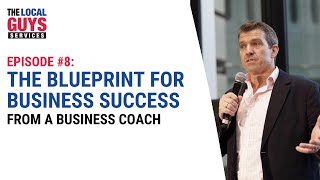
A podcast interview (Episode #8) featuring business coach Tony Meredith in conversation with Jarrad Goulding. Tony describes his transition from corporate roles to business coaching, lessons from personal transformation (weight loss), the value of grit, goal-setting and persistence, and explains pros/cons of franchising and practical advice for new franchisees (follow processes, know your numbers, work on the business).
Questions this video answers
Brisbane
Five and a half years
2018
tonymeredithcoaching.com
Chapters
Well, thanks so much for joining us, Tony. Welcome. Much appreciated for joining us. We've worked together for a little while now, so I've been really keen to get you onto the podcast. So, yeah, thanks again for joining us. Maybe you could get you to start by just introducing yourself and what it is that you do.
Fantastic. Well, firstly, Jared, thank you, mate, for the opportunity. I'm very excited to be here and supporting you and the team at the local guys. So I'm a business coach. I'm based up in Brisbane. I've been doing this now for five and a half years. So prior to that, I had a corporate career, had a whole range of senior roles, different sales roles, commercial roles in leadership, but decided a long time ago that I'd had enough of corporate and that I wanted to get into my own business. And in 2018, I. I was in a fortunate enough position to leave corporate and get stuck into business. So I've been doing it ever since. And I work with small to medium businesses across the country, primarily helping them, you know, grow their sales, become better leaders, you know, master time, and then all with a dose of mindset over the top because we all need a little bit of mindset every now and then just to help us, you know, keep moving forward and looking at, you know, the opportunities positively as opposed to sometimes it. It can get a bit tough in. In business and you look at the things that. That are going wrong.
Yep, yep, sure. Absolutely. And I think a lot of people have, like, a similar path to that where they might work for corporate or work for a business for. For many years and then they decide that they want to go out on their own. You did it a little bit uniquely, though. I think most people wouldn't sort of want to go off and go off and become a business coach. What was your driver behind doing that?
So I actually never started off to be a business coach. Right. Funnily enough. So if I go back to 2015, where all this started for me, so I was in a really dark space, you know, I was overweight, I spent all my time away from my family. I didn't have the wealth that I thought. And I was away from my family because I was traveling around the country, you know, in airplanes and hotel suites. I didn't have the wealth that I thought, so I was really in a dark space. And so for me, I thought, well, what am I going to do? Because I was on a very good salary back then. And in fact, the first thing that I did is I went and lost weight. I did a 12 week weight transformation challenge and fundamentally changed the way that I looked in 12 weeks. And I remember saying to myself at the end of that, if I can do this, then I can do anything. And so then we'd had dabbled in real estate, in property, and I thought, right, property is going to be my, my ticket out of corporate life. And so started off down that path, but I realized in the development space, but I realized that I liked it, but I didn't love it. But I had a lot of people coming up to me and saying, oh my gosh, Tony, like, why? How are you having success? And oh, you lost all this weight and how did you do that? And I just thought, well, I'm an average guy from the suburbs, you know. But I remember sitting there having an epiphany one night going, oh my gosh, maybe I'm meant to be a coach. Because I'd always been a manager. And back then, in a corporate setting, they don't call them coaches, they're managers and they're different, they're different functions. But I've always been a manager of people, but never saw myself as a coach. I thought, oh, what's this coaching? So I just explored coaching and went off and did a coaching course. And then the rest is history. So it's interesting, I was actually having a conversation yesterday about a guy who's in a similar position to where I was. He's in a corporate role, he gets paid well, but he's feeling unfulfilled. And I said, you've just got to try something because the thing that you try may not necessarily be the thing that you end up doing, but at least if you try it and then you can either rule it in or rule it out. And I say it's a bit like a buffet. You know, you go to a buffet and there's a series of different dishes. And sometimes you will try some dishes and they'll be wonderful and you'll come back for more and there'll be others that you try. And it's like, oh, yuck, you know, I don't want to go back for any more of that. And it's a little bit like that from a, you know, from a business point of view. So what am I going to do? And a lot of people will try and solve it in their head. Whereas for me it's about just try some stuff and you'll start to figure out, yeah, I like that, or no, I don't like that, and you'll start to navigate your way towards what it is that you want to do.
I think I. There's a saying that I love, and it's fail quickly and fail often. And I think there's really something to that.
Oh, abs, absolutely. You know, and that's what it's about. And it's about the courage to make mistakes, Jared. You know, I mean, the reality is that a lot of people don't have the courage to make mistakes. They want everything to be lined up perfectly. And I'm not going to take that first step until everything's lined up perfectly. And you and I have talked about this never happens. Yeah, correct. There is not a straight line in business from point A to point B. You know, it's up, down, back, you know, it's all over the place. And I mean. But it's the courage to have a go. It's the courage to learn. It's what growth's all about, you know, and then you figure out along the way, well, it's like, hang on a second, I tried that thing. Either A, we'll adapt it and do it better next time, or B, actually, that was the wrong thing and let's go and do something different. Either way, we're constantly trying, and as long as we're moving towards where we want to get to, then it's okay to make mistakes. Because mistakes equals learning and growth.
Yep. Yep. Absolutely. I think it's kind of like having kids. I remember my advice my brother gave me once in regards to. He kept on saying, because we had kids later in life, and I've got my. My third child due two days ago. So I'm waiting for the phone to ring now, actually, to know that I got to rush off to the hospital, but. But he sort of said to me, there's never the right time. It's. There's always something going on in life and it's never the right time. And you just gotta. You've just got to make it happen. Because if you don't, it's just time gets past.
Well, and it's. It's called. It's the R word. It's regret, you know, and what I left out, you know, way back about my own journey, is that the. Whilst it was the weight loss that got me going physically. But I actually read a book, and it was Stephen Covey's book, the Seven Habits of Highly Effective People. And chapter two is around Start with the End In Mind. And when I first read it, this was in the January of 15 when I first read it, he talks about, you know, what people will say about you at your eulogy. And I remember reading it initially and not wanting to deal with my own mortality. And so I put the book down and I sort of put it back on the bookshelf and, you know, left it there for a few weeks and kept walking past the bookshelf. And then for whatever reason, in mid January, I picked it back up again, and I reread that chapter, and I really understood what he was saying. And effectively, it's, you get one shot at this. You know, what do you want people to say about you, you know, when you. You pass? And it's like, well, at the time, like I said, you know, I was overweight, I was unhappy, I was unfulfilled, I didn't have the wealth that I wanted away from my family, blah, blah, blah, you know, and so in the instance we're talking about here, it's like, well, do you want to. To, you know, be on your last breath and say, well, gosh, if only I had have done that thing back in 2023. And I wish that I had the courage to take that step, but I never did. And unfortunately, Jared, there's a lot of people that will be like that, and they won't have taken that step. And it's not easy. But one of the great things about being part of a franchise community is it makes it easier. You know, you've. You've got a. It's a. It's a softer. It's a softer landing because you've got all of that support around you. From a franchise point of view, I. I did on my own. I didn't, you know, I didn't have a franchise network or like, I just, you know, got in and did it all myself and made an enormous amount of mistakes and still do today, you know, but I've. I've got that. That courage to keep. Keep moving forward and just have a go.
Yep. Yep. Do you think that there's a correlation between going through the journey of weight loss and business ownership? Because I've also, you know, I lost 42 kilos in a year, and, you know, it's a lot of stripping back and a lot of looking at. Not putting the blinders on and really looking at things in the facts of what they are and not sticking your head in the sand and just going, okay, okay, cool. Stripping everything back and just going, all right, what's the facts here? And moving forward from there and then being diligent along the path as well. Can you. Do you see something like that along your journey where there are similarities.
Yeah, absolutely. So, so and, and your, your, your efforts been amazing. I've been, you know, privileged enough to sit in the front row and you know, and watch you and your journey. Congratulations on your own success from a physicality point of view.
Thank you.
As I mentioned, you know, for me it was, it was a 12 week challenge. It, they gave you the, it was a national competition, so they gave you a food sheet and an exercise sheet for the three, four week blocks. So 1 to 4, 5 to 8 and then 9 to 12. And so for me, I simply had to eat what they told me to eat and exercise what they told me to exercise. And so I remember sitting there thinking to myself, well, how am I going to go and create a goal out of this? Because it's 12 weeks, it's weight transformation. So it wasn't about weight loss. It was actually a lot of, you know, weight loss, lifting, like, you know, building muscle. And so I thought, hang on. Well, my muscles heavier than fat. I don't know how to create a goal. And what I ended up deciding was that I will set a goal, that I will eat what they tell me to eat and exercise what they tell me to exercise for 84 days in a row, which was, which is a 12 weeks. And so every day I would just get my exercise sheet and I would just simply follow that process and follow that process and the other. So that was one thing, right, about follow the process, you know. And so in business, particularly in franchising, right, it's about, you know, you guys create a process. There is a process of how to go and, you know, do particular tasks or how to go and run your business from an operational point of view or how to go and do local area marketing. So me as a, as a prospective franchise partner in the local guys, it's about follow that process, right? The other thing that I learned during my 12 weeks was that in weeks one to four, I lost a little bit of weight, could see a little bit of change in weeks five to eight. I saw a little bit more change in weeks nine to 12. Just the change was phenomenal, right? So literally I had weight just falling off me. And so what I learned out of that is around consistency and persistence. And I could have easily given up after four weeks, you know, done it and gone, oh well, I've lost a little bit of weight, you know, but throw my hands in the air. This is too hard, right? And I can tell you that prior to that moment, there's so many times when I was that guy, right, going, oh, my gosh, you know, throw your hands in the air. But the reality was that I stuck with it. Stuck with it. And so, you know, the lesson then back to business, which was your question is through consistency and persistence. And it's that consistency and persistence that will lead you to have phenomenal success. Because most people, Jared, unfortunately, will throw their hands in the air and say, this is all too hard. And in fact, in Napoleon Hill's book, Think and Grow Rich, he talks about a concept called three feet from gold. And I'm not sure if you've heard of that concept. Yeah, yeah, yeah. For the viewers. For the listeners. Sorry, yeah, please. Yeah, for the viewers and listeners, three feet from gold is essentially that most people will finish three feet from their gold. So if you imagine yourself. And again, this book's about 90 years old, so if you imagine yourself sort of 90 years ago, and you're. You're. You're. You're mine, You've got your hard hat on, and you're sort of digging for gold, and you've got your pick, and you dig, dig, dig, dig, dig. And you get exhausted, you go, oh, my gosh, there's no gold here. But the reality is that three feet away from where you finish is the gold. Whatever your gold is, is the gold that you were searching for. Now, here's the kicker. If you knew that the gold was there, then you would be on your knees and your hands and you would just do whatever you could to get your gold because you've got certainty that the gold's there. But there's no certainty, Right? There's no certainty in business. And so then there's an element of, you know, we talked about it, you know, following the process. You know, trust, faith, belief. You know, these are the words that start to come up because you've got to just keep going with that process and believe that I'm on the right path. And. But unfortunately, a lot of people don't have that. And they. They sadly will get to, you know, the end of their days, and they will have been three feet from gold. And if only. If only they, you know, had that courage to just go that little bit further, then perhaps, you know, their circumstances may have been very different.
I had someone ask me the other day what they thought, I thought was the most important thing to success in a business or a business owner. And I think weighing everything up over however many years we've been in business now, I think if I had one word to describe the most important thing, it would Be grit. And it's exactly what you're talking about. That's, that grit that keeps you rocking up day after day tends to be the deciding factor. And it's, it's one of the hardest things to, to achieve as well because you, you get mind games and your logic kicks in and you do a bunch of, you kind of on this roller coaster. And it can. One day you're up, the next day you're down. And it can very easily, that grit. How do you teach grit? How do you, how do you. Without going through the hard yards for the last two decades, how do you, how do you install that as a coach?
Yeah. So one of the things is to be very goal oriented, you've got to have something that's in front of you that working towards and also about managing expectations. So that is that, like you talked about, it's not going to be easy, you know, it's, you're going to have good days, you're going to have bad days. If you think it's all going to be smooth sailing, you know, rainbows and butterflies, then perhaps go and do something different because it's not going to be easy. But it comes down to the goal orientation, the goal achievement and how committed you are to that goal. Because I meet a lot of people who are interested in goals, but interest in a goal and commitment in the goal is two different things. So an interest in a goal is a bit like a fantasy. Oh, I'd love to get into small business. I'd love to have my own business. I'd love to be my own boss, you know, all those types of things. And I get it, you know, I used to hear that a lot, you know, in my corporate sitting. Oh, gosh, I'm fed up with this place. And I'd love to be, you know, you know, out there doing my own thing, which is great, you know, but that, that's an interest, you know, that's a fantasy. Whereas the commitment is actually, you know what? I'm, I'm going to put my left foot in front of my right and I'm going to have a go. But I do that because the goal means so much to me. And so that's the key thing. And so, you know, whenever you want to go and change in business, in life, the first thing you want to do is understand the why do you want to do it? You know, so what's your purpose? What's your reason? It's got to be a deep reason. It's got to be something that's Relating to you, it's internal to you. Because on those dark days when you wake up and you'd rather be a thousand and one other places than, you know, going to your business or battling away with whatever you're battling away with, you've got to have a deeper reason. And it's like that reason is in front of you and it's like a gravitational pull. And so a lot of people will push towards change. And what I mean by that is they're not fully committed to it. They're sort of not really serious about it, and they'll push, push, push, push, push. And eventually when you push, you run out of steam. Whereas when you have something that's in front of you that the reason is so big and it feels like it's just drawing you towards it, then it's a lot easier. It's not easy, but it's a lot easier in that sense. So having a reason why and then being very clear, like vividly clear on what is the thing that we're going for, you know, and then constantly reminding yourself of that, like, you know, a lot of people will go, well, I set a goal, and I set a goal on the 1st of January, right? And it's like, well, know what tends to happen, I call it the January 1st effect, is that, you know, most of us, we'll go and have a few beers or whatever on the 31st, and then we'll wake up and we're so right, I'm going to climb mountains and lose weight and start a business and all, all these things. And, you know, the reality is by the third, third week of January, then we've all, you know, we, we've, we've gone into a, into a heaps. The reality is that about 85, 90% of, you know, news resolutions, they're all done by the third week of January. So that's interesting. You know, that's fantasy. Right. Whereas, you know, it's about really deeply spending the time understanding, you know, my commitment towards doing this thing. And as I said, you know, managing your own expectations.
You, you work with a wide range of different clients, and you've got clients that are traditional business owners, independents, and then you've got other clients in the franchising side. What's, what's your take on the, the difference of, of either side?
Sure. Well, I mean, if I talk about the franchising side, you know, I've got a lot of the hard work's been done for me, and I think it's an amazing thing. If I Look back at my time, as I said, you know, I, there, there are franchise coaching organizations out there. I chose not to go down that path. I chose to go down my own path. Now I've got no doubt that had I've gone down a franchising path, then yes, there may have been some outlay of investment to do that, but then my time would have been compressed significantly. All of the things that I had to do would have been laid out for me. I would have had the support of a network around me. So there's so many pros to the franchising side of things. Jared, I know that, you know, you've got a franchise network, but you know, from a, from a, so at a high level, from a business point of view, there are two key things. There is demand and there is supply. And so when people start out in their business, one of the big things that they worry about is demand. Will I have enough work coming in? Well, the great thing about, you know, franchise organizations and specifically the local guys is you guys generate marketing, you guys generate the leads for the franchisee. So as a franchise partner, then, you know, a lot of the heavy lifting has been done for me from a, hey, what do I do? What do I do on day one or day two or week one or week two? Well, you guys have created the operations manuals and the procedures around. Here's all the things that you need to be doing. On top of that, you know, being part of a franchise community is I've got a group of people who perhaps are going through what I'm going through, perhaps have been through what I'm going through and I can lean on them from their own experiences. So their support, support, there's training, so there's a whole range of people around me. So the big thing that I would, you know, I know I've given you a long winded response to your question, but the difference would be time. So that is, in a franchise community you will compress your time. And so what if the way that I would describe it is, yes, it's, it costs you some money to be involved in a franchise community as an investment, but you have compressed your time, you have increased your support network around you and you have significantly increased the probability of success. You know, and the reality is that from a small business point of view here in Australia there's different stats, but I think, you know, it's something along the lines of 60 odd percent of, you know, businesses, you know, small businesses don't make it past the two or the three Year. Mark, I can't recall exactly from a franchising point of view.
The.
The statistics would be significantly different now because I've got the marketing being generated, the training, the support, the community, then my likelihood of success is far greater.
I think it's. 90% of small businesses fail within the first five years and 80, 80% of franchises succeed. And that's just for the numbers. Yeah, yeah. So it's.
And the fact, the facts are like that. They're. They're the facts. Right. And so you can't dispute that. And, and that's why I love, you know, the franchise model is because I've got work now. But, but here's the key thing that I want to stress with all of it. At some stage, as a franchise partner, you still have to do some heavy lifting, right? So you can't, you know, leave everything up to, you know, to your franchise or, you know, you've still got to get out there and. And do the thing, you know, whatever that thing is. It's just a matter. It's a matter of. It's all laid out for. It's a bit like karaoke. So it's just. You just want to follow the bouncing ball. You still got to sing the song, you know, but you just got to follow that bouncing ball.
And I think that's one of the things that we outline to franchise candidates very early, is that this is still business ownership. You're not a subcontractor. We're not just providing you with work orders and just going out doing the work and a glorified employee, small business owner. And yes, that we do put things in place to assist you in that process. Yes, we do provide leads and yes, we do provide a bunch of different things. But. But at the end of the day, it is still your own business and you are responsible for part of the growth of that business as well.
Yeah, absolutely. Well, I describe it as it's your own business, but you're not on your own in business, you know, in the, in the sense of that you get the ability to do what you want to do in your territory within the parameters of the franchising agreement. But. But you've also got the procedures and the support and the marketing and all the, you know, the support from. From head office.
And.
And also the other thing too, is, like I said earlier, you know, because you guys have been doing this for a while, you know, respectfully, you guys didn't get it right from day one. And so through your own trials and tribulations and making Mistakes and refining things and trying different things. You've gone through that learning process on behalf of your franchise partners. So now any new franchise partner coming in for them, what they see is the product and the service that you sell today. But the reality is that that just didn't happen overnight. It's happened based on your experiences here with the local guys, but then also, like, you've been in business way before the local guys as well. So you've taken all of that experience and roll that into to, you know, what you're offering today.
Yeah, and I think that's the thing. It's over a decade of experience that gets to where we are today. So someone that comes on today gets that over a decade of experience, which is a great thing. What are some of the challenges of franchising?
Well, some of the challenges around franchising is that some people can feel a bit restricted, you know, so it's like, oh, my gosh, I feel a bit restricted. Some people don't want that accountability to, you know, some. Someone else to the franchisor. So there are a couple of the challenges that I. That I see, you know, but it's about recognizing that you have created the system, like we just said, based on your own trials and tribulations, and you figured out what works, you figured out what doesn't. You've also got to factor in a whole network of individuals. And so, you know, a challenge for someone who is extra creative or wants to be independent. They may struggle, you know, they may struggle in a franchise model. So, you know, if you want to be part of a franchise model, it's phenomenally successful. And the statistics that we just talked about, you know, speak for themselves. But you've also got to, you know, comply to, you know, what works. And again, you're just not, you know, creating things to fill space like you're creating things because, you know, it works, you know, and, you know, it works because you've had plenty of, you know, mistakes and failings along the way to figure out all this works. So that's where it can become, you know, difficult within franchising. And the other is then the monetary side, you know, so people will say, well, you know, why would I invest in a franchise? I could go and do that thing myself. And the reality is that in 2023, there's an enormous amount of knowledge out there. And so, yeah, you can go and figure things out and, you know, get into AI or get onto Google or whatever it is, you can figure it all out. But one of the Reasons that you, you're investing money is because you're now compressing time. And I said it earlier. So that's the exchange. The exchange is I'm going to invest in a franchise. But now what I'm doing is I'm doing two things. I'm short circuiting my time for success and I'm also increasing my probability of success. That's worth something.
Who do you think makes the, the right fit for a franchise? What type of person?
So it's, it's varied in the sense of that you've got to be hungry, like, you've got to be. Yes, I'm part of a franchise, so I need to be compliant to the franchising parameters, but I've also got to be hungry as well. I've got to recognize that my franchisor has done the bulk of the work. But there's still this bit that I can't just sit there and hope that it, you know, the money's reigning down from above. That's not how it works. You know, I've got to still get out there and take action. And it's no different in franchising than it is in any business, which is, at the end of the day, I've got to take action and I've got to take action. And even in franchising there'll be things that I do. So, for example, if I think about, you know, from a, from a pest control point of view or from a cleaning point of view specifically, well, one of the great ways to generate leads will be through the property managers at real estate offices. Well, even though you can direct the franchise partners what to do, where to go, here's what you should say, here's some scripts to go and chat about, they've still got to execute it. And if I rock up and my uniform's dirty and I'm disheveled and I don't go through, you don't follow the process. Well, I'm, I'm, I'm not going to have the success. So you've still got to, you know, put the effort in. And it's like anything in life. You know, we, we talked earlier about our, you know, our respective weight loss journeys. You get out of things what you put into them 100%. You get out of things what you put into them. And so when you put into, you know, your franchise business, then you will, you will get phenomenal rewards back.
It's a good example, actually. I know only recently we've created a pricing guide for people in the real estate industry and we've provided training around that side of things and some of our franchise partners have had some great success around going to real estate offices and presenting. But as you say, they've got to be able to actually get out there and do that though. So we can, we can make them look like a national brand because they're part of a national brand and we can have our team design the flyers and the brochures and everything like that and have, have them on the right foot. But if they don't take that foot in the, in the door, then there's a missed opportunity and then you're solely relying on leads from us, which, which is great and I always consider it sort of offense and defense and you can have leads coming to you but, but you know, they're always going to go like this. So you want to have the ability, so when you're in one of those down ones that you've got the ability to be able to go out there and you know, you've got this tool in your tool bag that you can go out and generate leads that way or that way. So yeah, it's, it's a great example.
What's about being proactive, you know, it's about being, being proactive with all of this, you know, and, and there's a lot that, that you and the team will, will provide from a head office point of view. But you know, if I'm the, you know, test and tag franchise partner or pest control or cleaning franchise partner on the ground, there is so much that I can still be doing to ensure my own, my own success. I can't leave it all up to the head office. Yes, there's a lot that comes through from the head office and it's amazing and the quality is phenomenal. But I still have to, I've still got to do some heavy lifting myself.
Yep, yep, absolutely. Many of our franchise partners have never owned their own businesses before. What are your sort of top tips or must knows for them?
So firstly, so in regards to getting into, to owning your own business, I would say that a lot of people when, when I speak to them after they've got into owning their own franchise business is one of the comments that I get back regularly is I should have done this years ago. Which goes back to that whole the courage, right? It's like, you know, and we have this, you know, the fear kicks in and we think about all the worst case scenarios but yet when we have the courage to take that first step it's like, oh my Gosh, this is what a breath of fresh air this is. I should have done it a long time ago. But in regards to. So let's say now I've gone and bought my, my own franchise. Well, for me it's about follow the system and trust the process. And so whether it be from an operational point of view, whether it be from a local area marketing point of view, but follow the system that has been created for you and trust the process. So we just talked about real estate agents and property managers. The reality is that when you go to a property manager for the first time, they're not going to be, you know, swinging open the doors, rolling out the red carpet and welcome you in open arms. That's not reality. The reality is they're probably already using someone else's services and they might have a need for your services. But don't be disheartened by that, you know, so it's, it comes back to what we just talked about before around that, the grit and that tenacity and that perseverance to keep going, say g', day, introduce yourself to, to people, put a smile on your face, you know, so do that. But then be consistent with that process. That's one thing. The other one for a business owner point of view is know your numbers, like really know your numbers. It's your business at the end of the day. And it blows my mind the number of business people when they initially start working with me and they have no clue, they have no clue over their sales, over their profitability, what's going on. As long as I got a couple of dollars in the bank, that's as long as I can pay my bills, that's okay. It's like, ah, you know, my gosh, I know your numbers, you know, it's, it's your business. The other is then, you know, thinking about mastering of your time. So one of the key things when, if I think about my own journey when I first started in business, when you start out in business, you have an enormous amount of time because you've started on a brand new territory. So you have plenty of time. So now with that time, but you don't have a lot of revenue or income coming in. So with that time, leverage that time, you know, leverage that time to get out into your community, to introduce yourself to, you know, create awareness that you know, I'm the new, the local guys, you know, franchise partner in this particular territory. So you know, you've got this enormous amount of time, no money. So leverage your time. Then what happens is you start to get work coming in and now you get busier and busier, which is good because now you're generating revenue. Don't lose sight of the, some of the key things that you need to do from a business point of view to help things still keep moving. And I just talked about know your numbers, you know, books is, is one or the administrative side of bookkeeping. Now, you know, there might come a time, once you've started to generate some revenue where you may think about, do I outsource or delegate some of those tasks, some of those lower level and respectfully to all the bookkeepers out there. But some of those, you know, lower level sort of repetitive tasks, do I outsource some of those? Which gives me now more time to get out there and generate more revenue. Because to me it comes down to an hourly rate comparison. So if I'm going to go and, you know, be doing the test and tag or do pest control, etc. And I've got an hourly rate of X, but I've figured out that if I can outsource my book work, for example, for why and there's the profit there, well, then I should outsource those tasks. Because the key thing that all business owners, whether it be franchise partners or independents, what we want more of is time. And it's not necessarily time to go and have a break. Although, yes, it's good to have a break every now and then and you spend time with your loved ones, but it's time to go and repurpose on then driving your business, generating more business for yourself. That's the key thing that you want as a business owner is time.
Yep, yep, absolutely. And I know even we've done this for, for many years, but every month myself and Stacy will sit down and we'll look at the previous month and work, have a look at our incomings and have a look at our outgoings. And it's been so successful for us that now Stacy does one day with the franchise partners on accounting and bookkeeping and all that sort of things and forecasting, and that's part of her recommendation to every franchise partner, is to sit down every month and know where the money's coming in from and where it's going and having a really good understanding of that. And that's why I think it's good in those early days to do your own bookkeeping so you can truly see every transaction and where it's sort of gone and all the rest of it and have a really good handle on your business. And as you said, you've got more time at that time, so it's better to do. And then by the time you're ready to hand it over to a bookkeeper or an accountant, you've pretty much got pretty healthy habits in place by then, or you should do anyway, so then you can outsource it. And as you say, then you should be able to swap those hours out that you were doing on the bookkeeping across for revenue creating and hopefully that that hourly rate is higher than what the bookkeepers is and then it's cashflow positive.
Absolutely. And the other thing I can't believe I didn't mention this, Jarrod, is have a goal. I can't believe that I didn't say this, but anyway, have a goal. I mean, you know, it's like, well, I got this business, I've invested into this franchise business. Actually have a goal for yourself. You know, what would you like to achieve in year one, what would you like to achieve in month one, etc. And not just a top line goal, you know, what does that look like then in activity? And so one of the things that I focus heavily on is things called sales drivers. So you might have a top line revenue goal and your revenue goal might be to get, I don't know, $10,000 a month early on. But what are the things that I then need to do to generate $10,000? And so there's a whole series of things that I can do. So I call them sales drivers, but set some goals. I'm going to go and visit X number of property managers. I'm going to do X number of flyers. I'm going to, you know, reach out to these local businesses. I'm going to. It's a whole series of things that I can be doing, but it's about setting yourself a whole range of goals. And now I've got something in front of me that's worthy or worthwhile to bound out of bed and work towards each and every day.
Yep. Okay. Again, you've worked with a lot of different franchises. What advice would you give to someone who's in the research stage of franchising? What sort of research or things would you suggest to them? You know, if it's the brother in law, whoever to you, what's the pieces of advice you'd be giving to them in that due diligence stage when they're looking at different franchises?
Yeah, 100%. So firstly, you know, get across on the Internet. So there's so many you can do a little bit of cyber stalking in 2023. Get on the Internet and look at reviews and all those types of things, you know, spend time with the head office. But I would also encourage people to spend time with the franchise partners, you know, so start to speak to a few franchise partners and get their thoughts of, you know, what is going on from a head office perspective and what's it really like, you know, within. Within the local guys. So I think that's incredibly important. But due diligence is so critical, Jarrod, because you're looking at investing a lot of money, you know, and so it's a case of you want to make sure that you're doing the right thing. The other would be to see if you can do a day with a franchise partner, you know, because I think it's important to get a sense of what's a day in the life of, you know, a test and Tag franchise partner, etc. What's the day in the life of look like, you know, because you can sit there and watch videos and, you know, have conversations with the team at the head office, but it's not until you get out and about, you roll your sleeves up and you go, you know what? Yeah, I think that I can do this. I think this is how I'd like to, you know, spend my day. Conversely, if it's not for you, then my view would be I'd much rather discover that early in the process in the sense of that, you know, okay, you go out for a day and you go, yeah, nah, it's not for me. Hey, terrific. You know, you say, thank you. Thanks for your time, and I wish you all the best. You'd much rather discover that early as opposed to then, you know, being six months in and going, oh, I think I've made the wrong decision. So I would say to, you know, spend your time doing your due diligence and getting to know some franchise partners. But then I go back to what I said earlier. You know, there's also this balance between analysis paralysis, you know, and that fear of actually taking that. That step, you know, and no matter where you're at, it's still going. You're still going to be filled with anxiety and fear. And that's natural. Like, that's. We all go through that as humans. So, you know, don't let that be the reason that's going to stop you. But I would go back to, what are your goals? You know, what's the thing that you want to achieve in your business life? You know, when you've got A goal that's bigger than your fear, then you'll go after it, you know, and that's, that's, you know, my story and it's your story as well. When you have a goal that's, that's bigger than your fear, then you go after it. Doesn't mean that I don't experience fear or experience anxious moments. I get them all the time. But I'm also, well, I am trained but B, I'm also driven enough to go, you know what, I've got to work through this because the best things in business or in life are on the other side of that fearful moment. So do your research, spend time with franchise partners, spend time with the team at the local guys head office, you know, do your due diligence but then get to a point and go, you know what? I've got to take that step. I've got to take that step. And as I said, I can assure you that whilst that decision is hard, once you get over the other side, once you've made that decision, the number of franchise partners or even individual business owners who've made that step to leave the security of employment, they go, my gosh, you know, I wish I had have done this years ago.
I think listening to your gut as well, there's really something to that. The older I get, the more I think there's something to that. If you get that gut feeling, you know, there's a reason why it's there, whether it's positive or negative. And I think sometimes you've just got to listen to that. And I don't think, you know, a lot of the times whenever I've made a bad decision in my life and then I've looked back at it later and I thought I've had that bad feeling about there and same with the other way as well. So I think it's really important to do that. I think there's around 1500 different franchises. I could be wrong, my number's there, but I think it's around 1500 different franchise networks around. What do you think it is that separates a good franchise from, from a poor one?
Yeah, it's a bit like any organization. The culture, the support, again, the feeling that I get when I speak to whether it be you or whoever it is that I'm speaking to when I first have an interaction with the local guys, you know, and then you get a sense when you, like I said before, when I'm talking to head office versus when I'm talking to a franchise partner, what's, what's the feeling going on there. But there's a real cultural piece around that, you know, also being in the game for a while as well, having proven success, Testimonials, case studies, etc. I think that's incredibly important as well. So that's what separates. Because there are a lot of franchise groups out there and it's relatively easy to create a franchise group, but you've got to make sure that you've got that support, that there's processes that there's operations manuals that. All that I need to know as a potential franchise partner, it's all laid out there for me. And I can see that there are other franchise partners who are having success. And so then it's a case of, well, hey, if they're having success, you know, why can't I go and emulate that as well?
I think as well, it's probably an obvious one, but I feel like a lot of the time it comes down to, to this and how driven the, the franchise is by that. You know, is. Is money the number one thing? And I think that if it is, it tends to. And they become addicted to that. It tends to quite often a lot of the other values that can build that, that franchise or even build that business can tend to drop off. And I think that the longer that I've sort of been in business, the more I've realized that it's actually more of an insignificant factor. Obviously, money is like oxygen and it's very important. You can't do business without it. So I don't want to discount that money's not an important part of that. But I think if you're a slave to it or you're solely driven by it, I think it really has the ability to do a lot of damage to a lot of organizations. And I think that instead being about creating value and knowing that as a byproduct of that value, that money will follow, I think personally, I feel like that's a much healthier set set up for success. And I. I feel like the older I've sort of gotten, the more I think that that rings true. And it's rare, but I think it's definitely out there. And there's plenty of franchises that are doing it in that mindset and they're seeing the success because of that. But it's very hard for a lot of people and a lot of organizations not to be driven by the almighty dollar. But yeah, it's, it's an interesting one, I think.
So, for example, a couple of examples. So One is, you know, from an employment point of view. So when you look at why is it that people leave a job, it's not money, it's not money. That's not the now money's there, right? So money sits around number five or six. So like you said, money's important. It makes the world go around, it provides a lifestyle. Am I being recognised? Am I being trained and support, supported? Am I being valued? Do I have potential to grow? You know, as humans, one of the most powerful things is that ability to grow, you know, rather than just exist and just sort of go through life. It's like I want to grow and I want to experience things. So there's a whole range of reasons why I would stay or leave an organization. I'm referring to a corporate type organization, but it applies the exact same here from a franchise, you know, group point of view. The other is, I see this in sports a lot. So people, amazing sporting stars will leave a team that's having success with all the salary cap and they have success. They've got to go to another team and they'll go to another team and they'll get heaps and heaps of money and that team will finish down the bottom of the ladder. And that individual, whilst they've got heaps and heaps and heaps of money, they'll be incredibly hollow and unfulfilled. You know, and so it, so it just, it aligns back to what you're saying around being an organization where you feel supported, you're part of the team, you're trained, etc. And it inspires you to bound out of bed, you want to go to your business, you want to do well. And like you said, the success becomes a byproduct of that.
You're in the unique position where you get to see a lot of different businesses and you get to see them from the back end and you get to speak with the business owners and all the rest of it. What's the most common pitfalls that you find you see businesses going into? What's the thing that trips them up? The most common.
So working in the business, not on it, you know, so spending all of their time working in the business. And, and I accept that there are, you know, depends on the business model. There are times when you have to do that, but you also have to spend some time working on your business. And so from a. If I bring this back to this conversation, then we talked before around, you got to do some local area marketing, you know, so don't just Go and sit there and wait for, for the leads. Like work on your business. Go and join a network community. Go and introduce yourself to other businesses. Go and do some letterbox drops, go to the local school, do things locally where I'm working on my business. We talked before about understanding your numbers, understand what's going on in your business. Where is my revenue coming from? What's going on? From an expenses point of view, where am I spending too much money? Where am I not spending enough money? That's on your business as opposed to the, in the business stuff, it's incredibly important. But that's a big area where people get tripped up. The other is around not creating enough awareness for their business. So again, if I came in as a franchise partner for the local guys, one of the great things is that you're out there creating a lot of awareness for me. But a lot of other businesses don't create a lot of awareness. And if you don't create a lot of awareness, then you're trying to sell a secret and it doesn't work. So you've got to get out there and create awareness. And I can give you plenty of examples where, you know, franchise partners, they've got their uniforms on and their van or their ute is signed up and because they're out there in the community with all this signage and whatnot, awareness and people will gravitate. No, you do such and such and you know, can you come and look at my place or my sister's blah, blah, blah, whatever it might be. It's about constantly look at how do I go and you know, create that awareness. So, you know, spend some time on your business always got to be in, but spend some time on. But then also look to create awareness. And then just some mindset things, Jared, that we talked about before, you know, grit, tenacity, perseverance, keep going, you know, have the courage to, you know, make mistakes. And I see this a lot from a, from a. Particularly from a social media point of view. So I know that you guys take care of the social media for, you know, for the organization, but other businesses getting people to doing these things right, get. Putting yourself out there, you know, putting yourself on video, on social media, publicly speaking, at network meetings. A lot of, you know, business people really struggle with those things. But again, for me it's about my goal is way bigger than my fear. And you know, I have all sorts of fears, but my goal is too important to me and I'm so committed to that goal and I'm going to do whatever I can to, to push my way through it. And then the other thing is that the more you do of something, the easier it becomes, you know, so I, I used to be petrified to speak publicly. Now I'm going back a while, but I used to be petrified to speak publicly. Well, you know, I do it all the time now and do it, you know, do it in front of, you know, hundreds and hundreds of people. Social media. I used to be petrified to do a video on social media. In fact, I've still got my very first video sitting there from 2017 when I was still an employee and looking to get out. But I just do it all the time. I've challenged myself and you improve. I used to struggle with a whole range of things around business, but I just constantly challenged myself to be better today than I was yesterday.
Yep, yep, sure. And I think that's. That's the thing, isn't it? It's just taking that first step, really. I think if, whether it's, you know, I know a big challenge that, that we see with our franchise partners sometimes is, and you just spoke about it, is working on the business rather than in the business. And it might be, well, you know, why would I spend the energy going out and doing that local area marketing? Because I'm not getting paid for that. And you know, where, if I go off and do this particular job or whatever, I get paid for it. And it's, it's that delayed gratification and it's waiting to go, well, you will get paid for it. And it's, you know, as you say, any type of marketing, whether it's social media or what we're doing right now or anything like that. You know, it, it's important to, I think, change the mindset a bit and not have it where you're just concerned about, all right, an hour's worth of work for an hour's pay. And it's completely different mindset as a, as a business owner.
Well, and that's an employee mindset, isn't it? You know, so it's that hourly rate mindset, you know, so I'm going to give you an hour of my time and in return you're going to give me whatever my hourly rate is. And I would, I would argue that it's. You have far greater success, it's far more sustainable by spending time on doing the things that will build your business and create it and set it up for success. You know, if I think about, you know, back when I first started, had Very few clients with plenty of time. So I spent my time letting as many people know about me and what I did. I didn't get paid for that, but I knew that by doing that and putting in the groundwork, you know, we're constantly doing things on social media. We're constantly, you know, going to network meetings. I'm constantly, you know, standing up and speaking publicly, you know, because. And some of those things I get paid for and some of them I don't. As in, as in the speaking. I don't get paid for social media. But, but, but it's a case of I do it because I'm constantly focusing on broadening exposure of who I am because I know that it will have medium to long term success for my business.
Yep, yep. No, absolutely. I was just talking. I had a podcast last week with Corey, one of our pest control franchise partners, and we've got an amazing mindset and we had a review come through from him where he rocked up early to one of his jobs. The, the homeowner was mowing a lawn. He got out there and assisted her. And finishing up mowing the lawn, he's got a rave review from her. He's since done both neighbors on each side because now he's got a screaming advocate for Corey out there. And you just, you know, like, you know, I guess we've been doing this for long enough now where you see those types of people at the early beginning of their journey and you just sit back and you think, wait, wait a year, wait two years, wait five years. Because that has a compound effect. And before you know it. Yeah, it's just growing into this big thing. And I think that's the, that compound effect is, is what you're talking about, having that process of being that sort of person.
Yeah, it's what's about. So what you've just described there with Corey and well done to Corey is memorable moments. Like a memorable moment. Like he could have easily rocked up and just done the service that he was there to do, collected his money and just moved on to the next. To the next job. But he created a memorable moment and that client or customer was impacted. Right. It's about how you make me feel. And now all of a sudden, then she's having a barbecue with the neighbors and whatnot and talking about, oh my gosh, this amazing guy from the local guys and this Corey fellow. And like you said, you know, it's all of these, I call them the 1 percenters, you know, so it's just all these little 1 percenters that. And it's about doing with it without expectations. So it's the. There's a number of universal laws around this, but one specifically is that law of reciprocity. You know, give us gain. And so I'm out there. I'm creating a memorable moment. I'm helping someone. I'm going above and beyond what I'm here to do and I'm doing without. Without expectation. I'm doing it because I'm a good human and I want to help that particular person out. But the universe has an uncanny way of, you know, getting that to cycle back around because you've gone on above and beyond and you've made someone feel incredibly important, incredibly special and created a wonderful memorable moment.
Yeah, we've, we've got a saying that we say here and it's a support center for our franchise partners and it's leave them better than you found them. And it's, you know, however long they're with the local guys and whatever they end up doing. But, but our goal is for every franchise partner that comes on is that they exit and they, they move on better in a better position than. Than where we found them. So I think that speaks very much to what you're sort of saying, ABS.
Absolutely. You know, and that's. And you talk about the culture of an organization, if that's what you're talking about at head office, that just permeates through, you know, everything that it is that, that you do. So that's amazing.
Yep. Okay. One last tip that I wanted to maybe hit you up for, if possible, is what's the number one piece of advice you'd give to someone who's looking at starting a business or just started a business, and you can only give them that one piece of adv. What would you, you want to leave them with on that?
Keep going. Keep going. You know, and in the sense of, we've talked about it, you know, at different parts over this last hour, but keep going, take action. You know, you're not going to have instantaneous success. You use the words delayed gratification. Business is not meant to be easy. It's about keep going and just keep following that process. And the thing that I love about the local guys is you have got a well laid out process and my job is just to follow it, but keep going. You know, I use the example of the property manager. They probably don't. They're probably using someone else in your particular service, might be pest control or whatever. They're already using someone. So but it's about keep going, keep going. Because here's the thing, Jared, the moment that you stop, it's never going to happen, happen. So you keep going and you increase your probability of success.
Yep, perfect. No worries. Thanks very much for that. So if someone wanted to use your services, Tony, what's the best way they can get in contact with yourself?
Yeah, absolutely. So our website is Tony meredithcoaching.com We're across all of the social media platforms. Tony Meredith coaching. Or send us an email to administrative and we'll come back to them very quickly.
Amazing. All right, thanks so much for spending some time with us, Tony, and passing on some of your wisdom. I loved our sessions and, yeah, you're very grounded person and I think that that's very much assisted us in our growth as a franchise and it's been a really important part to us. So thank you for all of your support.
My absolute pleasure, Jared, and congratulations to you and to the team on all of your success to date. I know we've got some big plans to go. We won't share all those just now, but congratulations on, you know, all the success that you've all had and thank you for today. For the last hour, I've thoroughly enjoyed this. We don't normally get to talk like this in our sessions, so I. The roles have been reversed. Normally it's me asking you the question, so I've enjoyed it. Getting even, I know.
No worries. Thank you so much, Tony. Very good.
Thank you, mate. Bye, mate.
Thanks, bye.










