Episode #9: The Journey From Casting Nets to Business Ownership (with James McDougall)
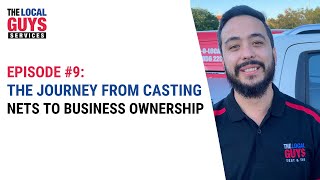
James McDougall left supermarket management and a prawn trawling career to buy a test-and-tag franchise in Brisbane. He grew fast by hiring a former colleague and using network-based marketing, and says the main challenge is uncertainty. His advice to new owners: lean on others and use your network.
Questions this video answers
2021
Three months
In the Torres Strait (ran aground on a rock reef)
Chapters
No worries, James. So thanks so much for joining us, mate. I thought what we might do, if it's okay with you, is just get you to introduce yourself and tell us what your role in the local guides is.
Yeah, of course. I'm James and I'm a franchise partner in Brisbane. Just started a few months ago.
Yep. So in our doing electrical test and tagging up in Brisbane.
Yeah, test and tag.
RCDs.
And I'm looking to expand into the fire area in Brisbane.
Yeah, beautiful. No worries. All right, cool. Well, I'd love to hear your story a little bit more. Could you maybe tell us what you were doing before the local guys?
Yeah, absolutely. I guess my two main jobs before the local guys was prawn trollers and for a large supermarket company. So. Yeah, 15 years.
Prawn trollers. That's interesting.
Yeah, it's completely different to pretty much anything else I've done, but a lot of life experience. Got to travel around the Torres Strait Islands and the east coast catching prawns and scallops and stuff like that.
Yeah. Wow. So. So what did that involve? You probably would have been away for like, what, weeks at a time or how did that work?
Yeah, absolutely. So my first stint was actually three months without touching ground.
Three months?
Yeah, three months straight into the thick of it. And then sometimes you'd be working, sometimes you'd be working like 36 hours with only minimal sleep and stopping for food and just keep going, keep going, keep going.
It's a bit like those, those TV shows they got on TV at the moment where they're off doing extreme crabbing or extreme fishing charters. I'm addicted to those shows.
Any.
Any crazy stories you can tell us?
Yeah, yeah. I mean, it's kind of my go to story, but my second last boat I was up in off Harvey Bay and. No, sorry, I was up in the Torres Straits and it actually sank. So we'd been doing one of these stints that I just told you about where it's like everything went wrong that could possibly go wrong. But the golden rule is you've got to keep fishing. So me and the rest of the crew, which is two or three other people, stayed up for the majority of 36 hours straight just fixing nets and getting, getting work going. And then on the final run, it was like maybe 3am to 6am the skipper's like, you boys sleep. I'll do the final run and then when the sun comes up, we'll finish the fish, have breakfast and go to bed while I sleep. About 5am we feel all this grinding and stuff and he'd fallen asleep and run aground.
So.
It was pretty much mayday, mayday, abandoned ship, someone picked us up. And then.
Where'D you run ground?
It was just a rock reef that was out in the middle of the ocean. Like no islands that you could see or anything. It was just rocks. And then the boat just ran aground, started taking on water and we all woke up to a shock and just. Okay, right. So yeah, we radioed the closest friend that we had in the area, he was about an hour away. So he steamed over and we all jumped on the life raft with whatever we could carry and jumped off the boat. The tide went up, took the boat away and then it went out to the middle of the ocean and just sank.
Wow. Yeah, incredible.
I was about 18 at the time, so it was a good fun and good life experience.
Yeah, yeah, absolutely. Absolutely. Wow. That is, that is full on. I thought I had some stories but that one's going to be a hard press to be. Yeah, there you go. So I quite often talk to people about their pain points, about, you know, why they looked at changing careers and stuff like that. But I don't think thing I need to ask you was when your boat literally sinks from around you, it's. Yeah, that's. So. So did that end that career a little bit then? Because I'm guessing if that boats out like that's, that's. How did that, that chapter of your life end? I mean clearly you survived. So was that the reason why you changed career or.
Look, I'm going to be honest, it should have been, but went out for another trip out of Harvey Bay and did a good couple of months out of there, but just too much time away from family and friends actually is the main reason I decided to come home and start working in Brisbane.
Yep, yep, fair enough. Okay, cool. So you came back and decided that having one boat sink on you wasn't enough, so decided to have another crack at it and then missed the family and then. So is that where you, you got into the supermarkets side of.
Yeah, exactly. Right. So yeah, pretty much started as a store assistant supermarket and then went up through the ranks and then started running stores and then by the end of it I'd run maybe 7 to 10, 7 to 10 different stores across Brisbane. Not all at once but with the company about 11 years and decided, decided I had enough of working nights, weekends and 50 hour work weeks. So.
Yeah, I can imagine, I can imagine. So that was, that was sort of the pain point There is. That was looking for a bit more work life balance. What was the main reasons from shifting to that to small business ownership?
Slightly boredom. Being in the same industry for so long. In 2021, I also attained my MBA, looking to branch out and utilize my newfound knowledge a bit more and always looking for a new project. And if I'm going to be doing a 50, 60 hour work week, it might as well be for my sake, not for someone else's sake.
Yeah, yep, yep. No, completely agree with that one. I think it seems to be a big driver for a lot of people in regards to. If you're putting your time, effort and energy into something, you know, you might as well be sitting there growing something that you know you can see at the end of it. So. All right, cool. So. So what? So you're obviously that was the reason for looking at small business ownership. What brought you to the test and tag industry?
What's the saying behind every great man is a woman rolling her eyes, Different ideas. And then I came up with, looked at the past, looked at a cleaning, looked at a few different departments and then the wife actually steered me towards test and tag.
She.
She looked at the ideas, looked at the B2B elements and she kind of pointed me in that direction. I thought she was right. So.
Yep, yep. Yeah, so she liked that it was business to business, like the repeat work, that sort of things.
Yeah, exactly. And being business, you would have me back on the weekends and then even. Yeah, it seemed like you'd be able to have a. Create your own good work life, balance with it all.
Yeah, sure, sure. Absolutely. No, and I think that's one of the great things, I guess that's kept me in the industry for the last 11 years is that Monday to Friday, you know, we had restaurants and we had juice bars and things like that. And I think that was the issue with that side of things. Although we weren't traveling away from home, it's just the. I used to call it invisible handcuffs sometimes is that, you know, you were just seven days a week getting pulled into this thing and you're constantly there all the time. So I think that having that bit of freedom and flexibility in a Monday to Friday sort of thing is. Is nice. And I don't know about you, I like being on the road as well. I enjoy that. I used to enjoy that. Not so much anymore, but. Yeah. Is that an aspect of it that you enjoy?
Yeah. Being able to go to a different site nearly every day is fantastic. Being able to meet all these new people. And seeing what they do for a living and like even just going to the child cares and all the kids bug you, like wanting to know what you do and stuff like that. It's a different element almost every day.
I remember going to childcares when I was doing test and tagging, and I remember a little kid looking up at me, he goes, you're a giant six foot four. Yeah, okay, thanks, mate. It's got no filter. Okay, cool. No worries. So, I mean, what. What do you think sort of attracted you to the local guys maybe over some of the other test and tag franchises out there? I'm sure I'm assuming you did your due diligence and looked at competitors and things like that. Was there any aspect of the local guys that. And why we ended up being the one that you decided was the right fit for you?
Yeah, absolutely. So, looked at quite a number of test and tag places, and I think the local guys was the best balance of every element. So I looked at, let's say, the biggest competitor and the end of the day with them is they. They were very expensive. So expensive to start up, expensive on a monthly basis. And they lost the personal feel to everything that goes with it too, because it starts to feel like you're a number rather than a person. And then on the flip side to that, I looked at some of the other guys and they were quite small, but upon reaching out to them, they instantly rubbed me as unprofessional. So if that was the starting point, I didn't see that going very far either. So the local guys are the best balance and the best medium out of everything I came across.
Okay, cool. That's excellent. That's good to hear. So, I mean, you're a newer franchise partner, obviously, up in Queensland. You've gone through your training, you've got Damien up there as your regional support. How was it once you went through all of your training and you, you know, you did your two weeks on boarding, your one week with us and then your week with Damien. How was it when you first got started and you're out by yourself and you, you know, you go to those first jobs or that first particular job, how was that as an experience?
It was actually really pleasant. So my high school friend, and he also has an mba, so me and him talk business a lot. Anyway, we ended up. He ended up being my first client, so got to kind of transition. Yeah, exactly. And he had done testing and tagging a decade ago, so he was kind of familiar with the whole world as well. So it was a really nice clean test run. Everything went super smooth so I could start, start my next job super confident. I was actually really lucky.
That is, that's a really nice, warm sort of hands over into it instead of it being too, you know, scary in that first job that it's gone over there. How do you feel like, because your business has grown very quickly, I know that you brought on a staff member quite quickly. Can you talk a little bit around that and your motivations around that? Because I think that was quite a unique thing in the local guys of someone bringing on someone so quickly. Did you want to talk around that a little bit?
Yeah, of course. Look, there was a few elements there where the business was growing so quickly and the work was there, but it also coincided with an opportunity to get a really high class employee. I used to work with him at our previous work. He used to be my 2 IC and I would be very comfortable with him running my business if I was to go away for a month sort of thing. If I showed him everything he needs to know, he would just do it. And an opportunity came up for me to snap that up so I, I jumped on it.
Sometimes you have to, don't you?
I think, yeah, absolutely. And on the flip side to that is now we've got two people doing the same work. So he can utilize his network and on while I'm doing testing and tagging, he might be able to do some marketing or vice versa. So it's not necessarily, if you're busy, you're not marketing and if you're marketing, you're not busy. It can be a bit of both.
Yep, yep. Now I think you're our only franchise partner that's got an mba. So I've got a, I've got to hit you up about that a little bit. Can you talk to me about how maybe that's come into play? And I think through your education, through that process, you probably see a bunch of things that maybe other potential franchise partners don't see as being newer franchisees. You might understand some of the business concepts and business formulas which would take a normal small business owner a few more years or even a few more decades to grasp those concepts. And you know, through your education, I'm sure that you've, you've seen the theory of that and now you're seeing it in execution. Is there any highlights that have coexisted or you've seen the crossover in those?
Yeah, I mean the main thing I have a takeaway from my MBA is being able to look at things critically and then kind of adapt quickly rather than what I've actually learned in the subjects. So, I mean, but everything I see at the local guys. Yeah, absolutely. I can see why things are done. So it's like, oh, you've got your marketing team looking at Google AdWords in the right areas and those sorts of things. And then. Or I see your specific goal is brand recognition across Australia. So the more cars on the road, the better for everyone. And I think I've heard you use the analogy before that all boats rise and can you finish the quote for me?
Yeah, yeah. What is that? A rising tide lifts all boats.
Yeah, you got me there. So, yeah. And then the business elements, it really helped with just hitting the ground running, to be honest. So, I mean, what. When it came down to accounting and admin and onboarding a new employee and those sorts of things, they all just kind of easy. It's just paperwork. It's just like. And if I don't know how to do it, you learn it and you just move on sort of thing. So I guess it kind of helped me there as well.
Yeah. It's lots of problem solving in small business ownership, isn't there?
Absolutely. But that's kind of the fun part as well. You don't want the mundane same thing every day. So.
Yeah, yeah, absolutely. So tell me, what does a typical sort of day look like for Team James now in the business?
My. There's no typical day, which is great, but my ideal day would be start at about 7 because that works really well for me. Other people's it's 9 or 10, but 7 is really good for me because I'm just an early start. Meet up on site, hopefully with Cooper if it's a really big job and then we can knock out as much as we possibly can. Usually try to be done in between one and three, do a bit of admin in the afternoon and then pick up the kids from Kindy and start cooking dinner.
Yep, perfect. Perfect. Sounds like a good day. What about. I know you talked about lam and doing a little bit of local area marketing and stuff like that. What's some of the stuff that you found that's. That's been effective in that, that way so far? What sort of have you been your. Because I, I think when it comes to local area marketing, there's two different things that you can do that you can be quantity and, and then there's quality. And I'm always talking, you know, are we just being busy for the sake of being busy or Actually, are we being genuinely, genuinely effective in that and then being busy in that regard as well? Have you found anything that's particularly effective in your local area marketing?
It's an interesting one because I know what you mean like quality or quantity.
But.
I see the quantity is widening the net and then once you start getting a few hits, you can kind of work off that so you can kind of expand on the things that have already worked for you. So for me, I found a lot of success on leaning on my actual network. So actually sending a genuine message to everyone in my contact list saying, hey, I just started a new business. Anything comes up, please let me know. Send it my way. If there's any way I can help you sort of thing or a bit of social media marketing, I've got a small, few small hits out of that. I'm going to be honest. I knew I would be terrible at cold calling and I was. So I actually took a. I took a different direction on that and actually found a lady who is an admin worker from home. So I've created a set of call lists that I would like in my local area. She calls on my behalf, half representing me with a script and gets me all the information I need and I start sending out quotes that way. And I've had a few hits out of that as well. That's a really good one because it's kind of passive because I can create a list, send it off to go to work and then come back in a couple of days and send off my quotes. So I really like that one.
And.
I was speaking to you earlier that I'm. Now I'm going to start looking at networking groups and stuff like that. Really expand my business network, not just my friends network.
Yeah, yeah, we had a quick chat about that before we jumped on and I think that's another really good under your lighters tool. I think that we were talking about BNI and there's a bunch of other ones out there, but I think that that's a really good start because then all of a sudden everyone in that chapter, and I've got nothing to do with bni, but everyone in that chapter is sort of an advocate for you and helping to assist and push your business out. And it's just business in general, as I'm sure you know. It's just, it's just a social game really. It's just knowing people and getting to know people and, you know, not being afraid to swap business cards and, and just having good, good simple practices like that. But it is. It is delayed gratification as well. And I think that that's a thing a lot of people struggle with, especially maybe people that have maybe worked for someone their whole lives or whatever who are used to. I do a week of work, I get paid at the end of the week. And small business ownership is very much not like that. It's a lot of work at the beginning. And I put it similar to firing a rocket ship off. A rocket ship when it takes off uses like 30, don't quote me on these numbers, but like 50% of the fuel just getting off the first six feet off the ground. Then when it starts to get momentum and it's moving, then, you know, the amount of fuel it uses compared to getting that first six feet is next to nothing. So. And I think business ownership is very, very similar, as you've got to be able to understand delayed gratification and putting lot of bit of effort in. And it feels like it's not a lot coming back in the. In the background. But then all of a sudden it gets this momentum and it starts to snowball, and all of a sudden you've got this big thing that's. That's really growing. And I think it's just you have to constantly remind yourself of that, and we're constantly reminding our franchise partners of that same thing. And you're in those early days of that business where it's, you know, it's the same sort of thing where, you know, you're trying to get the momentum of it ticking over. And I think until you. Especially until you get into the second year, I think once you get into the second year and you start to get your repeat work and stuff like that ticking over, then a light bulb kind of turns on. But in that first year, it's just like we're just really trying to keep our motivation high and now strong habits high and all the rest of it. And then you get to the other side of that, and then it's like, all right, I don't have to be revving out in first gear anymore. I can drop it into second gear and I can coast a little bit more and then slowly into third gear, and then the revs come down a little bit lower, and before you know it, you're in fifth year and you're doing 110 kilometers an hour. So, yeah. Does that feel. Does that feel like a pretty accurate place?
Oh, absolutely. So, yeah, every time I attain a new client, whichever means possible, I see that as 100 or like a small job or A large job, it doesn't matter if I think of that coming up in 612 months again, that's going to build, build and build and build. So I'm absolutely, I'm looking forward to midway through next year when we hit year year two and things become a bit more consistent.
Yep, yep. No, absolutely, absolutely. And what do you think? What has been, do you think the best thing about being in business for yourself? And I'll ask you the worst thing in a minute.
The best thing is definitely just being in complete control over my work week and the way the business is run.
And.
Just being able to goal set for yourself and achieve them and actually have those little wins. When in my old industry, if you push yourself into a 60 hour work week, you'd be lucky to get a pat on the back because it's just kind of business as usual. So if you absolutely kill it for yourself, you definitely see the benefits.
Yep, yep. Totally agree. And what do you find one of the most challenging things is?
The challenging things is the most challenging thing is probably the uncertainty of the future. So I mean I love problems. I love being able to, to throw myself at them, learn new things. I love being able to like fix a problem in a unique way or improve efficiencies and all that sort of stuff. So I love that side of things. But the uncertainty of the future, that's the hardest part. But as long as you can switch that on and off. So when I'm in work mode I can worry about that and work to solve that problem and then when I'm in my family time, I turn that off and just worry about family.
Yep, yep. And I think that's that mental sort of game that you, you play with each, with yourself, especially at that early, early days. So no, I couldn't agree more. I wanted to ask you, finishing up, you know, if I can get some advice off of you. What sort of advice would you give to someone who's maybe looking to start their own business or someone who's just started their own business, whether it's marketing or you know, operations or anything else. Just any sort of tip that you think you know because you're a lot closer to it. I've been in my business game for well over a decade now, so I quite often forget about some of those early lessons that I learned. So you could probably help someone out who's, you know, you're a few steps ahead along than someone who's maybe at those early days. What's some of the sort of advice you'd potentially give for someone like that.
Something I learned at my old job is don't try to do everything yourself. And I mean that in like, okay, you're a small business owner. It is your responsibility. But I mean, lean on others wherever you can. Like, I'm not an expert in nearly anything. So if I can lean on my accountant for tax advice, if I can lean on you, Damien, and other franchise partners who have been around a while and get your knowledge and your problem solving, like, when I'm solving a really difficult problem, sometimes it's just easier to reach out because the problem's already been solved before. You just need to ask the right questions. I think it's really easy to kind of get stuck in your own head and you're like, I need to solve all these problems. I don't want to bother other people with it or all those sorts of things. But I think most people are genuinely want to help and want to see others succeed. So, yeah, I think that would be the main thing, is lean on others wherever you can.
I think I love that answer. I think that one thing that people struggle with a lot is realizing that business is a team sport. And I'm exactly the same as you. You know, like, I dropped out of school after year 10. Like, I'm. I'm. I'm terrible in very, very. In many, many ways. But, you know, you build up a network around you and you realize it's a team sport and you don't have to be the smartest person in the room. You just have to know someone that's smarter than you in that particular area. And I'm very good in some areas, and I'm very bad in other areas, but I don't mind asking for help. And I've built up a team around me now of people that are very good in each aspect of the business. You leverage off of each other. And I think that I've seen people make that mistake many, many times is they just feel like they need asking for help is. Is. It's almost like an ego thing. And they have to keep everything nice and tight and not share anything and all the rest of it. I'm the complete opposite. You know, I try and share as much as I possibly can. I'm bouncing ideas off of the team in the office here every single day because I know I'm not the smartest person in the room. And I think that if you can do that, that's half the batt there. So I think that's a perfect point to end on mate. Thanks so much for that. I think we shared some genuine value there and really enjoyed our chat. So thanks so much for spending the time with us. I really appreciate it. No worries.
Thanks for having me. Appreciate it.










