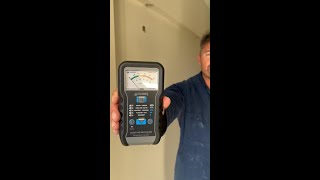
Short demonstration/discussion (YouTube) showing how a moisture meter is used during termite inspections. Shaun explains the purpose (termite attraction to moisture + timber), walks through device settings (wood/timber, shallow drywall, plaster, tile, masonry), how to take readings along wall cavities, and common inspection hotspots (bathrooms, pipework, lower wall areas).
Chapters
So, Sean, what are we looking at here? This is a moisture meter. This is a device that we use to perform termite inspections. Now, what this device does is picks up moisture inside of a wall cavity. The reason that we look for this is because moisture inside of a wall cavity can attract termite activity. They're looking for two things, food source and a water source. So the timber frames inside of your home is their food source, and then a water source can also attract them because that's the two things that they require. So this is a timber frame home. So we're going to just turn the device on here to wood and timber. What we do is place this at intervals along the wall. And if we do pick up moisture, the meter will go up to give you an indication. I've got moisture inside of my hand, I place it on my hand, it picks up the moisture inside of me. So essentially what that's doing is looking for a reading inside the wall. So these are the different settings depending on the wall construction. You select the different types of setting you are looking to use, the moisture meter. So we've got wood, timber, shallow depth drywall, plaster, tile, and then masonry. So even your own old brick homes can pick up moisture inside of a wall. So, Sean, where do you usually find termites? So the most common area that we'd find termite activity would be in a bathroom. Obviously there's moisture in bathrooms, showers leak, that can attract termites. So that's the number one place we look. So what setting are you on? So being a timber frame home, we would set it to timber. But then it also depends on the construction. So tiles themselves can give off a false reading. As you can see there. It's. It raises the meter slightly, as long as that's consistent throughout. And we know that it's the construction, the material. If you wanted to go to a deeper setting, you can just set it down one. And again, we're just looking around. The pipe work in particular because showers can leak. And then down the bottom is a great place to look because obviously water itself is going to travel down the wall.