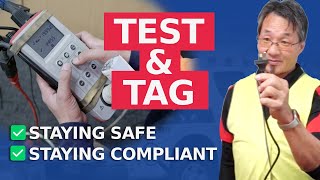
Jarrad Goulding explains electrical test and tagging: visual inspection and electronic testing of plug-in appliances to ensure workplace safety and compliance. Testing frequency varies by environment, from every three months on construction sites to five years for office items. Failed appliances get tagged out, and clients receive a full report, certificate of compliance, and next test date.
Questions this video answers
The process of visually inspecting electrical appliances and electronically testing them; plug-in items that pass receive a tag, failed items are tagged out and reported.
Every three months.
Every six months.
From 12 months up to five years, depending on the item.
About five minutes per workstation.
Chapters
So today we're going to be talking about electrical test and tagging, or pack testing, as it's known, and we're going to be answering some of the questions and giving a little bit more information on it.
What is test and tagging?
So test and tagging is the process of visually inspecting any electrical appliances as well as electronically testing them as well. So we test everything from kettles, computers, any electrical appliance that plugs into the wall, basically. And if the appliance passes it, we will put tag on it. If it failed, we'll tag it out and then we provide the client with a full report of anything that's passed or anything that's failed.
And why do we need to test and tag all these things?
So there's a couple of reasons why you'd want to get electrical test and tagging done. One, obviously, it's going to ensure a safe workplace for all of your staff, your contractors and visitors. But on the other side as well, from a compliance side, you want to make sure that the workplace that you're working is, is safe, and it is your responsibility to ensure you are maintaining a safe work environment.
How often do these appliances need testing?
So it depends on the environment and it depends about the appliance itself as well. So generally speaking, if it's construction, mining and demolition, it's every three months. If it's a warehouse, manufacturing or place of assembly, it's every six months. And if it's an office environment, it goes from every 12 months to, to every five years, depending on the item.
So what items need testing?
So any electrical item with a plug, basically. So it could be kettles, computers. Anything that plugs into the wall needs to be electrically tested, tagged.
So, Jared, the test and tag is out at site. How long does it take to complete the job?
So we work with our clients closely just to make sure that we're creating as minimal amount of disruption as possible. So quite often, you know, if we're testing a workstation or anything, generally speaking, it's only going to take five minutes.
All right, Jared, so you've tested and tagged everything in the office. What happens if something fails?
Yeah, so if something fails, we'll tag it out immediately. We'll take that out of the environment that it's in and we'll isolate it so it can't be used and be deemed unsafe. We'll provide a full report on it, stating why the appliance has failed. And then if it's a simple repair, we're able to repair it and put it back into circulation. If it's not, then all of those failed items get given to the site contact at the end of the day, along with all the reporting on why they failed.
So, Jarrod, what does the client receive after a test and tag job has been completed?
Yeah, so once we've completed the test and tag job, you will get a full report on every item that's been tested, including the location, whether it's passed or failed, assigned an asset number to that appliance as well. We'll also give you a certificate of compliance and then as well as notifying you next time you're testing due. So basically, we're managing the entire test and tag process, so you can just be busy focusing on your work and you don't have to worry about the compliance of your electrical items.