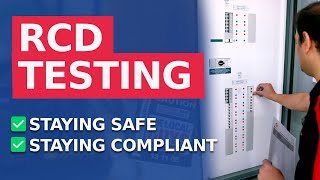
A short instructional/commercial video in which Jarrad Goulding (The Local Guys) explains residual current devices (RCDs), why regular RCD testing is required under Australian and New Zealand workplace safety standards, how testing is performed, and typical testing frequencies. The video stresses that RCDs can wear out and must be tested regularly to protect people and ensure legal compliance; it closes with an offer to book professional testing services and a compliance report.
Questions this video answers
NZS 3760 and NZS 3012 (as cited in the transcript).
Every six months.
Every three months.
Chapters
So today we're going to be talking about one of the most important electrical safety requirements for every workplace across Australia and New Zealand, and that is RCD testing. Jared, what is an rcd? So an RCD is also known as a residual current device or a safety switch. It's a life saving device that's designed to protect people from electric shock. It constantly monitors the flow of electricity running through buildings, wiring and it detects even the slightest imbalance or something that could indicate a fault, a damaged cable or a person receiving an electric shock. The RCD cuts the power in milliseconds. Why must businesses do RCD testing under Australian and New Zealand standards, particularly as NZ 3760 and 3012 businesses are required to ensure that their electrical equipment and their RCDs are regularly inspected and tested. Why? Because RCDs are mechanical devices and they wear out, they fail and sometimes they stop tripping when they're needed the most. Regular testing protects your staff and customers and your business from electrical hazards and it helps you stay compliant with workplace safety laws. How does RCD testing work? So when we perform RCD testing, our qualified technicians runs a series of controlled tests using specialised RCD equipment. We simulate a fault, measure how quickly the RCD responds and make sure that it trips within the safe limits set by the standards. If it, if an RCD doesn't trip fast enough or doesn't trip at all, it's considered unsafe and must be repaired or replaced immediately. Well, how often is RCD testing required? Testing frequency depends on the environment and the standard that applies to your workplace. Most workplaces require RCD testing every six months, but high risk environments like construction sites require testing every three months. At the local guys, we specialise in professional RCD testing. When you book an RCD test with us, we'll send out one of our trained and insured technicians. Then, after we're done, you will receive a detailed compliance report and we'll even remind you before your test is next due. So your compliance always stays up to date. To protect your people, stay compliant and keep your workplace safe, get in touch with the local guys today.