Building a Business Idea Into an Emerging Brand and Competitive Franchise
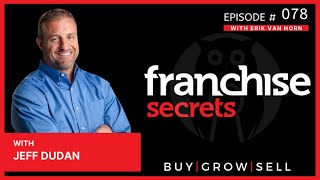
Jeff Duden built Advantaclean from launch in 2009 to 240 locations in 37 states before exiting in 2019. His centralized call center answers 250,000 inbound calls yearly within two rings, earning a 4.92/5 national rating. He shares how disciplined execution, clear values, and one focused competitive advantage drive franchise success.
Questions this video answers
2009
About 240 locations in 37 states
2019
About 250,000 inbound phone calls per year
4.92 out of 5
Chapters
My name is Eric Van Horn. I bought my first franchise in my 20s and since then I've owned six brands with 25 stores in eight states. I've also helped a thousand people find the right franchise for them. People like us who are not cut out for the 9 to 5 and like to work smarter, not harder. How do we find the right franchise? Buy it, grow it, sell it, and.
How do we do it in a way to own the business without it ownership owning us?
Those are the questions and I'm on.
A mission to give you the answers.
Welcome to Franchise Secrets.
Welcome to the Franchise Secrets podcast with your host, Eric Van Horn, here with today's guest, Jeff Duden. Jeff is a seasoned business leader. He was on the Undercover Boss. He was a former college football player. He went to Florida to paint in the wake of Hurricane Andrew and two years later launched Advantaclean. It's a national restoration franchise that had 240 locations in 37 states. And Jeff exited the company in 2019 and then joined up with his brother Mike to start Duden Partners. He has a couple books out there and I'm really excited to have Jeff as a guest. I've never been able to meet him, but I know a lot about him. We have a lot of mutual friends. So Jeff, welcome to the show.
Thank you Eric. I'm so excited to be here and finally get a chance to meet you.
Absolutely, man. Well, I want to talk about your book Discernment and I know it's about decision making, which I love that topic. I also want to talk about emerging brands because I know that you have experience in that launching Advantaclean, growing it to 240 locations, but also what you do today and how you help people. And the merging brand topic is something that I am working on myself with the Mighty Dog roofing. But I love to learn about that and learn from people that have gone before me in that I know the audience does as well. And then just the topic of service based franchises, I mean that is something that you know more than most people and so I want to pick your brain on that because that's the buzzword of post Covid really. It used to be reoccurring revenue fitness and now everyone likes service based brands. But if you could start with your book, tell us a little about a bit about it and the evolution of.
How it came to be sure Eric, I'd be happy to. So the title of the book is Discernment and it is the business athletes regimen for a great life through Better decisions. And what I've come to believe is that decision making and good decisions create the quality of our life and create the success of our businesses. And there are no absolutes when you're making important decisions. Anything can go to zero on the other side of it. So the probabilities of everything's a probability in business. So your decisions determine the probability of success or failure inside of that. And what you do is you accumulate decision making prowess over time. And so if you think about who's wise and you think about, typically when you say the word wisdom, maybe you're thinking about older people, people that have had experiences, unpacking people's experiences and really understanding what they went through to become wise. And then if I'm a young business owner, what can I do intentionally to create models of thought so that I'm faced with decisions, I can lay those against the scenarios of outcomes and make better and better decisions. There's fundamentals in everything. And the business athlete concept has to do with. Right. Many people were athletes growing up, they trained. If you wanted to be a better basketball player, you'd say, all right, I gotta work on my left hand dribble, I gotta work on my rebounding, my agility, whatever it is. Well, it's the same in business and it's the same in decision making. So what are the fundamentals in terms of values? What are the fundamentals in terms of the types of equity that you want to build over time? For example, relationship equity, especially in franchising, you want to create relationships that you have equity in. So how do you do that intentionally?
How do you relationships that you have equity in? Let's pause there because I want to unpack that a little bit more. So what do you mean by relationships that you have equity in?
Everything that you do creates value in a relationship or it consumes value in a relationship. So if you have a personal balance sheet, and that's one thing I talk about in the book, what's on the asset side of it? What are the equities that you have? And one of them is relationship equity. So as you're building an emerging franchise, are you available? Do you do what you say you're going to do? How professional do you execute? How efficient are you? Do you jerk your franchisees around and make them do things that end up wasting their time, energy, or money? All the things that you do and the decisions that you make and the interactions that you have, and you are either building equity or you're taking it away. And the reason that that's important in franchising is because ultimately something's going to go wrong. For example, we're in 2020 right now. For those who might be listening later, 2020, not the best year. And a lot of things have gone wrong for a lot of people. So if you're in a brand and you've got hundreds of locations and Covid hits, certain segments were really hit hard and everybody's got to pull together and what you do in the moment is critical as to how the brand's going to survive that. And if you have a lot of equity, people trust your decision making. They know that you're never going to tell them things that you don't believe to be true or that you don't believe that can be delivered upon. When something goes wrong, you have to draw on that equity. So building that asset on your balance sheet and your relationships and it doesn't just go in franchising, I would say that relationship equity with your children, your spouse, your friends, your peers, your partners, your mentors, I think it goes. It's a 360 concept.
I love that. And I think because you started out talking about the franchisor and I talked to a lot of people about franchising, obviously, and somebody thinks they have a good business model and maybe it is a great business model, they want to turn that into a franchise and think just because I had a good model, I can now have a franchise and now everybody can make a lot of money as a franchisee just like I was. And yet they have no idea that they're getting ready to play a completely different game where their decisions are not only impacting their business, their decisions are now impacting everybody else's business that is under them. So I mean, just talk about when does pressure have the magnitude of pressure of having that type of responsibility? Change your decision making metric.
Are you referring to as a franchisor franchise?
Anytime you go from my decision is a lower level decision to massive big decisions. Because I look at it this way, Jeff, a lot of us have read the book a while ago, Go Good to great, which the beginning of that book was called Built to Last. And they started to look at all these different companies and how they did and why some were built to last and some were definitely not. They were going to look back at this time in Covid and there's probably going to be, well, probably the same author, Jim Collins is going to write another book like who Made Good and Bad Decisions and what Businesses Survived. What Businesses Thrived Throughout Covid and why so just the impact of decisions would like any of us in any point, all of a sudden, it's pressure. We're making decisions under pressure. How does that relate differently to just normal decisions that we're making in our business?
The importance of having a set of values by which you lay your decision against is the first filter that your decisions need to go through. And assuming that you're a franchisor and you are authentic in the space and that you. You're good at what you do and you understand the business, it is your responsibility to look out as challenges come and to lead in the best way you know possible. So making sure that you keep your values front and center, you're honoring the commitments that you made to the franchise owners with the opportunity that they've given you. And I like to say that the music is made between the notes. So when. One of the reasons I think I've been somewhat successful in business is because anytime that there was a lull, I always had things that I knew that we could do to improve our business. So being a contractor prior to being a franchisor, there was times where we had more work and there was times where we had less work. And when we had less work, we didn't just wait for more work. We worked on things that we worked on our franchise program, we worked on our systems, our SOPs, the fundamentals of our business. We would do a boiler room and go back through old accounts. So when you get a lull or you get a business interruption that's outside of your control, what are the protocols? What do you immediately shift to so that you can lead positively? And I think finally being available leaders need to be available. In a crisis, you need to be more available. So one of the things you have to make sure that you're the voice of your customers, number one, and the voice of your franchise owners, number two, can fall directly on your ears. So one of the things that we did at Vantaclean was we had a call center. And we always. When something was going wrong with a particular store, we would know it because of the nature of the calls that would come in related to that store. So having the voice of your customers fall upon your ears, having the mechanisms to be able to accumulate that feedback and make sure that it gets escalated and then just being available. So when something like Covid happens daily, huddles with your team, maybe every other, maybe twice a week, huddles with your franchise network, not because anything changed between Tuesday afternoon and Friday afternoon, but because you just want to Hear what's going on with them, and you want to portray confidence. I said many times during this that we're COVID positive, leading. I have a fitness brand now that you mentioned it as the one that getting hurt in Covid, but, you know.
That makes two of us in the fitness space that are getting hurt.
Yeah, but the funny thing about it is we didn't really, because we were very surgical about the way we dealt with membership. We pivoted online immediately and we offered our fitness accountability and nutrition coaching available online. We, for the most part, kept everybody employed. And as a result of that, the majority of our members continue to pay us. Now, new sales obviously went down a little bit, but they needed to hear that we at the leadership level weren't panicked and we weren't going to panic and we weren't going to let them panic because there was a lot of. One thing I learned doing disasters and responding to every disaster in the continental US for 25 years. It's never what the news says it is. The misinformation is massive. And you don't know until you show up what the real story is. So I was going out to a franchise conference out in California and a hurricane hit Texas. And I had. We had clients down there. So I said, well, I'm going to. I'm going to fly to Texas. I'm going to rent a car. I'm going to go, you know, get eyeballs with our customers, and then from there I'll. I'll fly out to the conference in California. As our team was driving down from Charlotte with all the equipment and vehicles and campers and trucks and diesel generators and all that stuff. So I just wanted to be an advanced team. So I rented a car and I had a hotel reservation, and I'm driving across 10 towards Texas because I had a hotel reservation. So I assumed everything was fine. I didn't get any food, I didn't get any water. I was in a hurry. And I just went, well, as I'm going along, I'm noticing that there's water coming up the on ramps. And I noticed that my gas was getting low, so ultimately I had to pull off in a town that was a hundred percent under everybody. What do they call when everybody's got to stay home at night and there was nobody out, there was no power in the town, and I ended up having to park in a parking lot kind of outside another group of trucks that was heading down. I had no food, I had no water, and I was there for 24 hours. And waiting for the gas station to open. And I don't know if you've ever been hungry, but I'm sitting in front of a grocery store and on the other side of the window is the bread and all that. And if it would have went on much longer, I would have, I was going to, you know, eat first and apologize later. But when a disaster or crisis happens, you have to be calm and you can never panic because the. As the information comes in, you have to be careful what you react to.
Yep. When I was in college, I spent some time in Kosovo and Albania on the, on the border there when, when NATO was doing airstrikes and there was a crisis at the border there. And I mean, I was the guy giving the news to cnn. Like they would come and ask me what was happening. I was giving the news, but I also got to see the narrative of how they would put out what they wanted to put out. So. And it was BBC at that. BBC and CNN were up there. But at that point I realized I was young, you know, early, like late teens, early 20s. And I'm like, wow, this. They feed you what you want and there is nothing like actually being on the ground there, just seeing it, tasting it, touching it. There's nothing like real life experience and, and seeing stuff and being able to. So yeah, that was, that was incredible. Something else that you said too, you, I think you mentioned something about I've had some success in business. I just want to do a little, just a little diversion here. Whenever you're talking to somebody that is successful, they're probably not saying, hey, I have three Lamborghinis and a 20,000 square foot house, they're probably saying something a little bit more humble. When you're talking to franchisees out there and when you're validating talking to franchisees and you're talking to someone that is an underperforming franchisee and they tell you how great they are and how smart they are and how they're doing everything that the franchisor tells them to do and how then actually how bad their business is doing. Just make a mental note of that. Are they really as good as they say they are? The middle performers will be in the. Between the top and the bottom in terms of how they communicate. The top performers are going to probably be a little bit more humble and saying, I am probably not doing everything that I'm supposed to be doing. I'm doing the best that I can and I'm doing very well. So if you ever don't want to know their numbers, but you just want to know their tone and their posture. That's one way to know if you're talking to a top performer or bottom performer. Franchisor. Any thoughts or comments on that? Jeff?
I agree with that. People that excel tend to have a growth mindset and they have a realistic worldview and they are always looking to learn and always, they always understand that there's room for improvement and room for growth in whatever it is that we do. And you have to show up every day and and take that approach of deconstructing what's going on. There's always a lever that you can pull that you haven't pulled in the past to improve your business.
Things get tough in business. We're dealing with COVID right now and that was unexpected for everybody. Some businesses are doing fantastic and even the ones that are doing really well. We didn't know what was going to happen. Who thought, you know, a painting business would excel during COVID because people wanted their houses painted because they're spending so much time in it? Who knew RV sales would go through the roof because people wanted to drive around the country? And the same with a lot of different industries. What are some of the in the service based sector, which you are, you know, one of the best at? What have you seen through this Covid crisis? Like, where is the service based sector and franchising today and where do you see it going?
Interestingly, we launched Advantaclane to the market in 2009 after the great financial crisis. And I made a decision of the final decision to franchise the business, which I had been working on since right around 2000, but I had a partner and we couldn't get aligned on it. So in 2004, I bought my last partner out. I brought in some consultants and we reorganized the business. 2005, Katrina hit and we went down there and kicked off what would be about a $50 million storm response over the next four to five years. And I was driving back from three months of setting up that business and I was in an RV and I was driving all night to try to get to my son's football game. My son was 7 at the time and I was missing his first football season. And that was the decision point for me to franchise the business because for me we were doing tens of millions of dollars direct. And I didn't want to be on the road and be absentee my entire life. And I saw that that was what it was going to take. And so I made the decision at that point to Franchise the business. And in 2006, 7 and 8, we sold all of the store company stores around the southeast. And in 2009 we went to the market and the service industry coming out of the great financial crisis was super hot. And it was just dumb luck that we were ready. Preparation had met opportunity and we were absolutely ready. We were authentic in the space, we were good at what we did. We had when that franchisee called and said, it's doing great, but their numbers didn't say I knew the three questions to ask them to diagnose it. And five minutes later they were saying, you're right, I'm not doing it. I'm not doing what I'm supposed to be doing. And there was many of us in the company that had been there at the time, 15, 20 years. What we found is that franchising, especially in the services, it's inverse to the economy. So there's predictions next year that unemployment is going to be back down to 5% by the summer. And they've come out and said interest rates are going to be at or near zero until 2023. So who knows if we're going to have any recessionary headwinds coming. You can't guess anymore because it's outside of our control. However, service industry is safe. If people are concerned about their security of their job, if they're concerned about where they are in their career and maybe they're getting replaced a different way, whether that be my machines or, you know, different employees or whatever it is, and they've got a problem to solve. They've got kids, college education, they've they need to earn up until retirement. They want to build something and fortify their retirement up. Whatever the problem is to solve, they're going to be trying to make a decision that has the greatest probability for success. So they are going to be looking at it and saying, okay, I'm not sure there's some uncertainty in the economy, but everybody's going to need to get their house painted or everybody's going to need their grass cut. Everybody's going to need some type of service. And, and if I need to, I can play a role in the business. I can be the estimator, I could be the salesperson, I could be the production person if I absolutely had to. And in any of those roles, I can replace my income. And if I do a really good job, I can replace my income plus 50%. If I do a great job, I can double it. And then if I do a really good job for enough years, I have an asset that somebody will come and buy from me. So they can solve a lot of problems through a service franchise, through any franchise. But I think that's one of the reasons that service franchising is so popular, especially when there's some uncertainty in the economy. Because these are needs based services. Typically there's not a lot of options. These things have to be done and they know that if it comes down to it, they can put their shoulder to the grindstone and they can make it work.
What do you see as from a franchisee or franchisor? You could look at it from both perspectives because I like kind of comparing both because sometimes there's a win win there and sometimes there's not. In terms of a business that focuses just on one thing, I know in the restoration space it's fire water mold, right? You don't have just someone that does fire water. At least I don't think you do. But what do you think about the difference between companies that just focus on one thing versus kind of do a little bit of everything and use any example that you, you want with that?
It depends. If you have a diversity of service lines and multiple revenue streams that are complementary and that are purchased by the same customer, it can be an advantage to expand your value proposition and be able to cobble together. Advantaclean was such a concept. If we did a sealed crawl space system, there was a good chance that they needed mold remediation and maybe duct cleaning. So those three things would go on the same job and we perform those if, if it's a single source thing. By and large, franchise systems benefit from being simple and repeatable and having high focus. Many times franchise owners, it's their first business and we forget as people that have been in an industry for 20 years that what comes second nature to us is a learning curve for a new franchise owner. So if we're going to make the contract during training with a franchise owner of no genius attacks for 12 months, because that's what we say, like we've got follow the plan. What's the biggest problem people have in franchising? They don't follow the plan. So if we say no genius attacks for 12 months, then we need to have a plan that's executable for them to follow and it needs to be complete and it needs to be robust and we need to be able to diagnose it if they get off track by a set of simple metrics.
So let's shift gears again to talk to people out there that have an incredible idea or a business. And they say this is franchisable, I can franchise this thing. And whether, whatever business model that is, and let's say it is a legit business model, Jeff, that it's something that they've been doing around doing, they're an expert in it, they're making money and they're looking at ways to scale. And their choices are I open up another location or expanded to a different market or whatever way to scale, or I do a licensing model or I look at franchising. I get those calls all the time. And I'm sure you do too. What do you tell, like play out that conversation for me. What, what do you ask them? Tell them in that first initial phone call.
I had a conversation this morning. I have them every other day. It's. And it's fascinating. So what I tell them is that this is a completely different business and they need to, they need to be up for it. And first thing a franchise needs is it needs to be a business model that's good for people, that people can execute and that people can make money doing. So the concept has to be worthy and it has to be replicatable and the more simple that it is inside of a model. Now, fortunately, people like you and people that have a lot of experience and exposure in the industry, you can always say, well, that's just like this concept or you know, that's just like that concept. And I would. So you have comparisons that you can draw to give them some models to think about as they, you know, how do they acquire customers and who is their customer and all of that. So you got to have a business model that's good for people, that a first time nontrepreneur. And I don't say that disrespectfully, but if you have not been in business before, then not only do you need to learn the business of the business, but you also need to learn the business of business. Meaning what happens when people walk in and quit? All of the things that any business faces, not just executing on a specific model. So you've got to have a business that can do that. And then you really. I look for inspired, committed leadership, especially on a startup. When franchise systems reach a certain size, anybody can run them, meaning, you know, private equity can come in, flip them four times in 11 years and they're fine because there's so much staying power inside of an established brand that they can be run. But startups, the first, they need to be started, I think by people and families because there's no validation out there. And people are going to buy into the people and people are going to justify your first. Franchise owners are going to justify it by the numbers. But feels get deals. It's the feels that get the deals right. So they've got to believe that this person is authentic. They've been able to make this business work. They're inspiring, they trust them, they like them, and everything tastes right to get your first 20 franchise owners out there. So are you authentic? Are you committed to it? And then the third thing you really need is you need to find somebody. I probably took eight years longer to get to market than I needed to because I didn't ask for, I didn't seek out anybody who had any franchise experience. So I really muddled along for too long trying to figure it all out. Now we did some interesting things in the vacuum where people might have told us not to do it, like our call center the way we did, which ended up being a huge competitive advantage as technology evolved. But the other side of it is there's things in the way that we charged some of our fee structure that we could have moved along much quickly had I met somebody like you who could have helped me with that earlier. And then the fourth thing is it takes a few bucks. So inspired leadership, maybe here.
Is this a better way to say it, it takes a few more bucks than the few bucks that you thought it was going to take?
Yeah, it takes a few bucks. Because what happens is so people, they find their way to somebody, they get some franchise documents. And I see this, these are the people I get all the time. They get franchise documents, they have a cool business, they do a friends and family round and they get three or four or five locations out there with friends, family or members or customers. And now they haven't built a franchise team. They don't have the support, they don't know, they really don't understand, like what are the things that a franchise needs to do to really be a powerful franchise in terms of the marketing, the customer acquisition, the support, all of the technology. And now they realize, wow, this is going to cost me a lot of money. And I'm doing it out of a coffee shop and I really need to get on building ahead of revenue. So I think just an awareness of however people can come up to speed about what it takes to build a brand, the sooner they can do that, the better off they're going to be to get a, to get a full comprehension, immerse themselves in the industry, call everybody people in the franchise industry will talk to you. I mean, if you're.
Well, the franchise industry is really helpful. Once you get into the right crowd that's not just trying to keep you from everybody else. They are, because there's a lot of not helpful people in the franchising industry. Like about any other industry out there. But you get into the right group in franchising, everybody knows each other. It's a real small world like most things out there, and people are really helpful. There's a lot of helpful conferences and things to do. I mean, our friend Lane Fisher, you know, is running a conference right now. And there's a lot of people that are really doing a lot of things to help these emerging brands out there. So I think that was really helpful and I love those four points that you had. A lot of people that listen to this podcast have ideas and they want to franchise. I get those emails often. And so I think that was. That was really helpful. How much do you think? What does it cost? What's a price range to start a new brand?
It depends on who you use for your legal. I can't give a number.
So by the way, I agree with you on this. It's not like it's, you know, but that's a question that I get and I'm sure you get and people are like, what do you mean it depends? Well, it depends.
It does. So if you have a location that you are operating and you can leverage people in that location, people in that business to do some of the training or to show if the business shows well and you can do your discovery day there and all of that, but very quickly you need people dedicated to the franchising, not franchising off the side of the desk. And that creates friction very quickly. So if I said you needed to find your way to a couple hundred thousand dollars over the first year, I think that would be very fair. It could be less than that. If you want to shoestring it. It could be a lot more than that. If you really want to, if you're fully committed to it and you want to have everything that you need and show the right way. When you get your people in there to come and visit you and look at your concept, you could spend more than that. But what do you think about that number?
I think that is a. I think it's a good number. I think it's a doable number. I also think there's also people that can spend a lot more than that and probably not get the. And get the same value. Someone can Spend two to three times that and get the same value for, you know, two to three times less than that. And that's why it's important to talk to the right people. And even if it's me, you people talk to me or Jeff about this because Jeff does this. So reach out to him and talk to him about that. Reach out to me, talk to me about that. But just don't take our word for it. Talk to some other, other people. When you're, when you're looking at doing this and there's a lot of different ways to do it. Let's go into competition. So a lot of people get into the service based business and they think there's too much competition. I would never want to get into restoration. There's too many. I mean, you see the, see all the restoration bands out there and there's too much competition. When I talk to the same people, Jeff, and they, and I show them a brand with no competition, they're like, there's no proven business model there. I would never want something like that. I don't mind competition. I like competition. Cause it's an indication of market. But what would you say to that?
You can't be afraid of competition. When I moved back up to North Carolina to start our second location with Advantaclean, I had a family member tell me that business will never be successful here because all of the good subcontractors are already working for somebody. And you're Talking about Charlotte, North Carolina in the mid-90s, there wasn't a piece of dirt that didn't have a shovel in it. There was high, high, high growth. There was opportunity everywhere. To me it looked like the money was just shaken from the trees. But that's going to be people's perspective. When I went to franchise at Vantaclean and we did a casual search of all the, all the sick codes that we competed with, there was over 500,000 businesses in the United States that we competed with. And the answer is, why would we need another business doing these various services? I think maybe my next book is going to be too stupid to fail. Because at the end of the day, execution's everything. So here's the way I look at it. There's really five pillars of franchising that you need to do well and marketing and operations. And I say customer. You know, I've said you got to have the voice of the customer fall directly on your ear. So I would say call center or engagement center. Of some point you've got franchise development and let's see which one have I left out? Operations. Probably the big one of a biggest one of them all. So those are the five pillars of franchising. So you have to. And what you do and what your franchise owners do in marketing and these other things really determines the, the, the fl. The, that's the differentiator in your brand. Inside of all of those things, you just need one solid competitive advantage. So what is it? Is it the pizza gets there in 30 minutes or less? Is it what, what is your competitive advantage? Well, if you have one compelling competitive advantage that you can make, you can deliver in a systematic way inside of building a brand. That is all you need to enter any marketplace. And then you need to have operational excellence in the five pillars so that over time you're not leaving anything on the field, you're not dropping any, you're not losing anything. So you've got to be excellent in those things. And then one competitive advantage that you can articulate is really all it takes to build a great brand.
Give me some ideas of competitive advantages because I love it. And it's really hard to think of a competitive advantage. You know, if someone's out there and they have, they're in a business or mom and pop business or they might be in a franchise right now, Jeff, and they don't, they don't even understand their own competitive advantage. And it might just be. Our advantage is we have good processes and systems because that's the, that's what franchisors tell us a lot. You know, we've got good processes and systems. And I'm.
Great support too.
Yeah, great support, good process and systems. And like if they have world class processes, systems and support, that is, you know, that's incredibly valuable. But that's a real cheap buzzword that's thrown around. But from a competitive advantage, do you have any examples of competitive advantages on.
The customer acquisition side? I go back to Advantaclean because that's where I was. We answered over 250,000 inbound phone calls a year. We drove all the leads. So now you didn't have to. And think about it, when we launched that brand, we were buying yellow page ads.
Yeah.
And after the great financial crisis, many of our franchise owners were displaced 50 year olds. So as the digital marketing came on, did we really want to make these guys become digital marketers? No, of course not. So we took it on and we generated all the leads and then we drove all those leads at a call center and we answered all the phone calls within two rings. Or less. And we booked. We had metrics, we had consistency and handle. One of our, it was immediate resolution of a problem. We didn't say, you gotta be off the phone with these people in a minute and a half. Like, we would talk to people, make them invest 10 minutes with our operator and really start solving their problem. And that way, when our franchisee showed up out there, they already had a good impression with the job. So. But think about it. You're a franchisee. You don't have to have an office for somebody to answer the phone. You don't have to have another office for somebody to answer the phone when they're not there. You don't have to invest in a phone system to record all the calls. You don't have to invest in training and hiring. You don't need a call center supervisor. You don't have all of that hassle. You're $100,000 better immediately. So that's a huge competitive advantage. And then they would validate that we did it exceptionally well. So that one competitive advantage, if you asked people why they bought it, would, number one, they would say culture. Number two, they would say marketing. Number three, call center. And then four, technical expertise. We had been in the business for 20 years. We did military contracts, high level security things, dropping down in Navy SEAL diving tanks, dropping down in a hydroelectric dam, and abating asbestos when they pulled the turbines out. I mean, we did all kinds of cool stuff. And so there was, if somebody called and said, yeah, I got this problem in this residential bathroom, there was nothing that we couldn't advise on. So. So that's one. And then if you think operationally, there's always people coming up with ways to do things just a little bit faster on the production side. So let's say maybe you're a window washing business and you've got, you've developed a system to where you can cut a third of the production time out of the deal. And that's a competitive advantage. So if you, if you look in, I don't know if you're a big blue ocean strategy guy, but I always look at value chains. And if you look at the entire value chain of a franchise company and you say, all right, it starts at the franchisor and then it goes through the franchisees, and it goes through the employees and the staff and the customers, anywhere on that value chain that you can save a nickel elevates the value proposition of the entire value chain. So understanding that if I took $100,000 in overhead out of each franchisee, that it might not directly impact. It could actually negatively impact my bottom line at the franchisor because I might not recover all of my costs, especially early when we weren't that big. But ultimately the net net of it was, it was an increase to the value chain. So over time, that competitive advantage gave us the ability to escalate the overall value of the system, the franchisee experience, the customer experience, and all of the things that really mattered. And what happens when people look at your brand and say, is this a quality brand or is this not?
And when that competitive advantage is. The function was a call center to the customer. It was, they answered the phone right away.
Oh man.
And all of that customer experience was completely different because of the call center. And you just think about your customers out there. All of us have customers out there. And even a local market, we're getting ready to start another business locally here that we may or may not turn into a franchise. But we look around and there are, there's a million unanswered phone calls. Nobody's answering their phone. These businesses are someone in their, in their truck having their voicemail full on their cell phone. And there's no back and forth with the customers. There's no, there's, there is just so old school in so many ways. And so a simple advantage there would be a call center. Even if we can't, you know, I'm a mom and pop right now. It'd be difficult to do that. But, but at the same time, that would be a huge customer. We'd have an advantage there with our customers. And we're going to have a call center for our little, little business that we're starting because we know how valuable it is.
Yeah. And it's easier said than done. There's a lot that has to do with understanding where the handoffs are and what they do and what they don't do. And especially when you're dealing with individual franchise businesses and whatnot. But you'll also have some unexpected positive outcomes that you might. So for example, when a customer would be dissatisfied and maybe they couldn't get in touch with the contractor on their cell phone, they'd call the office. The office was the call center. And now we could de escalate that customer. And as a result of it, we had a 4.92 out of 5 rating across the country because we would be able to de escalate the situations before. Because what happens if you call 1, 2, 3 times? You're mad you didn't get a call that Night, right. Sunset rule is what? Call everybody back before sunset. Well, if they don't do that now, they're stewing overnight. They get up in the morning, you're like, you know what, I'm going to go and bang out a little friendly review for this company. So we were able to de escalate things and we have some incredible recorded complaint calls. And I've thought about where I want to put those on a website. It's I gotta find time for that.
Project you mentioned earlier, execution is everything. And I think all the franchisees and the franchisors that I know that have just excelled, they may not talk about it, but they do it. They just, they're doers and they're told to do something, they're shown what to do and they just focus on executing. Can you unpack that a little bit? Execution is everything.
We had a rookie of the year franchise in Missouri. And of course when you're building a franchise concept, you water what you want to grow. And what I mean by that is you highlight people that are living the values and that are executing the model. You put them up on stage, you put them on panels. And this particular rookie of the year was there and he had the mic in his hand in front of everybody in the system and somebody says, what did you do to become so successful so quickly? And his answer was, I did everything they told me to and nothing that they didn't. And it was just that, I mean, you couldn't pay for that plug. And so, you know, but. And what's interesting is, is you don't want to put people out there and then hope that they adopt the model. Because the way people operate after the first 90 days is the way that they're going to operate. That's going to now be their tendency and everything after that is change management. So what do they do before they come to training? Is everything consistent? What pre work do they do? What do they do in training? How many reps do they get? How realistic is your training? Are you talking at people or do you have an actual training where people are creating muscle memory, whether it's around a sales pitch or a production piece or whatever it is that's critical to the success of the execution of the business. And then high touch, high engagement, immediate correction right out of the gate and whether every aspect of the business, whether it's the business development piece of it. So the more coaching that you can put around the business in the first 90 days, you're just saving yourself years of therapy.
That's a good, good answer. I have another question for you. It goes back to the conversation around this is the first time that a lot of these franchisees are in business. They come from corporate America. They've never owned a business before. Now they are thrown into business ownership. And a lot of franchisors do a good job of training them for, for their franchise system and all that goes along with that. But I don't know who's really, really good at training them on business ownership. Just pure business ownership, training, financials, all of that kind of stuff that would go into, into, into being a, just a good business owner regardless of the industry. What are your thoughts on that?
Business ownership is full contact and it's easy to get overwhelmed in your first fight. And you have to be so careful because you know training can't be everything you know about everything. Training has to be the important things done many, many, many times. And if you set the expectation that these are the, these are the things that you need to focus on when you start. But part of your journey as a business owner is to gain wisdom over time in, as it relates to the operation of your business. So it might be additional reading. You've mentioned a few great books on here that everybody should read and there's probably 20 business books that you probably shouldn't be in business without reading. And so it just, it informs your thinking, it informs your behavior. So in ongoing professional development, I know that there's some really prestigious big brands out there that have the position where it's not only professional development, they also look at personal development, personal finance, personal health and wellness. How do they making sure that they have proper engagement with the right types of peer groups and things like that. So being very thoughtful about how you use peer groups and peer groups need to have a sunset. They have to have an expiration date on them. But they can be very helpful in if you rotate them enough and you're intentional enough about it to let the right voices fall on the right franchise owners to help round them out. But it's a project. There's no how in the world Warren Buffett reads 500 pages a day still at whatever age he is. But I mean if you think about, if you, Buffett, Gates, all of these people, what do they do? They read all day, they're pouring into themselves then they're constantly doing that. So if they can find time to do it and amass $86 billion, then certainly we can find time to do it and building our businesses, that's a big challenge.
To just be able to take that step back every time. The more that I devote time to learning, to taking a step back and to just be more proactive in feeding myself, the more that I continue to open up my calendar to block it, to block it off. I have Mondays are blocked off to be proactive, focused on the things that I want to be focused on. I don't really start my day until 10 or 10:30 because I want to make sure that I get the stuff in that I want to do for me because then I can show up better for my team. You talked about books and I'm a big reader, big audible guy and I have a mastermind called the Franchise tribe mastermind. It's ztribemastermind.com, ztribemastermind.Com and what we are going to implement in this low cost mastermind is a book club where I will mail everybody a book every quarter. We will get on once a month to discuss the book in a group session and then we'll have the author of that book on to a Q and A so everybody gets to know the author and we've gone through that book. But I, you know, just hearing you say that makes me more excited to get this thing implemented inside my mastermind because that's what us franchisees need because we don't always get that from the franchisor. And it's okay because not all the franchisors can do. They can't be all things to all people. So that's why it's good to have outside resources. EO Entrepreneurs organization is another good one for anybody that's out there that wants to be a part of a group to better yourself. So Jeff, this has been great. Some really, really good stuff. I want you, if you could just give us a little bit more in your book, whatever you want to say about your book, how people can find it. And I want to make sure they have your website, jeffdewn.com but I want to make sure that you give people some info on that book and your website before I wind up with one last question for you.
Absolutely. And I'm very excited to hear that Discernment is going to be your first book in your book club. Did I hear that? I'm not sure.
Only if you commit to spending an hour and a half with us at the end of it so we can unpack it.
We just made a deal. So Discernment is available on Amazon. Just search Discernment. My name Jeff Duden. J, E f f d u d a n you can go to my website jeffduden.com and I also have some podcasts. I have many, many articles on franchising in there for people that are interested in acquiring a franchise or building or launching a franchise. So lots of good content on there and you can always connect with me on LinkedIn or just shoot me an email at jeffuden me.
That's great. Anything on that book? That book is if you had to give someone the the 32nd pitch on that book, what they'll take away, what are they going to come away with on that book?
I hope that people get entrepreneurial encouragement out of it and that when they look at how do I build myself into a business person? How do I build myself into somebody that has a model of thought and has a system for constantly improving my decision making and also understanding what business fundamentals look like. If you want to be a powerful leader, that those are the things that you will get out of discernment.
So my last question is along the book theme. I didn't ask people their favorite books for at all up until this point and I thought about it the other day. I'm going to start asking a specific question so I can compile a list of something that all these industry experts and franchise experts come on, say. So the question is, what are the most impactful books? So impactful, not favorite, but impactful books that you've read that have had an impact on you personally or in your business.
I will say lately that Principles by Ray Dalio is a must read and it's a big book, but there's no wasted words in those pages. So I would recommend that for people that are really interested in how an incredibly elevated thinker thinks about culture and thinks about business. It's just brilliantly done. And I will point you to the back of my book, Discernment. I actually by category, I make 20 or 30 book recommendations of the most impactful books in my life. So funny you should ask, but it's right there in the back of the book and it's by strategy, leadership, personal development, coaching, all of these, all of these things.
I'm going to get the book just to get that list.
That's right.
Back to Principles of Ray Dalio. He is not afraid to admit the mistakes that he's made along the way. It's one of the things I appreciated about that book because he would talk about the mistakes and how he actually felt because he went public with stuff, talked about stuff where he was completely wrong with it and yet he's just one of the most brilliant minds today.
What's really helped me about that book, there's so many things and if you want the Cliff Notes, there's go to YouTube and put in Ray Dalio principles. There's a 28 minute video. And in the year that I was going through the process to sell Advantaclean, I literally listened to that 50 times because it's a 28 minute video, but there's so much in it. And one of the things I liked in particular about it was that he realized that pain was simply a signal that a great learning experience was at hand. And so when we get in pain because an employee issue or you lost a deal or whatever, something's going on, something didn't go well. If you say, you know what, this is just a learning experience, there's nothing fatal. Very few things in business are going to kill you. So if you can get out of your own way with the emotions, then you just realize that this is a learning experience. And once you can get into that mindset and that mental framework now you can start to recognize patterns and you can realize, in his words, that this situation I'm facing is just another one of those. And it's avoidable if I recognize it as such.
Awesome. I love little nuggets like that. 28 minutes Ray Dalio principles, YouTube. Check it out. It's things like that, everyone, that shortcut your success in business. It's being around the right people. If you guys aren't part of the Z tribe Mastermind, this is what we do in the Mastermind. We have cool guests like Jeff on there to talk about real stuff. You get nuggets that are, that are extremely valuable. And most time you won't even realize how valuable they are until you then you need to pull on it and then you realize you have that arrow in your quiver to use. Ztribemastermind.com check it out. Jeff, thanks again for coming on.
Awesome, Eric. Really enjoyed it and appreciate the opportunity.
Thanks for listening to this episode of the Franchise Secrets podcast. Whether you're watching or listening, please make sure to subscribe to my YouTube channel and to whatever channel you're listening on. If you want my help with anything from buying a franchise to franchising your business, please visit franchisesecrets.com.
More from Jeff

Franchising 101: Heroes On The HomeFront #HomeService #franchising Home Service Franchise
Speaking with CEO Jeff Dudan and Growth Officer Zac Dudan at Home Front Brands Headquarters