Scaling Quickly With Franchising and Offshore Talent
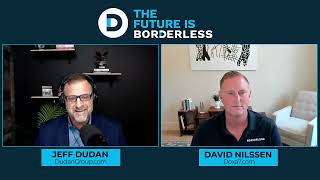
Jeff Dudan built Advantaclean from 1994 to 240 franchise locations in 37 states, then sold it to Home Franchise Concepts in 2019. He identifies four requirements for fast franchise growth: simple unit economics, strong leadership, franchise expertise, and capital. Homefront Brands now bundles complementary service brands on shared territory to give franchisees more leverage, and is hiring offshore talent for executive roles.
Questions this video answers
January 1, 2019 to Home Franchise Concepts.
About 240 locations in 37 states.
Chapters
Welcome to the Future is Borderless Podcast with David Nilsen. We feature top entrepreneurs and thought leaders from around the world, those who bring a global mindset and a unique perspective to their life and business. Now let's get started with the show.
Hey, David Nilsen here. I am the host of this show. On this podcast, we connect with business leaders from around the world who have what I like to refer to as a borderless mindset. And the purpose is to share ideas, new innovations, best practices, things that will help power growth in our personal and professional lives. Now, this episode is brought to you by Docs of Talent. Docsa helps businesses to source full time highly skilled workers from all over the world. And as a result, these companies can scale faster, increase margin and improve culture. They provide everything from accountants, sales development reps, virtual assistants, and even software engineers to publicly traded companies and small local businesses. If you want to learn more about how you can grow your business with offshore talent, visit doxatalant.com all right, well, let's get into the show. Today my guest is Jeff Duden, who is the CEO and chairman of Homefront Brands. This is a platform of property service franchisors. Jeff's journey actually began in college when he started a business painting student housing. After graduating, he assisted South Florida in recovering from Hurricane Andrew, which then led to him launching Advantaclean in 1994. Advantaclean became a leading national restoration franchise, which was eventually acquired by Home Franchise Concepts. Jeff since then has become a published author. In fact, his latest book, the Business Athlete's Regimen for a Great Life Through Better Decisions, is available on Amazon.com today. Jeff serves his YPO chapter as the Southeast Regional Chapter Chair. He is an advisory board member for Novant Health and a member of the IFA's franchisor forum. So with all that, welcome, Jeff, to the Future is Borderless.
I'm excited to be here. David, thank you for that fine and accurate introduction.
Well, I'm glad it was accurate. I never let facts get in the way of a good story. All right, well, let's just jump straight in. In the bio I mentioned that you had started and I guess I didn't say this, but you franchised and then eventually sold Advantaclean. My, my hunch is that there are some people listening that won't be as familiar with that business. So could we just start by sharing a little bit about what is Advantaclean? What did you guys do?
Yeah, 100%. So we were a light environmental service business. So anytime that water or moisture got into somewhere where it didn't belong and impacted what are most people's most valuable asset is their families or their greatest investment, which is their homes or businesses. That's where we came in. Services like mold remediation, emergency water removal, air duct cleaning, and we also had a line of sealed crawl space options that were kind of a waterproofing line for certain parts of the country where we would put vapor barriers and things like that. And so early on we were more of a traditional fire and water damage contractor. And we always, throughout the 25 years that I owned the business, responded to disasters. We would work in the Caribbean or anywhere there was a hurricane or an earthquake out in California. So we traveled and we had a very capable technical competency in logistics responding to disasters in those types of sites. And then also had a division where we did very technical work. We did a lot of government contracting, VA hospitals. You know, one of the, one of the stories, I mean, we did a. We were working in a hydroelectric dam where they pulled out the turbines and we abate, you know, repelled in there and did the asbestos abatement on the pads or demolding a Navy SEAL diving tank, things like that. So we would get into some interesting things. And because we were in business so long, we really collected a very talented group of people and protocols to be able to respond to those things. But you know, when we franchised the business, it was residential, commercial, local business, mold remediation, emergency water removal, things like that. Yeah.
So my pipe bursts and now I've got a flood in my home. You guys would come in and try and help clean that up before it becomes even more damaging to the area.
That's correct.
Got it. Now did you. I mean, I know you became a franchisor, but I guess I actually don't even know the story. Did you start as a franchise or did you eventually become one?
Great question. So the story goes. So I was a college, I was a high school basketball player and I came to football late and I was a horrible student, to be honest. I'll just say it. I usually beat around the bush, let's just say it. I wasn't a very good student. So my college options were limited. But I started playing football my last two years high school. And I'm like, wow, I could probably, you know, go somewhere with this. And I wasn't going anywhere with anything else. So I walked on to the University of Northern Iowa. I continued with my scholarly pursuits. And at the end of that year there was a meeting and they Decided that I shouldn't come back. So I dropped back to a junior college in Chicago, Kind of a last chance, you football factory for people that came back from, you know, colleges and needed to. Needed some refinement. And then from there I got a scholarship out to Appalachian State University. And that's where I really cut my teeth. I wanted to stay there over the summer and I had worked the trades in Chicago and one of the things that I did was as a, as a union painter. So I started the painting business because I had the skill and I knew kind of how that business worked. And we quickly started and we won the contracts of painting the student housing apartments. So there was two times in late May and then in late July where they'd have a week where they were moving everybody out and moving everybody back in. So we recruited all the athletes that were taking classes over the summer and we put together a huge painting crews and we would do 15, 20 apartments in a day and over that, you know, and just work eight straight days doing it at those times. So. So that's what I did. And then one of the gentlemen that painted with us in the summer took a job for a restoration business. And he called me and he said, this hurricane just hit South Florida, Hurricane Andrew in 1992. So my painting partner and I jumped into our four cylinder Dodge Ram with the wooden pressure treated ladder rack. And I said to my fiance at the time, I'll be back in three weeks. And three years later I came back and we had cut our teeth in the restoration business and started the company in 1994 in Central Florida that would ultimately become Advantaclean. And then in 95, I moved back up to get married and open our second location in the Charlotte, North Carolina area. From there, we quickly grew into a 10 to 20 million dollars a year restoration business. And we developed our government capability. And then we had offices around the southeast and it was growing and it was a great business. And you know, this is where, you know, I believe that many people, if you look at, if you look at them, especially people that you would consider successful, they have many lives within a life. You know, they started doing one thing and then they had another phase of this and another phase of that and the business was growing well, but the problem was, is that I had three small children and I was never home. And you know, the. Some of the things that led me, you know, kind of astray when I was a young person, you know, were at risk of repeating themselves. And I remember I was driving home from Katrina, we had just, we, you know, in 2004 I bought up my last partner and in 2005 Hurricane Katrina struck. But I had spent all of 2004 with consultants and learning about purpose, vision, mission, values and how to paint a picture of where you wanted the company to go. And I was pretty sure that franchising was going to be in our future. And so we had invested in a fleet of semi trucks and campers and trailers and generators and thousands of pieces of equipment. So preparation met opportunity. Hurricane Katrina struck the Gulf coast and we went down there and, and did an extended four year storm response down there. But I was on my way back after setting it up for three months and I was driving through the night because I was missing my son's first football game. I was trying to get there and I remember, I'm like, man, I said this is never going to work for me long term. I'm going to be on the road the whole time. And I made a decision in the middle of the night driving through Atlanta, that I was going to sell all of our company stores under a franchise model. And I was going to throw, put at risk or throw away a perfectly great business in exchange for an opportunity to do something bigger, which was a franchise model. So in 2006, 7 and 8, we sold all of our company stores under a franchise model. In 2009, we went to the marketplace and I saw a Facebook post that popped up from 2013 where we already had 130 locations by that time. So it was a really quick launch. We were on the heels of the great financial crisis, so there was a lot of people that were looking for stability and advantaclean was recession resistant, needs based, high margin, third party payee. We didn't have a big screen TV or anything like that in the lot. So people looked at it as a way that they could solve their retirement problem or you know, if they were, you know, take their 401k and invest it. So, so that's how that worked out. And, and then we, we grew the business to about 240 locations in 37 states and sold it January 1, 2019 to Home Franchise Concepts out of Irvine, California.
Wow, that's a, that's, that's, that's fast growth, 240 locations. I, you know, I'm curious, I want to talk about that for a second, but I, I want to talk about the process of moving from corporate owned stores to being a franchise because I think a lot of people that will be listening to this have their own business but have maybe never contemplated how their business might fit within a franchise model. Because we still just by default think about McDonald's and Burger King and those quick serve restaurants as the poster child for franchising. What did you have to do in order to be able to get the business ready for franchising?
Well, at the time I had to be too stupid to fail and you just had to, you know, it was an iterative process and that's. Iterative is very close to idiot. And you know, I mean we just, we just, I mean we just kept at it, we tried to learn. We, you know, and you know, it wasn't, it wasn't clean. But what I, what I will share is since later in my career, specifically the last few years and then the last three years since selling the business, I've made a study of emerging brands and currently we have two franchise platforms. We have the Homefront platform that you mentioned. We also have Thrive More which is a Rockbox Fitness and a Beam Light sauna in it. And I've really worked with, I mean I've talked to at least 200 people that either wanted to franchise their business or have an emerging concept. And what I, what I understand now is that there's really four elements that go into a fast launch of a franchise system. First of all, you've got to have a business that's good for people. And what I mean by that is it can't be overly complicated, it can't be, oh, you can't. There has to be work that's within a geographic area of where the people are going to operate because territories are an important part of the franchise business model which is the greatest wealth creation model and I believe that's ever been created in business. And an average person on an average day giving good effort needs to be make predictable profit and predictable revenue. And there's going to be a distribution of talent and a distribution of effort and assets and resources in your franchise network. And your top 20% are going to be your sled dogs. They're going to be incredible. Your next 70% are going to be well intentioned people that are trying really hard to get into that top 20%. And then 10% of people, maybe they made a mistake and, or somebody did or something happened to them, somebody got sick, the marital crisis, something going with the business. And you need to find a way to exit those people with honor and help them get out unscathed and move those businesses to somebody that wants to move it up. So, but you know, that's so 90% of the people need to be able to operate this business, and it can't be a jet airplane. I mean, it can't be maverick to operate the business, because then only your top performers are going to be able to be successful. So, you know, simplicity, scales and complexity fails in franchising. So you accomplish a business that's good for people by centralizing lots of things, making systems clear, having a really strong learning management track and really knowing, you know, knowing your business and being able to communicate that and all the learning styles and support and reinforce that along the way so that these people can. The way franchisees operate after the first 90 days, everything else after that's change management. So you got to get them early and help them and just love them in every way that they need to be loved to be successful and execute the model. Second, you need an inspired leader. So the first 20 franchise owners are going to be people that really are going to be looking at the people, not the paper. And if it's you, David, they're going to hold you accountable. And 10 years later, 15 years later, they're going to come to you and say, the first thing you ever said to me was, and I'm holding you, I'm. I hold you accountable to that. So an inspired leader that knows everything about the business. Because early on, when there's not a huge cohort of franchises out there, you're going to get a lot of pushback, a lot of challenging around the model. So you have to be good enough at it and have enough authenticity and done it long enough to where people can't question, you know, you have the answer and, and you have to be inspiring and somebody that people are going to trust. I mean, if you've got three franchises out there and somebody's looking and saying, am I going to give my life savings to this guy or gal, then, you know, you have to be somebody that they, they can buy into. Kind of a side note, I think that's why building values for organizations and franchising is so important, because people are always okay as long as they know where they stand. And if you're consistent and you're upfront and you've put the time in to be able to really articulate to people so that they understand what they're getting into, then they're going to be fine. When you change things midstream and it's different than what they bought into, that's when franchises run into problems. So inspired leadership, a business that's good for people. The third thing is I mean we did in Rockbox Fitness in 15 months. What it took me 15 years to figure out an advantaclean. You got to get some franchise expertise. You got to find a franchise guru. You have to, because, you know, it's already expensive without doing the wrong things in the wrong order at the wrong time. So you're going to, you know, royalties are how you make your money and you're not going to have a lot to begin with. So to some extent you're, you're spending capital, capital, human capital, intellectual capital ahead of revenue. And you've got to. The tighter that you can build that launch, the more informed you can be. And there's, you know, it's a small industry, like there's a small handful of people out there comparatively that have really built brands before. And there's a lot of people out there selling you consulting services to tell you that they know how to do it. So you have to be very careful with who you sit around your table. It's like any business, you know, get in a room that's bigger than you and put the right people around the table and break bread with them and that. And then, you know, it takes in the last four thing, one word, money. So that's my observation of, you know, if you want to franchise your business, you know, unit economics have to be there that kind of goes into a business that's good for people and has to be something that can, that can operate and you know, a franchise for a franchisee. Don't think that you have to build a business that these people are going to be able to get a private plane from. It's somebody can take a $50,000 investment with a growth mindset and open mind and good intent and really change the course of their life by learning entrepreneurship inside of your system. Part of being a great franchisor is building a vision and a dream that's big enough where other people's can fit inside of it. And I think statistics, there's 64% of all statistics are made up. But here's one I heard that six point the average term of a service franchisee is about 6.7 years. So people get into a franchise, they learn all the things about business by doing and they build a great income for themselves and then they have an asset that they can sell for a certain amount of money. So they've really taken $50,000 and turned it into 10 or 20 or 30 times that. And now they can hang a success on themselves and be confident going forward into future business. Endeavors. So, you know, for us at Homefront Brands, that transition is important because we are all about strengthening, you know, the economy through entrepreneurship and small business. And we think that we serve a very noble purpose in helping people do that, especially today.
Yeah, yeah. It's interesting, franchising. So I just want to note, so business that's good for people, an inspired leader, a franchise guru, and money. So put those in the show notes. But I think it is really interesting. When I first started Guidant Financial, I was very, very new to franchising. And over time, the one thing we kept saying is that franchising really is a financing strategy for a company that wants to grow very, very quickly. They have the opportunity to do it sort of slow and conservative, which is just opening corporate stores as quickly as cash flow will allow. You can either dilute yourself by taking on capital and now you're beholden to others, or you can franchise, which is just another way to think about expanding your business, your brand at a very, very fast clip while also creating opportunity for others. So I think that was a great overview. Let's talk about you as a leader, though. I'd love to know if you were to look at who you were in 1994 when you this versus who you were in 2019 when you exited, how did you evolve as a leader and what did you really take away from that experience?
Well, where my head goes with that is, so I've managed to stay married for, geez, 27 years now. And I think it's because a big part of leadership is alignment. So my wife and I have. The biggest thing we have in common is that we're constantly both working on me. And I think that, you know, I mean, leadership is a work in progress. We evolve. You get tired. You know, it's funny, I. To prepare for this podcast, I started going through my notes and just kind of cracking my book discernment over, which is really about the models of thought. You know, why do they write the book? Well, I just, you know, it's not a great story, but there's models of thought in there that I learned over the years and how you apply. I need to reread that book because honestly, my leadership at Homefront Brands, with the velocity that we've had, I need to get back to basics and remind myself what's important. So leadership is a constant work, and it's all the basics. It's communication, it's vision, it's clarity. It's leading by example. What I did, which is one of the things that I did when I came off the road and franchised the business and stopped traveling as much is I coached 30 seasons of my kids sports. So I had soccer players, football players, baseball players, basketball players basically and two sons and a daughter. They're 24, 21 and 18 right now. And people were like, why, you know, how do you have time to head coach? Not just coach, like I head coach these things. And I believe that it was part of my leadership training because if you can take. And I actually wrote a book called hey Coach on it because I knew I was coming to the end of my coaching and I wanted to capture. Because people would come up and they'd say every, you know, you don't fight in the draft. You take the kids that they give you, you lose one or two games early and by the end of it you end up in the championship game, either winning it or playing your way into it. And all the parents, kids want to be on your team. How do you do it? And I'm like, well we have a system, we have a process and it's, it's about. So we had three little tomes, we had parent, what was it, coaching commitments, player rules and parent. Each of them had like little, five or seven little phrases with it, you know, so and the way we approached the culture, basically no clicks, we play for each other. We're going to put everything in, in the first two or three weeks of the season, I got a bunch of 12 year old football players and we're going to play, we're going to play fast, we're going to play loose, we're going to play happy. You know, if you make a mistake, it's not punitive and we're going to, we're going to have a good time doing it. And I mean it was just those kind of basic things that are, I think leadership fundamentals around clarity, around coaching, around inclusion, around transparency and around having a clear sense of purpose and then having some grace in the culture too. So I use that to kind of keep my. Because if you think about it, a franchise system is, it's not a thousand employees, man, it's 100 families with little groups of 10. And that's what it is. So you have to give the franchisees the tools to do the people piece well. Because if they do the people piece well, the businesses seem much easier. If they don't do the people piece well, it's a grind. So my leadership really I have a very coaching format. I tend to keep it pretty loose, but accountability is always one of our values wherever we go. The ability to rush to conflict and have candid conversations, live in real time. Something. I mean, we talk about that all the time. Like, just say it. It's not a personal attack. I had that conversation. We had a marketing and excellence little thing I did this morning with a bunch of our new marketing people, and we talked about exactly what we're talking about right now and what the expectations are. And so that's kind of how I view leadership. I mean, it's leading from the front, eating last, pushing yourself to be out there and being. I think somebody had told me, I think it was a general. A big part of leadership is being available. You got to have availability. People need you. You need to be available to them.
Yeah. It's funny, you talked about culture, and then it dawned on me. Right now this is a hot topic. How do you build culture in a remote environment? But it's funny, I hadn't really contemplated that. Franchisors have been dealing with this for years because instead of everyone being in one office where you build culture by osmosis and there's this sort of visual component to it, franchisors really need the system or playbook to be run consistently. So how did you think about instilling that culture in your franchisees, particularly when these people are actually independent business owners who are leveraging your model? That is a very interesting challenge, and I think it might be very relevant for people that are battling with that right now. So just how did you do that with your franchisees, specifically?
Well, the first thing we did is. So there's something called the primacy recency curve. And I do this great little parlor trick to where I say, all right, everybody take out a piece of paper and a pen. And by the way, if you don't have one already out, you probably need to leave training. But. And I say, okay, put the pen down and I'm going to read 10 words. And I read these 10 words and I say, and then I want to pick up your pen at the end of it and from memory write down the words. And I've done this 200 times, maybe. I mean, I've been doing this for years. And. And then you read the words back, and sure enough, the curve is an in. It's. It's like a U. People remember the first two or three words and the last two or three words. So whatever's most important, you have to do first and you have to do last. And people generally don't remember what's in the middle so we, I do the first two hours of every training for every brand with building your team. And it's a very specific presentation, and it gives them the models of thought, it gives them the tools, it gives them how to. It gives them the rationale why. And it's very tactical and practical things about how they need to think about leadership now, whether they do it or not. But then we incorporate those things into our weekly calls, into our monthly calls, into how we do convention, into every. You know, we're constantly. Because you have to water what you want to grow. So if you want to grow leadership, you constantly. There always has to be evidence and clues that it's not just lip service and this is the way that an organization communicates. So things like unique language, you know, special things that are unique to us is a big important part of culture. You know, if you join a club that's special, they've all, you know, they have a secret handshake. Well, what, what's your secret handshake in your organization? What are the things that, that, that are, that are. Identify people as part of your group, part of your process, part of your. Part of your business. So, so, and then, and then, and then I also wrap up training at the end and we go over some of the things that we went over and also really just encourage them to know that, that the people, you know, building an intentional culture is so important because if you don't, one will develop by default. So you'll just be, you will be a blend of the 10 people that showed up. The other thing is, you know, leading with your values in an interview process and making sure that, you know, if, you know, there's a couple of questions that we, that we use early in the interview process rather than, you know, this is how much you're going to make an hour and stuff. So, yeah, it's tough. I mean, especially when the pressure to get workers has been so hard. But I mean, tell me that. I mean, if somebody absolutely doesn't care what they do, who they do it for and who they work with, then you probably don't want them.
Yeah, I love the intentionality around all of that, because you're right. By default, culture is going to be creative. The question is, is it the one that you want in the business or the one that, that you get or inherit because of it?
The minute the third person walks in the room, politics is born.
Yeah, we talked a little bit about your book. I should say you made a comment about it a minute ago. But I want to talk about that for a second. What inspired you to put pen to paper and actually write that book in the first place?
So I get inspired to write a book when I see the end of a chapter coming and you know, yes, ah, very, very good. And, and I see. So when I was coming to the end of my coaching career and I had a file cabinet full of our techniques and everything and coaches would, I mean, I had a conga line of coaches that would come to me and sit down and say, you know, how do you do it year after year after year? And, and I would be, and they'd be like, what defense do you run? What offense do you run? I said, depends on who shows up, but this is how we do it. Half of them were like, yeah, whatever, that's. I'm not doing that. You know, it's just, it's not. I just want to run. I just want to know what to run. So I put pen to paper to capture what I've learned so that anybody who's interested and in the right place can take from it and incorporate that and use it in doing the same thing that I was doing. So discernment came about and I knew that I was coming to the end of a 25 year run with Advantaclain and I had really things that I felt strongly about, but moreover, getting into things like Vistage and getting into things like ypo and now CEO and also now in CEO and you know, getting, getting around a table of people that I don't like. I don't have any. There's nothing that should. Where I would deserve to get around the people like you, David, that I have the opportunity to engage with in my life. I would have never, you would have never thought 20 years ago that I would get access to time with these types of people. But I developed from all my materials and what I had learned, just what I call models of thought. And I had accumulated these myself. And also from, you know, every book's a compilation. I mean, there's 7 billion people on the planet. Is there, is there ever. When's the last time there was an original thought outside of Elon Musk? You know, I mean, we're all, we're all compilers and we're all, you know, so, so the book's a compilation. It's got my own spin on it, but basically, you know, I do, you know, it's anchored in the belief that your, the quality of your decisions impacts the quality of your life and the velocity of your business. And you have. I used to Teach my kids and the teams that, you know, you get 99 decisions every day. It starts just whether you make your bet or not and whether you give a compliment or a criticism or whether you smile back at something like these little things make huge impacts in your life and in the velocity of your business, your decisions. One time we had hired, he was retired and he was doing some consulting work, but he was the ex CFO of Pepsi. Brilliant guy, but he was at the later, later, later end of his career. But he told me, jeff, business is only about probabilities. Anything could go to zero. Enron, Arthur, anything could go to zero. And nothing's 100%. It's your decisions that tilt the scale from 68 to 72% or whatever it is. So really. Okay, well then how do. Why is it that older people are wise? Well, they're not. And I've always said, and I say in the book, older people don't have any more intelligence than younger people do. They just have more experiences. And so, you know, wisdom is just the accumulation of models of thought. And a model of thought is, here's how I think about this set of circumstances, and here's what my experience tells me, how we need to think about this set of circumstances. And then you apply that to a common today's situation. So when somebody comes to me and says, you know, here's what I'm facing, I've got a model of thought that says, well, you know, my experience is not my advice to tell you what to do. My experience is this is these are the things that I would think about, these are the things that I would look at, here's how I would weight the decision. And, you know, this is how quickly or slowly I would move on it or if at all. And I just came up with a bunch of those. So I really took all of my models of thought and all of my experiences and I wrapped those up into what I think is actually pretty decent, concise look at things that people can take and incorporate right in their business. And when the right person has read this book and they're like, you know, they're like, I use two highlighters on this. You know, every, every paragraph has a little nugget in it at the end of it that you can remember and the use of stories. You know, I believe that one of the definitions of culture I like is culture is an organization's memory that lives in its stories. And we had. And it creates organizational boundaries and cultural norms that inform people how to behave in your absence. Not only in your presence. So, you know, so that's what it is. It's really. And then it comes up with decision filters. So, like, if I was facing a decision, how would I filter it through? There's a concept, you know, one of my core beliefs is around creation versus consumption and that you need to feel fulfilled. I think you need to have a healthy balance between creating value and consuming it. And, you know, there's people, too, that, you know, and you have to avoid the swirl to create, because there's a swirl that we're all in. It's people and busy and obligations and things. And so. But, you know, so look, if you took that and you applied it to a balance sheet and you said, what are my assets and liabilities? And then what are the equities that are created on my balance sheet? Relationship equity is something that I talk a lot about. Reputation equity. How about that? You know, because your name goes farther than you ever do, Your health equity, your financial. You know, these types of personal balance sheets are really a function of your actions and your. The thing. The people that you. The books that you read and the conversations that you have throughout your life. And, you know, you build yourself a balance sheet. And so that talks a little bit about that. So that kind of stuff.
Yeah, man. I want to put a pin on something because you and I, we've talked about this before. You brought it up a minute ago. You're a member of YPO and CEO. I've been a member of EO and ypo. The thing I love about those organizations is one of the ways that they build culture is by being very intentional around that people are both contributors and consumers. Right. It's pack your own bag is one thing I've heard. I always like to say it's a gym, not a spa.
Right.
But I think that's true of life in general, is that we got to keep working at it, not just take what is brought our way. So I just want to put a pin on that. I know we're getting close to the end of the time, but I want to just talk about today.
I wasn't going to let you talk at all, David.
Well, I'm not going to. I'm just going to bring it up and hopefully guide the conversation.
Sorry, I went a little long there.
The Homefront brands, what is the problem that you guys are solving? What is it that you're really trying to do for the brands that you're supporting?
Wow. I appreciate that question a lot. That's a great question. So what the Problem. First of all, you know, my goal was to do it better, do it with excellence, you know, if we had the resources to do it exactly the way we wanted to, and resources and resourcefulness. Right. You always have the resources to do something great if you choose to. But if we could do it, excellent, and we could create another layer of leverage. So franchising is a leverage model. You create leverage for franchisees through leverage in acquiring customers and technology and websites and coaching and all this stuff. It's a shared service model that creates leverage for franchisees. So if we wanted to take multiple brands and lay them into a platform, where are the areas that we could create yet another layer of leverage to create something that people were looking for. And, you know, we've got all of our, so Homefront brands is the platform and we have a whole bunch of what we call frontline business systems and support systems. So business intelligence, lead management capabilities, go to market growth systems, all of these types of things. But I think, I think at the core of it, we have spent a lot of time, energy and money putting curating specific businesses that are good for people, number one. So all of our opportunities have to fit certain requirements. The second thing we've done is, okay, well, you know, there's some people that want to do one business, but there's other people that want to do multiple businesses and they want to be an empire builder. But what they have to do is they've got to buy two businesses that are disparate and not connected in any way. Or you run one business and now you've got a geography that's sprawling and you've just got to go out farther and farther and farther, and you've got got to now create multiple offices within half a state or whatever it is. So what we've done is we've curated a group of businesses. We've got six right now, we've got an LOI on a seventh, and we have a huge pipeline of opportunities coming our way. But we've spent the time and energy and money to group these into business types that have similar characteristics. So let's just say you start with our Window Hero franchise and you can be successful in that business. And then you can take our mosquito franchise and it lays in exactly the identical territory with exactly identical customer base. It's recurring smaller ticket items. And we've platformed those businesses onto the identical technology platform. So now you don't have to have two groups of people learning how to run a bunch of different systems and processes. It's the Same. So again, you know, it might take you a person and a half in the back office to run two businesses where. And you know where it would take you one to run the one business, so a person and a quarter. So we've created leverage and efficiencies very intentionally around it. And then we're, you know, we're. So we've done that with technology, we've done it with territory. And we've got three different business model types right now that we're looking at. We got one that's a little bit of an outlier, it's more of a commercial base, whatever, but it still runs on all the same, all the same tools. So that's kind of what we set out to accomplish there. And then we just, we really, you know, we're not building this company to sell it. I mean, I hate to say, you know, and you know, you never say never. And I mean, the first one took me, I hung onto it for 25 years and maybe that was a little too long or if I was smarter, gone quicker. But, you know, we're, we remind ourselves every day that we're here to build a great company and that's what we're here to do. And if you build a great company, you don't have to sell it because it's going to be challenging, it's going to be constantly growing. And we're really focused on the quality of this. And anywhere that, I mean, we fell short in a couple of different places in Advantaclean. And then the problem is once you get a system out there that's got two or 300 locations, it's a big boat to change. And so we're very meticulous in the executives that we've attracted, which are incredible. I mean, our CEO has run $2 billion plus franchise systems as well as did franchise finance for Citibank and rolled it out to 14 countries and also worked at Australia's version of a McKinsey. So, I mean, just talented people in all the right seats and then we're building it very deliberately and taking the time to do it right. So that's what we're set out to do. We really want to build a company that's great for people and where we don't have to go back and fix things later.
Yeah, I love it. So it's funny and this for the people that are listening. I was in franchise financing for 20 plus years, still an owner in one of those businesses. But Jeff and I had run into each other on occasion and I I remember in every interaction thinking, gosh, there's a lot of philosophical alignment. And one of the things that you said Light went on for me, I always used to say, look, we're not a products business. We put the customer at the center of the business and we go find the services that they need. Right. And it sounds like you guys have done something very, very similar. And you've also created a phenomenal alignment for franchisees to become multi unit operators without to your point, having to stretch into new geographies. Because historically, and this is again just an explanation for the audience, historically, if I was the franchisee for whatever brand it was here in Boise, the way I grew was to go to Nampa and then to McCall and then over to these larger groups. You're just stacking them on top of each other or giving people the opportunity to do that. That's fantastic. Makes a lot of sense. Let's talk about people because you keep bringing up leadership, but as you know, talent scarcity is a really hot topic today. I do know that you've been expanding your talent footprint outside the US leveraging offshore professionals. Would love to hear what has that experience been like for you and any sort of words of wisdom for people that might be considering doing something like that.
Sure, it's working for us. We've just dipped our toe in it. My executive admin actually sits is a borderless employee and it's going extremely well. And I think like anything else, if you're, you're going to have to consider this as part of your team like any other remote employee or person, you really need to make sure that you find a way and you adjust your meetings and your processes to accommodate these people. Because if you want the best out of them, then like anybody else, they have to know what's going on. They have to know where to go get the things that they need to get. I think it's, you know, if people can sit anywhere, which, you know, we've largely during COVID crisis accelerates trends. Right. So there was a trend of people trying to decide if they want to work remote or not. Well, you know, if you just look at Zoom stock and everything else that has to do with remote working, that crisis accelerated that trend and it showed people that people don't necessarily have to be sitting in the office. For us, we do. We need a certain amount of people that are physically present because we have discovery days every week, we have training. You know, we'll as we're, I mean we're going to literally have a continuous training going on in our building because if we train every six weeks and we've got 12 brands and we put two of them together, you know, it's. So we're going to have to have people in place to deliver the training and to meet the needs. But the other side of it is there are many positions that we can, that don't have to be in the office and, you know, just can do the exact same thing that they're doing and do it in a borderless capacity. So we're very excited about it. We, we jumped in with both feet and we're, we've been working on it this year and we definitely intend to expand our program in that regard.
Awesome. All right, well, we'll leave it there. We've been listening to Jeff Duden, the CEO of Homefront Brands and the author of Discernment the Business Athletes Regimen for a Great Life and Better Decisions. If you don't have it, go to Amazon and get a copy. But Jeff, where can people learn more about the work that you're doing?
So you can go to. Just reach out to me on LinkedIn. That's probably the best place to go. If you go to my LinkedIn profile, Jeff Duden. J E F F D U D A N It has a link to right on there to our Undercover Boss episode. If you want to listen to some of the podcasts and things that I've done, you can go to dudingroup.com and go to podcasts and you can see things that. That's kind of our family office website there. And of course, if you're interested in learning more about Homefront Branch, just go to homefrontbranch.com and reach out to us there and we will get right back to you.
Awesome. We'll put all of those things in the show Notes. Thanks again for being on the show today.
I enjoyed it very much. Thank you, David.
Thank you for listening to the Future is Borderless podcast with David Nicholas Nielsen.
Be sure to click subscribe to future.
Episodes so you can hear from more top entrepreneurs and thought leaders.
And we'll see you again next time.
More from Jeff
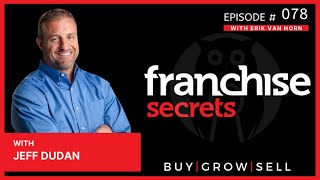
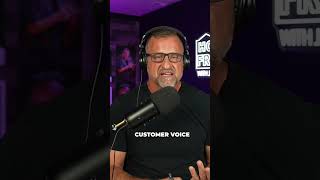
Franchising 101: Heroes On The HomeFront #HomeService #franchising Home Service Franchise
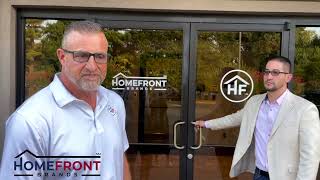
Speaking with CEO Jeff Dudan and Growth Officer Zac Dudan at Home Front Brands Headquarters