Undercover Boss on Values and Leadership with Jeff Dudan
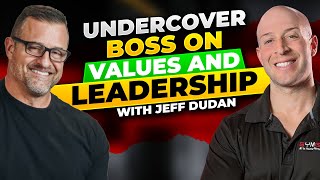
Jeff Dudan built Advantaclean from a painting business into a 240-location franchise before selling it in 2019. He talks about 15 years of preparation, taking on debt as calculated risk, and the values-driven leadership approach he details in his book Discernment.
Chapters
My name is Fire Fury. Welcome to Fuel your Drive. I'm your host, Josh York. Guys, we have a really great episode today. Today's guest is not only a good friend, but we're also in the same industry. We're in the franchise industry. A lot of people think that the franchise industry is huge, and it is, but everyone knows each other. Our guest today, he is a business builder. Okay. He's been an undercover boss. He runs a lot of very successful companies. He's had some successful exits. He's a former college football player. And the most important one is he's a certified stud. Yes, he's a certified stud. Right. We have shared many CEO roundtables at franchise events, and this man is not only a great guy, but he's very smart. And I'm very excited to have him share some great insights and really drop some major nuggets for each and every one of you listening to this to grow and develop even more, because that's how you're going to get better each day. Guys, please welcome my good friend Jeff Duden. Jeff, welcome to the. Welcome to the show, my friend.
Thank you, Josh. Excited to be here. I've been trying to get on the show for years, man, so today's a big day for me.
Oh, well, listen, I'm really happy to have you, and a lot of people are going to hear this, so it's going to be fantastic. So first, let's kind of like, you know, I don't want to go, you know, I don't want to steal all your thunder. I want to give you, you know, some time to kind of talk a little bit about your. Your background, you know, the companies you've been involved with. What you've done has been great. And let's start. Let's start with that. And I want to kind of talk, you know, because every. Every episode, usually on podcasts, people talk about what people have done, and that's all great, but I want to get down to the dirt because people don't understand. I keep trying to deliver this message to everyone. There is a price to pay to get to the other side, and people don't understand that you have winning seasons, you have losing seasons, and life's like a roller coaster. So that's really what I want to focus on. But let's first give everybody, like, a little overview of you and your background. Right?
Well, hey, no problem. So real quick, man. I'm a Chicago guy. I was a basketball player, and I came to football late in my career, so I decided I Wanted to chase that. So chase the ball up to University of Northern Iowa. Then I dropped back to a juco in Chicago and I got a football scholarship out to App State. So Chicago guy showing up culture shocking to the top of a mountain in Boone, North Carolina. It took a while for the town to but we made amends with it and ended up being a great experience. So I started in business doing a painting business, winning all the contracts for student housing apartments. From there took a flyer and went down to South Florida after Hurricane Andrew in 92. Cut my teeth in the restoration business. Started the company with three partners in 94 in Central Florida doing insurance, restoration, government contracting and then we grew that to a a large national business and then ultimately franchised it in 2009 and we hit it just right. It was after the great financial crisis. There was a lot of people that were out of work looking for things to do. We were recession resistant, needs based, third party payer business and we really took off. So you know, 15 years of preparation to have some luck and we ended up selling the business. In 2019 we had 240 locations in 37 states. So along the way, much like yourself, I know that you're generous with your time and that you have a passion for helping entrepreneurs as I do my purpose, I exist to serve by encouraging entrepreneurs and really feel compelled to do anything that I can do to help people make a life for themselves and in doing that, rebuild the middle class. Because we really need a strong middle class in this country and entrepreneurship is one of the ways that people can look, buy a house, put their kids through college, man, have a great life. So that's my role in the business. I had gotten involved with along the way, helping other franchisors grow their business. So today I'm part of a platform in the health and wellness industry that includes Rockbox Fitness and also includes Beam Light Sauna which is an infrared sauna concept. And then also have a bunch of property service companies under the brands, Homefront Brands where we do property service businesses. So that's what I'm doing on the franchise side now and then, you know, helping out anywhere I can, anywhere that I'm asked.
Fantastic. It's great. That's great. Sauna business is a great business. Man. I love sauna. I use my sauna, you know, multiple times a week. So I love it.
You have an infrared?
I do infrared, yep.
Oh man, they're great.
I love cooking in that thing. I go right from my sauna right into my 27 degree ice bath. I've been doing that. Oh, my God. Well, I've been doing the ice bath since I'm probably 18, but I never actually have had, you know, the sauna. And now I have a sauna in my home. But I used to have the sauna at a location I would go to and then I'd go home. So it wasn't really like the full real effect. But you should think about adding those ice baths into the concept. It's great and very beneficial.
Yeah. So I go right from the sauna into my recliner. So we're different there.
So listen, you said something that I took note of because it's very important. You said, 15 years of preparation. Let's talk about that. Because people don't understand, you know, and I've been getting lots of messages on Instagram and LinkedIn. You know, people, you know, hey, I've tried this. I tried this for six months. It's not working. You know, and then you have the people say, oh, I tried this for a month. It's not working. Like, let's talk about what that preparation looks like, how, how, how challenging it gets. Because, you know, I don't think there's really a secret to success. My, my thought is, you just don't quit. That's it. You just don't quit. You got to, obviously, make sure you're being strategic and aligning with the right people and all those other things. But let's talk about that. 15 years of preparation.
Yeah. So, you know, I had this saying. I don't know if it's true or not, but I think most entrepreneurs are screwed into existence and by circumstances. And I think as entrepreneurs, we feel like the path is in front of us and we really don't have another choice. And for me, it was kind of like that. I mean, I started the painting business because I needed money. I mean, I just literally needed money to live. And I'm like, you know, I got food service opportunities here, but that's not going to be enough to meet my needs during the summer. So. And then, you know, and then from there it was like, well, you know, I really just had that entrepreneurial bug. But I needed. I mean, I needed money, right? And so I had to. There was nothing going on where we were up in Boone, so we had to chase it down there. And I can tell you that at least a dozen times during the 15 years, I felt like there was a good chance that we could go out of business. You know, something would happen on a receivable or, uh. And Then when I actually bought my last partner out in 2004, we had no franchises. We had a franchise company, we had franchise to ourselves, but we didn't have any franchisees. And I was, the day that I bought out my last partner, I was $4 million in debt. And I don't even know that we had that much revenue over, you know, that year. So, you know, it was, it was. But you know, you have to be committed to the outcome and there's going to be ups and there's going to be downs and you know, but if you're not living on the edge, man, you're just taking up space and all the great things happen out on the edge, man, in the rarefied air where the air is thin and people are taking chances. And I think that people want freedom. Especially today you talk about this great resignation, but I think it's a great liberation because people have got a taste of what it's like to have a little bit more time and a little bit more control over what happens to you. And that's something that we all need to be happy, man. We've got to have control over what happens to us. Negative progress is one of the biggest dissatisfier. So we all want to be making progress in life and we want to do something that we feel is significant for us and that we're better off next year than we were last year. And I mean, when I started, I didn't have a grand vision. I just knew that I wanted to build something. I wanted to be control of my own destiny. I wanted to help other people with whatever it is I had learned. And that's a passion for me. You know, I coached over 30 of my kids sports teams while I was building the franchise business. And I really think that that was for me, the two things were the same, right? How do you communicate? How do you create a plan that's clear that people can understand? And how do you bring energy and then create a situation where people can win? But yeah, I mean, it's a struggle, it's been a struggle. And then, you know, after I sold the company, I thought, well, I'm going to take an investor's posture and I'm going to take it a bit easy. And here's what I found out that is, that's, that's a recipe for disaster. Like you've got to strap it up every day. It doesn't matter where you are in your business, if it's your first job or your first opportunity or the first business you're starting or, you know, if it's. If it's something further down in your career, man, if you phone it in, people will eat your lunch.
So true. It's so true. You say you just gave away so many nuggets in that. I really hope everyone takes a second and rewind everything Jeff just said, because it's really true. First of all, playing it safe, you're never going to get anywhere. Playing it safe is a horrible thing. Taking on debt is a wonderful thing. People say. Why do you say that, Joshua? You will never grow unless you take on debt. And obviously, every scenario is going to be very different. But people also don't understand. And I try to explain this. Like, if you're profitable and you're making money, you're paying taxes, right? If you're losing money, you're not paying, but you're able to actually build your business. Like, people have to look at. Have to look at the full picture and understand what it takes. Any successful entrepreneur, anyone has been in severe debt. I will tell you that right now. And I know a lot of entrepreneurs, and sometimes getting into partnerships, depending, like, I know you said you bought out your partner. Sometimes people say the worst kind of ship you could be on is a partnership. So you got to make sure that, you know, when you are getting in partnerships, you're aligning with the right people and you have the same beliefs and values. But, you know, let's touch on, you know, so you talk about this debt, right? Going through that process, because I get this question often, too. So it's a great, great kind of segue here, like, because I know I've always been nervous, but every time I get scared and no one ever knows because I'm the best actor, I'm the best poker player. I don't even play poker. And that's very important. That's a very important trait as a leader. You can never let your team feel your true emotions. But were you scared, too? Because when I get scared and I have, like, that fear, I always know. My intuition always says it's giving me, like, the direction. Like, this is the right way. Like, I feel like when you're scared and you have fear, you got to keep going in that way. Like, just like you made the comment about you felt like you were going out of business, but you didn't quit, Right? You believed in yourself. You didn't quit. So maybe we could talk a little bit about that.
Yeah. So, Josh, you know, great, great entrepreneurs are always paranoid. I don't care. Because there's Always somebody coming and there's always, there's. The wolves are always at the door. There's always a risk. You know, managing, managing risk is something that we constantly, constantly do as entrepreneurs. You know, what's the upside? Where are we going? What's the vision? You know, how are we going to get there? And then, okay, what could possibly go wrong? So, you know, and when I, you know, and I really, I mean, I've grown a lot. I think, you know, we all grow as we, as we get older. But, you know, one thing I learned about fear. So, you know, why people are, you know, why people are worried about speaking in front of people, you know, they get scared. It's because of the eyes. So, you know, back in the day when everybody was looking at you and their eyes were looking at you, then that means you're outside the group, you're getting ready to get eaten, stoned, sticked, something bad is going to happen to you. So when, when you get fearful and you get that fight or flight mechanism, it can happen when you open up the wrong email and it's a threat to your business or you're standing up in front of a room of people or, you know, and one thing that I learned is, look, nothing is fatal. Like very few, you know, some things in life are fatal, but in business, very few things in life are fatal. So, you know, once you learn to just calm down. There's a great quote that I share, and it's the person who can most accurately describe reality without laying blame shall emerge as the leader. So often what happens, it's like, how do you deal with stress? How do you deal with pressure? One thing I've learned to do is, number one, realize that nothing is fatal and that I do not need to be fearful of things that cannot, that cannot eat me or kill me, number one. And then number two, if I don't understand what's going on, then I just describe reality for what it is. This is the situation. I'm not blaming you, I'm not blaming me. I'm not blaming anybody. But let's describe the situation because that's where we can start working towards a solution. You know, the quicker that you can. One of the things about entrepreneurs that I've observed is their ability to bounce and shift quickly between different modalities. Right? You're dealing with this person here and you're coaching them. Next thing you know, you've got an issue with accounts receivable or accounts payable. Now you can shift to that. The only way that you can shift to. That is if you don't have the emotional baggage as you shift between modality to modality inside of your business. Because honestly, you know, leaders have a very short list of highly important things that you need to do. Number one, leaders need to bring energy. So if you burn your energy being paranoid, upset, burned out, or scared, then you can't be the leader that you need to be for the people that are in your business and sitting right in front of you that need you.
Right.
Leaders need to provide clarity, absolute clarity about what the future is. There's a great book by Lencioni called the Four Obsessions of an Extraordinary CEO. And every single one of the four obsessions has the word clarity in it. People hesitate. What looks like hesitation, what looks like indifference or even insubordination is most often just a lack of clarity. I wasn't sure what to do, so I hesitated inside of that. And so bringing energy, because your people are only going to be a subset of the energy that you bring, creating clarity so that people don't hesitate and they know what to do and their interests are aligned with the company's interests. And then the third thing is somebody has to speak a bold and powerful future into existence with absolute clarity as to what it looks like. And I tell a story in training about a guy that worked for me in 1995, man, and you know, he had come in, he had been doing all of our jobs and bringing the checks back and doing all that. We were in kind of a construction type business. And he said, jeff, you know, I drink your coffee every day, I do the jobs, I bring the checks. Maybe I should have a job here. And I said, well, why don't you sit down, Ray, and let's talk about it. And to hear him tell it, in 1995, which was 14 years before we took our franchise to market, I described for the next four hours everything that we were going to do and every, you know, we were going to build a national company and we were going to be a franchise and we were going to do this. Now, did I think it was going to take me 14 years to get to market? No, but I wasn't that good, apparently. But you have to beat that drum constantly speaking a bold and powerful future with clarity, with energy into existence so that people can follow and some people will fall off the bus along the way and other people are going to row to the end. And after we sold the businessman, we went out and had dinner. There was nine people that had been there 20 years. And we sat we closed the restaurant down, they left the keys, they parked our cars out front and man, we told stories from the very beginning. So yeah, that's. And those are the people that bought into that bold and powerful future and helped shape it along the way.
So it's so true. You're like giving me memories. When I was sitting in my parents dining room, I'll never forget, I was interviewing a trainer one day and it took me almost like Jeff, it took me almost about 45, 46 trainers before I found one that stayed with me longer than a month. Everyone was quitting left and right, you know, and I was telling people, we're going to be worldwide, we're going to change so many people lives, we're going to be all over the place. And you know, there goes my dad. He's walking in his underwear. Like, imagine how professional that is, right? But at the time I was working out of my parents dining room and I didn't even have money to like literally rent out a hotel room. But you know, you got to be clear, you got clarity is definitely the key. You got to have that vision and that's awesome. I would have loved to been sitting there in that restaurant hearing some of those stories. I'm sure there were some great, great stories.
Yeah. Our spouses were turning to us and saying, how did this company possibly even survive? We just saw it through, right?
So, you know, let's talk a little bit about leadership because, you know, I remember in many scenarios, like, so I used to really suffer from anxiety. Like, I don't know if you ever really did, but I used to have severe anxiety issues when I first started my business. Like, if I even had to talk to a trainer, like I would literally throw up before I would have a conversation. Like, I literally couldn't breathe. Like, I just don't know why I used to get like that. Obviously I've trained myself over the years and it doesn't affect me anymore. But what would be your advice to someone who wants to start a new business? You know, because what I see also, and this is also my scenario was I was young, right? A lot of people didn't take me seriously. And that was another problem. So what kind of advice would you give to someone who is looking to be a leader or someone who's young and up and coming and maybe they're in their early 20s and you know, they have some people working for them who might be in their 30s or 40s and look at this. But like, you know, how is that going to work? What does that look like. What do you think?
I got. I have two, maybe three recommendations. So the first is, man, you got to work on yourself. And, you know, the fundamental, you know, your leadership capacity is going to determine the, you know, to a large extent, the scale of your business and the speed of your business and the quality of your decisions is going to determine the quality of your life and to an extent, the velocity of your business. Right. So you've got to start working on you. So let's, let's talk about, number one, purpose. There's a great book by Kevin McCarthy called the On Purpose Person. And I. It was gifted to me by one of my mentors years ago, and basically it's like a fable. And you run through this little tennis tournament and you come up with a purpose statement for your life, and you break your life down into eight different categories, and then you run things off in tournament. I mean, it's a. Probably a $10 book, but man might be the best $10 people would ever spend in their life to really determine what their purpose is. And aligning the, the graphic in the book is a light switch. So if the light switch is off, you're off purpose. If the light switch is on, you're on purpose. Right? And the more time that you spend aligned with your purpose, the more productive, the more lit up you're going to be. So if I exist to serve by encouraging entrepreneurs, and you know, right now, what I'm doing is on purpose for me, because there might be, you know, I don't know how many people listen to this, but a lot of people listen to it. I know that it has a huge audience, but if there's three or four or five people that take something away that fills a block or a gap for them, that encourages them, then I've spent my time well today, and I'm comfortable because I'm living inside of my purpose. Second thing is, you got to understand how you roll. And by doing that, we build values forward businesses. We spent a lot of time saying, what is it that really matters to us? Your true values in life are what you tolerate. And, you know, so you can say, you know, we're the punctual plumber, man, but if you're late all the time, then that is not your value. On time is not your value. So, you know, building values forward companies. And then with my family, I've got three children and a wife, and, you know, we had a set of family values, and it was like, live fun, be humble, respect others, trust yourself to take chances. Fail, fail fast and move forward. Be a servant, leader. I mean, those were up on our refrigerator for years and years and years. And, you know, and you don't think that your kids are paying attention to it. But when it was time to do the Undercover Boss, I mean, I mean, we were, you know, we lived humble like nobody. We practice football in this. We have a 5 acre campus, 22,000 square foot building where we ran the business, and we practiced football in the side yard.
We.
I striped off a whole football field, and that's where we held our practices. Nobody even knew I owned the business. Right. So when we had the opportunity to Undercover Boss, I'm like, guys, this is going to materially, there's going to be people that look at you differently at school, when this plays to 7 million people on Thursday night or whenever it was. And so. But we looked at our family values and we said, look, trust yourself to take chances, fail fast, and move forward. You know, so we felt like if we're going to truly live our values, then we have to take advantage of that opportunity. And we had to go do it. And it ended up being a great experience and a great show, and it really is something that we were able to build on. So understanding your purpose and putting time into who you are and what matters. Because when you're on the airplane and the masks fall down, you got to help yourself before you can help other people. And then really working on. And your personal values can actually be. They need to be close if you're the authentic leader of a business. But if you look at Zappos, I mean, they have this set of nine weird values that power their business. And it's, you know, so. So a business's values have to be aligned with, you know, the customers that they serve and the promises that they make to the marketplace. So your personal values don't have to be 100% aligned with your business values, but each of them has to be right for you, and they have to be right for the business and something that people can buy into. Because I've learned in life that, you know, people are okay as long as they know where they stand. And so when we started this, you know, a discovery day and franchising, I mean, we really have two questions that we ask them. What's the most important thing you came here to find out? And which of our values resonates the most with you and why? Because we want our values to be our contract with our franchisees. That's how decisions get made. That's where the Buck stops and we'll honor them. And if they honor them, then, you know, the relationship equity that we build over time with our franchisees will help us when times are tough. And you started about tough times, right? Because, by the way, man, building at VantaClean, I made three or four mistakes that were painful to our franchisees, and they were 100% my fault. But we had also invested in what I call relationship equity and really pouring into them and having that relationship. And when you make a mistake and you've got to go hat in hand to the people that it impacted, you've got to have some deposits in that relationship equity bank. You've got to be authentic. They got to know that you care and that you believe, and that's more than anything that will help you get through tough times.
Tough times don't last. Strong people do. Right? That's what they say.
Yes, sir.
And that's very true. So let's talk about Undercover Boss, because I did watch that episode. I don't really watch much tv, but I did watch that when I. When it did air. And you did a great job. It was an awesome episode. Super inspiring. You know, was. Was. Was it difficult filming that? You know, did, you know, like, what was that like? Did people know who you were or, you know, maybe you could tell everybody a little bit about that?
Yeah, I think my confidentiality ran up now. But it's, you know, you. I don't want to do anything that will impact them from doing future shows, but what I'll. Yeah, I mean, there was. We put five episodes in the can, and one of them didn't air, which was one that I did get caught. I did. There was once. I did get busted once by a guy. But, no, it was. It was a great experience. I mean, we were on the road for quite a while, and it's exhausting. And you get a look at a world that is, you know, the television world is a whole different animal. So you get, you know, long days. You know, you put 100 hours of film down to get the 42 minutes that they're going to show. And you don't have. You have no control over what gets put on the show. So you really. You have to be mindful and you have to be vigilant about, and you can't lose your cool and say, you know, say things or try to make some jokes and stuff like that, because I guarantee you, it will be on the show. We all like to watch good drama and stuff like that, but I felt like our franchisees were bought into our values. Our values were cares, are still our community, accountability, respect, excellence and servant's heart. Because when your house floods or burns, you got to have people that show up with empathy and that really are going to care about the people, not just say, well, I'm just doing an estimate. I don't care that your dog died in the fire or whatever it is. We had a national partnership with St. Jude Children's Research Hospital where our franchisees would go out and do work for free for children that went home and had an issue in their home because the families get really stretched when you're struggling for a couple of years and living out of town and all that. So that's what mattered to our franchisees. So I knew that the overwhelming majority of our franchisees did their very best and were values forward companies. And Advantaclean is a great business for people when they need it. Hopefully you don't need it, but when you do need it, you need to have people out there that care about what's going on. So, yeah, we ended up with the director said, you know, you guys just had to throw away an episode that other shows would kill to have. We really had five great segments with five great franchise partners.
That's awesome. That's awesome. And it's funny, you know, your values align very similar with mine. Ours are drive, determination, respect, integrity, versatility, and excellence. And since we're talking about values like, I want everyone to understand, fuel your drive. The name of the podcast. I've said this before, but it's my values and the four pillars of success, which I refer to as fun, unity, earnings and leadership. And I'm sure you're going to agree with this, Jeff, you can't run a business unless you have fun. Culture is everything. Unity. If there's no teamwork, it's never going to work. Earnings, right? Well, if you're not making money, that's not going to work. And leadership. Good leaders will always create other good leaders. And obviously for me, when I did come up with that concept, fuel your drive, you can't drive without fuel. And that's kind of how I created that. But that's how strong, as Jeff just said, my values are and my pillars of success, that I actually named it the name of my podcast. So take some notes of what Jeff said, because that was very powerful. So, last question. Jeff, I like to always ask, and sometimes it throws people off, but you can think for a second. If you were conducting this interview, what question would you have asked?
Oh, wow. What Question would I, you know, I don't know that I'm going to be able to come up with one. I don't know if I was conducting this interview. What question, what question would I have asked? I think maybe I don't know what's next or. Yeah, you know what I would have asked? I would have said, I would have asked me about my book Discernment.
There you go. You know, it's funny, I was actually looking at that we were going to touch on it before we ended, so you beat me to it. But let's touch on it. So tell me about your book.
Right, so it's actually my second book. The first book I wrote was called hey Coach and I really, I only write books for one reason. It's that's to if I think that I've worked hard for a decade to figure something out and I can put it in a book that other people can benefit from it, then that's what I do. So my first book, hey Coach was really a fable style but it's about all the tools and tactics that I learned in coaching kids, a group of 10 to 12 year olds for four months and how to really have a great experience to where the parents and the players and everybody and the coaches all want to be a part of it again. So that was that. And then when I got out of Advantaclean I said hey, you know, I've got all of these models of thought that I really want to share. So you know, discernment is really, it really means wisdom and decision making. So if you think about it, the book is a bunch of models of thought. It's not, it's a story but there's really just a bunch of models of thought. And what models of thought are. It's over time you're faced with a situation and then you accumulate, you know, a way of dealing with that situation that becomes a model of thought. And wisdom is really just an accumulation of different models of thought over time applied to a present day situation. So you know, usually we think of older people as wise. Well, it's because they have more life experiences and they've been able to put those into, into buckets where they can pull those out when they need them and help other people with them. So Discernment is really, it's, it's really just a collection of models of thought. And I really get when people, you know, I didn't promoted. I mean there's a good number of copies out there but I get people that reach out to me all the time and say, you know, this is just what I needed. It's really targeted towards people that are starting a business. They're early in their career and they're like, how do I accumulate? You know, they can take 15 or 20 models of thought that I learned through 25 years of business, and they can incorporate them and now they can use them. And I. People reach. I had a guy called me for an hour and talked to me about how it impacted, and he's moving his business forward now. He'd been stuck in a business and he's now moving it forward. And. And it's really. I'm really encouraged and honored when that happens. So, you know, a couple things out of the book. Nothing's 100% and anything can go to zero. Enron can go to zero. Arthur Anderson can go to zero, and nothing's 100%. So the decisions that you make inside of your business, the big ones and the little ones, every day, they increase that probability of success, you know, one way or another. So the quality of decisions determines the quality of your life. Talks about what your decision filters are, your values, and other things like that. So how you make decisions. And then different types of equity. I mean, I look at life as kind of a balance sheet, right? So on once, it's not your. You have assets, you liabilities, and you got your equity, right? So what are your personal human assets that you might have and what are things that are liabilities? What are things that suck your time? You know, I say, you know, track your inputs and. Or control your inputs and track your outputs. I mean, you can. You can drive into work and you can listen to a podcast that's going to help you, or you can listen to something that's going to distract you. And I mean, it just wears you down over time. So. Talks about the different types of equities that you can gain. Relationship equity, health equity is something, Josh, that I know is important to you and your business and the people inside of it. Financial equity and what those things mean. And so as we think about the models of thought, you know, really, I believe that. I truly, truly believe that our life is an illusion that we create in and of ourself, and that you can make a different decision today and have a different outcome and a different life. Within a very short amount of time, I could decide that I no longer want to be the franchise guy of Homefront Brands and that I want to be a fishing guide in Alaska. And it might not happen tomorrow, but I start making decisions to get there and ultimately that will manifest into itself. So, you know, and if it, you know, unpacking my experiences and helping people understand, giving these models of thought, something that if you're at the right place in your life and your business career, these things would be very material for you.
Powerful man. Powerful stuff. Jeff, listen, where can people find you? I'm sure more people are going to want to learn more about you after this episode. Where would they go? Instagram? Online?
Yep, yep, I am on Instagram. Just put in Jeff Duden. Just. It's just that simple. LinkedIn is probably the place that I get most reach outs from there. But Instagram, LinkedIn and direct email would be the best places to get me. Or you can just go to homefrontbrands.com and you can find me through that as well.
As I was going to say to take action because you just did something that's pretty powerful and honestly, most people probably won't even do anything because that's what happens. That's what most people do. I'll give away secrets of things I do. I know people are just not going to do them. They're not going to take the time to do them. They're not going to put the effort into it. And that's why people never get to the other side of success. But I'll let you know about that. But anyway, look, Jeff, thank you so much for coming on the show. It was great having you. You dropped some great knowledge. I'm sure you're going to help some people. And is there anything else you want to say before we sign off?
No, just appreciate the opportunity. It's an honor and a pleasure to be on. I've always admired, admired what you've done, Josh. So thank you and let's look forward to seeing you soon.
That's very kind. And those words mean the world to me coming from you. So, guys, until next time, remember, fuel your drive.
My name is Legend.
More from Jeff


Franchising 101: Heroes On The HomeFront #HomeService #franchising Home Service Franchise
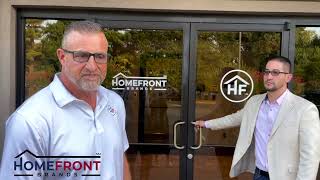
Speaking with CEO Jeff Dudan and Growth Officer Zac Dudan at Home Front Brands Headquarters