Create the Ultimate Brand Identity with Designer Jeremy Mura - The Creator's Adventure #9
Interview (Creator's Adventure #9) with Jeremy Mura (brand identity designer, content creator) and Brian McAnulty. Jeremy describes starting YouTube in 2016 with a goal of one video per week, growing to ~36,000 subscribers and ~3 million views (over 400 videos). He has 55,000+ Skillshare students and ~100,000 Instagram followers. Topics covered: building a personal brand via consistent evergreen content; role and process of brand design (strategy → visual identity → touchpoints); importance of niching and clarity; multiple income streams (clients, courses, digital products, coaching, YouTube, affiliates, investments) and the 4PE/value-ladder model; time management, outsourcing, mindset, and balance. Interview date: April 4, 2022.
Chapters
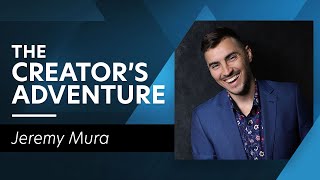
Welcome to the Creator's Adventure, where we interview creators from around the world, hearing their stories about growing a business. My name is Brian McAnulty. I'm the founder of Heights platform. And today I'm talking with Jeremy Miura about how he grew a YouTube channel, how to craft a unique brand, how he became successful selling online courses, and the importance of creating multiple income streams. All right, hey, everyone. We're here today with Jeremy Miura, a brand identity designer and content creator from Sydney, Australia. He's been in the design industry for nine years now and has worked with brands like American Express. And in that time, he's also helped hundreds of people upgrade their design careers. So he has over 400 plus videos uploaded on YouTube, he's taught over 55,000 students on Skillshare, and he has a following of over 100,000 on Instagram. Jeremy, welcome to the show.
Hey, Brian, thanks so much for having me on. Appreciate it.
Yeah. So you have this successful brand design business and you have this YouTube channel with 36,000 subscribers, 3 million views, over 400 videos. Can you tell us a little bit about your story and how you got to where you're at today?
Yeah, great question, man. For me, YouTube was always a thing that I wanted to be and do because I saw the potential of, you know, building my personal brand. Being a content creator, that was always sort of my goal and it's paid off. And I just love creating content and teaching people. But it started all the way back when I finished college at the end of 2015. So I started YouTube in, in 2016, and my goal was just to create one video a week, you know, so by the time, you know, five years later, I would have, you know, over 300 videos because 52 videos a year. And yeah, I just wanted to teach what I knew. You know, I learned tips and tricks in university and just wanted to share those things. I used to read a lot of books and take courses as well, so I'll just like, teach everything. I knew that was the concept. You know, just whatever I'm learning at the time, just teach it to help beginner designers so they can level up, you know what I mean? So for me, yeah, that's. That's where I started. I just kept going with it. The first few years was a slog and a grind and, you know, I didn't really see many results. I wasn't getting that many views. I wasn't really getting blit brand deals or making any much money with AdSense. But I saw the big picture because at the end of the day, it's a long term game. You need to think long term. It's all about creating evergreen content. So it's constantly working for you while you're sleeping. You know, because YouTube is such a big platform, there's billions of users on there and people are constantly on there watching content. So yeah, I saw the long term game, saw the big picture and yeah, being creating ever since and yeah, I'm enjoying it and loving it and I'm getting so many opportunities now, so many brand deals and you know, it's really a great source of income, to be honest.
Cool, that's great. Yeah. It's interesting to see always how creators start because I think there's two ways in how creators can approach this. So some creators are like you, they say, you know, I'm going to be this content creator, I'm going to make these YouTube videos and that's what I'm going to do. And then from that eventually other things start to happen. There's all these other opportunities. And then some creators say, well, I'm going to start this business, I'm going to build this product, build a course, offer something. And then they decide after that, okay, now I'm going to do the content creation. And it's interesting to see how both of those work. I'm not sure which one is really better in a way. Like we always tell everybody, start building your audience first. Because it is easy enough for a creator to make the mistake, say, hey, here's my thing, everybody come buy it now. And then there's no one because there is no audience yet.
Correct. And that's why I feel people miss the point. It's like you're meant to build up the content because that builds your credibility and it also increases the perception and the trust that people see in you. So that's why the principle is you teach what you know. So you build up your audience, your content. So then you know when people land on your page like, oh, this guy knows what he's talking about. So you're going to increase the chance of someone converting into your course or your product, et cetera.
Yeah, exactly. Because if you do just release the product first, completely forget about any kind of creation or audience building. Now you're in this situation that in your mind you have this great thing and maybe you really do. But other people can't see that. They can't really feel or trust or believe that because they don't know you. But if they've seen videos from you, they can say, oh, I know this guy. Yeah, he's been making this great content. Well, I want to get more from him. I want to do something to get more from him. Cool.
100%. I can even attest to it because I actually got a client one time, they were from America and they're looking for logo design for their new business. They were running a beauty cosmetic business or something back in like 2019, 2018. And then she found my logo design video and then she wanted to hire me because she thought my personality was nice and friendly and I got a client. So it's powerful, the power of content, you know?
Yeah, yeah, it's a great example. Yeah. And as you said, it's. Every piece of content is like an investment because you're making that content and now people can watch that at any time. Who knows, who knows what might happen from that piece of content that you made years ago even.
Exactly 100% cool.
So what exactly is your job description as a brand designer?
Yeah, so basically a brand designer is someone who crafts visual identities for brands and businesses. But it's not just actually the look and feel of a brand. Right. You know, logos, colors, typography, graphics, illustrations, icons. It's actually someone who takes the whole process from, you know, the strategy part of the discovery phase all the way to, you know, the end of it, the production. So for me I can do the whole, the whole thing. So taking a, whether it's a small or medium sized businesses, that's usually who I work with, do like a strategy session and then build out, you know, their funnels and what direction we're going to take and then bring that into the visual identity, creating the brand itself and then delivering all those files so they can use that, you know, whether it's, we create a website or touch points like Instagram or LinkedIn or whatever it is. But basically that's what a brand designer does. So I do that on the side, even though these days I do a lot more content and brand deals, to be honest. But yeah, that's typically what a brand is on is. And it's, I think it's crucial, especially with today's day and age. There's so many products and businesses and everything saturated. So it's like, how do you stand out? And the way you stand out is through branding and messaging and crafting a unique brand story and experience for your customers so they'll pick you over the competition. So sure, basically that that's what it is.
So with all the clients that you've worked with, with your brand Design, what do you feel is like, the biggest mistake that they make or the biggest thing they overlook and how do you fix that?
So for me, I feel like a lot of the times they just try and rush things and they don't get clear on who their target audience is and what their message is. So I think clarity is very important instead of just like throwing spaghetti at the wall, seeing what sticks. And I see that a lot of people just try and do too many things. They don't clarify, they don't simplify and niche down. It's like when you go to an Italian restaurant, you know, or a pizza shop, they just, you know, they do pizza and pasta really well. But if they start doing, like steak and chips and tacos and all this stuff, it's gonna. It's gonna be messy, right? It's not gonna work. So it's like learning to niche down and focus on who you're serving and focus on your core messaging, on your benefits, features, and all that stuff. I think that's what people miss out on before they. When it comes to branding or.
Yeah, I think how this can be applied to, like, creators who would use heights, creators who are building a course, building some kind of coaching offering maybe. The thing that people tend to think, well, this happens in any business actually is they say, okay, well, I want to serve everyone. We can, we can help everyone, actually. And that's great. But really the reality is it's, yeah, how can you differentiate yourself then? And people think, oh, well, I'll. I'll earn more or I'll get more clients if I can do everything or help everyone. But if you can show people that you're in this specific niche and this is really your core specific target, you can, number one, attract people easier, and number two, you can charge more for your service because it's so specialized.
That's it, man. And I think specializing is 10 times better than just trying to do everything. It's always going to benefit you.
Cool. So many times entrepreneurs who are more focused on the business side of things don't really consider brand design a priority for their company. So what would you say to somebody like that? And apart from the visual aspect, how can, like, neglecting that brand design affect their sales or revenue?
Yes. If you don't have a strong brand, you're going to, you know, lose the trust of potential buyers and potential customers. So, you know, if someone's like a cold lead and they, you know, they jump on if your site, you know, if you have a website or a landing page, and it's not, you know, designed properly. You can actually lose that connection or trust or if the messaging is not speaking to the people, to that specific customer, then they might bounce off the site. Right. So I think, yeah, the negative impacts of it is that, yeah, you'll, you, you can decrease the chances of people, you know, wanting to engage with your brand because of, you know, low credibility, low trust. It doesn't feel like, feel right. But to people who are hesitant, whether they should get like a brand design or brand designer is that you need to see it as an investment. It's not an expense because you're investing in your business. And if, you know, obviously you might be tight or strapped on cash if you're just starting out, I totally understand that you can use free options. Right. For now. But if you're trying to launch like a, you know, $100 product or a $500 product and it. The quality doesn't match and the brand doesn't match that level of value you're trying to offer, then you know, you're going to have a disconnect there. So I feel like, yeah, it's always a great investment. You need to think about it long term. It's also good because you're gonna get clarity as well. And typically you'll get like a, you know, a brand style guide as well. So if you, like, hire someone, they can stick with those brand templates, you know, the brand style, the topography, all that, all this stuff just so it's. You have cohesiveness and consistency across all platforms. You know, you don't want to like, have a weird different graphics on like your Instagram and then Facebook is different. And then you go on the website and it's got a different wacky logo or color and it's like, am I on the right page? So that's sort of my, my perspective opinion on that. But I always see it as, yeah, beneficial. And obviously I'm biased because I'm a designer, but, but I've seen, I've seen the benefits. You know, we pay attention to big brands like Nike, Adidas, you know, Disney, Coca Cola, all the Netflix, all these big brands. And you can see they do design really well and we can see the impacts of that. So that's sort of my thoughts on that.
Yeah, definitely. I definitely agree and I'm probably biased as well because I started as a, we started as a web design company ourselves. So, yeah, definitely, I see the value. But yeah, I think it's important. And yeah, if you're a creator, that you, you don't have maybe the funds to invest in that right away. At the very least it's worth researching, learning a little bit about it for yourself, how you can be consistent with your messaging, with your graphics and everything. Because as you said, yeah, you don't want some potential customer start researching you. They end up on your Instagram and they're like, oh, what is this? This is, this looks different. Yeah. Okay, cool. So with your YouTube channel, how did you manage to grow that to now 36,000 subscribers, over 3 million views. How long have you been doing a YouTube channel?
Actually so I've been doing it since 2016. So I've done it for six years now. Six? Yeah, going almost onto seven. So it's been a long road, long journey to get to this point. But funny enough, I actually earned like most of my subscribers in the last like one year and a half. So I think yeah, 20,000 came in and just at this last little, you know, slog. But the first like four years it was really like, it was really tough getting to like 10,000 subscribers. And that's because with any platform you need consistency. If you don't consistently upload, you're not going to get results. It's the same thing for Instagram and TikTok and whatever it is, like you need to consistently upload. And for me, like, because I saw it as part of my personal brand and I saw the long term effects, I just kept posting, kept posting and yeah, it's hard work. Like, it's not easy. Like now I've got cool lights and you know, good cameras and everything like that and a nice mic. But I just started off with what I had, what was in my hand. My dad bought me, like had a, gave me his old Sony camera. I was using that. Sometimes I would use my phone, just, you know, had a cheap tripod and I used to, I started in my mom's, like at my mom's house, like my parents house. So I was still living with my mom. I shared a room with my brother for 22 years. So that wasn't an excuse either. I just like. And I was in my little corner, my little desk and I just started teaching tutorials. And yeah, the quality wasn't the best but I just focused on being consistent. And that's one principle I believe you need. You need discipline, consistency. And then now it's gotten to me where I'm at today, where, you know, I'm getting big brand deal deals with like brands like Editor X envato Elements, you know, I've done stuff on Behance of Adobe. I've done a live session. So just like cool stuff like that. And it's because I decided to be like, no, I'm gonna stick with this. I do all the editing myself. I've done, I do all the graphics myself because I'm a designer. I use Premiere Pro and I use Illustrator, Photoshop. Those are my main tools I use. And Vidiq as well. So, yeah, that's what's really helped me to get to this where I'm at now. But my plans to grow up to a hundred thousand. So this end this year, I'm, I'm really doubling down on video this year. So, yeah, let's hope we hit that milestone fast.
Awesome. So, yeah, I think you made a great point. I always like to tell people that, like, yeah, don't make the excuse of, oh, my camera's not good enough yet, my microphone's not good enough, whatever it is. Because the reality is that you got to get that video out there or whatever that content is. Maybe it's not even video, but you got to get it out there because the reality is a year from now, you're going to be embarrassed about it anyway. You're going to think, oh, that's, that's really bad anyway, so don't force yourself to wait to have all that stuff. And if your content is good, people will enjoy it. People will still subscribe to you, even if it's just like from your cell phone that you're recording it. And over time, you can, you can always improve that. And it's an endless journey of improving all that anyway, so that's really interesting, but I'm curious. So you've been working on it on all these years, and you mentioned it's only in the last year that it's really had this really big growth. So what wins did you have along the way that how did you keep yourself motivated to actually continue so many years without really seeing giant results yet?
Yeah, so for me, one of the big factors is having a strong mindset. So I have a lot of faith and belief and for me, that really helps me, you know, move forward. And, you know, I believe God created me to be a success, to have impact and influence on people in a positive way, to benefit the world, add value to people. So in my perspective, it's like, I need to serve people, and I serve people through content, through teaching people on how to, you know, whether it's how to make more money, how to get better at design, how to improve their brand, you know, concepts or whatever it is. So in my mind, that's, you know, if I'm. If I'm holding all this knowledge to myself, I'm being selfish. I have to release this knowledge into the world. So, you know, you got to see yourself as a gift to the world, not in an egotistical way, but in a, like, you know, beneficial way to help others, to help other people become a success. So for my, in my mind, that's how I really, really think. And also, you know, I believe, you know, I'm called to great things and I believe everyone has potential and greatness in them, and it's just they have to believe it and manifest it. But, yeah, so that's sort of the key thing is I have a strong mindset. But then the last two years, I actually had two viral videos that got over 200,000 views. So that spike really gave me a boost in subs and views. And also my revenue, like, my revenue, I was hitting around 700amonth and then it jumped to like 1300 for like three months or whatever it was. And then now it's dropped back down because of December. January is pretty quiet, but then it should pick back up. But, yeah, knowing. And that brings you on to, you know, another bonus. Bonus point is that having the right thumbnail, understanding trends and what people are searching, you know, using keywords and also using the right tags and titles, that's the key to YouTube. Like, obviously the content needs to be as best as you can be, but thumbnail title is just as important and you should spend as much time on. On those things as you can.
Cool. Yeah, that's a great tip. So aside from the brand design, Aside from the YouTube, you also sell online courses. One of the ways you do that is through skillshare. You're a top teacher there. You offer this online coaching sessions. You have this private community where you help new designers. So when did you start selling the online courses and what drove you to say, you know, I want to teach others, I want to share these skills and build these courses?
Yeah, so I saw the need for people who are beginners to, you know, learn in depth, you know, videos instead of just. Because YouTube was typically just tutorials. But what I found was a lot of YouTube tutorials were just low quality and it would be some, like, kid from some, I don't know, other third world country or something. And I would, like, use a voiceover because they couldn't speak English. And it's like very like robotic voice, you know, or some people would go too fast and I would see comments like saying this is too fast, doesn't make sense. And I felt like I could do them better, you know, in a way, like in a positive way. So for me, yeah, I just thought like, okay, you know, after I got used to doing YouTube for a bit, I started doing skillshare classes in the same year in 2016. So 2016, around August, I was my first paycheck of like $50. And then I just built it from there. And now I'm earning like, you know, 10 times that a month, which is great, it's a blessing. But yeah, I just wanted to teach more in depth, break down some things that I knew in terms of like logo design and branding and stuff like that. And I have one of my classes, IT now has 15,000 students. It was logo design for beginners. So that was one of the big classes that did really well. And then I got invited from Skillshare to join the Skillshare Top Teachers Club. And basically we have a private slack group. And yeah, we have some extra benefits than the rest of the teachers on there because there's a lot of other teachers. But yeah, it was super cool. But yeah, I enjoyed the process. It was a big slog. But now I have got over 25 classes on there and it constantly generates revenue every month and I get new students and yeah, that's how I got started doing courses or classes.
Cool. So I think a good takeaway so far is that determination, drive and there's just relentlessness of pursuing all that can really pay off. That's really.
I definitely saw the benefit because I saw the monetary side as well. Like obviously like I wanted to be self sufficient and running my own full time business. So for me I need to also pay attention to like, okay, what, what revenue streams can I invest in? And I think teaching courses was one of the big things that I kept seeing over and over again to generate revenue. So that was another reason why I wasn't just big to create the courses, but to generate passive income. Even though it's not really passive, it's more like semi passive. Because a lot of effort goes into creating a course. But yeah, you get the point.
Sure. Yeah. I like to tell people that it's. I look at it as leveraged income rather than passive income. So you're creating something that it's going to repay you way more than the time that you put in it proportionally. But it's not just, it's not magic, it's not just unlimited Money starts coming in. So. All right, so regarding the revenue streams, from what we've seen about you, you have sounds like six streams of revenue. So you have the client work for your brand design, you've got online courses, digital products, like some web templates, things like that. Yeah, you got your online coaching and then you've got YouTube and affiliate links. So would you say some other ones.
As well, like stocks?
And so with all these, would you say creating these multiple streams of revenue, would you say that it's important for your success in business or like, what made you think like I have to have all these different streams of income.
100%, like you can't put all your eggs in one basket. And we've heard that many times. You need to actually believe you have to diversify to build wealth. Like you look at millionaires, they've got multiple revenue streams. They usually say that they have millionaires have five passive streams and one like active stream. Typically that's what they have. So one where they're actually working physically and still, you know, whether it's a business, whatever, then the other streams are working for them. It could be investments, stocks, you know, whatever it is, it could be real estate, it could be, you know, products, courses, etc, etc. So for me, like if you really want to earn six figures, you need to have multiple streams of income, you know, unless, yeah, you're hyper focused and you're, you know, really good at sales or you have a good team or whatever. But to really build that up, you need to diversify because there's so many opportunities out there. You just got to see yourself doing it and you need to learn how to do these things because it's gonna benefit me in the long run. You know, like for example, it's just great because you basically get freedom. So because I work full time from home, I have income coming in from so many places. I don't have to stress, I don't have to worry, I can take a day off, I can take a week off if I want, like nothing. It won't affect me that, that much because I've built this ecosystem of diversification of income streams and that's how you build wealth. You don't build wealth by working nine to five, to be honest. That's what I believe. You know, and obviously there's inflation and there's all these things happening in the world, but you need to think outside the box and think how can you expand your income and grow it?
Yeah, definitely. Yeah. I like to think if you're an independent Creator, you want to set things up in your favor as much as possible. And if you are, if you have this YouTube channel, if you have some way that you're creating something, there's probably another step you can take where you can create this other kind of product or something else to create another portion of your business that could be this other income stream that it's not like starting from scratch because you've already done something. So in your case, like you have the YouTube channel, you're teaching people well, why not give them a higher level, like more guidance and turn that into a course or coaching?
So that's right. And I'll give you one bonus tip as well. There's something called the 4PE, which is the 4 product empire. You basically want to have a free offer. So something that's like, free. And then you want to have something that's a passive offer. So it's like you have a membership or a private community and that should generate subscribers. And then you have like your core offering where it's like maybe your main service, maybe you offer, you know, web design or whatever. And then you have your high T offering where it could be like, you know, 2,000 to $5,000 range and you offer like a high teed. Maybe it's coaching or, you know, a level course or whatever. So it's like you have the four PE for different levels, and you funnel everything through the free stuff, which is the content, and you funnel them in to the core ring and then you have like a funnel them in all the way to the hype product. If they don't do that, then they can sign up to your membership if you want to do that. So that's, that's one of the ideas of how people build, you know, online businesses these days.
Yeah, definitely. That's super important. We always refer to it as like the value ladder, where when you get people in this free offering or the cheaper offerings even that you have, that's how you find the people who may one day say, you know what, Like, I'm getting so much value from this, but I want more. And they want to get that more expensive coaching from you or something else. But it's hard to go out and find somebody and say, hey, give me $2,000 or whatever, and I'm going to coach you or give me more than that. But when you build this value ladder and these segments of products, it can lead people through that journey.
Yep, that's it. Totally agree, man.
Cool. So to recap, you're managing your own company you're creating this weekly content for YouTube, other social media, the online courses, coaching programs, the membership site. I assume that you have also some kind of personal life. So how do you find time for all of this and do you have any other tips for entrepreneurs in a similar situation?
Yeah, so I do have a bit of a personal life. To me I love working because it doesn't feel like work because it's fun. But yeah, I'm married. I also have two months. Well she's actually eight week year old daughter now. I also enjoy going to the gym so I have a gym in my garage. That's great. I also have a little park down the road. I play basketball with mates and stuff. And then on the side, yeah I play some. I like playing games, watching movies. So that's sort of what entails in personal life. I also have mates. Sometimes I go to the beach like just this weekend I went to the beach on the weekend. But I've also got big, a big family as well. So yeah, I do that. Family is very high on my value list so I do make time for them. But yeah, I just find ways to optimize my business. So I'm not always constantly working. But yeah, my thoughts on like how to balance plans if you're actually struggling with it, you know, obviously I'm not perfect and you know I deal with this stuff as well. So sometimes you just got to make time. Like you got to prioritize things. Like don't focus on things that are low income activities or things that are just not moving the needle in your business. You need to focus on activities that is going to bring income that is going to, you know, move you forward in terms of business and actually frees you up time so you can spend time with your kids or with your wife or with your friends. But obviously like I didn't go partying and drinking all that stuff. Like I don't do that anymore that I did that when I was younger. So like that stuff is not important to me. So I can make time for the core things. So yeah, you just got to balance it, prioritize. And if you need a higher outsource tasks that are unnecessary, whether it's like accounting or whatever, like I have an accountant and he saves me so much time instead of me trying to do it all myself. Right. So if you can outsource little tasks then I definitely recommend doing that. But yeah, you just got to make sure that you prioritize the right things and don't stress. I do meditation as well, prayer Helps me as well. And also getting sunlight and exercise, these all help me because you got to think holistically, body, soul, spirit. So if you're physically feeling great, you're eating right, the right foods, and then your mind is good through meditation or yoga, whatever your method is, and then spiritually as well, growing your inner self as well, then everything's going to flow nicely when it comes to business and family and everything's going to meld together. You just got to work on all of it as much as you can.
Cool, cool. I definitely agree with that. I like to think that I really highly value that balance as well. I don't want to be completely focused on work. I love the work that I do, but I also really care about family, personal life, health, all of that. So I rather be the most balanced person than the most successful or the most. Something like this. So definitely, I think that's really important. All right, so one of the things we like to do in these interviews is to ask our guests what they would like to ask the audience if they have any questions for our audience members. So for you, in your case, Jeremy, what would you ask our audience?
Yeah, so what I would ask is what. What comes to mind when you think of branding and how. How do you perceive it when it comes to business? You know, obviously we mentioned branding before, but, yeah, that's. That's my main question. Like, how do you see it and what's your perception of it? And, yeah, do you see it as valuable? So, yeah, hopefully that makes sense.
Oh, yeah, that's a great question. All right, awesome. And that is all the questions I have for you today. But before we get going, where can people find you online?
Well, you can find me on jeremymurra.com got some resources and free stuff on there. You can also find my courses on Skillshare, so just type my name, Jeremy Mirror. I'm on YouTube @Jeremy Mirrodesign and also an Instagram at the Jeremy Miira, come say hi. Message me. Always happy to have a chat. Yeah, I love meeting new people.
All right, cool. Well, thanks so much for coming on the show, Jeremy.
Thanks, mate, Appreciate it.