Using Youtube to Grow Your Business w/ Jeremy Mura | Make It Stick
Podcast interview (Lucas host) with Jeremy Mura — web/graphic designer and YouTuber — about using YouTube to grow a creative business. Jeremy describes his design education (SAE Quantum College), launching a YouTube channel as a personal-brand project at the end of 2015, and building a niche (Adobe Illustrator beginner tutorials) that produced steady growth. He outlines practical advice: know your audience and pain points; research keywords (VidIQ, TubeBuddy, Keywords Everywhere); craft thumbnails and titles to stop the scroll; reduce friction with a ready studio; reinvest earnings into equipment; and diversify revenue (AdSense, brand deals, affiliates). He also discusses mindset: share generously, combine creative and business skills, set long-term goals (100k subs), and persist through slow growth.
Questions this video answers
At the end of 2015.
SAE Quantum College — Bachelor of Graphic Design.
25,000 subscribers (stated in the intro).
100,000 subscribers (stated as his goal).
About $800–$900 per month (AdSense/earnings cited).
Chapters
You can't run a business and not have innovation or creative ideas. Like, they both need each other to work really well. Because if you're not bringing income, then what happens? It actually kills your drive and kills your passion.
What is up, guys? Today we have an awesome guest on the podcast. We have Jeremy Muir, who's an awesome web designer, graphic designer, and YouTuber, and he's got 25,000 subscribers. We're going to chat about how to grow our brand using content, and this guy's a genius at it. So welcome to the show, Jeremy. Thanks for jumping on.
Thanks, Lucas. Really appreciate it, man. Stoked to be on here, and, yeah, hope it brings some value to your audience.
You definitely will. I know Jeremy. Like, we grew up together pretty much. Our paths kind of took off in different directions, and we reunited a few years ago. But it's so cool to see what Jeremy's doing, and I'm so inspired by his YouTube channel and how he runs his business, and I think you guys will be too. So let's just kick off straight into your story, bro. Tell me, how did you first get started with design and then tell me about the YouTube journey after that.
Yeah, awesome. So I started off design when I first launched up Photoshop in high school. I got to do a class. It was called Multimedia, and. And we got to play around with, like, 3D max. So we got to create, like, little animations and create 3D objects, and then we actually use Photoshop as well. So that was my first taste of, like, the graphic design world. And I've always been into, like, games and movies and animations, and I just knew I wanted to do something creative. I wanted to do something with design. And my mom was always creative. My dad was always into, like, it. So for me, it's like the two wells of creativity and technology merged together. And it really inspired me to get into design. And from high school, I went into college, I studied for a few years. I went to SAE Quantum College to study a Bachelor of Graphic Design, and I really made a lot of connections there. I got to learn all the Adobe suite creative cloud, started getting into, like, you know, creating the basic graphic design for print, doing some brand identities, logos, layouts, brochures, like, all that cool, fun stuff. And it just started snowballing from there. But, yeah, that's sort of how I got stuck into to design. And the cool thing was that I finished at the end of 2015, and part of the course of the of that design course was to actually do a major project. So I decided to actually do my major project on my own personal brand. I originally had a friend that I was going to do a brand for, but he was busy and he couldn't deal with it. So I just did my own personal brand. And one of the deliverables I decided for myself was to create a YouTube channel. And I was just really pumped and. Yeah, and that's why I started to do the YouTube thing as well. And I launched my channel at the end of 2015, as well as finishing college as well. So that's sort of the introduction of how I got stuck into the journey.
Man, that's awesome. Like, I think what's cool about what you're doing is, like, you're really taking YouTube as your.1 of your main business strategies. And I know you do online courses and you do a lot of client work, but even just seeing you go hard with your YouTube stuff, it inspires me. And I know it's like it's. It's the way of the future. Like, lots of people want to be doing that on YouTube, but they don't have the guts or they don't know where to start. So maybe if you can just touch on how are you utilizing YouTube as part of your business strategy?
Yeah, I truly believe that video is the future. You know, I've read so many statistics that say that, you know, by 2025, like, you know, 90% of people will be watching video as the main online marketing tool. You know what I mean? And there's so many more statistics about that. Like, apparently like every. There's like over 2 billion YouTube accounts. So that's almost like a quarter of the world population on YouTube. So two point the new generation. Yeah, 2.3 billion, man, it's crazy. And so it's like the new generation is just constantly going to be watching thousands, hundreds and millions of minutes a day. And it's just the potential is amazing. So, yeah, so the reason why I decided to do YouTube is because I just saw potential because it builds your personal brand. Secondly, it builds your skills, your skill set. So for me, it was like, I saw the potential because I used to listen to people like Gary V and other mentors like that, and they were all about, you got to get on social media, you got to get online, you got to put your face out there to build your personal brand. So I knew that YouTube was one of the ways to actually do that. So that's why I'm like, stuff it. I'm just going to dive headfirst into it and whatever Equipment I had at the time, I just like jumped in head first and I learned, made a lot of mistakes, but I learned along the way. But for me it's just been super beneficial. I've seen so many benefits and results from doing a YouTube channel. Even though it is hard work, but it's so worth it, bro, because I've just built my brand. I've attracted clients, I've attracted brand deals and sponsorships and so much, so many things just from making that decision to do a channel.
That's awesome. I think for a business person who's like wanting to start putting out content or maybe they're not even sure if they should put out content and YouTube seems like such a big decision. Like you're going to be putting so much work and effort into because you want to create good videos that are actually going to help people and not just promote yourself. But like, what's for you? What would you say to a business owner who's like, but how does that make business sense? Like how am I going to actually make profit from this? How is it going to really? What if it tanks? You know, like, what would you say to someone like that?
Yes. So I believe truly that you need to take risks in a business, right? If you're not taking risks yous're not growing, you're gonna stagnate. So you need to see it as an investment, as an opportunity in your future, not an expense or something that's gonna take time away. But you know, I'm not gonna lie, it is a lot of work upfront. But you can always hire someone to edit the videos for you. You can always, you know, hire a designer to do thumbnails for really cheap. So it's not. Those things are not going to be big expenses. But for those who are thinking about should I do it or should I not just give it a go? Because the key is if you have a niche and you know something, you have knowledge, you can teach that in a short five minute video. It doesn't have to be an hour long, it doesn't have to be a live stream. You can literally do two to three minute, five minute videos. Just short, you know, tutorials, something that you can teach. I know the how to sector is growing because everyone's online now because of, you know, the pandemic. So people are learning skills online. So you can do how to videos and you can just talk about, you know, something you've learned along your journey of business. And when you just constantly give value for free, people will be attracted to that and obviously share it on your social media and stuff like that. But I guarantee once you start getting a little bit of views or like positive feedback and responses, you're going to feel the benefit. But like, wow, this is awesome. Like I can see the results actually impacting people and you're going to see the benefit in the long run because at the end of the day, business is a marathon. It's not a short term thing. So if you're able to invest into your brand over a long period of time, you're going to see the benefits. And the thing is like, don't fear if it's going to fail because you know you're going to learn so many skills along the way and you can apply those things in your business as well. So that's my perspective on it. And you know why I recommend everyone. It doesn't matter what age you are, what business you are, everyone should have a channel.
Yeah, that's so good. Like it's. If YouTube is so big and it's still growing, your audience is going to be on there. Like you can find an audience. And I like YouTube because you can grow a real community and some other platforms, I mean you can do that in other platforms, but YouTube's really good for that community and like, you know, building consistent viewership and stuff like that. So you said something really important which was giving value. So like how do I know as a business person if I'm actually giving value or how much value should I give? Can you touch on that?
Yes. So yeah. So if you're getting positive feedback from someone that validates that what you're sharing is valuable to them. Because when someone finds something value, it has a benefit to them. It's improving their lifestyle, their business or their thinking, whatever it is. So all you have to do is know more than somebody else. Because remember, there's beginners out there in the world. There's people being born every day. Those people don't have the knowledge you have. So all your knowledge, you can package that and deliver it in a video or a design or whatever it is. And that's gonna just be beneficial because people need your knowledge. Right? And in terms of like, should you be reluctant, should I hold everything back? I believe you should share all your secrets. Because realistically, anyone can find anything online for free, guaranteed on YouTube.
No secrets.
That's right, there's no secrets. Like the, you know, there's a saying that, it says there's nothing new under the sun. Right? So everything is just a reimagination and there's a cool book called still like an Artist and Picasso, there's a quote, he says, good art is theft. So what, you know, people do, artists and creators, they actually take ideas from people that are already been done in the past. But what they do, they add their own flavor. They update it, they improve it, make it a little bit better. And that's the thing, you know, don't hold back. Just share your processes. Because the thing is, when you show your process on how you think, how you work in your systems or your tools, what tends to happen is that you're going to attract two people. Number one, you're going to attract clients that want to work with you because they can see that this person's genuine. He's actually sharing and being authentic in how he does his work. So there's that transparency there. And then secondly, you're going to find people who want to do what you do, right, and they're going to want to know how you do things. You know what I mean? So there's just those two audiences and those two benefits of, like, I should be doing this. And that's sort of how I see it. Like, just give as much value as you can and share what you know, teach everything.
That's awesome. So you've got a lot of subscribers now, which is really cool. And I know you probably want to get more. I mean, I don't actually know your goal. What, do you have, like, a goal of how many subscribers you want?
Yeah, at the moment, it's a hundred thousand. That would be like, when I get there, that would be like a really big milestone for me. Like, I'll just be like, wow, like, this is awesome. See, like, I've gotten comments where it's like some people. Yeah, it's like I've gotten comments saying, like, oh, man, you. You should. You deserve a million subs. Like, this is such good content. I'm like, oh, wow. Yeah, that'll be great. But, yeah, you gotta take one at a time, right? Yeah, exactly.
No, that's good. So obviously, for a lot of people starting out, or maybe they've got a few subscribers, they look at channels even like yours, and like, how did they get the momentum? Especially when you're building, like, slowly and you don't have like one like video that just goes viral, what was something that, like, did you have any shifts or something that you changed or focused on? And when you started to see that growth, is there any points like that where you. You actually saw a shift?
Yeah. So when I decided to just stick with doing Illustrator. Adobe Illustrator tutorials. So for those of you who don't know, in the design industry, there's something called Adobe Illustrator where, you know, a lot of it's the industry standard for, like, creating logos and brand identities and patterns and cool stuff like that, typography and color and all that stuff. So for me, I just decided to stick with beginner tutorials because I saw a need for it on YouTube. There was a bit of a gap. Like, a lot of the times the videos were added have too much fluff in them. They didn't make any sense, or the person didn't speak English properly because it was from another country. So for me, it's like, I could do this way better. Like, not out of ego, but out of, like, you know, I can improve upon what's there. So I just wanted to do tutorials. I had a few tutorials that actually started doing really well and I just stuck with that niche. And because I already knew my tools very well, because of, you know, I went to college, I've worked for freelancing with clients. It was easy to teach little things because I knew all my, the features and all the tools really, really well because I've been using them for so long. So for me, when I decided to stick with just that niche and keep focusing on that for a few years, I started to see the growth and the benefit and it was just easy to do the videos like they were just short and snappy and easy to create instead of trying to do too much stuff. Um, but yeah, for me, that's sort of what worked. And then. And then, yeah, I learned. I learned from what was working. And then I started applying, you know, techniques and stuff later down the road. But when I first started, that's what I did.
That's awesome. And I, like, I'm asking because I genuinely didn't know what was the thing that you shifted to see that. Because I do know that most people, when they talk about seeing the subscribers start to roll in, is they focused in on one niche. So, like, another word for a niche is your audience, your target market or your target audience. But a niche is obviously a small segment. And it's like when you focus in on that niche, you start to relate to people more because they feel like it's right for them. Like it's exactly talking to them. And then that seems to always work. So, yeah, I mean, that's really cool. So another question. What do you think? Because you are an artist, you're a storyteller you're a creative, but you're also a businessman, similar to me. We got both sides going where you've got creativity and you got business. Have you found, first of all, what do you think the relationship is like between those two for you? Do you find that they conflict or they complement or what is it like for you?
For me, I think it complements because I'm a type of person that likes business, likes doing, like, even the mundane stuff, admin stuff or doing sales and stuff like that. But I also enjoy the creative crafting side of it. So I might be a unique person, like a unicorn, which is good at multiple things or likes multiple things, but for me, there's a connection there because you can't run a business and not have innovation or creative ideas. Like, they both need each other to work really well. Like, if you look at all the bigger brands like Apple and Nike, they have creative campaigns, right? So they have creative team and they got the business side. Like, yeah, you need to make sure that you're bringing in money and income to, to sustain your passion. Because if you're not bringing income, then what happens? It actually kills your drive and kills your passion, right? So it's like you need to learn both to make sure that you're building a profitable business, but also being able to do your craft and do your stuff and be. And be a creator, right? But over. Over the years of doing it over and over again, you get used to, you know, negotiating and doing deals and finding techniques of, you know, outreaching and stuff like that. But for me, they both connect together and it's just been a journey. And like, even for YouTube, like, it opens up a whole world of business opportunities. Whereas, like, instead of me working with a client, it's like I'm working with a brand now. Like, I'm doing collaboration on a video or, or I'm promoting a product in an affiliate or a review. So it's a bit different. So it opens up a whole new realm of like, okay, how can I negotiate with a big brand and get a deal or get free products, etc. So that's how I see it. But I don't know, you might have.
Different thoughts, but, yeah, no, I fully agree. Like, I think there's a stigma of them, the two kind of not working together, or like the starving artist and the boring business person. And it's like, if you actually, like. Because I enjoy both. Like, I've tried to, like, just focus on my art, but I always find that I'm not going to be able to make the big, like movies I want to make without making money. And. But then I also love business because I love like being able to actually make that kind of wealth for myself to, to then spread a message. So it's like we need more people who are going to be able to take on both and be like, I'm not just going to shut out. So for business people, it's like I feel like sometimes we get scared of putting out content or putting out our why or connecting, telling stories online because we're just trying to build a profitable business. But it's the actual thing that helps you and takes you into that next level. So that's what I'm learning and that's why I wanted to hear your thoughts on it. But yeah, so everyone needs to learn, man.
I reckon.
Yeah.
To do it, you know, you can't neglect it. And that's why like, you can see in the back there. I've got so many books and I don't read just, it's like I don't read just design books. I read psychology. I read like influence marketing, business, entrepreneurship, copywriting. Because I can add all those tools to my belt and apply it to my business, which is going to help fuel my passion and help the whole business run smoother.
Yeah, that's awesome. All right, so let's get a bit practical. If you can whip out some like, how to tips and whatnot, what's your advice for a business owner wanting to get started with making content?
Okay, so number one, you need to know who your audience is and what are their pain points. So once you know you're targeting and like, what the struggles they're facing day to day, then you can and, you know, mold your content to those needs and pains. Right. And you can teach, you know, a specific topic about that. So target audience understanding their pains and challenges and making things that are relevant to them. That audience, you know, for me, I have a designer audience that want to learn to design. So I teach design tutorials and how to create, you know, cool designs and posters and websites and all that stuff. Yeah. If you're maybe you're like a person who does like sells plants or something, then like you can teach people how to grow plant grow plants or how to water plants or you know, all that type of stuff.
So you're saying it's not just promoting your business and trying to get people to sign up or buy your thing.
Hundred. And that's where people, a lot of people fall into that trap. It's always Focused on me, me, me, me, or promote my business, my product, my service. It's not about that at all. It goes back to the point of, like, okay, are you giving value, free value, without promoting? Like, you literally have to be selfless. That's the thing with being like a creator, a content creator. The content has to be purely selfless. But obviously you can add your little plugs at the end, you know, like, comment, subscribe, or check out my website. You can use the description. There's so many other ways where you can add the little, you know, things after you've delivered value. First value, and then you share. Okay, this is how I can help you. Check out my website. This is my services. Boom, boom, boom. But remember, focus on just giving pure value. So understand your target audience. Another thing is invest the money that you're earning back into the business. So back into equipment. So for me, I personally invested in a, you know, nice Sony camera. Get some better light. As you can see, I got a light here. What else? I got invested in, like, a better microphone. And when I first started, I didn't have, like, all, like, the money to spend on this stuff. I just use what my, like, my dad bought me a camera for my birthday. I used an old mic that we had in the garage. I just use what we had. So, yeah, every. All the money I was getting from YouTube ads and affiliates, I've just put it back into equipment. And then now I've got an awesome setup that I can just jump on board, boom, record. And it just makes the process way smoother. Yeah, so.
And does that help as well, having, like, having your setup? I know for me, I just couldn't wait to get my. My stuff permanently set up so I can just. There's no barrier to, like, having to set up a camera every time you want to do a video.
And friction.
Yes.
Yeah, correct. So if you can reduce friction, it's the same thing as going to the gym, man. Like, when someone goes to the gym, it's like a lot of people don't want to work out. Right. But if you can live close to the gym or maybe put something in your garage, it makes it easier, like, oh, I can just quickly go. Just a workout, you know, like, and that's why you just. Like some people will just drive to the gym and just. It's. It's. If it's the drive that just makes them go in and like, okay, I'm here. Now what? Might as well work out. So it's like, same thing with like, like YouTube and stuff. When you have your gear all set up in like a room or if you can have a little nook in your house, it just makes it really easy just to jump on and just shoot something really fast.
So because then you're, you, you feel like a YouTuber, you're like, oh, I got my little home studio. So I, I guess I gotta make videos.
That's right, I gotta do it. And then you get starting little lights in the back and stuff.
Yeah, yeah, yeah. So any more tips for getting started with content? So you got know your audience, know what their pain points are, so you can start to tailor and give them value.
Yep.
It reinvests whatever you're making into better equipment. What else is anything else that you've definitely.
So I'd say also research. So there's a few tools called TubeBuddy and Vidiq. I personally use Vidiq. This allows me to. Sorry. I also use keywords everywhere. So these two tools allow me to do research on topics that people are actually searching in Google or searching on whatever search engine they use. Right. Because remember Google earns YouTube. So YouTube is the second biggest search engine in the world. Right. So when people type things, they type sentence how to do this, or they type how to bake a chocolate cake or whatever it is. Right. So these tools allow me to see how many monthly visits or views are on a certain keyword. So that tells me that I should be creating content around this keyword or this certain topic. So if I type in logo design, there could be like 500,000 monthly views. So it's like, okay, I can make a video on like how to create a logo design about. And then maybe I could do like a photography business or beauty business. So I can make. I niche it down a bit. But the keyword is the key thing I'm looking at. So research content ideas. This is going to help you create videos that are actually going to get a bit of a boost or can have the potential to go viral and get more reach. And so, yeah, you can't neglect research. That's an important, important part of the process. I might also say design. So not only do. When it comes to research that you're. You need to have the right keywords, but you also need to have the right thumbnails and titles. So in terms of design, you need to have really eye catching. It doesn't have to be clickbait, but has to be really appealing and eye catching when someone scrolls on their phone or you need to stop the scroll, you know, because people have short attention spans. So you might have any 5 seconds or 10 seconds be like, well that looks interesting or they might have like a funny face on it or bright colors or gradients or big, a big font on the thumbnail. And that's, that's all about design. Like can you create things that are really eye catching so someone clicks? Because if no one clicks on your video, no one's gonna watch it. So and to support the thumbnail design, you need to have a clear, catchy title headline that uses emotional words or trigger words that make people want to click and find out. You know, for example, you can say like three. The one secret that helped me get a hundred thousand dollars or five mistakes to avoid as a beginner carpenter, you know, so I'm using or like how to create the best logo. So I'm using certain words that are making people like oh, this sounds interesting and drawing them in. So those are probably my top tips when it comes to the YouTube game.
That's awesome. And just another tip because you mentioned some good research tools and we'll probably put that in the description so you can check those out. Another tool for thumbnails is Canva. So you can just whip up some nice stuff if you don't have an in house designer or if you don't know Jeremy, Canva is a good little way to create thumbnails. Yeah. But awesome tips, really good. So that's how to get started. Now how do you keep motivated and keep make it sustainable? What are some things that you do that. Actually before I ask you that, I had one more question. Do you, how much time do you spend on writing your videos before you shoot them or what kind of like prep work do you do?
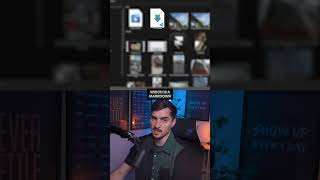
Yeah, so for me, I don't particularly script my YouTube videos. If I'm working on courses or like a, a brand deal where the video needs to highlight certain features, then I do a bit more writing. You know, sometimes spend up to, you know, an hour just crafting that. But in terms of a bit of prep, a lot of the times goes into actually researching. So what I do is like I search the keyword, I search what I'm, what the idea I'm going to create. I look at my other videos already out there in the top 10 lists. So when you search, search something and the first top like 10 videos or five videos above the fold, that's probably the key videos you want to focus on. I look at their thumbnails, see if I can do it better or how they did it. So I could do something similar. Then what I also do is like research, like how they structure their videos. So when I see a viral video I see like, okay, how do they structure this? What are the key good points that work here and how can I apply it in my video? Typically I do that. I also like look at, follow people that in my niche or vertical that are actually trending at the moment and see like what's working. And I typically find like one or two videos that are actually going viral because YouTube's suggesting it and they're just like growing like crazy and the subscribers are going up. So it's like, can I add some of those things into my work? But yeah, usually prep work. I spend one day a week, usually on a Wednesday or Tuesday to just focus on researching. I use Notion, that's my note taking app. And I just drop like all the key points. Usually I just write a short description. I'll have a title, like a section for research. And I just, I just copy paste or screenshot thumbnails, then title headlines just to get some ideas. And then I'll spend, you know, 30 minutes writing headline options. Like I might write up five to 10 different headlines that I can use and then the tags, I do that all when I'm uploading the video. Your edit, a video edit will pop up and I basically do that. All the tags in there. That takes me like, you know, five to ten minutes. Vidiq gives me suggestions, so I pay $10 a month for that software. So I just click on a keyword and it'll give me all these other suggestions that are high ranking to help the video. But to me that's what I do. Like I don't do crazy amounts of writing or scripting. I just, you know, spend a few hours and just make sure that I'm yeah, getting as many ideas as I can and just researching really fast.
I love how most of your prep is like thinking about the title, the thumbnail and kind of the overall structure as opposed to writing every word down.
Yeah.
Which is also good because then it helps you just be more authentic. Reading of a script, your natural. Yeah, that's awesome. Okay, that's very helpful because I think some people are just like, how much time am I going to put into this? So it's not that much time, but you definitely got to do the research. You definitely got to do that prep work. Okay, so now onto the motivation question or the sustainability. Have you ever had a time where you were just like, stuff YouTube?
I have, I think back in the day, like in 2016 or 2017, I was like not seeing a lot of subscribers and growth and I was like, I'm just over it, you know, Know. But like, what motivates me is just seeing those positive comments and seeing the impact I'm making in the, in the industry, in the society and community. Like, people just say, like, this is so awesome, man. Like, you've changed my life or like you helped really help me. This is amazing. Or this tutorial was like one of the best I've seen. Like, this is amazing, this is awesome. And that really just gives me, it adds fire to, and wood to the, to the fire and it adds fuel. You know, that's what keeps me going. Knowing that if I don't share my knowledge and my skills, someone else is missing out, you know, because, you know, I can bless other people, I can help other people, you know, why do I have to just think about myself? So it's like that keeps me going. And like, I remember like during the early years, like some weeks I'll just take off. I wouldn't even do a video for the week because like, you know, I wasn't bothered. I was, I was doing freelancing, all the stuff. So it's like, you know, I was slacking off a bit, but then, you know, I kept seeing the big vision and in my mind and just visualizing like, no, I want to have, I want to get that goal of 100,000 subscribers, you know, because if you have like that, you're in the top like 5% of like YouTube channels because even most channels don't even have 10,000. So if you, if you have more than 10,000 subscribers, you're already in top 10%. So it's like insane. And it's not, it's not about just having followers. It's about like achieving a goal and impacting people's lives. So those are, those are what really helps me keep going and then to make it sustainable. It's like when I started getting the ad sense money, it just made me want to be like, man, this is good. Like, what if I grow this to like, you know, 5,000amonth? Like I could live, I can just do full time YouTube. I don't have to do clients at work anymore. You know what I mean?
Yeah.
So that was always at the back of my mind. At the moment I'm earning around 800 to 900amonth, which is good. So I'm trying to get over that 1,000amonth, which would be great, but obviously it takes Effort. But yeah, to make it sustainable, it's like, am I making content that brands want to work with me? And like, the past few years I've been getting a lot of brand deals, which has been really, really great. So a lot of the times they just, they get attracted to me. So that's one revenue stream. When, when you come to YouTube, you need to make sure you split the revenue stream. So I'll have brand deals. Sometimes I reach out to brands. Like, for example, the other day, Australian software app followed me. I messaged him like, hey, are you interested in doing a paid collab? Happy to have a chat. And they're like, yeah, sure, no worries. Send me your media kit and your rates. And then boom, just got the email, sent another thing, and then now I'm in conversation. And that could be potentially $500 thousand dollars or whatever. The other thing you can do is do affiliate marketing, right? So you don't need to be a digital marketing guru. Anyone could be affiliate. Typically when you go on a website of maybe one of your popular brands or gadgets or whatever, you scroll to the bottom and you'll see like affiliate or join sign up or whatever. You can actually just sign up with an email and then you get a login to a software and every time, you know, in your video or you can put it in your description, you can actually put that affiliate link, or if you're an affiliate with Amazon, you can put a product link. And so every time someone clicks on that and buys a product, you get 10% or 30%, whatever it is. So that's another way to trickle in money to help it become sustainable. So, yeah, you got AdSense, you got affiliates, and you got brand deals, and that's the best ways to keep the money flowing on top of all your client work and other things. So typically, yeah, that's what I do.
Yeah, that's awesome. And I think like, when you're starting out, you have like, you can have these big goals and it can turn into its own business. Eventually you've got your own business running and you're trying to make videos to bring people into your whole world. But then eventually it becomes its own business and you've got another stream or multiple streams within YouTube. But before you get there, you're, I mean, I'm just happy as well to make content that's reaching the people that are already in my sphere. So it's like, for me, it's like I'm gonna keep putting out stuff to YouTube and then by the time I get There, that's awesome. But for now, it's helping me, you know, close deals within my business. It's. It's helping people, it's building authority with people. It's actually reaching out to my sphere. So it's like, you got the short term, which is awesome, and then you got the long term, which it can just grow exponentially. But I do really love what you said about the motivation, which is like, seeing how you're impacting people and like, letting those, you know, the comments of people actually inspire you to keep going. And then the big vision, like, do you have a goal? Do you have, like, what's the reason why you're doing business, why you want to start making a YouTube channel or putting out content and keeping that front and center? So that's right. I think that's an amazing note to end on. Do you have any last golden nuggets that you want to share for someone who's like, thinking about doing all this stuff?
Golden nuggets.
Can be random.
There's so many things I'd say. Just believe in yourself and be confident. Because, you know, a lot of the times people look at the end result, but, you know, you grow with time. It's a journey, it's a process. But the initial step of confidence to say, like, I'm gonna take this risk. I'm gonna step out in faith. Just. Just do it. Because take action, man. Because when you take the action, you're gonna see the results. You're gonna see the benefit to your personal life. Like, for me, I was a shy kid, you know, and the thing was, like, I couldn't even talk properly. My first 50 videos were horrible. I couldn't talk properly. I had pimples on my face. The lighting was bad, audio was bad. It was horrible. So it's like the confidence to just, like, believe in myself. Like, I can do this and keep going. It's like now I'm at a level where, like, I have so much impact. I have, you know, up to 10 revenue streams. I'm getting speaking gigs, engagements at conferences. I've been on virtual summits. Now, just because I built my authority, my audience, and just because I decided to be confident in myself, believe in myself, and just jump on camera and start talking to the camera. And that's what I encourage you just take action and just hit record. Don't worry what people think, because you're going to see two years time from now, you're going to be a different person and the people around you are going to love it. So that's what I encourage you to do.
Awesome. That's an amazing last note to end on. That's a very golden nugget for us. But, Jeremy, I just want to say thank you so much for jumping on, sharing all your wisdom. Guys, if you want to check out Jeremy, there'll be some links to just go follow his stuff. But once again, thank you for jumping on and we'll see you guys next time.