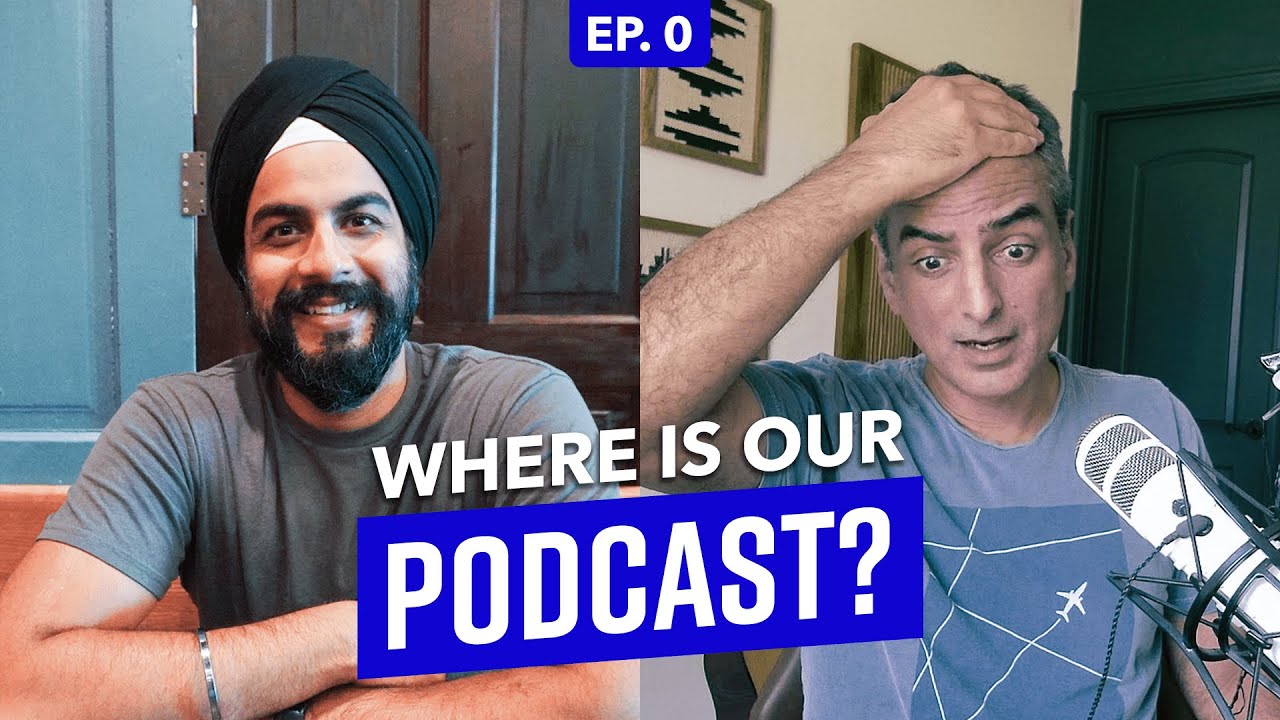
Jesse Pujji coaches Andrew through procrastination on publishing podcast episodes using the Above/Below the Line model and the Drama Triangle. Andrew realizes he gets stuck in guilt and self-criticism, and commits to publishing his first episode by Monday.
Chapters
What's your vision for these?
You're the expert, dude. I just, just have fun with it. Come on, like, welcome everyone. We're gonna do this new thing we're trying. I think the more authentic we could be, the better.
All right. So we do have an agenda, but here's the first thing that I wanted to bring up, Jesse. I haven't yet posted the first episode of the podcast. We have recorded now 4 episodes and I haven't posted them. And I'm the podcast guy. I've done it for other people. I've done it for myself. It is just It's taking me forever. And one of the reasons why I didn't want to have this recording right now is because when am I even going to get to publish it? And it's one more item on our list. And just because you're Jesse and I feel like the best, the best way to relate to you is to just dig deeper and be more honest and open. I have to say that one of the things that I'm realizing is that when I When I have trouble doing something, I double down on having to do it and then quieting down until I get it done. It's like, well, I didn't publish the podcast episodes. We're still editing. I better just shut up about it and get it done. I can't ask any, I can't burden other people with it or even talk about it. I've gotta just get it done. So there it is.
Should we do like a live conscious leadership coaching session on this? For 5 or 10 minutes?
Anything, because I hate suffering in private about this and I also hate not having it up.
Well, let's do it. Okay. What I hear is you are struggling with getting podcast episodes that we've already recorded posted online.
Mm-hmm. Yes.
All right. Would you say you're above the line or below the line?
Would you explain what above the line is? I know where I am, but I think if someone's gonna listen, they should know it. But also I should just be clear. About what I'm accepting about myself when I say I'm below the line.
Yeah. So, so this is a paradigm. It's just a kind of a framework that they use that I, I use and you use now, which is there's either, there's 2 states basically of consciousness or, or being. One is sort of this open, curious, wanting to learn, like laughing. And then one is more of like a closed and, and threatened and scared state. And, and even when you talk about the brain chemistry. There's the threatened, scared, I'm under threat, something is coming for me. And then there's kind of like the, no, I'm, I feel safe and I feel open. And you could think of it, you know, depending on how spiritual you are, some people think of it as like your ego being more triggered versus your soul, or are you present or not present is another way that it's framed. But it's all the same thing essentially, which is what state are you in? And, and a lot of the work, as you know, is, is in developing awareness over which state you're in at any given moment or any given time. So.
Yeah.
In this moment around this issue, what state are you in?
I'm below the line for sure. And it's interesting actually that you said be aware of it because of the coach that you introduced me to and that you set me up with. Actually, I've got an alert that goes off on my phone that just says random times of the day, are you above the line or below the line? And it has been interesting for me to notice when I'm below the line and realize, wait, I can change this right now.
Yeah.
But what I'm not aware yet—
Well, and, and remember, 95% of people are below the line 95% of the time. Like that's how we're wired as humans to be in this state of threat because we actually needed it originally to, to survive when a lion would eat us or something like that. But now we have this, we don't really have that as a physical threat, but we use these other things like podcast recordings to create a threat for ourselves. So, okay, so you're below the line. So we gotta do this somewhat quick cuz we have other topics today to cover. But when you're below the line, you're in this threatened consciousness. And one of the tools that, that help you understand where you are is called the drama triangle. And the drama triangle is again, states of consciousness. So you're either in a victim state of consciousness, you're in a villain state of consciousness, or you're in a hero. The victim is the one who feels bad for themselves. The villain is the one who makes themselves wrong or bad or other people. And the hero is the one who goes, oh, I have a quick solution that's gonna solve the problem, but they don't actually deal with the core issue at hand. So for just a minute, let's pretend you're, you're a little drunk and get on this triangle and just, just bitch about the issue.
Um, big thing is it's villain that I think I go into. It's like, damn, how did I, how did I cause so much trouble by not publishing, by not moving it faster? Why am I not able to get The editing done right.
Make it bigger. Make it bigger. You sound too controlled. Pretend you're, you're, you're like, okay, what the hell, Andrew? Why can't, why am I not doing this?
Why am I not?
What's wrong with you?
Why am I giving into all these other issues? Why didn't I at least spend like 10 minutes a day? Why don't I go on a campaign to make sure that the thing gets done? If I go on a campaign and I commit that I'm gonna get to do this by the end of the week, then every day I will Com— commit to doing something, get on a call with the editor, check in with her, give her feedback, and then come up with great ideas. Like when she was stuck, instead of spinning my wheels trying to think of what to do, when I'm in the right space and it's a campaign and needs to get done by the end of the week, I would fig— I would've figured out faster that I could just reach out to Chad who, who's been editing, or Michael in the Philippines who's been editing and he's a phenomenal editor. And, you know, and I connected her with them and they were able to help her within 15 minutes. Solve all the problems, or why didn't I do this sooner? Why don't I just do a campaign where every issue is handled that quickly and, mm-hmm, and that clearly and with that authority and leadership and what's going on?
Then, then what happens in your brain? What happens? So you, so you're, you're beating yourself up. Then what happens in your brain?
Oof. Then what I do is I think of one thing I could do to step, to step it forward so that I can step it forward and just stop that, that record from going off in my head.
That's your hero move.
Oh, that's interesting. Yeah. Yeah. Okay. So then the hero move is—
I just gotta move it a little forward.
Yes.
I just move it a little forward so I don't feel this feeling.
Yes.
I don't wanna feel this. I gotta move it forward. Then what happens?
Hmm. I move it forward, but it's not enough. And then other things come up and I tend to them and I don't come back to, to the next thing fast enough. Okay.
And then you beat yourself up over that.
And then I beat myself up over it.
What's the victim? You, you didn't usually, this is usually a, a, a pattern people go into and I didn't hear your victim. What's your victim?
I don't know that I really have a victim around this, but maybe it's just not loud enough. Yeah.
What's, what's the part of you that feels helpless, say? I got too much on my plate.
Yes. The too much, just too much on my, my plate.
Too much going on.
Yeah.
What does that, let, let's give that victim some voice. Uh, there's too much going on.
There's too much going on. I keep getting more messages, more requests, more needs from the sponsors who want this.
It's never gonna end.
It's, yeah. Even if I get to finish this, there's gonna be another thing. Actually, I never feel that exactly, but it's more like There are all these things that have already been given to me, and I, of course, at some point I'm gonna say yes to them because there are too many things and I can't ever say no all the, all the time. Even if I am at 5%, I'm still just at way too many things.
You, you sometimes, I say, I hear you talk about like not wanting to let me down. I make up a story that that's part of your victim is, is like, oh, I, I'm gonna let someone down.
That is a big one. You've said in the past that you're not as moved by the income statement numbers. numbers for the week as you are by the people who are affected by them. I think I feel the same way on the positive, but also on the negative. I'm like, damn it, Jesse's counting on this going public and he wants to do more of them. And what about Nak? I'm letting him down because Nak, the COO, has been organizing things. And what about Toinette who's editing this? She's, she wants to get this off her plate too.
It's almost like your victim consciousness is you don't get to let yourself out. You're mean to yourself and then your victim consciousness applies to other people. Poor them. They're gonna They're gonna not, maybe something bad is gonna happen to them.
And when you said the villain is one of the items, one of the, one of the characters, I realized, oh yeah, I'm the villain who's doing this to all these people.
Right. You make yourself the villain and then them the victim. That's part of your, it's all just a mental pattern. Mm-hmm. Right. Okay. So, so just to repeat it back to you, you, you have a lot on your plate. You, you kind of feel like it's never gonna end. You've, you're, you're disappointed that you're worrying other people, that you're gonna let other people down. So you start beating yourself up going, what's wrong with you? Why can you not get this done? Then in order to relieve yourself of that, it's like you move something forward a little bit and then, and then you kind of fall back right into that pattern.
Yeah.
Does that feel right?
That's exactly it.
Is there anything more coming up as we're talking about it?
The only other one is that I then go into more, I, I've, I picture it as not just a circle that's flat, but a circle that just keeps going down and down and down. And part of the down is— Yeah.
Like you can't do anything right. Why are you even doing this job?
You're not even cutting work.
He's like—
No, more like you go into private huddles. So then where, when I'm above the line, I would include other people and work with other people and solve it. When I go below— Oh, I see.
I see. One of your hero moves is—
Yes.
One of your hero moves is to, is to shut other people out and to, to, to cut yourself away from everyone.
I'm like 2 days away from pulling this all back into Descript and editing it myself, or pulling it into Riverside and editing it myself and not, and not even talking about it and then just getting published. Yeah.
Okay. So you're below the line. You're feeling scared. You see that?
Mm-hmm.
You're feeling threatened.
Mm-hmm.
Can you take a breath into it?
Yeah.
Can you feel, can you feel the fear here right now?
I feel less of it now.
Sometimes when you just put attention on it, it goes away. Where, where does it show up in your body?
Uh, lower pit of my stomach and then in a cloud on my head.
Does it move at all? Like when you put attention on it?
Just dropped something. Uh, no, I, I don't think it does.
Can you, can you allow the fear to be here? Like, can you allow whatever it's showing up in your body to be there?
Strangely, it doesn't feel present anymore, but I I can, I, it almost feels like I, like self-flagellation to bring it back, like to force it up so that I can hit myself in the head with it.
Well, just imagine the amount of work you have on your plate and the fact that you haven't published the podcast. Like put yourself back in that thought pattern for just a second and then see if the fear shows back up.
Truthfully, it's harder. Maybe a little bit. Yeah, maybe a little bit.
Sometimes, sometimes when you just, well, that's how you know it's an unconscious pattern, right? Sometimes it just, it happens like when your mind is idle. And if you really wanna get spiritual, it's like your ego, just your ego does that when you're, the more idle you are, the more your ego is there to kind of like fill in the space. Okay. So, so you're a little, you're a little threatened. You're feeling a little less scared. That's good. Um, can you accept yourself as scared?
No.
Okay. Why not?
Because I don't think of myself as a scared person because if I do accept that, then I feel like I'm taking on weakness and I'm becoming weak. And yeah, I think that's it.
So what, so you're not willing to accept yourself as actually feeling this threat?
Maybe I am, but I mean, I, I have to really stop and, and say, this is an exercise, go for that and see what happens.
Just in this moment, will you, can you accept yourself? You're like feeling, you're feeling fear.
Yeah.
You see that you're feeling it.
Yeah.
What would you say? What would you say to your son if he said, dad, I'm feeling scared. I'm, I'm worried that, you know, I'm never gonna, I'm never gonna be able to write this science book that I'm writing, the sci-fi book. What would you say to him?
I know exactly what I would do. I would do the how to talk so kids listen and listen so kids talk methodology, which is just say, oh yeah, what's, what's going on? And let 'em just talk it through and then I would come up with a small first step for him to take and then help him see that he, that it's okay. Maybe I would even tell him a story about how I used to do this really late and then I realized that.
But what would you, those are, it's interesting that you move into solving. Do you notice that, that, that's what you're, that you're solving?
Well, I start with listening, but yes, then I do go into solving. What, what's another step?
But what's, what's behind that? What do you, what, what are you feeling behind that? Towards your son?
Oh, um, appreciative that he's coming to me. Realization that what he's saying is normal and that I'd experienced it.
Normal. But, but there's something I, I, I think there's another word that you're, that you feel for your son when you, in those moments.
And is it love? Are you gonna make me say love publicly? You know how shy I am. It, yes.
But it's some form of compassion or love. It, whatever you're doing, you're doing because you're like, hey, it's okay to feel that way.
Yeah.
And I, I wanna like, are you willing to do that for yourself?
Less so, but only because we're, we're talking publicly. Yes.
What the—
It's strange. I mean, I, I wanna be open with you. It's really weird to say that because I, I understand that that's not, not the way I wanna be, but I also—
Well, dude, the first time that Dave ever said this to me, you know what my response was? Mm-hmm. What he did this when I was in your shoes in a coaching session, I was like, get your shit together, Jesse. Come on. What's wrong with you? Because that's, that's what had been said to me when I was scared. So then, like, when he was, when he was literally like, what would the question he said to me was, what would you say to your son if he was scared? I'd be like, come on, get your shit. Like, let's go, let's go. Don't be scared. Like, and it was such a moment of an unlock for me because I was like, oh my God, that's like. That's actually what I say to myself and that's what I say to other people. That's what I say to my wife and what I say to my team. And like, holy moly, like it was such an unlock for me to realize there was other things you could say to somebody who was scared.
Yeah.
Uh-huh. 'Cause I had never, 'cause my response had always been, oh, you're feeling scared? Like, get over it. Let's go. Let's move. Right? Let's like, it's all right. Yeah. You know, it'll go away. Let's, let's go get to work. Like that was like, that's how I dealt with fear for such a long time and, and it kept me Stuck. And, and then over time now it's like, oh no, like it's just, it's okay to feel scared. It like, oh yeah, you know, it doesn't make you less lovable. It doesn't make you less worthy to feel, to feel scared. Like you said, you said something about toughness or, or like that being, I make up that there's some like connecting your worthiness, like, oh, I can't feel that way.
Yeah. Okay. So now.
All right. Are you, are you willing, are you willing to accept yourself?
I am. Yes.
Okay. That you're scared. Are you willing to appreciate yourself? What, what are a couple ways you could appreciate the fact that you feel this fear?
Uh, that it matters to me and I appreciate that, that I'm doing things that matter to me. I, I never wanna do anything that I'm not fully invested in emotionally.
Uh, you know, the one in you who wants to be successful, who wants to win.
Yeah. That I care about the, that I care about the product enough to sweat it or worry about it instead of just being like some kids I remember in college who would be this, let's just bullshit my way through this test. I go, I'm not doing the test if I have to bullshit my way through it or the report. Okay. I'm, yeah, I'm willing to accept both of those.
You have high standards.
Yeah.
What, what else do you see when you think about appreciating yourself for?
I, I see worry. I see worry that now I'm going to not get it done because I'm so busy appreciating where I am instead of. Pushing myself further. Okay.
Can you continue to accept your, your, your, your low line? You're accepting yourself. Um, you just say it's just a human, it's just a human thing. Yeah. Natural part of being human.
Yeah. I can do that. Okay.
So now the next part of this process, and you, you've done it with Dave, I assume, is they're called willingness questions. So I guess the next question though is, are you willing to shift above the line?
I am.
Okay.
I would like to. Eager.
So I'll ask you these willingness questions and, and the point of these, answer very honestly. And sometimes in my experience, having done it, the nos are actually more valuable than the yeses, cuz the nos point to the area that's keeping you stuck. Mm-hmm.
Okay.
Um, are you willing to feel all your feelings around this issue?
Hesitating, but yes, because I know it's part of a process that will get me above the line. Sure.
Are you actually willing though? Are you willing to feel your fear, your anger around this, your fear?
Yeah.
Are you willing to feel the anger you feel towards yourself?
Yeah, I, I do that a lot, so yes, that one's easy.
No, I don't know if you do it actually.
Oh, really? Yeah.
My story is you think it, but you don't actually feel it. And there's a big distinction there.
Like the anger. Am I willing to feel the anger towards myself? You're saying? I think so. I could be wrong. I think so.
I, I think if you, do you, have you, have you and Dave done any of the CLG feeling feelings? No.
What I'm thinking is like, I would wake up in the middle of the night multiple times with like anger and frustration towards myself for not having done something. And then I'll write some, a note for the next day to, to get on it.
Right. But the, but, but that's not, there's a distinction between thinking. That's not, so, so one of the things that conscious leadership talks about is Feelings, authentic feelings are only 90 seconds long. They're legitimately feelings. They're like, you know, when you get really mad in traffic or something, you feel something and it kind of goes through your body and then it exits. If you actually let it go, like on a roller coaster, your fear, you just scream. You're like, ah, and it's gone. When you get off the roller coaster, you're like, I'm good. I don't feel that fear I felt anymore.
Okay.
And what we, what they, what they talk about in conscious leadership is they call it a cognitive, emotive cognitive loop. Which is you keep yourself in that state of, of sort of where you are by constantly rethinking about it versus actually feeling the feeling.
Oh, I see. You're saying that maybe I think I'm feeling it, but what I'm really ha— what happens is I feel it for a second and then I go into my head about it instead of feeling that. Yeah, I do. Then I, I literally will go into, into—
Would you, would you be willing for the next 10 seconds to scream at the loudest volume you possibly are willing to scream at to mirror what this feels like? How you feel about your own anger towards yourself.
It's gonna bring my wife into the room with the baby, but just put a, put a, put, put the thing in your mouth.
Cover your mouth. That's the sound.
It's like the sound.
Take a deep breath and, and do it again. Yes.
That's the sound that I hear in my head.
How do you, how does it, how does that feel after doing that?
It feels like I've, it feels like I'm aware, like what I sometimes would like my, I don't see a therapist often, but what I would sometimes like him to do and what I would always like my wife to do after I've expressed something, to just hear it and then reflect back this voice, the sound.
How does your body feel? Do you, where's it, is the fear still here or is the fear sh— do you feel like it's shifting?
I think maybe I'm a little bit running away from this because what I'm thinking is, oh, this is such a cool exercise. I should show other people that this is part of our, of our relationship. And instead of feeling it, I'm thinking ahead to how I can use this. And that's, that's not helping. That's another way of running away.
Stay, stay here, right here. Stay in the present for just one second. Do you feel like, did that feel relieving? The groaning, the like, ah, yeah.
Yeah.
For the, for the, for the purpose of time, 'cause I know we probably want to move on, like when you have this thought pattern go through your head for the next week, will you scream or do whatever sound comes Like instead of thinking about it and getting into that loop, will you just feel through it? Will you just do that groan you did? And then like we can talk about it.
Middle of the night, this happens and I go, damn it, I still didn't do it. You're saying instead of taking out my phone, writing a note for the next thing that I should do tomorrow to move it forward, just lay there in bed and feel the pain.
Well, yeah. Feel, feel whatever you're feeling.
I'm willing to do that.
That anger or that frustration with yourself, let it out. Let it, let it flow through.
Okay. I'm willing to do that.
And I, I've done this. I'm the master of this. But like what we do, part of the reason that this perpetuates, like there's a saying of whatever you resist persists.
Yeah.
And so all this whole thing is like a fancy mechanism you've designed to not actually feel the feeling of like frustration. And I have a, I have a sneaking suspicion that there's some disappointment or sadness underneath that.
Yes.
Once you let, let the anger through that you're Yeah. Do you feel it now? The disappointment or sadness?
Feeling the relief for talking about it.
There's some version of like, why can't I get all this? Say it again.
I'm feeling the relief for having talked about it. Yeah.
Am I, I'm making up a story that there's some sadness, like the victim version of you of like, oh, I'm not able to get all the things done I want to get done. And what's wrong? Like, oh, that's. That's sad. I'm disappointed. I'm disappointed in myself.
And I, and then it goes to, I don't deserve to go running now. I don't deserve to whatever. Hmm.
Are you willing to let go of being right that your ability to upload podcasts on time has any connectedness with what you deserve in this world?
Ooh, I would love to. I don't know if I'm, if I'm ready to do that, but yes.
For the next 10 seconds, can you just see that they have nothing to do with one another?
Yeah. Yeah.
They're just completely 2 independent events that have no connection other than in the, that, that your mind and your ego has decided to connect them in some way.
I, I gotta just say something like just related to this. This is how running is one example of it. Running will take an hour. Here is how the you don't deserve comes in. I have this, I'm in Texas, it's freaking hot. I have a, this is maybe too personal. I have a, like an itch right here in my crotch from the heat. The doctor gave me medicine. I will some days rush in to sit down and work. And not put the little cream on there because I don't deserve to take time. And it literally is a minute. I don't deserve to take time to do this because I have so much else to do. And it clearly is not true there, but that's, that's the level that I take it to.
It's like a game you play with yourself. It's like when I was in 8th grade and I wanted to make the basketball team, I'd be like, okay, I need to dribble 150 times. Before I'm allowed to go get a sip of water.
Yes.
And your version of that is now the adult version of that is like, I can't put this cream on until I get these 5 things done.
Yeah.
It's just a little, it's like a little way you keep yourself motivated, right?
Yes.
It's like, it's like a good way.
And it's good, but it's also bad. It's good because it then says, okay, every—
Well, but what if it's neither good nor bad? What if it's just like, it's just, it just is, it's just what you do. Like it. The question for you is just, do you wanna do it that way or not? Or like the, like another version of this, you know, Dave has done this with me, maybe he's done this with you, is like, what are the benefits you've gotten from it and what are the costs of it?
Yeah, I, I've heard you say stuff like that before and I think that that's the truth, that it's, there's clearly benefits that I've gotten from this. If I marshal, if everything depends on this, then I'll do it. But also if everything depends on this, then What happens is I'm a very painful person to work with at times like this. Like, because—
Well, let, just name, let, name the 3 biggest benefits you've gotten from, you, you do this thing, you're describing it, which is you hold, you hold yourself back personally, your, your physical body, whether it's your itching or your running or whatever, you literally penalize your physical body, your, your, yourself.
Yes.
In order to motivate yourself to work in a certain way.
Right.
What are the 3 benefits you've gotten from doing that for your whole, for a huge chunk of your life, presumably? And what are the 3 biggest costs?
The 3 biggest benefits are it really did help my company grow. It really did help me end up in a relationship that mattered, and it got me to do things like put contacts in my eyes back when I needed them. The negative is that it, it hurt my health. Not super big, but it did. It kept me from having the enjoyment that I would want in the years that I, that I did it. And, um, I think it's also hurt my ability to create a fun business, fun environment to be in. You know, it was all very dire for everyone around me because it was dire for me.
Right.
Right.
Do you, are you willing to let go of this pattern?
Yes. I'm willing to.
Are you actually willing to let go of it?
I am. Because as I talk about it, it sounds really silly. If like, if you see the math in front of you and you say, or if you see the calculus and you say, do you want this for that? I don't think I do. And it doesn't really lead to it. Yeah.
Yeah. I, I, what I would tell you is these patterns, for me at least, they take a lot. It took a lot to let go of. Even when I knew they weren't serving me anymore. And I think in general, the way to think about this is like when you, when you recognize a pattern, and I see you do this a lot, I knew I used to do it. I still do it. Okay, stop that. I'm going to stop that pattern. And that's actually just like fear on top of fear. You use fear to stop the pattern of this other fear thing and you kind of get stuck and winded up in this knot. And actually like the, the, the, the way I found it to be effective is actually appreciate whatever this pattern was. It served you amazingly well for a large part of your life. It's done a bunch of great things and it's a little bit more of a soft let go. It's like, Thanks so much for doing this, but now I'm 40-something and I have a family and I don't, I don't want to do this anymore. I'm just choosing, uh, it's not bad or good.
Yeah.
I just don't want to do it anymore. Yeah. I just don't want to be this way anymore and I'm going to make a change. One other homework assignment I can give you that Dave gave me many years ago that sort of blew my mind was, um, make this pattern about yourself huge. So in every minute for the, for the next week, I want you to constantly withhold. Don't, don't allow yourself to eat until you get a certain amount of work done. Until you hug your wife 10 times, don't allow yourself to go to the bathroom. Like, make it extreme. When he first told me this, I was like, dude, that sounds insane. Like, I have a problem. No, like, I don't wanna do that. And he's like, just trust me, just do it. Mine was, mine was a different pattern. It was like, it was like a, uh, comparing myself to other people and wanting what they have versus being happy with the thing I have. That was my pattern. And so he's like, pretend you want a different wife. Pretend you want different kids. Pretend you want a different car. Pretend you want a different, like, And I started doing it and, and you said this just now, but it started to feel ridiculous. Like it started to feel absurd that, that I like would, you know, but I do it, but yet I would do it all the time with my business or I would do it with different employees. And, and so the, the purpose of that, if you try it even for 2 days, I think what it does is it really, it really makes, it kind of puts a red flag on that pattern.
Yeah.
The next time you catch yourself doing it, you're like, oh, I'm doing that again. Okay. I, and then you're not mad about it. You're just like, oh, I'm, I'm, I'm gonna let, I don't wanna do that. I'm gonna put the, I'm gonna put the cream on my, my body, or I'm gonna go for a run. 'Cause like, I just noticed that, I noticed that, that, that is, I'm, I'm, I'm back. Like that pattern's showing up again and I'm not mad about it. I'm not, I'm not scared about it. I'm just not gonna do it. Like I can see that pattern is back.
I'm up for trying that.
Make it big.
Okay. All right. I'm up for trying that.
All right. So, so we started this conversation 'cause you were below the line about these podcast things. The last willingness question I'll ask you is. Are you willing to make clear agreements around this issue?
With who?
Me? You?
You mean with this, with, with, uh, the podcast?
Yeah.
I am. I think it would help me to, to do that. So it would help me, for example, to just say I'm going to commit to just publishing this as the first episode before anything else. With light to no editing and just relieve myself of the, of the pain. Yep.
Well, will you just, let's just do it. What, by when will you upload the first episode?
Well, I, I like that you always say, okay, if we're gonna do this, let's have a time to, to get it done. Let's say by Monday, by the end of day Monday. Okay.
You, you, just to be clear, you're not under any duress from me. Like you can do it, you can not do it. Like, do you feel, do you feel, do you feel like right now in this moment you could not do it if you don't want? Or you still have the pressure? Do you still feel like you have a pre— a thumb on your, on your—
Well, what I'm feeling is that I could just Easily say I've given Toinette the editing feedback on the first episode. I think she's got enough there that she could get it done to publish that other episode by Monday or even by today. I kind of like the idea though of saying this is gonna be the first thing that we publish cuz it creates the right atmosphere and it allows me to just get it done. But is that me being the hero again going, look, I can solve it. I'm just gonna go into Riverside, I'll hit the edit button and then we're ready to go.
Only you, only you know that the, the most interesting part of this work is like, do, do you feel above the line, right? And do you feel Threatened? Do you feel like closed physically or do you feel open, curious?
That's a good realization. When I think about like throughout the day when the alert goes off and says, are you above the line or below the line? One of the things I realized is when I'm in the moments when it catches me above the line, it's like such fun work. I'm going, this is so cool. I, I'm doing this and I'm going to adjust that. And it doesn't matter what anyone says because I got this crazy idea and I want to do it. When I'm below the line, it's, uh, if this doesn't work, then I'm so It's so bad. Okay. So do I feel really like excitement about getting it up and edited and doing all that? I do. I'm excited to, I feel relieved by having it, by, by just editing and publishing it. What happens if I don't hit the agreement?
So you'll get it done by Monday, end of day?
Yeah. What happens if I don't though?
If you don't feel that way? If I don't get it done, you go back to, you go back into that?
No, if I don't get it done.
Well, we'll, we'll, we'll cross that bridge. Well, I mean, we've talked about integrity and agreements, right? And I think you and I are— Back and renegotiate. 80, well, 85% of the time we'll do what we say we do by when we say we'll do it. 10% of the time we'll renegotiate ahead of the deadline. And 5% of the time we may miss the deadline, but we'll go back and clean it up. Meaning we'll, we'll acknowledge that we missed a deadline because Because you and I have chosen that we want to keep integrity as a value between us, that we think that's an important part of just being, being good partners to each other and all that stuff. Um, that ratio, by the way, could be 90, 10, 1, or 99, 1. It could be 95, you know, but I think you and I know that sometimes we're gonna miss deadlines, sometimes we're gonna renegotiate, 'cause that's how we roll and, and that's okay.
Okay. All right. I feel you. Yes, I do. I find it to be, I, I find it to be just fun to let it go without trying to get it the way that I want it to be, to just get the rawness out instead of trying to buff it all.
Yeah, there's the last thing I'll say on this, we can move on, is like the, it, part of me, part of me, my, one of my wishes for you for the medium to long haul of all of this is like, You can approach this with the play genius curiosity that exists inside of you and not the part of you that says this is dire and really, really important. And if it goes wrong, it's, it's the end of the world. And, and I like, I, it's so funny cuz knowing you, I see both sides of you so clearly that way.
Yeah.
Um, and this guy, like the, the second guy is like, he's weak and he's afraid and he's worried and like, You know, I don't know if worth at some point thinking through, like, I don't know, what if this did all go wrong? Like, would you, you'd be fine.
Like, I know I do keep hearing your voice in my head because in my head it's always, if this doesn't work out, then here are all the lists of things that, that suck. And there are a bunch of others that I hadn't even thought of. And I've said that to you before about something. I know what it was. It was like having sponsors in the newsletter. And I go, well, we can't, we're gonna overwhelm the, the Audience, if we start newsletter sponsors all at once, what if we go and you go, Andrew, it's fine. Who cares? Everyone knows we're experimenting. We'll tell 'em we're experimenting and we'll calibrate. And so I, I hear that voice in my head, which is actually a very healthy attitude, especially, I mean, if we're working together to know that that's your attitude, it makes it feel more okay for me to take it on. Yeah.
I mean, it's still a kind of a hero thing, but yeah. 'Cause it's outside of your, it's 'cause it's outside of yourself, right? I want you to say to yourself, I'm okay. Not, none of this is a big deal.
This is a safe zone. Yeah.
You've got 3 beautiful children. You've got money. I think you're fine. You've got, you're young, you're able-bodied. You, you, you'll be okay no matter what happens. You'll be fine. And like, you really wanted this to work out. There's nothing wrong with that either. It's exciting. You're, you're, there's a lot here. We're both excited about it. And, and there's something to that that I think is also very powerful.
All right. Do you want to talk about some of the exciting things? Yeah.
What should we talk about next?
How about we shift to you? Like you're, you're in Europe. One of the things that I noticed about being in Europe is you're, I'm starting my day. Someone shut the light off behind you earlier because they're closing out the day in Europe. What time is it there?
It's almost 7 PM.
What's it like to do that? I'd love to work from Europe, but I'm worried about missing my family and friends in the evenings. Because you're keeping US time.
Yeah. I mean, you know, a friend of mine, the former CMO of Dollar Shave Club, told me about this a few years ago. And, you know, one of the, like, I'm in an interesting position, right? Which is I don't have to work. I enjoy work. I enjoy all the stuff we're doing. And I try to make sure that I also only do the things I enjoy. Um, but like, I like working hard. Like I work, you know, you know me, I work, I work pretty hard. And most of the time, most of the year, that's fine. The kids are pretty busy, right? I drop them at school. They have their activities. I see them, I do bedtime and, and like, that works for my balance. But in the summer they're like totally available. And I like realize, like, I'm like, man, I don't like that. Like, it makes me want to be like, I like, let me take the whole summer off with them, or let me take parts of the summer off. And so what he told me is super interesting about Europe is he goes, look, you can wake up in the morning at 8 or 9 o'clock. You can be with your kids all day long till 3 or 4 o'clock. And then at 3 or 4 o'clock, that's like 9:00 AM on the East Coast or Central Time. You basically can work from 3 or 4 till 11. Like last night I was working till midnight. I had a meeting with Casey and he's like, it's very productive. You get a lot done. Your kids don't realize that you're even working because, but like, they're pretty tired by the time the end of the day comes for them. And no one, everyone works like you're on Zoom and you're around and you're available. And so I've done it, I think for the last 2 weeks in San Sebastian. Today's my last day and then I'm going to take the week off next week, as you know, and kind of vacation around here. But Um, it's been great. I mean, it, it generally has been, I like, I would endorse it to someone. I think it's a little weird and tiring, especially at first. It's like, oh, the, the day's ending now. We've been biking and hanging out all day. Now I'm gonna go, I have to like get, get on all of a sudden. I think that's been a little tough. Um, and then I, I mean, I just don't like remote work. I like being in person, as you know. So it's a little like, I'm a little, I feel a little on an island here, literally, like just sitting here trying to figure that part out. That's probably been the downside of it. Um, but in general it's worked, it's worked quite well. Like I would recommend it.
And you're then, so today you went bike riding with the kids, you're having lunch with the kids, you're spending time with them.
Today we woke, I woke up at 9:30. I like meditated, you know, got, got my day going a little bit, got some iced coffee, hung out in the morning with, and just everyone chilled with the baby and stuff. And then Around 10:30, we went and rented bikes and we biked to like, we're in San Sebastian, Spain. We biked to like 5 different parts of the city. It's a very bike-friendly city. We biked on the beach boardwalk. We went to this park where there's peacocks, like lots of pictures, hung out. It was a blast. It was like a total blast. Came back, the siesta time here is around 2 or 2:30. So came back, chilled for like an hour, had a brunch with them, like ate some food. And then had my first call at 3:30 local with Carolyn, uh, the former, you know, CEO of Unbloat, who's now been doing marketing for Growth Assistant. And, uh, and caught up with her and, and then did, you know, content and then doing this. So it's been, it's been great.
What about dinners and evenings and socializing with locals there? Do you, do you miss that?
Well, next week I'm taking off, so I'll be, I'll get my chance to do a normal vacation trip. I think, We see people during the day. We've, I've done super late dinners with my wife, so 11:00 PM local time, her and I will go get dinner. We go to Nobu. Um, so we, we've done a little bit of it, you know, I think I've had a couple early evenings where it's been like whatever. And I've, I also disappeared for an hour of my workday to go grab dinner. So yeah, I mean, it's, you just plan around it and manage it. I have a cool, this is like a Regus office space.
You know what that is nice about Spain, I think they do Dinner in Spain later. I remember in Argentina they would start dinner at 11 o'clock or 10 o'clock, so I guess there's still an opportunity for that. Yeah. Wanna talk a little bit about what's exciting at Bootstrap Giants?
Yeah, I mean, I gotta go in 7 minutes, so I don't know what other topics could we chat about just 'cause I feel like that deserves its own episode.
I think what's really interesting is Charlie is a college student that You all found for us, um, through someone who had worked for one of the GatewayX companies. And he's a writer who I sense was maybe giving up on writing and was gonna pick another career choice. And he started writing for us and he's doing great. Like you could see that there's this, he's picking up on trends, he's picking up on writing that's exciting him. He's experimenting. It's just been so fun to watch that. And I remember you saying that. People can learn this and that Achint, who's now managing your other company, Growth Assistance Marketing, was a writer. And you go, this guy wasn't even born in the US. It's English is not—
Well, here, here's a, this is a great way to end this episode. I think like, you know, 2 of the big business trends that I've had the fortune of being a part of, one was, was Facebook advertising.
With Ampush.
The second one has been, yeah, with my first company Ampush, the second one has been organic. Content on Twitter and LinkedIn. And both of them, I kind of caught the wave at the right time, which is super important, I think, for any kind of new business you want to start. Um, and in both cases, I've run into the same problem. And I was telling you this with Facebook, we tried to go hire people who knew how to do Facebook ads. There was nobody because Facebook ads had never existed. And so we had, we had hired one guy at search. He was pretty good. He was actually very good. But then we hired another person at search. They weren't good. And we just kept struggling to find people who could do this thing called Facebook advertising. And so then eventually I said, you know what, the thing I did in my career, my first jobs were the— they were these tight, big firms like McKinsey who would hire young, bright people and just teach them how to do the thing. And so I said, let's try that for Facebook ads. And honestly, we never looked back. And of the first class we hired, one guy is like the head of marketing at DoorDash. He's got 100 reports and a $200 million budget today. Like, We basically have created the like coaching tree of digital marketing. And I think the same thing is going to happen with us, dude, with, with our, with our Bootstrap Giants content stuff. Because Achint, who runs Growth Assistant, is 21 years old, this guy Charlie, like, and I think anyone listening, like, I think there's so much value in hiring young, motivated, smart people, showing them the problem, and then working with them and coaching them to teach them to become strong at it. Because, because the book has never been written, there's probably like, 100 people who know how to write really good social content right now in the world. And just like back in the day, there was maybe 50 who knew how to do Facebook ads. I knew who all of them were. And I think that, that thing, when you find a new thing, don't try to teach an old dog new tricks. Like, I think go find a young, bright, smart, you know, smart person and teach them how the game works. And the way I convinced Achint, by the way, it was like, oh, this is just a video game, dude. Every day you, you do some things in the video game, you get some feedback and like, you know, whether you won the level or beat the level based on how big the impressions are. At first he looked at me like I had 3 heads and then he started doing it and he, he would text me these excited things like, oh man, I'm on the next level of the video game. And I think there's something about young people in that sort of orientation that I think is really powerful. And, and it's like what I think we should also do as we grow and hire. And then, but by the way, the other awesome thing about young people is in 2 years, Achanth is gonna be able to train 3 people on how to do this. Right. And same thing with Charlie. He'll be able to like, and you just create this capability and, and that's, that's literally what we did at Ampush. That's how we, that's how we scaled all of it. All Yeah.
right. That is a great place to leave it. Thanks, Jesse. I'm gonna play with editing.
Okay.
Thanks. Bye everyone.









