I Tripled Productivity Through Meditation
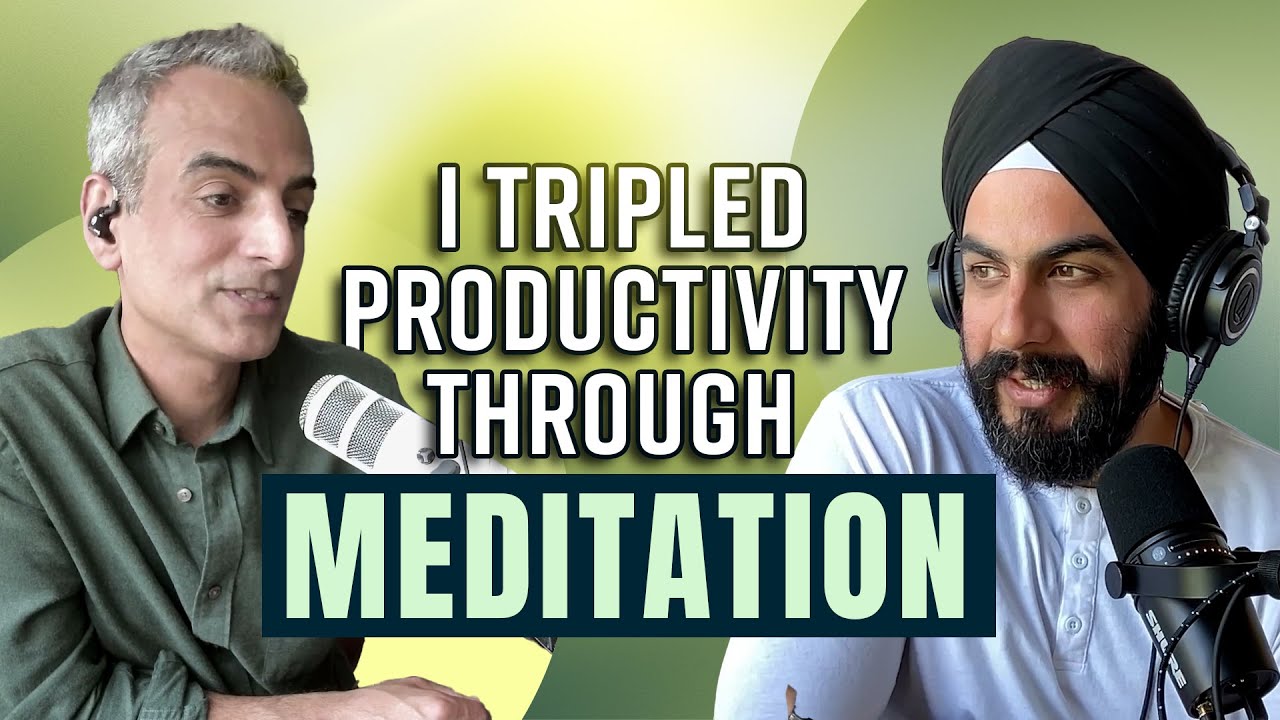
Jesse Pujji credits daily meditation and early-morning routines with tripling his productivity. He writes newsletters by storytelling first, uses walking and running to quiet his mind, and relies on affirmations and retrospectives to stay sharp. They also discuss his venture-studio model and why he paused launching new companies.
Chapters
I wrote an email yesterday for our newsletter. I think it was good. You know how many hours it took me to do that?
The ego likes to control. I need to control Jesse's experience of what I write. I need to control these users' experience of what I write. Everybody pick one. Just make one promise that you're going to do slightly differently in the future because of what we learned here. You probably feel so much throughout the day. You have all these thoughts, you have all these angsts. Dude, you got to move. You got to move. If you're in a services business, your product is literally people. So you have to get good at creating those people.
All right. I have some topics I wanna talk to you about.
Okay.
Here's the number one fricking topic that's on my mind today. I wrote an email yesterday for our newsletter. I think it was good. It did well. You know how many hours it took me to do that simple newsletter? Just saying, this is the cool thing that happened to us last week. Our members came to New York City. They did this experience with us. We asked them, what would private equity do if it took over your company? And they had these big realizations and these big understandings of what they need to change. And it took me a long time. And then this morning I sit my butt down and I'm looking at my email. One of multiple emails pops in with a newsletter that you've written much more in depth, much more. And then number 2, and then number 3. And I've asked you in the past, I've said, Jesse, I've heard you say, I didn't write this. This one came through me. I said, digest the process. I'm doing it out of a selfish need to know how to not take forever to do that. What is the process that lets you just bring these out?
I don't know. I don't— the— I mean, I'll give you a couple tidbits that I think might be valuable. You know, one is like, I like, I tell a lot of stories, but I think somewhere along the line in my life, and maybe because I did debate and then worked at places like McKinsey where they spend a lot of time on narrative and Like I just started living in story essentially. So, you know, when something happens, I'm like, oh, what's like, how would I describe that to another person? And the way my brain describes it, it starts to tell a story. Oh, you won't believe what happened, or this thing happened. And so, so I think once you start looking at the whole world that way, you have, you have a countless amount of stories already in your head.
Yeah.
And most of those emails that I'm sending are things I've said to people already, or that like their thoughts I've had, they're, they're, they're, it's not the first time they're hitting paper. And so I think that's like, but, but that, that's not to say that, well, actually it is the first time they're hitting paper. It's not the first time they're being said or they're being kind of thought through. So I think that's one big thing is just like, there's a lot in my brain and my brain has always worked in story. And, you know, I, I think I'm like a very reflective, observant person and I'm like, you know, I noticed this with my son and I think I have the same thing. Like I'm always connecting connecting dots. I'm always like, you know, they talk about Charlie Munger's lattice framework of like, oh, how does this relate to this? And how does this relate to this? And like, you know, I have a chance to meet a lot of different kinds of people and, you know, like a silly example that just popped in my mind is I invested in this company that is doing, it's called Devoted Health. It's supposedly gonna replace UnitedHealthcare and it's like sort of a full payer for Medicare Advantage, whatever. And I don't know anything about healthcare, but someone explained to me like, oh, these guys basically take risk. Like there's a form of insurance where they take risk on the patient and like government pays a fixed amount of money. And then if they can deliver care to the patient for less than that amount of money, then they pocket the difference. And I was like, ooh, that sounds like Red Ventures. Like that sounds like a thing I understand very well in media, for example. And then I learned about the background and the story and I was like, okay, it's a very interesting way for me to process. That is because I could connect dots across things. So I think my brain is always going that way. I think that's a big reason for it. I think the other reason, and I feel like you're like that too, to some extent, Andrew, but I think the other big reason, and I think this is more Dave Cashin and spiritual journey stuff, is like the through me is definitely from Conscious Leadership and from Dave, which is like, you know, let's decide how spiritual you want to get. But if you believe that we are all children of, of God of the universe, of the creator, and we have this creativity inside of us, right? Then when we stop and everyone kind of, everyone says like, oh God, what's he saying? It's like, okay, what about flow? Oh yeah, I know flow. I know flow. I know the feeling of just something is coming through me. Like I'm not doing it.
Yeah.
Well, the more present we get our mind and the more present our being is, the less chatter is going on, the less below the line we are in our ego. The more stuff tends to flow, right? It's funny. I wanted to talk to you about a funny thing this morning that happened to me, or like just a new thing I'm doing, which is, and my, in my spiritual journey, I've, I had this interesting thing where I've found, uh, I've been waking up earlier and—
Interesting.
You know, there's, there in almost every faith, there's a thing of waking up early in the morning to like think about God, like to start your day that way. That's very present in my faith. Right. And I'm like, this is so weird. And I'm waking up and I'm like having these like kind of very present moments. And, but the problem was I would like go back to sleep. And if you ask why enough times, you're like, oh, it's 'cause you're sleeping late, Jesse. And then there's the other thing is I'm like, I, I'm trying to cut my night eating. That's like another interesting thing that I'm working on. And my wife sleeps around 9:30, 10 o'clock, maybe around 10 o'clock. And So I was like, all right, it's a few nights a week. I'm going to go to bed with you, which I didn't used to do. That's a new thing. And so I did it a couple of days ago and I've done it 3 days this week so far. Sunday, one night I didn't do it. I don't remember. And the first 2 days I would wake up at 6 o'clock in the morning and I'm never awake at 6. That's like very early for me. And I'm like, I don't know what to do with this, but I'm not tired. But then I would go, I went back to sleep one day. I like, And this morning I woke up and, you know, Dee usually takes the baby in the morning and I was like, hey, why don't you sleep? And like, I'll take the baby. And I was like, oh, this is interesting. Like I'm serving 2 people now to start my day. Right. So I'm like, okay, this is cool. Like I slept a full night. It's 6 in the morning. I'm going to go play with the baby. And I had a really fun session with her one-on-one, which is always, as you know, as a dad is like really special when you just get one-on-one time with a kid. Then, you know, we do whatever, get the kids ready, the big kids ready. We take them, you know, D's day to drop them off. So D dropped them off and I kind of, and then I just started writing and, oh, by the way, oh no, sorry, I forgot. I did in between, I did a 30-minute really good meditation. Like the meditation was deeper than normal. I did Tony Robbins priming thing and then I did another 15 or 20 minutes of meditation. And then I got up and I like, and then dude, I just started writing. And by 9:00 AM today, normally it takes me, you know, by 9:00 AM I had, you guys had 3 emails for our newsletter. And I can't think of anything else other than like, A, the getting up in the morning and like starting my day a certain way, but then the meditation, like having that creative energy and the sort of like the flow energy was just flowing through me. Like it just, it was just coming through me.
You know, it's that shutting off of the internal chatter that I admire that you could do. And I noticed in myself that I could do it at times. Like if we're doing an interview, I've done over 2,000 of them. And in the early days, I would catch myself second-guessing what I was going to ask and thinking, okay, it would be great if I could edit this out. And it becomes a very stuttery mess. A few times of that, and I realized, no, you just have to let it go. Even if you're not sure where the words are going to go, you just have to trust that you open your mouth and the words will go where your brain needs them to go. I don't do that in other places.
Well, I see something very different in you in those moments. And again, we talk about zone of genius and some of these other things, but I think, uh, again, depending on what you believe, like there is an energy in all of us that is this creative— Sikhism believes that there's no like God in the sky. It doesn't have any kind of mythology. There's almost zero mythology in Sikhism. It's just formless, boundless energy of No hate, no fear. It's inside of everything and everyone. That's sort of what the belief is of the divine. When I see you asking someone questions, whether it's in an interview context or my wife, I see God because I see you really present and just curious. And then I see this other person starting to open up and you put them in interesting positions, whether it's Rick Elias or my wife or me. And all of a sudden that person's different. Something different shows up out of them. But I think it's 'cause you are so present in those moments. That is true. And so you're not, you're, the chatter isn't going and you're very, very clear. And you're just like, oh, and you're so curious. And, oh, wait, you do this? Why do you do it that way? What about this? And I think that's really powerful.
How do I get in other— you're right. I definitely see that. There are times when even a little voice might come in my head and go, they're going to think this is a stupid question, or you're being too personal, you're being too pushy. And I shut it out and I just say, I trust that what I'm doing is really genuinely curious and that I really care about this person. I'm not trying to take them where they're not comfortable. But when it comes time to, let's say, writing the newsletter, no. When it came down to, we do a retro at everything that we do that's important. So we had a retro on the event from last week. Writing it down would've just landed me in hours of editing and all that. I ended up just talking to ChatGPT and I said, now you organize these thoughts for me. And then I went back and I edited it.
And it took me like 9 minutes to write mine. I'm gonna do mine, by the way, just for comparison's sake.
I was wondering. So then what you had was, Boom, boom, boom, boom, bullet point, bullet point, bullet point. I could see the thinking. I could see the, like, the details of it. What's your process for doing that? And it comes through, and I could come up with a ton of examples. Newsletter, one example. You doing a retro with these, like, bullet points of— there must have been 100 of them in there— of what we did well, what we could have done better. Here's how we can change the way we do it.
It's the same 2 things, right? Again, like, my brain was going the entire last week on— during the event, my brain was like, ooh, this, this, this. My brain is already moving on it, but in that moment, I'm not, I'm not worried about what it, like, I, I, my, my sense of my guess is what's happening. Right. And what Dave would tell you is like, you're going below the line in those moments, which for people who don't know what that means is—
When I'm writing, when I'm— Yeah.
Your ego is activated.
Overanalyze, I'm below the line. Yes.
You're, cuz you're, again, you're at, you feel like you're at the effect of someone. You wanna be right about what you're saying. You, I mean, you could just go through the commitments and say, I'm trying to control. I mean, that's another version of it is like the ego likes to control. I need to control Jesse's experience of what I write. I need to control these users' experience of what I write. And that's the opposite of flow, right? It's again, you're in a state of, of closeness and threat and contraction versus an open curiosity. And when you're interviewing someone, you're just like, oh, I'm just so curious and open and it doesn't matter. Right. And so it's just, I mean, you know, the formula, Dave, we've shared lots of stuff. The first step is just a much more awareness of it. Like even having this conversation. You're probably now more aware of it. Next time you're gonna go, oh yeah, I'm writing this and I can see who wants, like, which, which part of my ego showing up today? The one that wants approval from all these people I'm gonna write to, or the one that doesn't think he's good enough, or who's showing up? Who's here today? And then, and then can you just go to that person, that one in you? And we talked about the book No Bad Parts, right? Which is a more like detailed version of this. And it's like, oh, okay, you part, you really wanna protect me from looking stupid. That's why you're here. I love you. I got this. I know what I want to write. I'm good. Step aside, please. And then you let it step aside and you go, I'm just going to go crazy and write. And so I think that's like the more— there's TLG versions of it. Meditation works obviously because when you do inside of a meditation, you're literally practicing having thoughts and not reacting to them, which is like today when I was writing, I got interrupted a few times and I had a couple things happen, right? And I was able to just get back on because that's, that's all meditation is, is, is that something happens, there's an interruption, there's a thought. And again, they say like meditation really clicked for me when someone said, or not, I read this article, like try to find, it was like, you're training your brain to not react to thoughts because when you have a thought, you either take an action or you feel something. Both of those are choices. And if you, if you get used to having a thought, Like, oh, that guy just told me to go fuck myself. Like, oh my, that's a thought. Like, I'm pissed off now all of a sudden. You can just like, oh, that guy told me to go fuck myself. He must be having a rough day. Like, I'm not mad about that. Like, and so meditation in a regular way gets you prepared throughout the rest of your day because you're going to encounter a lot of stimulus and a lot of thoughts. And then your ability to basically take it in and just decide what to do about it. And by the way, decide could be to punch the guy in the face. It could also be to shrug your shoulders and move on, but you're making a choice. That's why all this stuff is called conscious leadership or conscious parenting, because it's taking the stuff that's usually subconscious and it's putting, it's bringing it into the conscious. All right.
You said you had a couple of things you want to talk about.
Not many of them. I just want to talk about my schedule today. I was so excited about it.
What do you mean? What's exciting you about it? By the way, I have an idea. Since we only get to work with you one day a week, Wednesday is a day. We're getting better at it. I think we need to do a retro at the end of each Wednesday and say, okay, this is our Wednesday. We got time from Jesse. He's talking to our customers, et cetera. Let's do a retro by text. I really love the culture of retro. You finish something and you just check in with someone. It doesn't even have to be by voice. You could just do a text back and forth. What do you think? And I want to do a retro of this Wednesday. Did we get to use Jesse all the way, but also give him time to go to the bathroom or not?
You want to know the next level of that, by the way?
Next level of retro?
Yeah.
Before we do, let me give you a couple of examples of how retro has been fantastic for us. Even we just ended up a sales call, we do a retro by text. What did you think of this? What worked? And I like seeing people evaluate it. The other retro that has opened my eyes to the power of retro is I play chess obsessively. And at the end of chess, you get a retro where it tells you, this is the move that would've been number 1. This is the move that you took.
Here's the difference.
That's awesome. And when you realize, All right. It's not making me a bad chess player to analyze this. It's making me a lot better. Let's just take a moment to do it. Sometimes I just wanna go and do something else at the end of the game. No, take the moment. It really helps.
Yeah.
Yeah.
I would say in less high-performing cultures, the feedback is just, I mean, you think about like a, a sports team, like they all know they're trying to win the game. They're all playing well together. And it's like, yeah, hey, move over to the right a little bit. You're not standing in the right place or whatever. There's, there's a, a nature of real-time feedback that I think you can really de— Deep, like get rid of the sort of fear around it. Um, and that can be powerful, but, but the next level of retro is once you do the retro, we haven't started doing this yet with BG, but you can start, which is, does anybody have any requests or promises? So we, we talked about what went well, what went different. Now, is anybody willing to make the future different? And the future requires either a promise from somebody, requires a clear agreement. So, and when people first start doing this, they try to resolve every single issue in the retro, and that's not the way you do it. You just, everyone just pick 1 or 2 things that in the future you're promising you're going to do differently or that you will stand for.
Okay, so the way we do a retro now is we say, scale of 1 to 10, how would you rate the thing that we just did? Vernon listened to me do a sales call earlier. He gave it an 8 out of 10. The next step is tell me what worked. why you gave it that? And he said, look, you shortened your story. The story of my background and like how we work together has been going too long. And so, I shortened it. I pitched it quickly with confidence when we saw that the person was ready to buy. And he gave me a couple of other things. Then the next part of the retro is what would make it a 10? And he pointed out that I'm not asking about people's revenue. And he did in that call. And I noticed, aha, customers do want to tell us where their revenue is now. It gives us a lot of insight into where they are and whether they're a good fit or not.
Yeah.
I, Andrew, have not been asking. I like that. The thing that comes to my mind is we have all this, we keep thinking about it, it's making me smarter and better, but we're not implementing every one of these items. And that then becomes, is it a big to-do list where everything that we say at the end of a call we have to go do? Or are we just trying to learn to be better? Or how do we—
Well, that's exactly— I mean, again, sometimes people get intimidated by, oh my God, we need to fix all these problems that we're noticing. And to me, what actually works best is if Literally, for every retro, you took one thing and Vernon took one thing and you each agreed that you're going to do something differently in the future. And it could be a thing that went well or a thing that didn't go. Hey, I commit. I promise. This is the language. I promise to start asking for revenue in every single sales call going forward. And he says, I promise to do X, Y, and Z. Now what ends up happening is every time you have a call, you have a retro, you have a call, you have a retro, it gets a little, little better every single time. Because there is a lot of retroing that can go on. And I remember doing it a bunch and then nothing ever changed. You're just like, why the fuck? Why do we keep? Saying the same thing and the same thing keeps happening. And then the flip of it again is everyone goes, oh my God, we have to fix everything that we brought up. Neither of those works in my experience. The thing that works is everybody pick one, just make one promise that you're going to do slightly differently in the future because of what we learned here. And what ends up happening is the pace of change, it just rapidly expands in the business. And that's like a cultural thing that—
So my version, my version of that would be to say, okay, If it's asking for revenue questions, I don't want to commit to doing it. I want to add it to whatever document I'm using to guide me. And so I'll just add it as a bullet point within that list. And that's what you're talking about.
I promise to add this as an item on the list of a question document and then ask it in every call. Well, because kind of, you want to be mindful of like, again, if Dave were here, he'd say like, hold on, you got to be mindful of actually adding The thing, like doing the thing, adding it to a document is not the same thing as doing it. So if at the end of them, if you just say, hey, any requests and promises and the requests that sound like, hey, hey, Jesse, will you make sure, you know, join this thing on time? And I might go, yeah, well, you know, whatever there's, you can request something from someone else. All right.
I think that makes sense. I'm looking at myself in the video. I kind of actually do like the way my hair is looking. And I'm looking fitter. The next step though is I need to run more often. It's really difficult. You know what I love to do? Here, you're the guy who says—
Do you need to?
Find your 10 out of 10.
Do you need—
here's one of my 10 out of 10s. What is it?
Do you need to run?
Oh, I really would love to add running back into my life more frequently. And here's the way I would love to do it.
When you said that, do you think you were above the line or below the line?
When I said I need to run, yeah, maybe a little below the line. Like I need to, because otherwise I'm going to be fat and I'm going to be unhealthy and the world is making it impossible for me to do it.
That's no good. You got those thought patterns. Like I've done a lot of this work and man, I still notice like subtle judgment patterns, subtle patterns that show up in my thinking. And it's just, it's very interesting. Like it never ends really. 'Cause humans are designed that way. Ego is designed that way. That's why, that's why it's also, I talk, it's, it's valuable to figure out what to believe and not believe. You don't have to believe your thoughts. That's another huge part of the journey here is like, you can have thoughts and go like the way people are like, no, no, what do you mean? You, some people think they are the voice in their head. Some people actually believe their thoughts, so they know they're not the voice, but they're like, oh, this thing makes up thoughts. And then I'm like, okay, I'm gonna believe, you know? And part of the goal here is to get to a place where you're like, oh cool, that's, that's an interesting thought. And, and some people don't believe that. And you know the way I always convince them? Yeah. Have you ever had the thought of murdering someone? Be honest.
No, but I get your point.
Oh, I have a lot, but I've never murdered anybody. I'm like, oh, that's an interesting thought. So like, just like the thought of I'm hungry or the thought of I'll get fat if I don't run, you could just be like, yeah, funny thought.
You know what, in my mind, I think about how if those thoughts are so powerful that I could be swayed by them, I want to program my mind. I want to find those thoughts that are most helpful to to repeat over and over in my brain and then facilitate that.
Well, that, yeah, I mean, that's why affirmations, yeah, we're talking about 2 slightly different things. One is like programming your ego. That's like where positive affirmations and all that stuff really work, 'cause we tend to bring the voice of our parents in our heads as we get older. So you can reprogram it for sure. And that's where affirmations have worked. And then the next level of it, right? The Zen level is, no, hold on. Like that's, None of that's me anyway. That's just this, this brain that makes thoughts and I'm, my being can choose whether to believe them or not.
Okay. So here's, here's where it came up for running. I had a coaching call with Dave yesterday, Dave Kashin. He's, he's someone that I felt comfortable enough a while back saying, I hate that I'm sitting down at a desk and talking with you. It's really difficult for me. And we decided, all right, we're going to do walking sessions and they've been wonderful. And so yesterday my mind was racing a little bit and I found myself at times, like when I throw a stick while we're talking, I end up like back to being centered. Or if I walk anyway, I started, I started organizing logs for the fire and the fire pit. And that got me super focused and it was really helpful. And I thought it's the movement. It's like, it's so uncomfortable sometimes to just sit and talk. Sometimes it's the best. Sometimes it's not. And Lauren, who's on this call, who's our new chief of staff, one of the calls that I had with her when we were evaluating whether it's a mutual fit for her to work here, I said, I need to go on a run. And we were running and talking and it was a good conversation. I'd love to fit more of those into my life. Vernon and I last night, we weren't doing a Zoom. We were just sitting. I had a— I just sat outside. It was 2 nights ago. I sat outside on the couch and was just chatting with him. And it was so helpful. To not be fully focused, but to be there. I'm trying to think of how can I do a running conversation with someone?
Do it.
I don't know how. I don't know how to do it. And I also, then this is the part that I know you've noticed about me. I think they're going to think I'm a dick for not being fully present on the conversation, even though I really am fully present when I'm doing it.
Yeah, but what would interviewer Andrew say? How would he have that conversation?
Interviewer Andrew would just take a real interest in why you think that way, that someone's judging you. What have you done?
Interviewer Andrew just go, hey, do you mind if I, if I run while we're on the call? It won't, it'll actually make me more present. Or do you mind if I, I mean, I, you know, I've switched in the last few weeks. My personal joy and contentment has gone up a lot from getting off of Zooms. And I've, I've flipped more than 50% of my calendar to calls. Even like I did a bunch of interviews for Ox yesterday. They were all phone calls. I just walked around and talked to the person. Which is what we've done since we've been professionals. And maybe the young kids do it, can do it this way, but this is such a limited format. This is by far my, my now least favorite format of communicating with people.
You mean the Zoom, this, the video type of conversation? Yes.
Number 1 is in person by far, by a long shot. Number 2 would probably be a phone call. Number 3 is even like Slack or something like texting. This is number 4 for me.
The thumbs up, I appreciate it, 'cause I get to see in a way that I can't stare at you if we're sitting and having a meeting like this in the eye the whole time, but I've got my screen up in a way that I can stare at you the whole time and I could see little twitches and all that, and it's really helpful. And I got my notes and I have this transcription service that I'm using. So if I missed a word or if I wanna know what did we say before, I got it. In many ways it's like the most prepared, and in other ways it feels like Too much, too much on. Um, I did, I did, by the way, used to have a running treadmill. I got a great one and a standup desk. It became too distracting for people to watch as I did it.
Well, that's good. Just get on the phone. No video. Let me just call you. By the way, you know, one of the reasons that works, just as we're talking about all this spiritual stuff, the other day my son was getting very frustrated with like loading the trunk of the car. And he started, you know, yelling at his sister and she's getting upset. And I, first thing I came up to him nicely and I was like, hey, like, have a seat for a second. And I was like, I want you to just, I was like, you have a lot of energy in your body right now. I want you to just go take a lap around the driveway. So I literally just had him run and he came back and I was like, how are you feeling now? He's like, I feel better. Because this, like, again, some of his, these things we call emotions, right? The conscious leadership is energy in motion. It's just like, You probably feel so much throughout the day. You have all these thoughts, you have all these angsts and all these various things. And it's like, dude, you gotta move. You gotta move. Like the, you know, the, have you seen the CLG wave, how you feel a feeling?
No.
It's so funny and awkward, but I've done it and it's, I'm surprised Zave hasn't had you do it yet. Has he never asked you like if that feeling had a, a sound to make or a, uh, mm-hmm. So there's a meditation they have you do, but it's literally like, I feel angry or I feel sad. And it's like, okay. Put your attention on that emotion, where it's in your body, all this stuff. Then it's like, if you could make a sound or, or a physical motion that would like, that would represent what that feeling feels like, you know? So, so like the fun one is like joy. Like joy's like, woo, right? And if you just do that, you will feel joy. Like Tony Robbins talks about that. It's like, dude, if you just—
Oh, interesting. Uh-huh.
If you go like this, go like this right now and tell me if you feel happier.
Woo-hoo.
See, I do. And so, so that's like, but then, but then if you're angry or something, like they'll have you growl or they'll have you like stomp your feet or pound your fist. And it sounds, it's so awkward when you do it, especially with another person. But dude, it's so effective. Like to move anger, I'll like oftentimes I'll just sit in my car and I'll just scream and I'll like hit, hit the steering wheel. I'm afraid someone's like looking at me side to side, but like, but it just, it just dissipates when you do that. And sadness, like Yeah. Whimper. Like sometimes I make a whimpering sound and it like, it's like, oh, I'm like letting this out. So it's just this energy.
Do you feel as someone who's running a venture studio awkward that you haven't launched any more companies? Like what's the point of a venture studio if you're not launching companies?
Maybe on some level I do. I don't, I always thought of this as like a holdco. Um, I mean, you remember my Ampush from like the, from 2009, that deck, right? Where I'm like—
The Ampush X deck where you essentially were trying to create this new thing back then.
Like in 20— 20— 2009 when I was 24. I mean, I think the idea for me was always definitely having like an organization where I controlled it and we had cash flow and all that stuff. And I think we're in a pretty good spot for that. I'm not married. You know, I tell, I tell people my only dogma is I have no dogma. Or like, you know, Rick Elias one is like, what got us here won't get us there. Um, so just because it got us here doesn't mean it's going to get us to the next level. And so I don't know, it doesn't, it doesn't really bother me all that much. Like, I, cause I don't think of GatewayX as solely a studio. I think of it as like a, a holdco that we started businesses to get to, you know, and we may start more and we may not, we may buy companies. Let's see.
There was a part of me that when you wrote that email at the end of last year to go out to the newsletter that said, we decided no new company in 2025, that I was going to email you or text you and go, no, you can't say that. The whole allure of Jesse is that he's running a venture studio and that he's gonna be launching companies. That's why people are reaching out. And then when I felt that, I said, oh, mm-mm. Whenever you're afraid of the truth, you've gotta go all the way with like full chest out and let the arrows come because that is so powerful that It, that it will make all those arrows just bend away. And so I thought, all right, this is a dangerous thing that we're saying. And I really love how it's the truth of what you're feeling. And let's see what happens on calls. Let's try that.
It's funny how you still have to convince yourself. You have this whole other narrative to convince yourself that it's okay.
It's true. There is a part that comes out and says, well, here's, here's the thing that we're doing. Here's, I mean, truthfully, what we've been telling people is, You, Jesse, run a venture studio. Our newsletter, the Bootstrap Giants newsletter, is taking what's in the venture studio and exposing it. And yes, that still holds up if you're not running other companies or launching other companies, but it's more sexy if you're launching other companies.
Well, to me, it's just more interesting to look at your own thought patterns and process.
Yeah. So now that I guess maybe what I did was got defensive. What, what, what is it bringing up for you? For me, it got defensive and I had to explain it to you.
It was nothing. I was like, this is what I'm doing. This is what I feel right now. And I'm going to share it. I was just like, I didn't do any of that future calculation as to how there may be, you know, none of that occurred to me. This is like when I was telling you the other day, my thinking is down 80%. Like there's a version of me that would have thought, thought a lot about that. And like, oh, but I said I'm building a studio. And to say you're not launching a company means that your studio is not successful. And now with a lot of coaching and all this stuff, I'm like, well, this year I'm not gonna do it. One of the companies isn't going well. Like, I think just this concept of living authentically, for me, I was just like, oh, this is, to me, it's gotta be interesting. Why aren't you doing it? What have you learned? What's different?
That you're saying that's where your head goes?
No, nothing occurred to me. I was just like, this is the truth. This is what's happening and I'm describing it. And that's what I've promised you in this news. Like, I'm gonna just describe, I'm gonna tell you the truth and be authentic and be honest. All right.
What about this? Every time you write about Unbloat, you say this, this failure, this Unbloat that I've gotta unload. How are you gonna unload it if you keep saying that you wanna unload it?
What, what do you mean?
I mean, if you're, if you're saying in the newsletter multiple times, this company didn't work out and I'm trying to unload it. And you almost feel like frustrated that you still own it. Doesn't that take away your ability to sell it at a higher price?
No, I think, but again, it's, this is all just about, again, how do you get more and more authentic? And I, this is a good one actually, 'cause I've struggled with it for Unbloat. Um, 'cause there is a part of me that's like, ooh, I can like pull one over on someone and get them to pay me money for this business. And then, and we've had a couple conversations and And then I'm like, wait, no, like I need to be authentic with what this is. This didn't work out. There's something there. This was something with the right person running it. I'm no longer the right person to run it. I've got other things going on and, you know, I want to, I want to basically sell it. I want to give it to someone for the debt. Like that's kind of what I just put that out there. And can you see how that might actually be more fruitful for me to get a buyer than, than the version where I have to like, Pretend like it's something that it's not.
I guess, but then that buyer is gonna say, I've seen him talk about this for a few months and he still hasn't sold. I'm here looking to buy it from him. Maybe I'll take more of a loss just to stop having to write about the same thing.
Yeah. It's a lot of it's control, right? You're trying to control the other person. Can you see that?
What's the difference between that and negotiating? Like when you negotiate, wouldn't you wanna be—
Negotiating's just standing for my position for like, if you offered me a dollar for Unbloat, I'd say no. If you'd offered me $500K for it, I'd probably still say no. It's like, I like my chances of running it and cash flowing it and paying off the debt. If you offered me all the debt for it, I'd take the deal if you paid me a little extra. And it's like, it's a little bit of, again, there's, it's just not trying to control versus being authentic and real. And I'm not, obviously, I'm okay selling things and pitching them a certain way and embellishing, but I think a lot of times it's gotten me into trouble too, because again, you kind of get over your skis on something like that. And especially for something that's not working, I think it's silly to try to put lipstick on a pig.
Right.
And all negotiation ultimately is, is it's not negotiation is not deception. What you just asked me is, isn't negotiation deception, Jesse? Isn't it control? And the answer is it's neither of those 2 things. It's in fact, the more clarity you have of your position, The better negotiator you are because you know what you're willing to do and not willing to do. And then it's like a problem-solving exercise with the other person. What are you willing to do? Okay, let's find common ground against it.
But isn't it also putting your best foot forward, showing the thing that you're selling is, is the best it could be?
In some cases it is. Like if I was selling Growth Assistant, for sure. In some cases, you just look like a fool if you say, I had a business that was $3 million last year. It's going to be $2 million this year. No one's paying attention to it. It's got a lot of debt. Like it's just being honest about, and by the way, that's not to say that there's truth inside of it. Like, hey, if you did these 3 things and you have the time and energy to do it, I actually think, I believe that the market's good. The product's good. Like there are lots of positives to like, but the idea of saying, Well, this is the, oh, you know, you like it. Just, you just look stupid and then people don't trust you. Right. Whereas if I say the product is good and, and here's the things I would do if I had the time and energy, and by the way, it's gone poorly and we have debt and people go, oh wow, I believe this. This is true.
I got one other thought that I want to bring up. This is more of a, like a A business question. Through working with you, I've gotten to know a lot of people in the virtual assistant business. There's so many virtual assistant businesses. When's the roll-up coming? Doesn't it make sense to take a bunch of these and say, we are going to roll them all up and we'll put a face on a few businesses. This will be one brand that has virtual assistants all over, right?
Yeah, sure.
And then we'll have a sub-brand that is for this type of business, a sub-brand for growth, a sub-brand for email virtual. Dude, why isn't that happening? And why aren't you the person to do that?
Let's see. You know, I think first of all, roll-ups of BPOs are not a new business. They've been happening for 2 decades.
Of what? What's a BPO?
Business process outsourcing, like a global talent business. This has been happening for 2 decades. I mean, there's private equity firms who've done it. It's not a new strategy. We love to think everything is new. It's not new at all. And as we've discussed in the past, rollups for people listening who, they work because there's what finance people call multiple arbitrage, which is this idea that I can go buy 5 businesses for 4 times EBITDA each if they're $1 to $2 million EBITDA. So say I buy 4 times 4 or 4 times 2 is $8 million, right? And I buy 4 companies for $32 million. But then a 10 million EBITDA business, if I could put that together and cut some costs and stuff, would trade at 10 times EBITDA. So I could sell it for 100. I can buy it for 32 and sell it for 100. That seems like a great deal, right? So that's why people do roll-ups in the first place. And yeah, look, I think the biggest issue right now with these global talent businesses, the biggest thing is just AI, right? I mean, it's on the horizon. It has, there's so much risk associated with these businesses. I think that's one big issue. I think the second thing is you gotta be, you know, one thing I saw from Red Ventures that really taught me was like, if you're buying companies without any advantage or edge or capability ability, you're basically paying market price for the business. If you have the ability to own the business and run it better the day you acquire it, you're essentially paying anywhere from 30 to 50% discount to what you're paying. And so your own company has to be ready to do that. And I don't think GA is yet ready to absorb acquisitions. Like its own business is not stable enough yet. It's going fine, but it's just like, so it takes some time and energy to get to the point where you're stable enough. To be able to run a business like that. So I think, I think they'll come. I think AI is gonna change the whole landscape. 'Cause I think I've, I've told Adrian multiple times, like, you either ride this wave or you're gonna get crushed by it. There's just only 2 choices for anyone in our business, in that kind of a business. So to me, if we can actually build some scale, like some interesting capabilities with AI, whether it be in the recruiting front or the commercial front, now you've got a thesis right now. You go, hey, I buy these things at a low discount. I improve them when I buy them using AI. And I have a platform that can grow, can roll them up and scale them. Like now I've got something that I want to roll up against.
And then all the other virtual assistant services that you roll up will have better people or better hiring or better something because there's—
Yeah. I mean, imagine, imagine you hire them, you bring their customers on, you let go of 50, 60% of their teams, plus you can accelerate a bunch of their processes with AI. Now you're talking about something that's got real legs in terms of thesis. And, and does Adrian want to do that? That's another question.
She's running the business.
I'm not running the business. So also the CEO has to want to do that, and she may or may not want to do that.
Are there opportunities to roll up businesses right now? Is there something that you see as like an easy yes, I could get 12 of these businesses and we end up rolling them up?
Yeah, there's a million of them. I mean, we see them every day in the aux business. People are rolling up dentists.
What are you seeing?
People are rolling up HVAC companies. People are rolling up, I mean, there's not, that's, it's, there's almost nothing you can't roll.
How about in the more online space?
I think like marketing agencies, creative agencies. I talked to someone doing content assets the other day. They're going to roll up a bunch of, I forget what it was, but some like directory or classified sites or something. It was like pet supply, like pet classifieds, something like that. Oh, okay. Everyone in every city, St. Louis, there's like a place where you can put your dog stuff. And so, yeah, I mean, there's a million opportunities like that out there.
You know, speaking of, by the way, agencies, I've been obviously talking to agency owners because a lot of them are joining the accelerator. And a couple have said that one of the problems with agencies now is that the really good people end up just breaking off and going and starting their own businesses. They're, they're really hard to keep around and it's so easy to start a one-man or one-woman operation now.
Yeah.
What do you do about that?
I mean, I think a lot of agencies don't realize their product is not the marketing service they offer. Their product is the talent. And so the question, like at Ampush, we got extremely good at manufacturing very high quality talent. You give me the raw material of a really bright, motivated person who's pretty quantitative, and I take them and I put them through my refinery. My refinery gives them feedback, it teaches them Excel, it gives them Facebook things, it makes them, gives them a lot of responsibility and it slowly converts them from a raw material into a finished good. And I can do it all day long. And so even if they go leave to go run growth somewhere or they go do X or they go do Y, my factory works and my factory is creating high talented people. So people running agencies, if they want them to be big and scale, they have to get really excited about talent. And talent development and talent. And they have to take it really, really seriously because that's the way you're, if you're in a services business, your product is literally people. So you have to get good at creating those people. If you're dependent on 2 people who are really good, that's it. You don't have much of a business.
You have to be so good you can create more of the people who left.
Yeah. We had people who left Ampush to start things and none of them ever got close to Ampush because there was a, We were extremely good at, we weren't subject matter experts. We were great at building that talent.
All right. I want to dive into that one time. That's a really big topic for going in deeper. We'll end it here unless there's something that you want to add.
No, this is great.
All right. I love this. All right.
Thanks.
Bye. Bye everyone.









