Tucker Max's business imploded?
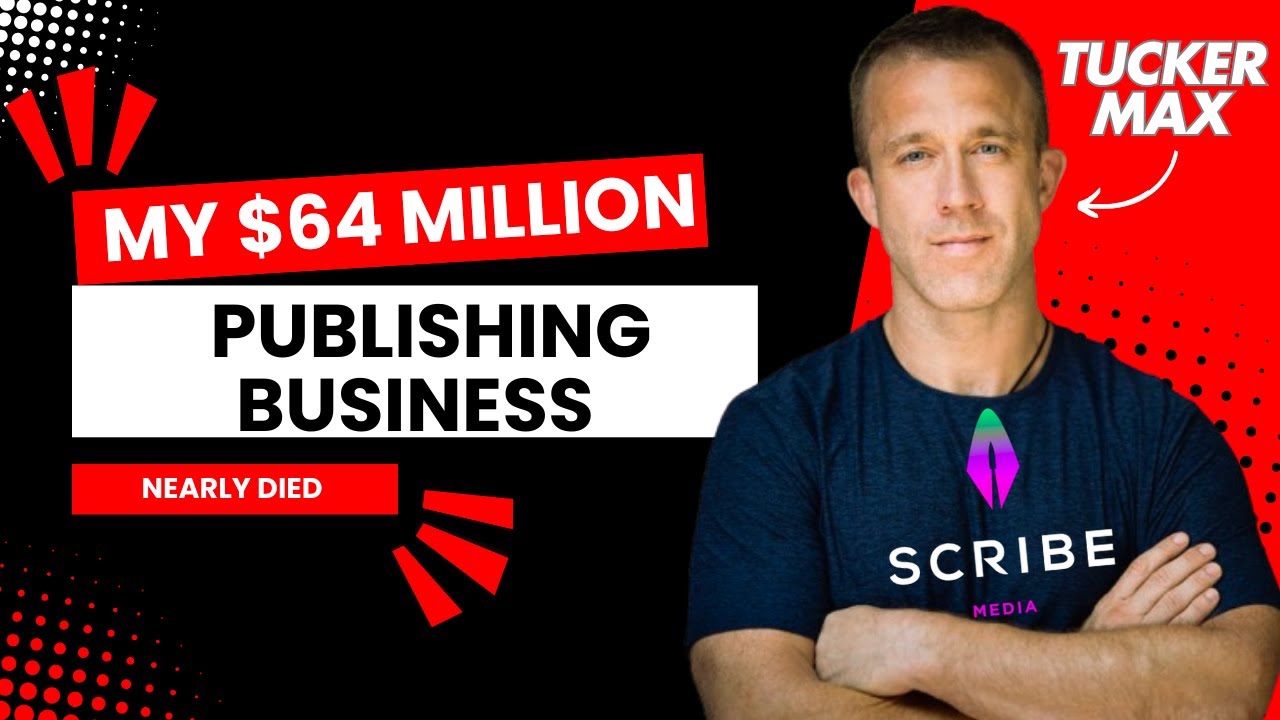
In a candid Mixergy interview, Andrew Warner talks with Tucker Max about the creation, growth, and eventual implosion of Scribe, the publishing company Max co‑founded. They explore Scribe’s marketing engine—organic content, SEO, referrals, and mastermind networking—that drove $70 million in sales, and the internal dynamics that led to its downfall, including the CEO Javon’s alleged financial fraud, personal guarantees taken on by Max and co‑founder Zach, and the resulting legal battles and valuation drop from a projected $65 million to about $15 million. Max explains why he stepped away in late 2021, sold his shares in 2022, and was legally insulated from the company’s collapse. The conversation then shifts to Max’s personal evolution: four years of psychoanalysis followed by psychedelic therapy to process emotions, his philosophy on fame and objectification, and how he now lives on a 50‑acre Texas homestead practicing regenerative agriculture, raising chickens, sheep, bees, and orchards. Finally, Max describes his new venture, Tell Your Story Academy, a memoir‑coaching program that emphasizes truth‑telling over legacy‑building, and how this aligns with his core values and desire for personal growth. Throughout, Max shares insights on handling external opinions, emotional work, and building sustainable, purpose‑driven projects.
Chapters
Hey there, freedom fighters. My name is Andrew Warner. I'm the founder of Mixergy, where I interview entrepreneurs about how they built their businesses. Most recently, I've been fascinated by bootstrap giants, companies that are basically self-funded and become giants. Joining me today is an old friend, Tucker Max. I interviewed him back when he was publishing books and he had this huge blog and email newsletter that everyone read. He got himself so famous that there was a movie made about his life, and then he started taking himself really, like, down the entrepreneurial path. He created a company called Scribe, which published books for, for wannabe authors. I remember real authors, supposedly, who would tell me, he's creating the McDonald's of publishing. He's taking publishing down this hole that it shouldn't. And anyway, and I love that Tucker is not someone who would stop based on that. I know I would doubt myself, and I would doubt the direction. He built it up. I want to know how he built it up. And then I started hearing all these stories about people getting fired, writers who had paid for Scribe not getting the books that they paid for. And, uh, and I want to find out what happened when it, when it went down and then how it recovered. Tucker, good to see you here.
You too, man. Good to see you, Andrew.
Did you, by the way, when, when authors would tell me, look at this McPublishing business that Tucker is creating where he's taking thoughtfluencers and helping them sell books so that they can sell their shitty services, did you hear that? Did you feel like— did you feel bothered by that?
The type of people who said that were, uh, they all shut up after we published David Goggins' first book. There was no more, there was no more nonsense about McDonald's because all the people who said that were the ones like, uh, what's his name who wrote, uh, Chaos Monkeys? Antonio, whatever the fuck his name is. He was one of the ones. I bet he's one of the ones who said it to your face. And I'm not saying he is or he isn't. I'm not speaking for you, but I bet he is. And and those types are always jealous of me and and how well I did in writing because like I didn't come from their world and I smashed all of them in it. Like in terms of selling books, and then I started a company up other people, and then bam bam bam bam bam. And then I did David Goggins' book, and they just shut up because there was nothing left for them to say other than the truth, which is I'm just envious of him. And I'm trying to criticize him as a way to make myself feel better.
So, um, I do think the impressive thing about David Goggins is not just the numbers, but also that you took him from complete obscurity. He was the guy in Jeff Itzler's book who didn't talk about himself, who didn't want his name in the book. And then suddenly he became like an inspiration to a lot of people. And I think that was the vision that you had. How do I take somebody who's not well known, make them well known, and, and take their ideas and put them down on paper in a way that they couldn't do on their own, right?
Yep, pretty much.
Yeah. Yeah. But, but you weren't at all, like, upset by that? I remember when people said Andrew's just, just an interviewer, just a podcaster. In the early days, people who saw my previous business said, this is what you're doing now. And I did feel a little, I don't know, a little embarrassed. It definitely affected me. It didn't affect you?
My man, no, you don't become the type of person I am if you spend a lot of time worrying about what other people think, especially people you don't know or care about. You know, like, it's hard.
How do you get past that? Like, what's the thing that allows you to stop, to stop thinking about that? Because some of them were people who you cared about.
Not really.
No, you just didn't. How do you get to be the place, Tucker, where you don't care what other people feel?
No, it's not to the place.
Like, take me higher level. How do you get to that?
Okay, okay. So it's not that I don't care what anyone else feels. Like, I care a lot what my wife thinks. I care a lot what my kids think. I care a lot what my, uh, close family thinks, my close friends. Like, those are very important people in my life, and what they think and feel matters a lot. But some dude or woman I don't know, uh, they, they don't even have an opinion about— All right, so let me explain how— there's 2 ways, 2 ways to look at this.
Okay.
First off is just the objective reality. When someone has an opinion about you, they don't actually have an opinion about you. What they are doing is projecting their biases, neuroses, unhealed traumas, all the other shit. They're projecting it onto you and using you as a way to speak to themselves or Feel good, feel something about themselves, or to signal to others who they are. No one cares. No one who doesn't know you has an opinion about you. They have an opinion about themselves, and you are a way for them to reflect that opinion about themselves to the world. Like who who who was a Aeneas Nin who said no. No one sees the world as it is. They see the world as they are. That is 100% true about all opinions everyone has about other people, right? That, that's just the objective part. The— now you can, Andrew, you could— the response to that would be, okay, but what about people close to me, like in my social circle? Okay, I can understand how that might be a little different, right? From that, the thing I would say to that is the reason you are worried about what people you know think, right? Let's say in your extended social circle.
Mm-hmm.
And the reason that what they think impacts you, and the reason that if they doubt you, it causes you to potentially doubt yourself or stoke those, those issues is because you haven't done the underlying emotional work to deal with your own issues. Right? So, so for example, in your case, if someone were to doubt you, yeah, and, and that stokes self-doubt in you, all that shows is you already had self-doubt and you were hiding it, ignoring it, whatever. And it's, it's just a reflection of you, right? But if someone— you know, I'll give you a really good example, Andrew. If someone said, I don't think Andrew is very smart, like, you would laugh at them. Like, you don't have insecurities about that because it's also so— it's so fool— like, well, whatever someone can say about you, not smart is just not in the universe of plausibility. You would just laugh at them because it's preposterous, right? And so, like, that— it's a— I mean, it's a way to do emotional work is to think, what are the things I hear or the things people say that trigger me? And then realize that's all inside of you, right? And then, then walking down— and if you want to talk about walking down that path, that's a long conversation, right? But if you deal with one or both, I mean, I'm at the point now where I've fully dealt with one and understood one, that other people's opinions are their projections. And, and I pretty much have dealt with, if not all, the vast majority of my inner stuff. So it's like It's so rare.
Through psychoanalysis, I think, is what you were doing.
Well, I started with psychoanalysis, and I did that for 4 years. It was great. And then— but the problem with psychoanalysis is you're talking and thinking about your feelings, but you can't feel your— you can't think your way out of a feeling. So what I really had to do to get deep into work for me was psychedelic medicines, MDMA, and psilocybin especially, and a few of the other medicines to help me access my feelings and feel my feelings. Now, that combined— thinking and feeling combined is where it's at. Like, if you just focus on feeling, it doesn't work. If you just focus on thinking, it doesn't work. You do both. And so you've got to focus on both. And I started focusing a lot on thinking, but that'll only take you so far.
So you did this on your own or with a— with—
Oh yeah, always with guides. I had never— it's so funny.
You have someone local here?
I do. I do. I'm happy to refer you if you want. Some great people are in Austin. Yeah. Oh, yeah. I never do it. I won't say I never do it on my own. At the beginning with new medicines, I always have very experienced guides until I feel like, okay, I know how to navigate this medicine. And then certain— not all of them, but certain medicines I will do at this point because I'm 6, 7 years Down 30, 40 sessions into medicine. So I mean, like, I know the space now.
All right, let's get into a little bit of the business mechanics. I watched you build Scribe from the outside. Here's what I saw. Tell me what I'm missing. You went out to speak to, to founder— at founder events, and by speaking about writing, you made it— you showed the value of it, you heightened people's desire to have a book published, you helped them understand that they have topics, and then they would reach out to you personally and they go, holy shit, this is Tucker Max, the guy who's like New York Times bestselling author. I get to talk to him and he's going to guide me through this process. They would sign up that way. That was a big one. Am I right? Okay. And then the next thing that I saw was blogging about the process.
Tons and tons of organic. Uh, uh, yeah. Organic is still 50% of the leads there. Yeah.
You personally led the content strategy? It was you writing the pieces and then at the end it was people. What's a piece that worked for you for bringing in a new author?
So many. Like, you know, in any space, if you can become the definitive sort of the, you know, the 1 or 2 or maybe 3 ranked sort of content space for anything in that space, we were at the time. I mean, I haven't looked recently, but when I was there, we were pretty much number 1 for almost any major, like, you know, should I use a ghostwriter? Should I write a book? How do I write a book? Like all that stuff.
And that was you writing those posts yourself?
We had a great team. Our CMO was one of those like sort of SEO nerds who like knows like SEO really well and all the strategies and hacks. And I don't know anything about that. So I would just say, I'm going to tell you what I want to write about, and then you can title it any way you want, and you can tell me the subheadings. I'm going to write the content. And so then I would write it and then he made me use Clearscope, which is like one of the SEO things. But like Clearscope would give edits, but they were like SEO things. So then I would edit it close enough where the SEO was happy, but we're still great writing and it still was saying everything I wanted. And so he and I together, probably the company did $70+ million in top total sales when I was there before I left.
And that's over multiple years?
Yeah, that was over 7, 8 years. And '21, I think we did '21 or '22, the year that I left. And so, so we were on a track, and I would say at least that last year, I know about $10 million was organic. And probably over the whole period, at least $25 or $30 was organic.
Yeah. And then so if $10 of the $21 was organic, what's the other $11?
It was either referral. We were— our goal was to get our internal referral rate, meaning every Uh, we were trying to get our internal referral rate to 1.1, right? So every client we brought in would—
Every client needs to bring more.
So once you got that flywheel going, then it would be crazy. And like, we were at like 0.65 when I left or something like that. So we were on our way. Um, and then, uh, uh, then also mainly me doing biz dev, right? Like exactly what you said. I will go to like I was in 8 masterminds or something like by the time I left Scribe, I was in so many goddamn masterminds. Uh, like I knew everybody in all these different fields and, and it was, it worked great.
That seemed like such an exhausting thing to do. I mean, really part of your, your appeal is that you're a celebrity. The other thing though is you're personally down in the trenches with people. That's exhausting to both keep the online presence going to let people know you're still alive online and then show up to masterminds. Which frankly, even being in one can be exhausting.
Yeah. No, I mean, I'm a little bit extroverted. Like, I tend to, you know, I don't mind talking to people, whatever. I met a lot of people I liked, you know, I was in pretty high-end masterminds, like, a lot of the ones I was in, I wasn't even the most famous person in it. So that was always cool to meet, like, I met a lot of smart people, a lot of accomplished people. You know, I didn't come out of the business world. So going into it, Um, it was a great way to meet a ton of people, uh, and I met a lot of people I liked. And, uh, I mean, I know like in certain circles I'm like considered famous, but like, I don't know, dude, I never bought into all of that. Like, I spent too much time in Hollywood and around famous, uh, really like seriously famous people and saw both how fucked up they were and how fucked up the universes were around them. And I was like, nah, man, like, I'm not— I don't care how famous I get.
Yeah.
Or how popular— What did you see?
What was fucked up?
Oh, dude. About Hollywood or just about fame overall?
Either one. Like, give me, give me an example. I love examples as a way of understanding bigger concepts.
The messed up thing about fame is that, okay, especially as a dude, is you as a guy, you're— it doesn't— growing up, you're just, you're fungible. No one really cares about dudes. Your mommy might care about you, but people don't really care about men. And to get people to care about you, for the most part in America, you've got to be good at something. You've got to have a skill. You've got to really bring value to the world in some way, shape, or form. And so guys are used to kind of working hard. Even guys who are really good, either at business or with women or whatever, you got to earn it, right? And then all of a sudden you became famous. And now everyone wants you. And everyone wants to talk to you and everyone wants to be with you. And at first you think it's because of you, right? And, and that's flattering and like feeds your ego and all that. I went through all that. But then I realized, oh, wow, they, they don't care at all about me. I am just an object to them for them to get something they want, whether it's raised status because they're my friend or whatever, you know, whatever, like whatever it is. And a pretty girl understands this because pretty women are objectified Intensely their entire lives. It's a thing that they just get used to and learn how to deal with. But dudes, we don't know. I don't know how it was a whole new world to me. Like, it was shocking to me to have these women that would come home.
Did you become a jerk because of it? What did— how did it impact you?
Oh, dude, it, it was the thing I needed the most. It was part of why I retired from writing fratire and stepped out of the fame game. Because I hated it so much. I—
it—
because as soon as you live in a world of objectification, then nothing is real, right? Nothing. Not, not a friendship, not a relationship. Like, uh, my therapist made this point, and she was right. Uh, my original psychoanalyst— no, girls who call— who were coming to me to hook up or whatever were not coming to, to date or hook up with me. They were coming to hook up with Tucker Max, right? A famous character. Even though I'm a real person, it was their image of me that they were coming for. And I saw this.
Why did that bother you?
With women specifically, dude, like women would have whatever image in their head of me they would have, and they would show up. And then they would meet the real me. And then if the real me didn't match with their image, they got upset with me. They were mad that I wasn't taller, or that I wasn't meaner to them, or I wasn't nicer to them, or I didn't hit on them more, or I wasn't more aggressive in bed, or less aggressive in bed, or whatever. Like, whatever it was they had in their head.
Fascinating.
They had this long, intricate relationship with a character and not with me. And dude, that was so demoralizing for me and so awful because I had no— no one tells you this. No one explains this to you. That's not even a thing that a lot of famous people realize, because a lot of people who try to become famous are soulless narcissists, narcissists, which I thought I was until I got famous. And I'm like, oh, this is horrible. This at all, I don't want any piece of this. And so that's, that's the thing no one talks about or even understands, you know.
Okay, going back to— it must be exhausting to have done all the work that you did to promote Scribe. My— the story I told myself about why you left Scribe was, You were exhausted. You were so deep into this, to figuring out what the business was, to writing for it, to talking to authors, to promoting it, that you were exhausted. And then based on the blog post that I read, it feels like you said, okay, I'm delegating to someone that I want, that I trust, but also I need to abdicate at this point and not check in monthly and see how things are going and check in when there's a family issue, right?
Yeah. And then also, I mentioned—
Or did I just make that up?
Uh, no, you're exactly right. I mean, bro, you're pretty perceptive. So you like, you're, you're reading between the lines is usually correct. And that is correct. I started by stepping away, and then I eventually sold my shares. So when it imploded, I was totally out. I was legally, financially completely out.
Oh, I misread that. Okay. And I did see it in your post that you had multiple— like, it was a sale over a little bit of time, and it wasn't a big exit for you. But when you had left the company in the hands of the guy you called your brother, At that point, you still owned as much as you owned before, right?
When I stepped away. So that would have been December of '21. I stepped away. And then we decided to sell the company in May of '22. March or May?
May.
And then I sold out in December of '22. So, there was a year period where I was not that active. I mean, I was still meeting with the CEO once every 2 weeks or so. And like, I was like, I was around, I was helping them transition out of a couple roles that I had, but I was fully out by December '22.
Okay. And this was the period where initially you said you thought the business was going to be worth up to $65 million. That's what you were told. And then it just kept going down in valuation until it hit about $15 million.
No, it wasn't really that. It wasn't that. If it had been a slow drift down, then I would have stepped back in and resuscitated it very quickly. Yeah, it didn't run. It didn't go like that. No. What did it go?
Can you tell me that story?
Yeah. Okay. So basically, We were on such a good trajectory in '21 that I stepped away. Things kept going pretty well in '22. Like, I forget what the year ended with, but maybe $15 million. So it wasn't— it was a little bit down. That was kind of expected with me and with me stepping away. And they were doing some other things. So it was like not a big— Dropped down. And then also they had some other product lines that were, that were actually starting to show promise. The problem was not really the comp— the, the company itself. The problem was the leadership. The, the CEO, Javon, the, the guy that I was super close with, when I left, he just, he kind of— I don't want to say he lost his mind, but he went— I clearly— both Zach and I left at the same time as my co-founder Zach Obern. And when he— he and I exerted a lot of power over him that we didn't realize. And we, in a sense, we kept him on, on rails. And when he was on rails, he was an awesome CEO. But without us keeping him on rails, which we didn't really realize how much we were doing that, he went off the— he went off the rails, dude. And He, he, he's looking back now. I didn't know any of this at the time, but he was horribly mismanaging stuff. He was actually forging financials by the end. He like he was showing us stuff that wasn't true, like making stuff up. And in fact, there's a pending federal lawsuit against him right now. The guy that he got to buy out Zach and I, the according to the lawsuit, and I'm pretty sure it's true, like he showed him forged financials as an inducement to investment, right? Which is like a serious federal crime. That's not dicking around with— it's not fudging numbers, man. That's like, that's straight-line fraud. And, and so he was— he went into that space, which obviously in no way, shape, or form did anything like that happen when Zach and I were there. Zach was a hawk with the books, and I was a hawk with, you know, sort of customer stuff. And like, we were— he stayed in line with us there, and that's who we thought he was. Turns out it's not who he was.
How do you— how do you create rails to keep someone like that in line, man? It wasn't a process.
Like, if we thought we had to keep— create process to keep him in line, I never would have hired him. Right? Honestly, Andrew, looking back, man, the god honest answer is I think Javon was the president of a software company at the time when and he was a client of ours, and that's how I got to know him, and I got to kind of experience him helping us. And the guy really knew his stuff, and he'd grown that software company from like a million to twenty million. So he'd already gone the path that we were trying to go. And he was good at it. Like, he'd just done it and he knew his stuff. And what I didn't realize at the time, I just didn't— I think the— I think Zach and I were in a lot of ways who he wanted to be, right? Not as a CEO, but more as a man, right? And I knew he kind of wanted to be famous a little bit, and that was a big part of why he was willing to take a pay cut and come work for us, was not just the upside, but because he knew I would be able to help him get a lot of the attention he wanted, and I did. And it was easy because he's good at being a CEO. He's a smart guy. He was a great speaker, right? And so getting him attention was not hard, and he valued that highly. But I think he just— he's one of those people— I don't know if you ever met these people— who their level of integrity is not fixed. It is fluid based on what they can get away with. And I exert a lot of Power over people and a lot of influence over people, even when I'm not trying to. Like, you know me, I don't walk into rooms and start barking orders at people, but I, I'm a very influential person. Someone like you who has a very solid core, you know, it doesn't change you that much because you have a solid core. I don't think he had a super solid core. Javon did. Um, he had a lot of solid outside, but not a solid core. And when I— he was around me, he adopted my— Sort of core, right? And and and I exerted a lot of influence, way more than I realized. And I think he wanted to be a good guy and a high integrity guy, and he liked that Zach and I were that way. And he so it's like okay, like let's be that way. But as soon as we left, you know, water finds its level, right? And so like there was no one else around who was being high integrity, no one checking him at his level, and so he he. Water found its level, and for him, that's very low integrity, right?
And, and, uh, you know, it's interesting you say that. I like working with people who bring me to a different level because without having clear systems in place to be like them, I find myself speaking like them. I find myself taking on their personality and, and being influenced by them. I'm very influenced by the people I'm around, and I could understand why he'd want to work like that. And why I'd want to work with you.
Yeah, dude, but I know you. You also have a core, a rock-solid core. I think your surface is very influenceable, but your core is not, man.
You—
I think you, you know who you are at your core, and you are who you are. Like, we've had discussions about things that I'm like, I kind of like trying to change your mind. You're like, nah, I'm on this.
And I'm like, okay, I didn't realize that.
Yeah, you are. You have a core that's not changing. No.
You know, strangely, just sidetrack here. The one conversation that sticks with me of— I remember saying to you, I wish that I could sleep with other women and my wife would let me. And I thought I had a sympathetic ear with you and that you would empathize or maybe have like this new way to do this. And instead you cut it off right away. It was like, nope, anyone I've seen who done that is completely messed up. And I forget how you said it because really I was just focused on the fact that Tucker Max is saying this doesn't work. I'm not getting the sympathetic ear, and boy, is this guy rigid about certain things.
Well, I wish it worked. Like, that's— I have not seen the example when it works. And everyone who says, I'm the example, if you just wait a couple years, it blows up.
I don't know. I do feel like there are people who are quietly doing it. I would have people come into my office for Scotch night. They would talk about this stuff, and then they would say, Andrew, you better not bring it up in the interview. And I said, yeah, absolutely. This is like personal stuff. I'm not, but they're together.
They're together and they're still doing that, the other stuff, doing the poly, whatever, some version of poly.
I've lost track of it. The other thing that I've discovered, Tucker, is that a lot of guys have less of a sex drive than they say that they do. And when really push comes to shove, they don't even want to leave the couch on a Thursday night to go out, let alone to go and find someone. So yes, they do. Do stuff, but they're not super active because they don't have that drive. Yeah, they just like the freedom and the self-invention of their own experience.
I'm 49, man, and I'm like— thankfully my wife has a very high sex drive too, so it's not a problem. But I don't know, man. Like, I stay very healthy though. Like, I eat really well. I think a lot of the lower sex drive stuff is lifestyle choices, not Age. But that's just me.
All right. The thing imploded. I remember getting messages from people saying, hey, look, look what happened to Scribe. Can you go do an interview on this? And by then I was just not interested in— like, I don't like the gawking thing. And I also was a little disconnected from stuff. I think I might have moved to Texas at the time, and I was enjoying being outdoors and doing my own stuff. I wonder though, you were quiet. What was it like to see this and to have people talk about you while this was— while you couldn't talk publicly, I imagine?
Yeah, I was quiet because there were quite a few legal issues at the time. Like, in the— I wrote a big piece about this, about the history on my website, on TuckerMax.com. It's like, you can go look on it and it explains everything. But I didn't put all of the legal details in there because so much of it is just like, you know how it happens in any company. There's all this nonsense going on. But one of the big issues that I did write about was that Javon had taken out bank loans in my and Zach's name that we were personally personal guarantors on, and we did not know this. And and so there were a lot of negotiations going on with the bank at that time that like I didn't want to talk publicly about Scribe because it's one thing. To lose millions of dollars that you're owed from an investment or whatever. It's another thing to do that and then owe the bank money, right? And I was not about to tolerate that shit. That was not going to work. And I don't want to go into details on that, but basically there were a lot of conversations that were legal conversations and legal issues going on at the time. That it was sort of like, it's like in the middle of a car wreck, of the recovery of the scene. You don't tell the story of the car wreck. Like, get everyone stable, get the people who need to go to the hospital to the hospital, clear off the debris. When everything's settled down, then you can talk about the car wreck. Like, the car wreck was going on. And number one. And number two, bro, I didn't own any piece of the company. I was not there for 6 months before it blew up. And so, like, I didn't have first-person info. I don't like to, you know, talk about a bunch of stuff that I don't have direct info about. You know, that's just not my style. And, bro, a lot of stuff I was in the dark on. Like, stuff was going down and the people like, well, you know, what's happening? I'm like, I don't know. I don't— I don't know. I have no idea.
How do you— how do you get out of a personal guarantee? You know, one of the things that my dad warned me about, like, Son, you'll be a man. Here's what you need to know. One of them, I'll never forget, he said, don't sign personal guarantees. And if you sign a contract, make sure that your title at the company is on so that you're signing as the person in the company, not for the company, not for yourself. And boy, do I take that seriously. But once you get personal guarantee, how do you get it removed?
So just speaking generally, when, when there is fraud in the inducement, of the guarantee, then it's not a personal guarantee, is it?
And so you— if, if one— because we're not talking about you specifically for some reason, but if one has a personal guarantee that was given based on fraud, that person can undo that or can get out of it. Got it.
Yeah. Generally speaking, yes.
Okay. And did you get out of yours?
I haven't paid a cent to the bank.
Okay. Wow. They're still on you.
I don't plan to. No, I don't.
Still on you. Is it going to hurt your credit?
Right. My credit's, I think, 800. I have no pending lawsuits against me. I have no legal action against me right now and none coming that I know about. Truly, I worked— Zach and I worked out a deal with the bank. that ensured we were not going to be held liable for, for personal guarantees that we were— the bank did not lie to us, but Javon did. To make it clear, to my knowledge, the bank did not commit fraud, but Javon for sure did.
Okay.
And, and so we worked out a deal with the bank where they got their money or they're going to get enough of their money or whatever. And we're not— we're not— we're not on the hook for it. Yeah.
You're saying Yvonne committed fraud. You wrote this down on your site. Are you concerned that he's going to sue you, that you're going to be caught up in lawsuits with him forever?
My man, all he could sue for— well, in America, truth is an absolute defense to libel. He committed fraud. Like, there's—
So you're saying, look, I—
Federal lawsuits against him for this. And the evidence is very, very clear. I don't think he wants to go to discovery in a lawsuit like that. So if he sues me, it'll be—
All right.
He's not that type. He knows he did wrong. He does, right? So like, why would he sue? He's not— there's a type who, like Lance Armstrong, who went and sued a bunch of people who were telling the truth about him. That's, that's a whole different type of person. Javon's not actually that type of person. He's a different type of narcissist.
All right, I'm curious a little bit about your experience in Texas, and then we'll close up with what you're doing now, uh, what, what this new company is that you've launched where you're helping people build mem— write their memoirs at tellyourstory.academy. But I remember moving in here, people said basically where I moved is similar to where you are. I, I don't want to get too deep into where we are, but I thought, oh, interesting, he's got a little bit of land like me, he's doing a little bit of outdoor work like me, he's got some chickens like me. And then I looked, it's not a little bit of land, it's dozens of acres. It's not just a few chickens like I do for fun. I went and checked them out this morning and got some eggs, and it's like an outdoor experience. You got like this army of chickens that you're moving around your property to also cultivate the ground, or I forget what it's called, to like break it up. What are you doing?
Uh, so we're— we have 50 acres. We're out in Dripping Springs. Like, I've been public about this. I don't care, I'll tell you too. Um, yeah, bro, if you want to come out and see, you're welcome to. Like, I know we're friends. I'm, I'm happy to have you anytime. You got my number, just text me. But yeah, we have, uh, right now we have about 125 meat chickens in chicken tractors, right? And we're homesteading basically using like regenerative agriculture and permaculture principles, which are like— if you don't know what this is, in the next 5, 10 years you will learn for sure. Like, I'm— bro, I'm— everything I'm on I'm always— becomes huge, not necessarily because of me, but I just get on big things early, right? And this is another— this probably will end up being the biggest thing of all the things I've gotten on early, like the internet, right? All those things. But, um, yeah, we have a flock of sheep. I have 48 sheep. We have 2 livestock guard dogs that watch them all the time because if we don't, the coyotes will decimate the flock.
Yeah.
We have a whole separate set of laying hens. We've got like 40 35, 40 laying hens, bees, all kinds of, uh, hives. Um, yeah, dude, like we're running like a homestead. Gardens, we got 1, 2, 3 orchards, and I'm putting in literally tomorrow a, uh, 30-tree pecan orchard. Um, yeah, like we're—
it's gonna be—
it's serious.
How— I, I would like to have more. I want all of this more, but I can't do it all. And every time I price out what would it cost to have people come on and do it, it doesn't make sense. Is it profitable to do this? Or you're not doing it by yourself, you and your kids?
Hold on. I, I don't run a homestead as a business, right? That's where people fuck this up.
I just don't want to lose money on it. I'm not looking for it to be profitable. I don't want to lose money.
No, no, no, no, no. Andrew, you are looking—
Tell me how you're thinking about it.
Totally, totally wrong. Okay, let me explain. So you can run a homestead as a business, and you can sell stuff— chickens and eggs— and you have to do that a little bit more scale than we have. Not more space, but more scale. And that's fine. I'm not doing that at all. I don't sell any of my stuff except maybe a friend will buy a lamb every now and then, or I give stuff to my friends, but I don't sell any of it. I'm not buying— I'm not— I look at this as an investment in my health. And my future and my sovereignty and my family's health and future and sovereignty. That's what it's an investment in, right? So so think about it this way: What bro, if you go into Whole Foods, and I know you probably shop at Whole Foods. I used to shop a lot at Whole Foods. I hardly shop there anymore because there's almost nothing you can buy there that's actually healthy, right? And when healthy, I mean like. Okay, if it says organic, I believe that it's organic, right? But you can, you can game organic. You can have still all kinds of additives in the meat. I mean, if it's organic chicken and the chickens are raised, you know, in cages or these huge industrial facilities, and they're stepping in their own crap, and they never see sunlight or blah. Bro, that's that's not healthy. There's nothing healthy about that, right? I'm at the point now where I eat all the meat we eat, excepting restaurants, is grown on our land or comes from our neighbors, right? Like we don't have cows. We buy our our meat once a year. We get a great steer from a neighbor, right? And I know I know what goes in their cows because I know them. The only thing that goes in their cows is water and grass. And that's it. Same as my sheep. No vaccines, no dewormers, no glyphosate, nothing. You cannot say that. You eat all kinds of chemicals all the time.
No ivermectin even?
Do I?
No ivermectin even?
No.
To keep them healthy?
I don't— ivermectin is very healthy, but I don't put— I run what's called a non-intervention herd. So if the sheep get sick, they go to the freezer. Like, that's it. Like, if they— and what that does is that creates what are called bulletproof sheep, right? Like, uh, my sheep don't get parasite problems because the ones that do die and the ones that don't reproduce. And if you do that over generations, you get sheep that are resistant to parasites. So then you don't need to put ivermectin in them. Even, even ivermectin. Which is as safe as a pharmaceutical gets. I don't want any of that shit in my, in my sheep or my food.
So then tell me about the time invested in this, because is it you? Did you hire someone like a farmhand to come on your property? No, it's you and your family. That's it.
With the—
that's the part that I can't get, because just getting weeds out is a pain in the butt from gardening, from the garden. We just had a baby recently. I stopped taking care of that. I really admire how you go super deep in on stuff. You're saying it's just you and your family going deep on this. This is what you're doing.
Yeah. So let me— so again, let me explain the mindset, right? Because it's a totally different way to look at things, right? I have enough money. Like, I don't really have to do a whole lot of work. Like, I do— I do my memoir thing and it's great and it makes decent money. But like, to me, I see my job In the world as working on my— doing my emotional spiritual development and being a husband and a father. Husband to my wife, father to my children, right? And I, I don't know of a better way to do that than for us to do it on this land and to work the land in a way that is both nourishing to the land but also nourishing to us, right? So if you look at weeding, For example, as a chore to do, I get it, dude. It sucks. It's not a fun chore. You're always going to find things that are more important, right? I don't look at it that way, though. I look at—I've taught this to my kids. This is our land and their homestead as well as mine. And so we talk about like, hey guys, you if you want to leave, you can. You never have to. If you want to. Meet your wife or husband and and raise your kids here. We'll build you a house here, or if we'd sell this and buy a bigger place at the bigger place, it doesn't matter. It's not this specific place; it's on our land. You always have a place, right? And so when we're weeding, what we're doing is making our land better, and we're making our lives better, right? And then also now on top of that, bro, once you dive into this space, you start to really learn it—not the bullshit that's in Home Depot and not Home and Gardens nonsense. But when you really start to understand land and understand animals and understand growing things, the whole point of permaculture is to make— to work with systems the way they're supposed to work. So you set up a system so that there are no weeds because everything growing there is something you want and know how to use, and that it all nourishes itself and there's no space for quote-unquote weeds to get in. Right? And so, it's hard. It's a lot of work. You have to completely reorientate yourself to nature. When we got here, this place was beautiful, but it was dead. The soil was dead. There was like 0.5% organic matter in it because everything the guy did was herbicides, pesticides, fertilizer. We cut all of that, stopped everything. Hay everywhere, wood chips everywhere, let everything kind of start growing. And now we're in the process of making something that is incredibly abundant for us in terms of resources, but also like a system that regenerates itself. It's why it's called regenerative agriculture, right?
I do admire how you go deep on stuff that you do. Like, you weren't just hanging your— you weren't just giving your name to Scrod, you were doing it deeply. The same thing, bro. How do you get to that level?
What other way is there to live? Like, I don't even know. I might be the wrong person to ask this question. I'll tell you why, because I don't know another way to be, right? If the only currency I have to spend is time, so if I'm not going to spend my time doing things that I love, that benefit me and the people I love, what the hell am I doing? You know, like, I don't— there's no reason for me to be doing it. And so if we're going to live on this land and create a land that regenerates us and nurtures us, Bro, I need to know what to do, man. I've got to go read the books and I've got to learn from the masters and I've got to figure things out. Trial— it's why I didn't hire anybody. I may hire, like, you know, if I need a plumber, I hire a plumber, right? But like, I try and do as much as I can myself so I know I understand the land, I understand the trees. Like, I'm putting in this pecan, bro. I just dug 30 fucking holes yesterday with a backhoe, man. Yeah. And like, but I I do that because I want to understand how— what's the right way to dig a hole for a tree, because there is a right way. And then what soil you're putting in, how are you putting in, how are you digging the hole, how are you prepping the hole, what are you putting in with the tree? This stuff matters because if I plant these trees right, my children and my grandchildren and my great-grandchildren will sit under them and harvest these—
Yeah.
For 100 years. So why would I not do it right? Why would I not learn? You know?
I love that. This is like the most inspiring thing that I've ever heard from you. That's like touching the thing that I want to do.
I'm doing it, bro. You are welcome to come out and bring your family and see it.
I will. I'll come over. Yeah. I feel like it's a little bit overwhelming to see how far you are with it, but to just even have a bit of it. My, my most fun is going and clearing brush. Like you ever see like George W. Bush Jr., he would come to Texas from the White House and clear brush and do stuff. And it felt like such a silly way to spend time, but man, it makes my passion for running seem silly. Yes, I'm moving forward a little bit. It's definitely fun and exercise, but you look back and you haven't made anything versus like even clearing brush or weeding or creating a path. You look back and you say, now there's this thing here. Now there's this thing that I just created. All right. Um, I wish you would like— all I want to do is be in this world and just hear this. All right. Finally, tell me about this memoir writing. So the one thing that you're taking time away from—you're not making investments anymore—the one thing you're taking time away from the land and this passion is Tell Your Story Academy. Tell Your Story Academy.
Why? My next memoir. And I got to like some stumbling blocks, and it got difficult. And one of the tricks for if you're not making progress on your book is create an accountability group, right? And so. instead of creating a random group, I'm like, well, people are still always coming to me for help with books. And the thing I know best, like, I know a lot about books, but the niche within books that I am one of the best, if not the very, like, uncontested best, is memoir. And so, I partnered up with the woman who helped me build the book coaching program at Scribe when I was there, and we decided to just focus on memoir and just kosher. And that's it. And it's awesome because it's like we peeled off the part of Scribe that was the most energizing for me and the thing I like to do the most. And now we only do that. And you know how it always works, Andrew. I'm doing less work and making more— making more money. If you actually look at take-home pay, actually making more money. It's like one of those things. I sat down this year like with my wife and I'm like, I could have done this 10 years ago and avoided all that suffering. And she's like, no, you needed that to get to who you are and whatever. I'm like, I know you're right. But like, I could have done this 10 years ago. Oh, they were— um, but yeah, dude, we just— we coach memoir and we're awesome at it and it's really fun. We have an amazing group. I mean, we do Zoom calls. I look forward to the group coaching Zoom calls. Like, when was the last time you looked forward to—
Why are people writing their memoirs right now? Why are they in the group? What are they trying to do?
They're all— okay, so the big distinction that we've done is that we've broken memoir out into 2 different goals, right? I think everyone who writes memoir has one of 2 goals. They either want to tell their story, which means to tell the truth about their story, or they want to leave a legacy, which means they want people to look at them a certain way, right? And you cannot—
Yeah.
You can make one of them your primary goal. You're going to get a little bit of both, Either way, right? But you can't have 2 primary goals. You can either—
Either correct the record or leave a legacy.
Tell the truth, or you're going to decide you're going to try and frame how people see you. Because, like, it doesn't mean you're lying necessarily. But, you know, like all celeb memoirs are like, oh, you know, I can't say this, I can't talk about this. You know, like they want people to see them a certain way, even ones that are very truthful. At certain points, they make decisions to hide the truth to not be the truth, to look a certain way, to avoid something. Okay, fine. It's not a judgment thing. And so the smart— the thing we've done is say, we don't— we only want to work with people who want to tell their story. It's why we call it Tell Your Story Memoir Academy. If you want to tell the truth about— to yourself about your life, we're the people you work with. If you want to do legacy, that's great. Go work with Scribe or any number of other memoir people, and they're really good at that. Don't work with us. Like, we are the truth people. And so we get people— this group is, bro, all across the spectrum— age, race, socioeconomic status, everything. But everyone shares one core value: truth. And that's my, like, number one core value. It's the thing I care the most about. And so it's so awesome. And everyone's, you know, like, they're going their own path. There— it's not about you have to sell— you tell all your truth all the time, you have to push everything. No, no, some people write 4 or 5 memoirs and each one's progressively deeper and deeper and more and more truth. That's okay. It's just as much truth as you can tell and you can connect with at that moment. You can only do the best you can, you know? And it's so inspiring. It's awesome, man. It's like I get excited every day to help these people because They're on the same path I am, which is I wanna tell my true story.
I get that. It is one of the things that I love. Like, the other night we were at a fire with someone, just last night, and you suddenly get people going into a truth and a recognition of who they are that they didn't have before, and it feels so deep and so, like, almost painfully deep, like you're in their underwear, but it feels like you know them better. And then the host of the event just cut it off and moved to something a little bit more surfacey, and I was so disappointed. I didn't wanna be the guy who was like, wait a minute, We got tools for going deeper. Let's go deeper. But there's something about seeing someone go to that truth of like vulnerability and personal and almost like wincing that makes you see yourself. All right, Tucker, dude, thank you. I'm going to take you up on it. I'm going to come and see, see the property. I might actually bring my kids. I want my kids to see what this is like too. And I'll follow up with you by text. Cool, man. Thanks, brother.
Listen, I get that it's overwhelming. Let me tell you something though, and this is for audience too. I didn't just show up here and have all this stuff, right? I showed up and little— I got to this point by one step at a time. It like, you already have chickens, bro. You're down the path and it's totally okay to just go one step at a time to get there. Like, you can let go of one thing.
Sorry about that. I also have goats. So I've got goats, for example, right? Goat milk is fantastic. It's delicious. People love goat milk. I'd love to milk the goats, but now I have a job every day that I would have to do. It means if I go to Europe for 2 weeks or a month, I gotta hire someone to come and milk my goats. That's the part that I can't get past. You're saying, yeah, well, all right, that's a level of commitment.
But you also don't have to get past that. Don't milk goats if you don't want to. That's okay.
I feel like everything ends up with, and you go to Europe and you have to bring somebody in who can manage all this, and that's going to be a lot of work. Every level seems to take you to that. All right, I'll follow up with you offline.
Cool, man. Thanks, brother.
Thanks, brother. Bye.









