Four Ways To Quiet Food Noise Naturally
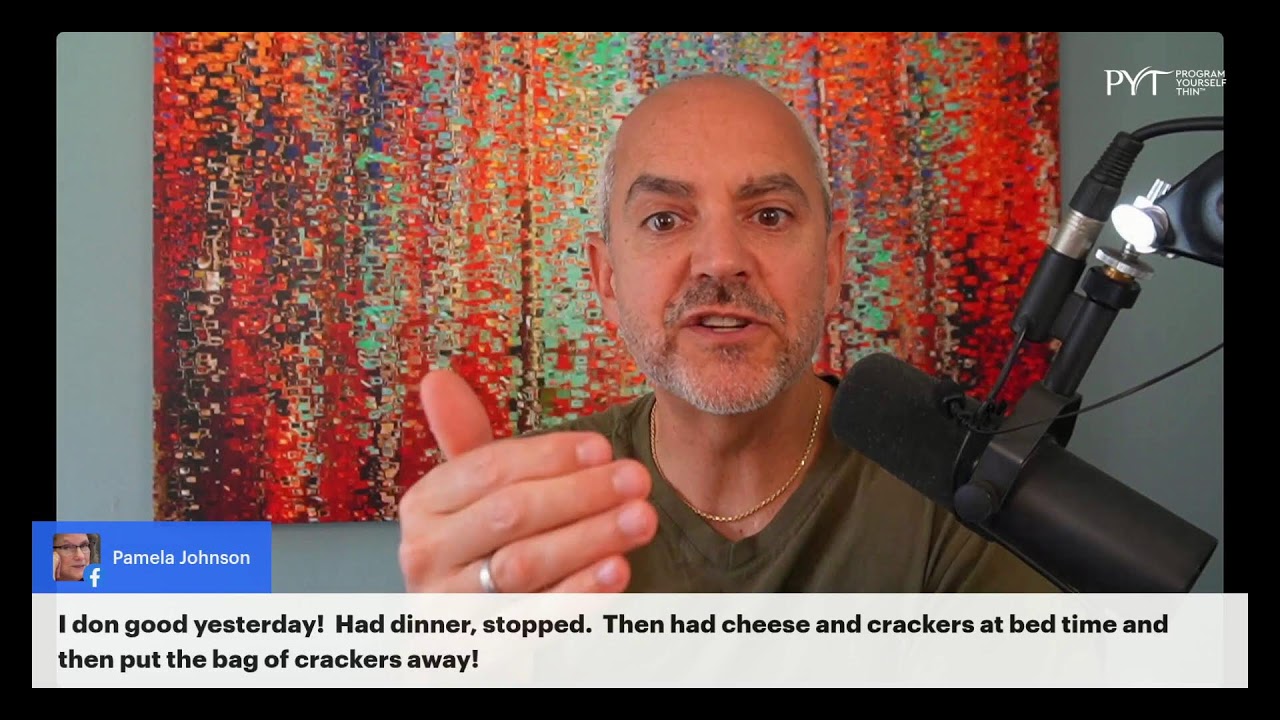
In this extensive YouTube session Jim Katsoulis outlines four natural pillars—high‑quality sleep, adequate hydration, purposeful relaxation and breathing, and whole‑food nourishment (especially fiber)—as foundational methods to reduce "food noise," the internal drive that fuels overeating. He frames these pillars as skills that can be improved and combined for greater effect, whether or not a listener is using GLP‑1 medications. The talk then pivots to deeper psychological themes: the futility of perfectionism, the persistent negative inner voice, and the importance of acceptance in weight‑management. Katsoulis critiques GLP‑1 therapies, warning that rapid weight loss often sacrifices muscle and leads to rapid fat regain once the drug is stopped, emphasizing the need for sustainable lifestyle habits. He introduces his "Program Yourself Thin" system, which includes a daily redo‑rehearsal technique, free hypnosis sessions, and a customizable goal‑weight blueprint that integrates mindset, habits, and nutrition. Throughout, he addresses emotional‑eating patterns, reframes "instant gratification" as temporary distraction, and offers concrete alternative coping strategies (e.g., walking, vibration plate, pet hug). The session is interactive, fielding live questions from participants about cravings, night‑eating, and self‑talk, reinforcing the message that consistent, personalized, non‑diet approaches are more effective than short‑term pharmacology or rigid diets.
Chapters
Because at some point, you're most likely going to want to quiet the food noise naturally because you're going to want to stop doing GLP-1, or you're going to have to stop doing it because it's too expensive. But most people, we're finding out, don't want to stay on GLP-1. So this is something to consider regardless of whether you're on it, you're on it, or you've come off it. Because at the end of the day, ultimately, your ability to manage your food noise is going to be a huge piece of your weight management puzzle. So there are 4 ways that are going to help you do this, and I believe that these are 4 starting points, and the deeper you go into them, the more quiet that noise becomes. So number 1, um, and I believe these are kind of in order of importance, but they're also important that they're, they're really changeable here. Number 1 though is sleeping, um, getting better, high-quality, more sleep. A lot of people struggle with sleep, and so understanding that sleeping is a skill, something you can get better at. The more you're able to relax your body, the more you're able to quiet your mind, the more you're able to kind of deal with whatever challenges are going on in your life more effectively, the better your sleep becomes. Sleep is a skill that you can improve at and get better at. You can increase it; you can increase the quality of it. And you can get better at it. And it's really important you understand this because as you start to get better at sleep, you kind of set one of the deepest foundations for yourself to succeed with, and not just with food noise and weight, but really every area of your life. So sleep's number one. Number 2 is hydration, because again, when our body is dehydrated, it's a stress state, and stress cranks up cortisol. Cortisol cranks up food noise. So we want to set up the stage for ourselves to be more relaxed, calm, grounded, hydrated, rested. We'll get to some of the others in a moment. But when you start to do this, you start to reduce the food noise and simultaneously understand that, yes, we want to reduce food noise. That's one focus. The other focus is we want to be able to manage the food noise that's there more effectively, too. So we want to do both of those things. And being more hydrated is going to help you do that. When you're dehydrated, your entire system physically, mentally is affected. And some of the biggest differences that you're going to notice is when you are dehydrated, your body and mind tend to confuse thirst with hunger because we evolved in an environment where we used to eat a lot of our hydration. So a lot of times we're thirsty, but we feel hungry. Food noise goes up. The second piece is When you're dehydrated, you're cognitively not thinking at the highest level because literally your hydration levels affect your cognitive abilities. So when all of a sudden you're feeling more stressed, you're feeling more hungry, the food noise goes up. Now you simultaneously have less of an ability to manage that food noise and to deal with it, get yourself back on track and manage it. So again, hydration is number 2 and extremely important. The next one, we're going to kind of combine 2. It's relaxation and breathing. I think I like to combine both of them because it's not just relaxation and it's not just breathing. We need both of them working together. This again builds on what we were just talking about, that the more stressed out you are, the higher your cortisol level goes. The higher your cortisol goes, the more food noise you experience. So we want to manage these things at a foundational level. And the more you start to dedicate yourself to relaxation, to breathing properly, the more you start to bring your stress levels down. And when you do that, you set your system up to reduce the food noise. And on top of reducing the food noise, again, when we're sleeping, when we're hydrated, when we're well-rested and grounded, even when there is some food noise, we're in a much stronger position to manage it. We can't be terrified of food noise either. Right? Yes, we want to turn it down, but we also want to recognize that we can also manage it. And the more relaxed and the more you focus on your breath and connect to your breath, the more often you do this, the more beneficial it becomes. You can take just 1 second and realize that literally 3 seconds of relaxing— if you relax your shoulders, chest, stomach, and face right now and take a deep breath and slowly let it out, It feels better immediately. Okay, that's one of a little secret weapon you have at your disposal 24 hours a day. And the final piece to focus on— again, there's more than this, but these are the big 4 in my opinion— is nourishment. Nourishment, in my opinion, is the number one factor that leads to increased food noise. And we know this because, again, we're injecting ourselves GLP-1 to increase GLP-1 that makes us feel more full and satisfied. But the most natural GLP-1 that we can produce is when we're eating whole natural foods. So as you start to focus on getting more whole natural foods into your body, you start giving your body what it truly needs. This is really important, and this is a natural way to do it, because if you're eating a lot of processed foods, one of the things that's happening is you're not meeting your body's micronutrient needs. When your body's not getting its micronutrient needs met, it sends you a hunger signal. Just like if you don't eat enough calories, what's your body do? It sends you a hunger signal. That hunger signal cranks up food noise. So the more satisfied we are with our bodies because we're putting the right foods in, the lower the food noise gets. And the number one thing to focus on if you want to start eating whole natural foods and dial down that food noise Fiber. Yes, protein is satiating too, but fiber is the missing piece for most people because most people are eating enough protein. They're not eating enough fiber. And if you are not eating enough fiber, you're eating a lot of processed food, sugar, that is going to crank up the food noise. It's going to crank up your hunger and it's going to make it harder to make the right choices so you can manage your weight effectively. Now, there's more things you can do beyond this, but this is a nice starting point. For, for relatively simple things. And again, it doesn't matter which one you pick. Start with any or all of them and start to notice what impacts it makes on your food noise. Because I want you to understand, I've been dealing with food noise for over 30 years. There are natural ways to deal with it. They may not be as dramatic as a GLP-1. I wouldn't argue that, but they're as effective ultimately, and they last forever, and it's a natural way to do it. So if that matters to you, Yeah. Start to play with these and start to notice if you can start to dial the food noise down yourself naturally. And if you want some support with all of these things, click the link in my bio or go to programyourselfthin.com. Or if you're on Facebook, you can just type mind, M-I-N-D, into the comments and I'll send you a link to go get this free hypnosis session I made for you. It's called The New Thin Me. It's completely free and it's going to help you connect to the goal weight that you want to live at and really kind of step into it so you can experience it. And that experience is really profound because it starts to pull you towards it. You start to magnetize that goal and feel, um, pulled towards it. So it starts to influence your behaviors in a natural way. So again, that session's completely yours, completely free. I also give you a training called Reprogrammed as well, as soon as you sign up. So go check that out. And, uh, if you have any questions, feel free to ask them. Uh, any weight loss questions are welcome. We, um, usually here Monday through Friday, uh, to answer any of your questions. And again, it could be about anything, about GLP-1s, it could be about Weight Watchers, it could be about food, diet, mindset, um, all of these things. So feel free to ask them. Um, how's it going, Ames? Hope you're doing well, and happy Friday to everyone. It is, uh, gorgeous, gorgeous, gorgeous time. I, I mean The fall is probably— I don't know, I like all the seasons for some reason or another, but, um, fall time in New England is something else. Um, Ames says, what do you tell yourself when you don't like what you see? Like, meh, what, might as well be, um, might as well blah blah blah. Yeah, yeah, sure. Um, and that's a big part of things because, you know, I always say in Program Yourself Thin, there's 2 things we got to do to manage our weight, to master our weight. Action— we got to take different action. And we got to practice acceptance. And I think of them as 2 separate things to get to that goal, uh, because most of us have to deal with acceptance on some level because our entire lives we have had these images and ideas of perfection put in front of us that subconsciously we're trying to achieve. And if we don't achieve them, we feel like failures or we feel bad about ourselves. And so it is almost impossible. Almost impossible at this point for any of us to look in a mirror and feel great. It's just—it's almost impossible to look at a picture of ourselves and just feel elated. Almost impossible. And I don't think there's any changing that. I think we've been so hard conditioned to compare ourselves against perfection, you know, that that even the people you look at, you know, even the people you look at, it happens to them too. You know, you. You think about— I always use the example of Brad Pitt in Fight Club. Well, that was Brad Pitt in Fight Club in one moment in time. I don't know what Brad Pitt's looking like these days. I bet he doesn't look like the Brad Pitt in Fight Club. You know, so even, even Brad Pitt, you could apply this to anyone, any actress, any model, any celebrity, any person you look up to. Um, it's the same thing. We never look the way we want to. We never look good enough. We never like what we see. There's always something to not like, right? And to me, this is part of the process as well, because there's no weight that's going to get you to a place where you just love what you see. Sorry to say this. I'm sorry to burst bubbles here, but, but I, I know this is true because I've done over 6,000 private weight loss sessions. I've worked with so many people have gotten to their goal weight and You're never going to believe it, they still don't like how they look. They're still upset with how they— what they're seeing, you know. So, so I think this, this is like its own path. That's what I'm trying to say, because you've got to blow up the idea that you can diet yourself down to a weight where you're just absolutely thrilled with everything you see, because it ain't never happening. It ain't never happening. Because there's always someone looks better than you. There's always something about you you don't like how it looks. And it's tough. It's tough. It's harder for women on top of it, but it's for, for everyone. It's just we've been conditioned this way, you know. At this point, think about it, 2026. At this point, you've lived your entire life steeped in marketing the world's never known. The marketing we live under has never existed in the history of the world, and here we are, we steeped in it 100 years straight, is steeping in all this marketing. And I say 100 years, you have to be 100 years old because your parents were steeped in it and that affected you. And then you were steeped in it deep. And yeah, we get to a point where it's never enough. We never look the way we want to. It's never good enough, you know. So I wish I had a more motivating answer for you, but I just don't believe that that chase to try and be perfect, that chase to just— you're going to just love everything you see. I don't think it's even possible. To just build on that idea too, I say this a lot to my clients. They don't like it at first when they hear it, but they always come around to it, is that that negative voice in your head, it ain't going nowhere. It ain't going nowhere. You can't get rid of the voices in your head. Again, one of the principal rules of neuroscience is you can't get rid of old wiring. So that negative voice in your head is not going anywhere, and you got to realize that. Because if you think you're going to get rid of that negative voice and you don't hear it for a day or two, then it comes back, it feels like you failed. You can never do it. But if you start by realizing you're never going to get rid of that negative voice— my negative voice is there still, and it's first on the scene every time. The difference is I've balanced it out with a warm, supportive voice that I've really focused on for years. But that negative voice is instantaneous, and that's the voice that shows up when I look at myself in the mirror. Boom. Look at a picture of myself. Boom. Negative. Okay, now I will manage it with my positive voice. You know, and that's my answer to you, Ames, is that I think on one hand we do some reflection on acceptance. What is our goal? What are we actually aiming at when we look at ourselves in the mirror? When we see a picture of ourselves, what exactly are we fucking expecting to see and why? You know, we've had this fucking ridiculous bullshit idea of what we're supposed to look like put into our brains. It has no basis in reality because We age as humans. We look different 5 years from now than we did 5 years ago. And we're conditioned from birth to not accept that, to beat ourselves up for that, to feel bad about it. Now, that's just— that's a different— it's a parallel path to managing your weight. But I think it's one that needs to be addressed at some point, because if you don't address it, you're never going to feel like Like anything's worth it. Exactly what Ames was saying. Because listen, folks, you can get to your goal weight and you're still not going to like what you see. You'll like a little bit more. This is the big— if I could share one thing with you from working with so many people have lost weight, it's for you to understand that just because you lose weight doesn't mean everything's great. It can be better. It can be great for sure, but it's not automatic. Just because your weight goes down doesn't mean now you love what you see in the mirror. It just doesn't work. Let me take it one step further and I will give you the most extreme example of this. I, at one point, I had a person, um, she had been a competitive bodybuilder and she was getting certified as a Program Yourself Thin coach. And I remember asking her, I said, what's it like when you're right about to go on stage? You, you live this lifestyle for years, um, you know this competition's coming up, so you've been just like zeroing in on being perfect for it for months. And it's now that time, and it's right before you're about to go on stage. You're looking yourself in the mirror, you're, you're single-digit body fat, you're, you're ripped up, you're muscled up, defined everything. I said, what are you thinking? What's it feel like in that spot? She goes, I'm just noticing other flaws. And I've never heard a better description of this process than that, that there's always this negative part of our brain that's been conditioned by marketing our entire lives to notice our flaws. And you can never diet yourself out of not having any flaws according to society. So again, that's its own separate path to me. And you know, once you start really reflecting on that a little bit, start to question what exactly are your physical goals? What are they and where do they come from and why? I just don't think— I think we know, oh yeah, the beauty industry bullshit, culture's bullshit, tells me a lot of beauty standards all bullshit, you know. We say that, but there's a difference between saying that's a bunch of bullshit and saying, okay, well, what do I aim at? What is my goal? What is my expectation? What do I value about myself and how I look? How do I want to look? What's important to me? Why? For who? I don't think we ask these questions a lot. I don't think we— we can say that North Star is bullshit, fine, but that's not the same as saying, here's my new North Star that I'm aiming at. And this, I think, Ames, gets to the very deep core level of what you're talking about. Because even if you start getting results— and this is what a lot of people, they don't realize it, but subconsciously this is what's going on— is they start losing weight and they still feel like shit about how they look. What I'm saying is, if you don't deal with the acceptance piece, you're gonna get to your goal weight and still feel that way. There's a chance of that anyways. Hope that makes sense. James says, never been fully satisfied, but statement, um, weight training, and that is helping. I'm not sure what statement weight training— I'm sure— I don't know, usually I can figure things out. Oh, started. Okay, yeah, yeah. Never fully been satisfied, but started weight training, and that's helping. Yeah, well, okay, Ames, that makes sense because weight training is, um, again, weight training can be a visual thing for sure, but weight training has the added benefit that you're going to notice other benefits that aren't visual. Right? So you might start lifting weights and maybe you notice some visual benefits. Maybe your shape starts to change a little bit. You have a little more definition, whatever. But the other part of weight training is that you start to feel stronger inside. You start to feel stronger as a person because you get yourself to do it consistently. You're doing something positive that you value. So I think you're absolutely right that aims that that that sort of focus is in the right direction. Yoga's like this. Meditation is walking. There's lots of things that are like this. Because now you're doing it, but it's not just about what you're going to look like. It has other benefits, and you feel better. You feel better when you're weight training. So nice job. Name says, where did you say I could find the new thin me? Yeah, you all can. You can get the new thin me as a hypnosis session I give you for free. And if you're on TikTok, you can click the picture of me up on the top left and click the link in my bio. If you're on Facebook, you can just type mind, M-I-N-D, into the comments and then it'll send it to you. I'm gonna get rid of this though; it's driving me nuts. So go get that because I also give you a training called Reprogrammed: How to Live at Your Goal Way Without the Fight. Completely free. Go check it out. Bookworm says, "Jim, sorry I missed the three you mentioned before the fiber." Yeah, well, it was sleep. Hydration, relaxation, and breathing. I combine those two, and nourishment. So it's even bigger than fiber. Fiber is just one version of it. But yeah, those four things are absolutely four profound ways to to deal with your food noise naturally. It's not a mystery. You know, food noise has been around for a long time, and there's ways to manage it that are beyond GLP ones. So just so we know. Yeah, same. Says, love that truth bomb. Thank you. You're welcome. That was a great question too. I really appreciate that. Um, says, so never gonna love it, but instead of just saying why, try say what. Um, well, I didn't say you couldn't love it, by the way. I never said you couldn't love what you see in a picture, in a reflection. Please understand that you absolutely can love what you see in the reflection, but But you've got to deal with your expectations first and what you're measuring. So you could start to look at yourself in the mirror and you could look for a sense of vitality, a sense of health, light in your eyes, skin glow, posture, the way you're holding yourself, energy, smile lines, different things like that. And you can start to Let go of the cultural beauty standard bullshit that you've been trained to measure yourself on, and when it comes up, you can say, "Fuck that! I don't care. I don't care if I'm going bald. I don't care if I'm my legs are fat. I don't care if my arms are flabbier than I want them to be. I love my body. I'm feeling good. I'm starting to eat well. I'm excited. I'm starting to weight train. I'm starting to feel stronger. I'm making better choices. I'm starting to feel more confident. I'm starting to feel." more successful. And this is really what matters to me. I have more energy, more patience for the people in my life. I got a little more stamina so I can kind of show up for the people in my life more effectively. I'm doing the things I want to do. I'm feeling excited about the future. I'm proud of myself. You see what I mean? Like, like, we can absolutely love what we see. We can absolutely love ourselves. But at some point, we've gotta have a conversation with ourselves about what we're valuing, what our criteria is. Because if you don't have this conversation with yourself, you value, um, how smooth your skin is, um, how luscious your hair is, how young you look, um, you know, how tight you are, how defined you are, uh, you know, all these things. And I know we want them. Listen, if you're under— if you're under 40, be gone. Listen to me as a voice from the future, but most of the people here, we're, we're at least over 45, 50, and usually older than that. At this age, please, we, we at some point have got to have a conversation with ourselves. We can still want to look good, okay? Please understand, we can still want to look good, but we have got to have a conversation with ourselves that we're going to loosen up what we demand and expect out of ourselves. We're going to let go of the concept of perfection. I hope for your sake there is no perfection. And there's no need for it. Maybe there is for you, I don't know, but, but for me there's not. And for a lot of my clients there's not. There's better, and better is always better. So that helps. Uh, yeah, Dina says— Dino says, how to stop emotional eating and finally lock in? Well, you know, okay, so those are 2 separate questions, you know. So how do I stop emotional eating That's a huge vague term because you have a bunch of emotional eating patterns. So emotional eating is kind of a big umbrella term to describe the emotional eating programs you have. And so that's the first step, is get specific, Dino, in what emotional eating patterns do you have? Do you tend to fall into boredom eating at night? Do you fall into stress eating during the day? Do you fall into loneliness eating on the weekend? Okay, most people have a few, 3 to 4 different emotional eating patterns. Okay, we need to break them up because each one's different. We can't use the same solution for everything. They're different, and so they require a different solution. So to deal with emotional eating, the first thing to understand is that the emotional eating is not the problem. It's a symptom of a deeper problem, and the deeper problem is that you don't know how to manage your emotions genuinely. And it's not your fault. We've been conditioned as a society to use food to manage our emotions, um, since we were born. So we get bored, we go to food. We get lonely, we go to food to feel better. But the core problem is that when you're bored, you don't know how to feel entertained or stimulated naturally without food. When you get lonely, you don't know how to manage, um, your loneliness and move towards connection and, um, you know, whatever else you want to feel instead. Um, when you feel stressed, you don't know how to move towards calm and peacefulness naturally without food, you know. And what the food really represents in emotional eating is not an answer, but really a distraction. So again, when you feel stressed and you go and eat a tub of ice cream, as soon as you finish that ice cream, you don't feel way more relaxed. You tend to start feeling more stressed right from that point. It keeps cranking up, and now you end up more stressed because now you ate the ice cream as well. So the real answer is not just how do I stop emotional eating? The real answer is how do I feel the emotions I want to feel more effectively in a way that doesn't have anything to do with food? And so if we look at boredom eating, the answer is not to just stop boredom eating because that's a path to becoming a bored thin person, which is not what you want. So the question becomes, okay, I got this boredom eating pattern I have. How would I like to feel when I'm bored? And when is it happening? That'll help you answer the question. But long story short is, um, how do I want to feel, um, when I'm bored, right? Not usually— most people want to feel entertained or stimulated or curious or interested. Um, and then the question becomes, how in my life can I start to feel more excited, more stimulated, more entertained, more focused, more compelled in my life? And once you have an answer for that, the emotional eating to some degree just fades away. The emotional eating is there because a lot of you think that eating the food is the best way to manage your emotions, but it's not because it really just operates as a distraction. And dealing with your emotions in reality is much more powerful and much more pleasurable. Again, in Program Yourself Thin, a lot of what we do is built around this idea of the goal weight pyramid, right? So if I show it to you here, and so, you know, if you look at, um, if you look over here at mindset, we got the emotion piece right there. And that emotion section is literally all about what emotions do you want to feel more of in your life and how do we make that happen, kind of strategizing for it, right? And then locking in is really not like what you're thinking, because locking in, you're thinking is like this this willpower thing. I'm going to force myself to do the right stuff and stay focused and on track all the time, when in reality locking in is much more about taking control of your habits. Again, back to mindset, right? You want to get your habits under— you want to understand how to run your habits. That's how you lock in. You start to make the things that allow you to be locked in run on autopilot, if that makes sense. What's up, Lynn? Lynn says, one thing I learned these past few months is not to panic if you make a shitty choice. Accept it and move on with the mindset to do better. Absolutely, Lynn. Yeah, huge part of programming yourself then. Um, I believe that the number one skill for mastering your weight is to be able to get back on track quickly. And I think diets never really teach you how to do that, and they don't set you up to do that for a lot of reasons. But, um, so yeah, being able to get back on track is really important. And one of the key factors of getting back on track quick is not to freak out when you make a mistake. We love mistakes in Program Yourself Then. Program Yourself Then is really built around your mistakes. So dieting is built around perfection, right? Dieting, you start on a Monday and the expectation is I'm gonna be perfect till I get to my goal weight. Program Yourself Then, we build around your mistakes because we build it around the redo rehearsal technique, the Program Yourself Then technique. And so we expect you're gonna make mistakes, but then we got a process there for you to look back at those mistakes and learn and grow and evolve from them. That's the difference in a nutshell between a diet and program yourself then. So yeah, absolutely, Lynn. That's one of the biggest things. Thanks for sharing that. Um, Lois says we talk to ourselves in a way we would never talk to others. Self-acceptance is so true. Yeah, absolutely. We talk to ourselves— we're the meanest to ourselves, right? Yeah, absolutely. Lynn says what bothers me about GLP-1s is that— is what will I need to do differently to maintain my goals if I don't also change my mindset and habits? If all I'm relying on is the jabs. I get that I'm taking it temporarily to get my D2 under control, um, but I know it's not the end-all be-all. Yeah, it's not. It's just not. I've been really— I've been doing a lot of research on GLP-1s, and, um, as I've been saying since they came on, because I've been doing this— I mean, I've been doing this for, for 30 years, over 30 years personally, over 21 years professionally, and I've been doing this podcast for almost 4 years. And so I've been here the whole time the GLP-1 thing was going on. And I've always said the same thing, that you know the way you think about it now is the best you're going to think about it. And exactly what I thought is starting to happen because in the beginning, the pharmaceutical companies completely control the narrative. You know what I mean? It's a brand new substance, and in this context, it's a brand new experience for people. They had studied GLP-1s for 30 years, 20 years with type 2 diabetics, but they never really had big giant studies long term for people. Using it that weren't type 2 diabetics. So that's what we're going through now. I mean, that's kind of what people using it are, you know, you're kind of the test group. But what we're quickly finding is that people don't want to stay on GLP-1s. They don't want to stay on them, and— or they can't stay on them, right? Because they just get too expensive, or that they just— they can't get them anymore, um, in a way that's feasible for them. And what ends up happening is everyone puts the weight back on. You know, again, it can take it can take a little while too. You know, it's like I think a lot of people think well if I lost fifty pounds on a GLP one and I come off it, well I know everyone thinks I'm going to keep it off, but no you're not. But um, you know, take about a year and a half or so to put the weight right back on, and then everything goes back the way it was. Um, except there's one huge difference, and this is the big. This is what you're going to start to see here. You heard it here. You may have heard this, but but please hear this over the next. 2, 3 years, this is what you're going to know a lot of because everyone's going to go through this. You go on it, you lose some weight quickly. You go off it for whatever reason, you don't want to stay on it, you lose your funding for it, now it's really expensive. You come off it, you gain weight really fast. And the difference here is that you lost weight and you lost a decent amount of muscle. That fast, rapid GLP-1 weight loss, you lose a lot of muscle. And then when you put the weight back on, you put on all fat. So that's going to be the— that's going to be the big thing moving forward. So maybe they'll come up with some GLP-1 that's got a steroid in it. I don't know. But that's the big— that's going to be the big problem moving forward. That's going to— I don't know. That's the one that makes me nervous. So you say, well, is it safe? Is it safe? It's safe in the way we think about safety. Like, you're going to take it. You're not going to get any, like, acute issues. Most likely, you know, some people get you know pancreatic. What's the shit? I forget pancreatitis. I forget the the different things that that happen with it, but they're rare. They're rare. There's a thyroid, you know, cancer scare. But again, even if that happens, it's rare, rare, rare, rare. So it's relatively rare things that are happening to people. So we can say in general that the medicine is fairly safe in that sense. Where I think we're going to find it's not safe, and this I find so interesting, and this I think people are going to be so primed for. Because, you know, you're, you're talking about— and I don't know this, actually, I'm making an assumption here, so I will, I will state that. But I would, I would imagine the majority of GLP-1 users are probably women. Probably I'm making an assumption here, maybe over 40. I'm just going to make that assumption. But I also know that women over 40 at this moment in time are so steeped in podcast influencer stuff about protein. And the importance of protein for what, ladies? What do we need high protein for? What do we need it for? And I know you're passionate about it. I know women are extremely passionate about protein maxing. For what? So you keep your muscle, right? So I find this very interesting. I find this is— this is 2 steam trains coming straight at each other because they're the 2 most popular things in the conventional wisdom right now. Is that you've got the nonstop drumbeat messaging of protein so that you can have muscle when you get older, and now you've got a GLP-1 which is dramatically reducing women's muscle tone if they're cycling with it, doing it, coming off it, going back on it. It's gonna be a big problem, and it's kind of a big problem anyways because it's causing a lot of weight, you know, muscle to be lost anyway. So anyways. These are two ideas that exist in the public's mind right now, and I'm curious to see. You're going to hear more and more about the GLP-1. I would look it up if I were you. This is what I mean. This is something you've got to be careful with these pharmaceuticals. They're not giving you the full story. They're a fucking company. And so I'm not saying they're necessarily lying. I'm not saying they're not lying either, by the way. But this is in their own studies. This has always been the pharmaceutical company's biggest issue with the GLP-1s. Was the muscle loss. And what they didn't even know in the beginning was not just the muscle loss, but followed up by the rapid weight gain that's mostly fat. The shift in recomposition is a big issue. And you know this because you're steeped in protein for muscle when you get older. So I don't know. I don't know if people are going to figure that out. But again, GLP-1s, I think you probably think about them as positively as you're going to right now. And I think it's going to be again. I think they're great at what they do. I think they're a godsend for certain people, but I think that we I think most people have the highest opinion of GLP ones right now, and I think it was even higher before. But now what's happening is a huge segment of the populations actually have experienced firsthand experience with it, and they're finding out they don't want to be on this forever. And if you don't want to be on forever, well, a You're in trouble because you're gonna put the weight back on unless you change your programming. You know, again, I have a lot of people in my program that are on GLP-1s while they learn this system, while they learn how to get their mindset right, their lifestyle right, and their eating right, and how to take control of their brain. So I mean, there's work going on there that sets them up to be able to come off it and have a chance to, you know, maintain the weight loss. But if you don't do any work outside of just jabbing yourself with a GLP-1, What's going to change when you stop jabbing yourself with the GLP-1? Nothing, except your body composition is going to change, and potentially very dramatically. So it's, it's just a reality. Again, I'm not saying don't— I'm— it's not a— this is a GLP-1 safe space. But again, we've got to look at things honestly too. We've got to have the courage to do that. Um, all right, Cindy says, so true. Talking about the, the bodybuilder thing I was talking about. I was a competitive bodybuilder years. 2%. Wow. It was a season helped me manage the loss of my father. Now I'm at peace and learning with your positive mindset, focusing on quality sleep and relaxation. Giving up protectionism is a huge blessing, has opened up a beautiful freedom. Yeah, so so I think you say giving up perfectionism. Yes, it's a huge blessing. That's awesome, Cindy. I'm so I'm proud of you for all that. And again, you you Cindy really represent a lot of my clients because so many of my clients are perfectionists, overthinkers. And that is something that needs to be dealt with because expecting you're going to be perfect, expecting you know that you're going to end up perfect, that you're going to be perfect to get there—it's all bullshit. You're not going to be perfect. You can't be perfect. And the sooner you recognize that, the sooner you can watch—you can walk what Cindy's talking about with a more peaceful path. And not only is the path more peaceful, but I think it's more effective. You know, helping you manage your weight and certainly your happiness too. Um, yeah, Zara says, at 62, I'm focusing on strengthening my body and eating as healthy as possible. Definitely working on only eating when hungry. Um, yes, Zara, that's great. Good for you. Again, as we get older, goddamn it, I hope our— I hope our focus shifts a bit. You know, we could still want to look, you know, good for whatever, but come on, come on, you know, there's so much at stake here. There's so much at stake. Don't let, you know, know, the culture we've grown up in and the conditioning we receive rule our lives. You know, just because we've been fixated and focused and conditioned to focus on what we look like our whole lives doesn't mean we have to continue that way. We can change up our values and what, you know, matters most to us. But that's wonderful, Zara. All right. Um, yeah, working on only when I'm, when I'm hungry. Yep. I'd rather take supplements and natural products than pharmaceutical crap. Yeah, I get it. I get it. I mean, these pharmaceutical companies, unfortunately, they're not on our side. Like, and I'm not— I will take— I take a statin, so I'm not anti-medicine in any way. Um, but at the same time, I think, you know, you got to be careful because it's just a grease slide, as they say. You know, it's a very easy— it's so easy to go in the doctor and say something, oh, here you go. And I mean, I see that firsthand every day with the GLP-1. And I get people can be excited about it because it's the most useful thing they've probably ever done, you know, in their lives. And so I can understand the excitement for it. But you have to understand that I have been living in this world where, you know, for over 20 years I've been helping and watching regular people with lots of food noise and no ability to influence their eating and their weight become successful with it. So I know for a fact, as much as I know the sun's going to rise in the east and set in the west, I know that people can manage their weight more effectively when they do it strategically, when they do it with the right system. So, you know, I get why people would be so excited about GLP-1s when you compare it to dieting or surgery, but I sit on top of a hill where I have what I consider to be the best solution, and I see it work day in and day out. And from my point of view, GLP-1 is not that great. Not compared to this. I mean, again, I say this every day. I'll take I'll take the program yourself thin success stories and put up against the GLP one success stories all day long, all fucking day long. And I mean, I got someone I worked with. I was just talking to them this week. They're down almost 100 pounds. And so that's a person you would look at and say, oh, they're never gonna be able to lose weight naturally. Well, here they are three years into it, 100 pounds down, living there, still progressing down, still managing it. And managing it more and more effectively each and every week. And that's just one. I mean, I see this all day long. So again, that's why I'm here every Monday through Friday, just to let you know there is another way. I give you the beginning of it, all of it for free. Go get the hypnosis session. Watch the training I made, Reprogrammed: How to Live at Your Goal Weight Without the Fight. Read the emails I send you every day. I give all of this stuff to you for free. All you gotta do is log in again. If you're on Facebook, just type Mind, M-I-N-D, and it'll do it. So you know, it's there is another way. You don't have to believe me, but at least you know take a look. It's not a diet. I'm not going to tell you about a diet. The things I'm going to share with you are things I guarantee you've never heard. You've never heard this. I know this because I've been in this world for a long time. I know it's out there. You've never heard this stuff, and it has the potential to completely change your life. It's a little bit of work though, so if you don't like work, then skip it. But it's also easy. It's easy and it's work. I don't know, but you got to put some work in. Again, the hypnosis— I can make anyone lose— not because anyone, but I can pretty much make the majority of people lose weight just with my hypnosis. But, um, to really master your weight, you know, you've gotta, you gotta participate, you know. Um, says, is it true to stop eating before 8 PM? Um, no, I mean, not really. You know, in Program Yourself, then we have a golden rule that there is no right or wrong, there's only what works for you. So if stopping eating before 8 PM works for you, great. If it doesn't, great. At the end of the day, managing your weight really comes down to managing your calories, and there's a million ways to manage your calories. So I have clients that eat right before they go to bed. I stop eating before 7 o'clock typically, so we're both at our goal weight. Happily. So, so who's right and who's wrong? Well, we're both right. No one's wrong. So there really— it's about— and again, that to me gets back to a fundamental piece. Dieting has trained us our whole lives that there's one answer. There's one answer and someone else has got it and has to give it to us. I would suggest there's many answers, and the one that works for you is the one you're going to have to discover. You've got to figure out what works for me. And yes, that, that part takes a little more effort. I wouldn't, I wouldn't You know, pretend it doesn't. But once you have it, you have a way that works for you, that's custom made for you. That's what this is. This thing I'm showing you right here is our goal weight blueprint, 144 pages. So again, I this program is not for the for the for the week. I'm not I'm not going to pretend it is. But you you go through this, right? And you come up with your own customized plan. And once you have it, you have a plan that's designed for you. Your lifestyle, your personality, your preferences, your genetics, and you have a plan that all of a sudden is built for you. You've never had that. You've never had that. Because honestly, at the closest you can get is go and get like a nutritionist or dietitian to write you out a you know custom made plan for you. But even that is not the full story because again, program yourself then that would be you know just just this category here. And by the way, we go into way more. Important things about eating than just the plan. Um, but, but they don't give you the lifestyle plan, they don't give you the mindset. And on top of that, most importantly, is they don't show you how to implement the eating plan, the lifestyle, the mindset. So again, in Program Yourself Thin, there's just a lot more information going on here that I think is crucial, you know. So no, you don't have to stop eating at 8, but experiment with it. And, you know, I'll tell you, for me, I used to eat right up until bed, and, and I kept making— I I stopped eating earlier and earlier before I went to bed, and that was wonderful for me. But it wasn't intermittent fasting. I started this 30 years ago before there was intermittent fasting. So I didn't start out by saying, okay, I can't eat for 16 hours and white-knuckling it. I kind of slowly, you know, dialed the eating down and, um, until a time that worked for me. Yeah. So yeah, there's no hard and fast rules. There's only what works for you. What's up, Vicki? How's it going? Yes, happy Friday to you. What's up, Jane? Jane said, I had a crappy day yesterday, just a few disappointing things, so I went and bought 2 chocolate bars. Drats. Um, see, I don't know, Jane. I wouldn't say drat. I would stop saying drats. You're stuck on that. And you know, this is a classic. Tell me, folks, if anyone can relate to this, because this is so common. Um, that you do the good girl, bad girl thing. You're caught up in good girl, bad girl. I, I, you know, got 2 chocolate bars, I'm a bad girl. I was a bad girl, why'd I do this? I've got 2 chocolate bars and I'm a bad girl. I'm a bad girl, see how bad I was? Look how bad I am. Aren't I bad? I'm the baddest. Why am I so bad all the time? I'm always bad, always messing things up. I had a bad day and I went and made it worse, you know. And then you have one good day, oh, it was so good, and I'm good, but, but I might be back to bad, right? Bad's always a lot more, you know, has a lot more pull to it, but I wouldn't look at it that way. I don't look at anything as good or bad. I mean, certainly there's things that are aiming me in the direction I wanna go and things that are aiming me away from the direction I wanna go in. So I bring it to that awareness of this is the direction I wanna go in, this is the direction I wanna go in. But I don't look at it as a good or bad thing. I look at it as a few disappointing things happened and I didn't have a good way to deal with them other than getting some chocolate bars. A few disappointing things happened, and the best strategy I had to deal with that in the moment was to go get two chocolate bars. So where are you a bad girl there exactly? Where's the bad girl part come in? Well, I shouldn't have eaten them. Okay, well, how do you deal with the disappointment? I should have just dealt with it. What's that mean? I should have just stopped myself. Well, how do you deal with the disappointment? I should have just ignored it. How do you ignore disappointment? I should have. What's that mean? I don't know what that means. So when you all do this, right, you, you get upset, you get disappointed, you get whatever, and you go and eat food instead of— oh, you bad person. Bad for what? What, what was the answer? What would have been the— what would have been the, the good girl? She would just ignored it. Now if you say, I would have gone for a walk, I would have read a book, great. But there's no good girl, bad girl thing. There's just either had the strategy or didn't. Jane says Jim AI is easier to talk to than you. Uh, that's funny. That might be true. Jim AI is a lot more, um, what's the word? He'll let you get away with more. He's more, he's more gentle, I would say. He's built that way too because he can't create the same level of rapport. That's so funny. But yeah, anyways, Jane, you get the idea though. It's not, it's not a judgment of yourself other than an evaluation of what you did in a casual way. Like, okay, you know, we can look at, um, we can look at like, okay, I did this thing and again, it either brought me the direction I want or it didn't. Um, but it's, uh, that's fine, but, but it's the beating ourselves up for doing it. Right? Oh my God, I did it again. I screwed up again. Well, you didn't screw up. You didn't have a good strategy. I don't know. Does that make sense? I hope it makes sense. Jane says PYT makes sense, and it is really common sense. It's all together in one program, and it's work, but it's a great plan. Thank you, Jane. Appreciate that. But again, Jane, you know it's the redo technique. Jimmy is calmer. All right, that's good to know. Jimmy is more calm than I am. I believe that. It kind of depends when you catch me, I suppose. No, it doesn't. I always get pretty hyped when I'm coaching, I think. Yeah. And says, thanks for doing what you do for us, much appreciated. Well, thank you, I appreciate you saying that. All right, Pat. Pat said bought The Untethered Soul. Yes sir, yes sir, that's awesome, Pat. Nice job. I love that book. I think that's a great book. Big fan of all his books, actually. Um, I, I'm such a fan of Michael Singer. I think he's wonderful. One of my favorite things about Michael Singer, if you don't know him, Is he teaches meditation, but he really is of this world. He also runs like a multimillion-dollar company that he created. And so I think he's— I love stories like that. You know, Steve Jobs is like that, you know, where he was a meditation teacher. So I'm always— I'm pretty fascinated by people that can merge together, you know, kind of meditation and the modern world, whether it's business or just the modern world. So, yeah, Michael Singer, I think, is really good like that. You know, I like that, Cindy. Yes, let's not should on ourselves. I love that. That's a good one. I've never— I haven't heard that. Yeah, should on ourselves, right? Exactly. The shoulds, right? I should have. I should have done this. Yeah, but you didn't do it. Why didn't you do it? That's what I'm interested in. Do you know what I mean? Like when you say, I shouldn't have eaten the chocolate bars. Shouldn't— why shouldn't you have? I know that sounds silly to, to say at first, but let's take it back a couple notches. And so I got— I was disappointed. I got 2 chocolate bars. I shouldn't have done that. Shouldn't have. Why not? Why shouldn't you have done it? Because I don't want to gain weight. Okay, well, you're thinking about weight now, but let's go back to that moment when you felt disappointed. In that moment, you felt disappointed and your brain said, ah, I want to feel better. I want to feel better. And your brain said, how do we feel better? And your brain reached for the first thing it reaches for— chocolate bars. Chocolate bars. Right, because what if I popped up in that moment, Jane? What if I popped up in that moment and you're like, yeah, I'm gonna get chocolate bars, and you're about to do that, and I said, ah, yeah, wait, or, or I got— here's a briefcase with $100 grand in it and a ticket to, you know, a beautiful island that you can bring one person with you go. Which one are you gonna take? I know it's a silly example in a sense, but what I'm trying to say is that there's no should because you didn't have another option. You had the option, I'm gonna eat 2 chocolate bars and feel better, or Or I'm not, and I'm going to keep continue to feel like shit. That's the option you had in that moment. I can eat two chocolate bars and feel better, or I cannot eat the chocolate bars and continue to feel like shit. And so, what? Oh, I should have taken the second choice. I should have not had the chocolate bars and felt like shit. You should? Yeah. When you frame it this way, it seems different, right? So, oh, well, it's not really a should. Huh. Yeah, I guess I never— I didn't have a better option. That's the problem. So I'm breaking it down. It's not that you should have not eaten the chocolate bars. You should today. Okay, so you want to stick with a should? Okay, I'll give you your shoulds. You want to have a should? You should go back in time in your mind, Jane, and redo it. What could you have done knowing what you know now? If I put you in a time machine, I send you in the DeLorean, and I hit 24 hours ago, you know everything that's going to happen, Jane. It happens. What do you do different knowing what you know now? What else could you have done when you felt disappointed? You should do that because that gives your brain a new direction to go. And the next time you get disappointed— because guess what? You're gonna get disappointed again. But if you've just told yourself, I shouldn't have done that, guess what happens the next time you, you get disappointed? It's gonna happen. You're probably gonna grab the chocolate bars again. Because it's serving a purpose. It's there for a reason. You're not just grabbing chocolate bars to gain weight and feel bad about yourself. You're grabbing the chocolate bars because in the moment it feels like the best solution, the best strategy to make things better. That's why you did it. And so beating yourself up for not— what, for saying no and feeling like shit? Hmm. Yeah. Says, at the time I was busy and stressed and running around, so I grabbed for what I knew would work, but of course it didn't. Yeah, well, Jane, let me ask you right now, and please answer this. If you could go back in time knowing what you know now, what would you have done differently? That's what I want you to answer. Please answer. What would you do differently if you go— if I could set you in that machine and send you back and you're 2 hours before that moment and you know how busy you're going to get, you know what's going to happen, what would you have done differently? That's what I want to know. And this is so important for all of you because this is what you're always doing all the time. You're making a mistake, and then as soon as the mistake happens, I shouldn't have done that. So now your mind says, "I ate the chocolate bar, but I shouldn't have eaten the chocolate bar." But nowhere in there does you do you figure out what I should have done because not eating the chocolate bar is not an answer because you're eating the chocolate bar to feel better. You're looking to feel better. That's the main prime. You feel like shit. Your main goal at this point is I want to feel better. So not eating a chocolate bar does not make you feel better in that moment, and you don't have any other options apparently. Okay, you know what Jane just said? Jane goes, I would have gone down to the beach and gone for a walk to relax. So why didn't you do that, Jane? And I want you to be honest. I want you just to answer. It's an easy answer. You know the answer. Why didn't you do that? I want—I hope all you can hear this. Why didn't you go to the beach and go for a walk and relax, Jane? Yesterday when that all happened, and this is this is the reason why you need to learn to program yourself and you need to learn from your mistakes because your mistakes are your greatest teachers. I'm not just saying that as happy horseshit. I genuinely mean that your mistakes are your greatest teachers in the world. So Jane says I would have gone down to the beach and gone for a walk to relax. So why didn't you do that? Why did you just think of that but you didn't do it yesterday? Why didn't you mention that before in this conversation? There's a reason, and it's a simple one, and it's one that does not deserve you berating yourself. Write it in, Jane. Why didn't you do that? Why didn't you go to the beach and go for a walk and relax yesterday in that moment? I'll give you another second, and then I'll answer it for you because I already know the answer. Do you all know the answer? Ah, so Jane gave me an interesting— I was hoping you'd give me the other one, but, but you're close. Jane said it was quick and easy to grab the chocolate bar, and I was sort of too lazy, so I took the easy way out. Did you take the easy way out? When you look at the full last 24 hours, was that the easy way? When you really consider everything, it was in the moment, right? But I bet the bigger moment— I'm curious, did you really think about going to the beach and going for a walk and relaxing? Because you said I was sort of too lazy, implying that you thought of going to the beach and going for a walk. Because I thought you were going to say I didn't think of it. I thought you were going to say I didn't think about going to the beach and going for a walk. Which one's more true, by the way? Either one could be. They just— they point at different things. And no, I know Jane. Jane's in the program, so I know Jane. Um, but yeah, did you forget it all? Did you not think about really going to the beach at that moment? Oh, okay. Also, it wasn't sunny, so less appealing. I did think about the beach. Okay, so you thought about the beach, but it wasn't sunny, so it wasn't gonna do the job, probably, in your mind. When you thought about the beach, you said, eh, eh. So maybe the beach wasn't the right answer. Or maybe it was. Yeah, Sally says instant gratification. But was it instant gratification? Here's another one. Bullshit. Bullshit. If you think that's instant gratification, it is not. Eating the two chocolate bars, you say, oh, it's instant gratification. Instant. Because what's gratification then? Because if we look at eating the two chocolate bars, yes, that five minutes it took to eat the chocolate bars, the ten minutes. That you could say that was instant gratification if you wanted to. The second you finish that chocolate, how do you start to feel? The second you finish the 2 bars of chocolate, how do you feel physically, mentally, and emotionally? Not great. Not great. Yeah. Jane, you're playing the should game though. I want, I want you to think back and think, what, what could I have done that would have been a lot better than 2 chocolate bars? And maybe the beach would have been it, but you have to look at it today, taking everything into account, and say, if I go back in time, what would you have done? What would you have done? Yeah, yeah. Sally says shitty. Yeah, you feel shitty. So is that instant gratification? Is it— is, is how we define instant gratification 10 minutes of eating a chocolate bar and then feel totally shitty afterwards for the next 24 hours? Is that our definition of instant gratification? We really considered that. I know we say it all the time, we always say instant gratification. I get it. But when we look at the, the picture more accurately, because we tend to look at the 10 minutes— well, instant gratification, you see the chocolate bars. Yeah, that's 10 minutes, but it's only 10 minutes, right? So I'm here, the 10 minutes is here. I can't look right here with it where the 10 minutes ends. Because right there is shitty. I feel shitty. So what's instant gratification mean? Maybe we call it temporary gratification. Instant temporary gratification maybe is a better phrase. Okay, so the instant gratification is really a relative term because if you feel disappointed, let's say, what's instant gratification? Well, instant gratification would be that I start to feel— I don't know what the opposite of disappointed would be, but I feel content. I'm at peace, let's just say. So to me, that's instant gratification. The quicker I can get to a place where I'm at peace. Well, if I eat 2 chocolate bars, is that bringing me to peace or is that just distracting me real quick? So maybe instead of instant gratification, we should call it instant distraction. Maybe we should call it instant temporary distraction. Is that a more accurate description? Yeah, not gratification, right? It's instant temporary relief through distraction. Is that a more accurate way to think about it? It certainly is in my mind. That really fits like a glove, that eating some bullshit when I feel down, whatever emotion, to feel better for a moment is an illusion that exists only within that 5, 10, 15 minutes of eating, and then it makes everything worse. If I start to remember that and think about what I thought was instant gratification as temporary distraction, instant temporary distraction that leads to me feeling shittier— now if that's true and I start to think about it that way, I might start to make different decisions naturally. Yeah, Jane says, I also bought the 2 chocolate bars at 2 different times. Yeah, but here's the big thing, Jane. Here's the big difference. I want to close this out on you for it, right? Because I want you to get this, because you're getting lost in the shoulds. You tend to do that. You tend to get lost in the shoulds. Is the point of looking backwards and saying— because you have to make it real. If I literally put you in a time machine and sent you back 24 hours, would you go and get the chocolate bars again, or would you have gotten your ass up off the couch and gone to the cloudy beach? And there's no right or wrong answer. Please understand, because if you say, ah, yes, I would have got the chocolate bars, great. That means the beach is not a good answer for you, and we need to find something else. And we're not going to even say the gym because we already know that's not a good answer for you. When you're feeling disappointed, when you're feeling down, when you're feeling lethargic, going to the gym— It sounds like a great idea, but most of the time that's not going to work for you. So we need to find something else. So I would go back in time, Jane, in my mind. If genuinely, as genuinely as you can, if I put you in a time machine and send you back 24 hours, what would you have do? That's what I want to know. Not what you should have done. What would you do if I sent you back in time? What's up, Pamela? Yeah, one says sometimes your best intentions don't materialize, and that's okay in my opinion, as I now see it as a lesson rather than a way to put myself down. Shitting on myself won't fix it, so why not just learn from it? Maybe next time it'll work out that way you planned in the first place. Learning this now. Absolutely, Lynn. Exactly, exactly. And that's what I, I thought Jane was going to say. I didn't think to go to the beach because I just want y'all to realize that part, that just because we realize something, we said, oh, I should have gone to the beach. Well, just because you say I should have gone to the beach, the next time you get disappointed, you might not even think about going to the beach, or you might think about it in a way where it's not very appealing. So remembering the good ideas we had and the good strategies we had is its own piece of the puzzle. And a lot of people kind of just forget because it's new. Oh yeah, next time I get upset, I'll go and eat an apple instead. And they just forget about it. And then they say, I can't stick with anything. We can stick with things. It's just, it takes— you got to reinforce it. You know, that's a piece of it too. Uh, Cindy says, with PYT, looking at the why behind the what. Thankful for PYT. I've developed a happy, healthy habit of standing on my vibration plate. It helps bone density and circulation instead of eating a chocolate bar. There you go, Cindy. There's a go. That's a great, great, um, example for— that works for Cindy. That's perfect though, because getting on a vibration plate— see, again, so for Jane talking about like, well, I felt disappointed and shitty, I'm on my sofa. The all answer is go to the gym, right? So program yourself— dieting is all or nothing. Program yourself thin is all or something, which makes all the difference in the world. So for Jane, going to the gym is the all answer. That's the perfect answer. It's what I should do. Okay, great. But sometimes you're in a mood and energy level, you ain't gonna do that. So we need to have some things. We need— I can't figure out all my hands. I, I— my screen's been mirrored for 3 years and I flipped around and still haven't learned how to use my hands this way. So the all answer of going to the gym is here, but you got nothing in between here. Here's the chocolate bars, the nothing answer. Here's the all answer going to the gym, and the beach is somewhere here. You got one, one answer here. It's not really enough apparently, you know, um, but we need some more options here. And that's what most people do not ever focus on or think about. They only give themselves the perfect answer. And when they can't do the perfect dance, they say, what's the point? I'm not gonna do any of it. None of it works. Well, there's a whole bunch of shit in between here that you didn't consider. How would I move my hands? This is funny to me too, because you're seeing in real time I don't have the neural connections to move my hands with the screen. I literally— I can't make these fingers touch these fingers. Oh wait, okay. You know how hard this is for me to do? Anyways, so that's a story for another day. But if you, if you're here all the time, you know what I'm talking about. Uh, what's up, Kent? Susan says because she wanted the chocolate. Oh yes, agreed. She definitely wanted the chocolate for sure. Um, but she wanted the chocolate for more than just the reason that it tastes good. That's the point I'm trying to make. Yes. Chocolate tastes good. You enjoy that. It lights up your your neurons. That that's all true, and that's a factor. Absolutely. But the bigger thing beyond it is it emotionally is giving you something, and what it is, it's giving you an association of some positive emotion. It could be relief. It could be distraction. It could be pleasure. It could be focus. It could be connection. It could be all sorts of things. So yes, it is that the chocolate tastes good, and I want the chocolate. But there's more underneath it. as well. And it's important to recognize those if you want to resolve it, you know. Yeah, Ken said try going to the beach afterward, you might not want the chocolate anymore. Yeah, absolutely. And again, that's a great answer, but sometimes we can't get ourselves to go to the beach, so we need another answer. A vibration plate I love because that's like right in your house and you just have to stand on it. That, that would be to me— so we're talking to all our— not this again. Um, we're talking all or nothing. Going to the gym, eating chocolate bars, going to the beaches right here. Maybe getting on a vibration plate might be right here. It's just easier. But if you got on it, it's weird how like the littlest thing can kind of change the whole direction you're going in. Uh, ah, Jane says, I think I was kind of punishing myself because I had sent an unkind message to someone and I felt bad about it but still meant it. Yeah, I think I was kind of punishing myself. Again, this goes back to what Susan just said about she wanted the chocolate. Yeah, I mean, she likes chocolate, she wants that, that's part of it. But here we get into the deeper reasons. There's always deeper reasons for why we do what we do. Yeah, I think I was kind of punishing myself. I would agree with that, Jane, knowing you. I think that was a piece of it too. I don't think that was the whole thing, but I definitely think that's part of it. I think you punish yourself a lot with the food choices you make. Does that resonate with any of you? You might be comfortable, you may not like it, but you may be comfortable in In this cycle of doing the wrong thing and then beating yourself up. Might be familiar, might be comfortable. That can happen. Lynn says it's hard to take that step back and give yourself a few minutes to let that urge to make the shitty choice pass. Um, yeah, it's definitely hard to do it. That's why you got to practice it. That's why we do the redo and rehearsal technique and program yourself. Then everything's built around that. So make a mistake instead of thinking about it as the mistake, the way that went, we think about it from the perspective of how we wish it would have gone if we could go back in time. You say, what the fuck's that gonna do? It's over. We're just gonna live in fantasy land? That's bullshit. Because when you imagine things, imagination's reality. When you imagine yourself in a situation you were— so let's just go back to Jane. Jane goes, something happened and she got all upset, and then she went and ate 2 chocolate bars. Well, if she does the redo technique and she goes back in time in her mind, And she thinks about what happened, and she thinks about herself as the best version of her. So she's going to replay that movie knowing what she knows, knowing what she knows now then, and being the best version of herself as well. Being calm, relaxed, grounded, calm in that situation. Go play that movie over again. Guess what? You're going to act differently. And you say, well, it's bullshit. It's all just imagination. Yeah, it's imagination that leads you to new ideas, new neural connections, new strategies, new thoughts. New behaviors. It's real. Imagination is real, folks. Does that make sense? It should. Yeah, Sally said temporary lapse of judgment. It's not a temporary lapse of judgment though. It's, it's a very accurate measurement of just judgment. Do you understand? Like, in that moment when she's really disappointed and now a little more comes to light, she's disappointed, feels bad, and wants to punish herself because she's upset about something she said to someone. It's not a lapse of judgment to choose the chocolate. It's the perfect choice. It's the perfect choice to take her mind off of it and to punish herself. So it— I do not believe it's a temporary lapse of judgment. I think it's her judgment working perfectly with limited choices available to it. That's what I think. All right, April says, I suggest hugging a pet. That could absolutely be a powerful strategy. I love that. That's a great one. Yeah, Pamela said, keep replacement food. Replacement food's not gonna do it. It's not about the food. It's not about that. It's about, it's about how do I deal with the disappointment? How do I deal with the punishing myself? And I shouldn't have said that. Again, there's more to it. Ah, okay. Jane. Jane says, "If I knew what I know now, I would have made a different choice. But without knowing, I would have probably have done the same thing." Jane. Jane. Everything after the but in your sentence. Everything after the but get rid of because you're saying without knowing, I would probably have done the same thing. Well, no shit. No shit, Jane. If I sent you back in time with if I. I give you a memory pill of amnesia and I send you back in time, you're gonna do the exact same thing you did yesterday, of course, right? But you know different things today than you know yesterday. You know how yesterday played out differently. You know how you responded to things differently. You know how you communicated differently. You know how— what options you gave yourself. You are aware of those at a much higher level right now than you were yesterday. So if I knew what I know now, I would have made a different choice. Great. Go back in time in your mind to yesterday knowing what you know now and imagine what that choice Would have been. Does anyone? Do you all get how fucking important that is? Do you see the difference? I get on here and say, "Oh my God, ate two chocolate bars," and what the fuck? I'm always screwing up, and I can't ever do anything right. I never do anything right. I get disappointed, and I went eat a bunch of chocolate bars, and I was punishing myself, and I don't know why I always do this, and it never works out, and I can't stick with it. And one step forward, five steps back. I do this every time. Chocolate bars got me right by the throat. I can't make any choices without. I can't. Get any— Lee, I can't do— I could do this for— I could do this all day long. And this is what people do. This is what a lot of you do because you're overthinkers, A, perfectionists, B. And so every time you make a mistake, it's just, you know, 24 hours on the whipping rack. The problem with that is that you never come up with a solution. You never come up with understanding. You never come up with a better way to go about it. So Jane just said, if I knew what I know now, I would have made a different choice. What would that choice be? I want to know what that choice is. And then in my mind, I want to go back in time into yesterday and the context I was in and the ways that I was thinking. And I want to imagine myself making a different choice. How did I make that choice? What was that choice? How did it feel? How much better would I feel today? I want to put all that stuff in my mind so the next time a situation like that comes up, I've got another choice in my head that is an option to me. So you can do that, or you can just keep beating yourself up for the next 48 hours and just get nowhere. Beating yourself up is just like walking in a circle. You just don't get anywhere new. If I knew what I know now, I would have made a different choice. That's a straight path out of the pain. Zara said, that's what I'm taking from today. What would I do if I could go back 24 hours, and how will I feel after I eat? Yes, Zara, Zara, listen. Go type mind, M-I-N-D, into the Facebook comments. It'll automatically send you a link. Go get the hypnosis session. If you're on TikTok, click the little picture of me up there on the left by the lake. Click it and then click the link in my bio. Go get the hypnosis session. It takes you 2 minutes, a minute, and then I give you a training, Reprogrammed: How to Limit Your Goal Weight Without the Fight. I literally take you through the redo rehearsal technique. I give you the main technique of the whole program and show you how to do it. For free. It's free. So, Zara, if you— if that's the main thing you're taking out, please watch it because I show you how to do the redo technique completely. I take you through it. Folks, what would happen if every night you took a few minutes and replayed your worst decision of the day? The decision you've been beating yourself up about. What if you replayed it and you put in your mind, if I go back in time, what would I have done differently? Oh, you know what? I could have done that. I would have done that. Do you think that's not helpful? Do you not think that every day when you look at the mistake you made and then gameplay it back, I could have done that. Oh, I could have done that better. I could have done that better. You don't think day after day doing that is going to bring you into a completely different space than just going to bed and say, "Oh, what a fucking jerk! Why'd I do that? Oh my God! I'm always, I'm always screwing up. I'll never get this. I can't get this. Five steps forward, ten steps back. I can't do this. I'm never gonna." You think that's better? You think that's gonna bring you to a better place? Then if you think to yourself, what could I do? Ah, shit, that's not what I wanted. What could I have done better? How could I do it better the next time? What could I say to myself? What's going on there? I don't want to eat that way. What could I have done better? You don't think that that's going to bring you to a completely different space 365 days from now? Then we think different. But Vanessa says it was incredible. I was able to pause and realize what was happening immediately. Craving was— oh, wait a second. Vanessa says, I found myself repeating a mantra by default last night. Before I almost ate something out of habit. It was incredible. I was almost, uh, I was able to pause and realized what was happening immediately. Craving was gone. That is awesome. And, um, again, Vanessa here is, uh, part of the program, and that's what happens is program yourself. Then one component of it— there's 3 main components. One main component is hypnosis sessions, and I bookend your day with hypnosis sessions. A 5-minute session in the morning, uh, 10-minute weekly session at night. That's, that's more optional. You have to listen to it every night. The more often you listen, the better. But every session is built around a mantra. I want to install good positive mantras into your mind so you naturally start thinking them, so they naturally move you forward in the right direction. Vanessa, that's exactly right. So wonderful. Yeah, and you keep listening to the sessions because of that, because some mantras are more powerful than others. But keep that mantra in your mind, write it out, really install it even deeper. That's wonderful. Kawaii says, "I'm a Christian. I can't be hypnotized." That stuff's silly. I mean, the whole—I know I've been a hypnotist for for over twenty years, so I've had enough conversations about Christians thinking that there's some demonic force about hypnosis. I just—you know—people are gonna believe what they believe, but I can't. Disagree with that anymore. Um, you know, hypnosis— first of all, everyone gets hypnotized constantly. You're, you're in a near-constant state of hypnosis anyways. So, you know, if you mean I can't get hypnotized because it's against my religion, well, God should have made you not as hypnotizable as you are. I mean, every time you go on a long drive, you're hypnotized. Every time you watch a TV show you like or a movie you love, you're hypnotized. So everyone's hypnotized, um, all the time, and there's no avoiding it. So I don't even know what that means. Um, yeah, Vanessa says the sessions have been so impactful. Yeah, exactly. And that's just one piece of the program. It's the easiest, most comfortable part of the program. But I hypnotize you and put all these good ideas in your mind. You start thinking differently because I install a, uh, install a new, new programming in your mind. Yeah, Jane said the chocolate didn't even taste good to me. Yeah, exactly, because you weren't eating it for taste only, primarily. Yeah, Lynn says jump on the vibration plate to shake the thoughts out of your head. I love that too, you know. Again, as hypno— with hypnosis, we can use concepts and kind of imagery. So I love that idea. I love that so much. Um, I love that so much that you, you have that idea, right? Because you could step on the vibration plate, not only are you getting the benefits of the vibration plate But yeah, in your mind you can imagine the the negative thoughts, you know, shaking out. Great, great visual. I love that. Sally says a lot of the time, I think it's gonna help me feel better and give me energy, but in the long run I feel more tired and disgusted with myself. Exactly, Sally. I do a ton of training on this where we talk about the three phases of eating: anticipation, consumption, and consequence. Consequence is the most ignored. Our entire lives through food marketing, we've been obsessively focused on the anticipation and consumption. Every single food ad you've ever seen in your life is always about getting the food and eating the food, and we ignore the consequence phase. But the consequence phase is the biggest consequence. And I'm not just talking about the consequence of gaining weight, I'm talking about the instant consequence the second you take the last bite. The consequences start, and the first consequence that starts is your mindset, what you say to yourself, and it's usually really negative. You start beating yourself up. You start saying very negative things to yourself. The next thing that happens is emotional. You start to feel really negative emotions. You feel guilt, shame, frustration, disgust, right? All of these things. And then there's the physical effect, which, you know, again, you might feel lethargic or full or whatever, all the way to gaining weight somewhere in the future. But if you focus on those consequences that fire off immediately, you'll very quickly start to make different food choices. 'Cause you're not bullshitting yourself. You're just cleaning your glasses off so that you can see the consequence that's right there. I always say metaphorically, if you, um, struggle with some food, you know, if, if every time you ate your, your favorite guilty food, um, I popped outta nowhere and whacked your thumb with a hammer, how many times would it take before you said, nah, I don't, I don't wanna eat that? You know what I mean? So, so when there's a real pain attached to something, we tend to naturally make the right choices. But the biggest issue is we've been conditioned in our life to ignore the most powerful, um, negative effects. And again, they're right there in the consequence. So you're right on the money, Sally. Uh, congratulations for realizing that. Um, so Lisa says yes, absolutely, nighttime eating. Yep, nighttime eating is probably one of the biggest ones. I would say nighttime eating is probably the biggest eating pattern, um, probably issue Eating pattern that exists. Jane said I did do the redo method, but not until last night. That's fine. I mean, you can do it at night and redo it. But what did you imagine yourself doing when you did it, Jane? What was different when you did the redo technique on it? What's up, Fran? How's it going? Yes, yes, yes, Vicki. Vicki says different ideas and options work at different times, uh, don't they? Yes, absolutely. That's important to remember too. Um, and again, that's why dieting doesn't work, is that it's not— there's never just like one answer that works all the time, you know what I mean? We're complex humans, you know what I mean? That we're always in flux. So we need to have, you know, a variety of, of solutions a lot of times, you know. And what worked today may not work tomorrow. You know, um, okay, it said sorry I got you so riled up. Don't be sorry, Jane, I love it. I, I'm— and it's totally passion, and I love speaking with you, and I'm always proud of you, um, for sharing your story. So, so yeah, please always know that, and I think you know that, but, um, I love talking about this stuff, you know. But yeah, sometimes the, the passion might be a little much though. Sorry. Yeah, yeah. He says thanks for your help. You're welcome. You're welcome. Yeah. Lisa says I do great all day. It's nighttime eating. Yeah, but what's great all day too? You know what I mean? We can't disconnect the day from the night. A lot of times people define the daytime eating as being great and the nighttime being terrible. But I ask them what the daytime eating is and they're not eating anything. And so they're going into the night starving, and they're wondering why they can't get the nighttime eating under control. So a lot of times where the problem shows up is not where the problem was created. Now again, it may be; I don't know. You know everyone's unique situation. But that's the first thing I would suggest you look at: Are you going into the evening too hungry, too stressed? Check those things out. Oh, I see what you're saying, Lynn. Yeah, Lynn, you know, Lynn, shoot me a message. Um, shoot me a message at jim@programyourselfthin.com and, uh, I'll see if I can help you out there. Um, Jane said, I have the opportunity to go to a big sale today and I was afraid to tell you as I think you would tell me not to go, but I've been looking forward to it for quite a while. Why would I tell you not to go to a big sale? I, Jane, I think, I think anything that is something fun and that you're looking forward to, especially something that has nothing to do with food, I would absolutely recommend you do. So yeah, I think it'd be a great idea. Hey, nice job, Pam! Yes, Pam said, I done good yesterday. Had dinner, stopped, then had cheese and crackers at bedtime, and then put the bag of crackers away. Nice job, Pamela! I'm proud of you. And again, some people go, crackers before bed? Yeah, it doesn't matter. You could eat, you could eat right before you go to bed. I, I think there's other reasons it's not great for me, but, but Pamela's got a different body than I have. So for Pamela, eating right before bed is beneficial. For me, eating right before bed is not beneficial. Okay, but for Pamela, knowing her situation and her goals, that's a big accomplishment. Congrats, Pamela. I'm super proud of you. And so it doesn't Success isn't you doing that every single night. I mean, it is, right? The ultimate success is you want to do kind of that every night. But also understand that the fact that you did it once is— that's the first big success, because you know you can do it. You know it wasn't that hard. You did it. Now it's, it's like, how can I make it happen easier and more enjoyable each and every time and automatic? So wonderful job, Pamela. I'm proud of you. And it's fun when we do something new, you know. Jane said, because it's also a bit of an addiction. Um, yeah, I guess, you know, but, um, you know, going to a big sale and overbuying things are 2 separate things as well, right? Because people say, oh well, you know, I'm gonna go to a buffet this week. I thought you're gonna tell me not to go. I wouldn't tell you not to go to a buffet. I would talk about how to strategically manage the buffet more effectively. But I'm not a big fan of just willpower, like just no, complete nos. I mean, there's a time and a place for them, don't get me wrong, but More often than not, we can manage things more effectively than we think we can. Nice job, Pamela. Yeah, the blood sugar was low this morning. Great job, Pamela. I'm so proud of you because, again, the first time is always a big time. So I know we tend to think in streaks. So the first time we do it, I would say, okay, I'm going to do this every time. You may or may not initially. Right. But the fact that you did it and you have all that positive feedback is wonderful. And so now, again, you've got a different mindset to move forward with because now it's not just about eating right at night. It's eating right at night so I can wake up tomorrow. My blood sugar is right. I sleep more restfully. I wake up more, you know, energized. Things are better. So nice job, Pamela. Keep it up. Keep it up. All right, everyone. I'm gonna get out of here again. If you're not in my world, please click the link in my bio or go to programyourselfthen.com. Or if you're on Facebook, just type mind M I N D into the comments, and it'll automatically send you the link to go get the hypnosis session and go get it because not only do you get the hypnosis session. I give you a training called Reprogrammed: How to Live Your Goal Weight Without the Fight, and you now automatically get this email program I used to charge for. I just give it to you for free. So every day you're getting these bite-sized pieces of information, um, to approach your, your weight management from a new direction. Um, and if you like this, I'm here every Monday through Friday, um, at noon Eastern. Uh, pop in here, ask me questions, let me help you any way
More from Jim

Think Like a Thin Person, Not a Dieter #programyourselfthin #weightlosshypnosis

I Am Thin: Weight Loss Hypnosis Session #programyourselfthin #weightlosshypnosis
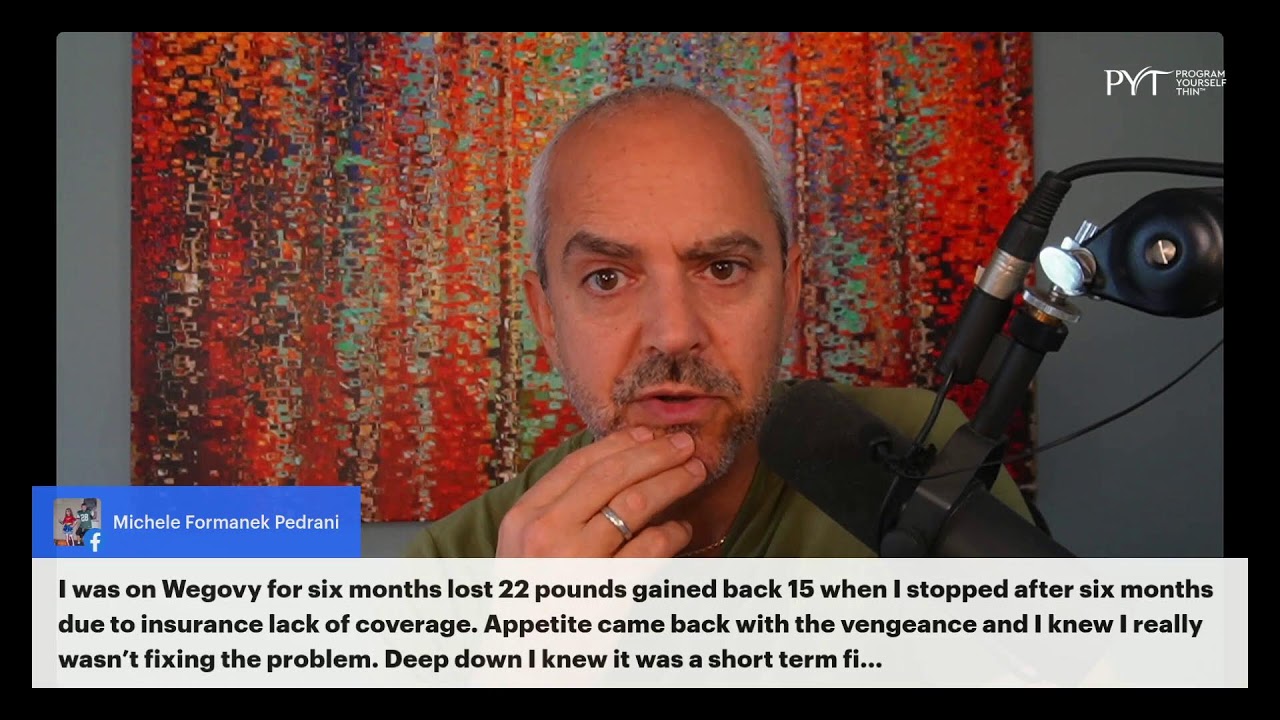
The Nutrient That Reduces Hunger and Helps You Lose Weight #programyourselfthin



Weight Loss Visualization: Wake Up in Your Dream Size #programyourselfthin #weightlosshypnosis
