Getting Control Over Foods You Love
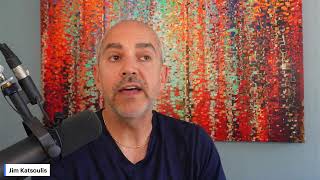
A live YouTube/podcast session by Jim Katsoulis explaining why “just say no” dieting fails and offering a practical, long‑term approach to control favorite foods. He emphasizes understanding the psychological/contextual drivers of cravings, replacing and reducing rather than only removing foods, and developing mindset, lifestyle, and eating ‘goal weight’ blueprints supported by hypnosis and program tools.
Chapters
It.
There we go.
Everyone. Welcome to today's program yourself Thin podcast. Today we're talking about getting control over the foods that you love. One of the biggest challenges people face when they want to get control of their weight, right? They can't get control over the ice cream, the cookies, the pizzas, these types of things. So how do you do it? Because the typical approach is that you're gonna use willpower and you're just gonna stop yourself, you're just gonna stop eating them. That's pretty much it, right? Let's be honest. It's an all or nothing sort of thing. And you kind of identify what your biggest challenge foods are and you say, that's it, I'm not gonna eat those anymore. And it might be beyond food sometimes, and it might get the macros or certain ingredients. I'm not gonna make sugar. No longer any carbs, no more fat, whatever. So we kind of pick something and we say, that's it, I'm not going to eat it anymore. That's. That's most the time what we do. And this has a terrible track record. You've tried this a bunch of times and it hasn't worked for you. Don't worry, it doesn't work for anyone. So how do you actually get control over the foods that you really enjoy so that you can lose the weight and weigh what you want, be the person you want to be? And in my opinion, it's a bigger process than just saying, no, I'm going to stop eating it. I know that sounds. That's the most appealing version because it's just so simple, but it just sounds so simple. I'm just going to stop eating it. And then you have to think about it again. So on the surface, it sounds like the simplest, best plan to just say, no, I'm going to stop doing it. But in reality, in the practical reality that we all share together, that is not a very effective strategy. It hasn't worked for you long term. Probably hasn't worked for anyone. You know, long term, it's very difficult to just say, no, I'm going to stop eating my favorite food. Because those favorite foods, they don't just taste good. That's the first thing you understand here that when you think about your favorite foods, we're not just talking about the taste of the food. That's why this takes a bigger approach than just saying no. Just to give a little reference on the idea of just saying no. By the way, to me, dieting is just like how we dealt with drugs back in the 80s or how certain people dealt with drugs back in the 80s. Specifically Nancy Reagan, she used to love the just say no thing. That was her thing. Just say no, Right. So simple, so easy. But clearly for a lot of people, there's more to it than that. And the reason there's more to it than that is because again, these favorite foods of yours are not just about the flavors. It's not just that you like the taste and the flavor of ice cream, pizza, cookies, whatevers. That's part of it. You do like the flavor, but you primarily like the flavor because you like the effect it has on you. And so the initial effect you're getting a lot of times out of your favorite foods is you're getting this.
It's a pain reliever, you know what I mean? So you're getting this pleasure, you're getting this pain relief, you're getting a distraction from the stresses in your life, from the frustrations, and that experience feels good to you, and so you seek it out. And so there's more to this than just the flavor of the food. There's the psycho, emotional, physical effect it has on your body in the short term, okay? Literally when you start eating ice cream, your brain releases pleasure inducing hormones and neurotransmitters. So again, eating ice cream feels good. It lights up our pleasure centers, it activates parts of our brains that certain substances do. So this is how we have to start to approach this, in my opinion, because we need to understand what we're dealing with and we need to strategically come up with better solutions. This is why just saying no doesn't work. We need a more holistic, reinforced strategic plan. And in order to get that, we got to understand what the foods represent beyond just the flavor of them. So the way I suggest you go about this is that you start focusing on the foods that you love the most and understand that the way you eat these foods is very specific. So for example, if you struggle with ice cream, right? Ice cream is one of the main sources of calories in your life week in and week out. I suggest you don't just get rid of the ice cream or stop eating it, you start to understand it. And the first step in understanding is when do you typically eat it? You're probably not eating ice cream all day long. It's probably part of your evening wind down routine, right? For a lot of people, the ice cream shows up between 8 and 10 o'clock at night, let's say. And so if that's the case for you, we want to Understand that it's not just ice cream. It's ice cream in a certain context, right? It might be ice cream, you know, going out with your friends or family and having ice cream out somewhere. It might be ice cream by yourself while you're watching tv. It might be ice cream at the local diner with pie. Again, there's different context and patterns for different foods. And as you start to understand the wider context of these foods, it starts to let you know what else is providing to you psychologically, emotionally, physically. And so we'll take a classic when I'm sitting on the sofa watching TV and eating an ice cream. So in this situation, the ice cream is not. The flavor of the ice cream is not the only thing. We're also using it to relax, unwind, recovery, you know, reward ourselves for hard work all day. And so all those factors are there. And what we want to do is we want to start to figure out other ways to do that. We want to ask ourselves, what are some other ways I can relax in the evening that don't involve ice cream? What are some other things I can do to reward myself for a hard day of work? What are some things I'd really look forward and enjoy doing at night other than eating? And so we're looking to do is we're looking to understand this behavior in a deeper level than and then come with alternatives to replace that with at night. Now, again, we're always going to still use some willpower to understand we're going to use willpower. But what we want to do is we want to use the willpower to get ourselves to do the new alternative rather than just go cold turkey. Because cold turkey, most of the time your favorite foods is not just about the flavor, it's about the emotional response you get from it. And so we don't want to just get rid of the ice cream and the enjoy enjoyment we get out of it. We want to get rid of the ice cream, but we want to keep the enjoyment. And there's a lot of other ways you can get the enjoyment. There's other less caloric, intensive ways to get the enjoyment. And when you start thinking about it this way, you give yourself more alternatives so that now you start to live in that gray space outside of the cold turkey, all or nothing mindset. You start to exist in this middle space where there's lots of different options and strategies available to you. And the beauty of this is that you can pick the one that feels most comfortable to you and you can try different ones until you figure out, which works best for you. But now it becomes a process of switching and replacing rather than completely just eliminating. Having one goal now, by the way, sometimes you can still eliminate too. Sometimes it's right to. I'm going to stop doing. It's not a big deal. I can do that. Great. Okay. In program yourself, then we have the three R's of weight loss. We have reduce, replace, remove. So remove is one of them, but it's typically the hardest one. And with dieters, it's pretty much the only one they rely on. So you also got reduce and replace. But this is how you start to truly gain control over the foods you love and how you're eating them. It's more often than not what I see working better is when you start to mend the relationship with the food rather than completely cutting it off. Start to train yourself, start to learn about yourself and understand the behavior and find alternative behaviors that are better for you but that aren't a complete 180. Right. The idea that you eat ice cream at night, now you're just going to stop has a very short lifespan. The idea that you eat ice cream at night now, you switch it over for five nights a week, you have a banana with peanut butter instead. Two nights a week you still have ice cream. And then maybe one of the banana nights, you take a, you go for a walk. So you start being experimental and trying different stuff. But this is how you go at it. Because where you end up is completely different than the willpower model. Because the willpower model, what happens is you'll do it for a couple days or a couple weeks and then you go right back to what you always do with the model I'm talking about. This is how you start to get long term change. So that six months from now, a year from now, six years from now, you're still following your new behaviors. That's where the real results come from. Right? So I hope this helps you out. If you want to go deeper into this, this way of kind of thinking about weight, your food, you're eating all the rest of it, click the link in my bio, go get the free hypnosis session I give you, Watch the training I made you. I got a bunch of cool stuff coming and it's on the way. The workbook, the blueprints, the goal weight blueprints in the program have officially been completed. So that's really exciting. I will be ordering the actual physical copies today. I will let you know tomorrow when they will be available and I'll get information on that. The digital updated version should be available tonight, tomorrow, and that'll be in the members area as well. So anyway, super excited for you all to see those things. So if you have any questions, feel free to ask them. Regina says, since listening to your live, I've lost ten pounds. All right, Regina, nice job. Screenshot that I always like my podcast testimonials. It's awesome. Great job, Regina. So that, that's, that's what happens, right? Sometimes when you start thinking straight and you start, you know, following better, better strategies, you get better results. But great, great job, Regina. That's very, very impressive.
So, yeah, I hope everyone had a nice weekend. Here we are Monday.
D says, what do you eat on pleasure days? How would pleasure days look? Okay, so what do I eat on a pleasure day? A pleasure day? A typical pleasure day for me is I will wake up. I usually eat an hour. Well, I usually eat a little bit later on the weekends, I would say. So for me, my weekends are my pleasure days. And they're structured differently. Most Monday through Friday is structured three meals, breakfast, lunch, dinner. My pleasure days are more breakfast, dinner. I usually skip lunch and I usually have breakfast a little bit later. And breakfast is typically on my pleasure days. A typical breakfast may be like a bagel sandwich, bagel, egg, little tiny bit of cheese, salsa, avocado. Then I might have a banana and peanut butter. Might have a donut or a muffin maybe, and that might be a typical breakfast. And then dinner. I usually have pasta on Saturday nights. You know, I'm gonna go out to eat somewhere Friday nights, typically. And.
Yeah, so again, it's even my pleasure meals. I really, across the board, I'm almost always avoiding processed foods. I really eat a very whole natural food diet. And so even on my pleasure days, I'm still eating whole natural foods. And. But that's typically what I eat. So I'll eat pasta. Usually I have like a clam pasta, spicy red sauce. I'll eat broccoli, steamed broccoli. I have a bunch of steamed broccoli with it. Maybe a little bit of garlic bread, dessert, you know. So that's a typical pleasure day for me. And again, I'm like sharing that with you because that's my pleasure day. So again, you know, pleasure days don't exist in a vacuum. They exist in context to the clean days. So I really, I hate answering, but I know D's in the program, so she, she's working on her pleasure days. I know this. So I, I share that with ud, but again, I Don't really like to do it, because what I do doesn't really mean a whole hill of beans to you all. Oops. There we go. But hopefully that's helpful. Helpful for you.
So I know some of the question here. What was it? I hope the fan's not blasting you all out here. I got a fan on me today. It's the first I've been able to have a fan on me in a long time. Quirky Cat, were you obese before? No, I was never obese. I was 50 pounds heavier at my highest weight. Actually, a little bit more than 50 pounds heavier than my highest weight now that I'm at my lowest weight. But, yeah, not obese. But would I've ever gotten to be obese? I always wonder that. I don't know. Maybe. Maybe I would have. Right near the edge, I feel like. I don't feel like I ever would have been, like, obese, like, but. But I do feel I was right on that edge of weight. Overweight to obese, I think is why if I hadn't made these changes, that's why I think I would have been. But, yeah, and then by. That was. That was over 30 years ago. That's my main point, though. Regardless how much weight I've lost, the. The much more important number I would say to focus on is how long I have actually kept the weight off. And again, even keeping the weight off is the wrong framing, but how long I've been able to live at my goal weight, and that's over 30 years. So my main message to you all is not to focus so much on the weight loss, but to focus on living at your goal weight. And it may sound like the same thing, but it's not. So, yes, there's my answer to that.
Hey, quirky cats, I lost £26 thanks to you. Oh, you're welcome, Quirky Cats. Screenshot that. Yeah, this is my life. You know, I. I really. I love hearing these stories. And this is. I mean, there's a lot of reasons why I'm probably. You're probably looking at one of the luckiest people on the planet. I genuinely feel myself to be one of the luckiest people. Truly blessed. But, yes, my. My work is one of those things that I feel so grateful for, and it's because of this, you know, simply, I. I just love what I get to do, you know, to help people get. Because it's not about weight in my world. It is about weight. Don't get me wrong. Weight's kind of the central thing. But In a weird way, the central thing, in a sense, kind of fades as you focus on everything around it. And when you're at your goal weight, oh my goodness. I know you think like you all. I know if I know my goal weight, Jim. No, you don't. Because a lot of times you're thinking about your goal weight in terms of how you're going to look. And I'm talking about living at your goal weight in a way that really resonates and feels good for you. So you don't need to think about your weight because you're just there. And the way that you're maintaining your weight is just running on near autopilot. That's what I'm talking about. And so it's not just the weight loss, it's how you achieve the weight loss and it's the quality of life you create for yourself because of that. That is what I'm just jazzed about. I love this work because, yes, it is absolutely life changing for people, obviously, you know, and again, it's not just because of how they look. It really comes down to who they are and how they're living their lives. So awesome job, quirky cat, proud of you. Love it. Love when people are succeeding.
Mary says, are your live sending saved on your site.
The lives, these lives? If you like watching the videos, the videos are on my YouTube channel and you can just go to the live section. Just. They're literally all just there because I stream there and they're just whatever you call it.
Stockpile there, whatever. So yes, you can check those out there. And the audios are up on a podcast. So if you go to any podcast platform and search program yourself, then you will see these. These audios are all there as well. What times are your lives? I was lucky to catch this one too. Lives are usually around noon Eastern. So usually around, usually between 12 and 12:30 Eastern Time. I'm outside of Boston usually that's when I get started. I do it Monday through Friday. So every Monday through Friday, usually around noon to 12:30 Eastern, I start them up. I'm usually here for about an hour or so, but yeah, I'm here every day. Again, this is my mission in life. So I'm happy to help you all out. If you have any questions about weight loss struggles, things you're working on, I am happy to help you out and I think you should take me up on this because again, I will. At the very least, I think I'll give you a different perspective on things that you don't really get very often. And I think that that can be really, really helpful.
Karen says, do you eat cooked oatmeal? I'm thinking it holds me longer rather than eggs. I don't eat cooked oatmeal, but I would. I just don't because I already got kind of my breakfast figured out. I like it and it's just easy and whatever. But I eat oatmeal very occasionally. I enjoy it. I would. Me personally, I'm sensitive to eggs in the sense that I believe. Yeah, I deal with cholesterol and stuff, so, you know, I am sensitive to caloric. I don't know. And I know cholesterol. They say, yeah. Some people say, yes, it affects it. Some people don't. But I try not to. I keep my egg consumption. I eat a lot of egg whites, but I don't eat a lot of egg yolks. Who knows on that one? But anyways, yes, I would absolutely experiment with cooked oatmeal. I think cooked oatmeal is a wonderful strategy. So. But the key thing, Karen, is this, that you're. You're reflecting on what holds you over better. See, that's why, I mean, that's why I don't like talking about what I eat because what holds me over may not be what holds you over and what I mean, hold over what's going to satisfy you the longest. And people are just different, you know, So I can eat a bowl of oatmeal and maybe I'm satisfied for four hours. Someone else might be able to eat a bowl of oatmeal, be satisfied for two hours. You see, so this is why. I think this is just another reason why diets don't work. Because again, what works for one person may not work for you. So you have to figure out for you personally what is the most satisfying, what's the easiest, what's the most enjoyable for you. Everyone's different. That's why I'm programming yourself. Then we have the weight mastery, we have the goal weight blueprints. And these blueprints, are you figuring out which foods work for you? You know what I mean? Like that we again, we follow the goal weight pyramid mindset lifestyle eating, and you figure out how to create your own mindset lifestyle needing blueprint that's customized to you. And this is an example of it. Because you have to customize. What motivates me may not motivate you. You know what I mean? How I want to identify and think about myself is probably different than how you want to identify. You Know what I mean? Like we're different people. And so your strategy and your path is going to be a different one, you know. But I think the way you're going about it, Karen, that's the right answer is to experiment with some different foods and then find out which ones. Again, kind of check the boxes. Most satisfying, most nourishing, right in the caloric range. I want it to be in, easy to make, enjoyable. Right. When you start basing your food decisions around those criteria, you end up with much better options that are easier to stick with, you know. And so great job taking action and yeah. Find out, experiment, do a couple days and I would put a couple days together because you never know from one day. But I would eat probably like three, four days of oatmeal. Three, four days of eggs and then see how you feel and then go from there. What's up, Julie? How's it going?
Massachusetts resident.
Something here.
Where was it? Oh, I guess I didn't. Yeah. So he's got any questions, feel free to ask them. If you don't got any questions, that's fine too. I know a lot of people kind of hiding out for the next two weeks. People, you know, it's funny just the. It's funny watching people over the year.
You start to notice patterns of when people start to get focused in on their. On their weight and stuff. And this year was a little different. This was an odd year. I think a little bit's ozempic. I think a little bit kind of the state of the world and just what's going on in the world grab people's attention. But September is always kind of a low key. A lot of people don't really think that. But September is actually a big month for people to get focused in on their weight. I think. I think it was their last ditch before the year.
Runs out.
So. I know but I know some people, they're in their summer mode. They don't want to think about it right now. I've kind of like that. It is weird. It does feel like. It feels like summer's coming to an end today. Even though I don't know it's still August 18th. But it's the closing days of summer, it feels like. But it's so nice out. It is nice that it's not. It's been a hot summer. Oh my goodness. So I'm actually.
I'm okay with it. I love fall anyways. But yeah, if anyone's got any questions, feel free to ask them. I'll get to them. If not, wrap it up, have a quick call. That's fine too. Got a lot of work to do today. Got a good call coming tonight. For today for my thrive group, we're gonna talk about the better reasons for losing weight. We're gonna have a workshop. And so we will go through 10 questions to uncover better reasons for why you want to lose weight. So I'm excited to share that all with you. D says, what do you think of 21 Day Fix? It has containers of how much you should eat daily getting veggies. What do you think of 21 Day Fix? Is that like a, like a plan or something? Let's see.
21 day fix. Oh, there it is. 21 day fix is a fitness nutrition problem designed to help innovators lose weight, improve their overall health.
It combines portion control, balanced nutrition and daily workouts to achieve noticeable results within 21 days. It emphasizes high protein, high fiber diet along with proper hydration and physical activity. Yeah. Focuses on consuming whole unprocessed foods, including plenty of fruits, vegetables, lean proteins and healthy fats. 30 minute daily workouts.
All right. I mean, I think it's fine. I don't know why you would want to stop in the fourth week.
I don't understand that part. You know what I mean? It's just, it's like, you know what I mean? It's like the, the three week, you know, fifty thousand dollar program and you're gonna make fifty thousand dollars in the next three weeks. It's like, well, what about the fourth week? I'm still gonna want money after that, you know? So again, I, I like when I look at it, D. I like some of the, I like some of the initial things I see in terms of, you know, unprocessed foods, high fiber. I like high protein. I'm not a huge fan of.
You know, I don't like the 21 day framing. I think is, is a sabotage in disguise. I think when it says 21 days, your mind thinks 21 days. And then what, what are you doing? You're gonna, you know, you're gonna do, you're gonna wake up on the 22nd day and you're gonna be like, oh, I only lost six pounds. Or oh, I don't look totally different. I don't look like a completely different. Oh, so I don't know, like why anything I want to do for three weeks, why would I want to do for the rest of my life? I. You're not going to get any, any result you get in three weeks is going to be virtually Nothing. So three weeks is a silly time frame, but I get it. I mean, you know, like, listen, I did challenges back in the day. I do three week month long challenges and I saw me so negative with them. But it's just to me, again, I don't mind like say, okay, I'm gonna spend three weeks and really dial stuff in. And folks, I don't, that's fine. But it's like if you don't realize that that mindset is the most toxic mindset in terms of you getting the weight you want, then you're just reinforcing the problem. And so why three weeks? Because you know, like, what is your thinking if after three weeks what are you going to do then? You know, like that's because if you're only going to do something for three weeks, it's because you just think you're going to look a lot different in three weeks. That's the only thing you're focusing on. You're going to look a lot different in three weeks from now, you know, because. Because why would you want to stop at four weeks? I don't understand that. I don't know. Maybe I'm crazy.
Yeah. Karen says it's too hot to walk outside this summer. Oh yeah. Hear, hear. Karen. I agree and I don't. I know I got my, my friend here in the program. I know if Don's here, but Don is a trooper. She will walk no matter what the temperature is. I have become a baby and I used to, I love hot weather but this year has been so ridiculous. I really have not walked a lot but I did walk the other day and it was so beautiful and it's like nice out again and you know, hey, that's just life. You know, things change all the time. You got to be able to adapt. It's fine. But I am looking forward to it being cooler and being able to walk more comfortably outside too. Regina says how long should you fast? I ain't a fasting expert and I'm not a huge fan of fasting for most people it doesn't seem to work really well long term. That being said, I do fast. I do like I call it nighttime fasting where I will stop eating somewhere. I usually stop eating six, seven o' clock at night. I'll eat the next day, seven, eight o', clock, you know, so I'm usually every day not fasting, 13, 14 hours. But I like that part. But again, it's just individual. If you fast for 16 hours in the last two hours, you're absolutely Starving. I don't think that's a smart move because I personally, I'm always saying I don't want to be starving. I'm never getting myself to a point where I'm starving because that just kicks off a whole bunch of problems for me. So I'm very, very keyed into. Whatever I'm going to do is I want to be comfortable and enjoy it to some degree, you know? So I don't really have a clear answer for how long you should fast, but I don't think you should fast any length of time where you start to feel stressed or frustrated or weak or anxious or any of that. What's up, Shereen ass girl here. Oh, you're from. Yeah, right, right. Yeah, I have my Biggie tickets. All right. Always thinking of healthier options. Yeah, that's right. I ran into Shereen last year. I saw at the Biggie. That was funny. So, yeah, I was just thinking about the Biggie because, yeah, the festival. Not festivals, but the fairs start this week. Next week. I'm in fair mode. I'm in fall mode. Because this summer was. I had a great summer. It was a fantastic summer. It was really, really hot, though I will say it was. It was a very, kind of uncomfortable temperature. You know what I mean? So anyways, so I think that, yeah, I don't know, kind of looking forward to the fairs this year, even. Every time I go, I'm like, I don't know what I'm doing here because I really. I don't need any food. I don't like a lot of that food. But I will go. And I'll eat a bunch of too.
Ken says, because if they called it the 21 year diet, no one would do it. Yes, agreed. Cat. Yes. That's so funny. Yeah. No one wants to do the 21 year diet. Right. It's so funny to me. I'm not picking on anyone because I mean, like, you know, that's just how it is with dieting. Dieting. Our entire lives, we've been just brainwashed to think like dieters. And as a dieter, you're always thinking just like, how can I lose weight as fast as possible?
You know, I'll start the 21 hour diet. I'll try the 21 minute diet. How about that? Oh, I shouldn't joke. I actually, I'm gonna do it. I'm writing. That's. I actually, the. Like, I said, the workbook is done. It's so exciting. It's the best thing I've made. Like, I only my Program is the best thing I made, but the workbook's the best like piece of training material I've ever made and it's so awesome. I can't wait for y' all to see it. I will have the physical copy next week. I can't wait to show you all. It's awesome. But like I said, it'll be in the members area. Probably tomorrow I'll upload the digital version and if you want to get the physical version, I'll get you information for that, you know, and you can download or print it if you choose to as well. But I will have all that for you next week. But anyways, yes, the next, the next job is to write the book and I don't want to tell you the title of it yet. I've got two titles, we'll see which one I go with. So I shouldn't make too much fun of what I was just saying there. That's funny.
These things about starting that program as well. Again. Yeah, I mean, you know, if you look at it though, again, I have no problem with like. And I, I'm just, I've never heard of the 21 day diet until literally just now. But let's just assume it's a 28 day focus.
Let's just say for example, that the.
It'S a 21 day program where you just focus on eating healthier. I think that's great because you're just gonna put healthy stuff in your body. But I would look at it as like, I don't know, like an intensive or a training. I, I don't. What ends up happening with these diets is they're so all or nothing. So you're gonna, for three weeks, you're gonna put all your food in containers, you're gonna eat all your vegetables and all the rest of it. You're gonna, you know, march through whatever you gotta do. You're gonna get the end of three weeks and then what? You know what I mean? So it's like if you do the three weeks in anticipation that I'm gonna do these three weeks to figure out which vegetables I like best, which ones work best, you know, just to get a foundation down, then I think that's fine. But most people are just going to jump into that 100%, do it perfectly for three weeks maybe and then look at their results they get and be disappointed in the results they got and then quit. And so, you know, again, I, I don't, I rarely have issues with like the nutritional philosophies of these Diets, I mean, I don't agree with like keto and, and like Paleo. I don't agree with it to its extreme, but in the general sense that we eat too many refined carbs, I definitely agree with it. So I, again, I agree with a lot of the nutritional principles, a lot of the diets. What I don't agree with is how we enact those principles and try to live them. I think it's ridiculous. So again, I have no issues when I look at 21 day diet and I see that just the top line ideas of it seems fine. What I'm concerned about is the mindset. So again, I mean, how many fucking three week fixes have there been? It's not a fix. It's not going to fix shit. I'm just letting you know three weeks isn't fit any fixing anything. And if you all get discouraged and you feel like I'm being negative and discouraging about it, I, I don't care. Because it's like you've lived a lifetime of dieting and three week fixes and six week diets and these time diets. That's the core problem. That's the core problem. Do you understand? I'm going to say it again. I know you all, I say this all the time. 100 years of diet. So there's not one diet that rises to the top as being the most effective long term. And if you look at every single diet, how are they all the same? Because they're all the same. How, how you say, oh, Jim, what are you talking about? How's veganism like carnivore? How are they the same? Well, they are. I'm gonna tell you in a second. How's keto the same as low fat? They are. I'm gonna tell you one second here. How's intermittent fasting the exact same as Weight Watchers? I'm gonna tell you it's not in what they say, it's not the nutritional philosophy, how you're gonna lose weight. Those are all different. What makes them all the same is how you approach them, how you approach any diet. You can literally pick any diet and tell it to me. And, and I know the problem you're going to have with it is how you approach it and how you're going to approach that diet, how you're going to approach intermittent fasting, Weight Watchers, Keto, carnivore, veganism, is you're going to jump in 100% perfect on day one, Monday, you're going to 100% perfect. 21 day fix. You're going to start on a Monday and you're going to do perfect for 21 days.
Then what? Then what? It's always the mindset. Your mindset is the number one problem with your weight. So the 21 day fix is not even going to address that. If you're aware of that when you start it, fine. But that 21 day diet's not going to fix a thing. Sorry, it's not. It's going to put a band aid over a gunshot wound for 21 days. Perhaps. Maybe it'll inspire you to live that way for the rest of your life.
Maybe. Would it? Do you really think? Is that what you're doing? Is that what you're holding out hope for the. That some fucking random diet you do for three weeks is going to turn out to be the diet you spontaneously do for the rest of your life? That is not where I'd want to put my eggs. I don't put my eggs in that basket because I doubt that's going to happen. How many times have you done a diet? How many times have you spontaneously stuck with it for the rest of your life? Did you just say never? Because I bet the answer is never. And I don't think the 21 day fix is going to be the answer either. Again, not that there's not good ideas in it. Not that eating fruit, fruits and vegetables, a lot of them are. Isn't. That's a great idea. It's that you're not even working on your mindset at all in that program. And so I don't give a how much weight you lose in three weeks. I care about how set up you are to live at your goal weight for the rest of your life. So again, sorry, I don't mean to be negative and I feel like I am, but I just gotta say what I gotta say.
Danielle says, what are your thoughts on amount of water to drink per day? Um, I think hydration is number two to sleep in. Importance of lifestyle. General rule of thumb with water is half your body weight in ounces. That's kind of a lot for most people, so you start with where you're at. But half your body weight in ounces is a good mark to kind of experiment with. And then you can find out if it's the right amount. Too much, too little, whatever. But the first step is to just start adding more water if you drink none. So if you drink no water, don't start with half your body weight in ounces. You're gonna flood yourself okay, Start with a quarter of your body weight in ounces. You know, half of that. Cut that back if you want to, But I think water is crucial. So, yes, I think that amount of water, just rule of thumb, is half your body weight in ounces. But at the very least, I mean, I don't know, I can't say the very least because everyone's different too. But if you haven't paid attention to your water, if you don't drink much water, it's one of the most important things you can do, though. So.
Jane says, or think your weight didn't gain, didn't happen overnight, and your weight loss takes its time until you're in a good state of mind. Absolutely, Mary. I agree a thousand percent. A thousand percent. People just get impatient. I was thinking about that. You know, it's like, I got my Jeep, and it's like I was thinking about getting some work done on it. And I mean, it's just a banger Jeep. So I'm like, I don't know what I want to do with it, but I was like, as soon as I, like, want to get the work done, I'm like, want it done this week. Who can do it right away? It's just, it just as a human nature thing. Like, as soon as we focus on something, it's like we just want it done instantly. We're just impatient. And it's like that with weight, obviously. You know.
Inge says, what are your top tips for maintaining weight loss? My top tips for maintaining weight loss are to start the whole process out by focusing on living at your goal weight. So again, the top tip I have is that you stop thinking like a dieter, stop thinking and focusing on just losing weight, and start thinking and focusing like someone who wants to live at their goal weight for the rest of their life on your autopilot for the rest of your life, and come up with strategies that resonate with you, strategies that work for you and your situation to allow you to live at your goal weight. So again, it's a completely different focus. Most of you have never learned this. You've never learned any of this stuff. You've only learned how to think like a dieter, okay? And so it's really important that you learn how to think like a thin, healthy person, and you've never learned that. So, again, I think that my number one tip for maintaining weight loss is to literally reframe that question into saying, how can I live at my goal weight for the rest of my life? On your autopilot and obsess on that question because the answers you get to that question are absolutely life changing. It is a profoundly different quality of life to live at your goal weight on near autopilot. It's one of the best qualities of life I think you possibly have. Genuinely believe that.
What's up, Jody? Oh, no. First walking meditation. Yes, right, right, the walking meditation. I told you, Jody. I tried to record that and all of a sudden it. It was so weird for me. It was so weird to think, like I was just doing a recording for people with their eyes open walking. And I just have to give it more thought. But okay, I will go back to it, Jody. I'll give it some more thought. It's been mulling around there for a couple months. It was harder than I thought. But I'll give it some more. Give it a bit more. Allison says, have you ever heard of Wild Fit? I have not. Let's find out about it though. Let's find out about wild fit. Nine debated 90 day transformation. Oh, that's not that. My bad, my bad, my bad. Transform your relationship with food. Yikes. Their website is pretty shot here. Let's see what's happening. Okay, there we go. Something happened weird when I connected. Oh, that's nice looking. Are you ready to get Wild Fit? Food Freedom. I like Food freedom. I like that.
All right, let's see. I don't know.
Discover the secret to food freedom in just 14 days. All right. Break free from an healthy.
I don't really understand exactly what it is, but it's about food freedom. So whatever, I'll have to look into it more. I'm just first running around. I don't really understand what it is.
So I can't give you too much information on it. I like the idea of stopping the cycles, but that's.
So. I don't know, I can't really see enough here to comment on it yet. So, yeah, haven't heard of it, but I'll look into it some more. Gary says three weeks is 21 days. And people say that is how long to change a bad habit for a better habit. Coming from Melissa, not Gary.
Oh, I got you. Got you. Yeah, yeah, that's. Anyways, by the way.
That three week habit stuff's been debunked a long time ago. So just so everyone knows, because I know, I believe that for a long time the idea rate takes three weeks to install a new habit. I wish. I wish and believe me, I am a habit Master. I'm a Habit Master. That I will proudly exclaim and I can tell you from all the habits I have that some took. I don't know if Anyone, anyone took three weeks. Really? Because they say 66 days. Now, I don't even believe that. You know, some habits take a little time and some takes take a lot of time. There's your scientific explanation. There is absolutely no fucking days. You can tell me how long it takes a habit. There's so many variables with a habit being installed that there is no, There is no one number of how long it takes to take a habit. Okay, they're all just guesses. But anyways, yeah, I get it. 21 days. Listen, I've done, I've done a lot of weight loss marketing and 21 days just sounds like the perfect. It's the perfect number. It's not a full month, it's three weeks. So I can do that, 21 days. So I can do that. And so it just feels doable. And I get it. Listen, I get it. I get the idea that people feel like I just need something to get some momentum with. You know what I mean? I understand that thinking, but. And I'm okay with it as long as there's. It's within a deeper mindset that understands we need a long term approach because nothing's going to happen, Nothing great is going to happen in three weeks.
For most people. And again, it's just, it's. I've talked enough about it, but anyways, yeah, I get it. The three weeks thing that it takes to install a habit is such. Just so you all know. And I say that to you because you know what's going to happen is you spend three weeks putting a habit and it's not going to be a habit. And you're saying, oh my God, well, I must be broken. It takes three weeks for most people, but for me, I'm broke and I can't even. Three weeks, I didn't do it. I've had habits that have taken me years to install. So it's just not true. There's so many variables about a habit being installed. So you can't just pick a time and just apply that to all habits and all situations and all people. It's so silly, you know, And I think that's the type of thinking, though, we got to be careful of. It's because that's diet thinking. This idea that we can just take like one diet and give it to all the people in the world, right? What 8 billion people are supposed to eat Low carb keto diet. You know what I mean? Like it's just so weird, this idea of dieting that's so devoid of us as people and instead. Just tell me what to do, just tell me to do it, I'll do it. It's like, well, what if you don't like doing it? What if you don't like eating that way? What about that? Oh, I'm just gonna force myself to do it. No, you're not. There's no evidence that you're gonna force yourself to do something you don't like to do. You know, dieters are crazy like that. Like they're just. I'll just tell them what to do and I'll do it. Why? Why would you say that? Look at your history. There's no real reason to think that you're just gonna follow a plan. Why? You know what I mean? You've got to make the plan work for you. Is that such a bad thing? You know, it's like the dieters, it's like this badge of honor, this idea that you gotta get your history. There's no real reason to think that you're just gonna follow a plan. Why? You know what I mean? You've got to make the plan work for you. Is that such a bad thing? You know, it's like the dieters, it's like this badge of honor, this idea that you gotta hate the diet as much as possible, but still do it. It's the no pain, no gain, basically. And there's such a weird ass like, addiction to that. It's like if it's, if like you're not doing the most miserable ever, it's not real weight loss, you know, I'm telling you, mastering your weight, living your goal weight does not have to be as hard as you think it does. I, I'm at my goal weight and I live a very. People might look at it and say, oh my God, how do you do it? Right? My mindset, lifestyle and eating are all locked in and so that makes my life very easy to live, very enjoyable. I'm just kind of doing what I do. I live my life on autopilot, but my autopilot is aimed at living at my goal weight, being happy, being healthy. So a lot of the choices I make to be at my goal weight just flow naturally out of me. So, you know, like, the choices you make keep you overweight. You know, like, like the, the amount of food you eat, the choices of food you eat, when you decide to eat, who you decide to eat with, where you decide to eat, all these things are natural. You're not eating, like, differently every single day of your life. You're eating in patterns. You eat the same patterns pretty much week after week. There's obviously always outlier and special occasions. But basically your reading is a repetitive pattern that you're repeating week to week, month to month. And that's what I change for myself. That's why all my clients change as I. Help us change our subconscious mind, help us change our automated mind, the mind that takes care of our automated behaviors. The when you go grocery shopping, you just get the same foods automatically. You eat at the same times. You eat the same foods in the same places at the same times. You eat the same amount of foods at the same times, in the same places of the same food. And you're doing all of this on autopilot. This is why, if you're not thinking about your weight, you're just living your life like you're caught up with work or life or relationships or whatever, and you're just living your life, and you're not thinking about food or your weight. You're overweight, right? Because your automated behaviors are making you overweight right now. You have been programmed to be overweight. Tens of millions of food ads have programmed you to be overweight. The culture you live in is obesogenic environment. It's programmed you to be overweight. The diets have programmed you to be overweight, so that now every thought you have really brings you to being overweight. And when you change those thoughts up properly, when you change up the strategies in a way that works for you, getting to your goal weight and living there does not have to be that difficult. You think like an overweight person, you live like an overweight person, you eat like an overweight person, and that's what you know. So that's what you do every time you try and lose weight, you go on a diet and you try and fight against those natural impulses, those natural thoughts and ideas and behaviors. And it works for a little while, and then you always go back to it. And so you're stuck being overweight. That's why you feel like an overweight person, because you've been programmed to be overweight. In my opinion, the only way to change that is to reprogram yourself to be a thin, healthy person. I don't know any other way. And by the way, I didn't just come up with this. I learned all this from studying people that had lost weight and kept it off for at least two years. They're the most interesting people to study.
And they all kind of tell a similar story, to be honest. They think completely differently. They don't think like dieters. It's very enlightening. And most people never get the opportunity. They never get the advantage of being able to talk to people that have lost weight and kept it off. But once you do, it's like getting to look behind the curtain. It's like seeing how the magic trick is done. It's not that hard. It's just that you literally have never learned how to think like a thin, healthy person.
So, yeah, funny girl. Yaya. What's going on? How's it going in the program? Yeah, yeah. Yes. I always thought it was Yaya the Greek Yaya, but it's not.
David Quintana says you look like George Clooney. All right, now we're talking.
I'll take that as a compliment.
What's up, Vicky? Vicki says I'd love a walking meditation, too. Although love re. Listening to the podcast, I know everyone wants to walk in meditation. I really. I thought it was gonna be easier than it was. It was like hitting a wall. It made me realize, you know, again, talking about doing things automatically, I've been recording hypnosis sessions for over 20 years. And so when I do hypnosis, I'm always imagining speaking to someone who's, like, in a chair, quietly listening to me, their eyes closed, and so all of a sudden do it, like, to. All of a sudden do it like.
Like you're. I'm talking to a person just walking with their eyes. It was just like walking into a wall. For me. It was like. It was so different that I really kind of struggled with it. But you know what? I'm not going to let the struggle stop me. I'm going to. I'm going to take this struggle out. I'm going to overcome it. Jody and everyone else, I'm going to get those walking meditation. I will do a couple of them, but then give me feedback on it. Okay, so it's a. I don't know. They'll be you. We'll go through it together. That'll make me feel better. See, what I'm doing is I'm doing. I'm doing. I do this stuff with everything. See? But look at my brain. It says, okay, walking meditation. And now what I'm doing is I'm holding myself with a walking hypnosis session. I'm holding myself to the same standard. I've never done a walking hypnosis session. I'm going to do one, but what I'm doing Subconsciously, I'm holding myself to the same standard of the sessions I create for the hypnosis sessions that I've done thousands and thousands of hypnosis sessions. And I'm holding myself that same standard. I've never done one, so that's my brain's doing automatically. And so now it's like, oh, don't do that. You're never going to be able to do it. It's going to suck. But you know what I'm going to do? I'm going to lower the standards and I'm going to say, you know what, people in the program, I will record them. Maybe it'll be great. Maybe they won't give me the feedback and I'll keep working on improving them. Now I feel way more comfortable to do it. So, so let's see. We'll see what happens.
But they would be good. I know they're good. Walking meditations are so good.
So I know it would work well. Funny Girl Yaya says I've lost seven pounds so far. I'm. I am listening to my body, especially because I have food fatigue, but I pick items that are better for me. I don't concentrate on food. Just when I start getting hungry, my volume of food has gone down. I also find myself rejecting foods that are healthier for me. Funny Girl Yaya. All right, seven pounds down. I mean, fine girls are showing on the program for like a month or so. A little over a month. I believe that's what happens. Yeah. Rejecting foods that are not healthier for you. I got you. I got you. And that's what happens again. Program yourself then is about changing your mindset. So now the. Listen, folks, you already know what to do. Like, like again, that's why I try to tell you the diets are not the answer because the last thing in the world you need is just another list of food you can eat or not eat. You know what I mean? Like what, what you need is the ability to make those right choices consistently. And that's a mindset issue. So again, when Funny Girl. Yeah. Using the program, she getting the, the, the hypnosis sessions in her mind, you know, going through the blueprints using the program yourself in technique. Yeah. It changes your ability to choose the right foods. And being £7 down, that's nice too. It's nice. Little bonus as well. Yeah. Six weeks. Great job. Funny girl. Yes. £7 in six weeks to me is the sweet spot. Because now that's it. You got to understand, it's seven pounds down, comfortably. You Hear what I'm saying? It's seven pounds down, comfortably, sustainably. That's the big difference. You all are so conditioned to focus on how much weight you can lose in a month or two months that you never think about what's going to go on beyond that. One of my favorite quotes is that most people overestimate how much weight they can lose in a month and underestimate how much weight they can lose in a year. So, yeah, you can kill yourself and lose 20 pounds in a month, and then you can't keep it up. You've done that a bunch of times. But have you ever lost seven pounds in six weeks? Easily and comfortably in a way that you can keep up naturally? Because that's where the magic shows up. Not in month one, not month two. Month three, month six, month 12, month 24, because it's easy to live this way. That's when the magical results you're looking for show up. You can't rush your way to your ideal body.
So hope that makes sense. Great job, funny girl. That. I'm very proud of you for taking the action and doing it right. Just Jason, I think you look at Stanley Tucci. All right, I'll take that, too. I love that guy. He's a cook now, right? He doesn't like cooking shows and he makes pizzas. I think because I make pizzas, because I started looking up how to make pizzas when I got my oven and I found out he makes a lot of pizza. So I think he makes a lot of food. Anyways, Italian food. Blue dog says, I'm new to your TikTok and really happy this came across my page. Do you recommend starting at a specific video? Oh, goodness gracious. What I recommend if you. If you fall into my world through any social media thing. My suggestion is to click the link in my bio. So if you're TikTok, go to the top left, click my little picture there. You brought to my bio. There's a link in my bio. Click that link and go get the free hypnosis session I made for you and.
Watch the training I made for you. It's about 20 minutes. That's where I would start. That's the real way to start the whole kind of journey. Okay, then just watch the TikToks. They're just in. No random or they're just. They're all over the place. There are just thousands of TikTok videos, so I can't say there's any starting point. But if you click the bio, go there. That's kind of a starting point. And I've got so much cool stuff coming for you. And I know I've been saying this for a while. I know that. I know that. I don't love that about myself, but, you know, sometimes you got to. You got to. What do they say? Einstein used to say imagination is life's coming attractions. So I'm comfortable saying what I plan on doing, even if it takes me longer than I expected to, because it gets done eventually, you know? So we got the workbook done. It's awesome. I can't wait for you all to see it. But what that's starting to do is starting to free me up. One of the next things to do, in addition to the walking meditations, is to get the Circle app going, and that's going to be a much more robust experience for my clients. But there's also going to be an area in there that is for free as well. I got a bunch of free stuff coming down the pike as well. So, again, my mission is to help as many people as possible live at their goal weight. And yeah, the next few months are going to be really stepping into that. I'm super excited. I really have spent the last four or five months really, really refining the program. Redid the goal weight blueprints, got them all designed. That's all set. Yeah, the program's just humming along, so. Yeah, so anyway, so now I'm freeing up some energy to really just be able to help. People aren't even in the program. So anyways, yeah, that's what I suggest. Did you click the link and go get that hypnosis session? Yeah, funny girl. Yaya says I. I so do not feel deprived. Do not. In all caps. Yes, that's what happens again when you know how to run your. It's not even just your mindset, though. I want to make that clear. Remember, it's the goal weight pyramid mindset. Lifestyle eating. It's all three of them. You need to have all three of those areas locked in, and they need to be locked in for you. So again, I can't tell you what to think, live and eat. You're your own person. You've got to figure it out for yourself so you get a little bit of the work. But once you do it again, this is what happens, is you're able to drop seven pounds comfortably, sustainably. Think about sustainably. You. You. That word just goes in one ear and out the other ear with you. All I know. Take a second and think about this. If you can lose seven Pounds over six weeks comfortably. Comfortably. Think about what that means. That means you can keep it going. That's. See, that's what you never assume that as a dieter, you're always thinking, how much weight can I lose? And how much time? But you're never thinking about doing it for the rest of your life because it's always a miserable process you don't like doing. What I'm trying to tell you is that program yourself then, is about changing the way you think, live and eat. So it resonates with you, so that you enjoy it, so that you feel better, so that you like it more, so that you like living the way you're living more. And it also brings you to your goal weight. Do you understand what I'm saying? You've never had this before because every weight loss thing for you has been you fighting against what you want to do. But imagine the things you want to do bring you to your goal weight and keep you there. That's what I'm telling you. It's not like a crazy idea either. I'm not bullshitting you. It's not just hypnosis where I put a spell on you. It's a holistic, comprehensive approach where there's a mindset section, a lifestyle section, and an eating section that allows you to figure out exactly the best way for you to think, live and eat in the most easy and comfortable way to get to your goal weight and then maintain it. You've never done anything like this, you know, so again, great job. Funny girl. Yeah, I'm proud of you taking the action and getting the results. You deserve it.
Yeah. Curveball says walking meditation. Sounds amazing. I know everyone wants the walking meditations and I even got the name for it. It's so easy. It's walk yourself thin. It's so easy. And then I went to record it, but I got a different mindset now. You watched me do it in real time. You know, to me, that's the real. That's the real mindset work, you know, and that's the program yourself intent. Again, program yourself. Then there's really three main components. It is the goal weight blueprints, right? This is. You need to know what to do, right? That's the goal weight blueprints, the mindset, lifestyle eating, how to think live and eat like a thin, healthy person. You style how you're going to do it. That's one part of it. The next part is how do you get yourself to do it right? So you need to know what to do, but you need to be able to get yourself to do it. That's the program yourself then technique. It's a 60 second self hypnosis exercise. Use at night to program your subconscious mind to take control of your mind so that you start doing the things you know you want to do and should do to get the results you want. And then finally there's the support of it all. There's a ton of support, but the main support is the hypnosis, the goal weight hypnosis system. And you listen this for eight weeks. You get a five minute session every morning, always different. And then at night you listen to a 10 minute session. Each week you get a new one and you listen to that same one each night during the week. And so the 10 minute one puts in a core weight loss mantra and the morning one puts in a weight loss mantra and kind of starts your day off. So you're relaxed, calm, focused on the right track. What ends up happening is it creates a book ending effect and it really starts to transform your mindset very easily, very naturally. And then when you use that in addition with the goal weight blueprint and the programming self then technique, you put that all together with all the other stuff in the program and it's transformative. And the way I always say it is like program yourself. Thin is an inside out approach to weight loss, to living at your goal weight. So it's not just about me telling you what to do and you have to force yourself to do it. It's about how do I think like a thin, healthy person who is the best version of me, you know what I mean? Like it's really built around you and the best version of you. So again, it's very inspiring. And it's just a completely different take on things than dieting, you know, Carrie says, hey, how's it going, Carrie? Happy Monday to you. Cindy says, I've stopped restricting food for the last two weeks. Restricting food has always led to overeating and binging. Great job, Cindy. Yeah, restricting does that, you know, it's kind of like, you know, it's such a basic rule of physics, right? For every action is an equal opposite reaction. And so the idea that you're going to restrict food, it almost is guaranteed to lead to binging on the other side of it, you know. So I'm really proud of you there. The more you practice not restricting food, but slowly cutting it down again in program yourself then the goal is this, right? Your weight is a reflection of your average calorie consumption. Okay? And so what we're looking to do is reduce your average calorie consumption down to your goal weight. But we want to do it comfortably because we're building it for the long term. What most people are doing is they're drastically cutting their calories down. It's really overwhelming and stressful. And. And then they're going to bring them up to their goal weight at some point. That's a very stressful way to do this. It's way more comfortable to go into this process intentionally saying, what's the comfortable? The most comfortable, easiest way for me to reduce my average calorie consumption and the way you get on that is not super restricting. Don't restrict everything because, again, there's a blowback effect. So instead, you know, be strategic about it. Make smart decisions. Don't overwhelm yourself. Play the long game. It's a much easier game to win. Like, you not only get better results, but it's just way easier. Weight loss is really hard. Weight mastery is surprisingly easy because we're not trying to do everything all at once. When you're dieting, you're making it so stressful because you're trying to do everything all at once. You're so impatient. You're making it a very stressful process. I always tell people the way to think about how you're trying to lose weight is you're like, you're a sprinter in a marathon, right? So you're at the front line, the starting line of a marathon, and you're getting ready to run it, but you're like, I'm gonna run it like a sprinter. No one's thought of that. And the gun goes off and you start sprinting as fast as you can. And for the first eighth of a mile, you're way ahead of everyone. You're like, oh, my God, it's working. It's working. The next eighth of a mile, you collapse and you can't finish the race. And you finish it and you say, yeah, next time I just got to sprint more. I can sprint longer. Well, you can't. There, there are, you know, there's limits to your abilities here. And dieting forever is not something you're going to do. And so you got to shift your mind so you can't keep trying to sprint through a marathon. It's. It's the wrong strategy. It's not that you're weak. It's not that you don't have the, the motivation or the focus. It's that it's the wrong strategy for the situation. And dieting is the Wrong strategy for living at your goal weight for the rest of your life. So hope that makes sense.
Dee says, I think my biggest problem is the blueprints. Finding what keeps me full from morning to lunch. Well, great. D. Yes. I mean, you focus on that, though. You just experiment. And there's, you know, again, it's important to understand, though, too. Even with the eating blueprints, the eating is, like the main thing, but it's also lifestyle too, right? So how's your sleep? So as soon as I realize, okay, my main focus is breakfast to lunch, I'm not just looking at breakfast to lunch. I'm zooming out a little bit. I'm saying, okay, how's the sleep the night before? How's my hydration? How's my relaxation? I want to pay attention to those things. Now I'm bringing those into breakfast. Okay, what am I eating for breakfast? What I typically eat. When do I typically eat? How do I feel? How long do I feel satisfied for? What are some alternatives? What are some things I try? If I go to bed earlier, how does that affect it? If I start drinking some more water in the morning, how does that affect it? If I try this food, how does that affect it? So I want to experiment and I want to figure out what foods at breakfast most comfortably get me to lunch. So I don't know what you've tried yet, Dee, but if you keep on that path, like that mindset over the next three months, it's almost impossible that you would not have figured out what to eat at breakfast that gets you to lunch comfortably. Does that make sense? So don't worry that you don't have the answer yet. Just stick with it. I promise you, if you stick with it, you're going to get the answers. That's what I'm trying to say, too. See, that's a good example of the difference between willpower and solutions. Willpower says, just don't eat. Just don't eat between breakfast and lunch.
Right? So the answer to everything with willpower and dieting is just don't eat between breakfast and lunch. We program yourself, then we're looking to be strategic. We're saying, what can I eat at breakfast that's within my calorie ranges that comfortably gets me to lunch? And you don't know right now, or else you would be doing it. So you have to figure out what that thing is. But once you figure it out, once you figure and say, oh, I do this, this, this, once I eat this thing for breakfast, this thing actually gets me right to lunch comfortably. Once you know that it's transformative, it changes the whole game because now you're not relying on willpower. You're not fighting against yourself. You're eating something that makes you feel satisfied and then just doing your day. So stick with it. D Again, that's. It's always that way. It's just that way forever. That we're always just, what's the challenge? What's the biggest challenge in front of us? Let's go to work on it. Let's find some resolutions, find some solutions, then move on the next one, you know. But great, great job taking action. Keep going with it. D okay, what's up, Maria? Maria says I watch every day. Well, thank you. Appreciate that. Yeah, it's good to have the people here. So make sure you're in the. In the. On my email list, Maria. So again, I'll put. I see you're on Facebook, so I will put the link right in there for you. Because again, folks, you are going to want to get on this email list. I've got a lot of cool stuff coming. A lot. It's really exciting. I'm telling you. Getting this workbook done for me was so exciting because I've been working on this, this blueprint, the goal weight blueprint. I've been working on this for. Oh, it's probably like six, seven months at this point. It took a lot longer than I expected, but it's. It's awesome. I was looking at the other day. I was so happy. I couldn't. I was really happy with. I can't wait to show you all. I'm so excited to show you all. And, and I will be showing you, too, because I will have them here all the time. I'll just show it to you. Oh, it's so cool. It's so nice. Can't wait to get it printed. And. Yeah. So. But make sure you get on my. My email list.
Cindy says it's a daily practice. I want to be free from restricting. Yes. And yeah, I agree. Agree, restricting sucks. And it's a terrible mindset to live your life in, you know, so now listen, we've got to reduce our average calories. We want to lose weight, we got to reduce the average calories. But there's so many other ways to kind of go about it than the dieting mindset. There's so many more comfortable ways, and when they're more comfortable and relaxed, it just feels so much better, you know? So again, it is a daily practice, Cindy. But it's. God it's, to me, it's like just one of the greatest daily practices that exists. I love it. I practice this stuff every day. This really is a part of my life. It's like a religion. I mean, but it's like, I don't just get out of being at my goal weight, though. Do you understand? I want to make that clear because when I talk about the goal weight, pyramid, mindset, lifestyle, eating, my. My mindset, my lifestyle, my eating are all wrapped around being at my goal weight. But it's because in program yourself, then we take our goal weight and we wrap it in personal development. So, yeah, the goal weight's important. We're focused on that, but it's because it sets us up to succeed and live the life we want to lead. It's not just about how we look. It's not just about wearing the skinny jeans that you want to wear. It's not just about wearing a bathing suit to the beach. It's that too. Okay. But more of it is, how can you be the best version of yourself possible? And anytime you imagine yourself at your best, whatever areas of life are most important, the best relationships, the best work, the best adventures, the best personal development, whatever matters to you in your life. When you think of yourself being the best version of yourself, tell me you don't imagine yourself being at your goal weight. It's not just a visual thing. Do you understand? Being at your goal weight frees up energy. It helps you think clearer when you're nourishing your body with good food, when you're living a healthier lifestyle, when you got the right mindset, you just, you think more clearly, you free up more energy, you feel more comfortable, you have, you know, more strength, more flexibility, more, you know, kind of energy to take on the world and do the things you want to do. It's just, you know, it's so much bigger. This is part of what we're going to talk about today and the, the Thrive class we're gonna talk about is the reasons you have. What are your reasons for wanting to lose weight? You know, and hopefully they're big. They're big. Lisa says please add me to your email list. Please add me. I can't add you, Lisa. You gotta add yourself. I can't just add people. It's against the spam policies. So if you click that link, you should see it right above Lisa, click that link and it'll take you two seconds. You just put your name and email, answer three questions, and you're done.
Oh, thank you, Mari. Mari says I've never met a better motivator than you, Jim. Well, thank you, Mario. It means a lot to me. Thank you. I know Mari's in the program now, too, so that's exciting, and I appreciate you saying that.
Cindy says my main motivation is to be free from binging. I'm waiting for your book. Yes. I can't wait to have the book ready to go. And it's. That book is pretty ready to go. I. I believe I will have the book out in the fall, so it's. I would say the book is 70% of the way there, so I can't wait to get the book out, too. But. Okay. For. For now, the. The workbook will be out for people in the program. And then. Yeah.
Mushroom says what's been working for me is after dinner, I go upstairs where there's no food. That's fine, though. That's fine. See, that's part of a strategy, and I don't think there's anything wrong with that. You know, as long as it's part of a strategy, as long as you're not upstairs just obsessed with food and not going downstairs. You know what? Like, again, we want to measure our strategies not just on how effective they are with weight loss, but also, like, how they feel to enact. Right. So. But that's fine. Again, going upstairs with a food isn't, I think, is a smart thing to do. Context has so much impact on what we think and the cravings we experience and ultimately our behaviors. So that's definitely not a bad strategy. Curveball says there's more vigor in life in general when thin. It's some. It's like some kind of life energy. Agreed? Agreed. Agreement. Course it's some kind of life energy. And it's like, so much deeper than that. A. When you're not. When you're not carrying the weight around, you're just freeing up a lot of energy carrying extra, you know, go. You lose sight of this because that's the. One of the weird things about weight is you habituate to it because it comes on a pound at a time. You just habituate to it in real time. Okay. And so.
I see. Maria. Maria, I'm going to put this right in the. Right in the chat. If you look right under this, where you wrote your little message, I'm gonna put this link and just click on it, and you should go right to the right spot. And for anyone else, you can just go to program yourself then.com and it's. You click a couple buttons and you'll get right to, the.
Right to it. But what was I just saying now? Oh, yeah, the, the life, the vigor, right? So it's like if you want to really get a sense of what the weight's doing to you.
You know, if you're overweight by 50 pounds, say, go to the supermarket or pet food store and go pick up a 50 pound bag of dog food and hold it in your arms. You know, imagine, imagine a backpack filled with £50 carrying it around all day, all night, every time you got up. It's a lot, it takes a lot of extra energy. It's the pressure on your joints, it's the pressure on your body dealing with that. And then on the inside of your body, what's leading to the extra weight. It's extra calories, it's extra glucose coming in. Your body's got to manage all that extra food coming in. It's got to digest it. Digestion is one of the main uses of energy in your body. So when you're eating a lot of food that what you're doing to bring you to be overweight is a big issue. It's causing your body to operate completely differently. It's gumming up the system, if you will. You're flooding your body with so much glucose and energy that it's having a hard time dealing with it. And then if it's food that's processed, if it's, you know, got chemicals in it, if it's just tons of calories, tons of sugar, your body has a hard time dealing with it. It takes a lot of energy for your body to deal with those foods compared to whole natural foods. So absolutely, it's absolutely a life energy. And then that's not impacting how either one of those, those two realities affect your brain. Totally different. So yeah, I mean, we got to think of the weight way beyond just what we look like and start thinking about the inner effect it has on you cellularly. Right. Physically, mentally, emotionally, to get a real sense of what's at stake here, you know, and I think that's how you start to get a much more appropriate level of motivation for this process. All right, but. All right, let me get out of here, everyone. Thank you so much. I really appreciate your comments, your questions today, especially all the nice ones. Those are always nice to hear. If you're not in my world, please click the link in my bio or go to program yourself. Then dot com. Go get the free hypnosis session. Watch the free training. Read the emails I send you. I got a Bunch of stuff coming for you down the pike. So get on my list. It's all free stuff. If you like this here. I'm here every day.
Monday through Friday, usually around noon, 12:30 Eastern Time. So get on here and ask questions. Let me help you out. That's what I'm here for. All right. And if you miss this live and want to listen to it, it's also a podcast. It's called Program yourself. Then you can search on any podcast platform and you'll find it. All right. And I see funny girl, Yaya says I too go upstairs in the kitchen is clean and thumbs things are put away. I floss, brush my teeth, mouth while it's after dinner and that's it. Eating day is done and I concentrate on my hobby and self care, getting ready for the next day and off to bed. See, that's brilliant. That is brilliant. That's very similar to what I do. I don't go upstairs. I am, I'm next to the kitchen. But it might as well be in a different building. It's just kitchen's closed. Right. That's what we say in the program. Kitchen's closed, dinner and done. You know, and that's what works for me. So I'm not saying that you have to do that, but you know, yes, there's. It's not just enough to say I'm going to stop eating at night or I'm going to stop eating after dinner. You really want to have the mindset behind it to back that up. And I'm really glad you shared that. Yeah. Yeah. Because.
That'S a great strategy. Super great strategy. All of it. Flossing, brushing, going upstairs, working on your hobby, self care getting for the next day and off the bed. Great job. That's just smart. And it's very much in line with what I do as well, most of it. So again, that's a better strategy than just trying to not eat at night. That's a much more well thought out, effective strategy. So. All right, everyone, have a super duper day and we will talk soon. Bye everyone.
More from Jim

Think Like a Thin Person, Not a Dieter #programyourselfthin #weightlosshypnosis

I Am Thin: Weight Loss Hypnosis Session #programyourselfthin #weightlosshypnosis
The Nutrient That Reduces Hunger and Helps You Lose Weight #programyourselfthin



Weight Loss Visualization: Wake Up in Your Dream Size #programyourselfthin #weightlosshypnosis
