Program Yourself Thin Live 6-5-26
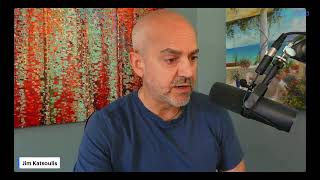
In this live episode of the Program Yourself Thin podcast, host Jim Katsoulis argues that willpower is an ineffective tool for long‑term weight control because it battles the brain’s automatic, subconscious programming. He proposes a different use of willpower: to install new, autopilot‑friendly habits that keep a person at their goal weight. Throughout the show he critiques the diet industry’s profit‑driven models, cites statistics showing a 5‑15% success rate for diets, and emphasizes the distinction between losing weight and living at one’s goal weight. The conversation shifts to common psychological traps such as all‑or‑nothing thinking, low motivation, and strategy deficits, and highlights mindset as the central lever for change. Jim answers numerous live chat questions, offering personalized advice on sleep, CPAP masks, cruise eating, and the controversial "Diet, Drugs, and Dopamine" book. He promotes his free hypnosis session "The New Thin Me," the daily PYT program, quizzes, and his book "Living at Your Goal Weight" as practical tools for reprogramming the subconscious and sustaining motivation. The episode blends a short presentation, audience interaction, and program promotion, reinforcing the message that sustainable weight management requires mindset work, strategic habit design, and consistent support rather than willpower‑driven dieting.
Chapters
Hello and welcome to today's Program Yourself Thin podcast. Today we're talking about why willpower does not work. To live at your goal weight. It really is not a good tool. And unfortunately, it's the main tool that most dieters are relying on to lose weight. Right. You pick whatever diet plan you're going to follow and then you use your willpower to force yourself to follow the plan. Makes sense, I guess, on the surface, right? That's what you've been taught and that's what you've tried to do your entire life. You've tried to get a plan, then force yourself to follow that plan. That's it. And so what usually happens is you're able to do this for a little while, a couple days, a couple of weeks, once in a while, a couple months. And you always end up in the same place that you end up back where you started. Why is that? It's because willpower is not the right tool for the job. Willpower is good for short bursts of activity, but your weight is reliant on your consistent behaviors. So when you pit your willpower, which is good for short bursts of activity, against the part of your mind that runs everything automatically, you're going to lose. To put it in a different perspective, it would be like if today you decided that all day long you were going to use your other hand to use your phone. So whatever hand you normally, what pocket you put it in, where you put it in, how, which hand you use it with most of the time, you're You're going to switch it up, keep it in the other pocket, use the other hand, and that's what you're going to do. Now, that may sound simple to do. So, so what, Jim? So what? I'll do that. Well, go ahead and try it. Go ahead and try it. I bet you can't make it through 5 minutes of that because what's going to happen is now you're going to need to use your willpower instead of using your automatic mind and your automatic behaviors to just use the phone on autopilot the way you normally do it. Now you've got to think about everything you're doing. You've got to think about holding it with this other hand. It's not natural. You need to think about scrolling with that thumb. It's not used to it. You haven't built up those neural connections. And so now every time you use your phone, there's a higher cognitive load cost to it because you're not using the hand that does it on autopilot. And this is a small example of why dieting through willpower does not work. Because you are consciously trying to micromanage all the things that you just do on autopilot. And so what I'm telling you is that your weight is dictated by your subconscious programming, the programming that drives your autopilot behaviors. And trying to fight against those with willpower is not the right strategy. It does not last. It's not meant to last. It's never going to last. So the real solution is to use your willpower. So it's kind of a little sneak attack. We're still going to use willpower. We're just going to use it differently. We're going to use the willpower to install new programming so that the new programming runs on autopilot but keeps us at the goal weight we want to be at. And that's the big distinction, that instead of using willpower to fight against our programming, we're going to use willpower to reprogram ourselves so that we naturally and automatically start to do the things that get us and keep us at our goal weight. And this is the real path towards success. And it's the one that dieting never teaches you, never shows you. So give this some thought. And if you want to go deeper into this process, click the link in my bio, um, or go to programyourselfthin.com and go get the free hypnosis session that I made for you. It's called The New Thin Me, and it is designed to help you, uh, relax, calm down, and then get truly, genuinely motivated to create the results that you want to achieve. And it all happens through a simple hypnosis session. Um, that is really just an easy, easy way to feel different. So go check that out. Uh, and if you're in Facebook or YouTube, I'll put the link in the comments. And if anyone has any questions, feel free to ask them. Any weight loss questions are welcome. Um, what are you struggling with? What are you trying to do? What's your big challenge, right? What's the one thing between you and your, your goal weight? What do you think it is, right? Let's talk about it. Because a lot of times what you think is the answer is not the answer when it comes to weight loss, because we've all been conditioned to think the wrong stuff, because we've all been conditioned by the diet industry. And the diet industry is not your friend. The diet industry is not there to help you live as a thin, healthy person. It— that's not the main goal. The diet industry is a branch of the food processing industry, and it serves its purpose by confusing us and giving us strategies that do not work. And the sooner you realize that, the better, I would say. But yeah, any real questions, any, uh, anything you might be struggling with, feel free to ask any questions. Let me take a swing at it. What's, what's going on here? Um, oops. Yeah, whatever. Have a nice day. Here we go, TGIF. I hope it's nice where you are. It is absolutely gorgeous where I am.. And oh my gosh, so gorgeous. I actually took the top off my Jeep and now a bunch of crap in my eye on the way over here. Um, but there it is. But yeah, if anyone's got any questions, feel free to ask them. You know what, today honestly, if no one's got questions, I may scoot-a-loot-doot. At least I got the first part done there. So yeah, but, uh, I usually hear Monday through Fridays, um, usually around noon Eastern. And, uh, yeah, I do this every day. I've been doing this for over 3 years, and, uh, I've answered all the questions. Maybe not all of them, but a lot of them, because again, I take a different approach. Uh, Program Yourself, then the program that I created, what we do— whoop, pull this back. Mirror, mirror. Yep. Uh, what's up, Rebecca? Yeah, on a bit early today. I am out a bit early today. Yeah, I, uh, yeah, I did get on a little early today. I almost didn't go on, but I was like, you know, pop on real quick, see what's going on. And I did pop on a little bit earlier than normal. Um, yeah, Rebecca says, I like to listen to keep on track. Yeah, smart. And that's why I do this as well. Um, you know, even people aren't in the program, I'm here every single day. And, uh, on top of that, like, that's why I always say if you go get the free hypnosis session I give you, that puts you on my email list and I give you tons of free stuff. One of the free things I give is, uh, my PYT Daily program. I just give it away to you and basically every, every day you receive an email with a little lesson in it. And, um, yeah, I give you all sorts of stuff. Goal Weight Quiz, 3 Steps to Mastering Your Weight. Got a new training about to drop. Um, so lots and lots of stuff. But, uh, yeah, that's the point. I'm here to help keep you all on track, you know, because again, you need consistent motivation. I think, um, what was it, Zig Ziglar, was that his saying, right? He says that people come up to me and say motivation doesn't last. He goes, well, neither does showering. That's why we recommend it daily, you know. And so, um, it's kind of like motivation. You need to have some source, in my opinion, you know, I think you need to have some source of support, um, that is supporting you even when you get wobbly, because you're gonna get wobbly. You know, dieters are crazy because it's like dieters just— this— they have this, this expectation that they're just going to be at this high level of motivation the whole time. And it's so weird. I, I think about this every day because the people I work with are so smart. It has nothing to do with intelligence. It's just how humans recognize things. And so it's weird that dieters who can look at like 20, 30 years of history and of patterns can look back and see that every time they've approached their weight loss, they've gotten really fired up, really motivated. They've started a plan, and then at some point their motivation went down and they went off their plan. Now I'm being very general. It doesn't matter what the plan is, it doesn't matter how long you were on it— a couple days, a couple years— but then people feel their motivation go and then they get off the plan. That's the basic structure of what happens, the basic pattern. And so this idea of— because be honest with yourself, what are you thinking about the future? Most likely you're thinking, okay, some Monday is out there waiting for me where I'm going to wake up and just be a completely different version of myself, where I'm going to wake up and I'm going to make all the right choices. And you have been living in this delusion for probably decades. And what sense would it make that you would expect to be able to make all the right choices in the future when you've never been able to do in the past long term? And I'm— it's a hard question I get, and you might feel like, oh, if I answer that, I'm going to be defeated because it's going to make me realize there's no way to succeed. But that's not what happens. What happens when you start asking that question, you start to quickly realize that expecting that I always have to be up here 100% of the time to succeed and manage my weight That can't be true, and it's not. Dieting has set you up for failure because they have conditioned you to think that you need to be perfect in order to get results, when the reality is that the best results come from when you can be flexible and you can be on track and off track a bit and you can flow between them. But you do that fundamentally at a higher level than what you're doing now. That's the secret to success. Abu says, starting my diet today, got a shit ton of weight to lose, pray for me, Daddy. Uh, you're gonna need prayers, thoughts and prayers, right? We— I don't know, I don't know, thoughts and prayers are all working out for all you, but, um, yeah, you know, I, I would say, and I'm not trying to be negative, please, please, please understand, I am not trying to be negative at all, but I think the idea of starting a diet today, wish me luck, is just the epitome of you don't have a chance in hell, because that just reeks of I'm doing something, I'm going to do something for the 50th time that I've tried that hasn't worked before. How many other times have you started your diet today? How many other times have you had a shit ton of weight to lose? How many times have you prayed for it to work, hoped it worked? And then the magical question: how many times has it worked? And the answer is zero. Even if you lost a little bit of weight, you put it back on. So the answer is zero. So I would suggest that you start to figure out a better way to approach it. Starting my diet today. And again, I don't know, I want to support you, but I don't feel like, oh, you can do it, good for you, come on, you got it this time. What? What? Everyone does that. Has it ever helped you when someone— oh, you got it, you, you're gonna do it. Have you ever done it? Has that ever helped anyone? So I'm not going to sit here and give you bullshit, you know, fake, you know, rah-rah motivation that doesn't last. I'm not going to do that to you. I'm here to tell the truth. I wish you the best, but, um, if it doesn't work, I'm still here, all right? So just remember that. Yeah, probably not inviting more comments, right? People like But no, this is the wrong place to come if you're— come on, come on, just tell me I'll do good. Tell me I'll win this time. You won't win this time. It ain't gonna work. It's gonna be the same as all the other times. How's that for your Friday motivation message? That if you start a diet that you've tried 40 times, the 41st time is going to end the same way the first 40 did. How about that? What's up, Lois? Lois said, I am still struggling with sleep. I am on CPAP, but being small, I have trouble with a mask that fits. Finally found a youth mask that works, but my supply people won't supply it and I will have to pay out of pocket. Um, that sucks, Lois, and that's a real genuine challenge, uh, that you're dealing with, that you're taking on. Um, but on the other hand, you seem to be very solution-oriented, right? You keep looking for solutions and answers, and that's really all you can do. You know, again, sometimes we can improve quickly, sometimes we can't improve at all, and then sometimes we're getting worse and we just want to minimize the damage. And that's the reality, folks. Dieting says, hey, just engage with me and you can do great. But what about when you can't do great? What do you do when, you know, life is kicking you in the gut every 2 seconds? What do you do then to manage your weight? And most dieters are going to say nothing, nothing, because the only time you can diet is when you're 100% focused and motivated and ready to go. But how long do you think you can be like that? That's my question. That's why all-or-nothing thinking is the kiss of death. All-or-nothing thinking is the kiss of death with weight loss. Weight loss is so unique because it's a— your weight is a cumulative average of your behaviors over time. I don't give a shit if you eat perfect for a week or a month. I don't give a shit because you're not going to keep it up perfect. You can't. So focusing, focusing on that perfection is just, again, just a recipe for failure, fast track to failure. Gigi says, I just can't diet. I feel like I can't live that way. I never worked for me ever. Yeah, there you go, folks. Dieting doesn't work for fucking anyone. Please understand you're not alone. Dieting does not work for anyone. Statistically, statistically, it's estimated that 85 to 95% of dieters that get to their goal weight put the weight back on, which means that dieting has an average success rate of 5 to 15%. Which in my book is considered a failure. If you got a 5 or a 15 on a test, you would get an F, you would fail it. So dieting is a failure. And to drive the point home, there's been 100 years of diets. There is not one single diet out of those 100 years that rises to the top of being effective for helping you live at your goal weight. There's not a single one. The closest one may be Weight Watchers because there's a social aspect to it, and that is it. So dieting is a failure, and it's a failure because it's meant to be a failure. All the big diets you know are all owned by big food companies. The diet industry is a branch of the food processing industry. Weight Watchers was owned by Heinz. Jenny Craig was owned by Nestlé. Atkins Food Products owned by the same company owns Annie Anne's Pretzels and Cinnabon. So SlimFast, owned by the same company that owns Ben Jerry's ice cream. These companies don't give a shit about your weight. They don't want you to eat well. They want you to give them money to learn a diet, do it, fail at it, and go back to what you always do. And that is where most people find themselves, doing what they always do and hoping and praying that someday will come and they'll just make better choices. A very bad strategy indeed, I would have to say. Rebecca says it explains why you lose 20, then gain it, then lose it and gain it over and over. Yeah, exactly, folks, because you've learned how to diet, which is really about how to lose weight. But surprise, surprise, your goal is not to lose weight. Oh my God, can you believe it? Your goal is not to lose weight. Your goal is to live at your goal weight. Do you see the difference there? Losing weight is just a phase that's part of your overall goal, and your overall goal ultimately is to live, live at your goal weight. This is why I wrote a book called Living at Your Goal Weight, the Tao of Living, Living at Your Goal Weight, not getting to your goal weight for a day, living there for the rest of your life on near autopilot. Living, living at your goal weight. How do you live at your goal weight? Well, you have no idea because your whole life you've been conditioned to think like a dieter. And a dieter is someone who's overweight who just wants to lose the weight. But you don't just want to lose the weight. You want to live there.. And that is a completely different process than losing weight. Dieting is literally the opposite direction from living at your goal weight. So the faster you all stop dieting, the better, because at least then you've got a chance of getting on the right path. Gigi says, seriously, you're the only person that has opened my eyes to this. I believe it. I'm not even gonna— again, I, I am not gonna be falsely humble here. I don't hear a lot of people saying my message. I came to this message on my own. I've been obsessed with this for over 30 years, and I've been doing this professionally for over 20 years. I'm obsessed with this because for me, this is a personal meaning. My father died when I was 9 years old of a heart attack. He was 54, and that has really colored my entire life. 10 years after that, I was 50 pounds overweight. I was lucky enough to come in contact with some information that absolutely blew my mind, changed the way I thought. And it was that that has allowed me to live at my goal weight for the last 30 years. And it's that experience that sparked my whole career of helping people do the same thing. And it all starts by realizing that dieting is a trap. It's a trap, and it's a trap that's especially effective for smart, intelligent overthinkers. So it's important that you realize that you're not the problem, that dieting is the problem. The concept of dieting is the problem. Right from the beginning, because your goal is not to lose weight, it's to live at your goal weight. Those are two separate things. And once you start aiming at living at your goal weight, you're going to be shocked to find that it's actually a lot easier to live at your goal weight than to get there. That's the irony of it. What's up, Jane? Jane said, I had to have a dental procedure done yesterday and I took my headphones and I listened to your deep relaxation session. It really helped me a lot. I was in the chair for 2.5 hours. One more thank you. Why? You're welcome, Jane. Thanks for sharing that too, because Again, people in the program, um, use those sessions that way. Those sessions are there, um, to serve you. All right. Uh, that, that's the point of them. They serve you in multiple ways, which I want to remind you of. You know, that's the important thing to remember is that the hypnosis is not just about what I'm saying. It's also about how you feel while you listen to them. And so to utilize them to relax while you're doing a 2.5-hour dental procedure. That's just smart thinking, so nice job. Um, Lois says, I catch myself starting to stress if I going to get a good night's sleep. Uh, listen to your hypnosis sessions. Yeah, Lois, well, there you go. I mean, but you're also working on a real challenge, which is the mask doesn't fit. That's, that's a core problem that needs to be addressed, and you're working on that. Okay, so realize that, you know, it's annoying thing right now, and you're doing what you can to work on it. And you're attempting a new solution, if that younger— the youth mask fits you better, that might resolve the whole thing, you know. But again, you got the right attitude, Lois. It's managing when things aren't going well for us the way we want them to. It's about kind of grounding ourselves and staying calm in that, and then also working on a solution to kind of resolve it ultimately, you know. But both phases have to exist, and I find people have a very low ability to manage themselves when things aren't going great. And I think that's the most important skill, and you're, you're kind of an example of that, Lois. So keep, keep at it. Uh, what's up, Hillary? Hillary says, hi Jim, I've been reading Diet, Drugs, and Dopamine and wondered if food addiction is real. If not, what is it actually? Thanks much, love your work. Um, yeah, I didn't love that book, I'm not gonna lie. I'm a big, big fan of his, uh, I like him a lot. I did not like that book, and I didn't like the overall message that he was really, really intentionally or unintentionally conveying the message that, that weight is really an addiction. And, uh, I just don't— I don't mind that framing as, as one explanation for one viewpoint of it, and to internalize that and, you know, aim it at solutions for that as well. I don't like the hopelessness in, in his message. I didn't like it one bit. I I didn't even finish that book. I got sick of it. And I'm a big fan of his. I love The End of Overeating. Um, I think he's a great writer. Um, but that book just rubbed me the wrong way. Um, and I don't really have a problem with GLP, you know, I really don't, but I did not like, I did not like that book and I didn't like the message that was subtly being put across. Um, I, I think food addiction for very few people is really real, like food addiction. Okay. But I think most people do not— are not addicted to food. I think they don't know how to run their minds. They don't know how to strategically, comprehensively change their mindset, lifestyle, and eating so that they can live at their goal weight. So I think what a lot of people will say is food addiction is really just a catch-all term to the fact that they don't know how to think, live, and eat like a thin, healthy person. And so it's, it's a convenient word that is not really accurate in my world because now, where do I say this from? I say this because I've worked with so many people that have come in thinking they had a food addiction and come out the other end that they don't. So, so that's my experience. I've worked with the FA people. I've worked with Bright Line people. I've worked with people, Overeaters Anonymous, all of that stuff. I've worked with all of them. And they come in thinking food's an addiction and with this very rigid abstinence-only mindset, and it almost always transforms into something better. So I will say this. Let me just put this as a finishing point, that the truth is you don't know. You don't know if you're addicted to food or if it is your mindset, lifestyle, and eating. And you'll never know until you change your mindset, lifestyle, and eating. Then see. And if you change your life, your mindset, lifestyle, and eating, if you change it successfully and then you're still addicted to food, well, then you'll have your answer. But if you have not changed these things, then how would you ever actually know? That, that would be my take on it. Uh, what's up Kimberly? Kimberly says, I just came back from a cruise. I walked entire buffet before deciding if I can get it at home. I didn't select it. I chose things I can only get on the cruise, gained 4 pounds. I was happy. Kimberly, that's perfect. Thank you for sharing that strategy. Okay. And I urge any of you to share strategies like that. This is what I'm talking about, folks. You're not— you don't have a willpower deficit. You have a strategy deficit. You don't have enough good strategies to choose from. That's your biggest issue. And so Kimberly, that's a perfect, perfect way to handle that. And a 4-pound to gain on a cruise is wonderful. I think that's a huge success, by the way. So you need to get yourself into the place where you can gain weight and still feel successful like that. That's a success in that context. So wonderful job. And now you're home, you'll drop the 4 pounds and, and you'll feel good, and off you go. Nice job. Thank you, Lois. Lois says if you don't have his book, go get it, it's great. Thank you, thank you. Yes, this book is really great. It's really good. Um, kind of verified people We've got over, what, almost 90 5-star reviews at this point. So go check this out, um, people loving it if you want that. Uh, Danny says, thanks so much for the autographed book I purchased and the extra autographed book you wrote. Uh, like, I'm totally stoked. That's awesome, Danny. Happy, happy to do it for you. Thanks for being in the program and getting them. So, um, yeah, enjoy that. Uh, what's up, Nina? Nina said, hi, I've been away traveling, but I'm still doing great. I'm enjoying food and taking care of my body, mind, and spirit. Thank you for all you do. Nina, you're a superstar. Keep it up. That's great. Again, and this is the type of stuff you can be saying to folks when you know how to change your mindset, lifestyle, and eating. It's not rocket science. I will tell you that. It's not like complicated. It's just a kind of simple, obvious approach to genuinely changing how you approach weight, food, and who you are as a person. What's up, Nava? Nava says, I feel like I need some sort of motive to be able to lose weight. I love dinner and I overeat at dinner. Yeah, you absolutely need some sort of motive. Everyone needs motivation. I'm letting you all know that you weigh what you want to weigh. So if you're— if you're overweight and you're not losing weight, I would suggest that your motivation is the core problem at the moment. There's other problems, too. But the first hurdle you got to get over is your motivation. You're not really motivated. And that's a big— I would say it's one of the biggest psychological mistakes dieters make is that they think they're really motivated when they're not. And that is a kiss of death because if you think you're really, really motivated and you're not losing weight, the next logical belief you create is that, well, it doesn't matter what I do, I can't lose weight. There's something wrong with my body. No matter what I do, I can't lose weight because I'm motivated up here and I'm doing everything possible to lose weight. I'm totally motivated to lose weight, but I'm not losing weight. So there must be something wrong with my body or me. That's not true. Your motivation is trash, most likely. And it's not that you don't want to lose weight, but you want to keep eating and living the way you're living more. Okay. And so that's the, that's the case for most of you. And that's where you should start because your motivation isn't high enough. You don't care enough to change. That's why you're not changing. That's more of a reason than any other reason. Your motivation's a way bigger reason why you're not losing weight than genetics, hormones, biochemistry, menopause, insulin resistance, diabetes, Hashimoto's thyroid. Your motivation is a much bigger issue than any of those things. Your motivation is the number one issue why you're all not losing weight. Does anyone not agree with that? And I think this is important to say so clearly because it need— you, you need to clearly see the problem. And if you're confusing the problem, it's, oh my God, I'm motivated 10 out of 10, but I can't lose weight. Well, that is cloudy. That's, that's blurring up what the problem is. Don't confuse yourself. If you are overweight and want to lose weight and you're not losing weight, start with your motivation. It ain't high enough. Hillary says, thank you, I was puzzled, puzzled on that addiction point. We'll look at his other books. Great point that you won't know until you attempt the changes. Thank you so much. Yeah, you're welcome, Hillary. Um, yeah, I did not— I don't know what is up with him, you know, that, that The End of Overeating was so good and I like him and I, I don't know, I just— that book fucked— that book was so triggering to me because he's so smart. Um, what's his name? Kessler. I think it's Brian Kraut. I forget that name. Kessler. I believe, um, let me find— I'm not going to get his name right. David Kessler. Yeah, um, so David Kessler is brilliant. I mean, this guy is a brilliant, brilliant guy, um, no question about it. Um, I mean, he's a doctor, you know, he's— was a Surgeon General. What was he? Let me look up— let me— oh, there he is. Oh, that's not him. Hold on, are there two David Kesslers? There are two David Kesslers and they both write books. Let's see here real quick. I want to see what he was. I feel like he was like a Surgeon General or something. Oh, okay, he was— he's a pediatrician and a former commissioner of the U.S. Food and Drug FDA. Okay, so super smart guy. I would never question that. I love his books, but he is of the mindset He— there's no psychology in his book. There's no mindset in his book. And that shit absolutely grinds my gears. Um, because this idea that mindset really is just— you— because that's how I feel. I feel like with a doctor, oh, you and your mind. Oh, the mindset. You know, look at me like that, right? Because it's what? Because it's not what? I don't know. You can't measure it in a lab or something. I don't know why mindset is so undervalued. But how could mindset not be the absolute central factor for your weight? Have you not seen in your life that when you're in a good mood and you're relaxed and calm and energized, that you tend to make better choices? And when you're in a bad mood and you're stressed and you're frustrated, you tend to make worse food choices. I mean, has anyone ever seen that? And so if, if you've seen that in your life or anyone else that you know's life, don't you think that that should be addressed in some way? Even if you don't have the answer, fine. But can we not at least identify and acknowledge that mindset is a fundamental component of what your weight's going to be? Because Katsoulis doesn't mention that at all. And it makes me— and I didn't mind before he was hot. I don't say he's hawking it, but before he's kind of like, you know, talking about GLP-1s, you know, fine, talk about— put your stuff in this. But now it's like, oh, GLP-1 is a solution to everything because the only thing that affects weight is physical. Right? The only thing that affects weight is physical addiction, physiological, neurological effects on your body. That's what's controlling everything. It makes me nuts. Is there a physical side? Obviously. Is there a mental side though? Absolutely. I'm going to say this. I know I'm going to get restricted in a second. I'm about to peace out anyways. But, um, look at substance abuse, substance addiction. How do they treat that? Primarily. How do they treat that mentally, right? You're getting mindset work for it. And so fine, if you want to go on the addiction model, fine, but where is the mindset piece of the medical establishment's weight management success? I don't see any of it. I don't see any of it. It makes me— I get so mad because I look at this giant gigantuan, gargantuan industry of the medical industry. I see bariatric surgeries, I see GLP-1s, I see gastric sleeves. And now I say, where is the mindset support? It's so ridiculous that it's like, even if you get gastric bypass, which is a huge shift in your reality, there is virtually no mental health support Following up on that. So again, David Kessler knows way more than me about the physicalness of weight and obesity and all that. I will give him that, but he seems to have absolutely zero knowledge or curiosity about the mindset piece. And it makes me fucking insane because I want, I want this gargantuan resources to start studying the mindset and let us know what to do. I feel like I gotta do it on my own. I really do. Where do you get— where do you get information about how to have a thin, healthy mindset? He doesn't even mention in his book. This guy is one of the foremost experts on weight in our culture, and he doesn't even— doesn't even hint at it. Doesn't even— it's like not even anywhere in his mind that mindset could factor in. And that is what just— I mean, so, so you either believe no mindset doesn't matter at all Is that what we're saying? Now, I can understand if you never think about it because no one ever talks about it, so it just doesn't pop up in your head. But once I bring it up, how important do you think mindset is for you in your weight, in your life? How important has mindset been for you and your eating? Is it not the main factor? Meaning, if I could magically improve your mindset, if I could magically tap you on the forehead and now you feel more relaxed, calm, oh, at peace, more resilient, more able to deal with the challenges in your life, more grounded, more centered, more connected to your goals, more hopeful, more optimistic about what the future holds, feeling better now. If I could magically tap you on the forehead, make you feel all those things deeply, do you not think that you would make better food choices just from that alone? If you were walking around more relaxed and calm, more motivated, more peaceful, more grounded, more centered— I, you know, I don't know, just right. It makes me nuts. It makes me nuts. So that book, that book triggers me. I, I'm— I— that book was— yeah, um, Drugs— what is it? Diets, Drugs, and Dopamine. Diet, Drugs and Dopamine. Yeah, that's the book. That's his newest one. And, uh, again, there's good stuff in it, so I'm not saying don't read it, but I'm saying read it understanding that he is completely and 100% eliminating the concept of mindset from his book. And so he is having a complete and total book about weight and there's not a single shred of mindset in there, not even a sentence. And to me, that is almost disqualifying. And I didn't mind it until he starts basically low-key hawking the GLP-1s as the only answer. That's when I get really triggered by it. So yes, Gigi says, and just because I think about being overweight all day doesn't help. Just relaxing helps a lot. Of course. Yes. Just because you think about weight loss all day doesn't mean you're motivated either. That's a big mistake a lot of dieters make is they're obsessed with thinking about weight loss. They're constantly in their head thinking about losing weight. But that is not the same as actually taking action to make it happen. They're two totally different things. And you've got to see that because if you don't see that, you can potentially live your entire life thinking that you're doing a lot to lose weight when in reality you're not. You're just in your head imagining stuff that's not helping you. So you've got to recognize that. Um, Lois says, during Juco baseball, I found a concession stand that sold fruit cups and did that instead of french fries. Wow, that's pretty good. That's good on both your parts. I, that's great that they even offer that. And that's great that you got it. Nice job. Yeah. Well, baseball, some fruit cups. All right. Jane says we mistake motivation for want. We want to lose weight, but our motivation is not high enough sometimes. Jane. Exactly. Again, Jane's in the program and Jane's kind of transforming each and every day as we move forward. But it's those realizations, Jane, that are so important. And you're, you're stacking more and more of those beliefs, those understandings underneath you. You know, each and every day you keep moving forward. But you're absolutely right. And so you've got to tend to your motivation, kind of like you need to tend to your garden. And just like a garden, it's more front-loaded with work. So again, program yourself then, like in this, this Goal Weight Blueprint we go through, there's a whole section on motivation. It's actually the very first section. And yeah, it takes a little bit of time and effort to kind of really define what your motivation is, but then you got it, you know, and you have to tend to it, you tweak it, and, you know, it evolves and grows and changes as you move forward. But It's like you have a system, you have a plan for how to boost your motivation that actually works, because most people just skim right over that, right? And again, you've got to tend your motivation, take care of it. Um, Danny says, I believe I have nothing to lose but weight with this program. It's much more than I expected. I'll keep you posted. Thank you, Danny. Yeah, again, Danny just joined, um, I'm not like a month or month or two ago. Um, so nice job. Yeah, it is much more than people expect, I will say. Yes, it's a, it's a big helpful program that helps you in a lot of different ways. So thank you. Uh, Nina likes that. I had to calm down. I get all worked up sometimes. I have not thought about that book, that Diet, Drugs, and Dopamine book. I haven't thought about it in like 3 months. I— like I said, I stopped reading. I just got— I was getting so irritated reading it. I was like avoiding it, and then I was just— I was so irritated. Uh, so it's funny you asked that. What's up, Lisa? How's it going? She says it's all in the mind. Well, it is all the mind, but I also want to point out it is also in the body too. So it's like in Program Yourself Thin, we really have two main categories we focus on: mindset and strategies, right? I believe that the only thing between you and your living at your goal weight is your mindset and your strategies. And so if you get the right mindset, you get the right strategies, it's amazing what you can accomplish. But are you, and have you approached your weight looking to develop your mindset and your strategies strategically, systematically? I'm gonna guess the answer is no. And so if you haven't, it's really no wonder that you've gotten the results you've gotten. It's a broken, broken strategy most people are trying to follow. What's up, Chell? Uh, all right, cool. I'm gonna get out of here. Thank you so much, everyone. Again, it was nice pop on here for kind of a— felt kind of a quick Friday, but, but we'll keep it quick today because I got a lot of stuff to do. Um, but yes, if you're not in my world, please click the link in my bio or go to programyourself.com com. If you're over on Facebook or YouTube, I'll put the link right— whoops, that's not it. I'll put the link right in the chat here and you can click that. But this will bring you right over to get a free hypnosis session. And, um, it's not just a free hypnosis session, that's just one thing I give you. Um, I give you PYT Daily if you want to join that, it's completely free. I give training, 3 Steps to Living Your Goal Weight. Um, the goal weight quiz comes— I gave you a bunch of stuff, so go check that out. Uh, if you like this, I'm here every Monday through Friday, usually around noon Eastern. Uh, and if you can't make the live, you can just go any podcast platform, search Program Yourself, then it'll pop up. You can listen anytime you want. And this book's available, so if you're looking for a new approach to living at your goal weight, go check this book out. All right, um, right before I go, I see Nina say, it's the main factor. Gaining a couple pounds on a trip does not make me feel like I failed. I'm no longer on and off the wagon. Your dedication to all of us is incredible, and the only person I know talking about mantra strategy and how to live at your goal weight. Thank you, Nina. Yeah, I might be. So thanks, that's a perfect message to go out on. Thank you so much. So thanks a lot, everyone. Have a super weekend and we'll talk soon. Bye.
More from Jim

Think Like a Thin Person, Not a Dieter #programyourselfthin #weightlosshypnosis

I Am Thin: Weight Loss Hypnosis Session #programyourselfthin #weightlosshypnosis
The Nutrient That Reduces Hunger and Helps You Lose Weight #programyourselfthin



Weight Loss Visualization: Wake Up in Your Dream Size #programyourselfthin #weightlosshypnosis
