Program Yourself Thin Live 7-10-26
In this live episode of the Program Yourself Thin podcast, host Jim Katsoulis outlines a simple yet powerful "weekend assignment" designed to accelerate weight‑loss and overall well‑being. He splits the weekend into two focus areas: (1) intentional rest – sleeping in, napping, relaxing – and (2) purposeful fun – doing activities that genuinely excite you. Jim explains how rest reduces physiological hunger, sharpens cognition, and stabilises emotions, while fun creates a positive anticipatory mindset that carries into the workweek. Throughout the session he fields live chat comments, addresses common misconceptions about supplements, micro‑plastics, electrolytes, and the modern diet, and repeatedly stresses the importance of upstream solutions (changing the environment and mindset) rather than downstream quick‑fixes. He critiques the supplement industry, highlights the role of whole‑food “information” versus processed “foodstuff,” and provides a concise, lay‑friendly explanation of glucose‑insulin dynamics, insulin resistance, and type‑2 diabetes. Jim also tackles emotional eating, binge‑purge cycles, and stress‑management strategies, urging listeners to reframe stress responses away from food. The episode ends with a call‑to‑action: a free hypnosis session (“The New Thin Me”), a preview of upcoming training (“Reprogrammed: How to Live at Your Goal Weight Without the Fight”), and reminders of his regular live schedule. The overall tone is conversational, motivational, and occasionally skeptical, with a strong emphasis on practical, low‑effort habits that can be implemented immediately.
Chapters
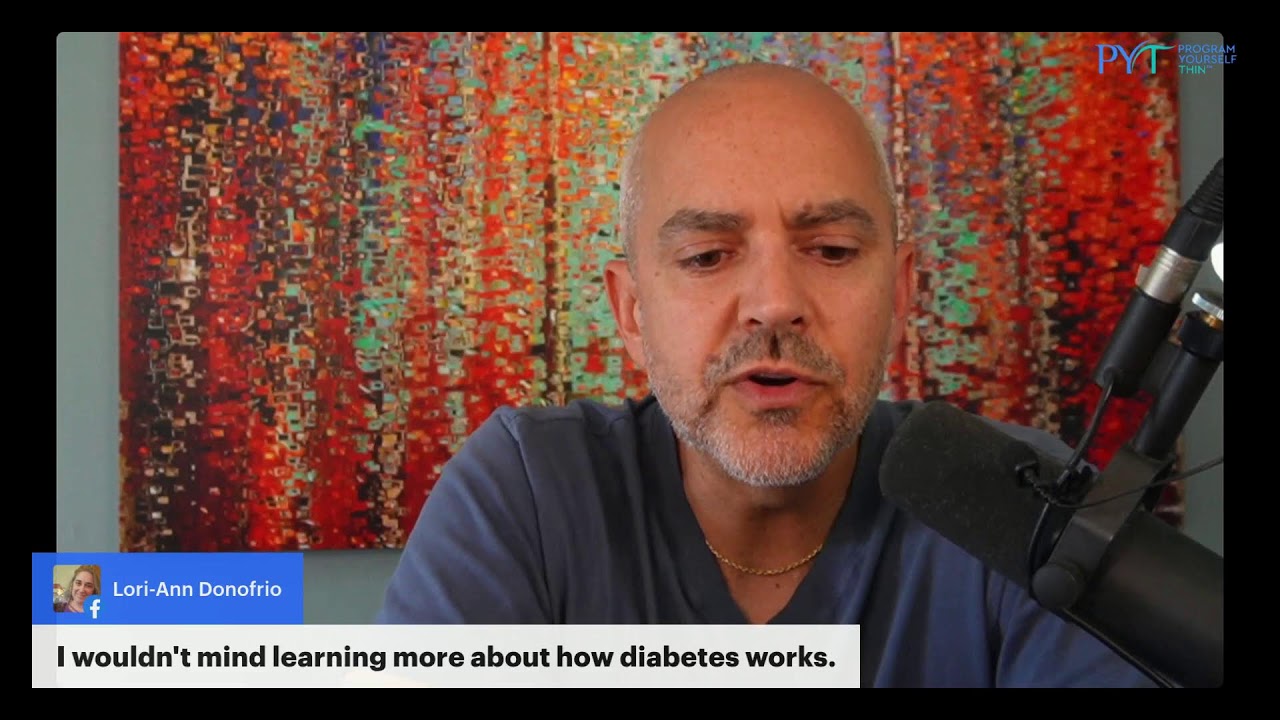
Hey everyone, this is Jim Katsoulis. I want to welcome you to Program Yourself Thin., podcast. I don't usually say my name in the beginning. Anyways, today we're talking about the weekend assignment that helps you lose weight. I'm a big fan of kind of separating the week into two categories. And for me, because I work kind of a typical Monday through Friday and have the weekends off, that's kind of how I look at it. Now, if you work a different schedule, you could again build it around the days you have off. But the idea is this, that when we go into those days off, we're our slower days from work, that we go into it with a clear intention that's going to support our weight loss the rest of the time. And there are two things that I find are most beneficial to focus on during the weekends that really can make a huge difference, um, when it comes to your weight. Because what you do on the weekends in terms of these two ways can really impact the food decisions you make the rest of the week. So the first one is to rest. Whether that's sleeping in late, going to bed a little earlier, taking a nap during the day, taking it easy and just relaxing. The idea is to rest when you can. And I know sometimes this is, you know, you can't do it. You don't have the time. You got too many things to do. I get that. But if you make this a really important focus for you, you will rest more. You will rest more and you will go into the week more refreshed. And that's going to benefit you in two big ways. A, physiologically, the more rested you are, the less hungry you feel because you haven't used up a bunch of energy, replenished it. And so you tend not to be as hungry. And then the other piece is that when you're rested and rejuvenated, you have more cognitive ability to make better decisions. And maybe even the third one is that a lot of times when you're rested, you're more emotionally balanced as well.. And so all of these three, three things, when you go into the week, I'm feeling more recuperated, more rested. You're going into the week in a much stronger position because of those things. So keep that in mind. And again, when you focus on it, it's looking for the opportunities. Again, I've had this conversation a million times. I know I don't have time the weekend. I got to do this. I get this. I get it. I get it. You may have a lot of things to do, but if you prioritize rest, I can almost guarantee you that you can squeeze in half hour, hour, maybe 2 hours somewhere where you can rest, relax, take a nap, sleep more. I've very rarely seen someone who couldn't make that happen if they really focus on it. So that's one thing. The other thing to focus on, your other weekend assignment, is to have fun, to actually do something that you're looking forward to, that you enjoy, and that you remember fondly. And when you start to add that into your weekends, at least, of course you can do this during the week too. Um, but when you add this into the weekends where you start to do something that you consider to be fun, I want to make clear, it's not something that should be fun, something you genuinely feel is fun. And this is your permission, almost be a little selfish here. Cause again, just like before, it doesn't have to be a full day of fun. It can be a half hour of reading a book, a half hour of watching a show that you want to watch and that you like, a half hour of, you know, going for a walk by yourself, whatever. Doesn't have to be a lot of time. If you could do more time, great. But even in a short period of time, when we're focused and clearly thinking about things, we can find something fun to do. And the earlier in the week that you know what you're going to do in the weekend, that's going to be fun. The more benefit you get out of it. Because when you have something fun on the weekend, you get to look forward to it, right? And you get to anticipate it, and that has its own kind of lift to it during the week. And then obviously when you get to do it, you get to have fun, and then the following week you get to remember it fondly. Okay? And so it's a nice way to go because you start bookending your weeks with fun things. And like I said, it does not have to be You know, it doesn't have to be big things. It doesn't have to be giant things you have to do to be going to do to have fun. It can be small things. And if you start to set those parameters, that's why I said your assignment, okay? Because it would take a little bit of energy, would take a little bit of focus to figure these out and make them happen. But when you do, the benefit is so big. And I think this really gets to kind of the deeper part of Program Yourself Then that we're looking for upstream solutions to downstream problems. So when you start to implement weekends where you're getting more rested and you're having more fun, um, what happens is you tend to be able to— you put yourself in a much better position to make better choices moving forward. And that is really one of those, um, kind of preventative approaches, upstream approaches, that the more rested you are, the more fun you're having in your life, typically it makes it easier to make better food choices, you know, and it makes it more enjoyable. As well. So give this some thought. And if you want some support thinking in this new way, click the link in my bio or go to programyourselfthin.com and go get the free hypnosis session that I made for you. Uh, it's called The New Thin Me, and it is just there waiting for you to listen to it. I give you a bunch of other free stuff as well, but go check that out, and, uh, it is ready to go for you. And if you are on Facebook or YouTube, I'm putting the link in the chat. If you're on TikTok You can just click the picture of me up on the top left. And yeah, if you have any questions, feel free to ask them. Um, see here. All right, let's get myself— get myself combobulated. What's up, Baj? How's it going? Yes, happy Friday! Happy Friday to all of you. Friday's always good, right? I'm excited. I'm going away this weekend to Montreal. I can't wait. I'll be super fun. Beautiful day, things are going good. Uh, what's up, Leticia? Leticia says nice to see you live, great talk to start the weekend. Well, thank you, thank you. Yes, nice to start the weekend. Again, we'll keep this one kind of short and brief. I got, I got some work. I'm— oh, will I get it wrapped up today? I don't know, but I'm gonna try. I gotta— my presentation, again, that's just one more reason to opt in to get that hypnosis session, is once you're on my email list, like I said, I give you a bunch of free stuff. Um, and one of the things I give you is a new training I'm doing called Reprogrammed How to Live at Your Goal Weight Without the Fight. And, uh, I am putting the finishing touches on that, so I'm excited about getting that, um, getting that done. And then, yeah, so go grab that. But yeah, if anyone has any questions, feel free to ask them. Um, let me see here. Let's see, Jane say the advantage of being retired is that I can plan fun for every day. Yeah, exactly. But Jane, you can plan fun for every day anyways. People don't know that. Don't wait till you're retired to plan fun. You can plan fun every day. And you, Jane, cut it out. You have fun all the time. Pickleball's fun. Getting ice cream's fun. So it's like you have fun every day anyways, it sounds like. But yeah, when you're retired, I suppose um, you have more time to have more even fun things. But do not wait till retirement, because, um, I promise you folks, you can plan more fun into your life. I don't give a shit how busy you are. You can plan more fun into your days, you know. Um, Baja says, what do you think about Stephen Gundry's work? Uh, Stephen Gundry, that name is ringing a bell. Let me look it up. No. All right, I see supplements, supplements, supplements. Lectin-free food. Uh-oh, we don't like lectins. Let me see, uh, first, as soon as I see supplements, I'm not a huge, huge fan. Oh boy, yeah, this guy's just selling a bunch of shit. So I don't, I don't really— I, I know this guy, I've seen him talk before. Lectins can negatively impact your health, digestion, and energy levels. Lectin-free foods, huh? Yeah, I don't know. I mean, yeah, I, I have seen him talk. I, I've never been super, super impressed with this. I can't, I can't say— I'm not real familiar with his work. Um, I'm never a huge fan of I'm sure he's got good— I don't know, but I'm never a huge fan of all these supplements. I think the supplement thing is such a crock of shit. It's just unproven. I mean, we all know that. That's a fact. These supplements are not held to a high standard. And so it really becomes an arena for people to overclaim things. And it's tremendous money. I tell you this every day. Every day I get emails to promote supplements. It's literally— it would rival it would double my stream of income, you know, but I'm just not— I'm not into it. Now, I'm not a big supplement person either. I can't— this thing— okay, there we go. I was too zoomed in. I'm not a huge supplement person anyways. I like to kind of get things from natural sources. I know the spiel on supplements, um, you know, I'm just not a huge, huge fan of it. But I— to me, if I go to someone's site and it's all supplements, to me that's kind of a red flag. For me personally, you know, don't let it be— if you like your supplements, don't let me dissuade you, okay? I'm not an expert in supplements at all, but I find that what I don't like to see about supplements is I think that people just get into talking— they base what they're saying around selling supplements. And that to me is, is going to— there's a good chance of that biasing what they're saying. Right. That in order to do this, you're going to need these supplements. And I just don't like hearing that. Again, I'm not saying that some supplements aren't beneficial and healthy, but I know it's very expensive. So if you got a lot of money, knock yourselves out, you know, get all the supplements in the world. But if you want to save some money, eating whole natural foods is way cheaper. And, you know, you're going to get everything that your body would need. So. Anyways, I'm sure he has more than that. I, I'm not really familiar. Like I said, I've seen him. I, I'm not a big fan. Um, Baja says, says we're drinking in microplastics. Ah, microplastics. Yep, yep. Um, yeah, I mean, we live with microplastics, it's true. I— but, but if he's selling a supplement that's gonna, you know— and now I just think he's a supplement salesperson because that's where he's very supplement forward. But, um, yeah, microplastics. Yep, true. But here's the thing, right? This is what I mean, is that you have to watch out. One thing you got to watch out for with marketing is— and this is why supplements are so appealing— because what happens is very quickly the paradigm becomes the reason you're not losing weight is because your metabolism's off, or your microplastics are screwing up your metabolism, your biological functioning, and this supplement will fix that. You got to watch out for kind of that type of messaging. Intentional and explicit or implicit. Um, because a lot of times what's happening is people are selling supplements as— because it's easier, right? That's, that's the, the implicit promise is that taking the supplement— I mean, taking a supplement's easier than anything. It's easier than going to the gym, easier than changing your, your eating, your lifestyle, your mindset. So it's, it's kind of a quick fix in a way. And again, that's why I say I'm not against supplements. I'm against supplements the way they're typically sold. Because they're typically sold as quick fixes. And I tend to think they're extremely expensive for something that's really not proven in any legitimate way. And so what I believe is proven is eating whole natural foods that we've been eating for millions of years on Earth. I think that's the better path forward. And microplastics, sure. You know, we got microplastics in our body. True story. What's that doing to us, though? I don't think we really know yet. You know, talks about drinking water all the time is too much. Yeah, I could, I could buy that. I think people are overhydrating sometimes. I, I see, I could see a case being made for that, you know. Um, but you know, yeah, I guess I could see that. But I think you're better off drinking too much water than too little. And I think it's hard to drink way too much water. I mean, you have to really concentrate. So there's that too. But like I said, I don't really listen to them. I don't listen to a lot of these experts at this point, especially if they're like I really don't. I just avoid them. I very rarely like what they say for very long, just to be honest. So I can't really speak to it. Um, and Love says, great advice, did some of this before and didn't realize it was what made an impact. Oh, great. Yeah. And, um, again, and Love is referring back to if the weekends— and again, it doesn't have to just be the weekends, obviously, but just kind of making the point that the weekend assignment is if you really make the weekend one core part of it about resting and one core part about having some fun, It's, it's game-changing. And it's a lot of times the things that make the biggest difference are the subtle things in the background. You know, I find that to be true. And again, I mean, you know, everything I talk about really came from studying people that successfully lost weight, were able to keep it off. And so that's who I have modeled for over 30 years. And when you focus on people that have successfully lost weight and kept it off, you start to notice patterns. And the patterns are usually more in the background. It's how they think, how they, um, think about food, you know, how they eat, how they structure their eating. It's, it's the more the background stuff of how they're living than the intentional things about like having willpower and forcing themselves to eat the right thing. So I tend to look at the bigger, bigger background picture of it. Uh, what's up, Connie? Connie said, I think you're on LinkedIn too. Am I, am I on LinkedIn? I don't think so. Am I? I don't even think so. I haven't posted anything on LinkedIn. I used to post on LinkedIn and then I, I just kind of stopped. I don't know why. Oh yeah, I do, because I just, uh, I started using a different service and I just didn't put LinkedIn into it. But maybe I should. Jane says, I do have fun every day. Yes, exactly. Uh, Jane says, I, I have gone down a different rabbit hole yesterday. I am trying to be better with my spending, but because I am going for a week, I bought a new purse and shoes. I've been wrestling with deciding if I should take them back or not. I don't need them, I just want them. Um, yeah, it's the challenges of life, right? What do we want? What do we need? And, uh, what's the middle there? Um, yeah, those are the decisions which would give you more, you know, in economics, which one gives you more utility, the, the new bag and shoes, or the money in your bank account, you know, which one's going to serve you better, which one's going to give you more enjoyment. Again, utility, just it kind of takes all that into account, which was going to benefit you more, give you more utility, give you more joy and happiness. And, you know, follow that path. I think you can't go wrong with that path. Now, again, not just in the moment, right? Zooming out and taking the, taking the whole picture. All right, Kim James says keep the purse and shoes, Jane. All right, there we go. There's one, one vote for keeping the shoes in, uh, in the purse. Keep them for the week, use them, and then bring them back. I'm joking, I'm joking. But, uh, yeah, well, that's it, right? I mean, life's just— life's a bunch of hard decisions, especially this day and age, right? We live in this capitalist society where marketing and consumerism has become a science, you know, and it's used on us constantly. And, um, yeah, who the hell doesn't want more than, you know, they can have, right? It's just— it's the way of the world in the modern world. So I get it, I get it. Connie says keep it if it sparks joy. All right, there we go. Get two, two votes for keeping it if it sparks joy, though. That one, that's more on the side of it I was talking about. So again, I like to compare apples to apples, and so I don't want to say like, oh, I got the shoes in the purse, now should I keep them or should I get rid of them, right? Because now we're saying I could have the joy of having them or the deprivation of not having them. People do this with food all the time. I could have the ice cream cone or I could have the deprivation of not having it. Well, that's one way to frame the choice. The other way to frame the choice is to say, I could have the purse and the shoes and enjoy them, or I could return them and I could have that extra money in my bank account and I could have whatever joy that would give me, right? They're both gonna— each decision is gonna give you joy. So we have to put the joy of having them versus the joy of having the money. That's a more apples-to-apples comparison, okay? And it's the same with the food. Yeah, we can have the joy of the ice cream cone, or we can have the joy of making a good decision the body that we want to have. So we have to frame these decisions more fairly. We can't just say, I could have the ice cream cone, or I could say no. Do you see how that makes you— you say that's not, that's not good framing. It doesn't make you see it accurately. I hope that makes sense. All right, there's Ronnie. Ronnie, come get rid of it if it's not an essential. Yep, well, we know it's not an essential, right? So again, we're well past knowing it's not essential. We're living in the want, you know, how much do I want it category? But again, how much do I want the shoes and the purse? How much do I want the money in my bank account? And what I like to do is I like to go— a lot of times I don't really trust my conscious mind, so I will kind of kick it off to— I'll kick it off to my subconscious mind by imagining having the shoes and the purse, and I'll go down that path for the next month or two or year, and I just kind of imagine what that'll feel like. And then I'll imagine if I bring them back and I've got the money and what that would feel like to have more money in the bank account or less bills or whatever else, right? And I'll compare those two and I'll kind of weigh the feelings back and forth against each other. But yeah, good luck with your decision. Intelligent Good, how's it going? What's the first thing that comes to your mind when you hear electrolytes? Shit, Gatorade. Gatorade's the first that comes to my mind. Brondo, it's got— it's got what plants need. Yeah, I'm going— I'm going, um, fuzzy again. I know, I— you know, I can see that because I have a stream over on Instagram. I can see it being fuzzy. My stream— my feed looks perfect. TikTok looks fine. But, um, I don't know what's going on. I gotta restart my computer. Maybe sometimes the gremlins get in there. You gotta restart it to, to get it set up. What's up, Lori? Lori says, I understand the dilemma. When I keep on my budget, I feel free to spend, but when I do it outside of my budget as a compulsion, I beat myself up. So glad I'm not doing that with my diet anymore. Yeah, exactly. I think that's a, that's a great way to put it, Lori Ann, right? Because again, now you're comparing apples to apples. We can't just say, you know, and that's what we always do, we think about having the thing and then we think about not having it. And so feeling of enjoyment, a feeling of deprivation. And we wonder why we keep going back to the enjoyment. So again, we have to put the enjoyment of having the thing or the enjoyment of the benefit of not having it. And now we're comparing enjoyments. And I think that's a much more accurate way to measure them against themselves. And I get what you're saying too, that yeah, when you spend within the budget, it feels different than when you're outside of it. There's something unbalancing, you know, like, and I think this, this certainly happens with food. This is why I don't demonize any food. There's no foods in my world that are off limits. I mean, I'm a vegetarian, so I guess I don't eat meat because I don't want it, but there's nothing I want that's off limits. It's really just a matter of how often I'll eat it. And, um, you know, so I was talking about chipwiches yesterday, you know, again, I don't eat a lot of them, but it's like, I don't mind eating them. I might eat maybe 10 a year. I don't know. But as long as I'm not eating them every day, you know what I mean? Every week all year round, I don't give a shit. So again, me, it's like, like I have a food budget, basically kind of thinking of that metaphor, but I have like a food budget. If I'm eating within that budget, I feel good. I feel balanced. I feel like I'm walking the right path. But as soon as I get off of that, I start to feel wobbly. I start to feel unbalanced and I can feel it, you know, very similar to what you're talking about, Laurianne. I think that's a real feeling. And I think it's great that you are aware of that and you want to use that. So. Agreed, agreed. Yeah, and that's what a lot of people say are athletes. Yeah, yeah, yeah, electrolytes. I think it's funny. I mean, and again, I, I just think that's funny because, yeah, I don't even know what an electrolyte is. I mean, I was gonna be honest, I don't. Um, I know people think they really need it, right? But, but it's like, I find a lot of things are like that. Like, we're pretty ignorant of like what things really mean. Like, like the idea like like, oh, you need more protein, right? I think that's what we're in right now. You know, that's a huge cultural phenomenon right now, is in the protein moment. It's the— it's the it girl, right? It's having its moment. But it's like, why do you need so much protein? You know, people so worried about protein, and it's like, what are you so worried about? You think you're not getting enough? Because it's not even possible. It's impossible to be protein deficient if you're getting enough calories in. Impossible. That's why you've never taken a protein deficiency test unless you're in a real outlier situation, you know. And yet most of the culture is just, uh, protein, am I gonna protein? There's a lot of things like this, right? It's just, uh, it's funny. So electrolytes, that's why I'm doing this video on electrolytes. They aren't really sure. Yeah, well, send me that video. I'd love to see it because I don't know anything about electrolytes other than, like I said, Like, it makes me think— if y'all haven't seen Idiocracy, you really ought to watch it. It's, um, it's one of the most unusual movies because it's a documentary, but it was a documentary that they did before the event happened. You know, documentaries are usually made about things that happen in the past. Idiocracy is a documentary about things that are going to happen in the future. So anyways, Connie says, believe me, nobody else wants your stuff. Minimalism resolves that for me. Yeah, agreed, agreed. I was just watching a show the other day. It was called, uh, it was on Peacock. It was something like The Gentle Art of Swedish Death Cleaning, but it's a show on it, you know, where they, they send these Swedish people to come over to America and help this, uh, this lady declutter her home. But, um, yeah, it was pretty interesting. All right, Cherry says take it back. I say take it back. I'm downsizing. I don't want my son to have that burden if anything happened to me. All right. Um, Jane says it was recommended to take electrolytes when I felt really lightheaded playing pickleball in the heat. There we go. That's one of those things though, people will recommend that, but I almost guarantee you they don't know what the hell an electrolyte is going to do. But it sounds good, you know what I mean? It sounds like— and again, why wouldn't it? It's all gone in at least the back of our minds. We've all seen Gatorade commercials for 30, 40 years now. Those commercials are so good. I mean, Again, commercials— remember this, folks— commercials are literally the cutting edge of hypnosis. They are hypnosis sessions just done at the highest level possible. And, um, those Gatorade commercials are just— again, I'm not a huge fan of Gatorade, but, but they are works of art in terms of persuasion and influence. Um, all right, it's like electricity going through your body. All right, makes sense. Sweating a lot, dehydration. Yeah, all right, so electrolytes, it must help the electricity moving through your body. There you go. And I don't even know, how do they get electro— I don't know, there's a mystery. So yeah, I can't wait to see that video, Intelligent Gut. I can't wait because I'd love to know. And I will say, like, I love, I love learning about stuff like that because I always think of it like kind of like, um, you know, like, like the, the emperor has no clothes. Like, a lot of times we have— and this, this— so this is the explanation of it that I think is that with language there's kind of two understandings, right? There's gist understanding and there's literal understanding. So a lot of times, and especially with like nutrition and weight, the understanding we have is kind of a gist one, right? We have a, a general idea of what it is. A literal one is like you really understand it and you could explain it right, right down to detail. And so a lot of times we just have this gist idea like, why do you need so much protein? Well, that's a gist one. You're not going to explain to me in scientific detail why you think you would need so much extra protein most likely, you know, at best you're probably going to regurgitate some, you know, half doctor on TikTok who's talking about it, which I'm not judging you. We— I think we all do this. I mean, how much shit can you really understand? You know, not much. Um, so, you know, again, a lot of times it is, uh, it is, uh, you know, our understanding is not— not is it not— not only is it not complete, it's really limited. Talika says, yes, I actually call myself a wellness translator, helping people understand the language. Yes, yes, I get that. I remember someone called me a blue-collar neuroscientist, and I thought that was the greatest compliment I ever got. Because I'm not a scientist at all, but I do read a lot of it, and I don't really have a capacity to speak in scientific language. But I get the ideas of it, and I'm able to kind of translate them into normal Because I'm a hypnotist, so I use words and concepts and ideas. That's my trade. That's my craft, my currency. And, um, but yeah, again, so much of your reality is what you understand. I mean, shit, I'll give you— I'll do you one better. I'll do you one better than protein. Blood sugar, diabetes, insulin, insulin resistance. Because this one's right at the heart of our whole culture. I mean, the, the increase in diabetes over the last 50 years is just absolutely unreal. It's unreal. And I have had almost exclusively conversations I have with people that have been type 2 diabetes, boom, stamped official. And I'll talk to them about that because they don't know anything about diabetes. They don't understand how it's working. They don't understand the concept of how blood sugar and insulin and resistance all works together. And I've talked— so what would the doctor tell you? Don't eat white food. Oh my God, that's it? You literally have this disease now and you don't understand how it works. And I think there's a lot of money made off of our ignorance of the concept of how glucose, insulin resistance, insulin all work together, because I think that ignorance just keeps us in a foggy haze eating, you know. I'm not gonna go into it right now, but yeah, great compliment. Yes. Yeah, isolated sugar is everywhere. True, true. Uh, yep, it provides salt apparently, which is needed when perspiring. Yeah, I like that. We'll have to look it up. But again, I love stuff like that because so often— that's why, that's where I kind of finished my thought— so often, and I would suggest this to you, this is, this has been the path I think that's brought me forward more than anything conceptually is that I look for things that I— and especially like, I'll look for areas I'm struggling in, and it could be literally anything. Guitar, it could be yoga, it could be nutrition, it could be my business, anything. When I find areas that in life that I'm struggling with, a lot of times a big reason I'm struggling is because I have a general gist idea of what I'm doing or why I want to do it, and I don't have a real clear idea. And, um, Diving into that and understanding it more deeply is one of the most profound things because again, when you just have a general gist like electrolytes, well, I don't know what it is, but once I understand it now, what's going to happen is I will understand electrolytes, but I will understand electrolytes because I'll understand the concept around them. Most likely I'll understand electricity in my body more effectively. I'll understand the role sweat and hydration play with it. So I will conceptually understand something on a bigger level now.. And I have found that process serves me so well. So anytime you're struggling with something, it is really helpful to realize that a lot of times you're kind of running on vague ideas and diving into it, you get a clearer, more fuller picture, you understand it better, and that's very helpful moving forward, I would say. Yeah. Yep. We need that fiber to slow sugar intake. Oh yeah. Yeah. Okay. We need that fiber to slow sugar intake. The complete message. Of whole food. Yeah. The complete message too. And I like, I like that Intelligent Gut. I know you speak in a way that I really appreciate. It's kind of like, it's kind of like the idea that there's a philosophy that food is information, right? And that when you eat like an apple and any whole natural food, it comes in a food matrix. It's a, it's a whole thing. And so, you know, it was really in the '60s, 1960s is really when this happened, when we broke everything down into macronutrients. That's not how we used to think about food. That came from the Keys Commission. It's like, oh, protein, fat, carbs. And all of a sudden everything becomes calories, carbs, fat, protein, and we start breaking it up. But there's a lot more to it than that, you know. There really is information. And so when you're eating whole natural food, it's a whole beautiful little— I always think like The Matrix, honestly. I think of The Matrix. I don't remember The Matrix where it's like reality turns into code. For Neo, right? And I think of like the apple is like the Matrix code, and there's all shit going on there that's beyond just the macronutrients and beyond just the micronutrients. It's, it's the whole thing altogether, right? And so when I eat an apple, it's, it's giving my body information, and I'm internalizing that information just like the Matrix, you know what I mean? Like, I'll be internalized. Maybe I sound crazy, but I think about on a, a different level than— because I think a lot of times we break it down into its base components But I think sometimes when we just specialize and break it down to components, there's a value to that for sure. But I think we got to balance it out with coming up and seeing the overall big picture as well. I— can I explain in detail how a food matrix— what's it mean? No, that's more of a concept to me, but it's a concept that drives me to want to eat whole natural foods because I believe that they're packages of information that fit with my body more effectively. So I don't give a shit if I sound crazy. That's how I think about it. Do I have to be able to explain it like a nutritionist could? Yeah, no, I don't think that really matters because I think people go to nutritionists all the time and it doesn't change their behavior at all. So I think more specific information about what things does does not necessarily mean you're going to change your behavior at all. So anyways, yeah, yeah. Oh, there you go. I like that. Yeah, it's Indulgent Gut says, that's my philosophy. I call food information because it tells your body what to do. I agree with that so much. And again, I understand that on a gist level, like that's a gist. I couldn't explain all the details of that down, but the concept to me is more powerful. And that's what you start to realize too, is that concepts are more powerful than specific information anyways. But yeah, so I believe that the food fits with my body, my body gets it, and it affects more. I think that there's more going on with food and it being internalized into my body than science understands. I think we understand a lot and I think we're missing a lot and we'll never know all of it. And so I really base a lot of my decisions on historical precedent that for a million years on Earth, we've been eating foods like this. And I know they're changed from a million years ago, but whole natural foods in 2026 to me are way healthier than processed junk food, fast food that we're getting. And I think the whole natural foods are still rooted in our history and our evolution.. And I think the junk foods and fast food aren't. And I think on one level of that, beyond just the physicality of it, is this almost metaphysical level of information and what it's doing in my body and how it's communicating with my body. I think I sound crazy when I say it. I don't give a shit. I believe it to my core, you know? And that belief though is a huge part of the motivation to make good food choices. So. As crazy as it may sound to you all, it absolutely, absolutely guides and drives a lot of my behavior. So I don't, I don't think I need to know. I've never dived into the details of the nutrition. It's boring to me. I've never tracked my protein, my carbs, my fat. I've never done it. It's boring to me, you know. So that's why I say I'm not trying to hide that on you, you know what I mean? Like, everyone's got something to offer. I don't have that to offer. Uh, Connie said it destroyed my late husband's vision and brought on kidney disease and necessitated dialysis. Doctors make $30K a week per patient. Holy shit. Yeah, I mean, okay, that goes back to the diabetes. I don't think there's a lot of, um, motivation to educate people how it works because I think the more people understand how diabetes works, insulin resistance— I'm not going in today. I do this sometimes. I just don't feel like explaining it right now. I'm about to get out of here, but Um, but yeah, I think the more ignorant people are, the more susceptible they are, and the more people are making money off of them. And I, I just— sorry to sound so cynical, but just what I think. Um, all right, Jane looked it up. Electrolytes are essential minerals in the body such as sodium, potassium, calcium, and magnesium that carry an electric charge. They are necessary for regulating fluid levels, maintaining blood pH, and enabling muscle contractions and nerve signaling. And these are lost through sweat and illness. Yeah, there you go. Thank you, Jane. Pretty cool, pretty cool. So yeah, electrolytes. Um, all right, Intelligent Gut says microbes became the translator for us to break down the cell wall that protects plants. See, I love that shit. I think that's true too. I think, um, you know, it's like, it's like even, you know, you got a belly brain, right? So the second biggest conglomeration of neurons in your body is in your belly, right? About the size of a dog's— medium-sized dog's brain. Pretty intelligent. And evolutionarily, we created these two— this two-brain system because it allows this belly brain to deal with digestion, and this part can deal with the rest of life. And, um, so again, this belly brain and your, your, uh, intestines, you know what I mean, your digestive system has evolved over a million years with whole natural foods. And so all of a sudden, if you're eating a lot of junk food, processed food, fast food, it's not, it's not prepared for that, those informations. And yeah, and fibers are a huge part of that. Uh, Lorianne says, I wouldn't mind learning more about how diabetes works. Okay, I'll give you the quick version. Okay, but here's the thing, right? So it's like glucose. Every, everything breaks down to glucose. All the food you eat breaks down to glucose. Every cell in your body can use glucose. It's the main, it's the the gasoline for your body. It's the energy for your body. But here's the thing, right? So you break down food and the glucose goes into your blood so it can go around to your body, to all the cells that need it. Right. And so when the glucose levels go up, insulin starts getting released. You can think of insulin comes from your pancreas and then you can think of insulin as being like a key. And so it opens up the cells. It opens up the cell doors and pushes the glucose into the cells so that they can store it and they can have energy. And then close it up. And it's important to understand that too much glucose in your blood is not good, right? So the more glucose you have, the more insulin you release to get it out of there. All right. So if you think about growing or living in the natural world, you can barely spike your glucose levels, right? If I drop you off in the woods and say, I'll give you $1,000, you can spike your glucose levels, I'm gonna hold on to that $1,000 and maybe find a beehive, right? But you're not going to spike your glucose levels.— in nature it's very difficult to do because in nature a lot of the calories are binded to fiber, so it's a slower absorption. Okay, so when you eat a candy bar, there's no fiber in that thing, so it absorbs quickly. Once you eat that candy bar, very quickly the sugar in that and the glucose goes into your blood very quickly, so it spikes. You get the spike effect, and you not only get a spike of glucose,, but then you get a spike of insulin. Both are relatively unnatural. Again, in the natural world, it's a lot harder, almost impossible to spike your glucose levels. Okay. Compared to now, today you can spike your glucose levels 10 times before, you know, the evening. It's easy. Okay. But it's a natural thing. And so your body's not even that good at dealing with glucose spikes because they're unnatural. Over a million years. And so now all of a sudden we live in this reality where we can eat foods that spike our glucose levels, right? What spikes our glucose levels? All kinds of foods. Again, it's different for each person. I mean, obviously candy bars, things with sugar in it, added sugar. You know, you think about sugar, it's not even a natural substance either. Sugar is so manipulated and so processed down to its most absorbable form. An absorbable form is what leads to addiction. Okay, so raw, raw sugar is less addictive than really refined sugar. Why? Because the refined sugar gets rid of more of the outer covering of it, and it's absorbed quicker, which leads to a quicker blood spike, glucose spike. Okay, so what leads to the resistance? When you keep spiking the glucose and you keep spiking the insulin, keep spiking it, spiking and spiking it, when you keep putting that key in the cell, eventually the key starts to get worn. And now the key isn't opening it up, so now you need to bring another key in. We need more insulin to open this door, right? So the cells become resistant to the insulin, and so now you need more insulin to clear out the same level of glucose. So again, what, what did type 2 diabetics do? And eventually what happens is your pancreas starts getting juiced out, right? It can't produce enough insulin. Now we got type 2 diabetes, and so now, you know, you need to get injections. You need to put more insulin into your body because your pancreas can't keep up with it. But it all comes from the core problem that you're spiking your glucose constantly with bread, with refined bread, with, you know, potato chips, with candy bars, with cookies, with— it could be any number of things, okay? Because we eat so much stuff that's processed, okay? And a big part of that spikes glucose, spikes glucose, spikes glucose. But on the other side of every spike of glucose is a spike of insulin. And every time you're doing that, it's very stressful for your body. It's very unnatural, and that's where it kind of leads to. So anyway, so again, you know, eating whole natural foods, in addition to helping you lose weight, it's also going to leave you healthier. Um, it's going to help you with that as well. All right. Yeah, that's right. The vagus nerve connects the brain and gut, so they are connected, right? The vagus nerve is fascinating stuff, right? Wraps around your heart and it goes up, so that's the connection. Um, there. It's very fascinating. And I think what else— yeah, there's a huge difference between what reaches the cell and what it can actually use. Yeah, agreed. So it's like, again, the quality of what we're eating is not, um, it's not all equal. Even they say, oh, calorie's a calorie. That's bullshit. That's bullshit. A calorie of a Snickers bar is a lot different than a calorie of an apple. I know technically I'm— and that's what I mean by specialization too. Sometimes we can really lose the plot. You can get to a scientific understanding that they're the same. But when you zoom out, there's clearly a difference between Snickers bar calorie and an apple calorie in your body, you know, and how it operates. Yeah, water is a great example. It doesn't guarantee hydration. Yeah, sure. Yeah, but fruit does guarantee because it comes with water, glucose, and sodium. Yeah, cofactors, right, right. Yeah, and again, that's why— yeah, and then that's, um, and that, that, that's probably like I was just saying, the Gundry thing, you know. We didn't drink as much water in the natural world because we ate a lot more of our hydration. Right. And, um, now we don't though, right? If you look at processed foods, they gotta dehydrate it to make it last. Hydrated foods don't last long. So a lot of the processed foods are dehydrated and they have a lot less, you know, again, back to the Snickers bar versus the apple, you know, a huge other difference between them is one has a lot more hydration in it, you know? So again, eating your hydration's a good idea and, um, your hydration, your hunger are related too because of that. But yeah, it all says, I can't stop the binge purge cycle whenever I'm stressed. My mom broadcasted it to relatives. I'm sorry about that. That's— I know you're dealing with that already, and then she's kind of blown up your spot. That makes it even worse. I'm sorry, that, that's a double, double whammy. That's really hard. Um, the binge purge cycle. Well, here's what I would say. Whenever I'm stressed— so again, you got a little bit more detail than the average person. That's good. So the question becomes— and this can be a little unsatisfying, but I got to get out of here— is that you start noticing when this tends to happen. So you already notice it happens when you're stressed. So now the big question is, it's not to stop bingeing and purging. That's not the goal. The goal is to say, when I'm stressed, how do I want to feel? That's— and I know, I know you're getting annoyed when I say that, but it's got to be asked because I know you're stressed. How do you want to feel? I don't know, but let's just say calm. As a point. Now the whole focus becomes, how can I feel more calm when I get stressed? How can I feel more calm without food? Because right now, when you get stressed, I'm gonna guess the best strategy you have to manage that stress is to binge and purge. Okay. And so one of the things we want to start focusing on is how to be more calm, if that's what you want to feel, how to feel whatever it is you want to feel more effectively. That doesn't use food. And once you have that, that may be a big step forward in actually getting a handle on that whole cycle. And again, that's not my specialty, so I'm just going to give you that quick one and, you know, move on. Oh yeah. So processed— yeah, processed food isn't food. The body doesn't recognize it, creates inflammation. Absolutely. It's not food. I always say that. I mean, you really— you want a big distinction to have in your mind. You should have food and foodstuff. Food, whole natural food that comes from the ground or an animal, whatever. You can see it, you understand it. And then food stuff comes in a box, bag, manipulated. And your body, your body thinks of them that way, right? And you should too. Gonna help you. All right, I gotta get out of here. If you're not in my world, please click the link in my bio or go to programyourself.com and go get the free hypnosis session I made for you. Um, again, I just put in the chat window over there. Uh, if you like this, I'm here every Monday through Friday at noon Eastern. Except for Tuesdays, I'm here at 1. And if you can't make the lives, it's also a podcast. Search Program Yourself, then it'll pop up and you can listen anytime that you like. All right everyone, have a super duper weekend and we'll talk soon. Bye!
More from Jim

Think Like a Thin Person, Not a Dieter #programyourselfthin #weightlosshypnosis

I Am Thin: Weight Loss Hypnosis Session #programyourselfthin #weightlosshypnosis
The Nutrient That Reduces Hunger and Helps You Lose Weight #programyourselfthin



Weight Loss Visualization: Wake Up in Your Dream Size #programyourselfthin #weightlosshypnosis
