The Best Weight Loss Motivation Technique
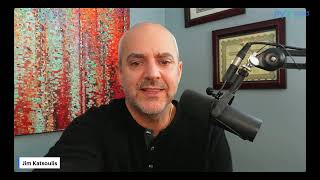
In this episode of the "Program Yourself" podcast, the host (Jim Katsoulis) explains that lasting weight‑loss motivation comes from linking one’s weight and eating habits to the deeper, intrinsic values that already drive a person’s life—such as parenting, work, or partnership—rather than relying on superficial, extrinsic goals like looking better. He argues that the diet industry conditions people to chase weak extrinsic motivators (before‑and‑after images) and to adopt rigid, single‑focus plans that fail long‑term. The host proposes a holistic, three‑pillar framework (mindset, lifestyle, eating) that emphasizes: 1. Identifying the core life role that matters most and asking how current weight and eating patterns affect performance in that role. 2. Reframing motivation as an internal, purpose‑driven engine, which creates a stronger, more stable drive. 3. Using flexible, multi‑option strategies rather than a single “diet” rule, allowing adaptation to different social contexts (e.g., dining out, family meals). He also discusses practical tactics: understanding calorie density versus volume, improving nutrient density, managing hunger as a physiological‑emotional system, and adopting a "1% better each day" mindset that compounds over time. The episode introduces hypnosis sessions (free “New Thin Me” session) as a tool to cultivate calm, groundedness, and subconscious alignment with weight‑loss goals. Throughout, the host critiques the profit‑driven food and diet industries, highlights the failure rates of conventional diets (85‑95% relapse), and stresses that sustainable weight loss is a lifelong, personalized process rather than a quick fix. Listeners are encouraged to explore the free hypnosis, the "Dao of Living at Your Goal Weight" book, and the broader "Program Yourself" system.
Chapters
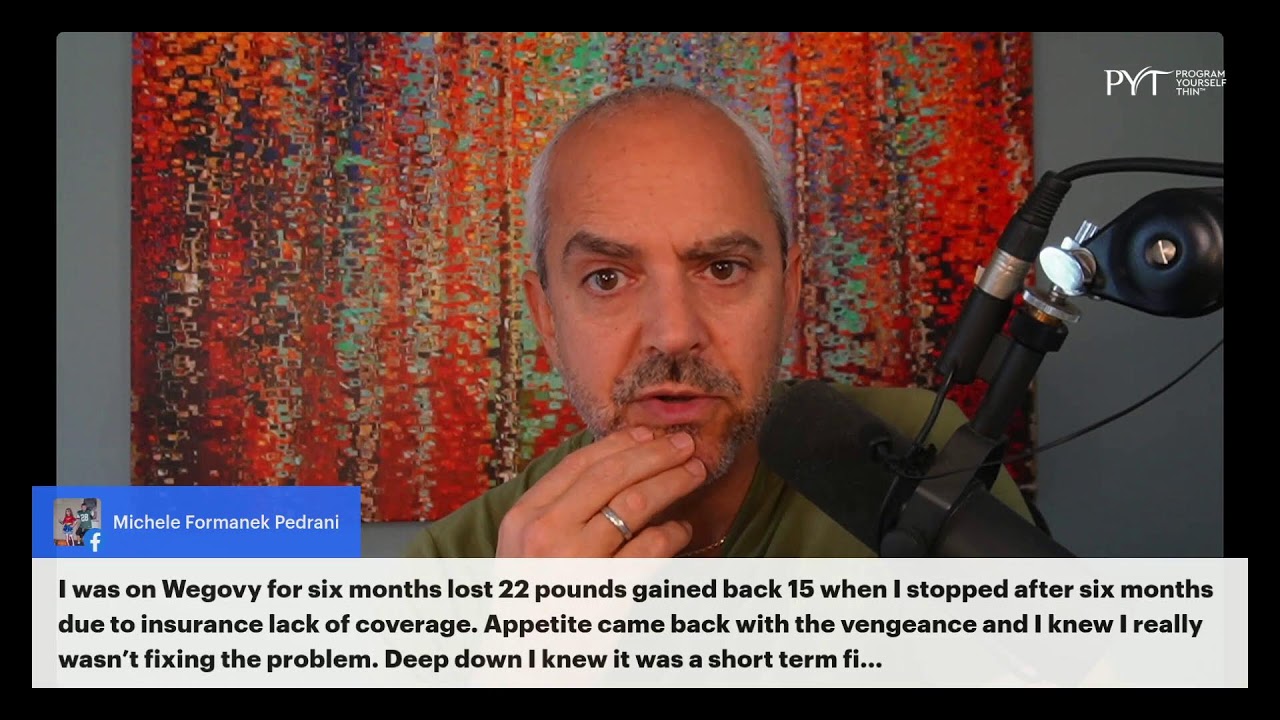
It. Hey everyone. Welcome to today's program yourself Thin podcast. Today we're talking about the best weight loss motivation technique. And once you understand this, I think you're going to find this makes the whole process of weight loss much easier because your motivation level is really like the engine of your car. And how big that engine is is going to dictate the entire driving experience. If you've got a tiny engine in the car, everything's going to feel like a struggle. If you have an oversized engine in the car, everything's going to feel a lot easier and simpler. And most people, without realizing it when it comes to their weight loss motivation, have been taught to create and rely on a very small engine. And that engine is that you want to look better. I get it. You want to look better. And as motivating as you think that is and should be, it really is not motivating enough for most people, which is why you have struggled losing weight more than almost any other reason you're not truly motivated. And you're not truly motivated because you've only focused on looking better. So the best weight loss motivation technique that I know of is to go deeper, to look for deeper reasons than just wanting to look better. And the good news is that this isn't that hard to do. This isn't a difficult journey or task. Because wanting to look better and looking better compared to living longer and having a better quality of life are really no comparison when it comes to your day to day reality. So again, we've been conditioned our whole lives to the diet industry. Every ad you've ever seen is this before and after picture which has trained you to think about how you're going to look different as the main motivation. When in reality, in the science of motivation, that's referred to as an extrinsic motivator. It's the weakest form of motivation and it's just not up to the task. So what we want to do is we want to get to the deeper pieces of your life that are really most important to you and how they're directly being impacted by your weight and how you're eating and living to achieve that weight. And once you start looking at things this way, you're going to find that you tap into a much deeper level of motivation. Because if you compare the motivation you have to taking care of your kids or going to work in the morning or being there for your partner, when you compare the motivation you have in those areas of your life to the motivation that you have when you're Trying to lose weight, you're going to notice there's an enormous difference. You're much, much more motivated with the core areas of your life. Right? And no kidding. So what we want to do is we want to weave our weight loss around those things that are already truly important to us. Because just weight by itself, just looking better by itself, and is never going to be as important as those things. Okay? So let's just say, for example, you're a parent. Let's just go there. And again, you can, you could put partner in there, you could put sibling in there, your parents in there, you could put anything in there. But let's just take something that's really important, a role you take very seriously in your life. Let's just use parenting as an example. So instead of just saying, I want to lose weight because I want to wear my skinny jeans, what we want to do is we want to go into the thing that you're truly most motivated about in life already. And so let's say that's being a parent. And we want to look at how is the weight, but not just the weight. This is the key part. How is the way that I'm eating and living to achieve that weight affecting my ability to be the parent I want to be? That's the magic question. And of course, you can sub, you know, you know, replace parent with whatever thing is most motivating to you. But what I want you to ask is not directly the weight we're going to, the eating and the lifestyle that creates the weight. How is the eating and the lifestyle affecting that area of your life that's most important to you? And so if it's being a parent, how is the way you're eating regularly, the lifestyle you're leading, the weight you're at? How are these things impacting your ability to be the parent you want to be when you overeat? And again, I just want to make a quick, quick comment. This doesn't mean you're a good or bad person, okay? This isn't a commentary on whether you're a good or bad person. This is directly a commentary on how this behavior over here is going to impact this result over here. So again, if I said to you, you know, you're going to eat a cake and then you're going to go to basketball practice, okay? It's not judging you as a person. It's just saying if you eat a cake before you go to basketball practice, what impact is that going to have on you? So, well, my stomach's going to be full, I'm going to be tired, I'm not going to feel good, it's going to be hard to concentrate. That's the level we're on. So we're not gonna fall apart here. I'm a bad part. It's none of that. It's just directly saying the way that I'm typically eating, the way I'm typically living, the accumulated effect of my weight, how's that impacting my ability to be the parent I want to be? And this is where things become really clear, because you're going to find that is those habitual eating living patterns, the habitual weight that you're carrying around and how you feel about it, that is directly reducing your ability to be the parent you want to be, be the worker you want to be the employee you want to be the partner you want to be the whatever it is that matters to you in your life. Guaranteed. Because when you're overeating consistently, there's effects of that. You feel more tired, you feel more full, you feel more discouraged, you feel more frustrated, you feel more stuck, you feel different, you think different, you operate differently. And that difference is going to have an impact on these areas of your life that are so important. And so as you start to see your weight in this light, you're going to find that you instantly start to tap into more motivation. Because again, with your weight, you're going to find that your motivation kind of comes and goes. But when it comes to the core areas of your life, that motivation is rock solid. And so once you make the connection between your habitual eating, living and accumulated weight factors, how it impacts those areas of your life, once you see that and put that connection together, it's there and you'll be able to see it moving forward. And it's a motivation that you're going to find is a quality above what you've been tapping into, most likely. Okay, so take a little bit of time and really think, how are the habitual eating, living and accumulated weight issues impacting this really important area of my life? Start to look at it that way and it's going to transform the way that you approach your weight and think about it, and it's going to most likely increase in importance to you, which is just another way to say that it becomes more motivating. So give this some time, some thought, and I hope it helps you out. And if you want to go deeper into this mindset, this ability to think differently and become the person you want to be, click the link in my Bio, go get the free hypnosis session or go to program yourself. Then you can go there as well. Get the free hypnosis session and check it out. It's completely free, and I made that for you so that you can experience hypnosis and what it's like to approach your weight with a different mindset. So if you have any questions, feel free to ask them. How's it going, Lucy? How's it going, Jane? How's it going up in Canada? I feel bad. All my. My. My Instagram people. I'm sorry. I don't know why Instagram's not working today. It's annoying. Who cares? You know what? Honestly, it freezes up every day anyways. Streaming is annoying. It's like, technology is annoying, isn't it? It's like, when it works, it's great. When it doesn't work, it is. It's irritating. But anyways, I hope you're having a good day. Never mind my technology complaining. What's up? Null and void. Null and void says I gained £100 in six months from medication. And since November, I've lost £60. Wow. Nice job. That's a lot of gaining and losing, right? Those are big numbers. Wow, £100 in six months for medication. Holy moly. Well, great job. It sounds like you're back on track and you're moving in the right direction, so keep it up. But, yeah, that's. That's big swings, and that happens. Jane says, I did go for dinner last night and didn't order anything I ate before I went. Well, there you go, Jane. So there you go. I hope, if anything. Now. Now, that may or may not be. One thing I want to mention is that, you know, again, dieting really conditions you to have kind of it's all or nothing, which by definition, kind of means you're gonna have one plan and you're gonna follow that plan. I think you'd be much better off in life if you. And certainly with your weight, if you have a plan. A, B, C, and D. Okay, so Jane went out to dinner last night. We talked about this before, kind of expecting the worst, but we talked about it, went out, and didn't order anything. Now, that may be the right solution, but again, it's one option. Okay. Because sometimes you might go on and go to dinner, and eating is part of the communal experience. Right? So that strategy you used last night may not be the right strategy for that situation. Okay, so again, this is why I say we want to have a couple different options. The more flexible you are one thing that's really interesting about diets, that they really, I would say this is very eye opening, I guess, even though it's obvious, is that one thing they've learned about diets, studying them, is that the more rigid the diet is, the more likely it's not going to last. That there's just a simple. That's been studied all the diets, and this is pretty clear cut. The more rigid it gets, the less likely it is to be effective long term. Because we're human beings and life is always in flux. And so we need the ability to be flexible and meet our lives where it's at that day. And so, you know, again, I think that we could go out to dinner one time and we're all fired up and excited. We eat before and maybe in that scenario eating together wasn't really a big deal. The next week you may go to another dinner where the context is totally different. You're all ordering dinner together and it's again, to be part of the group. You're going to order dinner. And so that strategy wouldn't be appropriate in that one. Okay, so again, what I want you to do is great job. Right Sounds. Again, I'm assuming that was a good strategy for you and it worked out well. Nice job. And I want you to remember that again, when you're solution oriented, it's not that difficult to come up with better options, you know, than when we just fixate on the problem. And then also keep in mind that you want to have multiple. There's always options. That's why I say it's not like you just want to go in there with multiple options, which you do. But also realize that even in moments of decision that the option that you decided was going to be used may not be the right one at the moment. So. So again, have flexibility as well. You know, the more flexibility you're able to have, I think the happier you'll be and the more effective you'll be. But that's great. And Jane said I did have a glass of wine. Yeah, I mean, good guy. I don't know. You know, I love glasses of wine, so in my, my world that's great. So, yeah, Jane says it was a really big group with people I didn't really know. Yeah, so. So that, that's great though. Again, what I want you to take out of it more than like, more than coming out of it. Okay. Every time I go to dinner now, I'm gonna eat first. I'm not gonna eat dinner. Right. Again, in Certain situations that can be a great strategy. In other situations, it'd feel really weird and you wouldn't be able to do it. So again, that, that's it. We don't need to have one strategy for every single thing. But the big thing you can pull out of that, that's going to help you find strategies for other things is to realize that when you looked at that challenge yesterday and you thought about what could be some solutions, when you went to it, you came up with a beautiful solution. So I want you to remember the process used to get to that strategy. Take that strategy, put in your quiver, right, Put in your tool belt for when that situation comes again. But understand that it was the process that got you that strategy. And so that's the exact same process you're going to use dealing with responses to sad, stressful situations that happen every day for you. You see? And if you approach it that way, it's pretty hard not to start stacking up strategies that are relevant to you. But nice job. That's great work and I hope you feel motivated and optimistic about it because again, in programming yourself in world, our success really comes on the backs of our mistakes and failures. And so we screw up, we make a mistake, and I don't like to use the word failure really, but when we make mistakes or we screw up or we do the wrong thing, that usually is the best opportunity we have to learn something really important and improve and grow and evolve. But again, most dieters, when they make a mistake, that usually becomes the. The end, they quit. It's evidence that they're failing and that I'm done with this, you know, and program yourself then. It's really just a starting point. We want to make mistakes and then learn and grow and evolve from them. And I think that takes a lot of the pressure out of weight loss. I mean, a lot of people, again, it's not your fault, folks. You've been trained by the diet industry to really put so much pressure on yourself when you start your diet. And I think it's very intentional. The diets don't want you to lose weight. They. The diets are just a branch of the food processing industry. You know, Weight Watchers was owned by Heinz. Danny Craig was on my Nestle Atkins Food Products, owned by the same company, owns onions, pretzels and cinnabon. SlimFast, owned by the same company, owns Ben and Jerry's ice cream. So these companies don't want you to stop eating their foods and lose weight and be healthy and happy for the rest of your life. It would go against their business model. And if we don't know anything by this point, we know that profits run business models. So anyways, so, yeah, so when it comes to the diet industry, it's been a lifetime of bad programming, ineffective programming. And I think it's obvious right from the start, because every time you start a diet, well, first of all, you don't start a diet and you avoid it because it sucks. It sucks 10 different ways. That's why you're not starting your diet. That's why you didn't start the diet. You promised you were going to start on Monday and you didn't. Maybe this is one of the. I'll say. A lot of people don't want to start this last weekend because next weekend's a new month, you know, so I'm gonna wait till the new month and I'll kick everything off. And yeah, Sunday's the first and, you know, the second. So. But we, we. You, you put off the diet because it sucks. It's. It's boring, it's miserable, it's hard, it's difficult, it's stressful, it's frustrating. It's all these negative things. And so it's not a mystery why you keep putting off doing it. But that's, that's the reason why you don't stick to it either. It's not built for the long term. You've never learned how to really transform your weight. You've never learned how to how to think, live, and eat like a thin, healthy person. You've learned how to do drastic shit to try and lose weight as quick as you can. And it doesn't work. It's built for the short term, not the long term. But if you have any questions, feel free to ask them. Any weight loss questions, I'm happy to take a swing at them. Jane says my other strategy was to look at the menu and plan out what I would eat. It wasn't until I got there that I decided not to have anything at all. Yeah, yeah. And Jane says, confession. It was someone else's birthday. So I have very. Two very small pieces of cake. Yeah, great. Jane, again, it's not about being perfect. It's about being better. And so it sounds like with what you did yesterday, that you ate better than what you would have typically done. And that's what we're looking for. Because if you can just keep getting better. Again, program yourself is built around the 1% better a day philosophy. So 1% better a day is what we're Looking for, again, dieting, you're looking at 100% better, right? You're looking to start on Monday, perfect, and then ride that perfection out until your goal weight. That's, that's the mindset. But that's virtually impossible. It's certainly impossible long term. And so what we're looking to improve program yourself then is we're looking for easy, consistent wins. I'd much rather I'll see your hundred percent better in one day that you do for a week or two, and I will raise you 1% better a day for a year. It's easier, it's maintainable, it builds on itself. And ultimately, what a lot of people understand is the math of 1% better compounded on itself each day over a year actually leads to not 365% better, but 3,700% better because it keeps compounding on itself. So again, the secret to success without exception when it comes to long term things, is slow and steady achievement. Not this dramatic drastic change, everything all at once thing. That's a short term temporary fix, which means it's not a fix, okay? And so that's why your diets haven't worked. And they never will. They never will. There's not a single diet that's more effective than any other ones. Again, go think about this. This is crazy, right? There's been a hundred years of diets and there's not one diet that rises to the top of the list that's any more effective than the others to helping you lose weight long term. That, that's a crazy statistic. The closest you're going to get maybe is Weight Watchers, if I make that argument. And Weight Watchers, when you really look at the numbers of Weight Watchers, it's very under. Under inspiring. And I like Weight Watchers more than any of them because at least it not so much anymore. But it used to have the social component, which was genuinely valuable. But none of Weight Watchers success is that they're, their system is some magical thing. They just, you know, they make counting points kind of more enjoyable, you know, so instead of counting calories, you're counting points and there's colors and it's easy to understand and there's that. And again, I respect that. It's fine. But that in of itself is not really the value there. The main value is again, usually the social piece. And so outside of the social piece at Weight Watchers, there has not been one diet plan that rises above the rest in terms of being effective long term. They, they all suck. They. None of them work. So something to keep in mind when you blame yourself, because that's the thing, you know, dieters are always blaming themselves for not losing weight when the reality is your strategy of dieting doesn't work for anyone. Dieting has an estimated 85 to 95% failure rate. That. That's ultimate. That's people that have lost weight too, by the way, do you know that this. The. They've done studies on this. People that have lost weight on a diet. There's an average of a spread of about 85 to 95% of people that lose weight on a diet. Put it back on. And those are horrible numbers. It says, DP says, I can't stay in my calorie budget without being hungry. Need a way to tweak meals. I'm always 100 to 200 calories over. My hunger, I think, is also due to my hormones and mood. Feel like I'm also just an overly hungry person. That's a great question. And so let's talk about that because. And program yourself then. The main thing we're managing after our mindset is our hunger. So on a physical level, I would say managing our hunger is. Is one of. Well, it's physical, mental, emotional, right? Hunger is. Is an interesting thing. It's not just physical, right. It. It really is a. Takes into account a lot of different things. It's a system, you know, but. Okay, so. So you're having trouble staying your calorie budget. The big thing, I always say the starting point, again, I don't know what you're eating, but the starting point for when I hear something like that is to understand the concept of calorie density. And I think a lot of people don't understand this. And to me, this is the royal path to getting to your goal. Weight lies in understanding calorie density. And so simply, calorie density is the amount of calories and a volume of food. So I could take a cookie this big versus an apple this big. The cookie's got a ton of calories in it, and the apple has a lot less calories in it. Same volume, but the calories are wildly different. And so when I speak about hunger being kind of a system with multiple factors, it's not just calories. I think a lot of people walk around and think their hunger is directly related to calories they eat. But if that was true, people wouldn't gain weight. Right? Because if you started at a lower weight, which you did, um, and you ate enough calories to satisfy yourself, Then you wouldn't end up eating more calories and putting more weight on. So calories are not the only thing that satisfy you. It's part of it. It's one of the things. But another huge part of what satisfies you is the volume of food you eat. That's in. In some ways that's a more interesting thing to track when it comes to your hunger. Because what do you do when you go on a diet is you drastically reduce the volume of food you eat. And that is the first sign that something's wrong. And that's the first sign your body starts freaking out. Then it realized the calories have lowered too. But the volume is the very first thing your body notices has changed drastically. It's the first thing that sets the alarm bells off, followed by the lack of calories. Okay, so drastically cutting your calories and cutting your volume of food is probably the dumbest way I can think of to change your weight long term. It has a very low success rate because you're literally fighting your biology. And when you feel hungry all the time, it's almost impossible to eat less calories so you can lose weight. So what's the secret, right? The secret is to consume the same volume of food that you normally eat, but to reduce the calories. And that is the concept of calorie density. And there's a whole weight loss program built around this called Volumetrics. Noom used to kind of co op that before they went. Before Noom went all in on GLP1's Nooms is a clown show. All these diets are clown shows. What do you want, folks? I've been doing this for a long time and it is what it is. You're just led astray constantly. So anyways, the, the secret is to manage your hunger and to reduce your calories while you remain satisfied. And it's not as a mysterious or, you know, crazy idea as you may think. Because what it comes to is you start changing your foods, so you start looking for more calorie dense foods. What are more calorie dense foods? Things with butter and oil. Those are two of the most calorie dense substances, right? Then we look for again, fast food, processed food, restaurant food, right? Because a lot of this stuff has got a lot of sugar, salt, fat in it. That's what makes food sell, that's what makes it appealing. And so we just go to the cookies in the apple thing, for example, if you can trade cookies that equal the volume of an apple and you trade the cookies you ate for the apple, that could potentially be a 300, 400 calorie reduction. But you're getting the same volume of food in your body, right? And that's gonna make you feel more satisfied. Now, beyond the volume of food, right, that's the first thing to pay attention to. The next thing to pay attention to is the nutrient density and variety that you're consuming. So if you switch again, we go from cookies to an apple, not only, okay, we'll say the volume's the same for both of them, right? So it's not just one cookies, it's the cookies that would equal the volume of an apple. So the volume's the same. The calories could be 70% less. But what else is happening is with the apple, you're getting more fiber, you're getting more micronutrients into your body. With the cookies, you're getting flour, butter, sugar, salt, right? And so you're getting more micronutrients in your body. And your micronutrient intake is directly impacting your hunger as well. People never think about this, but if you reduce your calories, what happens to you? You start to feel hungry, right? So don't you think your body has an ability to recognize when you haven't gotten the micronutrients that it needs? What, what do you think would happen to you if your body's like, hey, we need more micronutrients, we need more fiber? What do you think? What signal do you think your body's going to send you? It's going to send you a hunger signal. So a lot of you, and this is the classic American dilemma, is that we're overfed and undernourished. So this is, in my opinion, the other side of the satisfaction coin. One side of it is the volume of food you're eating. The other side of it is the micronutrients that you're putting into your body. And so when you start to trade high calorie dense foods for low calorie dense foods, and when you start to trade low quality nutrition foods for high quality nutrition foods, you directly start to impact your hunger in a positive way so that you're able to reduce calories but still stay satisfied. And I think, to me, that's the holy grail of managing your weight in a way that's comfortable because you can't fight against yourself forever when it comes to your weight. You just, you're not built for that. You're going to follow your hunger to some degree. So it's not enough to think that you can Just fight your hunger forever. You've got to be strategic and you need to get your mindset, your lifestyle and your eating in order to. So that you're satisfied, calm, grounded, comfortable, motivated, and able to eat at your goal weight in a way that feels comfortable. So I have reduced my calories over time, but a big part of how I do it is I still feel full because I'm eating a lot of fiber, I'm eating a lot of micronutrients, I'm eating a lot of whole natural foods. And there's your cheat sheet for it. If you just to summarize everything I just said, we want to go from more processed, hyper palatable foods to more whole natural foods. That, that's. Forget everything I just said and just, just think about that, right? Because as you go from processed, hyper palatable foods over here, engineered foods, to more whole natural foods, you tend to do that naturally. You tend to get more nutrients, you tend to get lower calorie density, you know, so, yeah, hopefully that helps you out. Yeah. Angela says, yeah, she wants to know how you lost the 60 pounds. People always want to know how you lost the 60 pounds. I will tell you. I, I see that all the time. I found that with dieters that as soon as they hear someone who's losing weight, come on, tell me what you're doing. Tell me what you're doing. You know, and it's that, that's always that dieting, thinking like there's some secret I, I'm gonna tell you. Well, again, see, okay, here's the first thing, Angela. I wouldn't want to know what null and void's doing, because that situation probably isn't your own. And this is what dieters always do because it's like, unless you started taking medication and put a bunch of weight on, what does it matter what they did? It's completely different from your situation. And on top of that, well, again, that's, that's an unusual situation where you start taking medication, you put £100 on quickly and then take £60 up. That's kind of an outlier situation. So, So I don't know what they did to lose that weight, but had they said, oh, I lost 60 pounds since November, what'd you do? Well, you did something drastic, so who gives a. What they did? You're not gonna do it. They're not gonna do it for long, most likely. I want to sound negative here, but you, you all have to start protecting yourself from. When you hear someone's lost a bunch of, oh, what'd you do. Tell me what you did. I won't. I'll do it. I'll do it. No, you won't. Not for long. Jesus Christ. How many times have you. Have you. How many times you said that? Oh, just tell me what to do and I'll do it. How. How can you possibly believe that at this point, 30 years into your weight loss attempts? No, I, I'm not. I can't just tell you a plan. You're going to do it. No, you, you won't just do it. And there's nothing wrong with that. Okay. You need to recognize there's nothing wrong with the idea that I can't just. Here you go. Here's your piece of paper. Here's what you're going to eat from now on. Yeah, that's not going to help you at all. You're. You're not going to lose any weight from that piece of paper in that plan. Sorry to tell you. You're just not. And that's what I mean, the diet industry's got y' all gassed up. You. You don't know which way is up or down. Diet industry is bullshit. You know, and again, in my opinion, without getting all the details, I think. Unless you're. Unless you're also changing your mindset. Unless you're also changing your mindset, your lifestyle and you're eating. Good luck. Good luck with it. Why would it last? Folks, please understand, I'm not being negative here. I'm trying to explain to you why you have not been able to maintain your weight loss. The primary reason, and I know it, I know it 100% why. This is what I do. This is what I've known for 25 years. You never. There's no diet on the planet that in a real practical, effective way is going to help you change your mindset. There's not one diet on the planet that helps you change your mindset. There's no diet that really is going to help you change your lifestyle in a strategic way. Now, they'll tell you to do crazy shit out the gate or start working out hard and start doing all this crazy shit. You'll do it for a little while and then you will stop. And then obviously, the eating, the eating. The diets are not built for you to follow long term. They're built for you to get fired up for a couple weeks and then quit. It's not, it's not your fault that you haven't been able to stick to it. Diets are not built to be stuck to long Term, you know, so angel says, I've been cutting down food for months. Started intermittent fasting last month, lost none. Yeah, again, I, I get it. In my opinion, intermittent fat. I always say this like, like dieting is, if you want to understand dieting, because dieting is marketing. Dieting is not a real thing. God damn it. It's like, you know, I, I say this all the time, that, that when it comes to like get rich quick schemes, we can see them in context because we know what a normal, natural way to create. You know, most people are going to go and develop a skill, get a degree, something like that. They're going to get experience and they're going to be able to provide value and then be compensated on it. That's a typical way people make money, right? And then we have get rich quick schemes within that context, which are bullshit ways to quickly get a lot of money that are bullshit. And we know that when it comes to weight loss, though, the diet is the get rich quick scheme. The problem is you have never been given a real plan for how to change your weight because the obesity epidemic has happened at the exact same time the diets have happened. And so there's no reference point in your mind for how do we deal with this modern environment we find ourselves in for the first time in history with this old evolutionary biology that we have. So we're programmed over millions of years of evolution to eat food when it's in front of us. And now we live in an environment we're constantly surrounded by hyper palatable addictive foods. And so the diet's telling you like, oh, here, eat this, don't eat that, do this, do that. That ain't your problem. You already know what you should eat, not eat to lose weight. Problem is you have no idea how to get yourself to do it consistently. And the reason you have no idea is because you've never learned a comprehensive holistic approach to managing your weight. You've never approached your weight by focusing strategically on shifting your mindset, lifestyle and eating so that you could think, live and eat like a thin, healthy person. You've never done that. You've been given these crazy diets that you dive into a hundred percent for a little while and then you quit. And the thing that diets do as well, on top of all that, is all the diets know that they're appealing to people that are overwhelmed, exhausted, tired of thinking about weight. So they have to make the diet around one thing to make it seem simple. And you'll notice this once you Hear it, you'll see it. Without exception, every single diet is built around one thing. Intermittent fasting. Don't eat for 16 hours. Count your calories, restrict your calories. Count your points. Don't eat carbs. Don't eat sugar. Don't eat after seven, don't eat before seven. There's just a million things. But it's all built around one thing. And that's another aspect of the diet mindset, is that you're going to change one thing and it's going to change everything. And so, you know, again, I use intermittent fasting personally. It's part of my overall strategy. But it's one piece out of 40 that helped me live at my goal weight. And the idea that you're going to go starting tomorrow and not eat for 16 hours and that's what's going to change your weight long term, I think is so silly to me. It's the equivalent of like you're going to start playing guitar and all you're going to practice is the A chord. It's one note. It's not built for a human life. And so I feel bad for you, Angela, because I know you've been cutting things down. You're probably stressed out, you're probably tense, probably fixated on the weight. It's not moving. You get more and more stressed. And this is why in program yourself then, one of the things we work on, and it's a fundamental one, is relaxation, calm. I bet you, Angela, are getting more and more worked up each and every day. The weight doesn't go down, you know, and this is part of what the dieting creates. It creates this, this obsessive, stressful, tense. You don't associate weight loss with anything positive at this point. Weight loss, this is what the diet industry has done. You want to know what Diet Stream is looking to do in a nutshell. And again, you got to remember, the diet industry does not want you to lose weight. The diet industry wants you to try and lose weight and fail. So you go back to the food that they're all selling. Again, the diet industry is a branch of the food processing industry. Literally the same companies, the exact same companies. Do you get that? So again, if you owned, if you owned Heinz, you unders, you probably don't understand what Heinz is, you know what I mean? Like at this point we don't understand the, the, they own everything. Food wise, it's like there's like six food companies in the world, you know what I mean? And so they own the diets too. And they love putting the diets out there because they don't work. They're just. It's one more branch of them getting you to eat more food. I always say, you know, the day they buy Program Yourself, then the day that, you know, Unilever, which is the company that owns Ben and Jerry's ice cream and Slim Fast and all these other millions of companies, the day they buy Program Yourself, then it blasts out to the world. I'll take it all back. But you're not going to see that. You're going to see them promoting stupid diets built around one dumb thing. Oh, you're just going to start eating Mediterranean food? That's. That's your fucking answer? Don't get me wrong, I love Mediterranean food, and I think there's a lot of value in that. That idea. But to say that that's it, all you need is a list of Mediterranean foods and you're off to the races towards your goal weight. Huh? What the fuck? There's just no way. There's no way that's enough. How could it be, you know? And if that was it, so what do you. And nothing's worked for you so far. So what are you waiting for, some magical plan? What. What are you waiting for? South American diet? Like, what? Oh, that's. That's the fit. That. That's the one that worked for me. What? You know what I mean? The Southeast Asian diet. Like, what is it? You know, what are the chances that they're gonna come out with some magical, you know, nutritional philosophy that all of a sudden, everything changed for me? Oh, never hungry. And I stuck with it perfectly and I met my goal away forever. Like, there's no way. There's no way. The answer can just be one thing, in my opinion, you know, so. And I think that leads to a lot of frustration for people that they think there is one thing and then they do the one thing really well, and then they can't stick with it, and then they take the blame on themselves. That's my biggest issue with dieting. I don't mind that the diets don't work. I'm okay with that. My issue is that the dieters blame themselves for it not working. When you have a Strategy that fails 85 to 95% of the time, ultimately, how can you blame yourself? That's a strategy problem in my world. What's up, Karen? San Diego. Wish I was in San Diego right now. I'm sick of the snow. I'm sick of the snow. I've got another, like, 2 inches of snow this morning. I'm just sick of it. I just don't mind it. I don't know. This year just kind of gotten to me. I've looked at white too long, which is in San Diego. Yeah. Jane says, as dieters, we always seem to want the magic pill. You do always want the magic pill. But I don't blame you because again, you lack the context again, in money. When it comes to money, we can see a get rich quick scheme for what it is. We have the subconscious associations that most of us see. A get rich quick scheme, that's bullshit, right? But when it comes to a diet, we don't have that association. When it comes to a diet. Oh, my God, I gotta get myself back on. Oh, I gotta do that again. I gotta do it, you know, and it's because there's no sense. There's literally. Think about this, to me, blows my mind. And I know this, this is my life. You wanna know my life? I was into this over 30 years ago. I lost 50 pounds. And I did in a unique way. And I was like, holy shit. And then I got so into it, I left. I got a degree in finance and investments. And I said, I just am obsessed with this. I'm obsessed with the mind, helping people change, losing weight, becoming a thin, healthy person. I'm obsessed with this. And as I got obsessed with it, the biggest challenge was, where do I learn this from? And it was shocking and discouraging at the time that I was like, there's no plan. There's not like what I'm looking for and what I want to do, teach people and do. I can't learn it from anyone. I had to create it. I don't want to sound like I got delusions of grandeur here, but I have literally had to create program yourself thin out of thin air. And that's why I say, I don't know. I don't know every weight loss program on the planet, but I have never seen. I've never seen a plan that goes through the mindset, lifestyle and eating in this way. I've never seen a plan that shows you how to program your mind. So, you know, I did that though, because I looked around and don't see anyone teaching that. And I think it's the most important piece. And again, remember, program yourself then is created from studying people that have successfully lost weight and kept it off for at least two years. And that leads us to have a different focus than most dieters, where most dieters just want to lose as Much weight as they possibly can as fast as possible with program yourself, then we're more focused on living at our goal. Weight as the goal. The goal is not just, I did it, I got there. No, that's the beginning of the goal. You know, the real goal is to live there comfortably, easily, enjoyably. And I don't. When I looked around, I just don't see that. I don't see anyone teaching how to do that. And I think because there's a big vacuum of that information, people only consider diets. And again, part of dieting is this magic pill thing. You know, Again, diets. Diets are marketing and they're marketed to be conceptually the simplest thing in the world. That's why they're always built around one thing. Because it's so easy and it flows off the tongue. So easy. I always say, like, oh, yeah, I'm just gonna stop eating carbs. Just stop eating carbs. So easy, right? Is it easy? Is it? Oh, yeah, Jim, When I do it, I feel. I felt amazing. I feel it's so easy. I get the flow. Why aren't you doing it now? It's not easy. It's weird. For most people, I'm not judging. If you love doing it, knock yourself out. But I want to track every calorie. I'm gonna write every thing I put in my mouth down. Tell me that doesn't get tedious. It's miserable. I'm not going to eat sugar. Oh, great. What a life. What a great life. You can never eat sugar again. Never have a piece of cake again. Oh, sign me up. That sounds miserable. You know, so again, you've been given all these broken strategies to try and lose weight because the diets do not want you to lose weight. They do not want you to lose weight. Maybe they want you to lose weight for the first month so you can get all excited, but not long term. And that's why diets. You have to tell me. Please tell me if you do disagree with me. I respect that. But please tell me the diet that is built for the long term. Just write any. Anything down. I would love to know. I. I've been doing this podcast for over three years. I do these lives every day for three years. I ask this question all the time. What's the diet out there? What's the diet weight loss plan out there that is built for. For you to live at your goal weight long term? I. I would love to see some answers. And if you can't answer it, that's like, holy. Then what Are you doing? What are you doing? You either don't care about losing weight or I don't know what, I don't know. When it says love your honesty, you're welcome. Yeah. Karen says comprehensive holistic approach. Yeah, it of course. Don't we need that? Karen says I now crave listening to your hypnosis sessions because it makes me feel so good. Yeah, that's the point. You know, so much of life is conditioning at this point. You know, we live in the most mediated reality in the history of the world. And so much of what we, so much of our reality is, it's not necessarily real and comes back. It's like Pavlov's dogs, right? If you know anything about Pavlov's dogs, you know, you ring the bell while you show them the dog food and the dog salivating and starts linking them together. But that there's so much wisdom in that experiment because another way to look at that is that we create this conditioned response between two things that have nothing to do with each other. We take the ringing of a bell and the salivating of a dog as food comes towards it and we link them together. That bell has nothing to do with making a dog salivate, but we can make it so. And the same thing's true with us. We can link things together and think about all the food commercials you see, and food's addicting. It has addictive qualities on its own, especially hyper palatable, you know, engineered foods. But on top of that substance that's so addictive sits non stop marketing. And so with program yourself, then one of the aspects of the program is the hypnosis system so that you know, each morning and night you have a hypnosis that you kind of bookend your day with the hypnosis sessions. And if you've never experienced hypnosis, by the way, you can click the link in my bio. If you click my picture up in the top left over here on TikTok, you'll see the link there. Go, go get that hypnosis session. It's completely free, right? It's called the New Thin Me. It's a kickstart session. It's designed to help you clarify your goal, weight, self and connect to it so that you feel pulled towards your goal as opposed to trying to push yourself towards it. But yeah, hypnosis, if you've never experienced it, there's a multitude of benefits because the brain waves of a hypnotic state are the same as a meditative state. So there are multiple benefits to hypnosis. Yes. You're hearing good, positive things that go in your mind, you start thinking differently. That's a fact. But beyond that, you're also relaxing. So my clients, the foundation of the whole program yourself in system, in my opinion, is creating a foundation of calm, grounded peacefulness. Because when you feel more calm, grounded and peaceful in your life, you think differently, you feel different, and you ultimately behave different. Like, if I change nothing else in any of you except that I. I dialed up your. Your calm by 30%, that would have a dramatic impact on your reading. Just. Just that alone. And so once you have that calm, grounded state and then you have great ideas on top of it, to me, that's the magic formula, you know, for really getting control of your mindset, your feelings and your behaviors, and that's what's controlling your weight. So. Yeah. But if anyone has any questions, feel free to ask them. Angel says doing my own diet. Yep. Eating 1200-1500 a day now for months. Still lost none. Yeah, I mean, you know, I hear that all the time, obviously. And, and so one thing we know for sure is first of all, congratulations, I think. So sticking with something for months is so wonderful because now you have real genuine data for what's going on with your body. Okay. And so you got a way that you're eating kind of pretty normalized over a few months, and you've got the weight effects of that. Okay. So the first things I would say is that 1200-1500 calories a day. Now, I could hear this, but I think first, first thing I usually say is I would audit that. Is that really accurate? You have to understand that right off the bat, 20% of calories, the calories on the box there on the nutritional label are on average up to 20% off inaccurate. And with frozen food, it's a little higher. Go up to 30%. So that's number one, is that sometimes your numbers could be off a little bit. Okay. The next thing is to realize I wouldn't just look at calories, I would look at the quality of those calories. So I wouldn't just focus on reducing calories, I would focusing on transforming those calories into more healthy calories. So I would take some of the calories and turn them into whole natural foods, and I would add to that. Then on top of that, I would start adding separate from just the calories and the food piece of it is, I would start focusing on some relaxation in your life. I have yet to meet a person who couldn't use some more relaxation and calm in their life. So those would be some things I would focus on in the short term there. Boulder says, you have no clue what you're talking about, old man. I'm officially an old man. I am over 50, so maybe an old man. Maybe. Is that a dog or a cat? I think that's a cat. Intermittent fasting did help me lose £100. It helped me rethink my attitude around food. Helped me realize I didn't need food to feel happy or have a good time. That's great. But again, and I respect that, you know, because again, I always say the golden rule of program yourself then is there's no right or wrong. There's only what works for you. So I, I take that as the foundational truth of the whole program. And I think that speaks to something else that diets ignore is that we're all unique human beings. And I hate that idea about diets, that it's a one size fits all plan, right? If it worked, this lady lost £100 on it. So I have to do this. Well, you're two totally different people in two totally different situations. So I think we should always, number one, bounce whatever we're going to do around what works for us. Okay? And so what works for you is more important than anything I say. Okay? So great job. That being said though, that intermittent fasting led to other pieces. So what I'm just going to say cat, because it looks like an image of a cat. But you didn't. You, you like you. You did intermittent fast, but that's not what allowed you to be successful. That's what I'm trying to say. If I've studied lots of people that say, well, I use intermittent fasting to lose weight. And I go into it and I find out that yes, the intermittent fasting was absolutely a part of it, but they also had other things change as well. Because listen folks, how many people have done intermittent fasting? It hasn't worked for them. So you see what I'm saying? So again, the intermittent fasting, it's just, it's up here in this pyramid. I always think of like the eating plans are about that much of the pyramid. And so even for cat person over here who talks how they lost £100, they go right into the emotions, the mindset, the thinking of it actually working. You see what I mean? So again, for everyone that's successful actually losing weight and keeping it off, there's always this stuff is always there, you know, so great job. And so, so anyways though. But if My point is this, that most people can say, oh my God, a cat person lost 100 pounds. Interment fasting. I'm an intermittent fast and I would rather you say, okay, cat person, intermittent fast. And they found out when they fasted, started changing their mindset and how they thought about food. So all of a sudden their attitude was different around food because now they realize they didn't need food all the time, that sometimes that hunger was really just about emotions about this other stuff. So I'm going to work on that too. Do you see what I mean? I hope this makes sense because with dieting we just look at the top level. Oh, it's going to intermit fast. No, there's other stuff that helped cat person here succeed. So learn about those things and focus on those. They may help you too. Because just being told intermittent fast, you're taking that strategy and you're putting it. What most people are doing is they're taking whatever the diet philosophy is and they're just putting on top of their mindset, their current mindset, lifestyle and eating beliefs and patterns. And I believe you need to change all these things. And I think when you approach it that way, it, everything starts to make sense as opposed to dieting. And dieting doesn't make sense to you all because you do it, then you stop doing, you say, what the fuck? I don't get it. I was doing it perfectly. Now all of a sudden I'm not. What, what's wrong with me? What happened? Why do I keep sabotaging myself? And it's like you just, you're looking for reasons, but you're not really looking for reasons strategically. And that's why you don't find any, you know, so. But that I appreciate you sharing that. Yeah, I definitely have to find what works for you. Yep, yep, yeah. No, no. One size fits all for sure. So true. Brianna says carnivore diet. Carnivore diet is a goofy. And I will tell you, the carnivore diet is just like the, the boss level of this protein obsession we're in right now. But again, there's no, I don't know of any population that lives. I don't, I can't think of any modern population. Nothing comes to mind that that exists on a high on a carnivore diet that I would want their health. Can you all tell me that? So again, I just think this carnivore diet is the epitome of diet culture where you just go so far to one side that it stops making any Sense. Because again, if you're going to make these decisions, this is literally your life. What you put into your mouth consistently is probably the number one factor that's going to dictate how long you're going to live and your quality of life while you're here. So to make the decision that impactful without any reference point for a population that has lived that way is wild to me. Kicking ass says, live in Europe and eat real food. Yes, Europe does have more real food. We get real food in America too, though. And it's not, it's not, it's not more expensive. Can I just tell you that pros. Like, like, I don't feel like, oh, they're getting apples. Oh, my God, the organic apples. Yeah, okay, but, but like, you know, it's so funny because I, I don't buy really junk food, but I got kids, I'll let them eat that. And it's shocking now how much that is. A bag of Doritos would be like seven bucks. So go look at the apples and then tell me how much apples are again. You know, it's bullshit. It is not more expensive to eat healthy. I promise you that I will put my beans and rice up against any fast food meal you can come up with. That's a bunch of bullshit. Don't believe that. Yes, there's expensive organic fruit, okay? But it's. It's not. It's not more expensive than processed food. And I, I don't. I'm not a meat eater. I'm a vegetarian. A pescatarian, technically. But on top of that, if you eat meat. Holy, that's expensive. I don't know. It got me on that. But he was true. Yeah, Kick. Nat says calm piece and ground. It sounds amazing, doesn't it? And that's just another piece of program yourself. Then we take the weight loss and we wrap it in personal development. I don't think just losing weight is enough. You're going to argue with me, folks. You're going to argue with me that no weight loss is enough for me. Okay, then you're at your goal weight. No, I'm overweight. Then it's not enough for you. You know what I mean? It's not enough for you if you're not at your goal weight. No, it's not enough. It's not enough motivation. And you know, God damn it, it takes a lot to change your weight. So if you're going to put this kind of energy into it, you might as well get more benefits out of it than just the scale going down. Why not live as the person you want to be? Why not feel more grounded and calm and relaxed and peaceful again? You know, that's why we do this. We feel more relaxed, grounded, and peaceful because it feels better, but it also supports us eating better and being at the weight we want. But the beauty is that we get instant, instant, instant effects, you know, I think people forget how easy it is to feel better, you know, because we live in a bullshit world where they're just always selling us bullshit. You know what I mean? Like, there's always some bullshit. When the truth is, I will promise you that one of the best feelings you can have and always will be able to have is something you do right this second. All it is is just taking a deep breath. It feels good every single time you do it. And we live in a world that separates us from that feeling constantly. And you need to remind yourself that that feeling is always within you. It always one breath away. But when's the last time you took a deep breath intentionally and calmed down and grounded into it, even for 5, 10 seconds? When's the last time you did it? Unless you kind of do yoga, probably. I don't know. I can't remember. Holy. So you're telling me you've gone weeks, months, years without just relaxing, genuinely going inside yourself deep, just letting it go? Because you probably wound up like a. Right. We're not all feeling that society. Is society calming you down and grounding you? Or is it society always just feel that way? How are you gonna eat? Well, when you feel that way, you tell me you can make a good food choice. Give a. I don't care. I don't care if I. Who gives a. I just want to eat a burger and just zone out for a second, you know, and the food becomes that little bit, a little bit, but not really. You know, the food goes like this. You're still tense. The breath, though, and you can do it right now. You don't even. You don't have to be a yogi. You don't have to do any breath work ever. You take a deep breath right now, you feel infinitely better. But how often do you use that tool, huh? Yeah. Lucy says, thanks for sharing such valuable information. You are welcome. You're welcome. All right. Don says, well, old man, your program worked for me. All right. Very good. Yes. Don is a pro in the program, so, yes, Chili says your advice is brilliant. You're helping me massively. Your book is such a great tool for keeping. Yes, I might be a little More there. Me on track. Yes. This is the book that Chell is talking about. This is available, right? This is my book, the dao of living at your goal weight. So yes, this is available. You can go get it. What's up? Therese Tree says good to be back even for just a little while today. All right. Yeah, a little bit's better than nothing. Remember folks, I do this every day, every Monday through Friday. I'm here usually around noon Eastern. And if you can't make the live, there's also a podcast that I put up of it so you can listen whenever you want and that's on any podcast platform that you find. Lori says saw a post on Facebook recently that said the American diet was meant to put you in an American hospital for American healthcare so you can buy American pharma drugs. Agreed. Agreed. Absolutely. And I think let's add a little bit extra to that. The American diet was meant to put money in the pockets of the food processing industry and then put you in an American hospital and American health care. It's just, come on, folks, you know, it's. I'm not even blaming people. It's the capitalistic society we live in. I like capitalism, personally. I think it could use a little, little firmer guardrails. Okay, but. So I like all that. But we have to recognize in that situation, people's motivation is based on money, not on your well being. And you need to look, I think at the food companies, very much like the cigarette companies. I don't think they're necessarily evil people, but I guess they are in the sense that they don't give a shit. They don't care if you die. They don't care if you got more biddy at the end of your life. They don't give a shit. It's just about money. And I think we have to have our eyes open to realize the situation we're in. It is a war, in my opinion. It's a war. It's a war for my health and I treat it as a war because I'm being attacked at all angles at all times in my life to, to overeat. And so I take it as a war. But I agree with that. Lori, I appreciate you sharing that. Amy says yes, it does. Intermittent fasting has also helped me as well and continues to help me stay aligned. It definitely requires lifestyle actions to make it happen. Yeah. Now, by the way, again, I don't talk about this a lot because I don't like the idea of like intermittent fat. Like, I, I like intermittent Fasting. And I use it. I've been using it for over 30 years before it was even called intermittent fasting, which I think was a benefit for me. But what I don't like about intermittent fasting is when it's framed as a diet. And I think a lot of people approach it as a diet, try to jump in straight 16 hours and all the rest of it. But I love it as a tactic, and I think it's very valuable. And I think giving your body a break from eating is really one of the greatest gifts you can give yourself, you know. But I would like if people approached intermittent fasting with some more flexibility. You know, when I did it, I started, you know, I went to sleep. I'd sleep for eight hours a day. I wasn't eating. Okay. And so what I started doing is making. Before I went to bed, I'd stop eating more and more and more. But, you know, I said stop eating at 11, stop eating at 10, stop eating at 9. So I work my way up to it. And I think that's the key part that's missing from the diet approach, because dieters, they want to lose weight as quick as possible, so they try and do 16 hours right away, and it's overwhelming. So, again, I think intermittent fasting with the simplest explanation of taking a break from eating and starting somewhere comfortably and slowly and building it up, I think is probably one of the greatest gifts you can give yourself. I definitely think it's a relaxation and calm for your body. I think it helps your mindset become more aware and realize a lot of, like, beliefs and emotional attachments you have to eating. So I think a lot of good stuff. I know I don't talk a lot about the good stuff with intermittent fasting a lot here, but I think it's good. And again, I'm really speaking more to the idea of it as a diet. Okay. But as a tactic, I love it. And part of my. My stable tactics, it's essential and it's one of my favorite ones. So I just want to second that. I agree with you, Amy. Oops. Oops, Oops. Beach girl says, just joined. What do you recommend for healthy weight loss? I mean, again, what I recommend for healthy weight loss is more of a comprehensive, holistic approach. So what I always say is program yourself, then is built around the goal weight pyramid, where we. We deal again, we break it down into subcategories, but basically it's mindset, lifestyle and eating so that you learn how to think, live and eat like a thin, healthy person. And you learn how to run your mind. So I know that sounds a little vague coming in. So if you want to go deeper into that again, just click the link in my bio or go up to that little picture me in the top left there. Click the link in my bio and go get the free hypnosis session. And I send you a bunch of different stuff to kind of move you along the path a little more specifically. Yeah, Vicki says weight mastery is a lifelong process. I live by all or something in 80, 20. Yeah, again. And Vicki is a lifetime Weight Watchers member, you know, so again, she, she's got the results that everyone thinks they want, but she also knows that it's an ongoing process that I think a lot of people don't recognize. You know, again, you get to your goal weight. That's exciting. That's just the start. That's the start of the process. Because you want to live there forever. Right? So, again, getting there is exciting. I get that. But we want to live there. And I think, excuse me, that focus from the beginning, I think is important. And take Vicki's words there, because again, Vicki's a pro at this, you know, and she works at it, though. I'm a pro at this, and I work at it. You know, I, I think that's a healthier way to approach it than to think that you're gonna get your goal weight and then just stay there forever, magically, you know, because that's just how it goes. Yeah. Sammy says, yeah. Decision to say kitchen clothes, give body a rest, and decision to break fast. Yeah, exactly. I get that. But, but, but to that point too, though, and this is where I think. I just want to say one last thing about the intermittent fasting that I think when you're. Start slowly and you build it around yourself, I think that's the, the, the golden road of intermittent fasting. And so for me, personally, like, I've experimented with it, for me, not to eat till, like, noon is uncomfortable. I don't like it. So my fasting is, you know, I usually stop eating six to seven at night, starting the next day, seven to eight. So it's 12, 13 hours. Right. And so I know some intermittent fasting, that's not even fasting. You're missing the most important hours. Well, for me, that's not comfortable. That's not what I like, you know, and so I, I. What I'm trying to say is I'm trying to empower you to believe in yourself and to build whatever you're going to do around you. I always say with program yourself, then you're building a one size fits one plan. You're building a plan for you and you alone. It doesn't matter if it works for anyone else or anyone else likes it, you know, And I think if you approach it that way, it's very different than. Than dieting and trying to. I always kind of metaphorically fit a square peg into a round hole, which is what a lot of dying feels like. You know, Shane says I intermittent fast, but if I don't do it some days, I don't worry about it. Yeah, that's great. Again, I think that's a wonderful attitude. And it's the opposite of dieting, because dieting is very strict and rigid. And a lot of people, if the first day they don't intermittent fast, they feel like they failed, that's. I'm done. Yeah. I can't tell you the number of people, oh, five days, I did it perfect. Then the 60 I did. I screwed up, and now I'm done. I was doing so good. Screwed up. Even if you ate tomorrow before it, that that's five days out of seven is a tremendous improvement, you know, so. Yeah, agreed. I think that's important. All right, Lois. Lois in the program, non scale victory. Next size closed down. Good job, Lois. Good job. And again, I always say this, that it's important, I think, to have multiple measurements, you know, not just the number on the scale, but if you do size measurements. But even more importantly, I think pay attention to your energy levels, your mindset, your, you know, your mental clarity, your motivation, your ambition. All those things as well, because they're usually pretty good. Yeah. All right, I'm gonna get out of here. If you're not in my world again, click the link in my bio or go to program yourself then dot com. If you're over in Facebook land, I will go and put this link in here if I can find it. Where are you at? So I'll put this over in Facebook land. Here comes, here comes. Ah, there it is. Okay. Yeah, so that's there. So if you're on TikTok, you just click the little picture in the top left. Go to my bio, click the link and go get the free hypnosis session. And if you like this, I'm here every Monday through Friday. If you have any questions, I'm happy to help you. This is literally. It's a mission for me. I do this as a service. My mission is to help as many people as possible with their goal weight. And this is part of how I fulfill that. So feel free to get on here, ask any questions. I'm here every day. If you can't make the lives and want to listen to it, there is still like I said, it's a podcast as well. You can search program yourself then and you will see it pop up and then you can listen anytime you want. And there is also the book available, the dao of living at your goal weight by yours truly. And get this over at Amazon. I think it's 299 for the Kindle 9.99 for the physical book. I'd say get the physical book. It feels awesome. Keep it on your house. Read it randomly. I did get a bad review today. I finally got. I got a one star review finally. And I appreciate what she said. She goes, this is the book of stories and poems, you know. Yeah, well, they're hypnotic stories, lady, and as you read them, they're changing your mind. So yes, I guess some people could say their stories are poetry. Like they're laid out like poetry. But they're hypnotic stories and poems. So the more you read them, the more they start to change the way that you're thinking naturally and automatically. So yes, I'm not looking to trick you. That's how this book is laid out. But anyways, so go check it out. Ignore that lady. Ignore that review. Look at the other 85 star reviews and go test it out yourself. All right, everyone, have a super day and we will talk soon. Bye, everyone.
More from Jim

Think Like a Thin Person, Not a Dieter #programyourselfthin #weightlosshypnosis

I Am Thin: Weight Loss Hypnosis Session #programyourselfthin #weightlosshypnosis
The Nutrient That Reduces Hunger and Helps You Lose Weight #programyourselfthin



Weight Loss Visualization: Wake Up in Your Dream Size #programyourselfthin #weightlosshypnosis
