Author Interview Jonathan Yanez Optioning film and Wolf Pack Entertainment
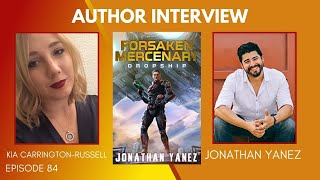
In this extensive interview, host Kaya talks with bestselling fantasy and sci‑fi author Jonathan Yanez about his lifelong love of storytelling, the messy path to his first published book, and the relentless querying that led to his first contract with Limitless Publishing. Yanez describes his disciplined daily routine— waking at 5 am, writing 4,000 words in short sprints before his family wakes— and how his wife, who now serves as CEO of their joint publishing and production company, fits into that schedule. The conversation moves into the creation of Wolfpack Entertainment, their shift from traditional publishing to self‑publishing, direct‑to‑reader distribution, and the development of a TV pilot called Infinity System as well as a mobile game based on the Gateway to the Galaxy series. Yanez shares the setbacks of the game’s development, the lessons learned from trying to break into film, and the practical steps they are taking to produce and market new content. He reflects on memorable reader interactions, the importance of community through their “Pack” meet‑ups, and offers three core pieces of advice for writers: stay consistent, bet on yourself, and embed hope in your stories. The interview closes with personal anecdotes, his biggest challenges, future ambitions, and a rapid‑fire “speed‑dating” segment revealing quirky details about his life.
Chapters
Welcome back everyone. I am so excited for today's interview. We are talking to a very well-loved fantasy and science fiction author who has also won a Jack London Award, which is an amazing feat. We are talking to bestselling author Jonathan Yonnes. How are you today?
Great, thanks so much for having me on your show. I've been looking forward to it.
Yeah, me too, because honestly, as I stalked you, um, or should I say did some friendly research, you've accomplished a lot and you have so much coming into the as well. So I'm so excited to just deep dive into this interview and pluck your brain on everything, basically.
Thanks, Kaya. You say it like it's a good thing, and it is a good thing that I'm doing so much, but I feel like, um, I think Tolkien in his book described it as like too little butter spread over too much bread. Like, I don't think I've reached my capacity yet, but we're getting close.
I would imagine so with the amount of projects that you have going on at the moment. So maybe then take us back to the start. What What got you into writing and how did you find writing your first book and then publishing that?
I've always, as long as I can remember, I've always loved stories. Like I was trying to think about when was like the first time, my first memory of loving stories. And I can remember watching TV shows and then playing at nighttime, playing back the TV show in my head, like the storyline, but adding myself as a character in it. Like what would my character do if I was in this TV show? So I think that's like one of my first memories of like actually like trying to storytell. And then I've always been a voracious reader. So anywhere from like Chronicles of Narnia when I was little, the Hardy Boys, Lord of the Rings as I got older. And yeah, I've always wanted to write. I went to college and wasn't like 100% sure exactly how to go about writing. So I thought like the English major route was like the closest thing that I could get to writing. So I was an English major, and like, I'm not knocking any English majors. I'm probably going to get in a lot of trouble for saying this, but like, all we did— I'm not knocking teachers either, but I feel like a lot of an English major, for me at least, was reading old books that weren't bad, they were good, but then you just sat around and talked about them, and it wasn't, it wasn't really, you know, like, um, preparing me to be an author.
That's interesting. So you knew straight from the get-go, this is what you wanted to do. This was the path that you wanted to go down. So then how did you learn those skills to write this book and publish it?
Oh man, we talked briefly about just like all the mistakes that I've made. Um, not you, you're, you're super kind about asking it, but I'm like, yeah, if you want to talk to somebody who's made a lot of mistakes, I mean, I just started doing it and I just like fell on my face over and over again. Just with like my first book never saw the light of day because it was horrible. So then I wrote a second one, I started pitching agents and I went through 100 queries. I would send out the queries in batches of 20, even though you're not supposed to do that. Cause I know a lot of places you submit, it says don't like submit multiple places at a time. But I was like, I don't got time for this. I can't, I can't wait, like, you know, submit one and then have to wait weeks or a month or whatever it's like to get that one no to then submit another one. So I was just like, you know, I just told myself that if I really wanted it, I was gonna make it happen. And there was no like time limit to success. Like this was going to happen. That was the only way that I approached it. And then eventually I got my first, um, contract, and it was with Limitless Publishing, and they're still around too. Nothing but great things to say. Like, they gave me my first, um, step on the ladder, and then since then we've been climbing ever since.
Yeah, that's phenomenal. And that's, uh, one thing that I absolutely love about you is you're very passionate, you're very driven. Well, I, I assume that is my read on you, but, um, and that I love that you're like, I will, I will achieve this in whatever whatever way that it comes in the best form, I will make sure that this happens. And I absolutely love that drive. And I find it so interesting, well, that we talk about making a lot of mistakes because I always say on here there's two types of authors. There's the one that has pre-planned for 12 months to 2 years the release of their debut novel, and then there's the author who hits publish and sits and goes, that's weird, I haven't earned a million dollars yet, what is happening right now? And then they learn all the lessons and realize it's a business, and so you build into that. And I think making mistakes, honestly, Honestly, as heartbreaking as they might seem at that time, they're probably the best thing to happen because you're certainly not going to do it. Well, I hope you're not going to do it twice.
Yeah, I used to think that the odds weren't in my favor, but then I realized the odds actually are in the favor of the person who doesn't give up because every no gets you closer to a yes. So, right, I might take like 100 nos and then maybe 1,000, but sooner or later that momentum starts shifting. Like sooner or later you're gonna get a yes along the way. The odds say you're gonna get a yes.
One series that really grabbed my attention was your Forsaken Mercenary series. Can you tell me a little bit about that and what gave you the inspiration for that series?
Sure, it's basically Jason Bourne meets Wolverine. That's so cool. And it's like in the near future. So we're not like interstellar, you know, like going to other solar systems, but we've gotten as far as like the moon and Mars. So near future. And yeah, it was a lot of fun to write. I like writing from the main character's point of view so that the reader can experience along with this character what's going on. So you find along with the character what's happening. And since he lost his memory, it's been— it was a really cool discovery process because I don't know about you, but I don't outline, or if I do outline, I have like a few— you're laughing. Do you outline?
No, I think where you're going is exactly what I do is like, oh, there's a little shell, there's a start, a middle, and an end. Let's go.
Yeah, no, exactly. Yeah, that's, that's why it's fun for me. That's why it doesn't really feel like work. It feels like I'm on an adventure because I don't really know for sure what's going to happen. I have kind of like an idea, kind of like if you're ever in a heavy mist and you can kind of see the silhouette of a lamplight. Like, you see the silhouette of lamplight, so you know where you're going, but who knows what you're going to discover along the way.
Absolutely. And I'm sure you have this in plenty of times where there's plots and twists that you don't see, or there's a character that's saying something or doing something, you're thinking, why are you doing that? And you stay true to it, you still put it in, and then it's a book or two later that it, it reveals itself. You're like, you clever little thing. You're like, no, that's not me that's clever, the character is fabulous.
No, you're exactly right. I do that a lot of times. So I write my first draft, and then when I go back and do my second draft, I start sprinkling in things so the reader thinks like, oh, it's foreshadowing, he knew this all along. All along I had no idea what was happening, but I just— when I did the rewrite, I was like, oh yeah, I can, you know, hint at this is going to happen later.
Because you have a lot of projects on the go, and we'll obviously get into that soon, but I'm curious as to what your sort of routine looks like then? Because you're a very busy man. Is it a 9 till 5? Are you obviously mostly pants up? But how do you incorporate that with the family as well?
Yeah, I always tell my wife our kids are going to grow up with a very skewed idea of what people do for work, because both my wife works for the publishing company and our production company too. So we're both at home all day, and then they're home because, uh, I have a 5-year-old and a 1-year-old and the 5-year-old right now is homeschooled. So we're just like at home and we go out and hang out. Like every day feels like Saturday. So I wake up at 5:00 AM, alarm goes off. And then, uh, I know I have about 2 to 3 hours before everybody in the house wakes up. They're usually up like around 7:30-ish. So I have 2 and a half hours to go. Like that's my time to get stuff done. So my daily word count is 4,000 words. So I've been hitting it in sprints. So I try to sit down and I know roughly I can get 1,000 words in, in 30 minutes. Nice. So I'll sit down and do that first 30-minute sprint and then go get some coffee and it's time to feed the dogs and the cat. And then I sit down and do another 30 minutes. And then I usually work. Um, I hear like a little knock on my door from a chubby little fist. Usually it's my 1-year-old son. He wakes up before his sister. So then I stop and we hang out and get breakfast ready. And then my wife's up and then I go back to work and, uh, I try to work until about 1 o'clock. And then it's kind of like we're handing off the baton in a relay race. So I give the baton to my wife. So then she has from about 1 to 4 to 5 to get her work done for the publishing company and the production company. And then it's hanging out, family time, dinner time. And then in my work schedule I work out, and then in her work schedule she finds the same thing, she works out. So she's in karate and she has a personal trainer, and then she inspired me because I was just going to the gym, but then she's karate, I was like, she's going to be able to beat me up one day, I got to learn how to defend myself when we're having some sort of like crazy conversation about, no, I should do this in the publishing house, no, you should do that. So I started, uh, boxing, that's been fun.
I actually read, and I laughed so hard in one of your bios, that, um, obviously your wife is part of the company and that she reminds you every day that she's the CEO and you just work for her. I love that.
That's not a joke either. Like, on paper, she's the CEO. I think I, uh, gave myself some sort of weird title. I forget what it was, but she's the CEO.
Oh, that's awesome. So have you— or has she always been on board from the very go when you started publishing? Or then actually, no, because you only started your publishing house in 2016. So was that when she came on board and you collaborated for this business together?
Oh man, this is a wild story. You're gonna start digging up some skeletons, so here we go. So, uh, I used— I— when I decided that I was gonna write full-time, I quit my job without telling her. So we were just married, we were like a year into our marriage. I quit my job and cashed in my 401k to give me like some money in the meantime, and I didn't tell her until after the fact. So I wouldn't recommend that to anybody. I definitely wouldn't do it now that she knows I was karate, but I definitely wouldn't recommend that. But yeah, she's been like super supportive from the beginning. She had a job in advertising. So in January of 2019, I believe she was able to quit her job in advertising to come in and work for our company full time.
That's amazing. And that's why she's the CEO. Since you did that, she's like, everything goes through me now, sir.
Yeah, exactly. I think about that sometimes too, and I feel like at the time I'm like, I'm glad that I did it, but I don't— I feel like I should have talked to her before. I should have talked to her before I did that, not just straight up quit my job.
I'm so curious, did you know Shane Silvers at that time? Because he did the exact same thing. So I'm wondering if you guys just made a very bad decision and packed. Obviously it worked out, but he did the exact same thing.
Yeah, it's funny because up until recently he was the only other person that I've ever heard of doing that. And then I was at a conference in November and I talked to somebody else who he said he did the same thing. So I guess now there's 3 of us who just kind of like threw caution to the wind and told ourselves we're going to make this work.
Isn't that the bar? So now our wives are watching us very closely.
Yeah, exactly.
One thing that I found interesting was your book Iron Wolves was actually written in the Galaxy's Edge, uh, world. Can you tell me a little bit like how you found that and the process of writing into somebody else's world?
Yeah, so one of the co-creators, Nick Cole, he actually lives like 15 minutes away from me.
Really?
Yeah, I heard him in a— on a podcast, and then I reached out. He was super nice guy, and we started talking, had a lot in common. And him and his co-author who created the Galaxy's Edge universe, Jason Auntsbach, invited me, or maybe I begged my way into writing a book in their universe. And then the easiest way for me to write a book in somebody's universe is if I can take my story and characters as far away from the main storyline as possible, because I'm not really big into rules. I don't like rules, not a big rule follower. So I told them, I was like, you know, I'd love to write this. Like, can I write my story in a different time that hasn't been like really developed within your universe? And you know, with a different unit, can I make up my own unit that's never been discussed or talked about? So I still had to play by some rules, like what kind of armor and weapons that they use and stuff like that. But then there was a lot of freedom for me just to tell my own story.
That's really cool. How long would you say it usually takes you to write a book?
Uh, it depends on the length because back then I think I was doing like 60,000-80,000 word novels, and now I'm trying to do closer to 100,000 word novels. So I can do, um, I write 6 days a week, so I write Monday through Saturday, 4,000 words a day. So I can do a 100,000 word novel in about a month.
That's amazing. Wow, I need to, I need to like follow your routine. Dang.
It's, uh, I feel like it's still the same work, but it just feels easier because I've been doing it. Like, I always kind of think of like push-ups. Like, um, if you start doing push-ups, the push-ups don't get easier, you just get stronger. So it's not like the word count has gotten any easier. I've just gotten better because I've done it so many times over so many years.
So then I'm curious, how do you go when you have— I mean, I know a lot of people call it, um, writer's block. I don't necessarily agree with that term just because I think it's usually when we're tired and we need a rest, or there's a little hiccup in the story that we're not yet getting. Um, how do you deal with that?
Oh man, I'm gonna say some wild stuff that's gonna get a lot of people angry. I warned you about this before. What's that? So, I mean, I don't feel, first of all, I think everybody has a different capacity for work. So like my work-life balance isn't gonna look the same as yours, isn't gonna look the same with somebody else. And I do think resting is important. Like I take Sundays off every week, so I do take a day off each week. But I know that when I don't feel like writing, I tell myself, it doesn't matter what you feel like, like you've built what you've built. Over almost 10 years because you've stayed disciplined and consistent. So I try to take my feelings out of it. And I just remind myself as writers, if I had one job, what's your job? It's to write.
Yeah.
If you boil it down, like there's a lot of other things that goes into the business, but first and foremost, if you're a writer, you write. So I remind myself like, do your job. That's your job. Make it super simple. No excuses. Nobody cares if you don't feel like writing. This is your job. A lot of people don't like hearing that.
No, because I think too a lot of people get— I won't say carried away, obviously it's a balancing act because you do have a lot of marketing, you have a lot of different things happening, especially when you start doing different projects outside of just writing. And I think then people sort of lose focus in a sense. I know I've been guilty of this many a times, um, and so they become quite overwhelmed with how much work can be done or needs to be done. So it's good that you've reminded yourself throughout your career, this is my priority. I just need to write because I'm a writer. As simple as that.
Yeah. And like, that's not to downplay other people who have, you know, like they might feel like they're burned out and maybe they just need to rework their schedule. Maybe they're trying to write too much each day. So those people who are burned out or feel like they can't sustain the pace, I tell them like, can you sustain 100 words a day? Can you sustain 50 words a day? Maybe you're just trying too much, like dial it down. But the main thing is that you can stay consistent. Like if you could stay consistent with 1 page a day, that's fine and you don't experience burnout, then that's better than trying to, you know, do 1,000 or 2,000 words a day but then burning out. How long have you been writing? Like, um, would you say that you've been like deep in the writing world, like knowing other authors and stuff like that?
So I've been— I started writing when I was 15. Um, not— I started publishing when I was 19, 20. So I've been doing this now for about 8 years. So I'd say I've probably been in the thick of it, I want to say probably the last 6 years, but these last few years have probably been when it really started to mature my brand, I want to say. I feel like the first couple of years were just finding, and I was trying different genres and things, and now I kind of really solidified who I am, what I want to do going forward, what projects I want to work on. So I'd probably say the last few years. What about you? How many years?
Yeah, I'm almost 10 years in. It'll be 10 years next May, but I would say I've only been like really knowing what's going on for maybe half that time, or maybe like 5 years. But to your point, there's a lot of authors out there that I've seen over the years who have— dude, you don't hear from them anymore. They like fall away in like a depression, or they have mental breaks. I've heard multiple people having like, um mental breaks and being hospitalized because they're not taking care of their health. Because a lot of time as writers, like, people don't necessarily think of writers as being fit because a lot of times these people are just in their home, like, non-stop behind the computer. So to your point, there's a lot of people who don't take care of themselves. So that's another thing to consider too, like, with balance.
Absolutely. And I think too, what you— some people— and it's great to be disciplined, it's great to have focus, um, I'm all for it. But, and it's, I'm sure, a learning lesson that you've had. I've certainly learned I've burnt out numerous times and you get to a point when you realize you want this for your whole life. You want this as a long-term career. And, you know, just if you can smash out a whole pile of work in 2 years, that's fabulous. But you could also achieve that in 2 and a half years without being stressed out majority of the time. So that was an interesting lesson to learn. And I personally, and everyone's different, but I think physical health is just as important as mental health, especially when you're doing this long-term because You just get more tired and things like that. So I want to be able to put 100% into when I'm riding instead of— okay, I still drink too much coffee, but like, depending on coffee—
how much coffee do you drink a day, like on average?
Okay, so I'm actually trying to cut back at the moment. It's not working out for me, um, but now only about 4 or 5 cups a day, so it's not too bad. It was— no, that's not bad because you— one of your— on your bio, you said you bleed coffee. So how many coffees do you have?
No, no, I, uh, try to limit my caffeine intake to 2 servings a day. And then if things get really wild, I might need like 3 servings a day. But, uh, yeah, but sometimes like, um, this is going to sound weird, but I feel like there's a lot of value in suffering and putting yourself in uncomfortable situations like the Spartan Race. We were talking about that earlier, right? Like it was enjoyable and it was good, but it was hard work at the same time. So there are days where I feel like, okay, like, so Sundays I sleep in, it's my day off. So on Sunday I sleep in, I was like, okay, if I got sleep, then do I really need coffee or do I just want coffee? Yeah. So there are some days where I just skip coffee altogether and it's, uh, it just reminds me like to, um, to keep on doing those hard things that might be good for me even though I might not want to do them.
Yeah, absolutely. Sucker for punishment's all I'm hearing. Um, one thing I'm curious about, obviously we're talking about making a lot of mistakes, and another thing within this industry that is plenty of is projects that start and they don't necessarily go where we think they're going to go, or they get put on hold. So you actually had one of your recent projects was being created into a mobile game, which is awesome. Can you tell me a little bit about that process and how you got into it?
Yeah, so I kind of think of IPs, like your idea, that's kind of like a pie. So like when we come up with a storyline, there's multiple ways to cut that pie and multiple ways to make revenue. So you can earn revenue through ebooks, audiobooks, paperback books, merchandise, um, video games, film, graphic novels, all kinds of different things. So I've always been that type of hunter that wants to taste the forbidden fruit. I want to do things that like nobody in their right mind would try to do. So I didn't know of any other authors who are making their own mobile games, or I knew of authors who have had their works adapted to film, but I don't know very many authors who did it themselves. So like attacking different projects that way. I know that there's a lot of authors who do a really good job at like starting their own publishing companies and they kind of just stay in their lane and they do great publishing their own books or finding other authors to bring under their imprint and more power to them. And it's not necessarily a good thing, but I don't want to do that because I think that would be the easier road. But I just feel like as like a hunter, like You know, they got really good at killing that buffalo over and over again, and they do a really good job. But like, I killed a buffalo and I'm like, I wonder what's that dragon? Let's go hunt a dragon. Let's go try to kill that. So with the mobile game, I partnered with a producer of video games and then they found the coder. So we started working on this a few years ago. It was for my Gateway to the Galaxy series. And 2 years in, a year and a half, 2 years in, uh, COVID strikes. So our coder got sick with COVID and, um, he was gone for about a good 6 months. And then the area that he lives was affected by fires. So he had to move and he was busy. And for about a year, that video game just kind of like sat on the shelf. And the craziest part is that it's finished. Like I've seen it. It's done. It had already been out to beta testers. So what needed to happen next is he had to go in and implement all the beta feedbacks, like, hey, this is wrong, this is glitchy. And then after that, we just had to upload it to, um, the platform to sell, like Apple iTunes. So the developer, the coder comes back after like a year off and he was like, hey, I just, you know, I don't want to work on this video game anymore. So by that time, the video game producer has also lost interest 'Cause this has also just been sitting on the shelf for like the last year. And then I kind of got to the point where like the video game publisher, producer is like still friends, like still, you know, will answer my emails and stuff like that. But every time I would reach out to him, there was no action behind his words. There was always like, oh yeah, we're gonna get to it. Oh yeah, we're gonna try. So I did that for 6 months and afterwards I just thought like, I don't like giving up. And that's not necessarily a good thing about me either. I don't like giving up on things, so maybe I should have given up on this a long time ago and it would have saved me time and energy I could have put towards a different project.
Speaking of different projects, and I actually want to get into Wolfpack Entertainment, you have started your own film production company. Like, what? Um, tell me how that started and what are you working on at the moment? Because it is so foreign to a lot of us, um, authors, you know. Obviously we always want the TV series or the film, but We have nowhere, no idea where to even start. Yet you're now sitting on the other side of the fence. So what's it like over there, friend?
So this is, uh, do you have time? This is a long time. I'm willing to do it. I want to get into it. Do you have time?
Yeah, let's do it.
All right, so, um, a lot of the times I talked to other authors about getting into film, and I was kind of trying to figure it out for like the last 2 and a half years. And I do feel like I'm at an advantage because I'm here in Orange County. I mean, Hollywood's, you know, like, well, depending on traffic, Hollywood's, you know, 40 45 minutes, an hour away. So like all the connections, like everything's here, but anytime I would talk to another author about, you know, their plans to go to film, it would almost like be a joke to them. They would laugh it off because it seemed impossible. They'd be like, oh, well, you know, when Netflix comes knocking, then, you know, get my series. And I thought to myself, like, how sad is that? Like, how sad are these people? It's like a joke to them because they think they could never, you know, get to that point. But I feel like us owning our own publishing companies and knowing how to publish. Yes, there's way more moving parts when you're making a film, but it's basically the same thing. Like, if you can think about as publishing a book, so like when you publish a book, you need a cover artist, you need an editor, you need to get it formatted, you need a marketing plan. So in a movie or a TV show, like, don't get me wrong, there is way more moving parts but it is a similar process. So I just kind of started unraveling what it meant to be a producer. Like, at the time I had no idea what a cinematographer was compared to a line producer, executive producer, associate producer, best boy, gaffers, key grips. Like, there's all kinds of crazy terminology. Even now when I'm talking to other producers and they're talking to the cinematographer and they're talking about these cameras and lenses and stuff like that, It's just like a foreign language to me. So I'm still learning now, but, um, we realized that like, hey, nobody's going to do this for us. It's time to do it ourselves. And what was the big wake-up call for me? So for 2 and a half years, I'm kind of learning the process, trying to figure this out. And a big wake-up call came for me at the beginning of this year when I was approached by a big production company to turn Forsaken Mercenary into a movie or a TV show. And they were telling me, because I'm the type of person, like, you know how a lot of people suffer from imposter syndrome? I don't have that at all. I don't suffer from imposter syndrome at all. And I don't know, maybe you can help me. We'll have like, um, I'll sit on your couch and you can tell me what's wrong with me, because I do suffer. I do suffer from— yes, I'll pay you. I'll PayPal you or something for a session. But I do suffer from not— I never thought about like, oh, is my stuff good or is my stuff not good? I was always just obsessed with getting better. Cause I told myself like with every book, if I could just get 1% better, then that would be enough. I could write, I'll write 100 books and I could be 100% better. So I don't know what the name was for that. Cause I never thought like, oh, is my stuff good? Oh, my stuff's not good. I was always just like focused on getting better.
That's good. That is the— I don't think that's necessarily a bad thing though. I mean, it's so interesting too because I, I'll, I'll share a little story. Um, but I remember in 2018, um, one of my books recently published, uh, The Shadow Minds Journal, love it, one of my favorite books that I've written. And that was actually picked up by a— it was at the Frankfurt Expo and it was picked up by a new American, um, studio, like, um, production company. And so the people who were representing my book over there, and they told me, I was like, what? And it was crazy. And I did research into the company, and I'd realized that they just opened, and the owner used to be the president of Warner Brothers. I was like, oh my gosh. And I absolutely shot myself in the foot because I was like, I'm not ready for this, there's no way, I don't know what I'm doing. And I believe in like, you know, you basically manifest, you create everything, or if you put positivity energy out there it'll come back. And of course it didn't go forward. It's also flattering to have that, but I shot myself in the foot. And ever since I think, why, why did I do that? Like, there's no point if it obviously was appealing enough for them to grab it off the shelf and look into it. There's something special about my work. And I just find it so interesting the amount of people that we talk to, especially as authors, who do have imposter syndrome. It's such a common thing, so it's very refreshing when you meet someone such as yourself. I recently interviewed Shane Silvers, who you know, Hunter Blaine as well. He was the same. They're just like, what is that? Like, full confidence, and it's phenomenal to see. So you're doing good.
Yeah, thanks. Yeah, I don't know what the word is for what I have though. I just like get just obsessed with getting better, just trying to be better, trying to get to that next stage. Yeah.
So, um, yeah, what happened to it then? The, um, when they were optioning the film?
Yeah, so that was a wake-up call for me because I was having meetings and they were setting up meetings with other writers in Hollywood, other directors and producers, and we're all talking and they read Forsaken Mercenary and they loved it, like individual directors and stuff like that. So that was a wake-up call to me, like, oh maybe I'm there. Maybe, like, I mean, I'm always going to be working on my craft, but maybe the work that I've put in for the last 9 years is good enough now. It's good enough to be able to take to Hollywood. So we're still talking with them for Forsaken Mercenary, but in the meantime, I met a director who wanted to work on a sci-fi project, and he found out that I was an author, and we started talking. And we collaborated on something called the Infinity System. So like the super quick pitch for that is like, basically our world's dying and we need to go colonize another planet, but who's the best first wave of people to send to be able to do that? So the powers that be here on Earth created a simulation project. So they're putting people in the simulation, kind of like The Matrix and like simulating them being on a planet and seeing how they would react and be colonized. And then the kicker is not everybody in this simulation knows that they're in a simulation, or are they willing to be in a simulation? And every time you die in the simulation, you get put right back in, but a little less of you makes the trip each time.
Oh, that's interesting. So this is a project you're working on now?
That's a TV show, yeah.
That is so cool.
Thanks. Yeah, so, uh, we decided like, what's the— we didn't want to tackle a full-on movie first, right? Because that's an hour and a half and that's a lot of money that you need to do it well. So we had— we kept in mind with the budget, like, okay, I wrote the script and I was thinking, okay, not a whole lot of money for visual effects. We need to have like a small cast and just be super character-driven. So we wrote a pilot, so 27 pages. So it'll be roughly each page is a minute, so it'll be a 27-minute pilot. We had went ahead and raised the money, and now we're at the phase of location, um, casting for the roles, and then setting up our crew. And let me tell you, I am the worst casting director ever because there are so many actors that want to be part of our film, and I was them. Have you ever— so have you ever, uh, watched Christopher Nolan's Batman? That trilogy?
Yeah.
So there's a famous line in there that reminds me that I'm the villain now, and it's, uh, you either die a hero or you live long enough to see yourself become the villain. Yeah. So I've been in there now and I've just been paying my dues, and I haven't died the hero because I haven't given up, but now I'm the villain because now I'm the gatekeeper telling these actors like, nope, nope, nope, nope, nope, yes you. And it's so sad because I want it for all of them because I have been them, you know, when I was submitting queries. And, um, in a different life, so super, uh, short side note is that when I quit my job to write full-time, I wasn't making full-time money, as you know, like right away I had to pay some dues and get some books out there. So I had a part-time job personal training and a part-time job modeling. So I did modeling for 2 years. So I went to all the casting calls and I know exactly what these actors are going through. And I feel so bad now having to tell so many people no, but we only have, you know, 7 speaking roles in the pilot.
But that's exciting too, because I think, um, because you've been in that position as well, you are a little bit more empathetic to it. Still got to be firm, say, I'm sorry, but still get out. No, um, brutal. But this is so exciting though, because, uh, like, as we're talking about before, we obviously learned so much in this industry, but you've really gone into another industry that it's so closely connected, and now you have this whole new world to discover. And I'm so excited to see where you take it. I know you're going to do amazing at it. So, you know, let's start writing my contract up. I'm ready. Let's do this.
Yeah, no, for sure. It's, um, I have faith that we're going to be able to do this well. But even if this was the worst TV pilot that we put together and we just learned from here, like, I'm not going anywhere. I've got another 10 years to put into film to learn and do the next one better and better and better. And I'm hoping that this can be the template that other authors might be able to use down the road. Like, hey, if we can, um, because what we're doing is we're creating the pilot and then we plan on shopping the pilot to Hulu or Netflix or Apple Plus or HBO and taking it to different film festivals and showing them the kind of like this proof of concept, like, hey, we can do this story really well. Give us the money to create a whole season for you and then you can stream it on your platform.
Have you ever done any pilot writing? Or screenwriting yourself before? Has this been a lesson learned as well?
So I had written a script a few years ago for a friend, and we wanted to kick things off, but it was way, way too early. This was like maybe a year or two into my publishing journey. Like, I had no idea what I was doing. I wasn't really making even any money with my books yet. So there was that one. And then over the last— the course of the last year I wrote two, two other movies and then our pilot for this. So just talking to different directors and different producers, I think people might be put off sometimes about how fast I write. And again, I don't know if that's a good thing or not because I was talking to a producer and he was like, yes, he's like, I love it. I love the idea that you're pitching. This is for a different project. He's like, write me, you know, a script keeping in the budget that maybe we could do a $5 million movie, not necessarily like a $100 million movie with all the visual effects. So I wrote him the script in like a week. So I sent him that. So I got some practice writing that one. And then there was another opportunity with a director where he wanted to do kind of like a Terminator meets John Wick.
Yeah.
So I wrote that script like maybe in a few weeks. And I sent it to him. So they're sitting on those projects. So if you go to our website, wolfpackentertainment.co, you'll be able to see the different projects in development or in pre-production. So there's a bunch of different opportunities that I have. So I was able to get a lot of practice writing scripts before I wrote Infinity System, which is the most recent one we're talking about.
What I love about this too is, yes, opportunities, but these are opportunities and doorways that you've created. Uh, which is phenomenal, but I'm also trying to figure out when you have time to write your books as well with all of this happening. It's just amazing.
It's, uh, so last year I was writing a book a month and I told myself that this year that I need, if I wanted to grow the production side of the company, there was no time writing scripts if I was going to write a book a month. So this year I started writing a book every other month. So now I can write a script one month, and a book the next month. So my workload didn't really go down, it's just now I have more time to write, um, scripts and novels.
Yeah, that's phenomenal. What would you— I'm so curious, and what would you say your top 3 tips are to authors, to writers who are watching this? If you had to give them 3 bits of advice, what would it be?
Oh man, I would say be consistent with whatever it is. If you only work 5 days a week, that's fine. If you only write, you know, 100 words a day, that's fine. Just be consistent because this is a marathon. It's not a sprint. And I think if you're honest with yourself and you can be consistent with even maybe, you know, what you would deem a lower word count, start there and then build as opposed to like trying to go crazy and writing 20,000 words a day, but then your brain's oatmeal after a month and you're burned out.
Yes.
Um, so be consistent. I would say bet on yourself as much as possible. There's a quote from, I think it was Michael Jordan. There, his coach was talking to him. Somebody was talking to him about a scenario and they were saying, okay, seconds left, game's on the line. Who takes the last shot? And Michael Jordan says, I do. Winners always want the ball. And I feel like as authors, We have to put ourselves in as many positions as we can to succeed, because nobody will care about your product as much as you. So like with our film project, it's not a coincidence that all the other film projects— we're still talking, like the doors are still open, but they move very, very slow as opposed to Infinity System where we're the producers working with the director and we can continue to move the ball forward.
And here's one thing that I've learned, especially in this industry, is it's always scary when you start something new, especially something as, dare I say, ballsy as this. But as soon as you connect and you meet one person and then you'll meet another, and you will be surprised by the network that you create. You'll look back 6 months later and think, how did I surround myself with these people? When did this happen? And you will notice the momentum starting then. The same thing as I've created, obviously, this channel. You, you know, I reflect a year later and think, wow, look at all these amazing people that I know, all these exciting opportunities that I've had, and all these side projects that we're doing together. It would have never happened unless you take the leap to do it. So I'm so excited to see what happens to you in the next few years.
Yeah. And, uh, has anybody ever asked you that question? What are 3 things that you would tell new authors?
Don't do it. No, I'm kidding, I'm kidding.
Has anybody asked you that?
Um, no, I don't think so actually.
Here you go, here's the first. Um, don't cut this out of the video either. You gotta promise to leave this in.
I don't like being on the spot. No, I'm kidding. Um, I love improv. Um, my top 3 would definitely be probably very similar to yours actually because I feel like we have a very similar mindset drive. Consistency is one, discipline, but rest is so important as well. And the rest has probably been one lesson that I've learned over and over again. Cause a lot of us, obviously we start off with full-time jobs and things like that. And so I remember I went through a stage and this is when I was doing logistics management, which is a whole different ballgame on its own. So doing that 60 hours a week and then putting 40 hours plus still into my books. And I used to tell myself, you're a robot, you can do this, cut personal attachment or whatever out. And I was sleeping like 4 hours every night. That does not work. That does not last. So that was a big no-no and a big lesson that I learned. But rest is just as important. Don't, don't do what a lot of us do. And the only reason why we usually offer this advice is because we've done that before. So I speak on a lot of friends that I know that have done the same thing.
So do you have a third one? I got consistency for sure, and I got rest.
I was gonna say discipline, but I think consistency is the same. Um, I don't know, just dream. I want to say dream because I don't know, I absolutely love the world is your oyster. Just go for it, go for whatever you want. Sure, somebody might say no to you, but then somebody else is going to say yes, and it may come in the most surprising ways. But once you really put yourself out there, I don't know, I feel like life becomes magic. Like, you just never know what you're going to get, and it's going to lead you to amazing people and amazing opportunities. So just dream and, and go for it.
That's so well said. I want to create my own show just to have you on. I don't have a show yet, but maybe I should put that on the docket so I can invite you on my show. We can interview you.
Who knows, in a couple of years, um, I, I might definitely be worthy. I'll be like, oh, Jonathan, I guess I could make Time to come onto your show. No, I'm kidding.
You could pencil me in. I'll have you talk to my secretary, see if she can pencil me in.
As long as there's wine, I'll be there. I'll be there. Um, so then what, uh, what, what book are you writing at the moment?
Let's see. So right now I'm working on the Hunters for Hire series. So I'm working on book 5, which is titled Devil May Care. And what we decided to do with, um, Hunters for Hire now with our publishing company is go direct sales. Because I love Amazon, don't get me wrong, super grateful, because without them I wouldn't have been able to start, I don't think. Like, I wouldn't have had a platform. So super grateful to Amazon, we're still partnering with them. But Amazon also, as the distributor, takes a 30% profit when you price your book between $2.99 and $9.99. So as the content creators and the publishers, we get 70%, which is fine. There's nothing wrong with that. They're a company, they make money too.
That's cool.
But now that we're a little bit larger, I feel like the future for us is to be our own distributor. So what we've been doing with pre-orders is we have a pre-order up now on our website so people can go and pre-order the book and then they'll receive their copy day of release. And then the very next day it'll be removed from our website and put up on Amazon. So anybody who's, you know, still wants to use Amazon or would rather read through Kindle Unlimited still has that opportunity. But, um, I just feel like the end game is being able to be your content creator, so writing the book, being your own publisher, and then also being the distributor. Because I remember back in the day when I had a publishing house, I mean, they took 50% after Amazon took their percentage. So I forget what I was left with, maybe like 15% or something like that, like back in the day when I first started. So slowly I've been cutting out the middleman so I can go straight to readers.
Yeah, that's amazing. And you and your wife are definitely building an empire here, which I live for. I love it so much. I'm curious then what your most memorable reader interaction moment has been.
Oh man, are you trying to make me cry? Yes, yes, there's so many of them. We had just had our, um, in-person meetup, so we've been doing one a year now in Las Vegas. So there was 15 people that flew in from like Kansas and Georgia and Minnesota and all over the country to come and hang out. Um, so the brand, the brand that we have for our company is the pack, like Wolfpack Entertainment. And then, uh, like if you go to my Facebook, um, group, you'll see our logo is the wolf. So we call it our pack meetup. So our pack got to meet up in Las Vegas and we got to hang out, hang out. And it was cuz I get, I've been so lost over the years, just like obsessed with getting better that sometimes to my detriment, I have lost track of like, there's real people out there. Reading these books. Like I've had stories of people telling me like one of our readers, her grandfather died. So she was at home by herself after the funeral and it was the exact same day my latest book came out. So she was able to read my book after she's, you know, had this really rough time with her grandfather. There's stories like that with people in hospice. I've had people email me and tell me that, you know, they don't know how much longer they have to live, but they're trying to hold out as long as possible so they could find out what happens in the series. So just stuff like that.
Wow.
And I didn't cry. I almost cried. I feel like there's tears in my eyes, but they have not, they have not fallen.
Yeah, good. Uh, same. Um, but, and I guess, you know, that's, uh, that's beautiful. I absolutely love that. Um, this is— I find when you start embarking, when you write, you kind of do it for yourself, and then you find yourself years later having having those connections and those reactions and thinking, wow, it's so much more than just me now. And knowing that because of something that you've created, you've been able to connect with that person in a very unique, special way. I think it, it takes the cake for anything else that we could have ever expected in this, in this industry.
Yeah, there's like so many bonuses now that I didn't even expect or realize when I first started writing that I'm now— I'm just like, wow, like I I don't like to call readers fans. Like, you'll never hear me call them fans because they're my friends. Like, I know who they are, we interact, we share life together.
Well, speaking then of interacting, you have a Facebook group, don't you?
Yeah, so if you, um, go to Facebook and type in Jonathan Yanya's Reading Wolves, that's the name of our group. And then, um, if you wanted to check out kind of like the merchandise or what we're doing with, uh, order pre-orders for books It's jonathan-yanis.com.
Amazing. I'll definitely— I'm probably already on there, to be honest, but I'll make sure that I'm definitely in the group. Um, what would you then say that your greatest challenge and your greatest accomplishment has been so far in your writing career?
Greatest challenge so far, I think, is not allowing people to put me in their box. Even like mentors who I looked up to and I still look up to, but I feel like, um, you get to keep the excuses you argue for. So I think along the way, and I've heard it in every phase of life, like even like getting married, like, oh, wait till you get married. No, jokingly, but I know they're serious because that's kind of like the excuses that they've used to stop their momentum or upward progress. Well, wait till you get married. Then, you know, it's all downhill from there.
Hahaha.
Or, uh, wait till you have kids and you get that dad bod. You're going to get that dad bod. And then I have a kid and it didn't happen. They're like, oh, wait, you have 2 kids. Once you have 2 kids, it's different. Now I have 2 kids and now it's like, well, once you have 3, you know, you're outnumbered. So there's like excuses at every level that people, I think, tell themselves and it makes them feel better about kind of like where they are in life. But for me, I'm like, I don't need to fall into those excuses, or I don't need to fall into those boxes. That people want to put you in. Like, I can continue going forward. Like, I don't feel like that we've reached the top of the mountain yet, because that every time that we've accomplished something, we've intentionally put ourselves at the foot of another mountain to climb.
Yeah.
So now we're climbing the film mountain, right? And I feel like with the film mountain, like, I'm going to be here for a good, like, 10 years until, you know, I'm inviting you and everybody else out to, like, our premiere for Marvel or something like that.
I can't wait. I'll be there with my cheap wine. I'll be interviewing all your people. I want to be the interviewer on the red carpet. I want exclusivity.
Yeah, I mean, I don't know what the travel restrictions will be when Infinity System comes out, but we've already talked with the director that we want to premiere it at maybe some of the bigger film festivals. So like either Sundance or Toronto, or Austin has a big one. So for sure, you'll get an invitation.
Yeah, please do. And, um, You know what, I'm a rebel. Who cares about the travel restrictions? I'll get in the boat. I'll swim if I have to. This is my favorite question then to ask. What is the biggest goal? What is the dream that you were chasing?
It's such a— it's a hard question because I feel like I've done already. Maybe I need to dream bigger. Maybe this is like a a good exercise for me because I'm 36, but I feel like I've done everything that I wanted to do. Or if I haven't done it, to me, when I think of the word dream, it seems like a lofty goal that might just be out of reach, maybe. But I don't really feel like anything's out of reach. I feel like I do everything. Like Infinity System, I'm going to be in the TV show. My wife's like, you're going to be in it, aren't you? I'm like, I didn't come this far to only come this far. I came this far to go all the way. So like, don't get me wrong, I'm not going to be the main lead in the TV show because I'm going to leave that up to the professionals. But I wrote in a little side character named Bob, and I'm going to be Bob. I have 4 lines. I'm going to be Bob with my 4 lines. So yeah, so I don't, I don't, I don't know. It's such a hard question to answer. Big dreams, I guess. I mean, oh, here's a crazy dream. What if I could impact a billion people with my stories in a positive way and give them hope?
Let's do it. I think it'll happen, so I'm excited.
Yeah, I think so too. I, um, every time I sit down to write a script, so a TV show or now, um, books, I always want to give people 3 things. That's it. I do have an agenda that I'm pushing, and these are my 3 things. I want to give them a sense of community. I want to make them laugh at some point. And I always want to leave them with hope because I feel like a lot of stories, um, are not hopeful stories. And maybe they might be a little bit darker. And if you're into that, may the Force be with you. Like, God be with you, you do you. But for me, I just want to leave people with hope.
Yeah, mine are dark. Don't read mine. It's just like, it's a thread of hope, maybe that all the characters won't be killed. I don't know.
But there is— you always have hope. You always have hope.
I'll leave a little bit of dangle, just a little bit. Um, so, okay, so I have a segment called Speed Dating with an Author. So you and I are going to go on a very romantic date. I lit a candle, I create an ambience, but basically what it is is 5 rapid questions. Are you ready?
Do you time these, or no? Is it just like— no, you don't know? I was gonna see, like, what— because I've done this once before and I asked them if they timed, they said yes, and they asked them what their fastest time was because I told them, I was like, I bet you I could beat it. So I wasn't sure if you've actually timed this with other authors.
I've never timed it. Maybe I should. Okay, let's see if on those little sand things. All right, first question: what is the clumsiest moment you've ever had?
The what moment?
The clumsiest moment.
Clumsiest moment, probably ripping my pants so you could see my underwear in the back end. I used to work at Enterprise Rent-A-Car right out of college before I quit my job to write full-time, and I hadn't realized I ripped my pants like right down the butt seam until like end of day. Nobody told me.
Nobody told you?
No.
That's cruel but kind of funny at the same time. And then was the next day you quit? Was that when that was—
Oh no, no, I stayed. I stayed working there for a while longer, bought a new pair of pants.
Oh, that's so funny. What are the 3 words that would best describe you?
Um, let's go with devil may care. That's the title of my latest book. Do you know what that means? No, it's an old saying that means reckless.
Reckless.
Okay, like he has a devil-may-care attitude, he has a reckless attitude.
Okay, I love that. What is the song that best describes you?
Oh, Till I Collapse by Eminem.
Okay, cool. That was quick, actually. A lot of people usually stumble on that question. What is—
I've always, I've always thought about that though, like when I, like when I see UFC fighters walking to the ring or something like that and they have their song, I always thought like, what would my song be? And I'm like, oh, Till I Collapse by Eminem. That's a good one.
That's perfect. What is your life motto?
Uh, fail often— no, fail early, fail often, fail forward.
I love that one. I've never heard that one. I've heard a lot of like ones that start with failure and end in success, but I haven't heard that one. I like that. What is a unique talent or skill set that you have that not a lot of people know about?
I could play the piano. Um, like, I could play the piano, like, I can read music. Yeah. Um, you know, it's not— I don't practice that often, so I can read the music, you know, key by key. It's not like I'm Beethoven, I could sit down and, you know, you know, play you a crazy song. But, uh, I took piano for 4 years growing up, and then we have a piano now, and I play it every once in a while.
I have had so much fun. What, what should we be on the lookout for? Um, what's coming out, and where do we find you?
Yeah, so, uh, Facebook or Instagram are probably like the easiest ways to find me. Jonathan Yanez on Facebook, it's Y-A-N-E-Z, and then on Instagram it's Author Jonathan Yanez. And then for what's coming out, just the film we plan on— so a lot of things can move, it's very fluid— but as of this moment today when we're talking, we're going to be shooting the pilot the last full week of January. Unless it gets pushed back, right? Because weather could push that back, locations could push that back. So, but as of today, we're, we're set to film the last week of January. So we plan on filming that and then it'll be out of post-production, so doing all the editing and adding the music and sound effects and all that stuff, end of April. So hopefully by end of April, May, we'll be able to share Infinity System with everybody.
Oh my goodness, I am so excited. Watch your journey. And obviously you're updating everyone as well. I think I got an email from you because I subscribed, um, basically updating everyone. So everyone really can be a part of the journey and see what's happening.
Yeah, for sure. I feel like, uh, like I'm under no delusions that I'm here by myself, that I did this by myself. Like, I feel like I'm a gladiator in the arena, and it's only because of everybody in the arena continuing to give me a thumbs up that I'm still able to continue doing what I'm doing.
Best of luck. We will be watching you. And thank you so much for coming on today. I've had an absolute blast.
Yeah, for sure. And don't— I mean, I want this on record. I'm going to say it again. You're definitely invited to the event so you can do that. You can be our professional wine-carrying interviewer for the red carpet event.
It's so professional. It just sounds like me. I would love that though. So yes, it's on record now, people. It's on record.
Yes.
I love it. Well, I am going to love you and leave you, but watch this space and who knows, we might even get you on next year.
Yeah, for sure. I'd love to.
Amazing. Well, I'll talk to you later, Jonathan. Thank you so much for coming on.
Of course. Thanks for having me.
Bye guys.
Bye.
More from Jonathan



MILSFPODS2EP23 The boys interview sci-fi author and screenwriter, Jonathan Yanez!






House of Wolves Episode Sixteen - Learn About Our New Film Project and How You Can Be Involved.

