From Books to the Big Screen | Jonathan & Jynafer Yanez
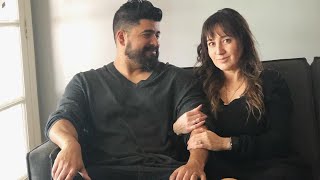
Jonathan and Jennifer Yanez took their self-published sci-fi novels to screen with Infinity System, a space-western TV series. They crowdfunded via Kickstarter, shot for a week with 60-plus crew members, and spent four months in post-production. They're now pitching to Netflix and Amazon.
Chapters
I don't know what I would tell my younger self as far as writing stuff, because A lot of this stuff is organic. You learn it as you go.
It's strange.
It's nothing I ever expected. I want to tell my stories by eliciting emotion in my audience.
It's an organic process. They sort of layer on top of each other. Each one makes the next layer more obvious to me. This whole thing could not have gone any smoother.
I usually say squad only in groups of 3. I like to batch them, like squat, squat, squat.
Look guys, this one's not going to be like normal.
Just not.
Welcome to the Writer's Journey.
I'm your host, Lauren Moore, and with me is the male lift therapist, Kaden Williams.
That's a big difference. It's like, are you talking or are you doing? Which, what's, what's happening here? We still have all the pets that think, oh, it's time to eat. It doesn't matter if it's 4:00 AM.
My name is Walt and this is Coffee and Concepts on Keystroke Medium.
For boom, and we are live! Happy Fridays, ladies and gents! Jennifer and Jonathan Yanez join us today to discuss a very special project she and husband are working on: The Infinity System, an indie-crafted— wait for it— space western TV series adventure. What does such a feat entail? Let's find out. We're going from books to the big screen, so get your questions ready because we're diving in. Live.
This is such an epic intro. I feel like I need to down my coffee just to catch up with all the keystroke medium energy.
Ah, well, I've got my coffee, so coffee cheers! Cheers to everyone here. And we've got, uh, Trekker Charlie D was first in, and so he gets the golf clap of appreciation. And we've got Leo Vaccaro and Lexi Price here, and Facebook user. Howdy, howdy! And Josh. Josh Hayes.
Oh, welcome, welcome everybody.
Overlord Boss is here.
All right, well, how have you guys been? You've been beast mode busy, that's for sure.
Is there any other mode?
I have—
there is. We haven't tried it yet, so, uh, and you know, thank you so much for being here. We're glad to be back. It's been a minute, um, as you've been distracted and preoccupied, I would say, for the past year with getting everything ready for our film. And it's crazy to think, as we're going to start October tomorrow, our Kickstarter started a year ago next month. That in less than a year, you know, we've, um, done like originated it, come up with a script, figured out a marketing plan, came up with concepts did a Kickstarter, got into the holidays last year, planned everything, casted it, costumes, and then filmed it in a week and then spent 4 months in editing, screened it, and here we are. By the time— yeah, our 1 year of launching the Kickstarter, we'll be at a film festival in Utah. So a lot could happen in 12 months. So how are you? Whoa.
Well, reeling from that timeline, there's that.
Yeah, let's just start with this week. How's your week been, Lauren?
Oh, week's been good. Um, I'm editing an exciting, uh, book for Wargate right now. It's a 3-book series and it's beautifully written. We've got an alien invasion and I just finished book 1 and it left on a really great cliffhanger and I'm like, yes, I love my job. I've got book 2 right here and I'm already like jumping in and enjoying every minute of it. So there's that. And also, I took up Hank Garner's challenge to write a book in 60 days. So I've got the Sword of Damocles hanging above my head. All of the internet will be watching us— you know, not all the internet, but it's going to be up there on the internet to, to watch us as we check in each week to see how our progress is going. So I've got to make progress, right? It's for the people. I've got to make this progress. So that's what I'll be doing for the next, um, 60 days starting tomorrow.
Oh wow.
Uh, I've, I've been doing a lot of the same old same, lots of editing, um, uh, for Athon and a couple of my own personal clients. Are, uh, one of them actually got picked up by Athon, so I'm really excited, excited for him. He got signed for a 3-book, um And yeah, daughter's in middle school, and they have the dumbest rule ever, and I'm going to make it known because I also think it's the dumbest rule ever. They're not allowed to carry backpacks.
What?
Why?
Yeah, yeah. So they all have their— and none of the teachers want them to have spiral-bound notebooks that go into binders, so they just have to carry this load of everything around like, you know, Neanderthals.
So I got her a, uh, like those leather straps around their books of like a belt and they like hang it over their back.
You remember? Yeah, basically that's what they get to— that's what they get to do. So I, I dug out a, uh, a laptop bag and told her, put all your stuff in there because that is not a backpack. And so far no one's— no one said anything. So— and I would have fought for it.
So it's just so interesting. The rules that people come up with, you know, their intent, while probably good and safety-oriented, at the same time, um, where's the better solution in that, right? So when you're creative—
yeah, when she came home literally bawling, like panicked, because she keeps spilling her giant binder of doom everywhere because it's just a binder with like an open pocket and lost one of her notebooks because it can't go in the binder. Uh, I was like, yeah, no, we're not doing this anymore. Here's a, here's a computer bag, not a backpack. So my goodness, that's been my week, editing and solving middle school problems, right?
It's like you're in a middle grade novel, right? Character plot twist challenge. How do you find a creative solution to this?
Yeah, work within the bounds of the rules given you. I'm teaching her how to be a rebel.
I love it. Yes, we homeschool, so we're all rebel here.
Homeschool. And you guys are both, uh, power moms, and I, I love that you guys are a power couple, the Yanezes. You are, you know, you're writing together, you're publishing together, and now you're creating a TV series together. And you said you've done all of this in the past year. Where did you guys come up with the idea to go from book publishing to actually making a TV series, like going for it?
That was you, right?
And to be fair too, to clarify, so Jen's right. Last October is kind of like when the Kickstarter went live. But before that, it was the following June that the concept was created. And then I wrote the script and was working with our director. So it was last year, June, that the idea started being fleshed out, but it wasn't really like any action steps until October when—
No, June 19th you guys had your first meeting. Yeah, but then we screened local our preview in June, in June 10th. Oh, so I guess even if it was a year from like June to June, I was in charge of all the timelines. That's why I know this one. This one I know.
[Speaker:JONATHAN YANEZ] Well, I think going from book to film, it's always been, I mean, there's a lot to that question. So first of all, I always have seen different readers asking their authors who they enjoy reading their books, ask them like, oh, this would make a great Netflix series, or oh, this would make a great Amazon series.
[Speaker:MARIE ARANA] All the time.
[Speaker:JONATHAN YANEZ] Yeah, all the time, right? And then the author either says, well, you know, one day, and they kind of laugh it off, ha ha ha, or lightning strikes, or maybe if I get lucky, or something like that. And, um, in all their answers, there's never any hope, there's never any plan. It's all like, maybe one day, who knows.
It's like, how do you even get into that though, right?
Yeah, yeah, yeah. I mean, the same thing with books though. Like, when I started writing books, I had no idea. I, I mean, I didn't major in publishing or anything like that, and I had no idea what I was doing. It's the same thing. So, uh, a lot of this conversation we can correlate since we know books and how they're published to film. It's the exact same thing except film is way more expensive. But it's the exact same thing.
Got a larger dollar sign there.
When you write a book, like, where does the idea come from, right? Comes from like the nether. You have the idea, uh, and then, yeah, and then you have to write it down, right? Same thing with the book. And then with the, uh, book, if you are going to publish it yourself, you need some money, maybe not a lot, but some, maybe some funds for a little bit of, you know, getting the book cover or editing or advertising, whatever it may be. With the film, you need way more money, right, to be able to, uh, film the project. And that's where Kickstarter came in. And then, uh, editing, you have to edit after you shoot the film, you have to edit it, just like after you write a novel, you have to edit it. And then you go ahead and then there's the distribution plan, how you plan on getting it out there. For books, how do you plan on marketing it?
And then you've written a whole bunch of different book series. So how did you pick one, like settle on one for a TV series and think like, okay, so this is the one that I'm going to target to an audience and this is the one that will pay off. How did you think through all of that and choose one story idea?
So what's crazy about this, and it'll tie into what's going on now, is this story Infinity System doesn't exist as a novel. Huh? Jen and I have been trying to get into the film world, just making connections, figuring out how it works. Works for a couple of years. And then we met who ended up being our director. His name is Matthew Charles Hall, who's been a great guy to be able to work with. And him and I went out to lunch one day and we're like, what do you want to work on? I don't know, what do you want to work on? And we came up with the idea for Infinity System together. So I went ahead and took the first pass and handed it off to him. And then he went ahead and added his notes. And then Infinity System was born.
So Matt has film experience. He studied film history. In college. He's done student films, and then beyond that, um, he's done a few documentaries and a fiction piece. That was, uh, the fiction piece was picked up by Lionsgate a number of years ago.
I think he went to Iraq a couple times.
Yeah, for documentaries. He's been to Iraq and Syria. Um, he's done some, um, like, yeah, different—
like, as long as I've been writing, which is like 11 years, he's been making film. So like, I think maybe, maybe in like 12 years.
Oh, and then he's done his shorts. Yeah, he's done short films, including he has a short film he did with Star Wars, or like a Star Wars, and he won the award fan fiction. But they have awards and recognition for that, like such a huge enterprise, right? So they're recognizing all of their fans that are especially those that are delivering at a professional level. And he did that. And so he went to that big film festival.
Is it Cannes? Cons.
Cons.
Yes.
Yeah, Con Film Festival. So yeah, it's not like he's like, um, oh, you know, how to pick somebody at random. Like, he knew what he was doing. That helped out a ton.
So between Jonathan's background in science fiction, Matt's passion for it, and also, you know, his experience with Star Wars— like, what 30, mid-30-year-old man doesn't love Star Wars? And also both of them, and I guess all of us, share an interest and passion in classic Westerns. And he's, he's a huge fan of John Wayne, who— I don't know if anyone knows, we're in Orange County, our airport is named after John Wayne. John Wayne, though he didn't— wasn't born here, he lived here. So there's like, you know, a lot of homage to him locally. So, and then also just like in a way writing to market, coming up with content and a story that would be interesting for to sell, I guess. You have picked up to— for— there's an audience for it. And, you know, looking at it from a marketing perspective, um, The Mandalorian, um, the concept of like the expanding frontier with Expanse, the notion of, you know, human consciousness with Altered Carbon, the gray lines between, uh artificial intelligence and robots and humanity with Westworld. And so if you got some of that stuff and then threw it in a pot and then let Jonathan Yanez and Matt Mixon mix it up and kind of create their own thing, that's how we got to Infinity System. It's a bit of all that. Oh, and The Matrix. Just throwing a dash of The Matrix just for fun, because again, '90s babies or '80s babies, right? Right. Matrix. Is, um, was key for all of us growing up in our formative years, I think.
And maybe a little bit of Firefly love too.
I mean, of course, right? So yeah, so that's like conceptually how it came about.
So you guys are making contacts and meeting people and then getting ideas and bouncing ideas off of each other. What was it like writing the script together with, with someone who, um, you're probably kind of new to working with, and you had to establish that relationship with this person, probably doing it a lot over the internet, over email, um, going back and forth. What was that like?
Yeah, it was really easy because he only lives like 10 minutes away from me, so we'd go over to his house, come over here, and, um, once I have kind of like the outline or the idea of the notes that we had written down, he was really cool about letting me go ahead and just, you know, do what I do best and just write. And then I was able to get the, uh, script finished within maybe a day or two. Just because a script's format is much differently written than a book's format, right?
I was going to ask the— that transition from novel format to TV screen.
Oh, so much easier. So much easier. Like, to give you an idea, each page that you write in script format is roughly a minute worth of film time. So if you watch a 90-minute movie, it's roughly 90 pages worth of script. But the script, if you've ever seen a script, it's all columns, right? You don't have to fill up the entire page. You must feel like you're cheating. So I can write about like 16 pages worth of script like easily each day, and it doesn't feel like a stress or anything like that on me. Because with a script, it's just kind of like introducing and setting up the scene, but you don't go into detail. And then it's the character dialogue that you go into detail, right? So if this were a script that I was writing right now, it would be, if I was talking about Jen and I, it would be like interior day, Jennifer and Jonathan's office. And then it would be the description would be like Jennifer and Jonathan are sitting in a chair talking on an interview. And that would be the whole setup. And then you would just start the dialogue.
You don't even have to get fancy with the prose, making sure it connects.
No, you don't want to include any of that. And that's what's so key about having the creative team, because the director, your costumer, your cinematographer, your performers, they're all going to fill in more of what you guys as authors would be writing in prose and coming up with your character, right? So the director is going to interpret and have more intent and provide some of that direction to the performer, and they're going to then work with the cinematographer to be like, what is this visual feel like? What is this reminiscent of? What am I trying to communicate or achieve with each shot? And what's happening in this scene? And therefore, what is important to capture? And then you pick your performers as you're casting based on who you see as the character, but also their interpretation of that character and representation, and then how they chemistry work together. Um, so that's why you'll see, for example, Martin Scorsese, you'll see a lot of his films have, for different seasons in his career, a lot of the same actors, um, the same performers will show up over and over. Like right now he's really big on Leonardo DiCaprio, right? Um, because Leonardo DiCaprio is able to, um, portray and convey a certain character archetype or such that, um, Scorsese has, but It's not that Martin Scorsese's films are all the same, but he's coming from a very particular New York Catholic in the era of gangs and all of this type of life. And so a lot of those tones and nuances are going to be in his films and in his scripts. So Leonardo DiCaprio kind of embodies that this season. He wouldn't have done that at the age of Titanic, but he does now, right? And so it's the same thing. So that's why everybody on the team just is crucial to work with a team that is on board with the concept.
So the whole team is adding in their perspective. It could be the costumers, they've got a vision. It could be the makeup design artists, they've got a vision too. The cost— the casting people and the actors themselves, they show up on the day of the shoot and then they're getting into their role, they're acting. Now, as you as producer, how do you kind of rein in I don't know about bringing is the right word. How do you orchestrate all of those different perspectives to make sure you, you're ending up with something coherent and beautiful and also kind of like with your original vision? Because I can see how it could get off track pretty quickly. That means absolutely.
And I think orchestrate is such a beautiful way to put it because, you know, everybody has a space. If not, like, they didn't have value to that and didn't shine in those roles, like, they wouldn't be on that stage, right? They wouldn't be part of that symphony you're creating. And so being able to respect and listen and be willing to let go of bits of your original ideas, because it's a collab— filmmaking is such a collaborative process, which is very different for the author who is like, this is my story, this is my story, these are my characters, this is my vision. And then being able to go from there and like, how does this fit? And a lot of times they're just listening and letting something play out, it'll be evident to see that like it doesn't work. And so you don't have to tell someone no, they see it themselves. Like, you know what, this isn't really fitting in with all of this. This feels like an outlier that doesn't belong. And then sometimes it really does enhance the outcome. So that's a good thing. Like the character, we, the performer we ended up finding for our role of Deacon. She wasn't, I think, the type that we originally had in mind. We were thinking for someone a little bit older, um, for that role, but we had an opportunity. We found this just wonderful, um, she is like popular TikToker and on Instagram, um, connected to like Marvel and Sony and the whole like superhero universes. She's big in all of that, but her background is actual like performing. She's in New York to, to and she has a military background. So she was able to bring her youthfulness and spunkiness and energy, but also she had this like grounded firmness in, you know, in her experience. And she just really changed this character and brought this character and made it so much more dynamic because she became quite different from the other characters. And there was just like really good, intense energy and everything. I don't know, I just ended up really, really enjoying having her. And I don't think any of us would have said like, oh, this is the type of person we're looking for for this role.
Yeah, she was like playful and also she'd kill you.
Yes. Yeah.
Just like her character. It was like dangerous, right? Because you didn't know. You didn't know what you were going to get. And that just, yeah, made the film that much more—
that made it better. So what I am definitely hearing, number one, going into any kind of filmmaking, be flexible and be open to the, uh, unprecedented, you know, the unexpected that might just fall into your lap. You're like, huh? And it happens in the writing world too. You're going, you're going at this scene, you're just all of a sudden you're just like, oh, that would be really cool if— just, it sounds like that kind of moment in writing in TV.
Just like practical— I'm sorry, do you want to say something?
Oh, I was just going to say that, uh, just like how an editor, a good editor, can make your book better, that's kind of like how every stage of the filmmaking process is. Like, you want people who are going to elevate what you've already done, and it's like on a much bigger scale, but it's the same thing, right? Like, the wardrobe is going to— I have to find somebody, the good person, the right person, who's going to elevate the project. The cinematographer has to elevate the project. The score, who's doing the music, elevate the project. So in that way, it's the same way as just like when you're writing a book, a good editor can help make it better. A killer book cover can really help with sales. A killer blurb helps. Like everything needs to work together to make the main product better. And if you can do that, you can do that correctly, then I feel like you have a better shot once you're finished and you're able to market your product.
So assemble that good team and then kind of step back a little bit. Like, let them have that part, that piece, and shine.
Yeah, for sure. It's easy for me to brag about Infinity System because I feel like it was very little me at this point. I feel like it was maybe like a 1% me because there was like, I forget how many people we had on set, like 60 people on set. And then after it was all done in editing, then there's like at least 10 more people who touched it in the editing phase from special effects. To the sound, to sound design. So it's like the sound of the blasters going off and stuff like that. That's different. And then there's the colorist who shades it and colors everything. There is the editor who's huge, right? She like brings the vision to life. She goes through everything that we filmed and cuts it and puts piece by piece how the story is told. So there are so many people. So if we had 60 people on set and then after the editing process, there's probably between like 70 to 80 people who worked on this project. So that's why it's easy for me to say like, oh, it's so good, because I feel like I just wrote down a few words and it was like 99% everybody else.
Wow. Went to the presses.
Yeah. Yeah. From a practical standpoint, one of the ways that it comes together is you have storyboarding. So you take the script and then you kind of map it out like this is what's happening, what it looks and feels like. And here's a sample from this film and here's here's like the coloring and then all of that. You kind of go through that with your creative team and then the cinematographer looks and it's like, oh, you know what, I get what you're saying here. Like, what if we added this? Or I'm going to get this kind of a lens, this kind of a camera, I'm going to use this angle, I'm going to bring in this special camera person for this day, or a special lens. I guess it's a special lens or the special way he's using the lens, the techniques that they use for each of those scenes to convey the feeling. Is it big? Is it intimate? Is it like wide spanning? Is this showing a world? We use drones, we use helicopters, we used tracks where the cameras would slide across. And so it was a lot of fun. It was a lot of fun for me. I enjoy all of that. So yeah.
All right. I really want to hear more about that, going from script to storyboarding to assembling your team and making that all a reality. But First, we're going to take a little break and spotlight Jonathan Yanez, one of your books. I looked you up on Amazon. I was like, wow, he's got a series that's releasing right now. And it just started in September. And you've got 2 more books coming up in rapid release this fall.
Yeah, that's right. Thanks for checking them out.
Yes. So we want to hear about book 1.
And it is on Legend Rising: Galactic Guardians, book 1. By Jonathan Yanez. My name is Max Tycho. I will become the most powerful guardian in the universe. This is my story. Max Tycho is a truck driver on the road more days than he's home. Events are about to transpire that will lead this everyday Joe on an adventure of a lifetime. Things like traveling through space, starships, alien monsters, and blasters have all been daydreams until now. The Roki is a fraternal fraternity of intergalactic guardians tasked with keeping the balance between the light and the darkness. A call for help from the oldest galaxy in the universe and the central planet in that galaxy will uncover an ancient secret that could mean the end of the universe as we know it. Chosen for the depth of his potential, Max will have to commit to the Roki or decide to go back home and forget he ever knew the truth. But the truth is out there, and more horrifying than he could ever expect. From the author that brought you Forsaken Mercenary and Gateway to the Galaxy comes your next adventure. Grab your beverage of choice and get ready. Once you start this ride, you won't want to get up. Click to buy now and escape into a world of AI, androids, spaceships, and galactic knights, or doom.
Thank you, you read that so well. Like, your pacing is perfect. You could be a narrator. I—
yeah, I have been told. Yeah, thank you, by the way.
Yeah, thank you, that was awesome.
It looks like a really exciting adventure, and the third book comes out in November.
Yeah, so the second book comes out next Thursday, October 6th, and then the third book will come out November, and the fourth book will come out in January.
Nice.
So it's in time for my birthday. Heck yeah!
Yay!
Are you— is your birthday in January?
Yeah.
Ah, so is Jen's.
When's your birthday?
The 25th.
Oh, that's my brother's birthday, um, on the 14th.
Nice. That's right before my mom's.
I'm the 7th.
January babies.
Yeah, Lauren, I knew you were Capricorn. And what does that mean?
I know Capricorn, but what does it mean to be a Capricorn?
Um, just like responsible, organized, a little more grounded. A little more and not always. Yeah, so like the Capricorns are the ones who like are good to have on your team and get it done.
Okay, that fits very well. Organized but not too much. Right, right.
Yeah, yeah. And my brother, yeah, he's, you know, a little more fluid and fun and all of that too.
Well, we gotta be because we're a water-bearing air sign, right? A little crazy. All right, we do have some questions coming in on the chat. First up, Leo Vaccaro wants to know "how do you handle hard idea conflicts between writers?" Do you want to, or do you want me to do that?
No, I can answer. No, there was, usually I think it's picking the right writer. So I haven't, I have co-authored with a handful of people, but I'm always, like, super selective, right? So I think when you have a relationship with who you're writing with, a good relationship, you can be honest with each other. So if you're like, hey, I really feel strongly that this doesn't work, the other person will understand. Like, hey, this person is usually like really understanding and willing to go with the flow. So if they're saying, you know, this one aspect is really important to them, how can we change it? Then you're willing to go with the flow, right? Because that only happens with a good partner. I feel like either that never happens or maybe just like once or twice. So there's just like one or two points that they're not really feeling, then you can talk it out with them. So I think it's just, yeah, picking the right partner from the beginning and then kind of like, you know, you have maybe like 2 get out of jail free cards so you can use those cards as long as you only use like 1 or 2 of them. I don't think it's that big of a deal to the other writer to find something else that works.
Yeah. So you also kind of want someone who will point out stuff too that could make it better instead of just like kind of applauding your every, your every idea and then it could have, you kind of wonder it could have been better. You don't know.
Yeah, and another important thing too is when you're talking to another writer, you don't have to say like, no, that's a horrible idea. You could say like, or, or, and how about this? Or, or, what do you think about that? So you can always kind of like add to their idea instead of blatantly just telling them no, it has to be like this.
Yeah, like the yes and kind of method. Yes, and Leo would like to know, um, wait, did we just do Leo's?
Yeah, we did, uh, Yes.
Charlie wants to know, how much of yourself did you put into your characters?
I really like this question because a lot of times in written word, we tend to put a lot of ourselves in our characters sometimes depending on the character. But going off what you were saying before with, you know, the actors are really putting a lot into the characters. So where's the balance in that for you guys?
Yeah, I feel like all the characters I write are either me or somebody that I know. So all the characters in Infinity System are pretty much the same thing. They're a part of me or somebody that I know really well. So, uh, and then like what Jen was saying, I think the actors have room to make them their own. So like one of the, um, an example of this is Tory Lawrence who plays Jake in the film. He had the ideas like, what happens if I carried like a toothpick in my mouth? What do you think about that when I come up? And I'm like, yeah, I mean, that wasn't in the script at all, but I think that fits. If it's the tone to fit his character as like, you know, the town tough guy. And I think it worked. So I think it all starts with a little bit of me, but then I try to leave room for actors to make it their own.
Yeah, one of the great things about Tori, I mean, there's a million great things about Tori. He was just wonderful to work with. And, you know, I hope we get to work together again soon. But he has second degree black belt in Muay Thai. Krav Maga.
Krav Maga.
That's what it is. And so we actually have a fight scene and we choreographed it and we had a choreographer and had some rehearsals. And so he was able to bring his experience to enhance and be like, okay, based on my character, this is how I would move and this is how I would attack and this is how I would approach this. So we were able to take some of that. You're not directing them and say, deliver the line just like this, right? Just like an audiobook narrator, they're going to interpret the character based on the drama. Like, you're not necessarily saying like, this should have this very specific accent and this is the word to emphasize. And so as they do that, they bring that character to life and their cadence and their tone and all of that. And Tori ended up having my favorite line of the whole film. And so, and it wasn't, you know, like, you know, you just see it in black and white and like monospace type and you're like, okay, whatever, like words.
And those are working. That works.
Words, more words. And yeah, so then he like brings it to life and I could hear it still like now only because also because during the editing I think I heard it like 100 times.
But yes, so, so many of our favorite lines from a TV show or a movie end up you find out, like, if the actor made it up on the spot and they kind of stick with you later. So yeah, that collaboration.
Yeah, even, um, I forgot her name again, but the, uh, co-writer, uh, Peter Jackson's other half, his partner for the Lord of the Rings trilogy of movies that he did. I want to say it starts with the P, like Piper.
I don't remember.
Anyway, um, she, uh, took some lines, you know, she had to write it, and not everything was exactly written out just word for word from Tolkien's original manuscript. But some of the key lines that we remember as viewers were not in the written word, or they, you know, may have been delivered differently. She kind of phrased them differently. And so I just think, again, how it comes to life on the screen is so different and maybe unplanned.
Well, speaking of coming to life, Leo wants to know "Do you grieve when the muse kills off one of the characters you never meant to kill?" Oh no.
Yeah, I feel like when that happens, like, I need to go where the story tells me. So I think readers are more angry than I am. I've done it enough times now. It's still sad, but I understand, like, it's a process. This is what needs to happen. And I've had readers get, like, super angry, like, leave our group, say they're never coming back, say horrible things. And then I'm just like super nice to them, and I just tell them like, hey, like, I've been doing this long enough where I dare not ignore what the muse is telling me to do. I don't want to get in the way of this character's path. This is their story, not mine. And I actually, I add in some more weird stuff, and then they're like, oh, this guy is like, you know, like, hinder me not, mortal, for this is their path they must travel, not my own.
But also you say No, he doesn't say that. You might also say—
say it in my head.
Yeah, but you don't put that— you don't put that in there. Um, like, it means a lot that you care so much about these characters. So, you know, I'm here— we'll be here writing words should you forgive us and decide you want to come back. But, you know, you have your own path and your old passions. But like, wow, how great is it that you cared so much about these characters?
And they've come back. I've had people leave, and then I'm just like super nice to them, still talk to them, and then they come back.
I go, okay, I may have overreacted a little.
Yeah, they want more. Brian Missouri says, uh, when that happens, Leo, I pull out the torture instruments and make Muse pay.
I'm not with that, Brian.
His torture instrument's like a feather.
All right, so you've got this awesome script, you found a great director, And you're going to go into the next stage, which is the storyboarding process. How do you assemble your team and then make that storyboarding process happen? What's the next step?
Well, a good way to break it down too is like a pre-production, production, and post-production. So pre-production is like writing the script. You have the script, you're attaching like your director and everybody who's going to be involved. You have the funds, you've already raised the money, so you have the money. So that's like everything before you actually film is pre-production. You have it all set to go. And then in pre-production is when the director works with a cinematographer to come up with the exact shots they need. And Jen could probably talk more about that than I could.
Um, yeah, you just go line by line or scene by scene and drawing You can draw them out or you can hire someone. It's also a thing, you sit down with an artist to sketch it all out. The guy, oh my gosh, his name is Mad Max guy. He's got two short names. Anyway, he is notorious for not necessarily having a script but only having a storyboard for his films because it's all these huge action sequences. So he does the storyboards first, like, what am I seeing, and you can see what's happening with the characters, but the exact lines aren't sorted out yet. So he's done that a few times.
But that's when the director works with the cinematographer to know exactly what shot and from what direction we're going to get. So let's just say our gunslinger walks into town. But how do you see it? You see it from his back? You see it from the side? Are you front on? That's all between the director and the cinematographer. And it hurts my brain. That's why I can never be a director. That does not interest me. Going over exact shots and pacing and timing and where the camera is going to move and what angles you're going to see. No thank you. My brain's not—
every time you watch the movie, yeah, every time you watch the movie you got like the panning and it's like now it's behind a window and it's going through the curtain and there's a little flutter. Every single one of those things were probably discussed and written down. It's like, do we want the flutter? Do we like the flutter? Get rid of the flutter?
And yeah, yep, like, oh, we're gonna pan here. You know what'd be kind of interesting is you can't see a flutter. In the, in the curtain. Okay, so let's do it again. Oh, that was too much flutter. Okay, let's just do it again. Less flutter. Oh, you know what? Something happened. There was a glare, a water plastic water bottle, whatever, a Starbucks coffee cup. Okay, do it again. And all of that goes into editing. So when the editor gets it in post-production, they'll get every single shot. So they have to go through and be like— and everything is labeled, you know, the slate.
Action. The little clicky thing.
Yeah, we should have brought it. We have one.
And they write on there the scene and the take of it. So each scene has a number, is labeled, and then a take, kind of like a chapter and whatever take of it. And that way we can make a note like, oh, you know what? That was perfect. I love the way he delivered that. So make a note for editing, like scene 16, shot H, like, Jack nailed it. I love the emotion here. So when we go into editing, they know to like, okay, kind of start with this take if it works out.
So much detail. Like, I can never do that, but I'm glad— like, God bless the people that can. So grateful for directors and cinematographers and editors because I definitely don't have that tool. I'm a producer. I don't have that tool in my toolbox to be able to do that. So that's Pre-production, right? Getting everything set to go. Production is actually, you're on set, like you're there, there's cameras, there's 60 people, there's costumes and makeup needs to be done and everybody's running around and lighting and lunch needs to be delivered on time. The, uh, western town that we rented out, uh, didn't have bathrooms we could use, so we had to have porta-potties delivered. We had to have trash bins delivered, like everything, all of that. Rooms needed to be booked. For the actors who were staying because it was like so far into the desert, and the crew, and the crew. Yeah, so that's all production that goes— that's like day of, boots on the ground. And then post-production is after everything's shot, so everything that comes after it's shot, we're done filming. Now it's like what Jen was saying with the editor, like editing which shots you want. And then that's when like, um, uh, somebody starts working on the score, on sound design. So all the sound effects from like wolves, you know, howling in the distance things like that. And then there's, um, the colorist needs to get in there and special effects.
That's what you did beautifully. There are— you guys have some, some, some really pretty effects in there, I must say. I was like, thank you.
Yeah, again, see, it's easy for me to say yes, they're awesome.
Yes, thank you.
I didn't have anything to do with that. Wasn't me at all. It was, uh, definitely everybody coming together to— I felt like at every stage it just kept on getting better. Like, after we shot, once we were there and shot it, like, oh, this looks so good. That had nothing to do with me. That's like the cinematographer and the director making this happen. And then after it's done, then it's the, uh, you know, the visual effects, special effects going in there. Then it's the sound. And each day it kept on getting better and better and better until we had something that, like, I didn't even recognize from what I had written at— from the very beginning.
So who is organizing all of these people and moving parts? Like, which one of you, or is it both of you together? And then like, how does payment— this sounds really expensive to my Capricorn brain.
Um, okay, Mad Max director, writer guy is George Miller. Anyone want to look him up? Um, because I couldn't remember his name earlier and that was going to bother me.
But that's all the producers. So what you're asking about is the producer's jobs. There's different types of producers. So basically it was like from pre-production, like, you know, finding, putting together a budget.
It's a lot of like who you know. So you go scene by scene, like I said, map it out, and then you figure out what's needed for all of this. Okay, so then you organize, you start assembling your team of Avengers. There was someone in science fiction who our director has worked with before, and he's got a fantastic short film on Dust. It's on Dust, right? It's called Alone. And so we saw his work. He's local. He and Jonathan actually went to college together, even though they didn't know each other in college.
Yeah, he's our cinematographer.
Yeah, so we met with him, and like, that's like your next key piece, right? So then we have the writer-director, the story idea, and then the director knew the cinematographer. So cinematographer has his group of guys, okay, based on what we're trying— or guys and gals— based on what we're trying to accomplish, who's the best person for those roles?
And the name of the cinematographer, his name is William Hellmuth. And, uh, you can watch Alone for free. That's what sold us on using him. Like, I think we can get this quality, like what this guy's doing on our film. Sold. Hire him.
Um, and so he has his team of like his gaffers, his best boys, his electricians, his first AD, his, um— and then I, you know, he has like the of each of those departments, so to speak. And then they have their crew that does all of this stuff down the line. Then you have someone who's in charge that works kind of help for all of them, like a floater. But his sole job or his or her sole job is to make sure that we have all the files and they're organized and labeled and they pull out what's called dailies and then they send those to the executive producer so they can see samples of how it's going each day. Then someone has worked with someone in sound. And so you're gonna like, okay, who's gonna be on the boom? Who's gonna be doing the editing? Who's gonna be managing these files? So it's kind of like a tree, telephone tree, like who knows who in each area.
And it's the producers at the top. So I think that was your beginning question, right? Kind of like who's putting it all together, who's overseeing the budget and doing all that. So it's producers. So it was Jen and I, and then our director Matt kind of like took the lead, and we would, uh, meet pretty much every week and then divide up like, okay, this week you're gonna do X, Y, and Z. You need to do this. You need to do that. Like I think I was doing porta-potties and dumpster work while Jen was like, oh, working with SAG 'cause we were a SAG project. So Jen did all the paperwork with SAG.
Screen actors guild.
And then our director is like storyboarding the scenes and working with the cinematographer to make sure everything looks right.
And then from there you kind of identify what are all the needs? What does this cost? Get some quotes from everybody and then start filling in your budget. And there's templates for that and there's different things that you can do to, you know, best practices above the line, below the line, and like each one has like a percentage, just like a personal budget, you know, like percentage of your personal family budget goes here and percentage goes there. And, uh, you know, building a contingency and you just keep filling it out.
Um, and none of us got paid. Jen and I and the director, nobody, uh, from like the producer's point, just three of us.
Everyone else except for the three of us.
Yeah, yeah, I mean everybody who worked on the film, but from like the, uh, producer level Nobody's getting paid for all the work that got in. It was just pretty much just like, hey, let's go ahead and let's go, you know, catch the unicorn.
That's—
yeah, yeah.
It's like an investment, like, in— definitely in the publishing industry, it's like you spend, you know, a month, 3 months, 3 years on this book, you finally publish it, maybe 3 months later you're going to see some of your money back.
Yeah, it's what equity— it's what you're putting into it, or— yeah. So, uh, yeah, that's how we did it. And like you said, yes, it is pricey. That's why, you know, we had set aside a certain amount. There was investments and then there was a contribution, um, because it's a community project in that, like, Jonathan has built up a community with his readership that have become so close. Like, we're gonna see them, you know, group of them soon and interact with them on a daily basis and get to celebrate with them on their wins and they share their challenges in the group. And so we said, they're always asking, how can we be part of this? How can we see more? So we opened it up to a community with the Kickstarter to do the crowdfunding that came up with the bulk of the funds for this investment. And in return, there were a number of really cool items they got to have, opportunities. People were just interested in film. And wanted to have like a more direct approach on like behind the scenes of like, how does this happen? And I have questions. So like they contributed a certain amount, they got to have a one-on-one call with Jonathan, the scriptwriter producer, and Matt, the producer director. And then people who invested initially also got first access to view the film. So yeah, that's kind of how it all comes together. And then there's a lot of checks to be signed and sent out, all the nitty-gritty.
Yeah. And it was like, uh, it's kind of fun. I think it's like a sick little part of me who liked this, is that every day there was things that would go wrong. Every single day, right? There's people—
odds are isn't going to work out at some point in the, like, tail or middle of a pandemic.
Yeah. So there was like, uh, something's always going wrong. That was fun. It's kind of exciting. I got like a hit of, I don't know, dopamine or endorphins or something.
So I am curious, because you said you filmed all of this in, in a week, and, uh, me and Lauren, we were very lucky to be among those, those who got to get the sneak peek. So I know things y'all don't. Okay. Um, but hearing everything that goes into like the behind the scenes to build it, how long were your guys's workdays to, to get this all cinched up, you know, film-wise, in a week?
I would say with everyone like working together, there were a couple 10-hour days like on set, and then there were a couple days where we were there 4 to 6 hours and then had to do some traveling for the rest of the work hours, um, because it was a union project with the Screen Actors Union. So between that and even though we didn't do union on the camera team, uh, camera, lighting, electrical team, uh, we still wanted to abide by like the general union rules. And so, um, it was just 10-hour days. I think there was only one day that we went over overtime, and then there's double time, there's second meal break, and also like there's safety and quality diminishing returns, right? Like if someone's there for 15, 16 hours just to get something in, another shot in, that's where mistakes happen. It's where things go awry. The actors are going to be— I mean, they're going to be tired. Everyone's like mentally, physically, it's, it's labor. And so, um, yeah, I would say about, about a couple 10-hour days there, and then if, you know, everything else was within 8 hours or so.
What did you guys learn about how to survive a grueling process like that that you think you're going to use in future episodes when you film the next episode?
Episodes? I would space it out more. Um, it just— it becomes, um, I mean, it's taxing. And you, as you guys know, like, creativity needs some room to breathe and some downtime. So it's not like you could be in a straight flow state for 10 hours for multiple days. Um, Jonathan needs to eat carbs.
Oh yeah, one day I wasn't eating, not because I wasn't trying not to eat, just like there's so much happening.
And I was like— looked at him and I was like, Have you eaten? I'm like, you don't, you don't look good. He's like, well, I know those feels happen. And I ran over here and we needed this. And I was like, you need to go to the producer's office, sit and have like a burrito or something. I forget what it was. I have a donut.
I don't know.
Drink this water, eat that. I don't know, maybe it was rice.
But yeah, um, I think, uh, for you adding more members onto our team, because I'm glad that we did it this way first. So we can see and understand exactly what went into anything, everything. But for the next phase, the next project that we tackle, I would hire more people. So a good example of that is Jen did all the wardrobe. So all the pieces of clothing that you see from like Deacon's metal breastplate and her coat to Wayne's flight suit and his poncho, Jen did all that. All that. Sizing, everything. So I was thinking like, hey, maybe next time, maybe we hire somebody to do the wardrobe and then you can kind of like oversee them or work with them to make sure it's the right feel. And then casting. So we had a casting director, we thought we had a casting director that didn't work out. So we did all the casting. So throw out a number. So when you throw out a casting, it's like, okay, this is kind of like what we're looking for. Apply if you feel like you fit the role. So for our villain Jake, How many people do you think applied for his role?
20?
1,700.
Oh, good Lord.
Actors applied for one role, and we had 7 speaking roles— 6. So we had to go, and then there was like, you know, uh, 1,500 for this person, 1,300 people applied for this person. So we had to go through every single one to narrow it down to like, I think our top 20. We went from like 1,700 to 20, and then we went from 20 to maybe our top 5, and then we chose from there. But we had to do that every single time. So next time around, it'd be nice to have a casting director where we wouldn't have to do that.
I liked it.
I did not like it. Think about it, when you see 1,700 people the first round, you're just basing them solely on looks. How many—
who, who physically fits this idea I have in my head?
Visual medium. It is a visual medium, so it makes Yes, it does, because it's not how good they look, it's how right they look for the part.
You're like, ah, this guy's nose is too big. Nah, this guy's too old.
I, I'm thinking of it in terms of like book covers, right? So it's like if you're looking for a science fiction, uh, book cover artist, you're probably not going to go with someone who predominantly does romance because it's not going to have the same vibe.
Absolutely.
I just felt bad because we're just like, people like, man, this guy needs more sandwiches.
To be fair— oh my gosh.
I'm gonna give that guy a sandwich.
So to be fair, I have 15 years experience in advertising where I've done casting calls for commercials, for educational things, for catalog shoots, and I was on the other side of that because I modeled for a few years.
So I know, I know exactly what it's like to go into a casting and you see like 50 doppelgangers of yourself because you do like, you know, Hispanic male that could be in his 30s with facial hair, and then I go and there's 50 guys who look exactly like me, like weird bizarros. So then I go in and the casting, they're just based solely on looks. And then you go home and they go ahead and do their little check marks and talk about you and then decide you're not.
It's a little bit looks and a little— it's so much more than looks. It's not the first round.
No, no, the first round.
No, I, I, I still didn't— I still look at anyone that looked like they could somewhat fit the part because that's the wonderfully cool thing about performers, actors, models. Is they can look so different. We've seen that with all of the favorite actors that we've seen in all the shows and movies and all kinds of stuff that we like, right? So they're like chameleons in some way, and it's not like they need to have a prosthetic to do it. It's just like the attire you put them in, how you style the color of their hair and all of that. So if you see an inkling of the build there for the character, like our hero is ex-military, I guess our protagonist. Hero is a loose term. Like, you just need someone who looked strong, and, you know, and he wasn't a good guy necessarily, so he can't have that like Prince Charming-esque look, safe look to him. So you kind of get a vibe. You can see it in the eyes, in the cut of the jaw, and in the shoulders, right? And if you see those three things, and you can click on the photo and you can see other pictures, and you can see a sample of their work as well so you can hear their voice and like how are they delivering. And that's before they actually submit anything with lines because like you said, like you do that for the first 1,700 and then you— we pared it down to like the 10 and at the 10 we sent them the lines and they were able to perform that little snippet and then from there based on their performance interpretation you can narrow it down to 5 and then from the 5 it's like who's available and like who works works well together with the other. So it's not just this guy doesn't look right.
For the first, for the first round, it was basically almost—
for you it was for me.
Yeah, yeah, yes.
I feel like it's this definitely coming from a place of personal emotional scarring with Jonathan. Yeah, yeah, one of those ones. I don't know, is it left or right?
I know how it feels. I know how it feels. I don't want to do that to other people.
That's why I never go in front of the camera.
But these actors need a certain kind of skill set too, to be able to make your lines come alive on their own. Like, I've done some theater before and you practice the scenes over and over and over again. You don't have that. You've got a week to shoot, so they have to be able to just like pull out, you know, right before recording, like before camera.
So what we did—
well, yeah, what we did too is a table read. So once we had selected our actors, then there was a table read. So we did it over Zoom where we read, everybody met each other, got to talk and hang out. And then we read through the script from front to back together. And then after that, the director contacted the actors each individually and gave them notes like, hey, you know, play up this or play down that, or I like how you did this, like that. And then when we actually shot, so when you're on set, even though you start, let's say like you start at 8 o'clock, you're not actually shooting till like 10, because like hair and makeup needs to be done, the lights need to be placed, the cameras need to be placed, you need to wait for the sun to get in the right position, all that stuff. So then on set they would have like a few hours to practice their lines as well.
All right, that's some. Yeah, it's not a lot.
As we reach towards the end of the hour, well, on the hour, um, uh, who was it? It was— I'm going— I'm going to call you Gamer because I'm going to butcher.
That's Brian.
Brian. Okay, Brian. Brian was wondering, he's, he's searching and scouring the intranets, but we know it's not available yet. But what is the, the overall plan for everyone else to start enjoying Infinity System?
And how you guys get paid, that's the other thing I want to know.
Me too.
So I'll talk about the YouTube channel where you can at least see some of the trailers and shots so they know what we're talking about. And then did you want to talk about FilmQuest? Sure. And then I'll talk about—
we only have 5 minutes, so go ahead—
what we're doing now. Oh, is it a hard stop in 3 minutes?
You guys are good.
Okay, so real quick, if you go to Wolfpack Entertainment on YouTube— it's a YouTube channel, Wolfpack Entertainment— or if you type in Infinity System trailer, there's a trailer, like a really short teaser trailer, and then like a full-length trailer you can watch. And we're working on another trailer now as well, so you can go there to at least get an idea and a look of what we did. And then the plan now is to start entering into film festivals. So Jen can talk about that.
So there are a number of genre film festivals we are looking to apply to, and one of them that we got accepted is like, what was it, 9 years running? Yeah, 9 years running. And they're sci-fi and horror, and they're in Provo, Utah, and it's called Film Quest., and James Gunn's brother is one of the lead judges who runs that. And, um, yeah, so our film is going to premiere there November 3rd at 6:30. And once that's done, then we'll be able to say it's officially premiered. And I think you may be able to watch it on their site, or if you like pay to pay a price, I think it was like $10. Yeah, you can see everything that they're going to be screening. And then from there, we've got different meetings. We've had meetings with producers. We have a film agent or a film agent.
What's really cool about this is having the pilot now has opened up so many doors and conversations that were closed before. So kind of think about it like if somebody tells you like, oh, I really want to write a book and you're like, yeah, bro, everybody wants to write a book. That's everybody, you and everybody else, right? But then if somebody tells you like, oh, I wrote a book, and you're like, oh, okay. And like, here's the COVID and it's a really good cover. You're like, oh, okay, well maybe they know what they're doing. And you open it up and it's really good. And you're like, oh, well this kind of puts them in a different category than somebody who just has an idea, somebody who's actually sat down and done the work. So now that we have this pilot that we can send, it's not like we want to or we have an idea, like we already did it. So we're building out our team now from having a manager to an entertainment lawyer. And last week we just signed with a film and literary agent. So a film and literary agent has all the connections that we don't. Like, as much as I would like to think I could call up Amazon right now and talk to them, I can't. I don't know.
Nobody can call Amazon.
Maybe she could.
Well, I mean, like, all of us always like trying to get ahold of Amazon for things, and it's like, okay, so like Apple Plus or Netflix, you can't call up, you know, Netflix and have them, you know, invest this.
So you need a film agent who has those connections, and that's what they do. They pitch to these, uh, you know, like Apple Plus So we just found, uh, we've met with one and been talking with her for about 3 months now, and we just signed last week. So she's on board. And what's cool about this is that, uh, it doesn't exist as a book yet. So she's pitching the book first, and then, uh, based off that, we'll be able to pitch the TV show as well. So we're getting closer and closer, closer. And, um, our entertainment lawyer was telling us something that made a lot of sense. He was saying that the easier and easier, the more work you could do now to present to like a Netflix or an Amazon to get them to say yes, you should do, right? Make it an easy yes for them. Don't be like, hey, we just have an idea. And they're like, well, everybody has an idea. Like, no, we have like a pilot you can watch. There's a book proposal.
There's a following, like a proof of concept.
Yeah, proof of concept. There's like following for it. It's already got into FilmQuest and maybe we will win FilmQuest and we can get that award. So it's just kind of like building a resume more and more and more and making it super hard for them to say no. But our inner— our agent has told us some pretty promising stuff about the book being sold. So hopefully we'll have news in the next month that we can share.
And by the holidays, yeah, by the holidays. So if we get, you know, some attention at FilmQuest, then other upcoming festivals may like see that and be like, oh, I heard about these guys over here and I also want to have them here because I want other people to watch it and come to this thing. And I think this is worthy and kind of builds additional momentum because then by the time our agent goes to like pitch it to Syfy or to her contact at Amazon or who, like, Lord knows, right? They'll be like, oh, I heard about that over at this film festival. And so it can all kind of like works together in a really cool orchestrated manner.
So where can our audience go to to follow on your adventure and to find out what, what comes next as it comes up?
I think, uh, I'm really active on Facebook, so if you just type in Jonathan Yanez's Reading Wolves, that's our Facebook group. And then our website is jonathan-yanez.com if you just want to sign up by email. And then for all the Infinity System like trailers and behind-the-scenes looks, you can go to Wolfpack Entertainment on YouTube.
All right, well, everybody, y'all heard it here. Did you have any last minute questions, Lauren?
Oh, mostly I'm just really excited to see, to see what comes next and to see where you guys land, if it's Apple or if it's, um, on Netflix or even Daily Wire. I was wondering, you know, they're putting out some more interesting kind of gritty kind of stuff, and I wonder if that'd be an interesting crossover.
But Gina Carano and all the golden age of content creation and of like constant content consumption, like there's all so many platforms. So it'll be interesting to know this is just the beginning because, you know, it's like tattoos and books, they're addicting. You can't have just written just one project, um, coming up with whatever comes next or the series, you know, however this plays out.
All right, well, everyone out there in keystroke land, keep up with Jennifer and Jonathan. They are on such great adventures, and I can't wait to see more of where they go. Um, definitely check out Jonathan's new Legend Rising Galactic Guardians Book 1, uh, coming out. It is currently live, currently live. Go check it, go buy it, do it. And the guys are definitely going to be back Monday Coming back finally Monday, um, talking about the 60-day Write a Book Challenge. I believe Lauren's gonna be on that one, right? Is that what they're doing?
We're definitely doing a podcast, I know, with Hank on, uh, Tuesday night. Oh, Tuesday. And then I, I don't know about Monday, but I hope so. I'm rooting for the guys, and I hope it's gonna be an awesome, epic episode when they come back.
Maybe I just— I read the post wrong. Sorry, that was for Hank's show, not for our show. Well, okay, you guys will be back.
That is Tuesday night, Tuesday night at 8.
There you go. Alrighty, Leo and, uh, Brian and Hariel and Trucker D and everyone in the chat, thank you for joining us today. Um, I'm not sure what we have coming up next, but we will be back on ASAP with more reading, writing, and everything in between right here on Keystroke Mediums: The Writer's Journey. So you guys, thank you.
More from Jonathan



MILSFPODS2EP23 The boys interview sci-fi author and screenwriter, Jonathan Yanez!






House of Wolves Episode Sixteen - Learn About Our New Film Project and How You Can Be Involved.

