Under the Iceberg | Episode 03 | Jonathan Yañez
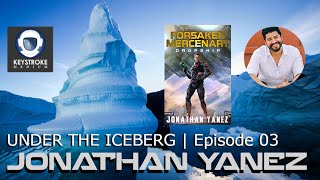
In this episode of the Under the Iceberg podcast, hosts Dean and James interview indie author Jonathan Yáñez. The conversation recaps Yáñez’s nine‑year writing journey, emphasizing the importance of embracing hardship, building iron‑clad will, and turning hope into concrete strategy. Yáñez shares practical habits—cold showers, cutting morning coffee, and weight‑loss goals—that reinforce discipline. He stresses dreaming big while maintaining daily consistency, and highlights the power of a supportive reader community (the Wolf Pack). The interview chronicles his financial growth from earning $0.70 in royalties to negotiating a potential seven‑figure traditional publishing deal. Yáñez discusses his current series—urban‑fantasy “Hunters for Hire” and sci‑fi “Forsaken Mercenary”—and reveals a direct‑to‑consumer sales model via his website (jonathan‑yanez.com) as a hedge against Amazon’s 70 % cut, while still leveraging Amazon’s platform. He underscores long‑term perspective, encouraging writers to focus on what can be achieved over ten years rather than a single year. The episode closes with gratitude, a teaser for the next guest, and a light‑hearted sign‑off.
Chapters
Hello, hello, hello.
Hello, mediums. Welcome to Under the Iceberg. My face should be appearing on screen any moment for those— hello— watching the live.
There it is.
Today we are joined by the Jonathan Yáñez. Make sure I pronounce your name right because others have pronounced it wrong in the past. Um, you'll notice on the—
on the YouTube, what's the worst way we could pronounce it? I put it in the—
yeah, How have people pronounced your name in the past, Jonathan?
Oh, everything from, you know, Yanez. I probably get like Yanez a lot. It's actually Yanez, but Yanez is a popular one. I even think like some people, because I have a tilde mark over the end, that's how it's actually spelled. A lot of people don't know how to type that on, you know, the keyboard. So I just have tried to save them that headache and just went with the N instead of the enya. So I've gotten everything that you can imagine. But yeah, technically there's an enya over the end, so it's pronounced Yáñez.
Well, I did you a solid and I did look up how to do that, um, on the keyboard, and so I threw you an enya on the YouTube, uh, title. So hopefully that doesn't screw up the searching, um, for this, for people in the future looking up Jonathan Yáñez.
Thanks, man. No, I appreciate you going the extra mile.
I was listening to a podcast you did a while ago and somebody was like, and now introducing Jonathan Yanez. And I was like, nope. That was funny. Well, anyway, welcome to the show. For those of us joining us for the first time, this is Keystroke Medium's Under the Iceberg, the show where we dive under the surface of authors' careers to find the keys to their success. And we're going to plunge beneath the facade of success to resurface with the will to survive. So, um, Jonathan, we're very interested to hear your story. You've had a very interesting author journey, um, and I don't want to say it's culminated, but you're— you've been doing some really cool things, interesting, uh, really cool, interesting things that, um, I want to get to later in the show, uh, for people that don't know. But, um, James, why don't you take it away with our first question today.
Sure. Well, I didn't want to miss the fact that Dean is on a baby timer. So if at any point he— his phone goes off or the, uh, the wall behind him, like, yep, disappears, there it goes. Um, you all know why, bringing another special human into the world.
So we're definitely going to, um, yeah, not me, but my wife will be bringing another human being.
It's an important part of the process. I think at this point, you know, you know about the two fingers, not three, right? Because she'll break your hand.
So yes, yes, yeah, this is, uh, son number three, yet to be named. Uh, so I don't want to say we've got everything, uh, under control because, you know, like, how much can you control these situations? But at least we're aware of, like, the signs to look for. So yeah, if you guys see me or, um, or if I drop out of the audio, that's why.
Congratulations, man. That's super cool. You said you haven't named your third son yet. Are you waiting to meet him?
Yeah. So we had a name board with like 7 names written down and one of my sons is old enough to read, so we let him circle like names that he liked. And then I circled names that I liked and my wife circled names she liked and we kind of narrowed it down to 3. And then I showed my son who can't read and I kind of went through the names and he was like, I hate that name. That name's dumb. And he only likes one of the names on the board. So, um, so yeah, we're, we're gonna wait until we see him and then kind of go with one of those three names that we, we have left on the board here.
So that's cool, man. This is exciting. Congratulations.
Thank you. Thank you, sir.
Well, Jonathan, I think, um, you know, I think a lot of folks, um, are familiar with your work, but do you just give us a, a quick background, um, for someone who might not be familiar with with you and kind of where the work you started on or where you'd want someone to start with your work and then where you are now.
Yeah, so let's see, I've been writing now for like 9 and a half years. So everything from primarily it's science fiction and then some urban fantasy in there too. So probably the biggest series on the sci-fi side is Forsaken Mercenary, and then there's some Gateway to the Galaxy too. And then in the fantasy side, it's Hunters for Hire. And then probably the Elite series as well. So I understand the thought process and a lot of people have told me like, oh, if you want to make it as an author, you have to only write one thing. If you want to make it and build a following, you can only write sci-fi or you can only write fantasy. And I do think there's some truth to that. I think like if you are a sci-fi writer and you only want to write sci-fi, then that's your brand and that's what people are going to follow you with.. But I just want to write to be happy because it makes me happy. And I don't want to be told I can only write one thing. So I've bounced around all over the place. And I think because of that, the following and the community that has risen up is kind of like the best of both worlds. So there's a ton of people in our group and in our newsletter who only want to read, you know, the urban fantasy stuff. And then there's a ton of people who only want to read sci-fi, but they're there together. And every once in a while, I'll get somebody who will cross over. They're like, hey, I don't usually read sci-fi, but since you wrote it, I gave it a shot. And they find out too, because I try to write character-driven stories, that it's almost like the setting takes a back, um, to the character. I always think of like Wolverine, who's one of my favorite characters, because he's lived in so many different times, right? You read stories about him fighting in Vietnam and then stories of him fighting in the Civil War. So it's almost like all that though kind of takes like a backdrop to the character.
Right, that's awesome. And folks want to— your group is the Wolf Pack on Facebook, right?
Yeah, so if you type in Jonathan Yáñez's Reading Wolves, you'll be able to find the Facebook group. And then yeah, we just call each other the pack.
Nice, nice. So, you know, when we think about as you're moving around among different genres, it sounds like you've definitely learned a lesson there in focusing on character. I've heard you say that, you know, some of those, those first books didn't perform or didn't sell, if that's the metric of success, you know, as well as you would like. And are there some lessons or maybe what you call failures early in your career with those first books that you shifted to move into where you are, you know, now?
Yeah. So I think, so I've been writing for about 9 and a half years and I would say only maybe for the last like 4 to 5 years now, if we're using sales as a metric of success. Have I found, you know, kind of broken through and found success. For the first 5 years, I was just like falling on my face, you know, making every mistake that I could in the book. And some of the biggest mistakes were probably, you know, doing my own covers, doing our own covers, 'cause we didn't have any, I didn't understand what covers meant. I didn't understand where to go to look for a cover artist, right? Same thing with editing. I didn't understand the importance of going out and finding an editor to look over your work and a beta team and how all that worked. So yeah, lots of, I mean, pretty much every mistake that you could imagine, I made it in those first 5 years.
How were you made aware that like you needed an editing pass or you needed better covers?
Yeah, so I think sales kind of told me that. So I would, you know, put a book out and it wouldn't do very well. And then I'd have to try to start figuring out why did it not do as well as I wanted it to do. And then, you know, just reading articles and, you know, watching shows like he stroked Medium. And, you know, Google searching, you know, how to be a successful author. So all those things kind of led to like, oh, okay, well, I need professional covers, I need a professional editor, I need a plan. I can't just like write a book and throw it into the void and hope for the best. That's not, you know, a whole lot of planning involved in that at all. So doing strategy with like, yeah, like with ads, uh, through, you know, Facebook ads and Amazon ads and putting all that together.
I mean, something you just said that I, I really, um, appreciate about you and my impression— I mean, this could not be the case, but I think it is the case— that you're very genuine. Look at that horn, man.
Yeah, there's a stand for it off screen.
I mean, it seems like you've been— you're, you're, you're not afraid of asking questions, even if that question might be a very basic question like, hey, let's Google how to make a book sell. Um, that you do what you got to do in order to move ahead. And is that something that you've learned, or do you feel like you've had that? And if you had it, did you learn it from someone else?
You know? Yeah, I feel like I had the mentality that this is going to work. Like, there's no option besides this is going to work. One of my favorite quotes is, it's not over until I win. And I used to think that that quote sounded very arrogant, right? It's not over until I win. But all that means is that you're just not gonna stop trying until you win. You're not gonna quit, right? So if you have to try 1 or 10 or 100 times, you're gonna keep on going until you win. So I feel like I've taken kind of that approach with my career and I don't think I would be able to put it in towards back then, you know, year 1, but year 1, all I knew was I wasn't gonna give up. This was gonna work. And I think now in year, you know, 9, almost 10, now I could put some better words to it. Like, every no brings you closer to a yes.
I like that. And I think that you've also made some choices, like, say, with collaborations, or I'm trying to think of the timeline exactly on different folks you've collaborated with. Were those earlier in your career when you were looking to learn things, or did you kind of, like, move to different collaborations to kind of promote your own work, or, you know, if you had something you wanted to learn out of that collaboration? Um, was that a choice you made along the way, and would you say those were good choices, or would you not do that again?
Yeah, yeah, yeah. I think you hit the nail on the head when you said, um, I wanted to learn. So I was collaborating maybe like in 2017 and '18. I think that's when I did some collaborations, and I just wanted to learn to see how I could fill out my game. Like, I, I know what I am and I know what I'm not. So knowing thyself kind of makes me realize, okay, you're strong in X, Y, and Z, and you're lacking in A, B, and C. Well, how can I get better? So just, you know, talking and surrounding myself with other people in the industry and then seeing if they're willing to collaborate and then seeing what I can learn from them.
That's a time, uh, do you remember, I think, I think I remember who you were collaborating with back then, but at the time, do you remember like what were you hoping to get? Those relationships and did you get that or did you get something else entirely that you weren't expecting?
Yeah, so I just wanted to learn and I feel like even if I could learn like one or two things, take away from somebody I collaborated with, that was enough. Like I've had this mentality that even if I could get 1% better with each book, then that's enough. That would be fine. 'Cause I'm willing to put in the work and I'm willing to write 100 books to be 100% better. So I was thinking like that same mentality with other authors. Like if I could just learn one or two things that would help elevate my game, that that would be enough. One thing that I learned, because I had no idea like what percentage or how many of the other author's fan base might come along with me to come read my books. And then that number is super small, by the way. If anybody's listening and is wondering like, oh, if I collaborate with, you know, maybe an author who's at that next level, who I see as like that next level ahead of me. If I collaborate with them, oh, I'm going to get, you know, 100% of their readership. The hard truth, boys and girls, is that maybe 10, maybe 10% of their readership will actually, you know, follow you and invest time into join your email or your Facebook group or going on to see what other books that you've read. So if you're thinking that you want to get in a collaboration with somebody because you're going to gain their audience, don't do it for that reason.
Yeah, it's been my experience as well.
Not that—
and not that it's not a positive thing to do, but I think it is good to have a goal going in. And then one thing, did you, as you went into collaborations, did you always think of the fact like, I'm only going to do one series in this collaboration, or just kind of take it as it goes? Or, you know, how did you think of that, about that, like an end state kind of thing?
So I, I tell this to my own people that I have published and I have collaborated with also in the past, I feel like the end game for me working with anybody is that they should be able to write their own work. I don't want anybody tied to me forever. Forever is a long time. Right. So not that I don't enjoy working with other people, but I heard a quote that said, you know, good mentors want to keep you under their wing. And great mentors want to see you fly. So I mean, let's just talk about like specifically, so I wrote with an author named Ross Bazell. And we did a series called Legends Online together. But after we did Legends Online, I was like, dude, I've got nothing else to teach you. It's time for you to go. It's time for you to spread your wings and be your own person. Like, that's the future. The future for you is not my name and your name. The future for you is just your name. So he's writing his own series now called Legacy Earth. And I'm publishing it for him because he asked if I would still help with, you know, the covers and the editing and all that kind of stuff. So I said, sure, but you'll see it's all his writing, and it's only his name on the book. And then as I go forward in my career now, I'm not really looking to, to try to build a publishing empire where, you know, I'm trying to publish, you know, 10 or 20 or 30 or 40 authors. And that— not that there's anything wrong with that, because there's a lot of people who do want to do that, and I think that's great, and they are very successful at it. And I say, you know, good for them. It's just— it just wasn't my path. My path, I've seen very clearly, and I understand what my path is.
Yeah, you like pushing birds out of nests, it sounds like.
Right.
What would you say has helped you determine that path? You know, one of the things you said there is you've been very aware of your strengths and your weaknesses. Um, is there any sort of like maybe experiences before you even started writing, or the fact that, um, you know, you and your wife Jennifer are in this together, and that maybe that pushes you to have some more defined goals? Or like, how do you approach that piece of it so you know what your plan is?
Yeah, so what I've kind of seen is authors who maybe figure out a portion of the industry, like how to sell, uh, books or audiobooks or whatever it might be, And I almost correlate that to like, okay, they figured out how to hunt. They figured out how to hunt deer really well. So they're just going to go hunt deer over and over and over, you know, produce book after book after book. And again, there's nothing wrong with that. They're doing super well. They're doing really well for themselves. But for me, that's not fun. I don't want to go just hunt deer and push out books and do the same thing over and over again. I want to go hunt dragons and werewolves and unicorns, and let's go figure out how to get those mythical beasts. So for me and Jennifer, my wife, who is the CEO of our company, both of our companies actually, she's the CEO of our publishing company and of our production company. But we've kind of talked and I've told her like, hey, let's not just once we reach a summit of a mountain, let's intentionally put ourselves at the foot of another mountain to climb over and over again. So once we got into like the foreign market and we figured that out, instead of doubling down there, we went into doing our own audio. And then doing our own merchandise and then in-person meetups and then film and TV. And so we've just kept on growing and growing and growing and just intentionally put ourselves in uncomfortable positions and realize that like, hey, once we have figured out something that works, yes, let's continue to do that. But what else can we go learn?
Well, I think also you've been successful in an industry that just changes continuously, and it kind of sounds like you're telling the story of adapting to change, you know, all the time, and your philosophy is maybe helping you do that, you know, since you're not resting back on a system that worked, it's time to go look for some other things because you never quite know when that foundation beneath your feet is gonna shift, you know, and go some other direction.
Yeah, for sure. I think the industry changes a lot, and I think if you have an entrepreneur— entrepreneuring mind, that, that will help, um, And then also, you know, I feel like perspective helps too. Like, I think we've all privately or maybe publicly been through different things in our lives that have been tough. So I feel like anything that happens within the book industry, like, you know, I'm super grateful for my family, they're healthy, put that in perspective. Super grateful to have a roof over my head. Super grateful to have food that I can put in my stomach in the morning. So anything that may or may not happen in the book industry, we'll figure it out.
Yeah, you know, you touched on something there, Jonathan, that I wanted to ask you. What maybe failures or challenges outside of writing have you gleaned from that you're then bringing into being an author and a publisher?
So my very first job, I'll never forget it. I was like 15 years old maybe, and I was helping a guy from our church He was a professional mason, so, you know, bricklayer. So I was looking for work, 15, you know, trying to save up for my first car, looking for work. So he's like, hey, I have a job if you want to come out and do it. And I was like, yeah, for sure. So my job for him was to make sure that he had all the bricks and the mortar that he needed as he was laying the bricks. So that means all day, every day. I think it was like 2 weeks before I quit. All day, every day for 2 weeks. I would just mix mortar and then wheelbarrow the mortar over to him and then just haul bricks over to him. And then that's all I did. So I've understood what real hard work is. What I'm doing with like telling stories and writing books in the comfort of my own office when I wake up in my pajamas and coffee in a warm house is like nothing compared to the work that a lot of people do So I think, uh, in life I wouldn't call that a failure, but definitely a learning experience. I've had the opportunity to work hard with my hands and do manual labor, so I understand what hard work is. I'm not saying writing is easy, but I will say writing is easier than hauling bricks and mortar for 8 hours a day.
Yeah, nice. I like that. I really appreciate that perspective.
So put—
like you said, you keep coming back to this— putting yourself in uncomfortable positions And that kind of contextualizes your life and your outlook on things. And then using that mindset going forward. So thank you.
I like that. No, yeah, for sure. I definitely think that there's something broken in my mind, because I try to make myself suffer as much as possible. So it's funny, like, when people, you know, I see other authors saying, like, you know, having meltdowns over getting bad reviews or being rejected and stuff. Stuff like that, or getting up all in arms because somebody was mean to them online. I'm thinking to myself, I just put myself through a murderous workout for an hour, waking up at 5:00 AM. I love coffee, so I stopped drinking coffee just because I liked it too much. So I stopped drinking coffee and just always looking to be stronger and better and make life harder. So when things do come along, like a bad review, I'm just like, this guy couldn't do anything to me or tell me anything I'm not already telling myself in my head when I'm working out at the gym. Or like working on this next product.
Like I'm the hardest person on myself.
Interesting. Nobody else can hurt you because you're the hardest one there.
Yeah, exactly.
One thing I am curious about. So when you said you left that hard physical labor job, and I think there's also a story you've told before about when you left your job to jump in with both feet into writing. Can you talk about the decision where if you felt, where did you feel you were failing at those things or just feel like I've put enough energy into this, it's time to do something else. I've only got so much energy. It's not quitting so much as it's time to go do, try something else. Is that kind of how that thought process works for you? So it's, you know, we keep saying the word failure, and I don't want to make it sound like we think Jonathan failed all these times. Like, that's not what we're doing. We're thinking, we're trying to kind of dig into, you know, so other folks can, who might be in the same situation, could maybe use that same thought process to help them. You know, it, have you walked through that or have you, you know, thought about that a little bit?
Yeah, so I think I wouldn't use the word failure. I would use the word joy. So when I decided to leave my job, I'd been working there for 5 years at Enterprise Rent-A-Car. I was underground at the John Wayne Airport renting cars. Couldn't see the sunlight, right? Because it's an underground structure, just breathing in all the exhaust and fumes, just like these long days. And I would just think to myself, like, is this why I was created? Is this why I was put on this earth? Is this what's going to bring me joy? And for some people, maybe it does. And I say more power to you if that's what you want to do. Go for it. Like, you be you. But for me, I almost got to the point too where I was seeing what my boss did and I didn't even want my, the position that was gonna be next if I stayed. So I'm like, what am I doing here then? Right? I don't enjoy my current job and it's not like that next level. If I got a promotion, I would really love and enjoy that job either. So what am I doing? So I just quit my job. I didn't tell my wife, talked to my wife afterwards, but whoops. Yeah, I wouldn't recommend that one. Quit my job and then I cashed in my 401k. And then, you know, I needed to bring in money in the meantime. So while I was writing, working on my first books, I started personal training at the gym. So part-time personal training, part-time writing, and just grind it out and paid my dues. And then in 2018, I would say was like the big breakthrough year where things started moving and money started coming in. And then in 2019, my wife was able to leave her job and come to work for our company full-time. Awesome, Jonathan.
Um, one thing we've been asking, um, guests in the past that I'm just kind of curious about, um, just a simple question is how many unfinished, uh, trunk novels, or even just like trunk novels that you didn't get to publish, do you have? And like, how much did you have to sink into this before you felt like you were publishing ready?
I think that there's only one. I think there was one, like, there's lots of short stories, but I can think of one full-length novel that I was writing while I was at work. And then I don't even think I have it anymore. I think it got lost in the transaction or old email accounts or whatever. But there's one novel there, and then there's two novels that I have yet to publish, but I plan on publishing them.
Are they older or are they, uh, stuff that you've had in the chamber for a while?
Yeah, maybe stuff that I've had in the chamber for like 2 years. It's like within 2 years I've written them and just waiting to release, but only one that, you know, I don't think I'll ever release because I don't even know where it is anymore.
If you had it right now, uh, do you feel like it's up to par or like or are you kind of glad it's gone?
Oh no, I mean, I can't imagine that what I wrote, you know, almost 10 years ago would be what I'm writing. I hope not. I hope what I wrote that long ago is not what I'm writing today. So no, probably, I mean, if I did publish it, I'm sure it'd have to go through like major rewrites.
One thing, uh, you mentioned we asked character, are there— oh, sorry, Floyd, I think I lost you. Dean, can you hear me? Yeah, go ahead, man. Okay, now you mentioned, um, like really learning to focus on character. Is there anything you think that has, you know, other lessons you've learned about the craft side of writing as you've, you know, those, those previous books to what you're doing now? And, and maybe what happened in 2018 that, you know, things changed as far as your writing process that started selling?
Oh yeah, for sure. So I found my voice in 2018. There's like that mysterious— which is weird too because a lot of writers have talked about finding your voice, but they don't really tell you how to do it. So it's like this just like mysterious like entity that comes and consumes your body at some point. It's like, oh, you got to find your voice. What does that mean? And then they move on. They don't really talk about it. So what I— The Rock actually taught me like what that means, right? So he was in a movie. I forget which movie it was, but he says like basically when he's on stage, it's who he actually is, but dialed all the way up to 10. And I was like, oh, so it's my— who— what I sound like already on a day-to-day basis while I'm writing, but it's like the best of that. Like, then turn that all the way to 10, and that's your writing voice. So for me, my writing voice is a lot like Tony Stark and Drax the Destroyer having a conversation. That's like, in my head, that's what comes the easiest. That's like who I am. So I don't try to fight that anymore. I just try to amplify that.
What do you think was the light bulb moment there for you back in 2018? Um, the light bulb moment that helped me find my voice, or that, uh, yeah, so you, you said you, you heard The Rock speak and you're like, oh, ding ding ding, and then like, how were you able then to then plug that into your own, your own writing?
I think I just leaned into what I was already doing. Like, I stopped thinking of things that, oh, I should do And if I was having fun and I thought stuff was funny or silly or whatever, I would just keep on going. I would just, you know, turn that dial all the way up to 10 and then just keep on, keep on writing, having a good time.
So also still having fun with writing, cuz like, I don't know, I feel sometimes like writing can be the hardest work. Like I would rather move bricks, um, than try and write sometimes. But, um, finding, you know, making it fun like that sounds like, um, just awesome. Like there's projects I wish I had that lesson cuz like, yeah, I lose it and then I try and find it again, you know?
Yeah, if I'm ever having a hard time, uh, writing, it's because I don't know what I'm going to write. So, uh, Stephen King taught me about the boys in the basement, which is your subconscious. And that goes back to every night before I go to bed when I'm going to write the next morning, I go to bed thinking about what I'm going to write the next day. That way my subconscious can work on it while I sleep. And that way when I wake up at 5 AM, it's— I already know what I'm going to write. I don't have to like look at, stare at the screen and just, you know, sit motionless thinking like, oh, what's going to happen? I already know. I can already see it in my mind. And then it's the easy part, just getting it down on the keyboard, just getting it out.
What failures have you made in the past in the writing craft itself, like genre, prose, characterization, that you were able to learn from and, like you said, kind of amplify those, the good parts in your newest works?
Yeah, I think a big learning lesson for me, so when I was getting into sci-fi, military sci-fi was, is a big genre within sci-fi. So I went into military sci-fi not having any military training myself or the background in that, and I thought that I had to write, you know, military sci-fi to be successful in sci-fi. And what I realized is the military sci-fi readers, many of them, you know, really want dialed-in, you know, tactics and terms that they're used to here on Earth. Earth. Yeah, that's a weird thing to say, that they're used to here on Earth, but, you know, used in these sci-fi novels on other planets. Yes, right, right. They want the ranks and the insignias and all that kind of stuff. And for me, I don't know if you guys know this, but I don't do any research for my books. I try not to. I don't really like doing research. For me, research is not fun. I'd rather write. So I try to do— if I have to do any research, it's super minimal. But to be able to write good military sci-fi, I feel like you've either had to be in the military or willing to do that research, willing to find all that, right? So that's a big transition that I made. I decided to, instead of trying to do military sci-fi, now to play to my strengths. So I tried to write Gateway to the Galaxy, which was more military sci-fi. But then when I wrote Forsaken Mercenary, I was like, what do I love? I love and I know superheroes. So what I decided to do with Forsaken Mercenary is it's a private organization called Immortal Corp. Who did experiments on people trying to turn them into like assassins and super soldiers. And I was like, yeah, that way I don't have to have, you know, the heavy military sergeants and corporals and all that. They could just be people who are being experimented on to be, you know, these like weapons, almost a little bit like Jason Bourne, right?
So you kind of found a creative way to kind of have that same kind of feel of a person who— a character that has that experience and that expertise but without actually having to do the research.
I like it.
Yeah, yeah, basically. Awesome. We're taking notes as we go because we'll share all these at the end, so that's why if you see— so another thing that it sounds like changed in 2018 as well is kind of, or probably at least the author business got a little more serious as you started selling more and needing to make, I guess, decisions based on like sales for certain books or choices on what you're going to publish later based on how a series might be doing. Um, do you see any mistakes or failures made during that time that you would not repeat going forward, or you would, you know, definitely advise someone to do differently?
Oh yeah, so like early on, uh, I was writing trilogies. I didn't understand the business behind the value of writing a longer series. And now I do like the easiest way. My wife explained it to me because she breaks down all the numbers. She does all our advertising for us. So she's saying, you know, what's— how much does it cost to get a reader through advertising? How much does it cost to get a reader into book 1? So for us, it's like around $4 or $5 that we need to spend in advertising money to find a reader, put them in book 1. And then if they read, you know, books 2 and 3, then you start making profit. You're making profit on that consumer consuming your books. But if they only— if there's only like 2 or 3 books in the series, then that's it, then they're done. And then you have to, you know, find a new reader to spend another, you know, $4 to $5 in advertising in to plug them into book 1. So instead of writing, you know, trilogies early on, I would have done long series. So I learned that, um, with Forsaken Mercenary, we made a big shift. So Forsaken Mercenary is 12 books. And now as I'm writing Hunters for Hire, that one's going to be at least 24 books. And then when I do the next sci-fi series, yeah, at least 24 books, because I understand the value now of being able to advertise to a reader and get them interested in book 1. And then it's my job as the author to make sure that they're engaged and happy with the story and that they're on reading 2, 3, 4, 5, 6, and on.
So from a business standpoint, um, the book one is, is from a profit— looking at it from a profit, uh, perspective is like a loss lead, and then you're kind of pulling them in, and then if they like it, then great, they have a whole ton of more material to read. And then that's where you're actually growing your author business, is those later books.
Yes, exactly. And then also, you know, building the community where they can come, whether it's the newsletter or the Facebook group, And then with the community having like events where we go and hang out together or different, you know, merchandising items that they can purchase that goes along with the series that they're reading.
Yeah. You know, one thing I've really enjoyed about your community in particular is it's kind of an oasis on Facebook. You know, it's a— there's a lot of positive energy. People are really positive about, you know, they share positive stories. Is that something that— I mean, I could see that definitely just coming out of your work. But is that something you've had to put a little effort into, or how do you feel about that? I mean, I think it's something you want, but—
Yeah. Yeah. No, thanks for saying that. I feel like it's kind of cliché, but, you know, the Field of Dreams, if you build it, they will come. So I think I, I definitely wanted to try to build a platform and a following, and I didn't know that it would take on a life of its own like it has. So unintentionally it's taken on, you know, this life of its own, but intentionally I was trying to build it. And I think, you know, just if you're raising your banner out there, that other people over time, other people who have the same banner or similar banners will start grouping, you know, together and finding like-minded people. So it's been really cool to see the community grow and it's been really humbling to see, like, in our last meetup that we did in November, people flying in, like, willing to fly in from all across the country to come and just hang out for a day. That was, that was something that seemed surreal. I think if I think about it too much, I'm going to start crying, but it didn't seem real to have all these people. Yeah. And to unintentionally start, you know, building this platform, this community, where they're friends with each other now. Like, they're like literally like calling each other on the phone. They've exchanged phone numbers and they're friends and they're sharing life together.
That's awesome. So it wasn't so much a like, hey, a meet and greet with Jonathan, but this was like a group of friends just getting together to hang out.
Yeah, yeah, for sure. I try to make it as least about me as possible. So like when they came out, I took them out to lunch and then we went ax throwing. And then we had dinner, and then I rented out a movie theater for them to watch the latest, uh, Marvel movie so we could have like that experience together. Nice.
Oh, that's awesome. You know, one thing going back to the craft piece, I guess I wanted to jump into this. Now, when you talk about you are kind of discovery writing, you know, writing what is exciting to you, um, how do you match that up with the idea of these long series? Are you— is that pushing you to do a little more of like beats of where the the series is going to go, or are you just kind of going with the character and, you know, what— where the character wants to go is where you take those, those series?
Yeah, I try not to do any outlining or planning, just seeing like where the character goes. But what I have realized is that there are, within the much larger arc— so usually the much larger arc for me is character-driven, it's the story of our character, what he or she is overcoming in this series. But then within that much larger arc, then I try to do smaller arcs, and the smaller arcs for me are the villains. So like I could do like a 4-book arc with one villain, and then, you know, they defeat or overcome that villain in 4 books, and then there's another villain or a new baddie that pops up, and then they have to overcome and defeat them in the next 4 books. So that's what's been working for me. So overall arching theme is the characters, and then the smaller, uh, themes within are the villains.
Are the villains. That's a really great way of looking at it. In the comments, Kit asks if there are any diminishing returns from long series. Are you seeing people be put off if it's too long, or is this still kind of an experiment in progress right now with your audience?
No, I mean, at least not that they're telling me. Like, if they are put off that it's too long, I haven't seen any of that feedback. Everybody seems super happy, and then the books have been selling well, so I haven't seen any diminishing returns.
That's great.
What is—
can you tell us about a time when you thought about quitting writing?
You know what, not to sound like cocky or full of myself or anything like that, but it just was never— it's never been a thought. It's never been an option that I ever gave myself. I've always just been fully committed to it. Like this was going to work. There's no, there's no going back. Do or do not, there is no try. Like, this was going to work.
Where do you think that mindset comes from? Was that taught to you from maybe your parents, or—
I don't know. What's funny about this, there's a funny story. So, uh, the question that you asked, I was at lunch on Wednesday a few days ago with somebody who wants me to write their script for them, a screenplay, right? Because I'm writing scripts now too. But, uh, he was at— we're having a similar conversation. He's like— and I was telling him, I was like, I just, you know, wake up early, just like driven, gotta go, gotta exercise those demons. He's like, what demons, man? He's like, what demons are you trying to exercise? Where'd you get all these demons from? I was like, I don't know, I just got a lot of like get up and go. So like, to answer your question, like, I don't know. Like, I mean, I, uh, my parents definitely taught me growing up like the value of work but I can't ever— I mean, they told me I could be whatever I wanted to be. Like, maybe that plays into some of it, but I just feel like I have this, um, burning fire inside of me to do and to create. I feel like that's the reason I was put on this earth. You guys want to get super deep?
Let's go, dude.
Under the ice. All right, so this might seem kind of crazy. You guys might not think it's kind of crazy, but I have a theory that as writers maybe we're put on this earth and we're able to tap into these stories that other people need, but they necessarily can't tap into. So these stories of adventure and hope and struggle. So maybe we're put on this earth to give people that hope. And maybe we serve a much greater purpose for everybody. So it's almost like we're lightning rods, we're lightning rods channeling into these stories that other people need and want. But maybe necessarily they can't tap into. It's because of our writing, they get to share in it too. And it's like a give-give, right? Because if they weren't supporting us, then we wouldn't be able to do this and then, you know, make some money off of it and be able to provide them with these stories.
So if I hear you right, Jonathan, you're saying that you're getting up and writing every day not just because it's fun, but because you almost feel a sense of obligation that, like, I gotta get these stories out in the world because there's like no one else can write the story that I'm going to write. And there's people out there that need to read this.
Yeah, so for sure it's fun. Don't get me wrong, like I'm having a good time doing it, but I've received just so many different stories and emails and stuff like that over the years of like people. So one story that I remember is there was someone who lost their grandfather and they went to their grandfather's service, super close with their grandfather, came back and they were just wrecked. And it was the same day that my latest book came out. So I mean, that's not me. I didn't plan that, that my book would come out on the same day that this person needed to escape and some relief from, you know, the pressures of life. Yeah. And she was able to lose herself in that book and she was laughing, having a good time. So I feel, um, I don't know if it's— I don't even feel like obligated because I have fun. Like, obligation to me doesn't necessarily mean fun. Like, I have to have fun doing it anyway, so it doesn't really feel like obligated. I'm just having fun. And, you know, these people are supporting me with their dollars and being able to purchase these stories. And hopefully I'm able to give them some light in life in a world that's sometimes dark.
Awesome. I don't think that's crazy at all, actually. I mean, I live in Oregon, so you can talk about like woohoo energy coming back to you and you put things in the universe and that will come to you. And I don't have to smoke weed to get into that. But I think, you know, that is a great way of looking at it. And you look at like even to apply numbers to it, like during a recession, Kindle had, you know, the Kindle store had very resilient numbers because it's one of the last things that people let go. Even when life is really terrible, like the opportunity to read stories and feel good and, you know, kind of get away from your, the reality of your situation is something that helps a lot of people out, I think. And, you know, the value you get for a book,, is, you know, way more than what it actually— I guess that's the thing about the movie industry. Movies are much more expensive than books, but, you know, when it comes to buying a movie.
But no, I absolutely think that's a, that's a really positive way of looking at it. You know, to quote Uncle Ben, with great power comes great responsibility. Jonathan, how much of a responsibility do you feel, you have in your writing? Because it's like, like James said, you know, you've cultivated this community intentionally, but then now it's taken on a life of its own. And how much of a responsibility do you feel to include certain or omit certain themes in your writing?
I think I got to really think of myself as a very responsible person in general. I got me right, like quitting my job, right? Quitting my job, just cashing my 401(k) and doing this. And even like risks now that we take in the business, like, you know, doing our own TV show. Like risks that we'll say, you know, sane people wouldn't do, hopping into a new, um, entertainment industry and all that kind of stuff. So I don't know how much I really feel like obligate any obligation or anything like that. Like, I'm just me, I'm just having fun, and I'm just telling these stories. I don't really feel like a sense of obligation. I'm just telling the stories that I want to tell, and the stories that I want to tell just happen to be adventure and hope and, you know, redemption and, um, stuff like that.
Yeah, awesome. Well, does that tie back into you finding your voice and really kind of telling the stories that are a reflection of you that you're interested in, you know, telling? And so people are kind of responding to that?
Yeah, I think so. And I mean, I feel like, you know, the world is a heavy enough place and there's enough darkness in it that I don't need to add to it. So I think by default, a lot of my stories, you know, like adventure and the good guys are going to win at the end. And yes, there's going to be loss. Yes, there's going to be sacrifice, but ultimately the good guys will win.
Nice. So speaking about risk, like, we have some questions about networking, which it, it's, it seems like you are— maybe you'll say no, this isn't the case— that, you know, you're an outgoing person, you kind of exude this positive energy that maybe draws people. Um, has networking played a big role in how your career has advanced and has that been hard for you or is it something that maybe is easy and so you have to make decisions about how you're gonna network or who you're gonna maybe collaborate with and things like that?
Or even think about it. Yeah. Yeah. So I say like, like early on, you know, in 2017, '18 when I was doing those collaborations, like that was definitely intentional. And have you guys ever heard of the saying that iron sharpens iron? Yeah, right. So I look for those people who I think who are, you know, driven and hungry and who, you know, maybe you don't hear from a whole lot but who are busy at work. So I look to those people to kind of, you know, um, not necessarily even collaborate with because now I don't— we're publishing, uh, Ross's books, but outside of that we're not really collaborating with anybody inside of like the writing arena. But, uh, uh, yeah, in 2017 and 2018 I was intentional about it, and now it's just kind of just been like It's just like, you know, all engines go. There's just been so many different opportunities coming from like comic books to writing TV shows and movies to doing our own, to doing our own TV show now. Oh, you guys, uh, you guys like Batman, right? Oh yeah. Do you remember, uh, Batman has— Christian Bale's Batman has the, uh, phrase, you either die a hero or live long enough to become the villain, right? Right. Yeah, you guys, I'm the villain now. I had a long talk with myself in the mirror. I'm like, oh no, because now I've reached the point where I don't necessarily need anything from anybody. Like, I'm the gatekeeper now. Like, people are asking me, like, to publish their works. And then even, like, when we're making the TV show, like, we're the executive producers, so we handle everything from, like, the actors to the director and everything like that. So I'm like, oh man, I've I, I've gone past the point of being the hero. Now I'm the gatekeeper because I remember, you know, 10 years ago trying to reach out to gatekeepers to try to get in.
Yeah, well, as you move into these new places, are there any steps you're taking to help like find resources to help yourself so you can make these decisions? Or, um, you know, because you try and network in these new industries, like that's all new people you got to interact with, right? And do I trust this person?
Do I not? Like, yeah, yeah, so that's a good point. That's a good point, James. So maybe instead of, you know, where I was in 2017-18, like networking and trying to collaborate with other authors. Now you're absolutely right. For the last couple years, we've been trying to network and collaborate with directors and producers and actors and stuff like that. So you're exactly right. Yeah, I didn't even think about it like that. This show has been so— it's like a therapy session for me. It's making me stop and slow down because I'm usually like, you know, so go, go, go, and like really think about what's going on.
Well, I think it's, it's cool that you've got these. You're right, you're at, you know, the top of every mountain is the foot of another, and it's a new set of challenges to apply what you learned from one industry to another one. And that's just constantly pushing is, you know, it's inspiring, but it's also kind of, you know, terrifying. So that's, that's a cool place to be all the time. I can see how it really, you know, it would draw other people to you, but then you gotta make decisions about who you wanna work with, you know?
Yeah, exactly. No, for sure. It's been a, it's been a long road, but it's been fun. And remember how in Lethal Weapon 1, I think Riggs sees like somebody who's about to jump off a ledge? Yeah, yeah. And he tells them that, oh, I'm gonna jump with you. Let's do it together. Yeah. So I'm that guy all the time. Like when there's like a new opportunity or a new investment, like there's people who would not do this at all. And you know, my wife's looking over the edge like, I don't think we should do this. And I'm like, no, let's do it. We should do this together. It'll be fun. That's what the— I mean, that's taken us down the road of figuring out, you know, foreign rights, to doing our own audiobooks, to writing comics and screenplays, and now it's being able to do our own TV show.
Jonathan, if you could, as a person that's, you know, working on a TV show, if you could go back into the past, say 10 years ago, and talk to yourself and say, hey, spoiler alert, these things are coming down the road, what would you— is there anything you would tell yourself, you know, different?
Or like, what would you tell yourself in order to get where you are today? Yeah, I would probably tell myself to risk everything sooner because I was in that job that I didn't really like for 5 years and it was kind of like one of those jobs. I don't know if you guys ever had an experience where, you know, that, that next promotion or the next step is always like dangled right in front of you. So it feels like, okay, I'm almost there, like a few more months or maybe even a year or whatever. I'll be there in that next phase, that next step. And then it was never coming. So I think I would've told myself, you know, to quit sooner and do this sooner.
Like, don't be afraid. Yeah, I've definitely had those jobs before.
Yeah. So. As you've been writing, has it been valuable to have more things that are in your control? So now you've got properties you can potentially do stuff with, you know, um, like it sounds like you really knuckled down and just wrote. I think you've talked about writing a book a month for a while, you know, just like building up that backlist. So you've got, you've got stuff to start playing with now that you're moving to the next level, right?
Yeah, so last year was the first year that I moved away from a book a month. So last year I only did 6 books. And then this year I'll either do 4 or 6 books. And that doesn't mean that I'm writing any less, it's just now, like last year I wrote, you know, 3 full-length movie scripts and then our pilot for what would— what ended up happening, and then, um, some comic books last year. So this year again there's more comic books, more novels, more screenplays and scripts being written. So I'm not working, uh, any less, I'm just, you know, channeling and looking to hunting down those dragons, hunting down those chimeras instead of just shooting the deer over and over again.
Nice. Jonathan, I've heard it said, don't prepare for failure, prepare for success. So in light of that, what kind of challenges are coming at your current level of success that you didn't expect or anticipate?
Yeah. A big one was when we were going through production for the TV show is the way that it works out, the way that we needed to file the paperwork is that everybody from like the cast and crew to actors to hair and makeup and wardrobe and everybody else needed to be employees of our company. So that was kind of like, you know, because up to this point, you know, we've had just a handful of us like assistants, editors, cover artists, it's, you know, just a handful of people who work with the company. And all of a sudden, you know, it's blowing that number up to, you know, 40 or 50 people at a time. That was kind of eye-opening and something that I didn't expect to have. And there's other things along the road that have really opened my eyes to how I can be used in helping other people. So Um, somebody that I worked with, uh, had some success and they were so thankful for that success and they were using that money, you know, to help their family. I won't go into details, but to help a certain situation with their family. And if they hadn't had that money that they got from us working together, they would— might not have been able to help them in such a way. So that's kind of like eye-opening too, because when I set out to do this, I just set out, you know, to write about guys throwing up in their helmets and eviscerating one another. I didn't really set out to have 40 employees or to hear these stories of how these funds working with other people are now helping their families. Wow.
Well, it's a new kind of stress too.
That's inspiring. Yeah. I almost want to do the Dumb and Dumber, and he's like, shh. Do that to them when they start getting too deep on me. I'm like, you know, man, I don't— that's a lot. That's some heavy stuff that you're putting on me. I'm just trying to write these crazy stories.
Want to hear the most annoying sound in the world? Yeah, I love that movie. That's cool though. That what I like about your story, Jonathan, is that you're pulling up other people with you. Um, you're not hoarding, uh, this information or this knowledge. Um, you're not touting yourself. It's about your community. It's about helping others. It's about providing readers with an experience that at the end of the day leaves them with a little bit of hope and like some relief, you said, from the real world.
So I appreciate that. Yeah. What's cool about— yeah. And what's cool about our community too is that for you to have the biggest building in the city doesn't mean you have to tear other people's buildings down. So I think for a long time I've just kind of, you know, kept my head down and just kept on grinding every day, 5 o'clock. I write 6 days a week, so I take Sundays off. So Monday through Saturday, 5 o'clock, whether I want to or not, I'm at the keyboard. Most days I want to, like, I won't lie, I like it. So I like suffering. Remember, there's something a little broken in my head. So, uh, I'm there writing all the time, and, um, I just feel like if I can help other people along the way, I will. And very quickly you'll get to see who's reaching out and actually wants to be helped, who's going to apply that knowledge, you know, put in the work, and then who's maybe not that serious about it. You know, they'll ask you some questions and they say they're going to do it, but then you never hear from them again.
Right, right. I think you've mentioned other places, and I, I've seen this firsthand, that consistency in this business is one of the hardest things. Like, someone will have a certain amount of success or one series that does well, but it's that follow-up, and it's the follow-up after that, and it's just keep you know, keeping at it is very difficult, you know. So are there any things that you've done to, you know, you talked about different projects that there's like a certain level of, I do this every day, you know, this is my process that I do to keep myself centered. And as soon as I feel like maybe things are getting a little too easy, I mix things up. Is that something that's been intentional? Or that, you know, you say that you just kind of do that naturally. But are there things that you do to help maintain your consistency by keeping yourself challenged?
I mean, I just tried to, uh, beat myself down daily as much as possible, as much as possible, from like, uh, you know, like working out 5 times a week. So I was, uh, I played a character in our TV show and I was, uh, 215, and I told myself Bob is like— I was trying to think of like the most generic, normal, everyday guy name you could think of, so I always came up with Bob. So Bob, I told myself in my head, he's 190, he doesn't weigh 215. He weighs 190 pounds. So I lost 25 pounds to, uh, play the role. So I think for me it's just— and that wasn't easy, it's not easy losing, you know, 25 pounds, as I'm sure a lot of people can relate to. But, uh, just finding new things to challenge me, like— and I use the coffee as an example. Like, I love coffee, so I was like, I love coffee so much, I just stopped drinking it. That'll be like another challenge that I can get through, right? So constantly trying to challenge myself so things don't get dull and never get boring.
And how long do you intend to go on without coffee?
No, no. So look, let me— let's set the record straight. Don't give me too much credit. I'm just not drinking it in the mornings anymore because my routine before was 5 AM, brush my teeth, drink some water, and then go get some coffee before I start work. Sure, sure. Now I save that caffeine intake for, you know, maybe like around the afternoon when I feel a slump, like around 1 or 2. Yeah, so yeah, yeah, don't give me too much credit, but who knows, maybe that's the next thing. Like, taking cold showers is another thing. I don't really like cold showers, but I know they're good for you, right? You know, doing stuff like taking showers. I couldn't, um, you know how Jean-Claude Van Damme always is able to do those crazy splits? Yes, yes. I'm gonna, I'm gonna start teaching myself how to do some splits. So I started, uh, um, like stretching and all that kind of stuff, adding that into my regular just like gym routine, and I'm almost there, guys.
You're almost able to jump and stand between— you got to get two semis, and I know you got some truckers that can help you out. You got to do the splits between the semis like Jean-Claude.
Yeah, yeah. So always, always keeping it interesting, I guess, like in my personal life and then also, um, in, uh, in my work life now, writing comics and screenplays and other books, like just keep being— keep on mixing it up, even to the point now where I'm taking boxing lessons So, uh, my wife and my daughter are both in karate, and I was like, man, I'm gonna get beat up sooner or later. These girls are like earning different belts and stuff like that. I got to learn how to protect myself. So I, uh, signed up for boxing classes, and let me tell you guys, that was like one of the most humbling experiences of my life. Because I go into the boxing gym and it's like, you know, not like a, uh, a chain, it's like a full-on like real boxing gym. Like they don't even have like flooring, it's just like cement floors that are like bloody. And I was like, oh my gosh, this is the real deal. So I, I go in and the instructor's teaching me basically like my first lessons were basically how to walk, almost like this is how you stand, this is your stance, this is you're supposed to be. And then all around, so we're in the ring working on this, and all around us are just like these animals just like, you know, practicing and boxing and stuff like that. So it was such a humbling experience for me just to be there not knowing anything and then start working my way up. But I think there's a lot of value in that And it's fun, it's fun. There's a lot of value and you get to learn and be humbled. And, um, I'm always trying to find those things, whether it's in business or personal life, that I can learn from and grow.
So putting yourself constantly at level zero in something.
Yeah, yes, intentionally putting yourself at zero so that way you can learn.
So, man, you better wear the big pad thing.
Yeah, it's so funny that you said that, James. So that was one of the, um, things that my wife made me sign in blood, was that if I were to go boxing, no sparring whatsoever, because I already have multiple concussions from like, uh, street racing, motorcycles, and jiu-jitsu. Yeah, so she's like, you can't afford any more concussions. She's like, if you do boxing, you do like learn and drills and stuff like that, but no sparring.
Concussions, uh, have been known to alter people's, um, personality, uh, going forward. So maybe that's where your indomitable will came from. So I'm probably gonna go hurt myself, uh, later after this.
You know what's so funny? I heard that too. I heard the same thing, that people who've had concussions, uh, their personality shifts afterwards. Yeah. So I wonder if that's might have been what's going on. Like, being—
it sounds like a funny, like a joke, but like, I've thought about that before too. Yeah. Um, yeah, I've had that firsthand experience. So with that, with, uh, my brother, that happened to him. So he became way nicer, which was awesome. So yeah, maybe I became way crazier. Um, so that's today's takeaway, guys. Go hurt your head and you will have success. Um, no, I'm just kidding. Um, So Jonathan, we're on the last few minutes of the podcast. We're winding down here. We've kind of skirted this topic and talked about it the whole podcast, but I do want to make sure to give you some time to say what you can of your new TV show that you guys have been filming. And then plug, after that, you can go ahead and plug where we can find your writing and stuff.
Yeah, so Infinity System is the sci-fi Western that we've been working on. It's in post-production now. So it's already pre-production, like setting up the crew and finding everybody and funding and writing the script and all that's finished. The actual filming was done last month, so that's finished as well. So post-production now and it'll be ready to show in May. And then without getting into too much details, because we haven't signed a contract for where it's going to land, whether it's like Sony or Netflix. Or Apple Plus. But we've been talking to different distributors with the hopes that they're going to see the pilot and then give us the funding to make the entire season, and then they can distribute it on their platform. So that's the hope. There have been distributors already, like, they're super excited to see it. They love the idea. So they know the pilot's coming. They've already asked me to write out, um, like 8 episodes like an 8-episode storyline so they can see where it's going, all that kind of stuff. So I mean, hopefully by, you know, May when it comes out and they see it, so maybe by like June, July, we can have a deal signed with a distribution platform, whether it's Hulu or HBO or somewhere like that, who will give us the money to be able to make the entire series.
Wow, that's really cool. Like, say, direct on your website where, you know, fans can go watch it or maybe pay, you know, throw you down some money to be able to watch it?
You know what, that's a good question. So we did this through— raised the initial round of investing through Kickstarter. So people who support us through Kickstarter for sure are going to get it. But I'm just going to admit my own ignorance to you, James. One of the questions I have too is like, so if this all works out, if Netflix gives us the $40 million to make the entire season, am I still able to show the pilot? Because a lot of— I don't know if they would own that and they would tell us like, hey, you can't show this pilot anymore. And then also a lot of times I've heard that what happens if they do pick it up for an entire season is that they'll reshoot episode 1. So then our episode that we shot might not even be canon anymore. So yeah, so for sure, everybody, yeah, everybody who, um, supported us through Kickstarter is going out to them because that was one of the perks that we promised them. But then after that, I'm not sure if I can just like sell it on my own or if I could show it to everybody or like where that all works with contracts.
Can I still contribute to the Kickstarter? I gotta go take a look. Kickstarter itself is a cool story. I wish we had time to talk about that because, I mean, you raised— I mean, as far as Kickstarters go, like, that's a wild success.
I mean, that's a really great story there. Yeah, it was. Um, definitely feel blessed. I keep on throwing out movies, but, uh, do you guys remember in Lord of the Rings when Boromir's dying and he's telling Aragorn and Aragorn tells them, I don't know what strength lives in me, but I swear to you I won't let the White City fall. Yeah. So when all these people are like supporting us and they're giving us the money and they're, you know, trusting us, I'm just thinking in my head like, I'm Aragorn now. They're Boromir dying in my arms and they're telling me you got to do this well. So I'm telling them like, I don't know what strength lies in me, but I promise you I won't let you down.
No, that's awesome.
Awesome. Very cool. Well, thank you, Jonathan. I want to do a little quick recap of my takeaways. James, I'll leave some time for you to do yours. Some things that stuck out to me were embracing suffering. You know, life's, life's kind of hard as it is, so you might as well embrace it and just get used to that. So I will probably go back to taking cold showers., and, uh, and maybe try not drinking coffee first thing in the morning because that sounds like it's helping you out. Um, and then you said, uh, stop thinking of what you should do and then just start having fun when you're writing. Um, I like that a lot. And then, um, uh, hope isn't a strategy. So just having a real game plan down, even if you have to pivot from that game plan Just remembering that, like, you know, hopes and wishes aren't, aren't going to make it in this career. You have to actually have a plan, put it to action, and then pivot when it doesn't work out.
Yeah, I think my, you know, the things that I'm really inspired by are dreaming big. I think having huge goals, not being unabashedly going after those goals, but then doing the work so that you have things that make those goals possible. I think that's definitely a piece of the story that Jonathan has absolutely demonstrated. So when you look at— it's not like this just happened today. There are years of work that led up to this that were, you know, years of not selling books but still writing books, and then years of selling books but doing the work to be in a place where, okay, if I'm— if I was selling, you know, soft drinks, now I have— I went from one brand of, you know, one flavor to 20 flavors, and now I've got all kinds of options because of all the— all this work I did. And the thing that seemed to make that happen was consistency, getting up every day, showing up, doing the work, but also challenging yourself when it seemed like that consistency was starting to slip a little bit. Because that gets hard. Like, I mean, at least for me, I can be consistent for like a week, and then immediately life starts getting in the way, you know, kids start dragging at you, work, whatever, you know. So finding ways to keep that consistency going, I think, is, you know, you really inspire me with that. So, you know, thank you, thank you. And then also the your, your reader group. For anybody that wants to see an example of what a really great reader group looks like, check out Jonathan's group. And the folks are so invested, and I think the energy is really positive, and it's just a fun place to, to hang out. Like, there's always— I don't come away from that group and the interactions there ever feeling like negative. Like, it's always kind of upbeat, and I've always really enjoyed that a lot. So, and I've left a lot of Facebook groups So, um, I appreciate that.
Thanks, man. Yeah, it's, um, I feel like just giving a word of encouragement to everybody. I don't think the question is if you can, I think it's if you will, because wars are won and lost in the will. So if you can just ironclad your will and buckle down, I know you could do it. I was thinking about before getting on with you guys, kind of like how long the journey's been. I remember our first month that we published a book, we made 70 cents in royalties. Wow. So from 70 cents, right, that number 7, now when we're talking to the entertainment lawyer about the film and he's going to help us with negotiations and all that stuff, he asked a question. He's like, well, have you thought about doing, you know, a book version of this? And I was like, yeah, I thought about doing it. You know, I already have my own publishing company. I know all the ins and outs of publishing. And he's like, well, if I could get you a 7-figure deal with a traditional publisher, would you consider that? And I was like, oh snap, we just went from 70 cents one month, you know, like 9 years ago to now all of a sudden talking about, you know, a 7-figure deal that this entertainment lawyer thinks that he can get for the rights to the, uh, making the adaptation. Um, so yeah, so I'd say just, you know, don't give up. I think people are too worried about what they can accomplish in one year and not worried enough if they kept on going what they could accomplish in 10 years. Like, don't put so much stress and pressure on yourself like it has to all happen in one year. Think of what you could accomplish in 10 years.
Long term.
Long term. I like it. Um, Jonathan, you have a couple of series out. Um, well, quite a few, but, um, uh, you have Hunters for Hire is your newest series, right?
Yeah, so Hunters for Hire. In a perfect world, I'd like to write urban fantasy and then sci-fi as well. So Hunters for Hire is the urban fantasy side, and then I just wrapped up Forsaken Mercenary on the sci-fi side, and I have a new sci-fi series coming out this year.
Awesome. And people can check that out on Amazon. And, uh, and sometimes you do, um, you sell your books like a day early on your own personal website, right?
Yeah. So amongst all the insanity, I wasn't even gonna do anymore. I was like, this is too much, this is bananas, I don't know what's happening into my life anymore. And my wife's like, no, no, no, we said we were going to do this, let's stay the course. Because what we had talked about is selling direct from our website. Yeah. So the date that we were going to sell direct from our website was in January when we're filming the TV show. And I was like, I've had enough, man can only take so much, this is crazy. I'm over here not drinking coffee in the morning, taking cold showers, trying to lose 25 pounds so I could play a character. And, uh, she's like, nope, we should still do it, we said we were going to do it. So in January we started a model where we sell directly from our website, and then after that's it's been out for a week, we pull it down from our website and then put it on Amazon. And, um, it's just all kind of like a conversation too. We appreciate Amazon, we love Amazon. I wouldn't be here without Amazon's help, but, uh, they take, you know, 70% of the profit, where if we were to sell from our site, we get closer to that 100%, right? And then, um, also, you know, I don't think that Amazon's ever going to kick me off or anything's going to happen to Amazon. Like, I don't think that's— if you ask me, do I think Amazon's going to implode? No. But is there a chance that something could happen, or maybe I get kicked off or something? Maybe. So this is also helping us kind of like plan for the future if anything did happen with Amazon. We already have a system and people are used to going to our site and buying our books there. And what is that site handle? It's jonathan-yanez.com. No, any— oh, okay. Yeah, no, no, and yes, it's jonathan-yanez.com on the book side. And if they want to see the TV show and movie stuff go inside.
It's, uh, wolfpackentertainment.co.
Awesome.
Well, thank you so much for coming on today, Jonathan. This has been a blast. It's always an encouragement to talk to you, um, and, you know, your, your enthusiasm is super infectious. So I enjoy the chats we've had in the past, and thanks for coming on today. Um, as far as Under the Iceberg goes, we have a show planned for the 26th The guest is to be announced, and if you are listening to this, guest, I'm still waiting to hear back from you. No, I'm just kidding. Um, so yeah, we, um, look forward for the, uh, the guest to be announced soon, and we will see you guys. Everyone go out there and get a concussion.
All right, have a good one, guys. All right, see y'all later.
Bye. Thanks.
More from Jonathan



MILSFPODS2EP23 The boys interview sci-fi author and screenwriter, Jonathan Yanez!






House of Wolves Episode Sixteen - Learn About Our New Film Project and How You Can Be Involved.

