07 - REAL PEOPLE, REAL ISSUES - "THE LOSS OF MOTHERHOOD" TRAUMA AND HOW TO DEAL WITH IT
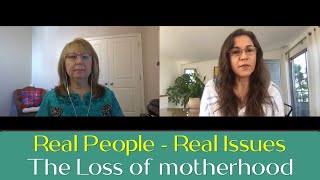
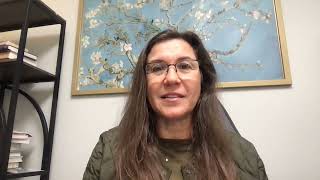
This content was created by Karol Darsa, Psy.D.. This content was uploaded by Karol Darsa, Psy.D.. This is a YouTube video titled "07 - REAL PEOPLE, REAL ISSUES - 'THE LOSS OF MOTHERHOOD' TRAUMA AND HOW TO DEAL WITH IT" created on November 15, 2020. It features a conversation between Karol Darsa, Psy.D., a trauma psychologist, and her guest Alexanne. They discuss Alexanne's traumatic experience of losing her ability to become a mother due to a hysterectomy in the 1970s and the long-term emotional and physical impacts of this trauma. The session involves a therapeutic exploration of Alexanne's feelings and bodily sensations related to her past experiences.
Chapters
Hi, I'm Dr. Carol Darca, author, trauma psychologist, and founder of Reconnect Integrative Trauma Treatment center in Los Angeles. Welcome to my series of real People, real issues. We are interviewing people who are volunteering to talk about their real problems and asking questions. And my goal is for you guys to really listen to them and identify and hopefully learn something from them. My next guest is Alexanne. We're going to be talking about her loss of motherhood and how she's still struggling with the trauma that she's been carrying for over 30 years. Let's listen to us. Thank you, Alexand, for being a volunteer.
Thank you for, you know, I'm looking forward to. I've been watching your work and of course, read the book. And so I've been looking forward to actually talking with you and sharing a little bit about my life with you and, you know, helping, getting some help and then maybe helping other people as well. So thank you.
Great. Okay, so just tell me a little bit about what is the topic you wanted to bring up?
Yeah, the topic was I just had a realization the other day that was so impactful. I had, back in the 1970s, a hysterectomy at age 25. All I ever wanted from the time that I was a child was to be a mom and raise a bunch of kids and take care of a family. And just that whole experience. At 25, I had a second ectopic pregnancy, and doctors could do whatever they wanted. People don't know that. Women don't realize this, but they could do whatever they wanted back in the 1970s. So when I came out of my second ectopic surgery, they said to me, while we were there, we figured you didn't need your uterus, so we took it out, too. And I was devastated. I was just devastated at that moment in time. It was like everything in my life just stopped. And the result that it had in me was one, I couldn't for, like, 10 years, I couldn't be around pregnant women. I couldn't go to baby showers. I didn't want, want have anything to do with people's kids. And the biggest piece I think that's affected me is that the choice to be able to be a mom or working in the work world, that was taken away from me. And I remember the words coming out of my mouth like, oh, yeah, I didn't get to be a mom. Now I get to go to work. And so what's happened, Carol, is fast forward 40 years, I have sabotaged my work life out of Resentment. I think that's what it is. I still am hoping you can piece a little more of it together. But out of the resentment of having to go to work, every time I'm about to accomplish something big, I self sabotage. I go into shutdown mode or just like an inner lethargy that I can't put my fingers on and can't seem to move past. Yeah, that resentment. I know that whole thing is still in there. And that was a huge, huge, huge trauma. You know, it took me 10 years to finally start doing work on it. And I know we've had the conversation where I told you I've done a lot of work on my life, and there are other things that are, like, huge for some people, that I have nothing connected to it. But this just came up the other day, and I was in tears, and I took a whole day I lost. You know, I didn't work the whole day. I just went to sleep and was like, whoa.
So, surprised you.
It totally surprised me.
Yes.
You know, I think that I thought that I had cleared it up, and I can even feel it underneath right now. I think, like, one of the biggest moments is someone had done this genealogy book for our family. And my family's huge. I have 65 first cousins, and they've all got kids and kids and kids. And as it was flipping through the pages of this genealogy book, everything stopped at me. Like, everybody had, you know, families, and everybody's getting together, and my sister's with her grandkids right now, and I mean, I got nothing. So it's kind of like, just feel this tears. I'm just gonna be really open about it. And it's like, you know, everybody's got all this stuff, and I've just got nothing. And I still. So obviously it's still really there. So I don't know, like, you know, when you offered this opportunity, it was like, I will go anywhere I can for help. I'm not under the belief that one path cures everything, but that so many people have so many insights. And, you know, I got a lot out of reading the book. And so I don't know if that, like, awakened some of it.
I don't know. Let's just do a pulse. Just tell me what you noticed right now in your body.
I'm totally hot. Like, my stomach is really on fire and my blood. My heart's racing. My throat feels constricted. I'm shaking. So, like, my whole arms are hot. This whole upper part of my body is hot.
Yeah. Okay.
Yeah.
So Just stay with that right now. Don't try to change. Don't try to cool yourself. Don't try to get away from it, but just without any judgment, just really notice that heat. Just bring your attention to here and to nowhere else.
Yeah, it's right here.
Yeah. Yeah. So just get in it. Notice the quality of it. Notice what happens when you just stay with that and just track it.
Yeah, it feels really scary. Yeah. So fear coming is coming up.
And where do you feel the fear in your body? How do you know that it was fear?
Oh, you know, that's a good question. I don't know. My throat got really, really constricted.
You were just touching there? Yeah.
I don't know how I know it's fear. It just feels like fear.
Okay, so notice the constriction also along with the heat. What's happening as you notice the constriction? Does the heat change in any direction?
Yeah, it's. It's more. It's not changed in a direction, but it's a little cooler as I'm focusing on the constriction.
Okay.
Mm. My armpits are sweating like crazy.
Yeah. Okay. So just allow the body to show its feelings. Sometimes we think we just have to think here or feel, but let the body just really sit with this, process it. It's almost like maybe your body didn't have a chance to express herself. Just sort of coming up with this tension and the heat now and really allow it. Just really give permission and just kind of notice what happens as you sit with that way. Yeah.
My heart just did a quick little flip flop, and I feel like this is a weird feeling. Like the top half is very separate from the bottom half.
Okay.
The bottom half is fine. The top half is freaking out.
Okay. So notice that. But again, no judgment.
Okay.
The top half is freaking out. As you just stay there, let that part know that it's okay. And if you can keep actually your eyes open, you don't have to look at the camera because that could distract. You can look elsewhere if you want, but just so that you really stay present here, freaking out and just kind of see if the body wants to say anything or do anything. Do you notice anything without changing yet, but just sort of notice it.
It's odd. It just kind of feels like a little bit of more calmness.
What's happening with the tension in the throat?
Oh, yeah. That's not as. As much as it was, I think, what you said, that whole thing about permission.
Yeah.
Because, you know, as soon as the Memory comes up. I try to stuff it as fast as possible.
Yeah, that's a common defense, right?
Or dissociate.
Well, that's how you know how to protect yourself from feeling worse, especially if you are 25.
Yeah.
You're probably even different than how you are today.
Very much so.
So as you stay with the sensations in the body, just notice it. And as you track, continue to track even all the way down to your feet and see if that point is there, any flow between the two parts.
I can feel my feet now a lot where it was feeling separate before. I'm feeling my feet a lot more, my hands a lot more now.
What's the sensation that you notice in your feet and in your hand?
A little bit of tingling. My feet feel heavier, actually. Kind of more grounded. Sort of like I'm aware of my whole body where before was just the top half up.
Right. And what's happening to the fear as you feel your whole body?
Yeah, I'm not feeling fear, more just feeling in touch inside. More like a meditative state almost.
It's almost like settling down is what I'm noticing. Yeah, good.
Just.
Yeah, so expand on that. Settling down throughout the whole body, but don't. Don't push it. Just really organically. Allow the body to do what it wants to do. And again, reminding yourself there's. You are. You have a permission. Your body has a permission to feel, to express yourself.
I'm like, okay, I just want to pee. You probably have to edit that out. It's like, whoa. Okay, that was a surprise.
Something simple, right?
Yeah, yeah, yeah. Like, let's just get rid of this. It doesn't even feel like get rid of it, because that just feels like trying to stuff it again.
But that was your first reaction. That was the first word that came. And when you said it, what were you referring to?
The pain. The pain of the memory, the pain of that.
Yeah. So you just made a little. Make a contact with that pain again and see where that shows up in your body.
Yeah, it's in now it's in my female. Or whatever's left of where that space. The womb space. Yeah, yeah. Because it. And so. So this is weird. It feels like the womb space, but at the same time, the mind just hopped in with, boy, you got cheated.
Yeah, you got cheated.
Yeah, yeah.
So when you say that, what happens?
I think that awakens the resentment and moves it right back up. It's back up. Like in my. My chin was like, starting to quiver. And.
Okay, we're going slow, but don't move that much. Just really stay connected to any sensation that comes. You can see that your body is processing a lot because this is also physical trauma. Yeah, you talked about it, but there's a physical trauma here.
Yeah, it's true. And, and so now I'm cold. Now I'm really cold. Like my hands are very cold, my knees are cold and.
Yeah.
Yeah, it's like I'm almost like one step short of actually shivering.
And is there an emotion that goes with that?
Just sadness. That one is sadness.
Yeah, you are sad because.
Good question. Because I didn't have a choice.
Yeah.
And so young for such a trauma that stepping back and looking at a life from just an observer point of view. So young to have gone through such a trauma and no. Oh, I know what it is. No help. I had no help, no support. There was no one. And even to the point of like I was taking too long to heal and it was an inconvenience for the man that I was with.
So not only you didn't have support, but you were judged.
And yeah, it was an inconvenience. And would I hurry up and then move out because there was no more need for me.
All right, stay with the body. Now tell me what happens.
Such sadness. Yeah, really deep sadness.
Do you see yourself as that 20, the 25 year old? Can you see that? 25?
Yeah, yeah, I can even see what I'm wearing.
What are you wearing?
Kind of a rust colored, a line skirt and because they were down at calf length back then in platform shoes and some kind of a button up shirt, top tucked in.
What happens to your body if you make contact with that part of you with that 25 year old? You can even make eye contact with her.
I can't see her face. I have no idea what her hair was like. I can only see your body. Yeah. That's so interesting that choices that came from that were all so such devastating choices.
No.
I don't know how to say this. I don't know if you're gonna, what you're gonna do with this, but they were choices of danger. Situations I put myself in. Situation after situation after situation of danger. It's like a punishment. Punishment choices.
You're punishing your body? Yeah.
Punishing my soul.
Your soul?
Yeah.
You were angry.
Punishing her for. Yeah, yeah, yeah.
Punishing her.
For. For her body not performing like it's supposed to have. Doing something that caused.
Who are you really with?
Gosh, it's intense, huh? You know, I don't. I want to say, my first husband.
What happens right now in your body? Let's pause again and just.
Boy, this is more than you bargained for, huh? What a surprise. My throat's constricted again. But I am very cold.
Okay. The coldness there. And tell me more where it is cold in your body.
My shoulders. My back is very cold. My legs are cold. The tops of my hands are cold. My palms are hot. My palms are really hot. I have them on my lap. It's the only thing keeping my legs warm.
Yeah. See, when you think of your husband. Ex husband. Notice if your body wants to do any move but don't move. Just notice. Okay.
It seems like it's a separate person. Like that younger me is a separate person. Separate from me now.
Can you see her face now? Not yet.
I can see her from before him and then in my early 40s, but then everything else. I can't see her face. I'm trying to think. I have no idea what my hair was. Nothing.
It's okay. If you could tell her something right now, as you just maybe came out of the surgery, what would you be saying? I'm going back to that original topic.
This is not your fault. This is not your fault. And. And don't. I would say don't keep it inside. Go find someone to help you. Go find some help. Find and find a woman. Find someone who will help you through this.
See if she can actually hear you, really feel her, and see if she's able to really hear that. Or how does she react to that statement?
Yeah. She starts crying. Yeah. So lost. Poor baby. I think that's what I would say.
Yeah.
You don't have to do this alone.
Can you connect to her as a part of your body? Like if you touch a certain part of your body, where would that be?
It is. It's here. Yeah. It's like a whole long, long piece inside. Right inside here.
Okay. Yeah. Keep your hand there. If you want to put your other hand even a bit lower. Okay. Just really stay connected. Just really settling into the body.
Oh, yeah. Right on the womb part. That's where my other hand is.
Just say again what you just said. It's not your fault. Yeah.
It's not your fault. You didn't do this. This wasn't planned. You didn't do this on purpose. Oh, I know. I had. Oh, man. I was angry at God. Yeah. How could he do this to me?
Yeah.
Yeah. And then I was also angry at myself for two things. This husband I got pregnant. The first pregnancy was with Him. And when I realized it was a very traumatic marriage, and when I realized I was going to have a child with him, I said this prayer that I was so connected, so connected. And I just said, God, whatever you do, do not let me have a child by this man. Whatever it takes. And that was when I had the first ectopic pregnancy. And I don't think I had the correct medical care after that, which caused the other fallopian tube to still be blocked. And so when I got pregnant the second time, that was the second ectopic pregnancy. They just didn't have the technology to do anything other than take things out back then. So when you asked me, who was I angry at? Yeah, I was really angry at God. And you said, yourself and myself. Yeah.
For.
For not taking better care of myself. For not finding out what I needed to know about myself or myself as a woman or my body as a woman. Just trust arbitrary doctors or, you know, believing that what was going on was my fault.
Yeah.
It wasn't my fault. No, it wasn't.
No. What happens in your body when you say it wasn't my fault? Now, as you.
A little bit lighter, a little bit lightness, and it's. I'm looking for inside my brain. I'm looking for, like, what else there is to have learned from it in addition to it not being my fault.
I'm going to suggest don't do that right now.
Okay.
I think you're very used to doing that already. Instead, just really allow the feeling to come forward. There's grieving, there's sadness. There's a lot of judgments that showed up. There's confusion about relationship. Where did these feelings go? Right.
Yeah. I mean, I've stuffed them for so long.
I wonder where in your body they're stuffed.
In the bottom half.
The bottom half?
Yeah, stuffed in the bottom half.
So if you can get in touch with that sensation, just notice the body again. There was a physical trauma surgery.
Oh, yeah. Now I have a headache right here.
Yeah.
Okay, get out. There we go. That was like. All of a sudden there was like this huge feeling in my womb area. And then it was just like, okay, don't sit still anymore because this has to get out some way. It's like, get out. If I set. My body just doesn't want to sit still. It just doesn't want to sit still.
It's like, okay, well, as you were getting deeper into the emotion, that's when you were like, get out. I gotta. I gotta get rid of it. Yeah, it's Hard.
It has.
I think it's important, just based on this now, it's important to respect the timing of it. And rather than wishing like, okay, how do I move on? And because it's so long ago.
So me. So me.
Okay, doing. Slowing it down. And just each time incrementally allowing yourself to feel a bit more of the grief rather than maybe you are wishing, okay, in one hour, Carol is going to help me to get right.
I'm also very conscious, like, oh, I don't want to take too much of her time.
No, I put aside an hour in case we need it. And I could go deeper, but I'm getting a sense that it has to be slower and it has to be increments. Maybe it's almost like today that's all you can feel, and then tomorrow, when you get in touch, you know, you feel a little bit more, rather than saying to yourself, well, but it's 40 years ago, I should have been done, or I talked about it, or I moved on, because, look, I have a very functional life. You know, those would be still a way to just sort of get rid of it. Because you. There are people who do get rid of kind of moves, but you can't get rid of it that way because there's still a lack of true acceptance and empathy in that statement. Yeah, really? Empathy of understanding the depth of the pain.
You can just tell just by the way I look that I'm not, like, light and relieved of it. It's there. I'm consciously in it. And the feeling piece is very difficult for me. I'm incredibly visual. And feelings. I can describe a feeling, but to feel a feeling is something different.
Yeah, I could see that you're looking something to do with it rather than be with it, because you were asking, okay, what did I learn? What else did I learn so I can move on? There's still that urge to move on rather than sit. So as we did this, I could see it more how that unfolds rather than every day. I'm going to sit a little bit. So when it showed up last week, it surprised you. It could sometimes even anger a person. That's not, like, why is that still here? It shouldn't be, you know. So I really urge you to change your point of view about that and see it as I'm gonna just make it okay. And I'm not gonna open all at once. Because, yes, we could do even more stuff and open it more and more, and then you can hyperventilate and cry. And, yes, you could have some sort of even maybe benefit or a relief. But I prefer that you don't do it that way. And then you just allow a little bit today, but to know that you will allow yourself more and that you're not gonna tomorrow look for what do I do with it more like how do I sit with it? Because you've already done something with it. You started working it young age and you. Okay, what are the action steps?
Right, right. So interesting right now because my stomach is so relaxed and that is an odd feeling. I hold my stomach in all the time. Someone told me in fourth grade, if you want it to be beautiful, you need to suck your stomach in. So I've been sucking my stomach in since fourth grade. So belly breathing or something like that is like. What are you people talking about? Breathing is here, but right now my stomach is like all fully expanded and open and like when I take a breath, my belly actually expands. Yeah, yeah. Not from me forcing it. It's just now there. It's there. Yeah.
So you can see it's like your body didn't even have a permission again to just be. To expand. And so you're in sort of this construct constricted mode. Otherwise, you know.
Yeah, yeah. My shoulders are down. I'm connected top to bottom. I can feel my feet on the floor. My stomach, my belly's expanded and I just kind of feel like inside myself. Does that make sense?
Yes. How's the connection between the top and the bottom part now of your body?
Very connected.
What tells you that?
It's visual. It's an image. Before, when we started. Oh. I was also sitting cross legged with my feet up on a ledge underneath my desk and my feet were angled in a different direction than my body facing. So now if you could see, everything is facing in exactly the same direction. My feet are on the ground, both firmly planted. My palms are on my thighs and my elbows are resting on my arm. I'm like congruent. Everything is on the same plane or the same match. It matches. So. And it feels really comfortable.
Okay.
Yeah. I'm not trying to force my shoulders back and sit up straight. And it just feels very comfortable. So I don't.
Restlessness you were feeling just a little while ago, it's gone. Okay.
Yeah, Yeah. I feel really connected, very grounded and just in my body, which is a rare experience. Yeah.
So my recommendation to you would be from here on, when you go back to therapy or whoever you are talking with, come back to visit it again, this topic. Don't make it Be gone. Really allow. There's a lot of. I didn't get into anything because I'm just trying to make it so informative for you. Because again, it was a physical body trauma. Right. Along with emotional stuff. Really allowed the body to feel. Get more into the grieving. And you might even want to do actually sort of really memory by memory, meaning before the surgery, how you felt right after the surgery, the trauma or the surgery itself, how you woke up, what happened. Like really just allowing to process these detail memories with you gradually going into. Because you look into the meaning of it. But the body was holding on probably to a lot of this thing. Losing an organ is a traumatic experience, not only the meaning of it. You see what I mean that.
I think what you said about the physical. I had never considered it being a physical trauma as well as an emotional trauma. So. Yeah. And there have been several ensuing surgeries in that area as a result. So I have what we laughingly call a Ziploc bag scar. Oh, you're going in again. Just unzip the same scar and you go zip it back up. So this is really.
When you say we are calling it. Who's we?
The doctors.
Do you hear that tone, the way you say that to me?
No, I can't hear it.
There's a minimization in that.
Yeah. Making it light as if it doesn't mean something, huh?
Yeah. It takes the value of it away. It takes actually along with it, the pain, but it definitely has a minimizing quality to it, which is not fair to you and to your brain. Right.
I think you and I should have some more conversations about working together and what might come out of that, too. The somatic work is not something that I. That happens. It's all pretty much mental work that I do. So this was a very surprising.
Yeah. Okay. So is this a good time to close just for today? Yes. Again, there's a lot to explore. Different branch one can take.
Yeah.
For the sake of today and Because I don't want your system, even though. Yes, you can tolerate it, but I prefer that your system says, okay, I felt a little bit, and that's where I stop. And then the next, I feel a little bit more. Right.
Yeah, that sounds good. Yeah. And I feel good inside my body right now. So.
Okay. If you can just tell me as a closing, like, what are you getting out of this? What are you living with?
The depth of how much a trauma, either physical or emotional, is stored in the body and how much of my life. Which means, you know, I'm pretty normal. That means 50% of most of the world thinks that you can just ignore it and it'll go away.
Yeah.
And how long the effect of a trauma can last in a person's life?
Mm. Okay. Yeah, that makes sense. Good. Yeah. Just stay gentle. Go smaller. Increment smaller parts of the memory and the whole experience. Okay.
Thank you so much.
You're welcome.
Wow. Amazing experience.
You're welcome. Thank you for listening again. And thank you, definitely, to Alexand for volunteering to share her heart with us. If you are interested in different topics, please write a comment or email me@drdarsareconnectcenter.com you could be my next guest. Or you can make requests of what kind of topics you want me to cover. My goal is to help you all remember. Trauma equals disconnect. Healing equals reconnect. Please stay connected. Sa.
More from Dr.


58 - HOW DOES TRAUMA AFFECT CHILDREN - IT MIGHT BE MORE THAN YOU THINK - HOW TO SEE SIGNS

57 - GAMING ADDICTION AMONG ADOLESCENTS - WHAT ARE THE SIGNS AND HOW TO DEAL WITH IT AS A PARENT?


55 - OCD - WHAT IS OBSESSIVE COMPULSIVE DISORDER? WHAT ARE THE SYMPTOMS? HOW TO DEAL WITH IT?

54 - ARE YOU NERVOUS ABOUT YOUR FAMILY GATHERING FOR THE HOLIDAYS? I HAVE SOME TIPS FOR SURVIVAL :)

53 - DO YOU HAVE A HARD TIME KEEPING YOUR NEW YEAR RESOLUTIONS? THIS EPISODE CAN HELP