10 - REAL PEOPLE, REAL ISSUES - "FEAR OF INTIMACY" (FAMILY TRAUMA) AND HOW TO DEAL WITH IT
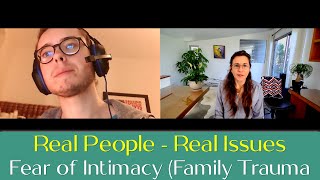
A YouTube interview (Karol Darsa, Psy.D.) with Luca (a guest from Belgium) about family/relational trauma and its effects on intimacy, trust, and emotional regulation. The session covers how childhood emotional neglect created protective defenses, how that shows up in adult relationships (difficulty trusting, avoiding vulnerability), gendered expectations about male vulnerability, and practical healing approaches (journaling, body-based practices, gradual exposure, building safe connections).
Chapters
Hi, I'm Dr. Carol Darca, author, trauma psychologist and founder of Reconnect Trauma Treatment center in Los Angeles. Welcome to my series of real people with real issues. Today we're going to be talking to someone in Belgium. His name is Luca. I'm very happy, actually, that he joined us because this is our first male guest. And it's important for men and women to really understand what trauma means and how it affects every gender. And so it takes courage for people to come here and talk to us. And I will be also referring a lot to some of the things that I cover in my book, the Trauma Map. So if you're interested, definitely, you can buy it from the link below. And I want to welcome Luca and let's listen.
This is Luca and joining me from Belgium, and we are on zoom meeting right now. Thank you so much for volunteering.
Thank you for having me, Carol.
Thank you. We find each other on Facebook on the trauma thrivers group, and you agree to be a volunteer. So we're just going to have a chat and if we can help other people listening to you so they can relate to what you learn, what you've been through, and if I can support you and listeners in any way, that would be my goal. So, again, welcome. And if you can just sort of briefly tell us a little bit about what you're struggling with and what's been your experience in life regarding trauma. As a starting point, please.
I especially struggled with the fact that my parents, they cared for me, but they weren't always emotionally very in touch with me. They were very busy with their work, and they had a lot of things to do. And they didn't always make time for the children. They gave the care away to nursing schools and to, like, our grandparents who then came from. From Romania to, like, care for us. And they didn't make, like, really a lot of time for us to. To really connect with us. And that traumatized me. Like, there is, like, a little bit, like, it's difficult for me to say because, like, I compare myself to other people who had, like, more difficult childhoods. And then I am like, okay, I'm weak because this happened to me. And it was. It was hard on me. And then it is like, yes, but those, those other people, they had it even harder. And so there's always, like, a little bit of struggle with, like, trauma to, like, compare yourself with others and to be hard on yourself. But after a while, you just have to acknowledge, yeah, it was tough on. Twas stuff on me, and I just need to Acknowledge that and work with what I have. Like not try to make stories or something. Just those are the facts. It hurt you. They didn't mean it. But I try to become better.
Yeah. Luca, you made such an important point. I'm actually glad that we're starting here because I talk about that in the book a lot too. I can't tell you how many clients that I work with say exact same thing where they compare. And I think comparison is a very unfair thing for the person. Because when you're a child and you're growing up and you're really missing this parents relationship, you are not capable to say, oh, well, it's okay, you know, people are at war, they're suffering more than me. Or here's some people, sexual abuse, they're suffering more than me. There is no such a thing for you. Your experience is valid and it's very important. So please do not blame yourself or judge yourself for being impacted by it. Every trauma impacts the person, and for each person, that trauma is very valid and very important. You're talking about a relational trauma, which I actually address in the book as to say this is the least recognized trauma and in fact is the most impactful trauma that people think wars are more impactful. But not having had the appropriate attachment to parents can be very, very hurtful for a person.
Yes, that's true.
So yes, acceptance is number one step. You are right. How does that affect you in your current life, do you think? How does it show up for you?
I didn't hear that last question very well. What did you say?
Sure. How does it show up in your life, this trauma? How do you struggle with it day to day?
I have difficulties allowing myself to be comfortable with other people and allowing myself to feel safe enough with them. I have like, always this like, protection. Like this protection, which it protects me, but at the same way it also closes me off and I have to find ways to let down my guard and open myself up to other people. But that's a little bit hard because, like, due to the trauma I experienced, I learned that it's pretty dangerous as a child to allow yourself to open up and then to not receive always the love you want and deserve. And now as a young man, I have to like, relearn how it is to be vulnerable due to the trauma. I also had, like, difficulties with, with other people, like connecting with other people. And that made it even more difficult because when you have a trauma, you need to open up. You need to find support with other people. And when you can't open up with those other people. Those people are. They're gonna look at you strangely, and you are not gonna be able to open up. And that's a major deal in resolving the trauma in, like, sharing your story and allowing yourself to be heard.
Yeah. It's such a difficult situation. You are describing. Basically a catch 22. You made a good point. You need the connection. Right. Actually, healing happens with connection to other people, which is why in therapy, we talk about the therapeutic relationship without that, without feeling good with the person. I don't care about the techniques. You have to feel comfortable eventually. Right. But then you said, well, it's the catch 22, right. If I open, I'm scared. If I don't open, I don't get the healing. You know, I'm gonna go back to the first thing you're saying. The acceptance is important to understand that this is your defense mechanism. And there's a reason why you have to come up with this defense mechanism to protect yourself has to be respected. Sometimes people want to fight against their defenses and end up actually being harsher on themselves rather than going, okay, this is who I am. This is what I am because of my trauma. I'm sensitive, and it's okay. It's okay that maybe you take longer time than someone who doesn't have this trauma to open up. And it's important not to judge that and to be able to say, give me time. I only trust with time. I don't believe words. Right. If just someone will tell you, oh, trust me, that doesn't mean you can trust them. You have to see the actions. And I think that has to be accepted and respected. Your timing should be your own timing and no one else's.
Yes, but I agree with that, with what you say. But sometimes the outside world also puts, like, pressure on you. Like when people, for example, see that you're not really doing well with other people and that it's really disturbing your life in some way, then they also can become pushy. They can be like, yeah, open up, go to other people. And that's difficult because that's just what it's about. And so it's true. You need to respect the fact that you cannot go as fast as you want. Other people also need to acknowledge that fact, because otherwise it's going to be very difficult for both to feel safe with each other and to heal, to be able to heal.
I agree that. So when I was saying you, I actually, I wasn't referring only you as the survivor, but the people who are Trying to connect. And it's interesting because I think in the Western world especially, there's a lot of emphasis on really wanting to be extroverted. Somehow extroverted people are more liked and it's more okay. And we don't respect the other people who need more time to trust. So. But if, I mean, maybe one suggestion, and I know it's not easy, would be for you to maybe from the beginning to say to people, you know, it's not easy for me to tell this, but I have trauma and I have learned, unfortunately, not to trust people. So please know that I might take a bit longer than other people. And pushing me is actually going to probably create even more defenses because you might shut down even more if someone pushes you.
Yeah, yeah, I agree. Yeah, I have done that. Like I made like an online friends and I told him like, I have, I have some problems, but I'm working on them. And he really, he was amazed at my openness. Like, he, he really appreciated my openness. And now we have become very good friends and, and we, we talk a lot and we share each other and we are vulnerable with each other because like, I opened up, I was vulnerable and he was a good person and he also became vulnerable with me. So I made a really good friend just by doing your piece of advice. Yeah. Yeah.
Well, you did. You knew it before I even had to say it. But we were in sync. But this takes so much courage. So you already pushed your limit in that way, but it was your decision. You see, it has to come from you when you make that decision and you felt the respect from the other person. And you are right. I think when you open, other people start opening. It's like, who's going to be the first one, right? To dare to be honest and brave because it's not easy to be vulnerable, especially again with the relational trauma. Do you know Bessel van der Kolk? Have you heard of his books? About.
I watched one of his conferences, of his talks at the conference, the embodiment conference, and it was really interesting what he had to say, but he, he didn't have enough time to explain everything. But everything that he explained was really interesting. He also has like a book about trauma. And yeah, he talks about some interesting stuff there about yoga, neurofeedback. Always to like overcome the trauma and not be subdued by it.
The reason why I was thinking of him is because when I went to his conference years ago, he talked about neglect and relational trauma actually being more impactful, longer term impactful compared to People who have experienced, I think it was like war or earthquakes or something where the house would come down. And even though I'm a therapist for 22 years and I work a lot with sexual abuse, I thought, no, is that true? But then I realized he's right. Relational trauma leaves a longer term impact and people really struggle with it. This is the reason why I was saying it's important to respect that. Yes. And he does have great ideas which is also integrated different things of haro, how to help trauma. But I don't know if you, you know about my book, the Trauma Map.
I haven't read it. I don't know what it's about. It's probably about trauma and it's different. Different causes.
Yeah, the reason, the reason why I'm mentioning that too. Yes, it is about trauma, for sure. But I talk about how trauma creates a disconnect inside of you, and then you just talked about how you can't connect to other people. So there are different ways of feeling a disconnect when a trauma happens, and one of them is either feeling disconnected from you, from your emotions, or sometimes from your body and other times also from other people. So the healing is about reconnecting. So even this example that you gave about the strength is partly a feeling of a relationship wound. Right. So where you felt connected with someone.
Yes. Yeah. Bessel van der Kolk also talked about that. That, like, the only way to, like, really heal is, like, to open up with another person. Like, that's one of the major ways to heal. Like opening up with another person, doing something together in group or something like something with the body, maybe like dancing or yoga or whatever. And I can really help. Like, it doesn't sound very manly to like, say, do some dancing or do some yoga. But if it helps, then why not? Like, you don't want to get stuck with your trauma. You want to heal.
I'm actually glad that you mentioned the man thing, because my other couple of people that I've interviewed, they are female, and female, you know, tend to be more open about their feelings. And I'm so glad that as a man, you agreed to talk here because men are raised in a harder way than us. They're told not to cry because it's not manly. They're told not to do. I don't know, you are weak and it's not masculine enough. And all these messages that you guys get as men, it makes it very hard for you to really, you know, without being labeled something negative in terms of masculinity. So how do you do. How do you deal with that?
Yeah, that's a tough one. I don't know if I figured that one out, because, like, males being vulnerable with each other, that's a tough one. Sometimes it happens, but I don't think there's a magic formula for it. Like, maybe if you talk about something you're both invested in. So if you're maybe both interested in a certain subject.
And so finding such a common ground, you're saying, right?
Yeah, Like a common ground that makes it easier to, like, be vulnerable and allow yourself to open. So that's a major one. Yeah.
I call that sometimes the backdoor approach. So rather than maybe right away saying, okay, I'm looking for friendships that can be open with me, you're saying you start with something else first, maybe. And would that build the relationship so you can hopefully then create some openness with time with pros?
Yeah. Yeah. If you. If you have something to talk about, we both have a certain subject you're passionate about. It's easier to open up. Like, sometimes you talk about the subject, and sometimes you just talk about, hey, man, lately I didn't feel so well, or lately I felt better. And you can sometimes, like, share your feelings, and that helps. Like, just if another man is like, yeah, I also experienced that. You just have to. Or he gives you some advice that that's. That is really helpful. Like, if another man shares with you his advice, his life experience, that's. That really helps. Yeah.
Yeah. I think the more men are out there like you that are opening up, even though it's challenging, the more other men will open. So we have to demystify it, you know, so it's not just for women to open up, but for men. That is a very good point. Yes.
Like, it's. It's really special. Like, men and women have, like, their own set of problems. Like, in some cases, men have it better, women have it worse. In some cases, women have it better, men have it worse. Divorce.
So, yeah, that's true. But trauma. Trauma happens to both gender, and especially relational trauma happens to both gender. A lot of the times, those men, when they grow up, they do not know how to father their own children. So it becomes an intergenerational trauma of a lack of fatherhood. Or if they didn't have a proper mom, then they also don't know how to parent, you know?
Yes. And I'm really glad I found it out, because now I have, like, the opportunity to do something about it, because if I didn't find it out. I was not on the best part to say it like that put it mildly. I. Yeah, I, I searched like instant rewards, like to soothe the pain, you know? You know what I mean? Like, like I used, like I smoked cigarettes, for example. I drank alcohol. And already at a young age, in fact like 15 or something, I started drinking alcohol and not alcohol to like socialize. Also to socialize, but mostly to put everything inside of me that was not going as I wanted it to be. And now I don't touch anything anymore. Like I don't. I stopped, I quit smoking, I've quit with drinking and. Because like if you don't solve the trauma, it's gonna cause a lot of problems. It's gonna cause a lot of problems for yourself, but maybe also for other people. Maybe you're gonna traumatize some other poor people further and they're gonna traumatize other people. And it's like chain and you need to stop the chain because if you don't stop the chain, it's not good for you and it's not good for the world.
Yes, that's such a good point. And especially if you become a parent, you are more likely to transfer this trauma from yourself to your child and your child to your grandchildren. If you ever do a genogram, like a family tree, you'll see how much of it has been transferred from earlier generations. But you made even a wider point, which I didn't even think of it, that you could spread into your friends and into colleagues and into other people, not just for your children. So I wish everyone dared to work on the trauma because it requires some willingness, it requires some courage to face everything, but it has to be done gently. I think that's what I want to make sure in case you. I know it, but maybe other people may not know it is not to push too fast, but then really gradually open up to the trauma and really sort of looking at what issues you're struggling with and where it's coming from to understand the root cause is important. Are you doing any body oriented healing things so that there's a. Reconnecting to your body?
Yes, I have picked up running. I don't know if it's really, really body based. And I try to do from time to time some yoga. I have like some DVDs and I watch, I watch some yoga and some women explains me how to, how to do the movements and then I try to do them and it, I find it really helps me like gets. It helps me to get in touch with My body. But I sometimes do. I close my eyes and then I go to yoga and I try to feel my body. I try to really feel it, like, where is my right arm located? Where is my left knee located? And that's where I get more in touch with my body. I get more a sense for where my body is in the space and how I feel inside my body. So I think both running and yoga can help also. Maybe, maybe something physical, like maybe strength training or something. I like a lot of strength training with body weights. Like, for example, push ups and squats and pull ups and all that stuff.
Actually, they talk about in the somatic world, the somatic therapy world, that if you do muscle building, it sort of ends up almost becoming like a container when you can feel more of your muscles. So almost like they're containing the emotions so that the emotions have a place to be contained.
But you need to be careful with that because I heard about some stories about like men and women who had traumatic events and they became like obsessed with muscle building because they wanted to have like a strong and tough image. And they started like taking steroids and becoming like real hoax because they had a lot of pain inside of them and they wanted to show a strong and aggressive image. But in the way that you're talking about it, just normal strength training.
Perfect. Yes. In the way that you're saying, I can see that actually if you do only that and not really facing your feelings in the past, then it's almost a bypass or an addiction. It's no different than using alcohol, except it's healthier. But it's still. The goal becomes numbing the pain. The goal becomes just an illusion of feeling strong outside as a compensation for the weakness. Weakness inside of our bodies. Right. So but if you do both simultaneously and you're aware of your emotions and you're not trying to numb them, you're not trying to cut them off, like you were saying the same thing. I know. Then there's a good, smoother way to work on it.
Yeah, it's like, it's like a balance act. Like you say, like you don't have to go too hard and you have to like find the right balance for you. And only you can decide what's the right balance for you. Like, you don't have to push yourself too hard. Like you need to be sometimes gentle with yourself, but you also need to learn to be gentle with yourself.
You know, you have to raise the bar just a little bit each time. So you sort of get like, you learn about your comfort level. Like, okay, I can tolerate this much. And then you increase a little bit each time and then you increase a little bit. You know, baby steps. Yeah, baby steps, yeah. But being gentle, I don't know. I'm always talking about being gentle. Being non judgmental towards yourself is a key thing in the trauma healing for me. So I'll get one more question. Do you have something specifically that you would like to ask to me about regarding trauma? Something that could be helpful to you as you are sharing your story with people?
How do you like we talked a little bit, a little bit about it, about body based therapies and I think that's a good way. But my question is, how do you get back in touch with your emotions? Because like if you repressed for a long time your emotions, you thought you were worthless or nobody cared about you or something like that, and you need to get back in touch with your emotions and allow yourself to be able to fully feel again. What are the ways to do that? Because it's not something you used to do, so it's something completely new. That's my question.
Yeah, so the first thing is to recognize that it's difficult to get in touch with the feelings and to know where it's coming from, which you already know. Right. The second thing is I go back to my gentle approach. Just like how you gradually get in touch with your body once you actually especially using body based stuff, that means your capacity to contain has increased. So then you look at emotions and say, okay, how can I increase my tolerance towards emotion? Also with baby steps, there are a few ways to do that actually. One is journaling. I'm a big fan of journaling and really sort of spending time writing feelings. On when you just talk about feelings, you're only in your cognitive brain. So it's just talk. Like I can talk right now, but I don't feel. But if you want to really feel what you're talking about, writing or art therapy also is another way to do that. So if you allow yourself every day a little bit, maybe at first, just five minutes, write some feelings, but without judging, without trying to understand, without asking are they real or is it valid? Every feeling is valid, right? So you're not questioning it, you're just really allowing this expression, this venting, and the moment it becomes too much meaning, you're feeling like, okay, now I'm getting too emotional. You stop. You respect your capacity. You don't push yourself beyond your capacity. It's like a muscle, right. If you work out Your muscle gets stronger, you look at it that way. And then the next day you write a little bit more. And then the next day you write a little bit more. But you need to make sure that you have a good support around it, that it doesn't end up making you feel actually more judgmental of yourself or hate, creating more self hatred, you know, so you could surround yourself with someone that will understand if you want to share any of them after the fact. But spending a little bit time alone, writing about it daily could be very supportive of that.
Yeah, that's, that's really good advice. Like, I like to write things, so. And yeah, writing it allows you to. To express everything, like express everything that's going on inside you. So, yeah, I think that's really good advice. Thank you.
You're welcome. Also, one more thing is to understand that when you write, some feelings will show up further. Meaning you might find yourself in tears, you might find yourself enraged. In fact, a lot of the times people will experience grief. It's really like they become aware of what they lost as a child. Right. The fantasy of having an ideal family is a fantasy for everyone. And when you write down and you realize you don't have that, you might have tears come up. So as long as it's tolerable and it's not making you unable to function that day, that's okay. But if you end up finding yourself in bed and you're not able to go out, that means you did too much and you should dial back and not do that much so that again, you go gentle and slow with yourself.
All right. Yeah, that's good advice. Like, I can talk about the grief. I also had like periods of grief. I don't know if the periods of grief are over. Maybe not maybe. Yes. But it was also, it was also good in a way because, like, you need to let it out. You can't keep inside of you bottled up because then you, you become like really a danger for yourself, a danger to others. You need to, you need to like. Yeah, like allow yourself to safely express it. And the ways you told me about, like, like grief or journaling, that those are art therapy. Those are all ways to let it out. And you don't have to keep it in because if you keep it in, eventually it's gonna explode. So you need to. Yeah.
So my suggestion actually is to make a habit of journaling. Even if today you don't have any bad feelings. I would still say journal. Even if it's just 5 minutes, 10 minutes. I journal usually up to half hour and just sort of get in touch with the feeling that maybe you had three days ago or a week ago or a month ago that maybe you didn't have an opportunity to express it and express it in the, in the paper. As long as again, the guideline is don't judge any feeling, don't make it right or wrong, don't feel guilty for it, don't censor your writing because no one else is going to read it doesn't matter if it's grammatically correct or if it's politically appropriate. You just really have the freedom to say, this is how I feel. And then at the end maybe doing a quick sort of self soothing ritual of like, I'm okay, it's okay that I felt this way and I just allowed it and I have a right to my feelings and something positive like that, you know.
Yeah, that's, that's a really. Yeah, that's a good message. Yeah, I, I think I will do that, like journaling. Like I already write sometimes in the evening what I did that day. So like to, to make like this little summary of my day and what I also a little bit what I felt. But I'm gonna focus more on like the feeling part, what I felt during the day. Because words are like, they're not, they can't harm you. Like they're safe. Like you can just safely express everything in words. Or if you're like more creative like other people, you can like draw something to like share your feelings. Yeah.
I just want to add though, although yes, words are safe, what could happen sometimes unconsciously is if as a child you did not want to feel the pain of something, such as like your parents not being so present to you. There's sometimes an unconscious belief that if you open the feelings now, you're not going to make it. Sometimes even a person could feel like I'm going to die if I feel all my pain. So that's the reason why I said please open only a little bit at a time because otherwise it could feel overwhelming. But also soothing yourself with verbally saying, I'm not a kid anymore. As a child I was overwhelmed and I had to put, put my feelings aside. But as an adult, I cannot tolerate them. And I'm not in that same powerlessness anymore. I have myself to take care of myself. And then I have maybe extra support just to sort of self soothe with words, really reminding yourself that you're not that child anymore. And then orient yourself also to the here and now when you ride. So even if you're riding of an experience of a five year old, don't ever forget, like 50% of your attention should be, I'm in 2020, I'm an adult. I'm in an adult body. Right. Feeling your body. But I'm ex. I'm writing about an experience that I had in the past, but I'm in the present tense. So that also helps to tolerate the past pain more.
Staying in the presence.
Like stay in the present. Yeah.
And not forgetting that situation now is different than it was in the past.
Yes. You validate the past. You validate the pain. You're not saying like, no, don't feel bad. Because it's not that you validate it, but you just don't forget that you are also here, that you are in this time frame. So that it's called dual awareness. You never let go of the two of them at the same time.
Yeah, it's. That's something interesting to talk about. There's so much to learn. Like you learn. Thank you for learning me and teaching me all those things I didn't know about. It's interesting. Like sometimes it's hard, like the journey, especially in the beginning, I was like crying the whole time. I was feeling really bad. But lately I'm feeling like more positive emotions and I'm opening up more and I'm exploring like completely new dimensions of life that I didn't know about.
Thank you. I hope you're proud of your own courage because again, it takes courage to do that. And again, thank you for volunteering.
No problem. I'm glad.
I appreciate it.
Thank you for listening and thank you, Luca, again, for volunteering. I really appreciate that. If you're interested in different topics or you want to be my next guest, please leave comments and let me know what you want me to cover next time. And remember, trauma equals disconnect. Healing equals reconnect. Please stay connected.
More from Dr.


58 - HOW DOES TRAUMA AFFECT CHILDREN - IT MIGHT BE MORE THAN YOU THINK - HOW TO SEE SIGNS
57 - GAMING ADDICTION AMONG ADOLESCENTS - WHAT ARE THE SIGNS AND HOW TO DEAL WITH IT AS A PARENT?

55 - OCD - WHAT IS OBSESSIVE COMPULSIVE DISORDER? WHAT ARE THE SYMPTOMS? HOW TO DEAL WITH IT?

54 - ARE YOU NERVOUS ABOUT YOUR FAMILY GATHERING FOR THE HOLIDAYS? I HAVE SOME TIPS FOR SURVIVAL :)

53 - DO YOU HAVE A HARD TIME KEEPING YOUR NEW YEAR RESOLUTIONS? THIS EPISODE CAN HELP