11 - REAL PEOPLE, REAL ISSUES - "HOW I GOT MY BODY BACK" FROM DISSOCIATIVE IDENTITY DISORDER (DID)
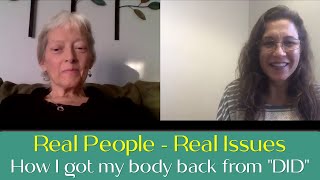
YouTube interview (Dec 6, 2020) between trauma psychologist Dr. Karol Darsa and Christine, a person diagnosed with Dissociative Identity Disorder (DID). Christine describes lifelong struggles with self-harm (she reports roughly 40 hospitalizations), an official DID diagnosis at about age 30, and how over years of therapy she moved from self-harm to practices of self-care and body reclamation. She estimates her current system contains ~18 parts, resumed somatosensory-based therapy about six years ago, used an addiction-targeting medication for roughly 6–12 months to blunt self-harm urges, and authored a memoir titled "Excavating the Fortress." Major themes: demystifying DID, internal collaboration vs forced integration, trauma-informed body work (yoga, somatic practices), and the value of trusted relationships.
Questions this video answers
About 30 years old.
About 40 times.
About 18 parts.
About six years ago (from interview date).
Approximately six months to one year.
Chapters
Foreign.
Hi, I'm Dr. Carol Darca, author, trauma psychologist and founder of Reconnect Trauma Treatment center in Los Angeles. Welcome to my series of real people, real issues. Today we're going to meet Christine. She is diagnosed with DID Dissociative identity disorder, which used to be called multiple personality disorder. She volunteered to be my guest for today's talk and she's going to tell us about how to live with her diagnosis. And let's listen to that.
Okay. All right, Christine, thank you for being a volunteer for this talk series that I'm creating. So. So I just would like to ask a little bit. You and I briefly wrote to each other about what you wanted to talk about and you said you're open about it. So would it be okay if you start and just let me know what your diagnosis is and what you struggled with and.
Sure, sure. Well, I have obviously my diagnosis is identity disorder or did, which used to.
Be called, which is to be called multiple personality.
Right. And back when I was diagnosed, that was what it was called. So by definition I've probably had it most of my life. And as far as I have the sense of it, I most likely did have it very early in life. So yeah, I was suicidal, I had self harm. And so there were attempts at that point figure out what was wrong and do something. But at the time my parents were very, very opposed to any kind of mental health treatment. Really isolated me and my rest of my siblings and so really nothing happened. Graduated from high school when I was 16 and went to college and I did really well academically, but still self harm was there. It just got worse and worse. And that was really the first. If I had to think of the one thing that was obvious, it was that it was a seriously addicting behavior that sustained me so I could, you know, function. It was, you know, if there was a stressor and you self harmed, you got through the stressor somehow. And so I did see a psychiatrist during that time and she did not. Trauma was not understood at that time as really focus on. I was labeled bipolar and I'm not sure what else, but at the time, you know, nothing really happened. So I graduated from college and went to medical school and was successful all got through it. I pretty did a lot of self harm during that time, but it was very hidden, wasn't something people knew about. And became a doctor when I was 25 and almost like at that moment I achieved something and then I just fell apart and I was, you know, self harm was bad and I was, I was Discovered as being someone who self harmed by the people who I worked for at the my residency back in the day when if you saw harmed in any way, they put you in hospital. So I think, I think I lost count, but I probably was in the hospital 40 times in my lifetime. And so it wasn't until I was 30 that I was diagnosed with DID that was really early. That was when people didn't.
How was your first reaction? Because when I work with DID clients, they talk about sort of initial difficulties to really be able to accept that diagnosis.
Okay, well, you have to understand that for me and for the system that I belong to, we have written journals from since the time we could write, since the time any of us could write. So I carried with me literally pages and pages and volumes of writing that I knew I did not write people I did not know that were signed by people I did not know. And I really had no one to talk about it with. So for me, as soon as I remember distinctly when I got diagnosed and it was by a lady who said, I know what's wrong with you, but I can't help you. And she told me and there was instantaneous relief. Okay, not because I was relieved I had it or anything like that, but it was as though all the puzzle pieces made sense. I had no doubt even then, you know, knowing that healing from that were two completely different things. And for several years I, you know, it was, it was an uncovering of, you know, who are these other people? And you know, and for me, a lot of my writing at the time really reflected me versus them. Like I'm me and I don't know who all the rest of you people are, but you know, I don't really. I'm not. And it took a lot of years before I realized, oh, I'm one of them are together. It's like I don't, I don't consider anyone in the system to be up an alter of me. They're not me. So that's why I see them as, you know, a person or a part totality. But it's not like we don't really have a host. We don't have a host personality and then alters because we're very clear that yeah, it's more like we're a factory and where everybody has a part how we function is that everybody's part works and we don't devalue the littlest part among us. That person has some intrinsic value to the our totality.
This is such an important point. You're Making. Because so many people when they come in, they talk about sort of labeling some parts. I'm going to use the word part because I have been using. That makes sense maybe putting some parts down or making some parts better than the other. And one of my goals with them always in treatment is to let them know there is no good or bad. There is no higher part or lesser part or higher self or lower self or dark side that how can you make all of them be okay for who they are? And yet it's like I talk about collaboration, right?
Oh, absolutely. That in fact instead of integration, we really refer to ourselves as collaboration or that we have achieved collaboration. Because for probably the first 13 years of our treatment or my treatment, yeah, everybody knew who everybody was, but nobody was on the same page. A lot of haters. This person hated that person. It came out on the skin, you know, if someone hated someone else, it would, it would come out in self harm in some other way. So it was just a lot of struggling, you know. So if a child part would want to say this is my experience, this would happen to me, there would automatically be an older part who we now know was probably we just call the ghost of our parents, you know, the ghost of a parent who internalized into us who was saying, no, you're not talking about that. No. So you know, that child part would maybe get a session or you know, half a session, only to be overrun for like five sessions later by another part who was basically trying to say this child part has nothing to say or invalidating them. So it really took literally almost ejecting those parts. And no, that's not who we are. That's not my voice. That's not a voice I want.
Is it okay I just give a brief explanation for people.
Yeah, go ahead.
Because some people may not exactly know. It seemed like you and I, we already knew it, what we're talking about. So when a person has. Did they have different parts and depending on the person, it could be two parts, it could be up to 100 parts or more. Often people talk about integration, meaning their goal being that we all integrate and we are back to only one person. But now we know over the years that integration is not necessarily a requirement nor a must for someone to live in a happy and healthy way. So we're not forcing the person for that at all. And which is what you are talking about. So the most important thing is to really find peace inside. I'm smiling because you're going back and forth. So cute. Yeah. So the goal for the person is to find peace within their system. And that's. Sometimes it's required maybe.
Exactly. Because, you know, integration was forced basically on. On my system fairly early on. That was we were told, okay, that's you. You have to integrate. But I. The part that they missed was you can't integrate until you heal first. And so it was kind of like, okay, you. You have to integrate. But, yeah, we're not healed yet. We're not. We don't even like each other, and we're not 100% on the same team. And so, you know, for us, that collaboration really comes with the recognition that, yes, there was trauma and here we are because of it.
Right. Acceptance of it.
We are on the same team.
Yes.
And then we just. Because our trauma happened so early in life, we can't even conceive of what it would look like to be a single person anymore. Just don't even. And it's not that we haven't had integration of some parts a little, you know, to some small degree. So that what was maybe, you know, 30 parts at one time is down, you know, substantially. So that has happened. And again, some of them just kind of drift. You just like, okay, well, my job is done. I'm good. And then they just leave.
How many parts do you have are you aware of?
I'm guessing now about maybe 18 or so. But, you know, it's. I guess it's not really as chaotic as it sounds. You know, we kind of divided into adults, teens and children, and then it's. We sort of. That's kind of how we think about it in that way. So it doesn't sound so chaotic, but, yeah. And then we started therapy again.
About.
Six years ago with a somatosensory therapist. One of the things that helped me early, early on, two things. One, she assumed everyone liked each other. It wasn't 100% the case, but I don't know if we just thought, okay, I guess we're not going to hurt her feelings and we're going to go with it. Or maybe it was just a time where it was, oh, yeah, I guess. I guess we do. We are on the same team. So that made a huge difference. And then the other part, that sounds simple but really isn't, and that is the recognition that while we are separate, our body is the same body. We share that same body. And so when you do that, you start to sort of have empathy for that child or that child part who went through terrible things. Then it's like, okay, it's the same body. Which explains maybe why I have symptoms of something. Because of them I might have phantom bladder infection symptoms, pain or abdominal pain or anxiety or something that I realize isn't necessarily me, but it's part of being, you know, close to that. Having empathy and compassion and understanding for each part.
Right. And knowing for each part that there's the same body that's shared, there's only one physical body that's shared. Could also help facilitate the collaboration because ultimately one person's well being affects the other person's well being.
Exactly, exactly. And so, so, you know, literally after years of horrible, horrible self harm, it's gone. It's gone. And I don't think it will ever. I can't even conceive of it coming back. Because now, yes, we know it is the same body and we actually. I actually worked very hard to figure out how do I reclaim my lost body? Because ultimately trauma is a lot about losing your body to people who hurt you. You know, maybe, maybe not. For me it was, it was consciously, it was sort of like, okay, if I knew it didn't belong to me, then it just didn't seem to be as bad. So reclaiming that body and deciding to take care of it and to honor it and, you know, and so it really was, there was a lot of, you know, how do I know I'm hungry, okay, Figure that out. How do I know I'm thirsty? How do I know I'm tired? Is it okay to be tired? Am I going to be punished for being tired? Which is okay. So those little tiny things blossomed into what now is, you know, meeting very health conscious and very interested in anything I can do to really just honor this body in a way that it never was.
So you came from self harm to.
Self care, which is 100% a completely different mindset. Completely different mindset. My personal focus as a physician now is on trauma physiology because I'm trying to look really at the different things that people experience as part of having trauma as their background in their physiology. You know, like shut down.
Right?
What that does, you know, people talk about, oh, I shut down or I collapsed or whatever, but I really look at it not from a mental standpoint, but what it physically means. And so I'm trying to teach other people, okay, this is why you have it. This is what that experience is like, you know, shut down, dissociated, or on the other hand, anxious, wired, hyper vigilant. You know, those are just two sides of the same coin. And really teach them self help ways because you know, you can talk to your therapist and you can, you know, do all sorts of things in that one hour or so a week. But what do you do when it's 3am and you wake up anxious or you've had a nightmare? How do you self soothe? And you know, so I'm really working on those kinds of things. As from a perspective of a trauma survivor, what helped you the most?
Because this could be helpful for other people, not only with DID but just in general with any self harm behavior. What helped? How did you move from self harm to self care? What do you think was the key ingredient that, that was helpful for you?
Okay, well, for me there were probably two things, maybe three. The first, I realized that if I, it was like any addiction that if I kept going, I would die. I knew that, you know, the things that I did 40 years ago just harm the body were no longer sufficient. So the severity had gotten bad enough that I knew, wait a second and second of all, I knew it was an addiction. So I knew that I needed to treat it like that. And so I did actually go on for maybe six months to a year on a medication that they use for addictions that block that sense of rush that you get from self harm. You know, I mean it's choice, it doesn't, it's like anything, you're choosing not to feel that high and that rush and you're getting a little bit of a boost to do that. But it did help as I was able to process through those parts and then really maybe for anyone, even not with did, you know, self harm is a lot about just not recognizing that yes, this is your body and it really belongs to you.
So in order for.
It's hard to harm something that you, you start to feel as precious to you.
Yeah, yeah, I was. In order to. For someone to even accept that body is precious, sometimes they have to accept also the trauma happen, which is a very painful experience.
Oh yeah.
That's the reason why people don't want to feel their bodies. Right?
Right. Oh, absolutely. I mean, you know, giving up your body or not wanting to feel your body is a defense against a real defense. It's not, not a disorder or it's, it's a, it's a, it's a real defense that you needed to have to survive at that time. The trauma's over, you forget, oh yeah, the war is over. And you keep up with that behavior, not realizing, oh yeah, no, the war is over and you get to take your body back.
How you put it, you have to take your body back.
That's right. Right. And. And for me, literally, it wasn't okay, I'm taking our body back and we're all good and everything's fine. It was a step by step process. And it started with, okay, well, you know, my feet are okay, I'll take my feet back and I'll get a pedicure, I'll get a foot massage. And then it was, okay, well, maybe I'll have my nails done. And then it was gradually to the harder parts of the body that you maybe didn't want to accept quite so much. You save those to the end when you're pretty sure you're good and things are okay so far. And then, yeah, it's not overnight, but it does happen.
And yeah, I mean, actually it's better that it's not overnight because it could be overwhelming.
Oh, 100%. I would never have done it overnight. And if somebody told me to, that would have been a recipe for disaster. But entertain the possibility that, yes, you can take your body back. And then starting to think, okay, how do I do this little by little about little things can I do?
And gentle, gentle, very gentle.
And it's, you know, it's things like, for me, it's like, you know, buying a few pounds of Epsom salts and putting it in the tub and soaking with headphones and, you know, calming when I'm under stress or maybe doing a little bit of yoga or just walking my dog. Those little kinds of things that are gentle and yet empowering. Some people need a lot, and you have to decide what you need, because some people are all jazzed up because of their trauma. And so their focus really is on containing and calming their body and finding ways of soothing, calming, relaxing, just, you know, finding some sense, sense of comfort for me, because my trauma happened at a time when collapse was so much a part of it, I had to figure out how to get out of that and to just energize. Even when I do yoga, I put a lot of energy into it because I really want to come out feeling, not collapsed. But when you do that kind of yoga and incorporate it into feeling semi energetic, as a result, it's hard to feel collapsed.
Right. There's actually trauma informed yoga right now that's out there a lot. So I just. Oh, yes, mention that, because I know that certain trauma postures or positions could be very triggering, especially if there's physical or sexual abuse.
What I personally did, I went on YouTube and I watched a lot of people teaching Yoga, not necessarily trauma informed yoga, although that's out there. You can watch it. But I watched a lot of like yoga for bedtime, yoga for this, yoga for that. And then I really started to find what made me feel the best. Good month or two of doing that and accepting and taking what I liked the most and, and just deciding I didn't need some parts of it. And so now for me, the yoga that I do is really yoga that I have figured out works for me. I don't really vary it very much.
Yeah, that's the individual approach. Right. It's not for everyone, but this is what fit. And not only for you, but do you check in with your parts when you make a decision about something? How is everyone feeling about it?
Yeah, well, you know, we like to say we have a benevolent aristocracy. It's not really a democracy because there is a little bit of, you know, you know, hierarchy, but everyone has a voice.
Okay.
So, you know, you know, we've had situations where, you know, there have been those of us who've like, powered through and didn't pay attention to a child's voice or a child being traumatized by it. And yeah, we've always kind of suffered because of it. Now we listen very carefully to decisions we make that we think, oh, yeah, we can do this, we're okay with it, and realizing, okay, I might be okay with it, but that child part will not be okay with it. And me deciding to do that is going to hurt them. So that choice is made again. Yeah, it's a democracy. But on the other hand, it really is listening to every part and recognizing that, you know, anything you do really affects every, every part of you.
So how is everyone doing with our conversation, with our interview?
We do pretty well.
Okay.
Yeah, no, we did pretty well. You know, we've done a lot of healing, so I can tell.
Yeah.
So, you know, it's. Is it perfect? No, not by any stretch. I mean, I think we still have days or times where we need to call our therapist or something that's triggering that we just, you know, feel overwhelmed by. But it's, it's, it's not. It's no longer a big overwhelming thing. Huge. You know, even take, for example, the 2020 election. Yes, the 2016 election. I didn't really think too much of it. I mean, I was upset and disappointed because I really felt that, you know, we had made the wrong choice as a nation. And I didn't think about it until after I had almost died of an overdose. And that was a Big reaction, because I wasn't thinking now here, facing the same thing I had to face. Okay, what happened if we dealt with the same thing, I realized that, yeah, I would be equally disappointed and whatever, but I had done enough healing that it no longer, I knew I no longer would react in such a huge way or I would react in a way that was healthy and empowering. And, you know, it's kind of like when you teach a child, use your words, not your behavior. You know, we've gotten to that point where we can use our words and express that, yeah, we might be disappointed or whatever, but, you know, it no longer comes out in behaviors and in things that are disruptive to us.
Great. So maybe just if you can briefly tell me in what areas you find the most challenging the diagnosis, and then in what areas you think you actually have some maybe benefits over other people who are not multiples.
Okay, I'll talk about the benefits first, because I'm good at that part. You know, people do, you know, it is called associative identity disorder, but I've come to see it as a measure of resiliency. You know, without that ability to have split, to have parts, you know, isolate the trauma, other parts to move on. You know, we had the situation where some parts really just were so kind of, I don't know, traumatized that they just started over. There's almost that, you know, I'm done. Someone else take over. Passing on the baton really, to have that, that ability. And also with our particular system, it's very, we have a strong protective force so that, you know, we, there's not a lot of fear and because the world is scary, but we don't have a lot of fear because with our, not only did we split, but we split in such a way that we were, we contained ourselves so that we, that every part of us was, was protected. And so, yeah, it is a disorder, but it is, it's a measure of resiliency. And this is the ability of that human spirit to, in the face of, you know, what is kind of insurmountable sometimes just go on and on. Whatever face it takes to keep going. Yeah, yeah, there's challenges. I mean, I, I, we, you know, there are people, a lot, too many people who have, did and I'm sure you know, this, who don't have co. Consciousness. And that's a huge struggle. Huge struggle. And I have had that. I mean, I had times where I would walk out of my bedroom. This was many years ago. Walk out of my bedroom. And I'D see a pile of strange clothes on the floor, and I would have no idea how they got there.
Right. That's the amnesia part. Just in case. Again, people don't know. So there's sort of an amnesia when a person switches from one part to another one.
Right.
And it could be sometimes hours or longer where a person has no idea how they got there.
Right, Right. And it's so confusing and so debilitating because, you know, you. You do have to just use a struggle to get by in life. I still have the situation where people know me, and I'm like, okay, do I know that person? You know, so there's a little bit of that. But, you know, I think I've come to cope in certain ways. Like, I'm very particular about where I put things, you know, how I organize things so that any chance that I might say, you know, it'd be the equip. The extreme equivalent of forgetting where you put your keys, not because you just forgot, but because maybe someone else puts your keys away, and who. Wherever. You have no idea. So there's that system. Okay, I always put my keys here. So they just act like a system. So that helped a lot over time. And also. But so for us, it's more of what we call a backseat phenomenon where there will be someone driving and it might not be the right person, but there's backseat drivers who. We have an awareness, but there's that sense of, okay, I wouldn't do that if I were her, and I have no idea why I'm doing this. But, you know, so there's. There's embarrassing times. You know, there's parts that come out and say and do things and behave in ways that you wouldn't want it to be you or people around you didn't realize it's part of you. So even when you do have co consciousness and know that something is going on, it doesn't mean you have control over it 100% of the time.
Right. So it's co consciousness is really when you don't have a full amnesia where you have no idea how you get there. That. I just want to know the difference.
Exactly. I know, but I. But my control over what's happening isn't there. Someone else is driving the car, so to speak.
Right. Someone is in the front seat, as a lot of people are referring to. And you're sitting in the back, but you can't drive. Right?
I can't drive. I can't do anything. I might be able to tell them, no, turn this way, but that's about. That's it.
They might not listen.
Yeah, right, Right. So. And it's hard with relationships and, and that kind of thing. And, you know, how do you have a relationship with someone when, you know, they have to deal with, you know what? I guess my daughter says, you know, sometimes you could be so moody. I just look at her and laugh. I'm like. Because she knows my diagnosis. I'm like, no, that's not moody. Moody. So, you know, but it's that sort of thing that. Where people have to deal with that. Maybe not consistency in behavior. It is hard. You know, I'm lucky I'm in a great relationship with someone who understands and is fully supportive, but it's not. It's not everybody's option, and especially when they're healing or in the beginning stages of healing.
Yeah. I want to add something to that, because working with DID people, they have talked so much about the embarrassment of not sharing. And I often encourage them at least to find one person to begin with, a friend or partner, a parent, a sibling, that you can be fully yourself, that you're not embarrassed to switch. And so we can normalize it and validate because this person has different parts, multiple parts, and they have this diagnosis and coming to terms with it and being able to talk freely to someone else who doesn't judge you, who understand you would be very helpful and healing in some way.
Oh, a hundred percent, one hundred percent.
We are relationship people. We need. We need that human interaction.
You need that, you need that. And sometimes it is a matter of taking a risk and deciding that you're going to share that. And my experience was, I've never had anyone say, okay, I don't want anything to do with you because of that. No, people are understanding and, you know, yeah, I have sometimes offended people close to me because of situations that have happened where other parts have said things that hurt them that I would never have said, but it does. It makes a huge difference. There's two things about DID One, there's a whole subset of people who don't even think it exists and think you're making it up, trying to get out of something or whatever. And then there are people who do understand that it exists but are just a little bit freaked out. So it is a matter of really finding people who just will say, okay, you're, you know, who maybe know that, no, you're not just being moody, but accepted as sort of a similar thing that, you know, you're. You're okay.
So, yeah, it's so important that we continue. That's why I was so glad that you agreed to talk to me, because I want to continue to demystify for people to let go of the judgments and everything else that goes with that. And the more we can talk about it freely, the more people can just be accepting of it, because it really is.
It's a. It's a trauma response. It's a trauma response that happens and is really a sign of your resiliency. It's a sign that, you know, you figured it out at an age when nobody told you how to figure it out. A way to survive.
It's absolutely how.
Your odds weren't that good to begin with, so.
Yes. Because otherwise you wouldn't have been able the next day to go to school or to play with your friends or to have a. Musically.
Exactly. Exactly. You know, there's just so much. And so, you know, and so it is really for people who do have. Did you know, we had situations where there were parts. We've had parts who were. The child who played with the friends who went to school, and there was a lot of parts inside that were like, nothing happened to you. I don't know what your value is. And, you know, and I had trauma, but no, you got to play and you got to have a life while I am. I had to suffer. But that's their role. And everybody has a job and, you know, take it and you accept everyone's job as it is, and that's part of it, even if you don't have. Did you recognize that, you know, there are parts of you that did have to get up and, you know, face the day and move on and what's your other option?
And. Or sometimes people just even don't remember being traumatized. They don't have did. Right. Like you said. But trauma was so big, in order to deal with it to survive, the automatic system kicks in and just completely compartmentalize it and say, I don't. Nothing happened. I don't know. In order to. Again the next day to be able to go to school or to play and have a decent life.
Exactly.
So none of this is to judge. It's just for the person to understand so they can work on it.
But I think once you do realize that every part of you has value, you just naturally lose that judgment. And then you just realize. Okay, you, Honor everyone.
Thank you. Christine, I want to say, as a last thing, do you have, like, an important suggestion for someone. I guess two people that would be watching this, either people who know who have did or maybe they have did themselves. Any suggestion, any last minute.
Well, I guess the, I mean, really my major message is, you know, if there's, there are people, whether you know someone or have someone with did. To really get out of the paradigm of I have a disorder or a disease is really, it's, it's a response to a traumatic event or series of traumatic events. You know, it's, you can't really call that a disease. And then the part of it, the other thing is too that that response came out of person's natural need to survive.
Yes.
So even when you at any point feel like, no, I can't do this, I'm not going to survive, or I don't want to survive, that natural need and desire to survive is really still in you. And when you feel the worst and you feel like, no, I can't do this anymore, I don't want this anymore, I'm going to kill myself or I'm going to do whatever, you know, you just have to go back and realize that, yeah, you survived a lot. And it was that will and desire to survive that got you this far. And yeah, you can, you can keep doing it.
Thank you. I think you mentioned to me via writing, you have written a book.
Yes.
What is the name of your book?
It's called Excavating the Fortress.
Excavating the Fortress.
The reason that's called that is because that's the name of our system. It's called the Fortress. And it is about our trauma healing and how we basically excavated the parts and, and, and, and, and, and started to heal all that and understand all that. So, yeah, it was, I, it's kind of my soul between two covers of a book. But I needed to put it out there just because it's, you know, it basically says everything that people tell you who traumatized you in your life, tell you, don't ever tell or don't ever say. I just, okay, I'm done. I'm saying it all. And, you know, good luck with the rest of you. I've said it's out there in the universe now, so I'm happy.
Thank you. Thank you for sharing.
Thank you very much.
Thank you, Christine, for being a guest today.
I really appreciate it.
If you want to participate in my videos next time, you can email me@drdarsareconnectcenter.com you can also email me questions if you have a specific topic that you want me to cover and I will gladly mention them in my next videos. And remember, trauma equals disconnect. Healing equals reconnect. Stay connected.
Sa.
More from Dr.

58 - HOW DOES TRAUMA AFFECT CHILDREN - IT MIGHT BE MORE THAN YOU THINK - HOW TO SEE SIGNS
57 - GAMING ADDICTION AMONG ADOLESCENTS - WHAT ARE THE SIGNS AND HOW TO DEAL WITH IT AS A PARENT?
55 - OCD - WHAT IS OBSESSIVE COMPULSIVE DISORDER? WHAT ARE THE SYMPTOMS? HOW TO DEAL WITH IT?

54 - ARE YOU NERVOUS ABOUT YOUR FAMILY GATHERING FOR THE HOLIDAYS? I HAVE SOME TIPS FOR SURVIVAL :)

53 - DO YOU HAVE A HARD TIME KEEPING YOUR NEW YEAR RESOLUTIONS? THIS EPISODE CAN HELP