15 - HOW DOES DOMESTIC VIOLENCE AFFECT TRAUMA - FAMILY ORIENTED ABUSE
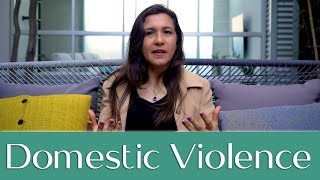
Transcript of a YouTube video by Karol Darsa, Psy.D. discussing domestic violence within families, why victims often remain silent (shame, fear, economic/cultural pressures, threats), the cycle of abuse (honeymoon–tension–violence), and practical first steps (reach out to a trusted person or professional, contact domestic violence organizations). The speaker also notes increases in domestic violence during COVID, links between childhood trauma and later victimization, and encourages trauma-informed professional help for survivors.
Chapters
Foreign hi, I'm Dr. Carol Darca, author, trauma psychologist and founder of Reconnect Trauma Treatment center in Los Angeles. Welcome to my YouTube channel to today we're going to talk about domestic violence and violence within the family. I wanted to talk about this especially because with what's going on with COVID the mental health decline is a huge problem right now. So there's an increase of drug use, alcohol use, depression, anxiety, trauma symptoms, PTSD coming up further. And unfortunately the violence has increased a lot. So I have decided to take this topic into my hands, into our hands today, and I'm going to explore, explain to you a few different ways. The most known topic about domestic violence is when there's physical violence between the partners. By the way, domestic violence can happen between a man and a woman, a woman, a woman, man and man, and from women to men as well. So yes, although the most common one is unfortunately from men to women. But don't be surprised if you hear the other examples as well. One of the first important steps is actually honesty. You have to be honest with yourself about what's going on and you have to be able to say at least to one other person in your life about your experience with your partner. If you can have an honest relationship with someone that you trust, that you know that they won't judge you, you have a chance that you can overcome your situation. Unfortunately, a very common symptom of domestic violence is when a person keep everything inside and isolates from the rest of the world because of shame and because of the fear that they're going to be pushed to leave the partner. So let's start there. Acceptance, sharing with someone. And then you look at different opportunities for either making corrections in the relationship or maybe even possibly leaving the relationship. By the way, my producer is interrupting me. I think she has some questions for me.
Yes, I wanted to ask you something. I'm actually a member in several, maybe a dozen women's support groups on social media. Now there's always shared problems there, but probably 99% of these problems are shared anonymously. That is to say that the victim never comes forward with her real identity, real name, and they always go through an anonymous name or they go through an admin of the group to share their problems and to look for support. Why is this anonymity? Why are women so ashamed, scared, or what other emotional feeling is there? Why are they not sharing their real faces?
People are scared to be judged, first of all, because if you are not in a domestic violence situation yourself, and when you see Another woman being abused, you may right away think, what's wrong with that person, rather than understanding the background of what's happening. So this feeling of a sense of incompetence or feeling like, oh, I'm a weak woman, that I'm staying in this abusive relationship is a very common thing. And that's the main reason of why women do not want to share. In fact, not only in social media, but they don't tell even their loved ones. Most of them are hiding for years and years about what really is happening inside of their homes.
So there's shame for being judged. What about fear?
There's tremendous amount of fear for two things. One is that most of the time they're afraid. The first thing that you're going to say as a friend or as a loved one is leave the guy, leave the man, leave your partner. And that is what they don't want to do. It's not an easy. Which I'm going to talk about why a person can't come out of a relationship. But that is the main fear. And the second fear is it could also be that you might report it to authorities and they do not want the police involvement or they don't. They're too scared of being homeless. They're afraid of losing their children. They're definitely afraid of not having enough money to support themselves. So those are all very legitimate reasons of why a person may not share with anyone. Another thing, actually, as I'm talking about it, is that the perpetrator might tell the victim or the survivor. I can say, don't ever tell anyone, because if you do, then I'm going to give you more beating. And so then there's the fear of being abused further. This you see even in childhood abuse.
As well, I understand in like, certain culturally formed groups, let's say spirit Spanish women support or, I don't know, Turkish anonymous women support, whatever. They're also ashamed that somebody in the group would recognize them. So they don't want to come out with their own names, but with, you know, false identities or with anonymous names. So what would you say? A woman or someone who's abused, what does he or she have to do? The first, the very first thing when the incident happens, if they can't call the police, that is like, it can be an emotional step. It can be, I don't know, is.
Really to reach out to someone or if they feel like that, the fear, again, that we just talked about, then to reach out to authorities, but not necessarily to take legal action. So there are women's rights organization or domestic violence organizations that actually can give you counseling over the phone. So finding a counselor or a case manager in this situation could be the best step. If you can't tell someone that you know so then they can really guide you. They can tell you legally what are your rights. They can tell you emotional support. They can see if you have a chance to find a home. Counselors will be much more impartial. So you are. Your best bet is to actually call a professional that specialized in that. Just even when you Google, you'll find domestic violence support organizations all around the world.
I want to tell you one last thing. Sorry for interrupting, but.
No problem.
I have been involved in several of these incidents online when somebody came forward saying they were severely abused or shut down inside their homes, they weren't being let outside the house, or their children were being abused. And when you try to reach out and comfort them or give them ideas as to how they can protect themselves, you know, come out, go to the police, call 911 and this and that, some women, as frustrating as that is, start protecting their partners. Well, I'm sure he didn't mean it. Well, I'm sure he was going through a lot. Yeah, I know he's having a lot of problems at work, and that's why, you know, he's very disturbed. Not disturbed wouldn't be the right word, but yeah, he's under a lot of stress. Yeah. I mean, you get beaten and then you protect that person that actually beats you.
This is a good question.
What's up with that?
It's a good question, because if you don't understand this dynamic, then you might be very judgmental towards a person who is in that situation. So there are various factors of why that can be. Again, it's in some way could be denial. Right. Why do we get into denial? Because if we accept what's really happening, then we have to make a change. So denial helps us to stay in the status quo. So if these people are not ready to move on from that relationship, they will prefer to put the blame sometimes on themselves. Right. Like, if I had done this, then my partner wouldn't have beaten me. Because if they accept that. No, has nothing to do with what I do, but my partner is an abuser, then they really will have to leave, and they're not ready to leave. That's one. The other thing is there's something called sort of a honeymoon phase in a domestic violence cycle. There's actually a domestic violence cycle. It starts this way. First, you get intimate with each other. You are you really enjoying. It's like the honeymoon, you know, phase. And then you start having a little bit of tension. It starts building up and then a conflict happen, fight and a, and a violent act. And after a violent act, there's usually sort of a return to the sort of apology and a honeymoon phase again. So right after this explosion, explosion or volcano kind of eruption type of violence, a person might be very apologetic and really assure the victim about how much I love you and I didn't mean it and you know, I'm going to change all sorts of promises. And then they go into the honeymoon phase. And from the honeymoon phase they go back into the violence again. During this honeymoon phase, the, the serotonins are so increased, the happiness is so high that the person actually will forget ever that they are going back into a cycle. So they are more latching on to this honeymoon phase of the good times that they'll forget the risk of really being hurt. That's why partners stay in the relationship. In addition to, like I said, there could be sometimes economical things, children and definitely cultural pressures depending on what country you're from. So education about this is, is very important just to understand how this violence cycle happens. So I'm liking these questions. I think I find them very helpful for our audience.
So unless they share this violence, there's really no help to begin with. Like, you go through this incident, let's say one day, and if you don't share it the next day, you keep it all bottled up inside of you, it will most likely happen again and again and again and you start living in your own hell, basically.
It's very rare that a violence occurs only once. It could, but if it's at least more than like twice, you better be prepared that this is going to be an ongoing thing. Yeah, perpetrators are perpetrators. A person can only stop being violent toward their partners if they are going through some sort of a therapy or treatment or really understanding and acceptance that because that's possible, a person can change. But yes, if you do not share at least with one person in your life, it's a very difficult thing to come out of it. Very difficult. So they need no judgment, please. If you have loved ones around you, do not judge them. Because if you do, what will happen is those people will actually back down from sharing much more and you push them towards isolation. So do not give them ultimatums about you're either leaving your husband, wife, whatever, or else type of thing because you will lose, they will lose you and you will lose them. So in summary, if you are right now in a domestic violence situation, reach out, accept what's happening, talk to someone, talk to a professional, convince your partner to go for couples counseling and find ways to either leave the relationship or resolve the current conflict. Please understand that right now, the more stress there's in life, the more chance there is for violence, unfortunately. And which is again why during this COVID pandemic situation, we have an increased number of domestic violence situation. I also want to address briefly the possibility that if you already are not are out of this domestic violence situation. So in other words, you're a survivor, but you are still feeling the symptoms of of this experience because this was a very traumatic experience, you might find yourself not wanting to ever get back in a relationship because you're afraid all your partners will be abusive, or you end up constantly attracting one abusive partner after another, which is another pattern that can happen. I'm gonna highly recommend that you really reach out for professional help in, in this situation because this is a hard trauma to work on. And if you find good therapists that understand domestic violence, the cy the trauma and, and work particularly from a body mind integrative point of view, you may really achieve and and feel sense of healing come up. It's definitely possible to heal from that. So I want to make sure that you understand that if you watch my other videos, you will know that I'm very passionate about the topic of trauma. And what one thing I forgot to mention is that if you have experienced domestic violence currently or in the past, chances are you might have experienced trauma in your childhood too. There's a big correlation between childhood trauma and adulthood trauma. So please, again, take care of yourself and seek out for help. Thank you for watching this video. I hope this was helpful for you. And remember, trauma equals disconnect and healing equals reconnect. Please stay connected. Sam.
More from Dr.

58 - HOW DOES TRAUMA AFFECT CHILDREN - IT MIGHT BE MORE THAN YOU THINK - HOW TO SEE SIGNS
57 - GAMING ADDICTION AMONG ADOLESCENTS - WHAT ARE THE SIGNS AND HOW TO DEAL WITH IT AS A PARENT?

55 - OCD - WHAT IS OBSESSIVE COMPULSIVE DISORDER? WHAT ARE THE SYMPTOMS? HOW TO DEAL WITH IT?

54 - ARE YOU NERVOUS ABOUT YOUR FAMILY GATHERING FOR THE HOLIDAYS? I HAVE SOME TIPS FOR SURVIVAL :)

53 - DO YOU HAVE A HARD TIME KEEPING YOUR NEW YEAR RESOLUTIONS? THIS EPISODE CAN HELP