23 - HOW NOT TO TRAUMATIZE YOUR CHILDREN - PLEASE, DON'T DO THESE THINGS
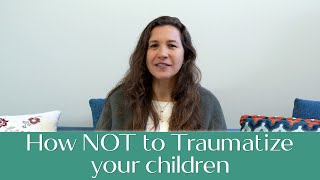
A short, practical parenting talk by Dr. Karol Darsa (psychologist, founder of Reconnect Trauma Treatment Center) filmed in her Pacific Palisades office. Dr. Darsa lists ~20 common "don't say" statements and parenting mistakes that can stress or traumatize children (examples: silencing feelings, projecting parental trauma/anxiety, blaming children for parents' feelings, triangulating about the other parent, comparing siblings, shaming around food/weight, overpraising tied to approval). She emphasizes allowing emotions, teaching emotional-regulation skills, setting and following through on boundaries, keeping adult conflicts away from children, and encouraging parental self-care. Ends with invitation to comment and referral to trauma treatment resources.
Chapters
Hi, I'm Dr. Carol Darza, author, psychologist, and founder of Reconnect Trauma Treatment Center. Welcome to my office. Actually, today we'll be filming from my office in Pacific Palisades in California. And today's topic is how not to traumatize your children, how to raise them consciously. And I'm going to give you sort of a list of what really not to say to your kids, which obviously means what to say would be the opposite of all of that. So I want to acknowledge each and every one of you who, of course, as parents, and I am one parent myself, we are really doing a very difficult job. So please do not take my suggestion as any judgment, because I know how difficult it is to be a parent. But despite all your intentions and all your knowledge and all your love towards your kids, you may make some mistakes. And the reason why I know that because as a trauma psychologist, when I work with clients who talk to me about their childhood trauma, the stuff that they share, I can easily see, see that the parents actually had good intentions. But unfortunately, the things that they said, the messages that they gave, could be traumatic or stressful. So in my list, not everything is traumatic. So don't freak out as you hear it, but just stay conscious. And let's give our best to our kids so that they don't have to grow up with negative pictures and images and negative messages throughout their lives. So I have a list. My number one, allow them to have feelings. Don't rush to soothe them right away. Don't tell them not to feel something. Don't try to just make them happy. Well, that sounds kind of funny as I say it, because I'm almost saying, don't try to make your kids happy. What I'm trying to say is that allow them to have all sorts of feelings so that they grow up in an environment where they understand and it's okay if I have sadness, it's okay if I have anger. And then I don't always have to be angry. I don't always have to be happy that every feeling that I have is welcome and that I will still be taken care of. For instance, sometimes parents say, stop crying or don't worry. I don't know, don't be afraid. You know, things like this. Again, the intention seems like we are trying to suit them, but it actually just gives them the message that they shouldn't have feelings and that we only like them when they have good feelings. Second one, don't project your own childhood issues, unresolved feelings, or traumatic memories onto them. This is a difficult one. But I actually work with a lot of parents who were abused as children themselves, Especially if they. They had any physical or sexual abuse. They tend to be very afraid that the same will happen to their children. I mean, of course I can't tell them not to be afraid, but it's so such a fine line between being afraid, being cautious, and really transferring that fear to your child. So if you are abused, then you might look at your child and constantly fearing that they're going to be abused, Then you might end up being sort of overprotective or giving messages like the world is not a safe place. You know, such things like this. So just, again, be careful about where your issues are, where your insecurities, where your trauma is, and how not to transfer that to your kids. Actually, a lot of negative feelings are quite contagious, as I use this word. I know it sounds sort of unusual, but if you have anxiety about something and you are constantly living with this anxiety, your child will feel that and then they will think living in a state of anxiety is a norm. And then they don't really have a chance to sort of calm down their nervous system or have a sense of really calm environment. So they will live always with this anxiety. Don't say. Here's a couple of other don't say statements. I do everything for you, or I sacrifice my life for you. You know the message that kind of like, you're a burden, I did so much for you. And if, if I didn't have you, I'd be free, or I'd be, I don't know, happier, or I'd have a career, but I sacrificed my career for you. When you say I do so much for you, you mean to say how much I love you and I do this from my heart. But what the children hear is, oh, no, I was a burden, and because of me, we're not living in a better house. Or because of me, my mom couldn't finish her career. Because of me, we don't have this amazing life that my parents deserve. So just know that what you meant to say could be really misinterpreted by your children. Because of that, don't ever talk about the other parent. Whether you are separated, divorced, or still living with your spouse, it is very common to be frustrated, Right? If you have another partner that you're sharing your children with, make sure that you're not judging them. Make sure that you're not saying anything about, oh, you know, how your dad is or, you know, how your mom is and that kind of thing, even within a joke. The message that the kids here is, my parents are not a unified front. They do not like each other. And then they kind of start feeling like, oh, I have to choose a side. Am I going to be on mom's side or am I going to be on that side? This unfortunately happens more when parents are really at a war, like, such as following a divorce or during a divorce. But it could happen even if you're married. So this is a very important message. Don't let the child be in the middle of an adult relationship. Whatever you are dealing with, make it your own parents even, or your spouse. Keep the kids separated from that. So don't triangulate them. That is something where it's literally think of like a triangle, right? You, the spouse and the child. It should always have that separation. Children always should be children, no matter how old they are. Your relationship with your spouse or your ex spouse should be separated from them. Don't make them responsible for your own feelings. So a lot of times when we're angry, we say, you make me angry, you made me sad, you make me tired. And, well, it kind of seems natural to be, you know, to be saying that. But the message has to be that children are not responsible about your feelings. It doesn't mean they can treat you however they want. It doesn't mean they get to be rude or hurtful or abusive towards you or, you know, act like spoiled kids, of course. But you as an adult are responsible for your feelings. This, by the way, gives a great message to your children that they are also responsible for their feelings. So, yes, you are there to take care of them, but that there's a separation of each of us as we are individually responsible. And that that means I can take care of myself and that you as a child, don't have to worry about me. Don't compare them to anyone else. I don't know about you, but a lot of us grew up with sort of in the family. We each had a role. You are this one and your sister is that one, and the brother is that one. And somebody's better than you, somebody's worse than you, and you create some sort of a competition. Don't compare your children to other friends also, nor to their siblings. Especially with the siblings. It creates. Creates a lot of sort of sense of incompetence or jealousy and wanting to be a better child. There are different ways to encourage them. If you are trying to encourage them to do something better, first, actually show them where they're good at. And once you find that, then you can also talk about maybe where they're really lacking something, a discipline or a motivation, and gently encourage them with, rather than being judgmental about it. Don't scare them with food. So don't say things like you're too fat or you're too skinny or you're going to gain weight, or don't put the fear of being fat in their minds. A lot of my clients who struggle with eating disorders unfortunately grew up with these kind of messages. And sometimes these messages are direct or indirect. So sometimes parents didn't tell them, like you are being fat or anything, but that they themselves were so worried about their weight and their appearance that the children really picked up the message of the only way for me to be happy is if I am thin or if I am. If I look a certain way, I have to appear a certain way to be really accepted or to be loved by my parents. I know the list goes on and on. By the way, there's a lot. And I actually was trying to really summarizes. I have about 20 items, maybe. But there's a lot of little mistakes like this as parents that we might make. So we have to be very careful. Here's an interesting one. Be careful about how you compliment them. So I know all the way till now I said don't judge them, don't say negative things. And now I'm saying don't compliment them too much. So if there's too much focus on sort of where they're good at and really no focus on anything about where they're not so good, they might really interpret that as that is how my parents love me. So if I'm really good at school, then my parents are gonna love me more. So I'm gonna focus all my attention there. And that's all I'm going to do because I'm looking at my siblings who are not loved as much as me or who are constantly judged because they're not good at school. I don't want to be like them. So I'm going to focus a lot on that. Let them be proud of their own achievements rather than you constantly saying, I'm so proud of you. I'm so proud of you. This sentence kind of creates a dependence on your approval sometimes. So just ask them how they're feeling about what they're achieving at school or how they are with their friends. Don't judge them for being childish. Like, that's so immature or that's so childish. And well, yes, they're children. So it will be important to know their age appropriate behaviors, their age appropriate feelings and thoughts so that you're not labeling them as too mature or too immature and kind of rushing them to grow up way faster than what's really necessary. Allow them to be kids. Allow them to have. They're just they playful, childish cells. Put boundaries and really stick to them. So boundaries is actually a way to say to a child, I care about you. So when I say I need you to do this and I need you to do that this, this way and I expect you to do that, if they don't do it and you told them that you will give them consequences. Please follow through with your words. Because if you can't follow through with your words, then, then even when something positive comes and they need you, they're going to think I can't count on mom or I can't trust my dad's words. Because look, one day he says this, but then the next day he doesn't follow through. He does something completely different. So mean your words, follow through with them and stick to your boundaries. This way you can be really role models for them. Don't make them center of your universe. A lot of parents who again sacrifice so much of their lives, like they're not going to do what they want to do in life and they care about their kids, which is great. Those kids really grow up with parents being physically there. But then if your whole well being and your whole happiness depends on that child, you are going to probably micromanage their behaviors. You're going to say, okay, if you do this, then that means like you're a reflection of me, right? So have your own life. Have a life with your kids, but have your own life, whether it's a career or a hobby or your own feelings or your own friends and your own family so that the child does not feel responsible for your happiness. I actually met many, many adults who during their childhood felt like if they left home, their parents were going to completely fall apart. And they felt like they shouldn't leave home so that they could take care of their parents. So that's another important area where unfortunately a child can be traumatized. Last but not least, teach them emotional regulation skills. So we teach kids how to tie their shoes, we teach them how to make their beds, we teach them how to their, how to do their homework. In fact, the schools teach a lot of these things, but unfortunately no one's maybe teaching them what to do. When you're angry, how do you deal with your emotions? What do you do when you're sad? Conflict resolutions. And I wish in fact, that was taught in schools. But since it's not, you take that job into your hand and teach them how to deal with your their emotions. Let them know that all their emotions are welcome, all their parts are welcome, even if they're behaving bad or they're behaving good, that you love them and you accept them. Either way, as I said earlier, we all have a very difficult job in our hands. It's a very important job, raising our kids. So I want to congratulate you for that. And please, please, please write down more underneath in the comments some other ideas, what other things not to say to your kids that I haven't covered here. It'll be great to share this and have a collaboration with you all. If you really relate to some of these earlier traumas that you think get in your way to be a better parent, contact us. We are here, all of us. All of our therapists here are trained at Reconnect to treat the trauma so that you can be a better parent. And remember, trauma equals disconnect. Healing equals reconnect. Stay connected. Sam.
More from Dr.





58 - HOW DOES TRAUMA AFFECT CHILDREN - IT MIGHT BE MORE THAN YOU THINK - HOW TO SEE SIGNS

57 - GAMING ADDICTION AMONG ADOLESCENTS - WHAT ARE THE SIGNS AND HOW TO DEAL WITH IT AS A PARENT?


55 - OCD - WHAT IS OBSESSIVE COMPULSIVE DISORDER? WHAT ARE THE SYMPTOMS? HOW TO DEAL WITH IT?

54 - ARE YOU NERVOUS ABOUT YOUR FAMILY GATHERING FOR THE HOLIDAYS? I HAVE SOME TIPS FOR SURVIVAL :)

53 - DO YOU HAVE A HARD TIME KEEPING YOUR NEW YEAR RESOLUTIONS? THIS EPISODE CAN HELP