27 - SELF-ESTEEM ISSUES AND TRAUMA. WHAT ARE THE SIGNS? WHAT CAN YOU DO?
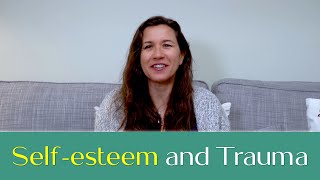
A short educational YouTube talk by Dr. Karol Darsa explaining how low self-esteem shows up (both obvious and hidden signs), how negative self-talk and early/indirect messages from caregivers or abuse contribute, and why treating underlying trauma (not only repeating affirmations) is crucial. The video includes practical exercises to track self-criticisms, trace their origins, and encourages seeking professional help while offering hope that self-esteem can improve.
Chapters
Hi, I'm Dr. Carol Darza, author, psychologist and founder of Reconnect Trauma Treatment center in Los Angeles. Lately I've been asked a lot about self esteem issues and how it's related to trauma. So I decided to talk more about this with you guys. What is self esteem? Self esteem is self love, self confidence and self respect. So if you are lacking basically a sense of not trusting yourself or not liking yourself, or not even loving yourself, you might be struggling with self esteem issues. What kind of things mean that you are actually lacking self esteem or. Well, some of them are very obvious. You can actually talk to someone and say they really don't like themselves because a person will say things like I hate myself. Okay, that's very obvious. I hate my body or I hate that I am such and such. Right? Referring to some behavior. So those are very common signs of low self esteem. But then there's sort of the hidden ways and those are the ones that you might not know as much. For instance, if you have a difficulty to say no to someone because you think you always have to say yes, that could be a sign of low self esteem. If you have a hard time to ask for what you need, that might be also a sign of low self esteem. You might think you're not worthy of asking or I don't want to inconvenience someone, I don't want to take someone's time. Those are all signs. If you have a difficulty to set boundaries, right, it's sort of like saying no. But let's say what you need, you absolutely need this and that to be healthy. And then when people ask you to break those boundaries, you just willingly break them. Those are some other signs of low self esteem. So we're going to continue to explore that and at the end I'm going to give you guys some tips of how to overcome that. So let's start. Okay, so let's start with how do you talk to yourself? Because to me that's a very important way of looking into how. What is your attitude towards yourself, right? So a lot of people are very aware of the self judgments that they have and others are not. So here's my homework for you. Take about a couple of hours or maybe even a whole day out of your week and write down a list of what you don't like about yourself or and also the statements that you say to yourself, something like when you're driving, you took the wrong exit. What is it that you say to yourself at that time? Oh, I'm so stupid. Do you Say things like I'm so fat. Oh, you can never do anything right. Just really write down everything that you said to yourself throughout the day, okay? And then take that piece of paper at the end of the day and really read it because you might not even become aware of how frequently you actually talk to yourself that way. And then really imagine, imagine someone actually you love very much. Could be your child, could be your spouse, could be your best friend, your grandma, your dog. And imagine yourself reading this list to them and saying these horrible things that you say to yourself, to them. How will they react? Will they still want to be your friend? Will they still want to be around you? Or could you even imagine that you talk to someone else the way you talk to yourself? So our words, our language to ourselves plays an enormous role in our way of being in our self esteem. And of course, if you constantly say negative things to yourself throughout the day, then you are going to feel often probably beaten down or in a bad mood, right? Well, here's the second part of this exercise. After you look at that list and sort of become aware of how you talk to yourself, start writing down names next to your statements of who these statements remind you of. So I'll give you guys an example. Again, let's say one of your sentences is I'm so stupid. And take a moment, think about it. If anyone in your entire life has called you stupid before did, is this, is this a message you got in your childhood? Is it, was it your teachers that were telling you, were you maybe failing at school? Is it your spouse? Right? Or is it your boss? See where it's coming from? Right? And it doesn't always come from childhood, but often it does. Then do the same exercise with the second one. So some of your sentences, you're not going to be able to find where they're coming from, but some of them you are. And so that should also give you an idea of I wonder if maybe really this is my voice or am I actually repeating maybe my parents voice who used to be very critical of me. So pay attention to that. Those are very important things. The awareness is crucial in terms of really being able to work on your self esteem. So let's start there with the awareness, understanding the, the root of it. So there's sometimes direct messages that you might have gotten, like in the example of the stupid or you're fat, this could be a direct message that you got growing up. But there's also the indirect messages which also could be very stressful or, and, or very traumatic, right? So if your parent maybe never criticized you, but they were not available to talk to you, they were drunk or they were out to lunch, they were just not interested in your well being, what do you think you learned? What is the message that you heard at that time? I'm not lovable. I'm not worthy of their time. Alcohol is more important than me or my parents left me. I must not be important. I must not be lovable. So all these messages become actually the root cause of your current self esteem issues. So it's not an easy thing to find sometimes these indirect messages. But if you continue to really look into the behaviors of the people who raised you, you'll be able to find some of these messages that are hidden in the behaviors. Let's look at other kind of traumas and how that might have also affected your self esteem, because I've been talking about sort of the messages, but actually abuse, physical abuse, sexual abuse, emotional abuse, directly affects someone's self esteem. I've been working for 23 years as a psychologist, and one of my specialty is the sexual abuse. And I've worked with survivors who have been through a lot of different situations. And I see one common thing, the lack of self esteem and the tendency to self blame, which really go hand in hand together. So if you have been abused by someone else, it's a very interesting phenomenon that happens. And no matter again what the situation is, you could have been a baby, you could have been an adult, there's sort of a tendency to think, I must not been a worthy person and that's why I was abused. This, if you're not abused as a listener, this might not make sense to you, but if something happens on a very unconscious level and it's, it's a sign of a trauma, this is actually proof that a person has had that trauma and they came to believe that about themselves. So if you can recognize that as a trauma symptom, you have an easier time to work with it because then you can really understand that it's actually not that I really think love myself or that I don't like myself, but it's that I was made to believe that I'm not worth it. And it's actually really about the trauma. So if you have a chance to work on that trauma that caused this, you'll see that automatically the self esteem will improve without even having to change your language. So a lot of the popular belief to work on self esteem is actually write down the negative things and write the positive statements and just repeat to yourself. I'm sorry, I'm making like sort of a light thing of that. But I know people who even go in front of the mirror and say things like, I love you, I love you. Well, I don't think that is as effective as people think because there has to be a curiosity about what the cause of this belief was and how to get deeper in it and then really make contact with what happened. So everything has a reason. Just to change the behavior or just to change the language is almost like putting a band aid. So a deep cut in your arm, yes, you won't see the injury anymore, but the pain and the injury is still there. Right? So that's sort of my approach to trauma and to self esteem. It's not a light issue. There's a cause of a, of a trauma and then we just want to really look at it and see how you can overcome it. Of course you can get professional help, which will be great, but if you want to work on yourself on this, you can do that as well. Find the cause. Become aware of your tendencies to beat yourself up. Right. Verbally and also even behaviorally. Right. Like if you eat unhealthy or if you do drugs. Those also are related to self, self esteem issues, right? Not liking yourself and then finding ways to really connect them to trauma and then see it as this is my traumatized experience and that's why I am thinking of myself that way. So if you show empathy for that trauma, you'll be much more likely to actually accept yourself and be more empathic, compassionate and caring towards yourself. When you make a list of what you don't like about yourself or the self judgments to that, you say to yourself, I'm not suggesting that you become in, you know, in denial. Like you can look at the list and go, well, I'm not very good at this and that's why I don't like myself. Well, that might be true, but the goal of liking yourself or loving yourself is not based on the behaviors. So it's not like, well, if I become very successful at work, then I'll love myself, or if I become thinner and beautiful, then I'll like myself. You like and love yourself despite the behavior, despite what you achieve, of course you can still be motivated and change your behaviors and get in shape or get a career. But regardless who you are, how you behave, can you still accept yourself and love yourself the way you are and then you can really improve your self esteem? I want to assure you and give you hope that this topic of low self esteem is something that you can actually improve. I don't want you guys to think, oh well, that's how I am and I'll live like that. This is definitely an improvable topic and you can continue to work on yourself by yourself with the support of someone that you love or a professional can help you as well. I want to encourage you also to ask me questions right below or email me@drdarsareconnectcenter.com and hopefully I'll continue to be a guide via YouTube videos this way as well. Thank you for joining me today. Remember, trauma equals disconnect. Healing equals reconnection. Stay connected.
More from Dr.



58 - HOW DOES TRAUMA AFFECT CHILDREN - IT MIGHT BE MORE THAN YOU THINK - HOW TO SEE SIGNS

57 - GAMING ADDICTION AMONG ADOLESCENTS - WHAT ARE THE SIGNS AND HOW TO DEAL WITH IT AS A PARENT?

55 - OCD - WHAT IS OBSESSIVE COMPULSIVE DISORDER? WHAT ARE THE SYMPTOMS? HOW TO DEAL WITH IT?

54 - ARE YOU NERVOUS ABOUT YOUR FAMILY GATHERING FOR THE HOLIDAYS? I HAVE SOME TIPS FOR SURVIVAL :)

53 - DO YOU HAVE A HARD TIME KEEPING YOUR NEW YEAR RESOLUTIONS? THIS EPISODE CAN HELP