31 - ANXIETY - WHAT ARE THE SIGNS AND HOW TO DEAL WITH IT
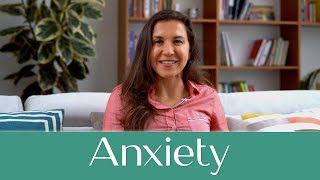
Dr. Karol Darsa (Reconnect Trauma Treatment Center) explains anxiety as a spectrum from mild preoccupation to panic, emphasizes how past trauma can 'hijack' the brain into past- and future-focused hypervigilance, and offers practical strategies to reduce anxiety. Core tools recommended include present-focused mindfulness, body-focused grounding (sensory awareness), thought-control pauses, EFT/tapping and lifestyle routines (sleep, exercise, healthy eating, journaling). She also briefly notes panic-attack prevalence and encourages daily, preventive mental-health habits; she references her book The Trauma Map and closes with the motto: 'trauma equals disconnect, healing equals reconnect.'
Chapters
Hi, I'm Dr. Carol Darcah, author, psychologist, and founder of Reconnect Trauma Treatment center in Los Angeles. How do you deal with anxiety? Do you find yourself constantly worrying about things that could happen or have happened today? We're going to talk about that, so let's start there. First of all, what are. What is anxiety? What kind of things you might be struggling with? What I noticed a lot with the clients that I work with is the constant rumination, right? It's sort of this obsessive, like thoughts going around and around in circle. People talk about it like a loop. Like you can't stop thinking about it. You're really worried about it. So it could be things that you have done in the past. So it's like the past haunting you. You might be worried about things that you are doing right now or you're not doing or you're supposed to do. And also there's a lot of anxiety about the future. So this is a spectrum. You could find yourself anxious, just like a normal, a little bit preoccupied to all the way to anxiety attack, where you're just like almost having panic, like symptoms, and you're very irritable all the time and you're fast, you're running around constantly worried about it. Right? So we don't want to live with a constant anxiety state because it's really unhealthy for our body and of course, for our mind. So where's this anxiety coming from? Think about it. Well, a lot of people might not actually make the connection with the past. And of course, because I'm a trauma psychologist, I'm going to tie into a little bit of the childhood stuff and the trauma. So what happens during trauma is our brain gets hijacked into the past. So it's almost like we some level, we know the past is the past, but that part of our brain that's really connected to holding on to the emotions actually does not almost know the difference. So we're stuck in the past and we're trying to live in the present, but we're pulled in to the trauma or we're pulled into the earlier stress. And so that's what also leaves us in a constant anxiety state. Because if you grew up in an environment where you are not really calm and collected and your parents were not really present and soothing for you, and you had to be constantly on guard or you were hurt or abused on a regular basis and you had to be hypervigilant in order to protect yourself, then your nervous system really doesn't have a Chance to settle down and really know the difference between the past and the present. So just even understanding that, that the brain is hijacked by the past could offer you a different perspective into this. So the another interesting thing with trauma is that it also hijacks you into the future because the brain goes, okay, this happened in the past. More likely it's going to happen again. So not only you are haunted by what happened, but now you are haunted by what could happen again. So you're constantly again back to that hyper vigilant state of I'm going to get hurt, something bad is going to happen. It's almost like you're always waiting for the other shoe to drop on an ongoing basis. So your baseline, in fact, is sort of like this, not even ever, you know, really relaxing. So that's where the mindfulness and focusing on the present time comes in. So that's one of the most important tools that you can practice is to bring your attention to here and now. Well, you could say, well, I'm worried about now, right? With what's happening, I don't know, I don't have a job or I'm stressed about my relationship, yes, but I'm not talking about that way of being now, but literally this second, even as you're watching this video, are you aware of just even being in the room? Or you're sitting here with me, but your mind is really somewhere else, so you're really traveling constantly slowing your internal pace. And just focusing on the here and now can actually help the nervous system calm down and to orient yourself to the moment, to the here and now. Right. Because as I was saying, our brain is hijacked by the present or the future. Sorry, by the past and the future. That's the reason why when you orient yourself to here and now, you are now looking into some sense of safety. So find a sense of safety of where you are and see within that if you can find some calmness and some slowing down. So let's talk about an example. I have a client who in his childhood, throughout the elementary school, in fact, he was bullied quite a lot. And now how does that show up in his adulthood? At work, he often has conflict with his co workers and he's really waiting almost a moment where he's going to be bullied again. So he's listening. He has an interesting way of filtering words because of the trauma. Right. His brain is again hijacked into that. So his orientation is constantly watching for words that he interprets as they're hurtful. Or they're bullying me, or they're ganging against me. And well, some of them could be true, but. But some of them could be completely an impact of the past. So how I helped him is starting to really reorient himself to here and now. So when he talks to his boss or when he's talking to his co worker, to really pay attention to that person, is he even seeing the person for who they are or is he almost seeing his school friends from elementary? So sometimes when you are traumatized, you are not even really paying attention to the person. You have this fog in your eyes because of how much impact you carry with you. So that's where the power of the presence come in so that you can really focus on how you're safe today. Another way to feel that safety again and decrease the anxiety is focusing in your body. So if you notice just the physical sensations, knock thoughts, not feelings. Not how I'm feeling now, but what am I sensing in my body just now as I talk, as I listen, as I interact with people, like I just felt some warmth in my room right now. My hands are just kind of a little bit on the warmer side. I can feel my hair. As I start doing that, my thoughts start reducing. In fact, my speech got slower. Right. So that's actually one of the best medicine for anti anxiety. There's of course a lot of other ones, but this is a very simple one where you can even do without anyone else's noticing about that you see in my other videos I also talked about EFT tapping technique and some grounding techniques that if you use them regularly, you can definitely manage your anxiety. So here's an interesting thought that a lot of people don't think about when they think about anxiety. But I actually think it's sort of culturally imposed on us because we live in a world that's all about doing rather than really being. I mean, look at our pace, right? Everything is very fast. We gotta go, what's my schedule? I gotta look at my phone and I gotta go, go, go. I gotta take the kids, I gotta run here and there. That kind of a speed actually is really not working for us. It's really creating more anxiety and then tendencies to be perfectionist is really happening. So if you actually look, the more modern the world is, the more technology oriented we are and the more stimulus and colors and noises there are out in the world, the more anxious we might be. Our nervous systems have literally no moment to calm down and to settle down, which is why it's great to Go on nature or to go on a vacation where a lot of us dream of just being on the beach for two days, three days, five days, and not really move because that really helps us slowing down. So you can do this slowing down internally, even if you're not actually going to the beach as an ongoing practice, so that all of a sudden you're not finding yourself completely overwhelmed. So another important thing is to watch your thoughts. If you live a lot in your head, where you're just constantly analyzing and ruminating, which I was talking about it in the beginning, you could actually use what's called a thought control technique. Yes. So it's not as simple as just control your thoughts, but it actually is helpful when you put an intention of being really aware of every thought that comes into your mind rather than just going through them, you know, so automatically pause for a second when you have so many thoughts, especially if of course, they're negative thoughts, and then just go, okay, do I want that thought? Do I stay with this? Or can I actually just put it aside and make a choice of tuning your attention out of that thought into just here and now? This is actually a matter of a practice. It's. It's maybe more difficult in the beginning, but it's achievable. It's a matter of discipline. If you just really practice every day to bring your attention to here, you'll find yourself much less anxiety oriented and overall you feel much healthier. Well, let's talk a little bit about also panic attacks, because it actually affects 4 million people in the United States. That's a lot you probably will remember from, I think, Robert De Niro's movie, when he has a panic attack and he thinks he has a heart attack and runs to the hospital, and then they tell him, hey, you're having a panic attack. And he gets really, really angry. Right. It's because it was more okay to have a heart attack, but not okay to have a panic attack. So here's an interesting way of actually dealing with panic attacks, which is the cousin of anxiety attack to me, is to know that you are having a moment of panic as you are having it. Because what happens is a person starts having anxiety or panic attack, maybe even the beginning, and then they get an anxiety about anxiety. So believe it or not, let's say your anxiety level was 5 out of 10, and the moment you feel that, you get anxious about it, and that 5 goes all the way to 9 or 10. Right? So be okay with the feeling as it comes. It's not a Bad thing to have anxiety. It's not a bad thing to have a worry about something, but you can actually control it if you don't judge it so much and make it much worse. So it's definitely manageable this way. It's important to know what kind of things causes anxiety for you. So in addition to the tools we talked about, do you actually understand what is the root for your anxiety? Yes, as I talked about, there could be prior past traumas, but also currently, are you at a job that's too stressful? Are you around people that are maybe not healthy for you? Are you doing enough exercise? Are you eating healthy? Do you have a routine of healthy sleeping and waking up on time and taking care of yourself? Are you eating healthy? So all of those things add up and can also contribute to your anxiety. Are you taking supplements? Do you go for nice walks or do yoga? You have to consider yourself as an ongoing project that you will need a consistent support and care. So no, mental health is not something where we just do maybe once in a blue moon where we're in a crisis, but it actually really requires daily efforts to feel good. It's no different than really physical exercise. Right. So if you never exercise, don't be surprised that you will not be a fit person. Right. Emotional well being, it really is in the same way. So a lot of people unfortunately wait until they can't take it anymore and they come in crisis mode and they go what do I do? Nothing is helping. Well yeah, at that time the tools are that we're going to teach is going to help a bit less or not so fast. But if you take care of yourself daily. So here's how a day could look. For instance, wake up and have some time of a quick 5 minutes, 10 minutes, either meditation or grounding practice, put an intention for the day so you're waking up being very aware. Spend time either journaling and or a quick exercise could be a real workout or maybe a short walk just to get yourself in your body, have your routine, know what your day looks like if you go to work and whatever. Eat healthy throughout the day and have healthy thoughts. So don't say negative things about yourself because that'll increase your anxiety. And then even at night, have few minutes, maybe read a book that's inspiring or when you're driving back home, watch, listen to an audio about an inspiring person just so that throughout the day you're feeding yourself with positive things, things that are calming your anxiety. It is always easier to prevent things than actually trying to take care of it when it's already too late. So continue to take care of yourself on an ongoing basis. I also have some more little strategies and tools that I talk about in my book the Trauma Map, so feel free to look at that and or my other videos as I mentioned earlier. Thank you for watching again. And remember that trauma equals disconnect, healing equals reconnect. Stay connected.
More from Dr.


58 - HOW DOES TRAUMA AFFECT CHILDREN - IT MIGHT BE MORE THAN YOU THINK - HOW TO SEE SIGNS

57 - GAMING ADDICTION AMONG ADOLESCENTS - WHAT ARE THE SIGNS AND HOW TO DEAL WITH IT AS A PARENT?
55 - OCD - WHAT IS OBSESSIVE COMPULSIVE DISORDER? WHAT ARE THE SYMPTOMS? HOW TO DEAL WITH IT?

54 - ARE YOU NERVOUS ABOUT YOUR FAMILY GATHERING FOR THE HOLIDAYS? I HAVE SOME TIPS FOR SURVIVAL :)

53 - DO YOU HAVE A HARD TIME KEEPING YOUR NEW YEAR RESOLUTIONS? THIS EPISODE CAN HELP