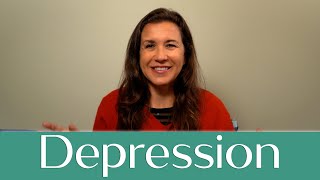
This is a YouTube video transcript of Dr. Karol (Karol Darsa, Psy.D.) giving mental health guidance and practical self-care tips for people feeling depressed, anxious, or alone. The speaker opens with US prevalence statistics for mental illness (adults and youth), emphasizes that many cases begin early in life and increased during the pandemic, and then offers a numbered list of daily self-care recommendations (enjoyable activities, journaling, sleep/exercise/nutrition, slowing down, social support, volunteering, quieting the mind, breaking monotony, avoiding substances, and daily mental-health practice). The clip closes with contact information and a brief therapeutic slogan about trauma and reconnection.
Chapters
Hi, I'm Dr. Carol Darza, author, psychologist and founder of Reconnect Trauma Treatment center in Los Angeles. Do you feel depressed or anxious? You're not alone. I'm going to give you some mental health tips. Well, let's talk about first of all the statistics of what's happening in the United States. So 1 out of 5 adults experience mental illness each year, 1 out of 20 adults experience serious mental illness each year, and 1 in 6 youth, and when I mean youth, it's 6 to 17 years old experience mental health disorder each year. Then 50% of all time mental illness begins by age 14 and 75% of them by age 24. As you guess, these numbers have increased during pandemic. But even then, even before, the numbers were actually ongoingly increasing. In 2017 and 2018, studies show that 19% of adults experience mental illness and that's an increase of one and a half million people over from the last decade. But where they're actually seeing the worst cases are among youth. Again, 6 to 17 year old. I would say, especially during COVID because there was so much home restrictions. And that is an age of really being outdoor and with friends and not really at home with family. I would say that makes perfect sense of why the depression and anxiety increase tremendously among young people. So again, I gave you these statistics because I wanted you to know that you are not alone. So what do you do? I have a list of few items, but most importantly, I'm going to actually first say if things are too bad for you and some of the suggestions that I have, it's not sufficient. Please seek professional help. There are certain situations that actually getting professional help is the best answer. And it doesn't mean you are weak. It's, it doesn't mean you are not good enough or strong enough, but that you just need support of somebody who understands and somebody who can stay objective. Well, my number one item is do something that you enjoy without even realizing. If you find yourself constantly between, you know, jobs, kids, house chores and other things that you have to do, and of course again the home, you know, stay at home restrictions or, or fear of being ill, you might spend actually most of your day just working and doing things that are not fun. So even if you just choose one activity, something that, where you do one hour, even a week, just do something that you enjoy and really lift your spirit. That way it goes a long way. If you can do more than once a week, it's even better. Don't spend too much time thinking, okay, what do I mean by that? A lot of us really sort of ruminate. It's not actually that I'm saying like don't think about what to do, but don't go around and around in your thoughts, especially things that you can't resolve by thinking. Things that maybe you can't accept or I'm sorry, things that you have to accept but that you can't change. Right. If you find yourself thinking about it a lot, then you might really feel more disconnected from just being in the moment and being in your body. And it robs you from the opportunity to enjoy what's happening now. So if you're just outside on the street walking and getting the sun on your face and actually maybe you would enjoy that, and all of a sudden you find yourself thinking what you have to cook next or how do you have to take care of your kids, homework or the fight that you had with your boss. You will really miss an opportunity to be here. So don't go too much into your head. Spend a little bit more time on being here in your body and just noticing what. What's happening. Currently, journal your feelings daily. And I mean daily. It's so beneficial if you have every day just even 10 minutes, 15 minutes, I do about half an hour every day, an opportunity where there's no censoring, there's nobody to judge you and there's no right or wrong. And you just write out whatever is coming out for you. It's almost a sense of purging, right? The stress. And you start your day positively. So you write your feelings, maybe the negative, you had a bad dreams or something that worries you. And then maybe do a little affirmation at the end of that, journaling something, a good intention of the day, how do you want your day to be? And then you can start your day that way. Take care of your body. This is so important. The body. Physical health is not only for physical health. It affects your emotions tremendously. The connection between body and mind, the Eastern philosophies talk about that for thousands of years. So which means sleep at least six to eight hours a day. Try to sleep on time and wake up around the same time. The body gets used to that exercise, right? Even if it's just walking or whatever that you find joyful, but some movement, the blood circulation helps the mood regulation as well. You can do yoga. Also eat well because nutrition affects your mood. Actually there are books written about mood and food, the connection between them and get some sunlight. Being in the sun under the sun actually really helps our mood Number six, slow down and be realistic. Don't rush everything. We are, unfortunately in the Western hemisphere, we're very used to just doing everything very fast and just sort of going around and doing things as fast as possible. The faster the better, right? Right. But that's really not good for our nervous system. Our nervous system has a need to calm down, which is why we sleep. But if you're just sleeping eight hours, then you have 16 hours awake. You have to find ways to slow down. Maybe in the middle of your work, take 10 minutes just to, you know, center yourself, or take a nice, a few deep breaths and just slow your thoughts down, slow your pace down, or do one activity like yoga that's much slower than your regular heavy workouts at the gym. Surround yourself with good people, good people with good energy. Right. This is very contagious. Actually, other people's moods could be very contagious for us. So if you're around people who are constantly negative and unhappy, you'll find yourself more unhappy. So find at least one or two people that's sort of more upbeat and happy and positive and that you can just really share good moments with them. But also it's not just their mood, but it's also how they treat you. So surround yourself with people who treat you right and that will affect your mental health tremendously as well. Volunteer your time and energy to help someone else. There's something about giving to someone else. There's something about hearing that what you did for someone else made their day or helped them feel better about themselves or you helped with their child, whatever that is. Right. It could be just even volunteering for your friend. If you can't volunteer for an organization or donating your couple of hours a week of your time, you will really feel good about yourself. And some people actually say, oh, so it's only because so that I feel good about myself? Well, yeah, I mean, if you're going to feel good about yourself by giving something to someone else, why not? I mean, I guess I'm in that field, right. As a psychologist, that's why I love my job, because I want to help people. And when they feel good, I feel good. So as selfish as this may sound, it's a win, win situation. Quiet your mind, just really reduce the chatter, the thinking, the planning, everything. Just an overall try to find moments of just maybe pure silence. Five minutes in the bathroom, anywhere in the car. That's something I've been doing in the last couple of years is I used to constantly listen to music in the car. Which I still love. But I choose some days where I don't put any music. So that from work to home, I have about 30 minutes of drive. It's pure quiet. And then I don't want to talk to any. I'm not calling anybody. I'm not constantly working. I'm just quieting my mind. I suggest you try that too. Okay. Break up the monotony. So if you have a. I don't mean like break up the routine, but if you have a monotony where you don't even realize you're constantly doing the same thing, that's creating a lot of stress. See if you can interject some sense of spontaneity somewhere where something fun or something different. Not every day, not every week, maybe even. But just bringing some element of surprise into your life. A controlled surprise could be very helpful as well for your know, lifting your spirit. Avoid alcohol and drugs. And I don't mean like a glass of wine, but I avoid. If you're heavy drinker more than a couple of cups, it actually fluctuates the mood tremendously. So people say, well, it really de stresses me. That's true to a certain extent. It de stresses you in that moment. But actually alcohol is a depressant, which means when you drink it, it creates a more depressed mood. So it calms maybe the anxiety. But you might find yourself eventually actually feeling worse. And drugs for sure that way as well. Depending on what kind of a drug, it either calms you down or creates more anxiety. But the thing is you go up and down, so you don't really. You may not even know your baseline in life of who you are. If you're really shifting your mood a lot with a substance issue. And the last one, which is almost like a summary of everything, is take care of your mental health daily. A lot of people do things only when they are in crisis. So what they do is they're not feeling good and then they're calling someone and they're like, what do I do? How do I calm down? I got to do meditation today or I got to do mindfulness today. But come up with a plan and do those every day. Just like a physical activity, just like a physical exercise. So if you are trying to get in physical shape, you can go to the gym only once a month and expect to have muscles, right? So I suggest every day you put. I put about half hour aside for my mental health between journaling, grounding, or just becoming mindful, you could do much less than that. But just take care of yourself every day and you'll you'll see that this will help you a lot as well. I hope you find all these items beneficial. Please see of all of them as very important and keep the discipline of taking care of yourself daily. If you have comments or questions, please write them below so I can address all of them in the next videos or you can even email me@drdarsareconnectcenter.com and again, thank you for watching. And remember, trauma equals disconnect. Healing equals reconnection. Stay connected.