48 - EATING DISORDER SPECIALIST TALKS ABOUT TRAUMA - HAYLEY MILLER FROM RECONNECT CENTER
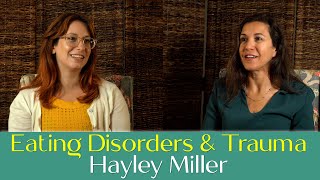
A recorded interview between Dr. Karol Darsa and Hayley Miller (licensed psychotherapist and nutritionist) about how trauma (sexual, physical, early childhood/attachment injuries, and emotional neglect) can underlie and perpetuate eating disorders. Miller describes eating-disordered behaviors as forms of avoidance and perceived safety/control that create disconnection from hunger/fullness cues. Recovery involves relearning body attunement (checking hunger/fullness), reframing exercise as safe/joyful movement, social re-engagement, skills-building, and medical/therapeutic coordination; Miller notes biological/genetic vulnerability and cites research estimating extended recovery timelines (~7 years) and increased relapse risk during major stressors (e.g., the COVID-19 pandemic). Practical self-help resources mentioned: Intuitive Eating and Carolyn Costin's Eight Keys to Recovery; professional treatment is recommended when possible.
Chapters
Hi, I'm Dr. Carol Darza, author, psychologist, and founder of Reconnect trauma Treatment center in Los Angeles. Today we are going to meet another wonderful staff at Reconnection. And we are changing our direction a little bit from trauma to eating disorders. I mean, of course, it's always connected, right? So we have one of our staff, Haley, she is a licensed psychotherapist certified in eating disorders, and she's a nutritionist. So we have the whole package. Thank you for being willing to talk to me today.
Yes, happy to be here.
Thank you again. So I want to know a little bit about the connection between trauma and eating disorders, which a lot of, in fact, even maybe eating difficulties in general as well. What have you seen so far?
Yeah, so I would say a lot of the clients that I see in my work do have trauma. Maybe they don't have, you know, as intensive trauma as I work with, with people with Reconnect, but, you know, they have some kind of traumatic episode that's happened to them, and so that's impacted their ability to connect to their body and always know if they're hungry or if they're full. And, you know, maybe just a disconnection from the body and maybe that comes out in purging or using laxatives or diet pills, or they keep looking for a quick fix to kind of like fix the problem by maybe doing, you know, fad diets. And then they'll also maybe, you know, also just have some issues with, you know, being able to take care of themselves in general. So that's basically what I've seen. The way that they've talked about trauma has been maybe they're ignoring the trauma completely, pretending it never happened, maybe not even telling the story to anyone. And then they're focusing more on the food and their body and less about their everyday life. And so they're more in the food and body realm and less really dealing with the trauma that is kind of underlying it. So sometimes the eating disorder can be the first thing and then they have a trauma and then the eating disorder gets worse and maybe the trauma is buried or maybe the trauma is kind of the forefront and the eating disorder recedes and then it comes back. So they're kind of all dealing with the same kind of issue, disconnection from the body and not being able to tune in.
Are you saying that sometimes when they focus on the eating related stuff like the eating disorder, it's because they really are trying to avoid the trauma and so their whole focus goes into how's my body or what am I eating, what am I not eating? And therefore I don't have to think about what happened to me.
Yes, because if they're counting calories, they're eating something, they're thinking about how many calories, they're doing the mental math, they're doing the exercise, they're trying to, like, almost run away from what's happened. And clients, as they move along, they've been able to say, I know I'm doing this, but I can't stop doing this because this is something I feel like makes me safe now.
Right. You know, we live in a culture where, unfortunately, our physical looks is highly prioritized. At what point do you know that a client moved away from normal preoccupation of the body, which most people have, into eating disorder? What tells you that?
So it's. It's partially the amount of time that they're taking on the behaviors. It's partially the behaviors. Maybe it starts out for a lot of people with, I'm unsatisfied with my body. I want to try to lose weight. And then it progresses to this whole taking up basically any free time they have, maybe not being able to sleep, maybe missing work for exercising, maybe feeling like they can't go into work because body image is so bad. And also, eating disorders go along with body dysmorphia disorder, which I think is in social media more now, which is basically, they don't have to have an eating disorder, but they're preoccupied with a certain body part that makes them really not able to tolerate even seeing that body part, you know, connecting to that body part, being able to use that body part. And so, you know, it's just this disconnection from their body and, you know, being able to take care of themselves. So it's. It's taking up all their time, so they're not focusing on the things that are actually upsetting them and bothering them.
Have you seen. This might be a weird question, but have you seen a very common, typical trauma that's more underneath of an eating disorder than another kind of trauma? Like, we have sexual trauma, physical trauma, relational trauma, war trauma. What have you seen that's sort of the most common denominator in a way. Right.
I would say in my practice, I don't really see veterans. I feel like that is a specialty, and I don't know exactly how to work with PTSD for veterans, so I have not seen. Seen those types of people, so I couldn't speak on that. But most of the clients that I have with eating Disorders, they have sexual trauma, they maybe have physical trauma. And then they may also have some kind of early childhood trauma. Maybe it is sexual in nature, maybe it is an attachment issue, like they're not able to be fed by their parent or they were adopted at a young age. Things like that is what I've seen most.
I like your connection of the feeding. Right. They were not fed emotionally, maybe by their parents. And then how this shows up and as an eating disorder later on. Because nutrition is, is very emotional, right? It's just even the word nutrition, emotional nutrition and phys. And physical nutrition. I can see the connection there. I, I hope that people watching this sort of maybe start understanding that it's not just a preoccupation of the weight, but, but that underneath that there could be really actually trauma.
Right. And I've also seen, you know, people talk about how they felt like their caregiver, mother, father, or you know, an older sibling or maybe, you know, another caretaker. They noticed the change in their face and they talk about that a lot. Like, I feel like they weren't listening to me while I was, you know, talking and eating at the dinner table, or they weren't paying attention to what my emotional needs are. And so I stopped eating. So those are some of the things that maybe it's not like sexual trauma, but it's like my caregiver maybe didn't teach me how to care for myself.
So in some way emotional neglect can cause an eating disorder as well, or overly being preoccupied. Preoccupied with it.
Yes.
That's a very good, interesting thought. Could you give me a specific example of maybe a client that you work with, but maybe a success story like you, they came in with a typical disorder symptoms and then you've seen them sort of grow and like, how were you able to help them?
Yeah, so I have had clients that maybe they started with coming in and they had a sexual trauma in the past and sometimes it's happened where the sexual trauma happened during the eating disorder treatment. So I'll kind of combine a few. But I would say if I can see the client long enough, it usually takes a couple of years for full recovery. Research shows about seven years. But that doesn't mean like the person's fully struggling for seven years. So if I get to see them long enough, most of my clients do a lot better. Their relationship with food is a lot better. So basically, you know, I can kind of think about a case where clients started with not being able to feed themselves, not knowing if they're hungry, you know, kind of just eating by the clock, being unaware of, you know, any hunger fullness cues. They're also purging. They're also over exercising. So kind of just avoiding any connection to anybody. Then over time, we did a lot of, like, checking in before they eat, making sure that they're eating food that they like, Making sure that body movement and exercise feel safe and comfortable, and they're not stressing the body overly, because this client was also having a lot of, you know, like, physical injuries from over exercise. And their doctor was worried, so figuring out kind of what they were worried about, because some people are worried about medical stuff, some people aren't. Some people are worried about, I can't show up to work because I'm having to go to exercise classes. So what figured out? What was the piece that helped her to feel motivated for this hard work? And then it was a connecting back to, when am I hungry, when am I full? What do I actually crave and like to eat? What do I do if I can't make a food choice? We came up with a couple of things of like, well, maybe you open the fridge and something pops out at you, or maybe it's leftovers from the night before, and you don't have time to make anything else. You just kind of want to have that. So it doesn't have to be also the perfect food choice either, Because I think a lot of people fall into that. It has to be exactly what I want. And then over time, she was able to see exercise as joyful movement and not as, oh, I have to kill myself with exercise or feel really sore. So it was a little bit of educating about enjoying movement in the body and not doing too much that's overwhelming the body and causing injuries. And then also a lot of skills around, what do I do with this extra time that I have Because I have so much extra time. So what do I enjoy again? Maybe seeing friends again because they're usually really isolated, not seeing anybody.
Well, that time was going before into obsessing. Right? That's what you're referring to about either what they're gonna eat or what they're not gonna eat or how the time is gonna be spent in exercising. So I can be the fittest that I can.
And there was a lot of isolation. I don't want to see my friends. I don't want to go to work. I don't want to, you know, date. So then she started with seeing friends. She started eating out more and doing exposure around that. And then she started dating and finding that, you know, she could have a healthy relationship with her partner without, you know, over controlling. And so, you know, the eating disorder, she still needs to be aware of it. She still reminds herself of skills, she still connects back to her recovery. But you know, she can say, I'm in full recovery. And so she just keeps herself, you know, on the path of like avoiding anything that's triggering to go back to the eating disorder.
This reminds me when I meet clients who have addiction problems, right? Substance abuse, and they talk about or when they go to AA meetings or NA meetings, they present themselves, hi, my name is so and so and I'm an alcoholic. That to me tells me I am an alcoholic. Even though I'm not drinking today, I'm still an alcoholic. How would you say that works for eating disorder? Because I know that there's some sort of talk about does that mean you can fully recover where you can one day say, I don't have any symptoms anymore or you will always have to say, I have an eating disorder, but it's just not active. Like, do you see the parallel between that and the substance abuse?
Absolutely. So we have to eat. It's not like with substance abuse where we could say, I don't need this for life sustaining energy. We need to eat. So we need to heal the relationship with. And yes, it could come back. People can relapse once they're in full recovery. Where they see, basically I see it as all foods are neutral, body is neutral. If I gain or lose weight and I'm not trying to, that's okay, you know, not going to. I have to control the body. You're letting go of the control, which I'm sure you know, with trauma you see a lot of power and control issues. You see that with eating disorders too. And they do their skills that they need to do. So, you know, as far as what I've worked with with clients and the research has shown full recovery is possible, but it's not saying, oh, I never have to think about it again. It could come back in times of severe stress, say someone had a divorce or you know, a trauma happened, or they're in a natural disaster or something crazy in their life happened, they could go back to it. Because it's not just the behaviors, it is also biological. So we do see there is a gene for eating disorders. It is passed along in families and it goes along with, you know, people that have addiction in their family. So they need to be aware of their toolkit and use it every day and cope every day. But if they do that, you know, the behaviors kind of fade away. The eating disorder kind of thoughts and feelings kind of fade away and they can really live a healthy and happy life without the eating disorder. That's how I view it.
Thank you. I have one last question because you talked about natural kind of disaster. We have, we're in the pandemic still, right? Right. A year and a half. Do you see people's eating disorders getting better or worse or any change in that time?
Definitely worse. In my work last year, 2020 was worse because we didn't know and feel like now feel like we're coming out of it. Maybe some people are feeling like I can start to expect my life to come back. But if we're stuck at home and maybe it triggers like isolation which triggers maybe eating to self soothe or over exercise because you're stuck at home, you don't know what else to do or boredom or disconnection from your spouse support system. So some of that has like caused people to start to think more about body weight is something to do and maybe it spirals or people are worried about I'm less active in the pandemic maybe and maybe they gained weight and so then they're feeling like in a little bit of a relapse. So kind of with my clients that were doing really well, if they started to relapse a little bit, we're talking about we need to add things back and maybe be more creative about solutions because maybe you can't go out to dinner or you can't go on a date right now if you don't feel comfortable. So how can you connect back to what you need without putting yourself at risk?
Thank you. If you could say one thing as a suggestion to people who are watching, obviously we will always recommend that they go to treatment. But if they can't go to treatment and you just want to give like one wisdom Right. To someone struggling with eating disorder, what would you say?
Well, I would say the more information the better. The more that you can be realistic about what your body is able to do and not do and what weight is realistic for you, relying on, you know, your doctor, your medical team, and connecting back to the body. So if it's an avoidance of hunger, fullness, maybe you don't know the answer, but maybe ask yourself, am I hungry? Do I want this meal or snack? If you don't know the answer, then maybe it's a continuously asking and trying to connect back to the body. Because a lot of times people with eating disorders don't even know why it developed because they're so disconnected and they don't know how do I get back to hunger and fullness cues. So there's a lot of books out there that talk about this intuitive eating book is one that people can use for self help. You know, Carolyn Kosson's eight Keys to Recovery is Some Skills. So these are like low cost resources that people can start to get information on. How do I connect back to my body?
Thank you. Those are great suggestions and great books. Thank you again for being here with me. I think I'd like to talk to you again another time. This is a great topic. I can have more questions.
Great. I'd be happy to. Thank you for inviting me.
I want to thank Haley again for coming today and talking about a very important topic, how trauma can cause eating disorders. You can see in some other videos we talked about that in depth as well. As you can see, unfortunately, trauma can also cause addiction and other problems as well. So this was a very important topic that we addressed today and the importance of the disconnect from the body and how to find ways to reconnect to yourself to help you heal from eating disorders as well as other mood disorders. I hope you found this video helpful. However, if you need professional help, please contact us at Reconnect. As you can see, we have highly trained people specialized in eating disorder and trauma at the same time. And we also have somatic therapists. So we make a very good team and we can help you professionally. And remember, trauma equals disconnect and and healing equals reconnect. Stay connected.
More from Dr.

58 - HOW DOES TRAUMA AFFECT CHILDREN - IT MIGHT BE MORE THAN YOU THINK - HOW TO SEE SIGNS
57 - GAMING ADDICTION AMONG ADOLESCENTS - WHAT ARE THE SIGNS AND HOW TO DEAL WITH IT AS A PARENT?
55 - OCD - WHAT IS OBSESSIVE COMPULSIVE DISORDER? WHAT ARE THE SYMPTOMS? HOW TO DEAL WITH IT?

54 - ARE YOU NERVOUS ABOUT YOUR FAMILY GATHERING FOR THE HOLIDAYS? I HAVE SOME TIPS FOR SURVIVAL :)

53 - DO YOU HAVE A HARD TIME KEEPING YOUR NEW YEAR RESOLUTIONS? THIS EPISODE CAN HELP