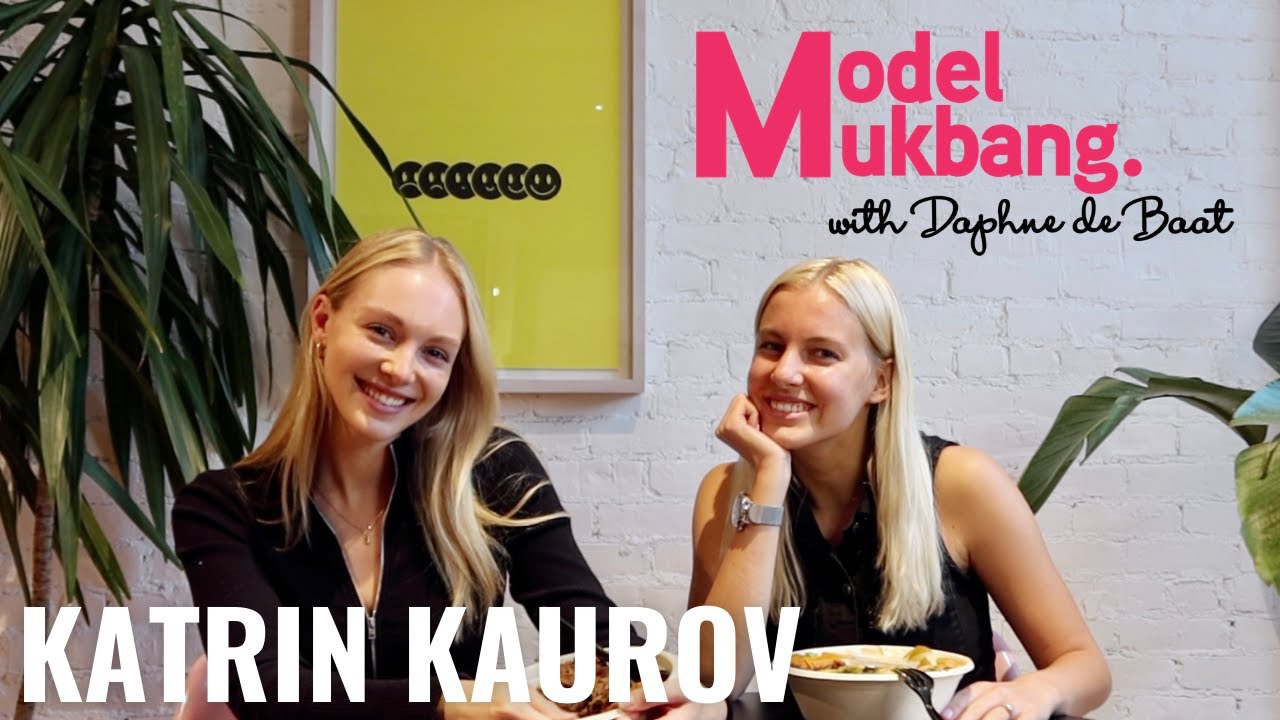
How She Went From Fashion Model to Social Finance Founder

In this interview, host Shervin talks with Katrin Kaurov, co‑founder of Fritsch (styled as "Effing Rich"), a social finance app aimed at Gen Z. Katrin explains that Fritsch builds the largest peer‑based money community, letting users compare their spending, saving and investing habits with demographically similar peers and then offering tools to improve their financial health. The brand positions itself as a "responsible friend" that provides radical transparency rather than authority, avoiding traditional financial‑institution messaging. The product onboarding asks users about their status and daily money questions, then presents anonymized community answers and data, with optional bank‑account integration for personalized product recommendations. Monetization relies on contextual, non‑display social ads that surface partner products (e.g., subscription‑cancellation tools, mental‑health services) based on user behavior, while deliberately rejecting predatory offers like micro‑loans. Katrin shares her personal journey from a teenage fashion model who managed cash across multiple countries to a tech founder, highlighting the resilience forged by early financial independence and a lack of mentorship. She recounts raising $2.8 M, joining a Mastercard‑affiliated accelerator, and navigating a difficult fundraising landscape, emphasizing the importance of staying true to the vision. Growth tactics included a large campus‑ambassador program, partnerships with money‑focused student groups, and later online communities on Discord, scaling from 100 k to 400 k users. The team now numbers six, with backgrounds from Acorn, Bumble, etc., and aims to hit 1 M users and achieve profitability without further fundraising. Katrin discusses ethical partner selection, future feature ideas such as career advice, and views potential competitors (e.g., Credit Karma, TikTok) more as partners than threats. The conversation also touches on the psychological aspects of money, the need for honest peer data, and the broader challenges of building a multimodal fintech/social platform.
Chapters
Let's give a welcome to Katrin of Fritsch, which by the way, before we give the round of applause, because I think this has to make it a loud round of applause, stands for?
Effing rich.
Effing rich. Awesome. I love that. Super excited for this conversation. I want to start with level setting on what the business is and then zoom way out and get wacky on industry. So maybe give us the 3 to 15 sentence, depending on how much you need for it. What is Fritsch at its core?
Yeah, so at Fritsch, we're building the biggest social money community for Gen Z. We've had hypergrowth recently. So we grew from 100,000 users this summer to almost 400,000 users. And the idea really is that most young people have no clue what to do with their money, whether it's figuring out how much to spend on bars, how to start investing, or even more day-to-day things like, you know, who should pay for the first date. Like, everyone has so many questions around money. And the funny thing is that especially young people, like, we all have this notion that everyone else has it figured out. So at Fritsch, we're really doing two things. We first show users how to compare to people exactly like them. Like if you're an NYU student, like what are other NYU students investing? How much are they spending? Where are they going on dates? Like giving kind of the access to snoop around their data. And if you're behind others, we give you the tools to get ahead. So like a very practical approach as well. So first you kind of level set yourself with others and then we give you the tools to get ahead.
There's so many analogies to your business that come up in my head, but let me start at a more kind of societal level around what you're trying to do philosophically. Because I think you're targeting Gen Z 'cause they happen to be the young ones right now who have these questions. 'Cause anyone, any demographic would have had, as a millennial, you know, I'm sure we would've, could've used something similar. When you think about though, you know, the notion of them wanting the answer to this, I think there's this interesting like authority thing. Like who are they seeking these answers from? To your point, it's like they think everyone else has it figured out, but would they take the advice from an app? Would they take the advice from a parent? Would they take the advice from mentor? How do you think about, I mean, Effing Rich, I just learned that it stood for Effing Rich like 5 minutes ago, so this paints it for me. But how do you think about being the right character in the notion of what does your brand stand for in relationship to the user? Again, authority is a word that comes to mind. How much are you doing authority versus credibility? And we'll get into product too a little bit, but maybe first from a brand perspective.
Yeah, so I think an interesting thing about Gen Z is that 67% of them trust peer advice the most. So Gen Z doesn't want to hear from celebrities, from influencers, not— definitely not from financial institutions, um, and not really from their parents. So that kind of leaves them very just alone in their money issues. So the way we like to think about Fridge is that we are not the nagging parent, we are the responsible friend in the group. So everything that our brand has been built around is like radical transparency and honesty. That like when there's so much BS in social media around like influencers promoting random products they've never tried, you know, TikTokers showing how they became billionaires when they're 17, like a lot of just very unrealistic portrayals. So we hope at Fridge to be that source of truth that you come there and you know what is actually going on behind the scenes. Like kind of people—
This is really interesting because one of the things, if you've been to Founders Friday or have heard me otherwise, one of my biggest, pet peeves for the past 5 years has been the LinkedIn feed. Now, I am a startup founder and I'm a more traditional person about things like work-life balance and hard work and things of that nature. But I tell people we gaslight ourselves all the time with our current feeds. So for example, even if you work at a startup, you wake up every single morning, you open LinkedIn and some entrepreneur is out of Bali claiming that they're making this many figures of income with their passive business, which isn't true. And you know, again, it's this point you're making of, what's real. How much do you think of yourself as breaking myths in this case versus just informing people? Because I think there's this other interesting notion of like, we have a little bit of a cross-section. Career is this interesting— I've thought a lot about this and the notion of how much is my job and my role at Free Agency, as a founder of Free Agency, to tell people here's what you're doing wrong versus here's what I need you to do to do things correctly.
I think in our case, like, we definitely Break the Myths. But what we like to think of ourselves is just being radically honest, but also kind of neutral. Like, we're never pushing people to do something.
It's not behavior change. It's like recommendations or information to make behavior.
Yeah, because like, I think what Gen Z struggles with, I mean, one is kind of the mental side of being afraid of money and not knowing what people do. But then once they do know, there's like this over flooding and overflow of information of like, you know, all the ads you're seeing. Like, no generation before has been exposed to that many ads. So what we've learned is that they don't even sometimes want the best financial products. They just want something so they can like just figure it out and move on with their lives. Because especially when you're young, let's say like you're getting your first apartment, you need like renters insurance, you need a guarantor, like all those things. And no one's really looking for like the best insurance. They just want to like know what should they be even worried about and like what are others doing to solve those problems. So I think that social element is really huge of like wanting to do the same things that other people around them are doing.
Maybe let's get into product a little bit. I'm realizing we need to. So I log in today as a first-time user. What am I starting with?
Yeah, so we start with onboarding where we're going to ask a couple of things from you to make sure we're bucketing you with people similar to you. Are you studying or working? Where are you based? We ask you a couple of fun money questions right off the bat so you can start to understand the user experience. Once you are in the app and the onboarding has finished, Every single day we announce a new money-related question. So every single day, and this vary from like very serious topics to like—
What's an example of money-related question you might ask?
Let's say like, how much money do you have in savings? But it can also go all the way into like, you know, has your card ever got declined when you tried to pay for dinner? Like all those things that are like very relatable that everyone's wondering, but like no one really wants to bring those topics up. And then once you respond to the question, that's when you're going to be able to see what did everyone else say. And you're going to be able to also snoop around. Like, let's say there's someone in your city who makes the same amount of money and they have $30,000 in investments and you have zero. You get to go and see, like, what is that person doing differently?
Like, when you say what they're doing differently, is it just the answers to their questions? Are you integrated with their bank account and their finances?
We're integrated with bank accounts as well. So we can really understand which products are they using.
And how, like, how do they decide how much they want to share?
So everyone's names are anonymous. So it's very much like a give and get community. Like once you decide to share your data with the community, like you're also going to be able to snoop around others. But we're never sharing anyone's name or photo or anything like that. It's always just like a person who's X age, makes X income, based their works as XYZ. So just giving enough information, but it's never going to be like, you know, John with a photo of John.
And then so if I'm snooping and I'm getting to observe this, Essentially the behavior there, I guess, comes into twofolds. One is this idea I like of like, these questions feel like they're like, am I alone? Is like the category. I remember the first time I was like late on a credit card payment in my life, I was like, did I commit crime? Like, is this like the worst thing I ever did? Or is it okay? So there's that element to it. Then there's the element of like more closely tracking someone's microbehaviors. If I'm looking at, let's say, let's use John, let's say I'm looking at John's profile, What am I as— or what do you want me as a user to be taking away in that moment? Right. Over time, there's a lot probably in the app.
Yeah.
But in that moment, am I trying to— what do you want me to do next, I guess?
Yeah. Like, really, for us, it's like leading you to the products that you might be missing in your life. Like, maybe I like to use the analogy of, like, canceling your subscriptions because it's the easiest way to save money. And all of us have, like, 10 subscriptions we never really use to, like, Things we never read, probably. And I think, like, if you go there and, like, realize that there are such, like, silly little things that someone's doing, maybe on a monthly basis, that you could do in the next 5 minutes. You could, like, download, I don't know, Truebill, and just cancel your subscriptions in the next 5 minutes. And that would bring you to this level, like the other person. Like, I think it's a lot of those little things you can do in the next couple of minutes that can really get you ahead financially. Because people think money is so complicated and hard, but it's not really. And I think there is that fear of even taking the first step and starting to understand what you're doing with your money.
It's super interesting that it feels like— tell me if this feels right to you as the founder, because I'm realizing maybe you could have created an app or even an experience or an advisory that gives all the right advice, because to your point, it's probably all the right same small steps, but you're really This is more of a psychological company than it might be given credit for at the front top line of saying that's not going to actually get people to change, but their peers might get them to change. And we're a visibility tool. The advice actually could be generic, but the visibility and the fact that it's not shaming, maybe it's aspirational, maybe it's a little bit of shame, all this other stuff, that's what gets people to change.
Yeah, 100%. I mean, peers are the biggest influencer, especially for Gen Z. I think it's the most socially open generation so far, and I'm sure Gen Alpha will be even more like that. But you're totally spot on, right? In the beginning when we started, I said we tried budgeting, we did like challenges, we did goal setting, and we realized people don't even want to set a goal because then they're stressed out that they're not meeting the goal.
Yeah, yeah, yeah.
People just, again, they want to snoop and then they want to have those like quick little hacks to get ahead. No one wants to like go to a finance app every day and like log what they're doing. Like that just feels like another thing you got to do.
Yeah.
So I think the emotional part of money apps is huge because most people inherently are afraid of money.
Let's get to the analogies because the analogies I think are the thing that get to this point too of like where people have done this in other spaces. So I would, I'm gonna list some analogies that come to mind for me. Glassdoor, Fishbowl, Credit Karma, Mint, in really interesting ways, LinkedIn. What, first of all, what analogies have I missed that you might often get? And then let's unravel, because I think the interesting thing about all of those things, they sit in this spot, right, of like how neutral are they? Credit Karma. I have my own opinions on the affiliate model. I'm curious to hear about monetization plans for you. Then you get the community stuff like Fishbowl, which has the anonymity aspect that I think enables radical transparency or data sharing. But first, any analogies that I'm missing that are major?
I think the only one would be used in the early days was Strava.
Okay, interesting.
Because there was a lot about creating community and maybe our product was a little bit in the beginning more of the community element rather than just having access to information.
Well, this is the other interesting part, not to dive too deep into product right away, but is that also Because I wonder how much of the experience of using Fritsch, is it a lot of tracking in the first onboarding of the experience? And then is it Mint-like on an ongoing basis?
So it's funny, we started as a Mint for Gen Z, and we started as a budgeting tool, and then we realized that Gen Z hate budgeting.
Everyone. Yeah.
And I realized that as a founder, I'm doing it. I'm like, I hate budgeting too. And I realized that that's the least sexy part about money. What's exciting about money is making more money, which is why getting a job is exciting. Investing is exciting. Dating is inherently exciting, or like spending from a more holistic standpoint. Like, can I afford to go to bars? And we realized that, like, and where I think Mint went wrong, um, like, first it served like an older generation, but also why I think it eventually shut down is because it's very like restrictive behavior. And like, the way I'm seeing, to bring a very specific example, people don't want someone to tell them to not buy coffee outside. Like, right, like, people don't want to hear that. But what people do like hearing is like, hey, this is a tool to cancel subscriptions that you're not using anyway, so you can take that money that's just like randomly going out of your account, a couple hundred dollars a month, and you can use that to go out with your friends and have fun. Like, people like those type of analogies more, where it's more about being smart with your money rather than having to like restrict your daily behavior.
So then this leads me to— I think monetization becomes a little clearer now that you've described this, but talk to us about it. Like, I think obviously, again, Credit Karma is probably the closest analogy from a business model perspective. I assume you mentioned using other products, Is this just like going to be a company that now understands Gen Z so much better than everybody else because of the give-to-get data model?
Yeah. So in terms of company vision, definitely. I think already now when I see what's out there, I'm very confident that Fetch has the best understanding of how Gen Z thinks about money, probably even better than themselves, because we've gone so nerdy, so deep into this. In terms of monetization, so the place wherever we place those partners who are like tools that we recommend or that your peers are using, those are all monetized placements. So technically it's a social ad model that we're doing. So we're leveraging what peers are using and we're charging brands for those placements.
But it's not personalized. I'm sure it's somewhat personalized. Sorry, let me clarify. The analogy in my head of Credit Karma is very personalized, as in your credit score is going to be used to give you offers. Does it get that granular in terms of allowing the merchants or the partners to say, hey, I want to make this I want to make offers to people who make this much money and need this particular product? Or is it more like a placement model of Truebill wants to get a display ad on top of everyone's feed?
No, we would never want to do display ads. So being very contextual is very personalized is really the key here. And the fact that we have access to not only users' bank transactions, but we also have access to what are their peers doing, and all that data together, together with the questions they have answered, we know we can even anticipate when they're going to need a loan before they probably know that. We can anticipate when they might run out of money. And that really enables us to put prime product placements there.
Founder to founder and all these other founders, how do you think, especially moving forward, I think in the early days you probably get to pick your partners and it's a much more curated conversation. If I was the founder of Credit Karma, I would—
It's funny, we just talked to the founder of Credit Karma like last week.
I mean, I just think it's such an interesting analogy to business and maybe you talked to them about this. I would struggle with understanding whether my recommendations are helping or not. I think Credit Karma— I don't know if you're going to do credit cards and loans as aggressively as they do, but maybe that's why I always think of them as maybe having more of a moral conundrum. Yeah. How do you think about that? Because I think there's— if you do this well and it sounds like it's going, you know, well, you know, you're having a moment of growth, you're going to have a hook into so many people, which is awesome as a founder. And at the same time, challenging.
Yeah, I mean, in terms of partners, we've already now turned down so many partners. I never want to give out microloans, like all those lucrative things, like buy now, pay later. For me, the fact that Fridge is an ethical business that actually helps people to be better is super important. And I'm sure there is a way to build this business successful, and we're already doing it and growing super fast without luring people into bad credit cards or loans or things like that. Because I think another thing that we haven't really touched upon that's very popular is as we talk about like money and all those other topics, there are so many non-financial products that we're plugging in, right? So for example, we're partnered with Headspace, and like whenever we talk about like money and mental health, like we plug in like meditation tools, and those ads are doing so well. Or we talk about money and dating, and we can put some dating tools. Um, you know, recently actually our most popular content piece, it was a newsletter, was how to travel for free. And we talked about pet sitting and house swapping. And those placements did extremely well because no one really knew about those options. So I think there are very many creative ways how to think about money that doesn't only have to be a credit card or a loan.
It's so funny again, how much of this is a psychological business. I think you guys describe it as social finance. I think some people would poorly bucket it as fintech. Yeah, because as you're talking, I'm like, this is less and less fintech as we go. Other than the fact you're doing banking integrations. Other than that, like it's just, it's so much other things. Curious, we'll bounce around a little bit here topic-wise because I have too many questions that are spreading right now. You have Mastercard on the cap table. Whether you want to talk about them specifically or more broadly, the investor conversation on this is super interesting to me because A, they're probably bringing a lot of baggage from all the financial tracking apps and how they failed, right? Like there's so many people that tried to copy Mint's somewhat success. There's what, Copilot money? There's, what's that other one? A thousand of them. And then they're probably also bringing some burned hand feelings from the Glassers and Fishbowls of the world. Glasser did fine, I guess, and then bought Fishbowl. So like anonymous community style stuff has not done as well as it seemed. And then you're suggesting actually probably in those conversations like, it's not even these things, it's this other stuff too. Which sounds like affiliate, it sounds a little bit like in some ways almost social club-esque. It feels just like a hard conversation to get VCs who are going to need to buy into a lot of what you believe is happening with Gen Z's brain.
Yeah.
How do those conversations go? How'd you get Mastercard involved? Or again, if you don't talk about them specifically, people of the traditional financial ilk.
Yeah, so we've raised $2.8 million so far. A bulk of it has come from fintech investors. Honestly, fundraising has been like hell. And it's funny because from day one, and even our lead investor has always been, he's just like, Fritsch is weird. And he's like, it's such a weird business. And he's like, and always it works. And they keep putting more money because it works. And from day one, and I can get into this later, but when I started this, me and my co-founder were super young. I had a background in fashion for 10 years. When I first went to investors, everyone was like, what are those two girls doing here? And we were like, we're going to build this for Gen Z. Fritsch stands for F-ing rich, like all those things that were just really weird for people in finance. And it was very tough in the beginning, like really extreme, like fundraising. As someone who had no connections really in New York, it was extremely hard. Like I had 150 conversations before I secured my first VC check. So you just kind of keep going with brutal force. And if I've learned anything practical during this time, it's like investors don't know anything. Like most of them, as you said, they've been burned. A lot of them have never been operators. They've never built anything. They just got access to capital. And like, they've told us to become an NFT business when it was popular. Then they told us to become a B2B business. Like, they told us to become a crypto business. Like, all the advice has been horrible, honestly. Like, most of investors haven't really given that much valuable advice outside of a couple few. And I think staying true to your vision as a founder, and like, we've always stayed true to the fact that we know what Gen Z thinks, and like, we understand that money needs to be thought of in a different way than like a boring old bank does. And I'm like, if someone doesn't understand the vision, then they're just not the right investor and they'll miss out on their return. Like, I think it took me so long to get to that place to understand that I'm building something valuable. And if they don't understand it, they are the ones missing out, not vice versa, that I'm there like begging for money. And I think that mindset change was everything.
So first of all, plus one everything you said. All true. But so now let's get into kind of like a little bit of psychology there. So how did you as that person— maybe let's go to the founding journey. So you were in fashion. Why, why, why did Frisch come about? And then in that moment where you're making that transition, where were you getting your information as an outsider to tech and, you know, starting a business? You know, it sounds like you knew that you need to have a lot of conversations and the first 10 nos did not dissuade you from continuing down the path. So there must have been either learning or peers or something that gave you a sense of let me keep going and this is going to change?
Yeah, I mean, first of all, just going to start by saying being delusional is really important. So from my personal backstory, so I started working as a model when I was 14, and at that point I started living alone in all those big cities. And the way that industry works, they send you for like 3 months as a 14-year-old to Milan and 3 months in London or 3 months in Hong Kong. So you're like basically a kid being shipped around between all those places and you get often paid in cash, like inconsistently, like you're like a freelancer. Essentially, right? And I had to learn to manage my money. And like, I became financially independent at that age. So to live by myself, rent an apartment, invest my money as a 14, 15-year-old when most people hadn't even started going to high school parties.
Yeah.
I think it just like left a very lasting impact that I had no one to turn to. I was so alone with my money questions. I had like nobody to ask. And I think that just led me to very early interest in personal finance. And actually, an app that I built before Fridge that was definitely not venture-backed, but it did pretty well, was something similar for models that help young models save money in big cities. Because, you know, as a model, you make the best money between your age of 14 to 18, which is a whole other problem that I'm not going to get into today.
But that is somewhat what it sounds like. So much of the analogy to what you're building today is you had to do it yourself and you were looking at your peers. We don't need to get into the details of all the things that went wrong in that set of people, but like, That is exactly what was going on for you. You had to figure it out and you were snooping.
Yeah.
In your own way. And that's super interesting because that, like, if you're bringing yourself to that moment before we get into the founding moment, how did you think either with this app or otherwise, how empowered were you by the agencies, by mentors, by people around you, by your peers? Were you having honest conversations with other models?
And it's funny, back then we had no conversations about it. Like, I feel nobody was there. And I remember like missing it so much. Like, I remember like, and I was too shy back then to ask other models like, what are you doing with your money when you're 15? Like, I literally remember getting paid in cash and like traveling with that money in cash back home. And because I didn't know how to start investing or do anything, so I just put it like in my closet to like a drawer for years, which is insane. And I think I missed out on so many opportunities because it took me years to learn. And I wish I had a mentor. I wish I could just see like, oh, there was someone else that did XYZ.
So, and there are no vendors, not that they would necessarily be a good thing. So, you know, there's a chance that if advisors tried to come out of the woodwork, that they'd be taking advantage of young people. But were there people who wanted to like help you manage your money at all? Are there people in that?
So it's funny now, I feel like a lot of financial advisors like are starting to tap into models the same way they tap into student athletes because they realize there's a big opportunity. But like when I was doing it, there really was Nobody was like— I feel like there's been a cultural shift as well, that money really used to be a taboo. And I think now people speak so much openly, even in the model community. Now there are a lot of like even Instagram pages that talk about it. Back then, like, your agents just throw you, you know, in the middle of nowhere and you got to figure it out on your own.
Okay, so now bring us to the founding moment.
Yeah, so I moved to New York, already knew I just wanted to get into business. I joined another startup here where I was trying to learn as much as I could. And then during COVID actually, me and my co-founder took one of these 4-hour-long walks in New York from like Chinatown to Central Park. And we were just talking that it would be fun to start a company together. We were like, what should we build? And it's funny, we literally covered all the topics that young people have issues. We were like, climate change. We were like, we're too stupid to solve this. Like, we thought about all the things and money and like social pressure to spend money. It just kind of was on top top of mind for us. And so was she also a model? No, but she had also started her career very young in brand building. So we had kind of very different skills, but both of us had to always be financially independent really early on among a lot of wealthy people. So we always felt that we were behind others. And we sat down and we were like, okay, we're going to build a company where we have today no skills, no connections in New York. Not really any money. And somehow we looked at that list. On the plus side, we were like, we're young.
There's time.
And we looked at that list and we were like, we're going to do it.
Let's go.
Yeah. Which I think we were like so delusional. And to be very practical, we looked at a lot of Y Combinator videos on YouTube. And it's funny, but it actually was really helpful.
You're talking about Office Hours and their podcasts.
I watched those all day and night, just like, I watched, I think I've like literally watched all of them. And then I was like, okay, we probably need an advisor. That's what they say in the videos. So I reached out again. I was like a nobody. I didn't have any LinkedIn presence. I had like, nobody knew who I was back then. Maybe now like 5 more people know. But, and I reached out to, I think maybe 10, 20 potential advisors. And the way we did it, we did cold outreach, but in a very personalized way where we would say like, you know, We loved your podcast that you did in 2011, which you said really resonated, like kind of flattering when you show you've done your homework. And one guy actually responded to end up becoming our advisor. And his first question was like, who's going to be the real CEO? And I was like, duh, it's me.
Was that an easy answer for your co-founder too? Did it feel natural?
Yeah. And I think again, we just knew so little. And then going from that moment onwards, and that's where Mastercard comes into play. So we came up with the name. We were like, Fridge stands for effing rich. We were like, good. And we put it on LinkedIn, but we have no product. We just knew that we want to build a social finance tool. We knew the idea of community, but we had nothing else. We had that advisor, we had the name. And then I got an email from Mastercard saying that they want us to join their accelerator program. Wow.
They just found you because of the updates to your LinkedIn, basically.
Yeah, I think maybe Gen Z was the keyword or something, or social finance. And I didn't even respond because I was like, it's spam for sure. And then they reached out again on LinkedIn, and I was kind of getting upset. I'm like, the spammers are intense. And the third time they reached out, I was like, let me just in case.
It's actually a social experiment. It's still spam.
I'm like, let me just get back to them. It was real and the accelerator was about to start in a month and we had to have some sort of a product to join it. So we just pulled the worst type of product you can ever imagine together for it. And I think that was one of the things that really changed the whole course of Fridge because I think at that point we went from being this idea that we could shoot around forever to this is real. We're now on a timeline. We have partnership with Mastercard, although we have no product. So everything else has been really hard for us. But that was the one lucky moment that I think was really defining.
Well, it's interesting because, you know, as lucky as it was, I tell people all the time, it's the surface area of luck that you want to create. And the early-stage founders who like are paranoid about updating their LinkedIn— 1,000 founders work at Stealth Startup and get over yourself. Your idea, I'd say 1 out of maybe 5,000 startups needs to do that. And it's probably not yours, whoever is listening out there. And you're opening essentially a surface area of like how many touchpoints can interact and interface with you to give you those opportunities and that luck to break in that way. Also, from an accelerator standpoint, I think accelerators are really going to become popular once more. What year was this?
That was 2021.
So even back in 2021, I think back when the tech fundraising environment was just out of whack, accelerators were seen a little bit stigmatized for a couple of years, or even YC of like, oh, you can just go raise a $5 million round. Why don't you just go raise a $10 million round, whatever it is? And at the time, it was possible for some set of founders, whatever, But I think accelerators are a fantastic spot for people who have the right amount of ambition, but zero of the context, and essentially saying, hey, this is more time. This is time that you're allowed to take, right? Because if you're not, let's say, in an accelerator, same thing as if you're in a job search, there's time that you're allowed to take, and it's normal and part of the practice. And I think an accelerator gives you some room where outsiders go, oh, what were you doing for those 3 months? Or did you not make this progress or that progress? That makes sense, 'cause you were part of an accelerator. That's part of the programming. What to you were some of the things some of the things that you find notable out of that experience? Was it a partner program, by the way, or Mastercard ran it themselves?
So it was a partner program. Mastercard? No, it was False Fintech. So essentially the idea was that by end of this program, you're able to launch your own debit card and have a sponsoring bank together with Mastercard, which was kind of like a huge deal at the end.
But they ran it themselves?
Yeah.
Got it.
Okay.
And at the end, we broke it to them that we don't even want to launch a card. But during those 12 weeks, they told us everything about—
Save that for later.
They told us everything I think it was like a crash course in fintech as well. And I like that it was very industry specific. I'll never forget the first day when we have— I think they picked like 6 startups. The other 5, which by the way, none of them survived, were all people who were kind of like middle-aged men who had done finance for like 20 years. And we were there like, we still don't belong. I have no clue what they were talking about. Like ACH payments and regulations. And I was like, I have no clue what anyone's talking about right now.
Which, you know, good on them for finding you, but this This reminds me of like a couple days ago, The Information wrote a great, Julia Black I think is the reporter, the title was really good, Why Women Are Sounding the Alarm in Tech. And it's about how it's already like 2% of funding goes to female founders and it's decreasing already over the past 12 months. The amount of VC partners who are female is decreasing again. You know, the thing I think that's happening, it's not an explicit action by tech except for the fact now we're in a downturn. What do people look for? Safety. Middle-aged white man looks more like a founder. And the problem is we're like in this weird reverse DEI moment that I think is stupid because this is the point. The perspective that you bring to the table literally allows you to survive out of an accelerator class compared to a bunch of other people. You're a VC looking for parallel outcomes. The company that your advisor investor constantly says is weird is probably a good signal that it's weird. But we don't seem to embrace those aspects. When you're coming, you're going through that program, it sounds like you've changed the business a few times from like tracking all these other things. How much of that happened just like in that period versus afterwards?
So I would say the first accelerator that we did, it really just established credibility for us, which is why I would recommend it for any founder. Like it just puts your name out there and you have something to like latch on to. You get access to advisors, you get access to investors, you have a demo day. Like, I think especially early days, it was huge. And like, while we were in the first one, we were still building our product. And back then, again, because we're really stupid back then, we were like, we're not going to show our product to any users, we're just going to build it in secret, otherwise someone's going to, you know, they're going to steal our idea. And so we put our product out there, launched it, and realized people hate it. And like, everything we built For months I was like, especially the most complicated products we built, like this very complicated savings tool. I was like, people don't want to use it and they don't even trust us for that. And after that we went totally in the other way. Like now we test everything. Like my co-founder speaks to users every single day. Like it's really about that communication. But I think that was during the accelerator, something we learned as well. Like you can't just build it all out in secrecy, you know, you got to actually put something in front of users.
I'm curious about something because again, You come, you're coming from the outside and you seem to have like a resilience as a founding team around things not working and that not bugging you at all. And even though you've brought on this one advisor who was, who you didn't know, it wasn't even like a friend or someone that you have so much trust in until time passes. You go through an accelerator and you launch your product and again, the signal of people not using your product. Where does that come from for you? Like, I think founder character and core values is so underrated. And I think it's really interesting just how much, again, resilience you had in those moments. Do you have either a sentimental or scientific answer as to what you think formed that for you?
I really think it was for me, okay, first of all, having Eastern European parents were never happy with anything, but outside of childhood trauma like that.
It helps. This is why you have a lot of immigrant founders. It's just the reality of the situation.
Yeah, but I really think think modeling, and that's why, yeah, and now I think I know how to tell my story also to investors. It wasn't like just like modeling. I was like, no, I was a 14-year-old building an international brand for myself, working in 20 countries, making my own money, building a career like when people hadn't even graduated. So I think I was so early on used to like rejection, used to like having to prove myself every single day because I was a model. Yeah, like being really tough. So I think that really built—
Even the managing of your own finances started to give you a sense of, okay, I have to resource appropriately. Do you think there are secretly like more founders in the modeling community than we might realize? Like, I feel like these community, like modeling student athletes, these demographics where again, you're building founder traits.
Yeah, I honestly like, it's funny, like I have a lot of model friends who maybe they didn't end up in tech, but a lot of them built their own brand afterwards. And I think it's kind of the same skill set. I think student athlete is kind of similar or like anyone who had to build their career so early on, like, you are defined by that. Like, I never had a normal childhood or teenage years. Like, I never went to high school party. Like, I was building my own brand back then, you know? So I think it just really defines you. And I think resilience as a founder, however, whichever way you got it, I think it's the most important trait. Because like, whichever CEO said it was easy for them, they're lying. And like, anyone I've spoken to, like, that's why I'm happy that we're having this honest conversation. Because most media, even the media that they did about Fridge on like TechCrunch and Business Insider, they were like, oh, overnight like raised $3 million. I'm like, it was not overnight. I did like 300 calls with investors, like I had like countless sleepless nights. Like it's been like a hell kind of ride in fundraising and media never speaks about it, you know, which I feel like I'm so happy that we're having a more honest conversation here.
100%. I tell people all the time, the reality of the situation is you don't want to cry for founders. It's a privileged job in so many ways. And yet it's this very— it's probably one of the hardest, if not the hardest knowledge worker job that exists.. And if you're not prepared for that journey, this is like there's a cohort of founders who weren't prepared for that and don't have the resilience, especially during the fundraising environment of 2020, 2022. You can kind of feel it. They're like now damaged by the experience. And so you have to understand what you're getting into. You have to know that other people— it's the same snooping, positive snooping mentality. You have to understand other people are going through it too.
Yeah.
Again, this is why I think accelerators are slightly underrated. And I think we'll have a bounce back in this new era of tech. Sounds like you did another one afterwards too.
Yeah, so we've done a couple accelerators. It's been honestly a mix of us needing capital versus us wanting the accelerator. We did an accelerator with NYU, and that was really, really good for us. So that came right when we were actually launching. So that first year we did back-to-back accelerators, and first NYU accelerator really gave us access to top-tier investors. But also what they made us do is every week we had a meeting where we had to report our metrics. And I think that discipline, which now seems very normal.
YC says that's a lot of their curriculum value too, is just the fact you're reporting to a partner.
Yeah. And every single week we had all the metrics and that we promised to do for a week, and we actually had to do it in that week. And NYU enabled us a lot of testing, and they were basically like the whole fail quickly and iterate. So every week we would test something and I think NYU just made us comfortable that building a successful startup means that you just test and iterate as quickly as possible. And it's normal that you try like 20 growth channels and if 19 fail but one works well, that's a huge win. You just need something that works and you need to honestly look at data and see if it's working or not. And I think learning that was a huge value add, like realizing that you don't want to build something for months and then see if it works. You want to build like the tiniest thing you can see. It can be even like For example, we built a financial concierge over text message and we were just texting our users and it was us. And in 24 hours we realized if this is working or it wasn't. And it wasn't. I'm like, thank God we didn't spend 3 months building this thing out.
It's the speed of that feedback loop that I think is so critical that early founders need to realize. It's like you want the data as quickly as possible as to whether to, by the way, continue to experiment or double down. Or say no. And again, all of the conversation we've been having, also realizing you just want also more runway for experiments. Yeah. Nos are not bad things on the product journey. We're at 33, so I want to go to the crowd for questions, but one more question from me. What's the challenge ahead? So you went from 100,000 to 400,000 users. You're building in this really interesting space where it sounds like early monetization partners and monetization is at least working right now. What's the next big challenge for Fridge?
So our next big milestone we're aiming towards is 1 million users, and we're hoping to get there before end of the year. So really, we're now in a place where we've experimented a lot with things, and now we have revenue that's working, like growth that's working, product that's working. So we're really like pedal to the metal, like running as fast as we possibly can to hit that 1 million user mark, which is Honestly, even for me, I'm like, I can't believe this is real. It's kind of— it's insane. I'm just really, really excited for it.
It's a fantastic milestone. Is it also related to fundraising goals that you have afterwards?
So, okay, I feel maybe this is off the record, but I hope to never fundraise again. I'm really focused on profitability.
Why are all founders wounded all the same way? It's so funny.
I'm like traumatized forever. I have PTSD from fundraising. No, I just want to get to profitability and I want to build a company on my own terms.
How big is the team now?
So we're 6 people and I think we've gotten so far with 6 people and we have a top team from like ex-Acorns and Bumble and all that. So I think having a small but like superstar team is key.
Again, founders have the same. Okay, I'm going to let the crowd get in on this now.
Go ahead. Hi, I'm Brandon. Thank you, Katrin. And Shervin for the conversation as always. I am an artist manager and I actually manage an artist that is an active participant in the Mastercard Accelerator program that you're referencing. And I cannot stress enough. And also as someone that is in Gen Z or yeah, a Gen Zer, I cannot stress enough how important your company is for our generation and even generations even younger than ours because you're correct in every sentiment. But specifically when it comes to the product market fit, I do confidently feel that you are going to crush it when it comes to that goal of reaching that 1 million mark. Not just because of the, of you being aware of your product market fit, but also the, I would argue the added opportunity of having the market even more expanded. 'Cause you mentioned models specifically. I feel artists and creatives in particular, certainly fall within that problem, right, of needing to address their, their money issues, their financial issues, but not necessarily being comfortable raising them. So the balance, balance of having that transparency and anonymity is really genius. And I appreciate you sharing your story and I would love to speak further.
Thank you so much. It really means a lot what you said.
Let's pass my phone to the back. Thanks a lot. To follow up on growth, can you talk about what user acquisition looked like in the beginning? And obviously from 100 to 400 is very different. What kind of tactics really worked for you that were efficient?
Yeah, great question. So when we first started, we went full on with campus ambassadors, which every VC, by the way, hates. Everyone was like, this will never work. And we're like, okay, whatever.
It's also one of their only ideas when they're asked for growth tips.
Yeah. And it's funny because many companies want to do ambassadors, but I think getting it to work is so great because you have that direct line with your users. If you're targeting Gen Z, we partnered with money parties, with sororities, with fraternities, with entrepreneurship clubs. We went on campus on every angle you can possibly have. At some point we had, I think, close to 200 ambassadors across the US, which is a lot to deal with that many students. I'm just going to say that. But that was really, really good, and that got us to that first 100,000 people.
Were you paying for them?
So we would pay students who would host events. And then there were a lot of people, which I loved, who just wanted to get involved because of the mission. And those were usually the best ambassadors, not people who just wanted resume building or wanted the cash, but people who just were passionate about the mission and had a lot of ideas and wanted to build a better financial future. Those were the people who really made a difference on campus. Today we're growing more through online digital community. So we tap into a lot of online communities on Discord where people already speak about money and we kind of take the users and bring them to Fridge. So I think the ambassador one early days is great, but for us at least hit the ceiling. And I hate to say that VCs were right about the scalability, but they kind of were.
In the early day, not to borrow a bunch of YCMs during this, but do things that don't scale, you got to find that way. Curious for the next question, the other interesting thing I don't remember what part of an answer brought this up for me. This notion, oh, I think it was the artist aspect of this. This notion of the anonymity and bundling people and grouping people, where does that go over time? Fishbowl is the interesting company from this perspective. So how many people used Fishbowl ever? Did you use Fishbowl?
Yeah.
So I don't know if it's dead now. Glassdoor bought it, but no, I don't think it's dead. But the interesting thing they did, it was a pseudo-anonymous app where where you could reveal as much about yourself. It's kind of like Glassdoor sharing your salary, but you also could talk about your company, other things like that. But you could change how much, on every post you made, you could change how much of yourself you revealed. So you could be completely anonymous, you could be a professional who works in finance, you could be a professional who works at MasterCard, or you could be a product manager at MasterCard, or you could be a product manager who works in finance. It was a really interesting mechanism of saying, hey, I'm gonna reveal more, so that the conversation maybe feels different, has different context, invites different people to join. I feel like there might be similar aspects of revealing each other to each other allows better conversation.
Yeah. So we've actually spoken so much internally about it in the future. There potentially being a way either of you connecting with someone who's kind of just like you and you being able to even maybe reveal your names if you want and have almost like your money friends to chat with. Or another thing which I think there is, and that's very psychological, is finding someone who is a little better than you. And so you can see that someone who is just kind of within your reach and that person also feeling that they are better than you. Everyone loves being the advisor and mentor, you know. So I think there's something there with connecting people and like someone being in that like mentor role and someone being in that kind of like student role there.
It's almost like the person who's a few steps ahead of you.
Yeah, yeah. And I think it can't be too far ahead, you know? But I think, like, let's say if you're a student who's about to graduate and someone who graduated 2 years before you, that's, I think, like the right kind of balance there.
From the perspective of social finance and as that relates to fintech, as it relates to the industry more broadly, I feel like there are going to be competitors that come at you from a variety of different angles. Thank you, Vin. They're gonna come at you from a more social aspect. Then there's gonna be like the fintech, there's a Credit Karma who wants this user in the same way. There's gonna be trackers or the existing trackers who are startups and venture fund in this space. Then there are people who straight up say, I also will help Gen Z in this way. How do you think about this multimodal startup you're building where you, I think I distinctly think of startups and being in two buckets. They're either niche enough or specific enough in their feature set that their competitors have to be direct, or they're playing in so many different fields that almost becomes one of the most major challenges over the lifetime of their business because they have to keep a user in so many different little contexts. React to that.
Yeah, so I think with a lot of startups that are Gen Z-focused coming out, as we are the central hub for everything, I see them as partners rather than competitors. For example, there's Alinea Gen Z investing app, which is very similar branding to ours. But I see them as a perfect partner for us when we talk about investing to plug them as a solution rather than be worried that they're getting our users. So I think that's from the Gen Z app side. I think from competitors, I frankly see rather like TikTok almost as a competitor.
Yeah, absolutely.
100%.
I think there are sources where people can find information. And today TikTok doesn't connect bank accounts and you can't really know if is that 17-year-old actually billionaire? Is that person in Bali actually making passively like $30,000 a day? Or is that BS? Like, you can't tell that yet. So I really like to compare ourselves to them and like think that we are the more honest and truthful source of financial advice.
Do you think you're going to get into careers as like a topic that will be discussed on Frisch?
That's already kind of happening. It's very popular. I think especially less about like what happens during the job, but like how to ask for a raise, how to get a job. Like, for example, a really popular question is like, how many interviews did it take you to land your first job? Again, like, is it normal if I do 40 interviews and no one's hiring me? Like, I think people have a lot of questions around that.
When I, I think about the LinkedIn feed as being something that I think even young people are frustrated with, uh, because it isn't leading to success. Like, the things they're reading are not giving them patterns and actionable behavior.
I hate LinkedIn so much. Awful.
And then Blind is in this— it's tech-specific, but Blind also tried to foster these conversations, but I I think because it's completely freeform and user-generated, it winds up kind of taking a lot of weird user-generated turns. And so this is a really interesting space. And again, I'm biased being in the creator space from, for agency perspective, but I feel like a lot of the things you talked about have a perfect mirroring there. I guess final question there, and I'll make it about that. Do you just let that happen and follow your users to it, or do you have that on the roadmap? Do you fear doing it too early as a founder? How do you think about that? Whether it's careers or by the way, other things we might not have talked about.
So we are very much following what are your users asking? Because our users can ask questions in the app. And we've noticed Fridge probably will never become the tool where you actually apply for jobs. But I think having insight into when should you get a raise, how to actually land that job, what's normal, even knowing how many people actually got the job through a CV and who just got it because they had a connection. Things like that, I think, are things that we're already incorporating that people are really curious about. Because, yeah, just my last point about LinkedIn, it's just horrible. If you open a LinkedIn, no matter what age you are, it seems like everyone else is succeeding besides you. Sometimes I just look at it and even look at my own post and I'm like, this just makes it look like every day there's just like, oh, we just did Business Insider and TechCrunch and oh, it's just so successful. Every day just media is shooting at us and no one sees that. Like last night you were up all night anxious about like everything that's going to go wrong. And I think the same for job search. It just doesn't portray it realistically. And I think there's a huge gap in the market.
100%. I love that. Katrin Kaurovov, this has been a fantastic conversation. Round of applause for you.
Thank you.
More from Katrin
ep34: "female" anything is a self fulfilling prophecy | brown girl unscripted podcast

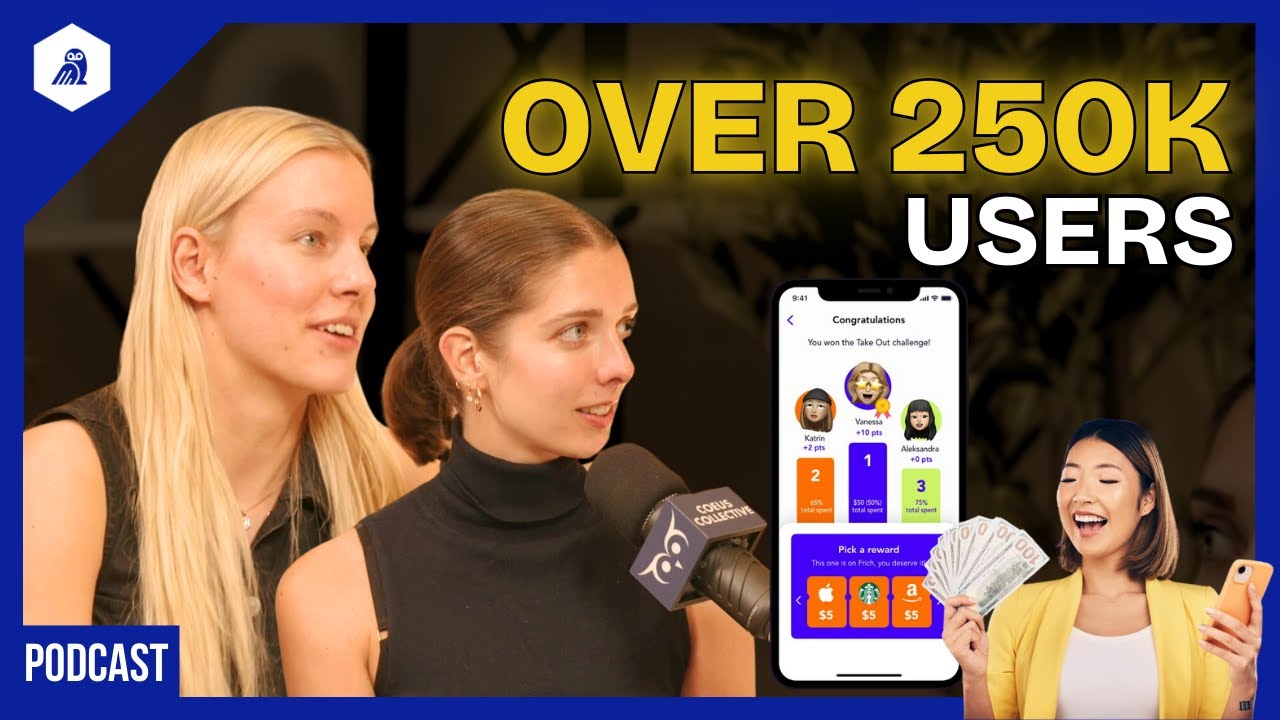
The $2.8M Solution to Unf**k Gen Z’s Finances | Katrin Kaurov and Aleksandra Medina - Frich



The Restive Perspective: Episode 2 with Katrin Kaurov of Frich | Cameron Peake